Gear Review

This will probably be the final update from the trip, going into depth on the kit I brought with me. It’s not really a review of the gear, but more just my opinions of everything I brought and how it compared to other peoples setups.

Bike
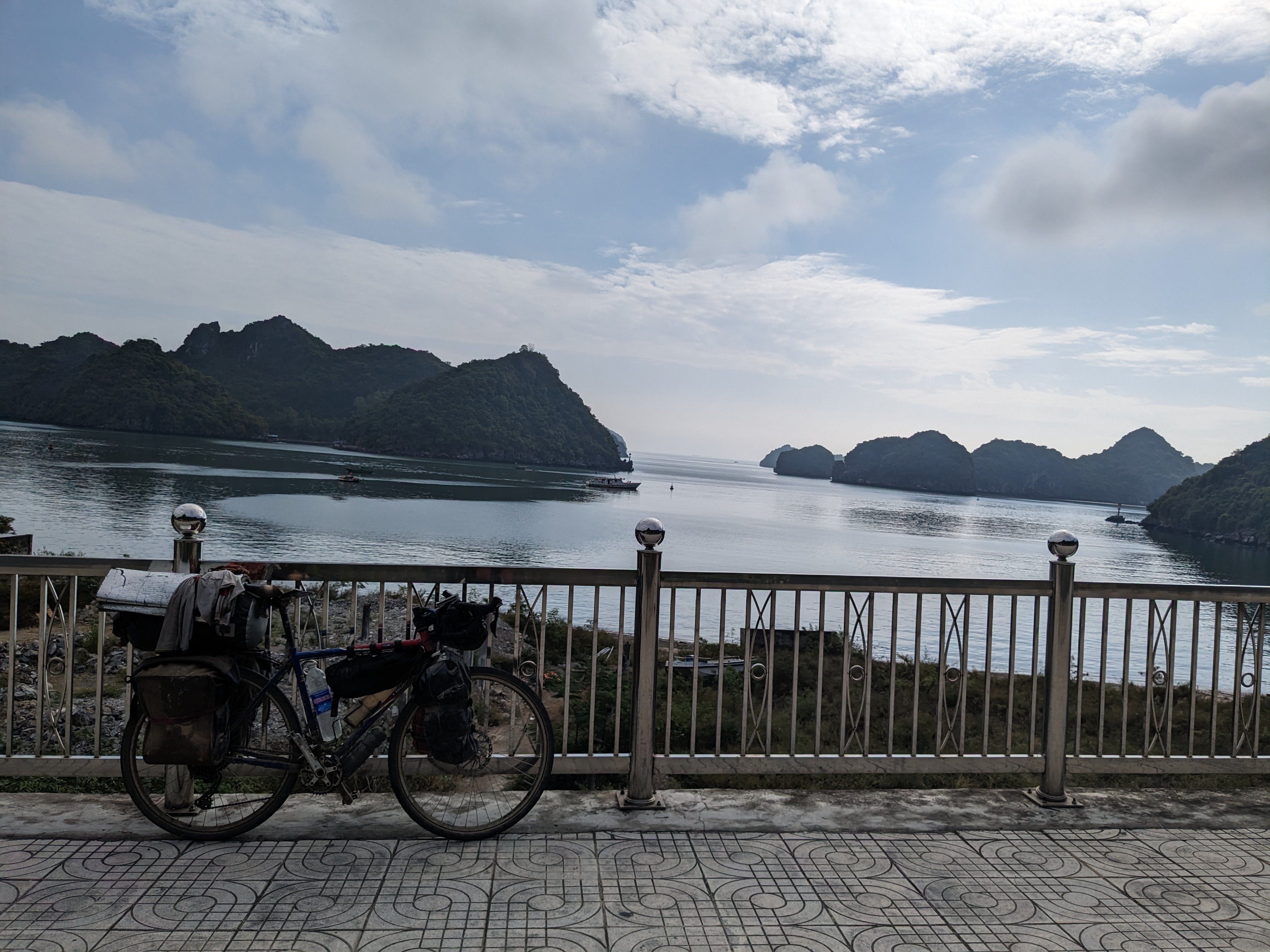
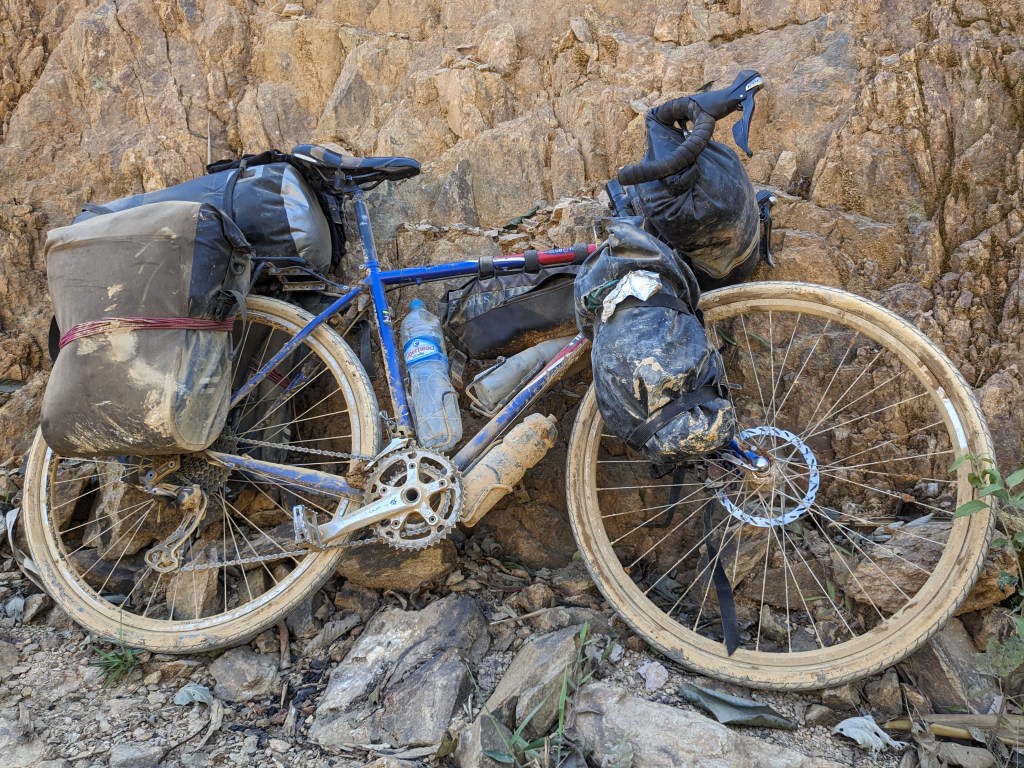
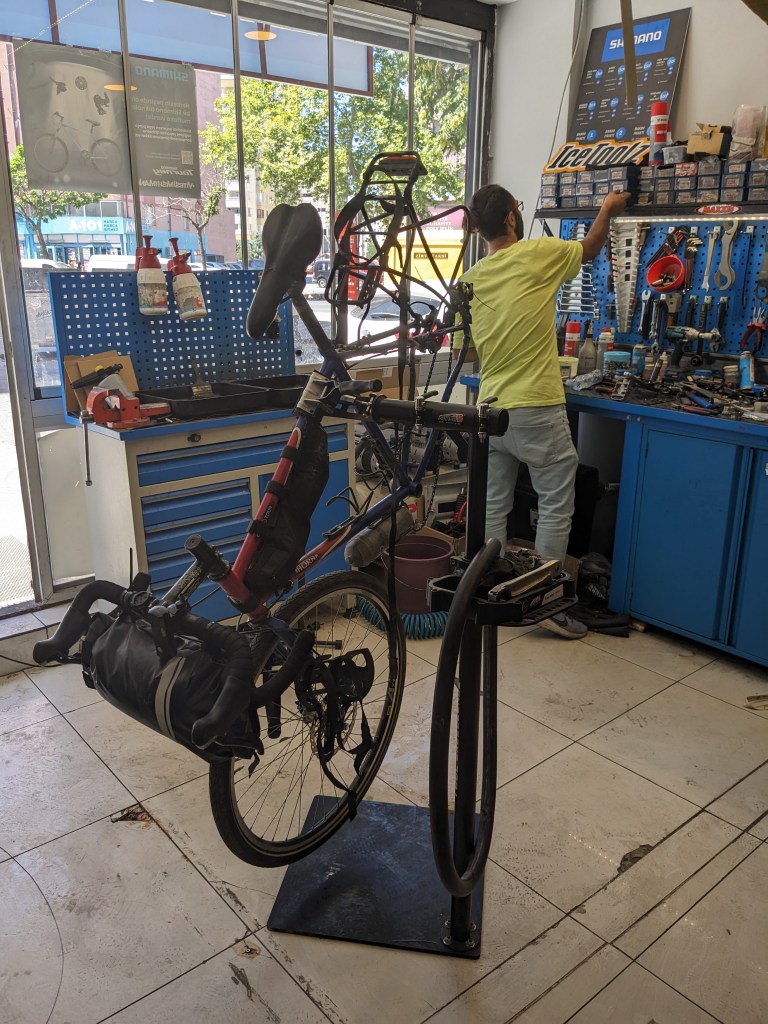
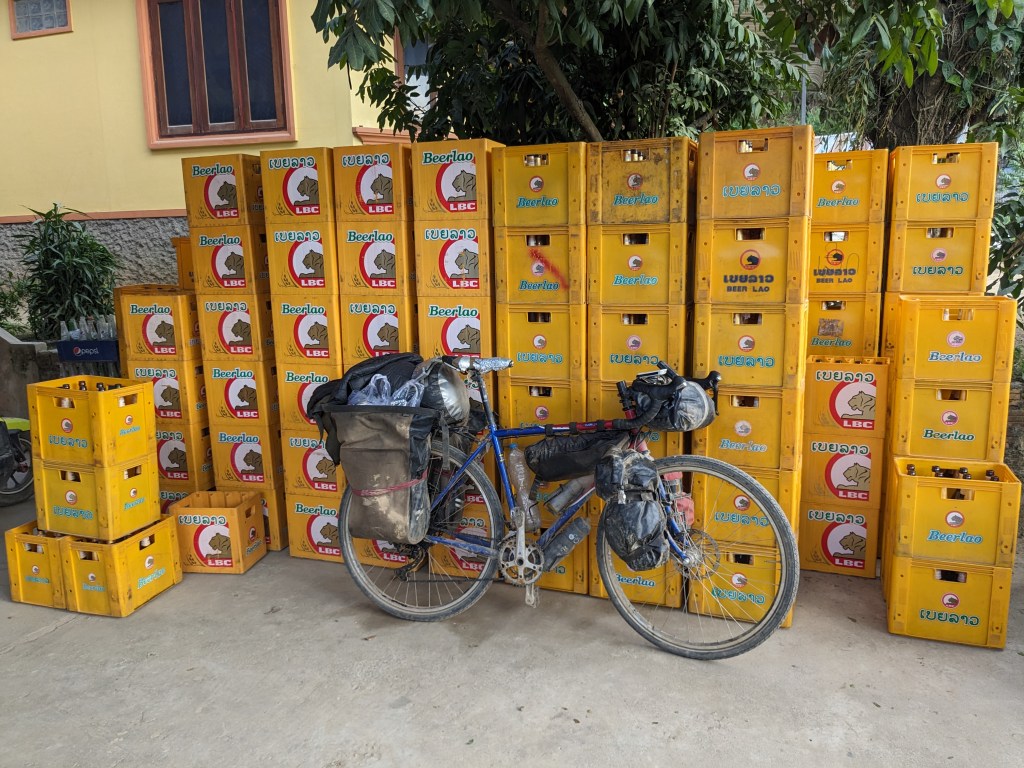
It was definitely a love hate relationship with the bike depending on if I was experiencing any problems. I never really had a chance to put it through its paces before setting off, but I had no major issues the whole way. The disc brakes required quite a bit of maintenance: tightening, cleaning or replacing the pads frequently due to the extra stress from the weight of the gear, but I’m not sure calliper brakes would’ve been any different. I would’ve liked to have the room for larger tyres, although I managed with 38mm and the Schwalbe Marathon plus tyres were incredibly durable and puncture proof lasting the entire trip. 
Pannier bags
I had some cheap waterproof ones costing £30 each from Halfords. The material held up most of the way, getting a small rip from the seam on one bag and the hook holding them to the rack came off too. I was able to fix this with some nuts, bolts and bungee, however I think I’ll upgrade them for the next trip to the twice as expensive Ortlieb branded bags.

Waterproof bags
I had two big thin waterproof bags I used inside the panniers, as before the trip started I wasn’t sure how waterproof the pannier bags would be. These were useful just to keep the clothes organised and doubled up as a pillow.

Pannier Rack
This was taken off an old bike before the trip and snapped in Laos. Fortunately, as it was steel I could get it welded back together. I think it’s probably one of the most important bit of kit, as it would be incredibly challenging to carry everything if it broke.

Fork cages
I will definitely be upgrading to a proper front rack and front pannier bags for my next trip, but chose the front fork cages and waterproof bags as it was a significantly cheaper alternative. They took too long to put on and off the bike along with never feeling very secure bouncing around lots on bumpy roads. This was probably partly my fault trying to carry too much with them and toward the end, they were only held on with zip ties.

Frame bag
This was another cheap bag and worked well. It claimed to be waterproof, but I never trusted it and one of the zips broke. This was vital to be able to store bits to access whilst riding along.

Large Dry Bag
This worked well just being strapped to the top of the rack filled with light bulky stuff: sleeping bag, air bed, rain coat and tent poles. The straps soon broke, my fault wrapping them up in the wheel and I should’ve cut them shorter. I’ll keep this for the next trip, but get a new dry bag with backpack straps which can double up as a day bag for when I’m not cycling.

Bottles and Bottle Cages
The bottles I started with quickly became disgusting with a thin layer of slime on the inside and got thrown away after a few months. I ended up using 1.5L plastic coke or water bottles most of the time which worked better as the screw lids kept the mouth piece from getting coated in dirt and I could regularly swap them out. The metal bottle holders were forgiving, with the flexibility to be bent to fit pretty much any size or shape bottle.

Camelbak
I brought both the bladder and backpack with me and used it regularly because it was a good way to carry some extra water without adding weight onto the rear rack. It was also great on the bumpy roads as it was a quick way to drink without having to reach down grab a bottle, then unscrew the top whilst riding along. The one problem is in the heat it just makes you hotter as where its in contact with your back it’s like wearing another layer of clothing.

Handlebar bag
This is where I stored my tent and it worked well storing it separate to the air bed and sleeping bag as it was often damp. Most of the other cyclist I met had Orlieb handlebar bag that looked great for keeping valuables in and to quickly unclip from the bike to take with them into a shop. It’s also another storage bag easily accessed when on the move or to grab stuff from without going through the slow process of unclipping then unrolling the pannier bag.

Bumbag
This was stored in my pannier bag and used to store my valuables mainly passports, money and cards. I had 4 bank cards with me but would mainly just use my Monzo travel card and occasionally the starling card if I’d withdrawn the monthly limit of cash using the Monzo. It would’ve been good to also have a visa travel card as occasionally places would not accept Mastercard. I was also travelling with a few hundred USD which I was able to withdraw from Georgian ATMs which I’m glad I had for emergencies.

Clothes

It was difficult deciding how much to bring, as the clothes quickly piled up packing for the negative temperatures of the Pamir mountains, the heat of the Kazakh desert and the humidity of Indonesian wet season. I think the solution is to pack light and just buy items when you need it, then dump them when you don’t. Toward the end of the trip, I had some extra layers and just three outfits, one for wearing on the bike, then two other sets of shorts and t-shirt for wearing at camp which I’d swap between trying to keep one set clean for if I was staying somewhere or able to wash.

Cycling Shorts
I started with bib shorts but once these were destroyed after wearing them for 3 months I just got a pair of cheap Decathlon cycling shorts. The bib shorts were an annoyance when you needed to go to the toilet whilst wearing lots of layers and then too warm in the South East Asian humidity.

Cycling Tops
I began with a lightweight cycling jersey which was good to have the pockets on the back, but once it was ruined I just wore button up shirts which were nice to be able to unbutton to stay cool. Having a long sleeve was also useful to not have to worry about applying suncream or insect repellent. Picking a darker coloured top would’ve been smart to hide the dirt. 

Bike Shoes
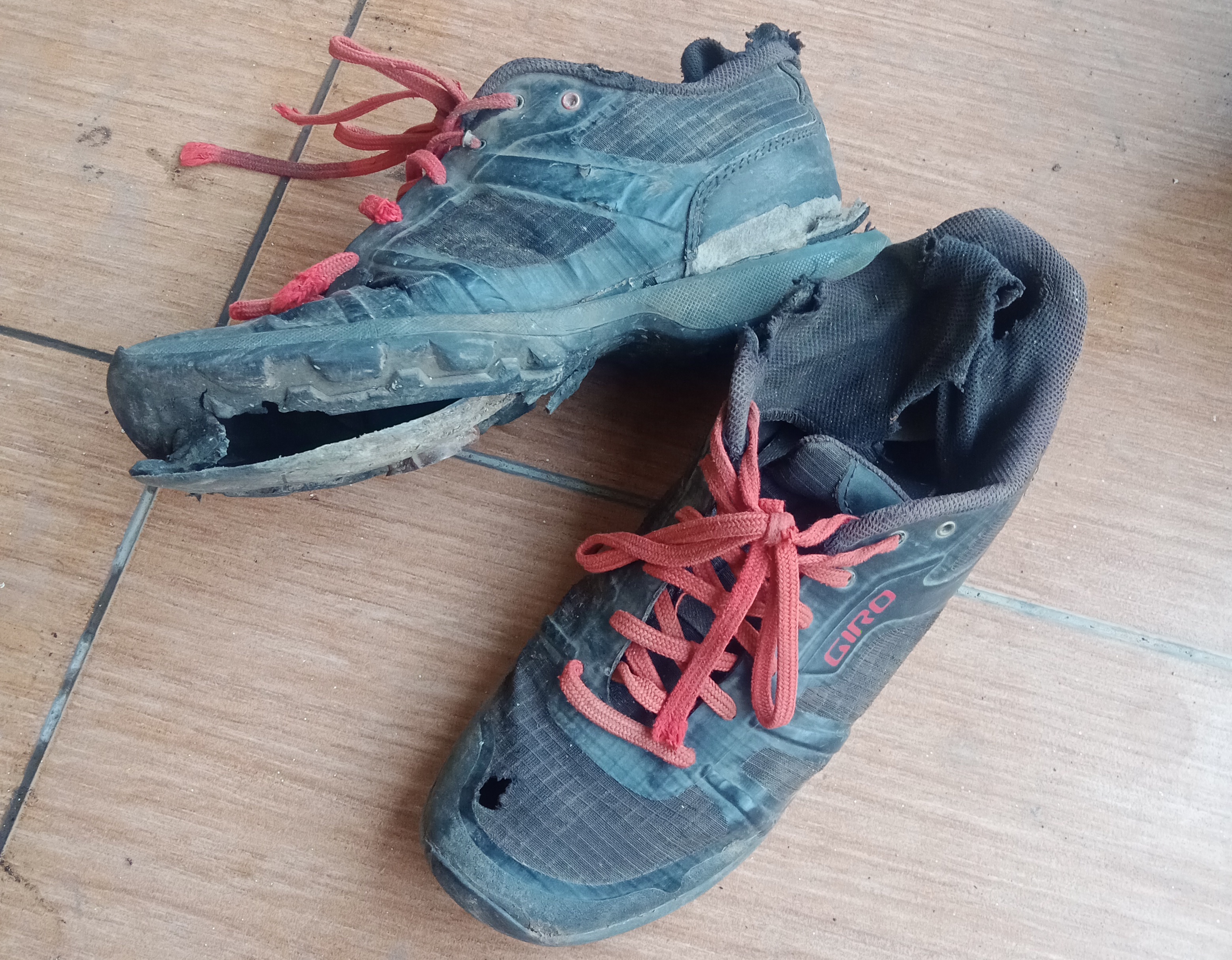
I had clip in bike shoes and I’m not sure they were necessary. Most other bikepackers just had good walking shoes. After 8 months these got binned in Bali, as they were in pieces.
Puffer Jacket
This was great. It packed up really small and was a warm layer. Mine was a cheap Primark one although I’d love a Rab down jacket but I’m not sure I could justify the cost of one.

Arm Warmers/Leg Warmers
I’d never tried these before the trip but liked them. They packed away really small and effectively gave an extra layer that I’d quickly throw on before descending the mountain passes. 

Thermals
I brought 2 thermal with me on the trip but probably could’ve managed with one. It was nice to have one for sleeping in and one for cycling in but I only wore both of them at the same time for a single night. Generally, it would be the last extra layer I’d go for when it was cold just because it was a pain to take on and off and I’d often get too warm wearing them.

Trekking Trousers
These were trousers with zips so you could wear them as shorts and ended up being really useful. These were good to put on whilst cycling when it got really cold as they acted as a windproof layer covering my legs. It was important to have a pair of long trousers with me for when I visited mosques and these were a good light option.

Hat, Gloves and Buff 
All more essential layers for when it got cold. The buff was also good when the sun was really strong or after soaked in water to breath through on the very dusty roads.

Waterproofs
I’m not sure the best solution for a waterproof jacket, I brought two, a lightweight cycling one and a large gortex jacket. The gortex jacket was quite bulky but was a great windproof layer that I could fit it over the top of the puffer jacket. The cycling jacket was great to quickly throw on if it rained or as an extra layer in the morning before the sun rose. I always felt the gortex jacket was taking up too much room but was still an important item to have.

Flip flops 
They were nice for camp in the evenings just to get out of the cycling shoes I’d worn all day. I think I’d prefer crocks as then I could cycle in them too when it was raining as it wasn’t nice wearing wet cycling shoes all day long.

Socks
I ended up buying lots of pairs along the way as they would get so dirty. I tried going without socks for a bit too but it wasn’t comfortable doing this all day.

Towel
I had a small microfiber towel which I really don’t like, but there’s no good replacement for them as they’re quick drying, lightweight and small.

Camping Gear

Tent
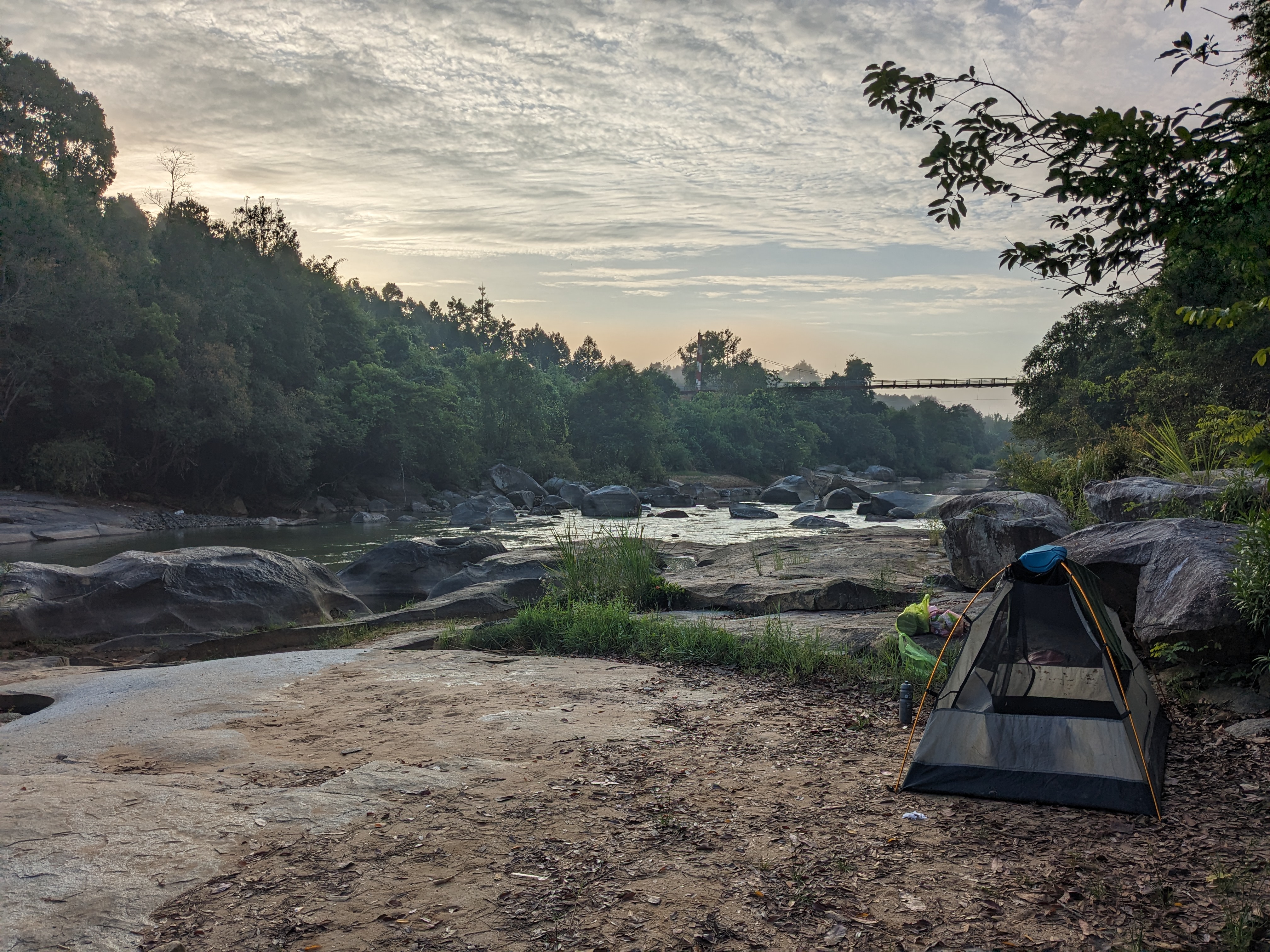
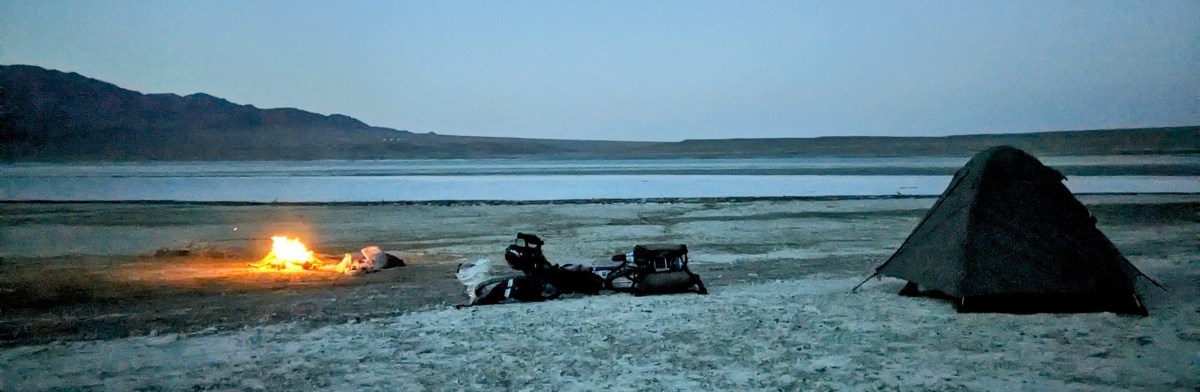
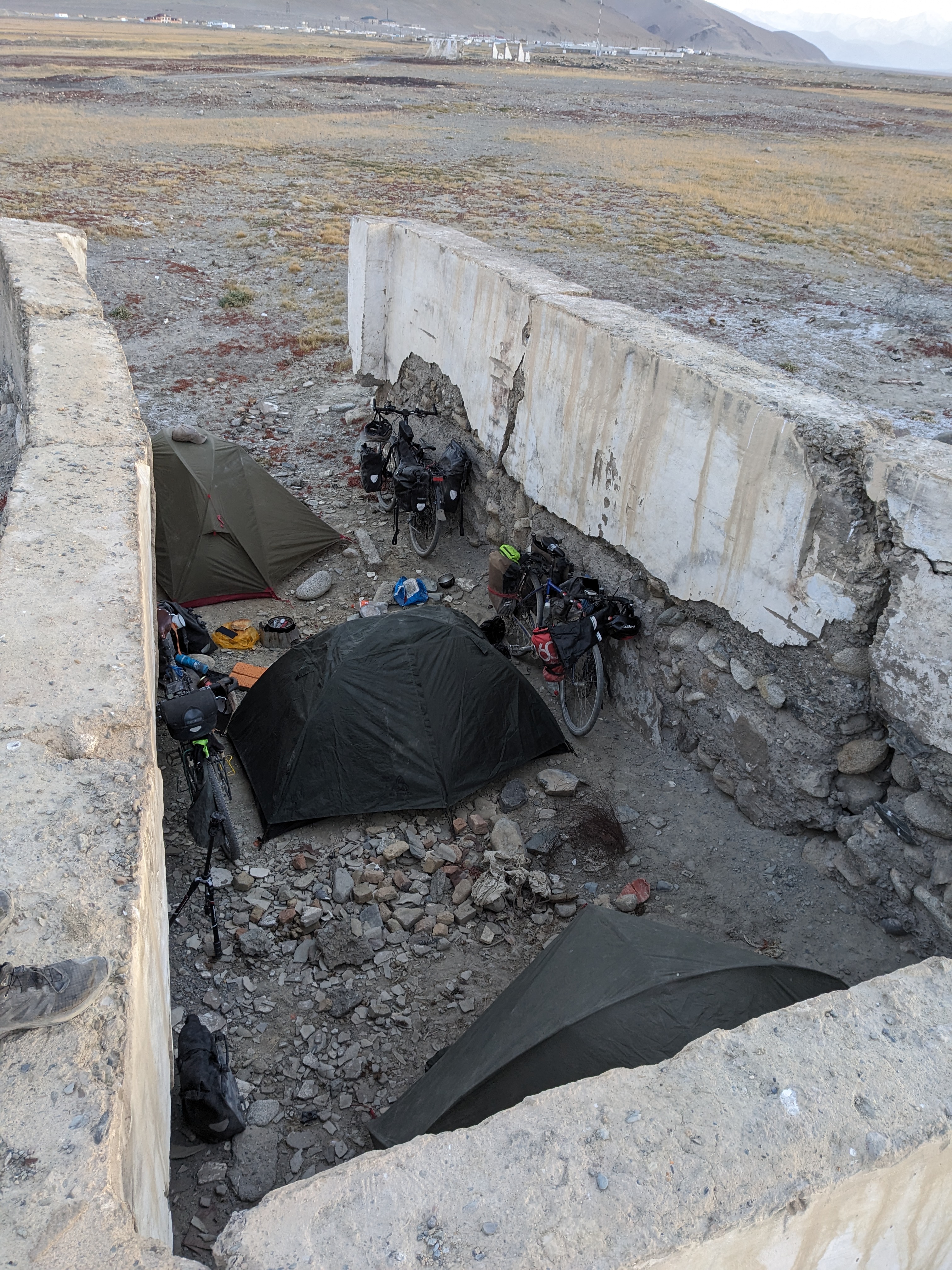
By the end of the trip, the tent was pretty wrecked. The pole had snapped and there were holes in the base material where ants could crawl in. Having said that however, I still have the tent with me and really liked it. It was a Trespass 2 man costing under £100 and weighed about 2kg. Having a 2 man tent was definitely worth it just for the extra room to store bags inside. It also had a removable outer waterproof layer which was really nice when sleeping in the heat as it kept you cooler with the air blowing through. Being freestanding was vital as I was often camping out on gravel or concrete so could set the tent up without needing to use the pegs.
Sleeping mat.
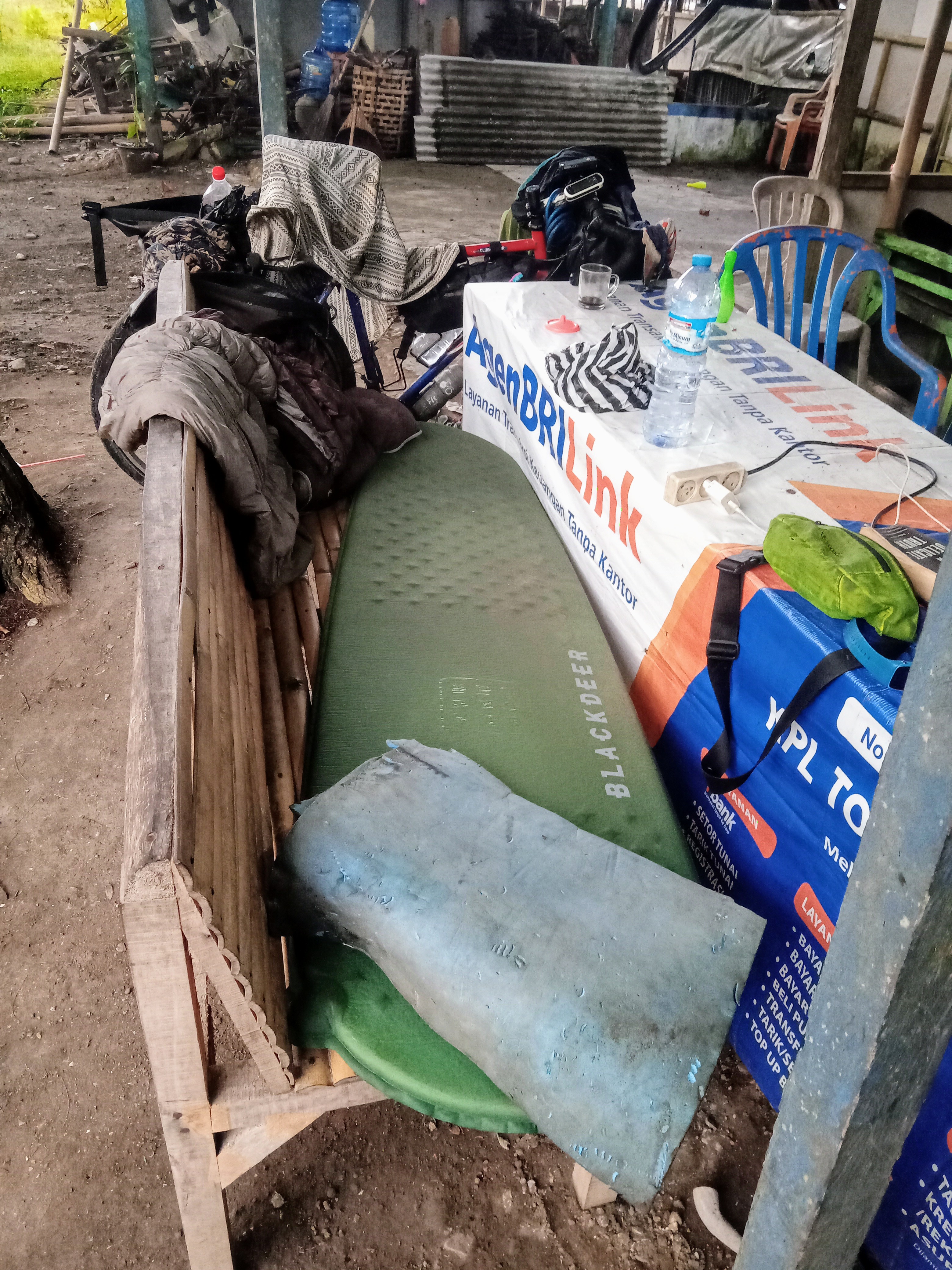
I made it through two sleeping mats on the trip.  The inner structure broke on the first mat, giving it a large bubble when inflated making it useless and so I got a new one in Bangkok. Both were just cheap ones and worked fine. They were both durable, never getting any punctured in them but I’ve heard lighter, more expensive ones puncture more easily. One problem was the cold from the ground would come up through the mat but after taking a foam mat for free from a hostel, this solved the problem. The foam mat was also great for just sitting on when cooking or using as a pillow so it stayed with me for the rest of the trip.

Sleeping bag
This was one of the fancier bits of kit I picked up before leaving, buying a down bag rated to -16 degrees. It was too warm most of the time but I was glad to have it for some cold nights. I wish I’d brought a sleeping bag liner to use when it was warm and also to stop the bag getting so dirty, as I was unable to wash the downs material whilst on the road. It also didn’t pack up too small but was a good balance between warmth, size and cost.

Cooking set
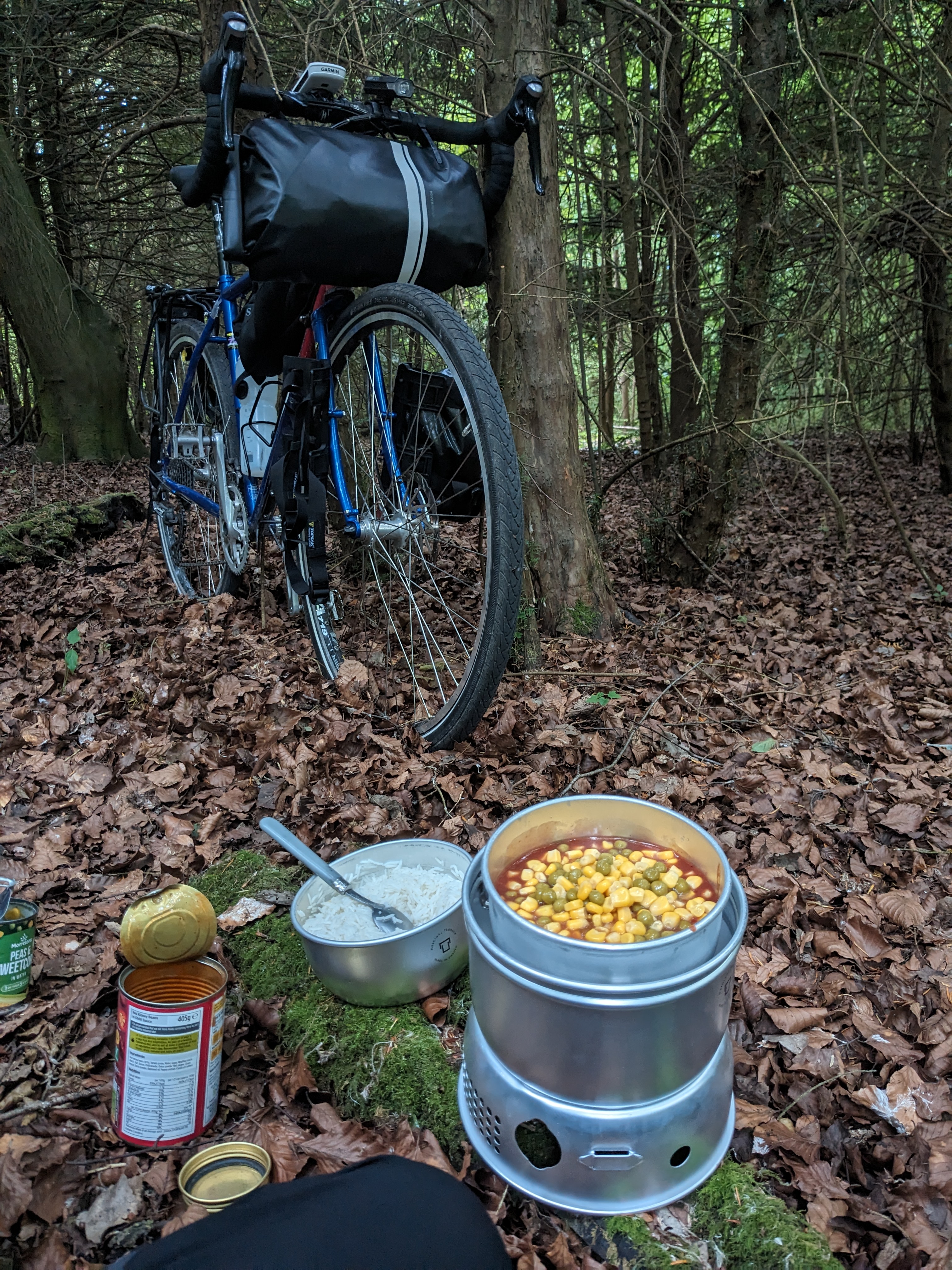
I went for an alcohol burning Trangia stove. This kit came with two bowls both 1L which were too small and I’d often need to make two bowls of pasta in the evenings. I think just one big pot would be better. I was able to find fuel everywhere occasionally resorting to burn paint thinner or hand sanitiser. This kit was cheaper than the petrol burning stoves but I think I’d upgrade to one of them in the future to allow me to use a larger pot and boil water faster as this kit struggled a bit in the cold.

The only bit of cutlery I brought was a spoon, which was all I needed. I wasn’t particularly doing complicated cooking, mostly just some pasta or rice then veg and some kind of protein source out a tin. To wash everything, I’d just scrub it with my hand under a tap or in a stream.
Swiss army knife
I mainly used the knife and tin opener when cooking but by the end of the trip I’d used every other feature it offered. 

Cigarette Lighters
I’d always carry two with me as always be leaving them out overnight, then it being too wet to light the stove the following morning. 

Water filter 
I could’ve survived through Central Asia without it, as in the villages we could find water and in the mountains the streams were so clear they seemed safe to drink. I used it frequently in South East Asia, filtering the tap water everywhere I was told it was unsafe to drink in order to save buying bottled water. Filtering the water took some time and effort, taking probably about 3mins to fill up a 2L bottle and just not bothering to filter anything that wasn’t already clear as this would just clog the filter.

Bike Tools and Spares

Inner tubes, puncture repair kit, tire levers and good pump
It was good having the puncture repair kit in addition to the spare tubes as it’s such a small kit and just gives you more redundancy if tubes burst.

Spare spokes
They’re so small and light I think it’s work carrying a few. I managed to snap two spokes on separate occasions when pushing my bike through branches in the forest. Also with all the extra weight on the bike it puts more pressure on the spokes so snapping one is more likely.

Gear cables, brake cable and brake pads
They’re all so small and light so defiantly worth bringing spares. I’d try to always have two sets of new brake pads as they were sometimes quite hard to find.

Bike Multitool
It’s a lightweight option for being able to adjust every bolt on the bike. Also good to have a chain tool and spoke wrench on it.

Cable ties, paracord, duct tape and super glue
Should be able to bodge anything back together for a bit with these.

Spare bolts
I was glad to have replacement bolts for everything on the bike. Especially the pannier racks as these were always coming loose.

Bike lock
It was hard to decide what sort of lock to choose. A D lock is probably overkill so I went for a decent combination cable lock. I reckon where the bike is left is more of a factor than what lock you use.

Chain lube and old tooth brush
For trying to clean everything and keep it running smooth.

Toiletries and First Aid

Toothbrush, Toothpaste and Dental floss
Good to keep them where you can reach it on the bike to save time in the mornings by brushing your teeth on the move.

Toilet paper
I’d grab this from public toilets or hostels.

Bar of soap
All I took for washing myself and clothes.

Bug spray
I really liked the one from 7eleven in South East Asia, it was strong and a nice small bottle.

Suncream
I found the Lidl factor 50+ kids waterproof one worked best and I’d only need to apply it every few days. I’d often buy suncream before leaving a country if I had any cash left over as it’s something small and expensive to spend it on.

Glasses, sunglasses and contact lenses
I just had 3 pairs of contact lenses in case the glasses broke to give me a few days to find somewhere to get them fixed. Luckily, I had no problems.

Sudocrem
This was about the only thing I used in the first aid kit. It can be used for almost anything minor that is likely to happen: burns, sunburn, bites, blisters, chafing and as an antiseptic for cleaning wounds.

Paracetamol
I think I took it once to help with altitude sickness but always good to have.

Spray plaster
I really like the stuff, just being able to clean a small wound and spray this over to cover it up. Then just regularly apply more layers to keep it covered. I never ended up using it though.

Tweezers/tick remover
This was used a few times getting ticks camping out in French forests. 

Bandages, plasters, steri strips and dressings
I took a selection of different sizes. I think it’s hard to know if you’ve overpacked for this as you don’t expect to or want to use any of it and fortunately I didn’t.

Electronics

Bike Computer
This was very much a love hate relationship. The first problems occurred leaving Europe and losing all maps as it only had the one continent downloaded. Eventually, I found a computer to borrow and load the rest of the countries I needed. Next, I’d have issues with it not charging or just freezing. I don’t think it was designed to be left on for 10 hours a day every day. When it did work, it was great though being able to see the roads, see the gradients to know the size of all the hills coming up and record everything for Strava without burning through phone battery.

Phone
Mostly just used for researching places and planning a route along with taking photos.

Waterproof phone case
This was really great, just one of those pouches to put the phone in and seal up. I’d often leave my phone in it just to give it some extra protection from either the dust or rain. Then pretty much always use it after having to buy a new phone when mine became water damaged.

Headphones
I went through a few pairs of cheap headphones but it was really nice to be able to listen to music or podcasts during dull days of riding.

Bike Lights
I didn’t use them that often but glad to have.

Head Torch
Really useful. I’d often wear it cycling at night just to be more visible and be able to look to the side of the road for camp spots. It was also used lots when I was staying in hostels to find stuff in the dark rooms. The red light feature was nice too to use when reading before bed.

Power Banks
I took two large power banks with me and could go about two weeks before I needed to plug them in. I didn’t carry a solar panel as it worked out cheaper to just take an extra power bank. One Problem I had was that my older power bank just took too long to charge and so if it was fully out of juice it wouldn’t charge up completely overnight.

Sim tool
A safety pin worked fine but I’d always end up losing this tiny tool when I actually needed it.

Charging cables
Definitely worth having two of each type as they were often breaking, I think from getting dirt inside.

This has been quite a long post, but it has been nice to reflect on the kit as I begin planning the next trip. I’m sure I’ve forgotten to include a few obvious things from the list, writing it 4 months later from memory. The truth is the gear really doesn’t matter, anything can be bought whilst on the road and if anything fails, this only adds to the adventure.
Final Thoughts

Here’s some numbers from the trip I’ve calculated in an attempt to get the maths brain working again.

  • Total days: 248
  • Total distance: 22,000km (probably slightly more as I didn’t record everything) 
  • Total elevation: 654km
  • Longest day: 189.93km
  • Biggest elevation in one day: 3074m
  • Total money spent: £4275.72
  • Average spent per day: £17.24 (this one is pretty interesting, as I’m spending more now just on rent)
  • Total spent of flights: £636.30 (£154.96 of that spent on extra luggage for the bike)
  • ATM fees: £24 (I thought this would be more, but every time I’d get charged it just felt like throwing money away)
  • Total spent in bike shops on the trip: £311 

It’s now been 2 months since I landed in Sydney and finished cycling across Eurasia. I finally have some routine and consistency in my life now I’m working in Darwin. So here are some reflections I noted down towards the end and after the trip.

Firstly, before I started, I wasn’t expecting to enjoy the trip as much as I did and thought it would be incredibly difficult. The truth is I found life on the road far easier than university life, I think just because there was no stress or expectations on me day to day.

I also didn’t find the physical challenge that hard, taking the first few weeks slow to build up the mileage definitely helped. Every time I’d head into some hills or mountains after just riding on the flat, it would be quite the shock and would take a few days to adapt to the increased energy expenditure. The only times I really felt exhausted were after some of the big days cycling for over 8 hours and I’d be too exhausted to cook, just wanting to quickly get some food in and sleep.

The main source of stress and uncertainty came each evening when finding somewhere to sleep. However, I really enjoyed the puzzle of searching for a camp spot and felt a weird sense of safety once I’d actually be in my tent compared to sat just outside of it.

Furthermore, I’d feel quite vulnerable when I wasn’t with my bike, such as walking around cities when staying somewhere non touristy. I think this is because with the bike I had a clear story as to why I was passing through a place.

Almost every city didn’t really do it for me and I’d be wishing I was back out in the countryside one I made it to built up areas. The exceptions to this were Istanbul and Kuala Lumpur. Istanbul really felt at the centre of the world, somewhere which naturally grew into a mega city and my first experience of Asia. Kuala Lumpur had a European familiarity to it and was somewhere I felt I could live. 

I didn’t really visit any of the cities in Europe, then through Central Asia they all felt sterile with these ultra modern building that didn’t reflect the rest of the country. Most of the cities in South East Asia were just huge concrete sprawls with little green space, an intensity that I couldn’t get away from and difficult to walk around.

On the trip, I was just treating food as fuel, eating as much as I could and most of the time just whatever was cheap. Anything would taste good when you’re burning that many calories a day. I now still feel a bit disconnected from food, still just eating for fuel and not really caring how things taste. It also took me a few weeks after I finished to slow down the amount of food I was eating. Over this period, I’d be just piling up the food on my plate, then feeling almost ill in the process of eating it.

Having said all that, some of my best memories from the trip were sharing food with the locals, such as a lamb stew in Georgia or sitting on the floor eating the spiciest meal I’ve ever had in Indonesia. 

These were probably some of the most interesting parts of the trip, being taken into the locals homes and catching a glimpse into how they live. It makes you question almost everything, asking what’s really necessary in life when you see these people living without things I’d have thought were essential such as running water in their homes. 

These are also some examples of how friendly and generous people were to me on the trip and at first found it hard accepting their kindness. The trip can also be viewed as an exercise in risk. For example, weighing up the risk of camping in a certain location or trusting someone who is offering help. It was also a new experience putting trust in people I knew I’d probably never see again. Fortunately, I didn’t really have any bad experience with people.

The small amount of people I’d interact with would really make a difference to how I viewed an entire country. Having one bad exchange, for example thinking someone overcharged me in a restaurant, really shaped my views of a place and I’d be quite suspicious of everyone for the next few days. The opposite was also true, taking just a few kind people to have a great experience in an entire country. 

I never felt I went to any unsafe countries and also there were very few places I actually felt unsafe. But I don’t think the idea of places being categorised as “safe” or “dangerous” is true. With there be parts of Nottingham I’d feel uncomfortable walking through alone at night but I wouldn’t say the city is unsafe.

I now appreciate how much easier the trip was for me, holding two strong passports compared to someone with a weaker passport requiring far more visas. I only needed three visas for the whole trip.

The world is also just constantly changing. For example, the Tajikistan-Kyrgyzstan border only opened up whilst I was on the road, allowing me to adapt my plans. During the trip, I really enjoyed following the geopolitics of it all and learning about the histories of all these places and borders.

It’s been interesting talking to people about my trip. For probably the first month I was almost embarrassed to say what I was doing as actually making it to Australia felt so far away. Then through central Asia, it seemed like such a bubble with almost all the travellers I met being on bikes doing huge trips across the world all looking like we hadn’t had a haircut or shave in years. In South East Asia, I felt quite out of place compared to the backpackers, and would often get asked why I was doing it. I never really had a good answer for the question and it was like they couldn’t understand doing it just because I enjoyed it. 

I regret not going through China. I didn’t because I never really looked into getting the visa just assuming it was too hard and also thought I’d need to get to Australia by February (I’d lined up a job which ended up falling through). Having this deadline also meant that I never really took any long breaks. I also wished I’d tried to line up a few WorkAways along the way just to break up the journey and have a few different experiences.

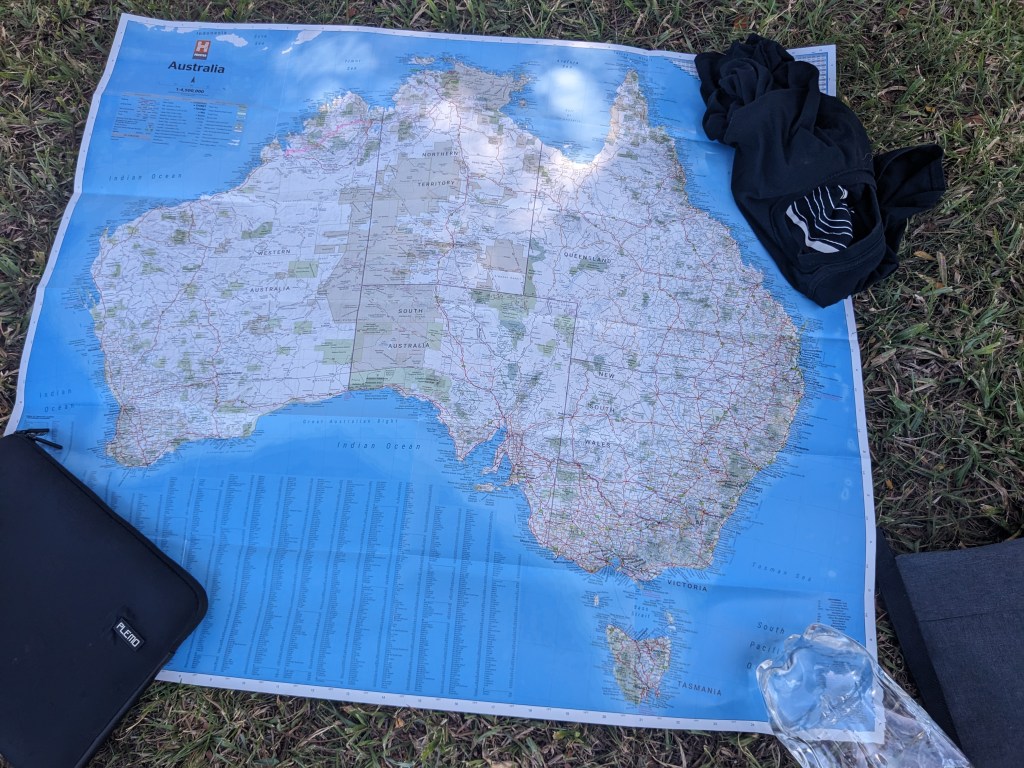
I never really felt lonely on the trip. I enjoyed the feeling of being truly alone when camping out in the remote regions of central Asia and want to go back as there’s more of Uzbekistan and the Pamir mountains I want to explore. There’s just other places I want to go first before returning and I’ve started planning the next trip: exploring the Australian continent. 

Java

The ferry arrived in the town of Merak on Java after dark. Having managed to get some sleep on the boat, I felt pretty energised and decided to ride into the night to escape the port town and reduce the riding time to Jakarta the following day.

Java, though smaller than Britain, has a population of 151,600,000, roughly the same as Russia, making its population density higher than Singapore. This high density made wild camping a challenge, as I often struggled to find empty flat land each night, leading to some interesting camp spots. Fortunately that night, I stumbled upon a perfect abandoned building in a field and set up my tent.

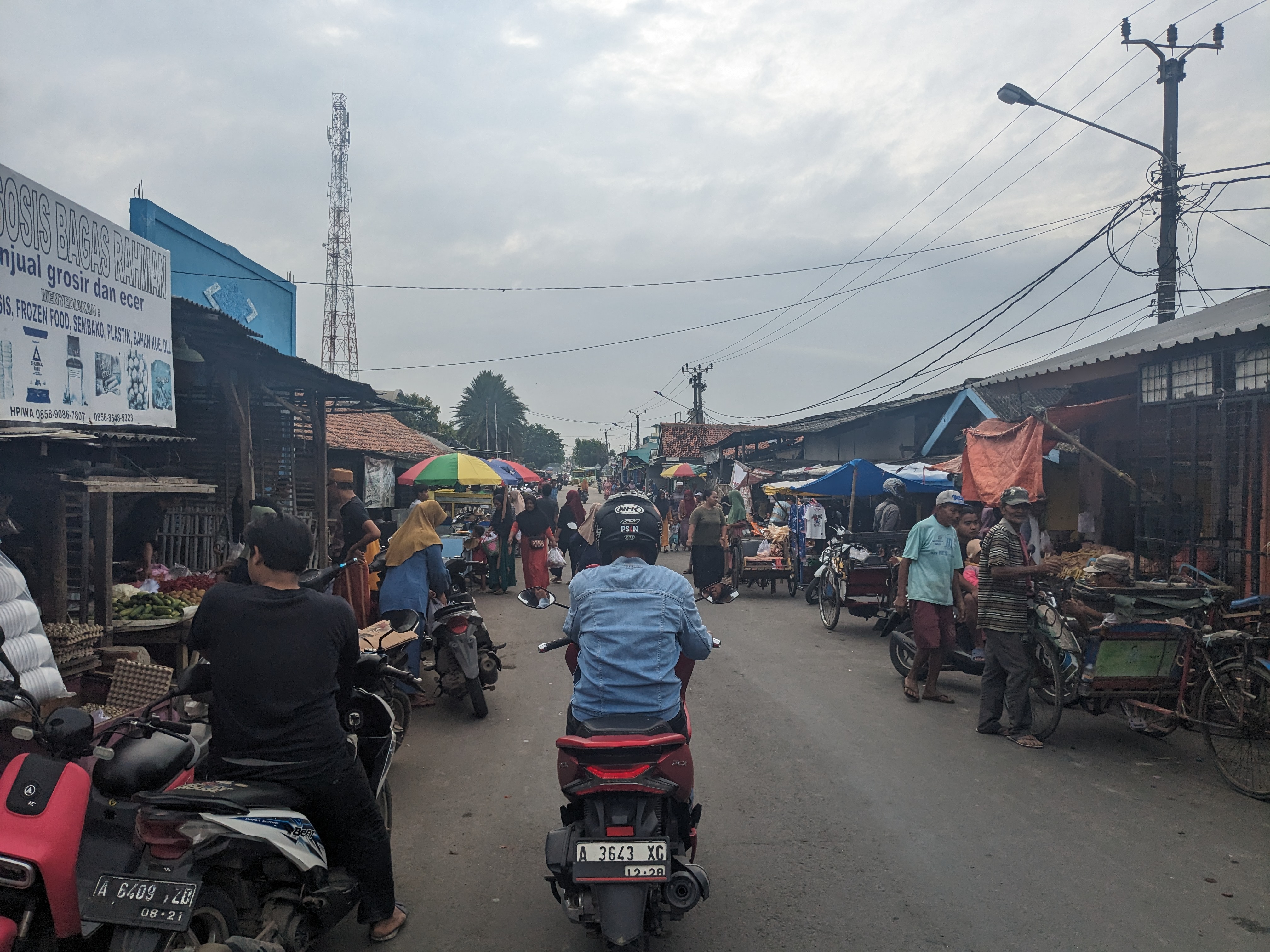
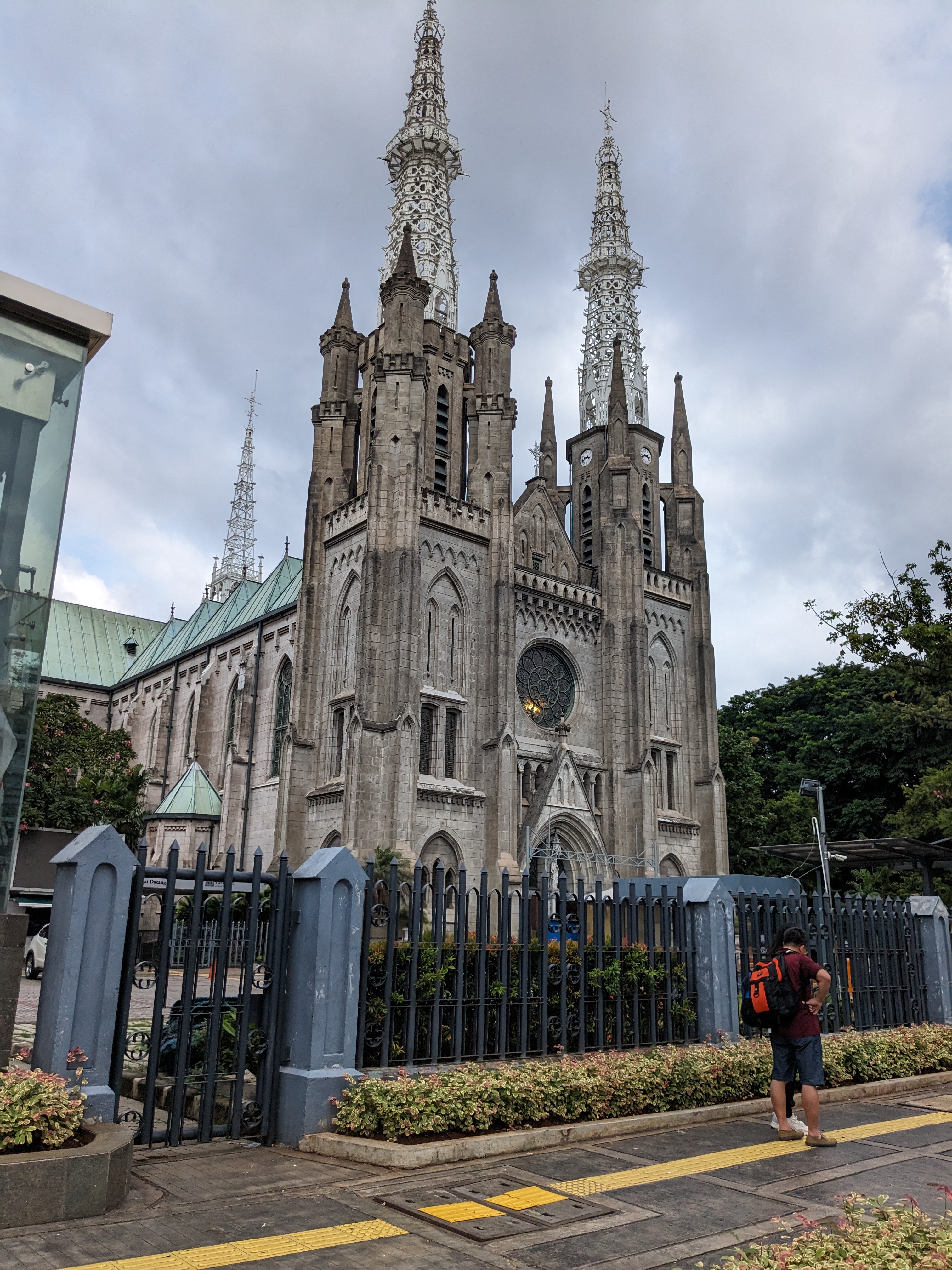
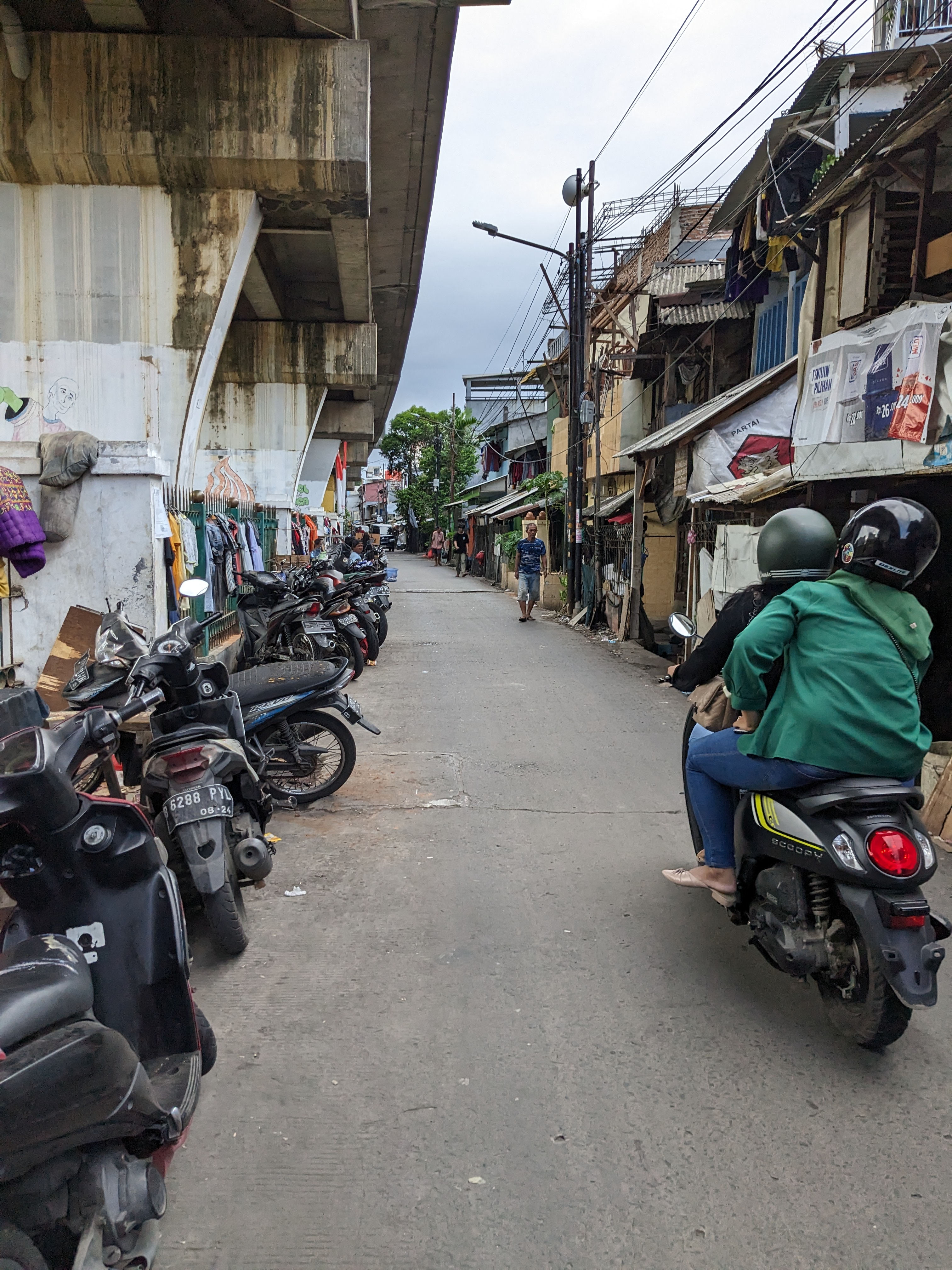
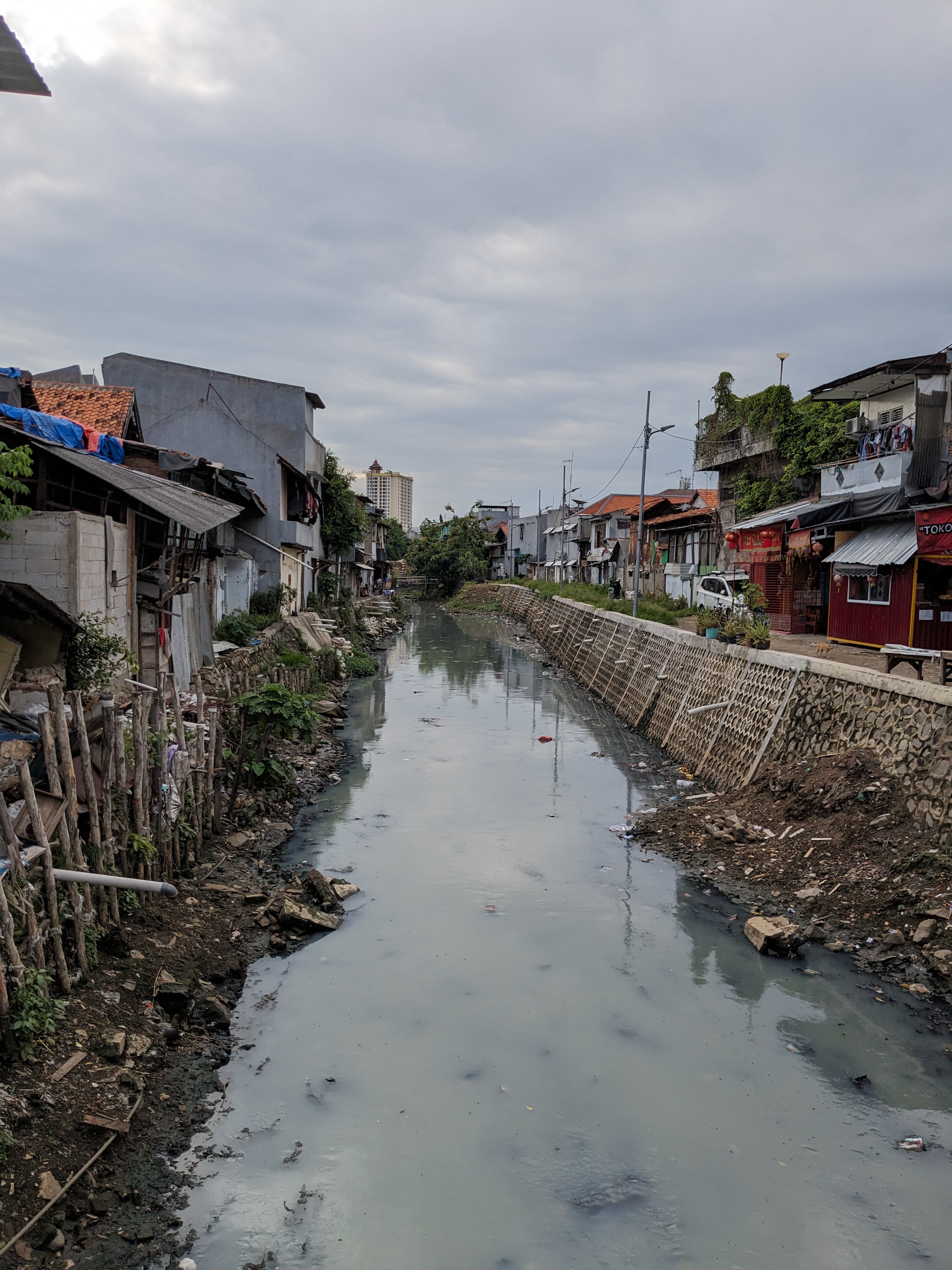
The ride into Jakarta was a few hours along very busy roads. The city felt overwhelmingly crowded but wasn’t too touristy. Walking around was quite challenging due to few pavements and constant streams of motorbikes on the roads. Additionally, the food was about double the price of what I’d been paying the previous day.

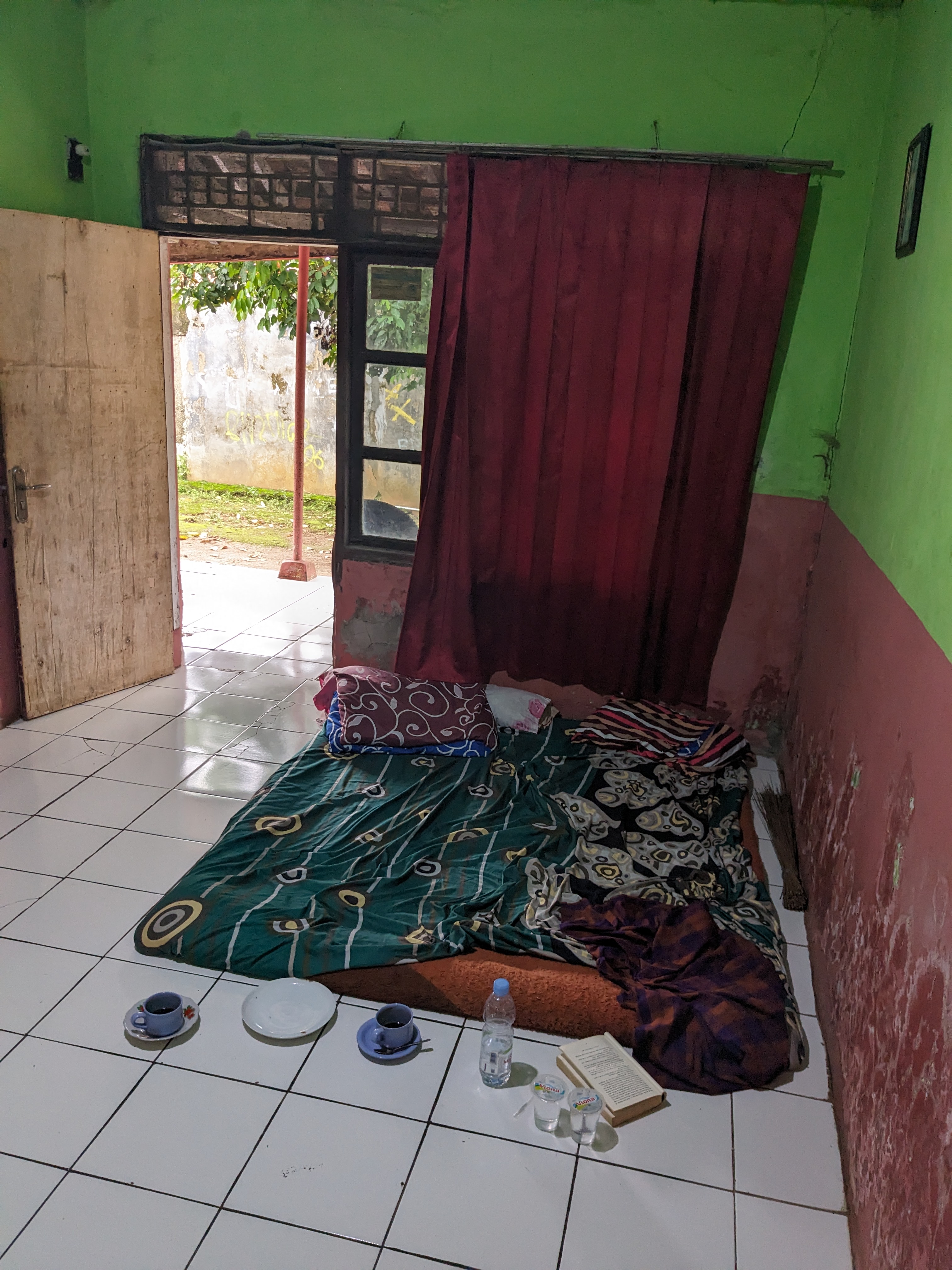
Escaping the city proved surprisingly easy with unexpected bike paths. The rest of the day was spent riding along the same busy road, and by afternoon, I was feeling exhausted from the constant traffic noise paired with the fumes from trucks coating me in a layer of dirt. As evening approached, the rain started again, and I sought shelter in a restaurant. The owner, upon learning I was camping, kindly took me to her home to shower and then to her father’s house to stay. Her father, who spoke some English, shared stories of his time as a driver for international businessmen in Jakarta and Saudi Arabia. It was a fascinating glimpse into their lives, noticing how sparsely furnished their homes were, with beds just being mats on the floor.

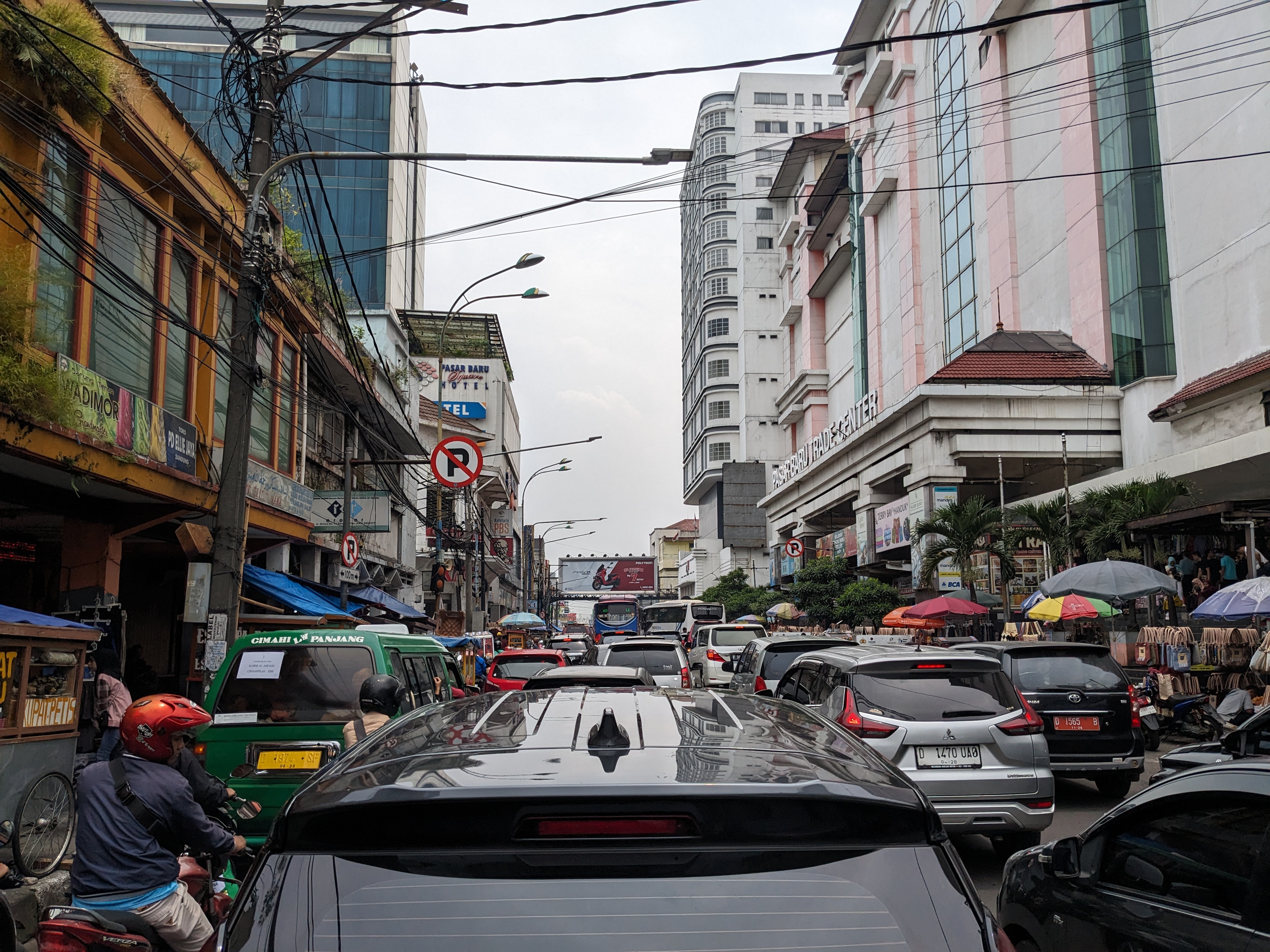
The next morning, we shared breakfast, eating goreng, which translates literally to fried and is a mixture of various deep-fried doughs, mostly tasting like doughnuts. Returning to the road, I continued towards Java’s south coast, heading uphill to cross the highlands in the centre of the island. This involved passing through the busy city of Bandung, stopping to enjoy some local coffee.

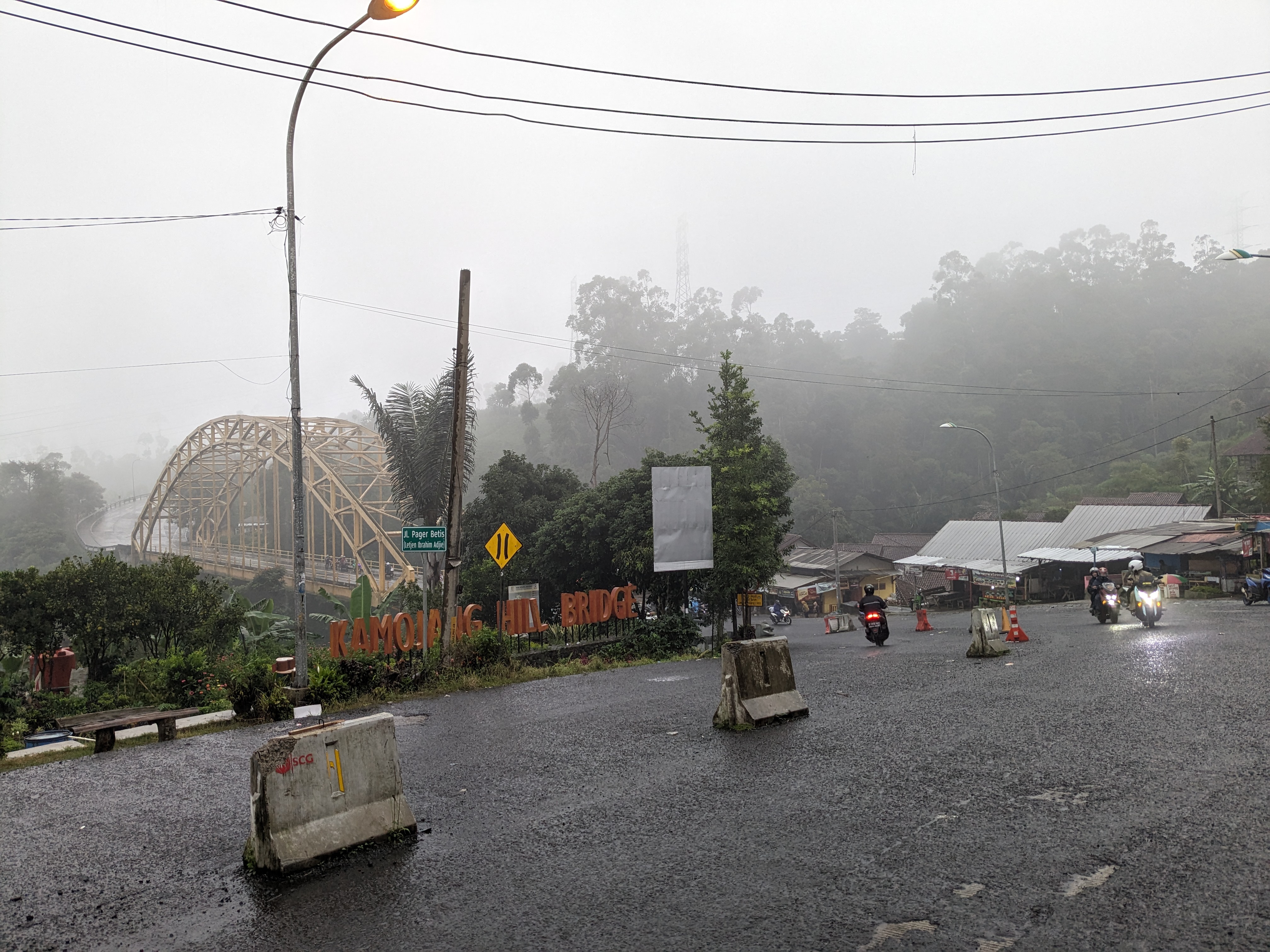
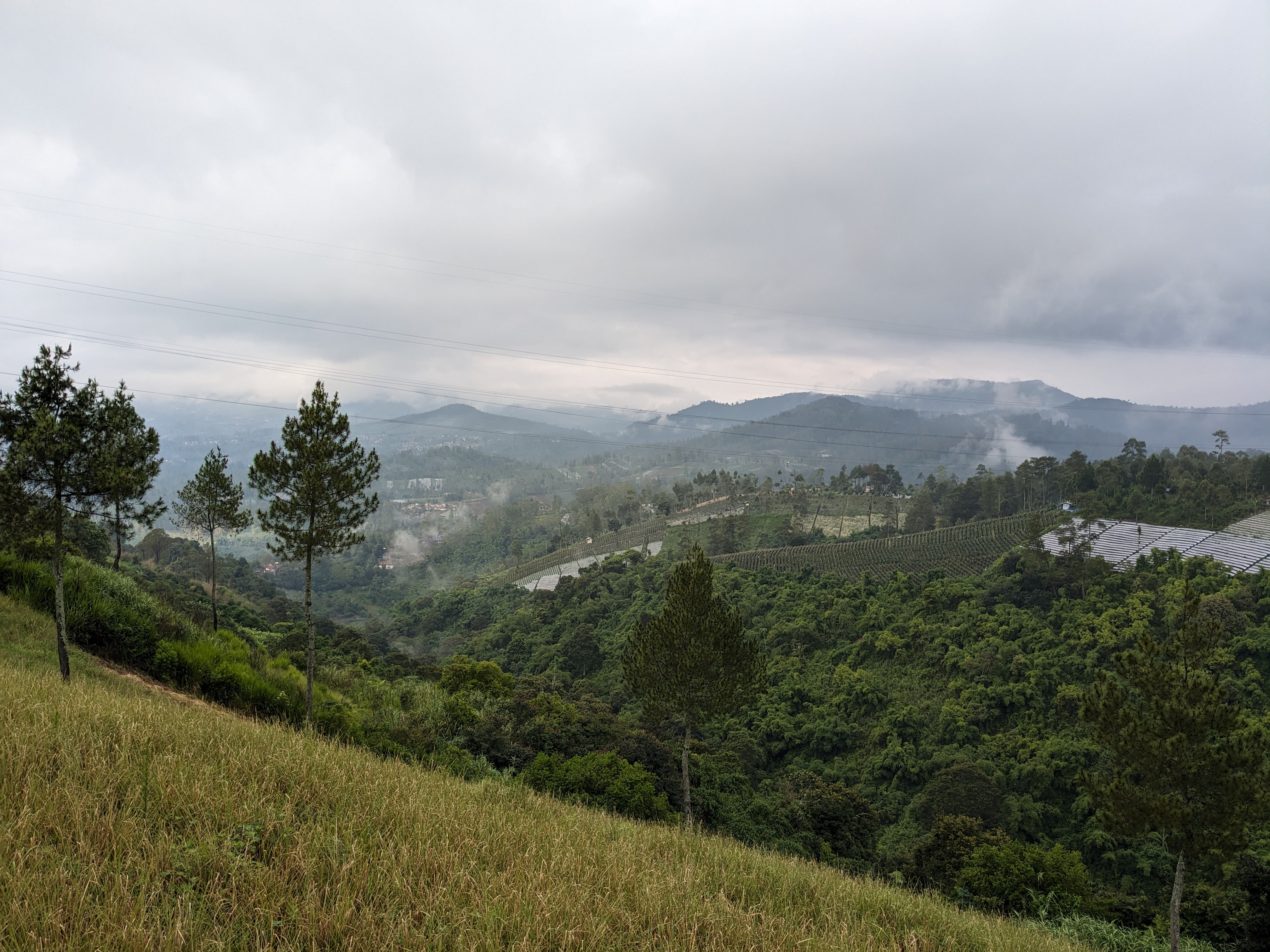
The road became steeper toward the summit, and I ended up mostly pushing my bike along a very narrow, quiet road winding through the jungle. From the top, there was a beautiful view of the valley below, followed by a great descent through small villages.

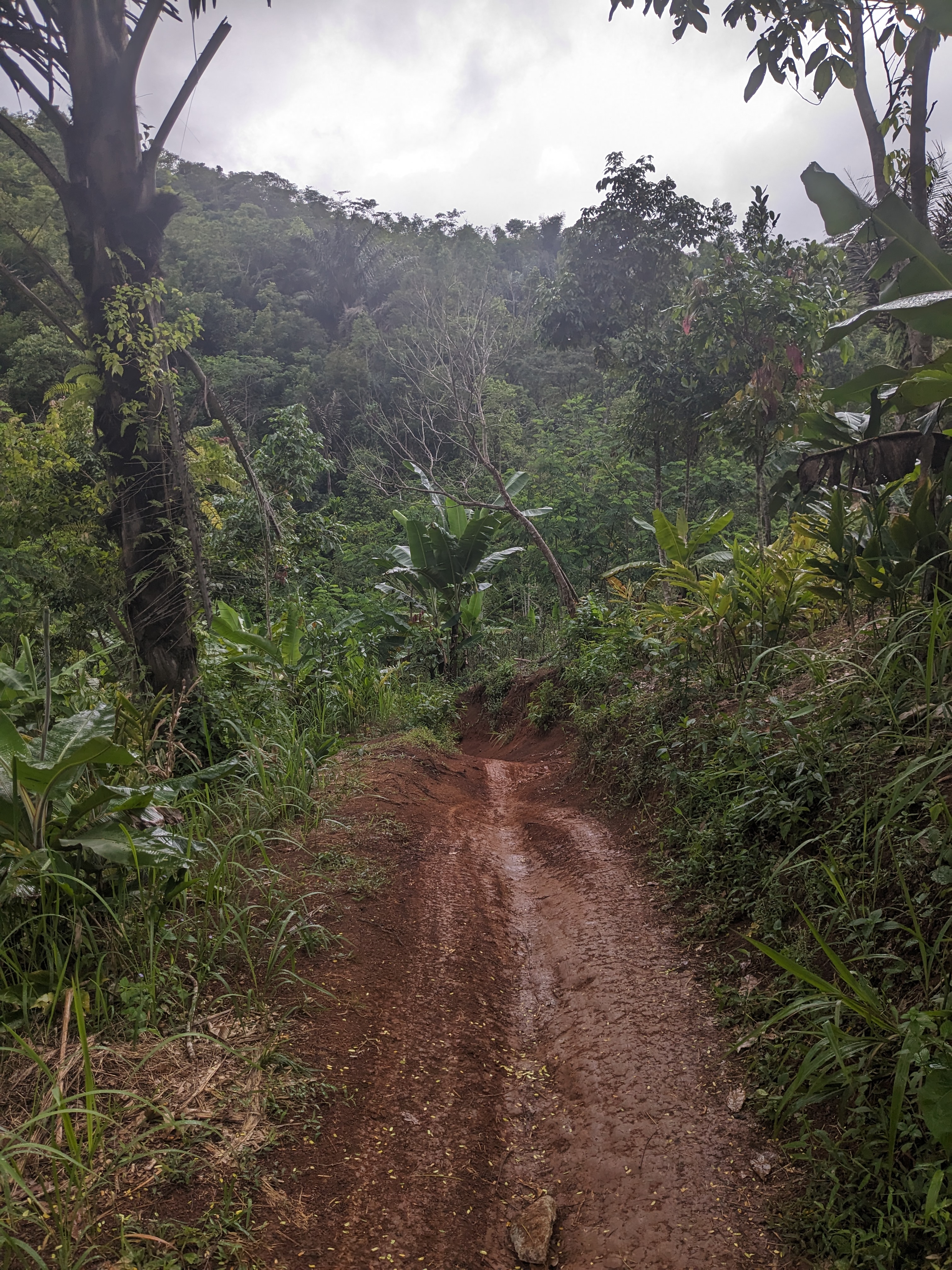
However, the road gradually worsened, and the route I had planned took me down some very questionable tracks, some of which were unrideable due to steepness and mud. Then the rain began, heavy enough to soak me through. Eventually, I found a small hut where I slept, exhausted from the hills and tough conditions.

The next morning, my phone wasn’t working, likely due to getting too wet. I ended up buying a cheap second-hand one (with quite a disappointing camera) from a phone shop and checking into a hostel by the coast for some much needed rest, trying to plan out my final 15 days of the trip.

I had considered taking a bus part of the way, as cycling the entire remaining 1000km was ambitious. It was also going to be ramadan in 10 days, something I was interested in experiencing but didn’t fancy having too many days on the bike where I would be unable to eat or drink during daylight. However, in the end, I decided to go for it and ride the whole way, knowing it would be tough but a good way to finish the trip.

The next day brought some of the worst rain I’d ever witnessed. Completely soaked, I rushed to a restaurant for shelter, and despite eating an hour before, ordered another meal. Sitting inside with the owners, we witnessed lightning strike a telephone pole on the other side of the street, a reminder of the power of mother nature.
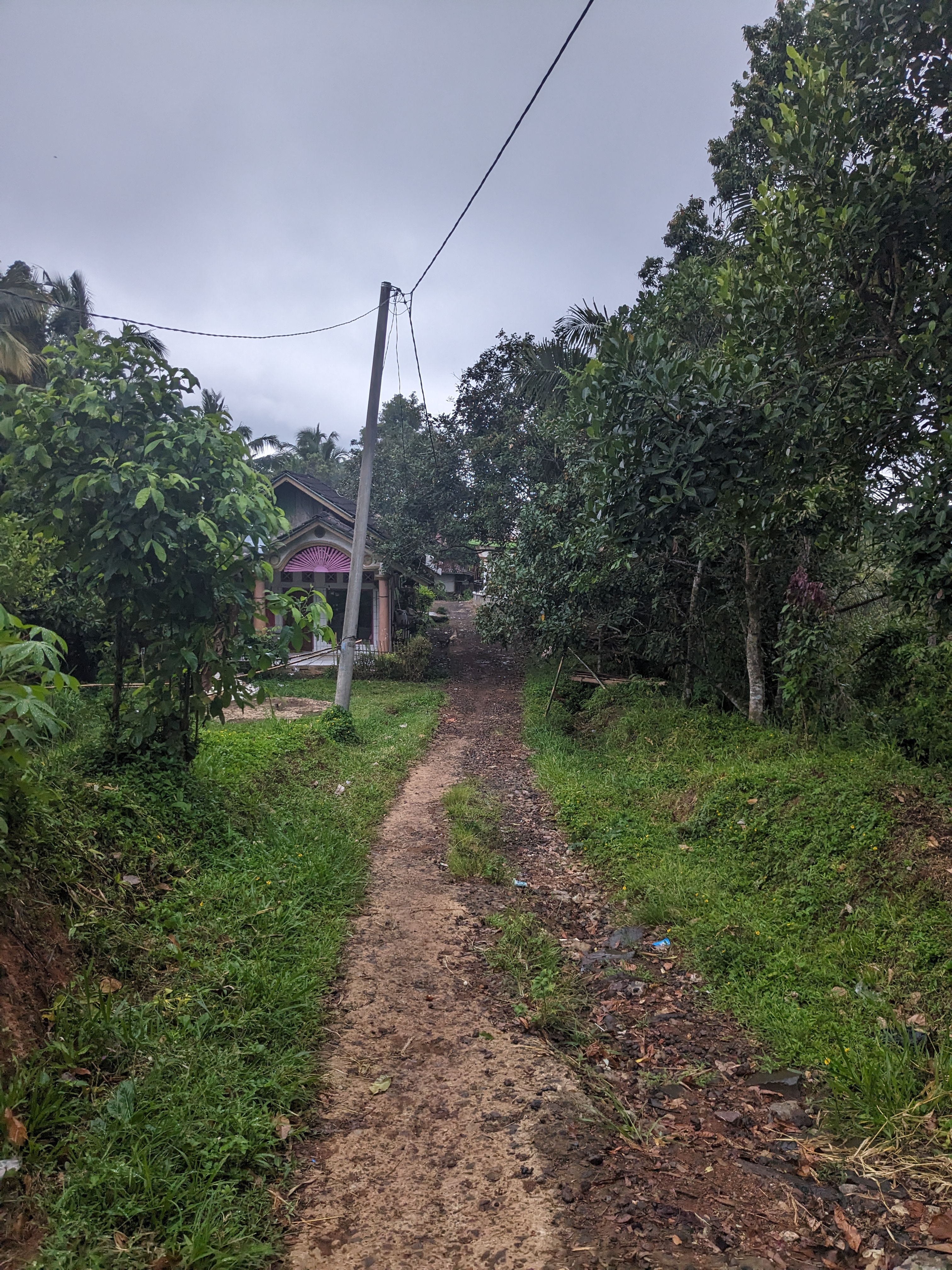
After a few hours I left and after riding a little further, found a sleeping spot in a park. The restaurant owners, three-generations of a family, let me stay on a bench. The father then got me to pick his lottery numbers and I guess I did an alright job as I got a message the following week from the daughter asking me to pick the numbers again.

Next stop: Yogyakarta, a beautiful city and the cultural centre of Java. It had a European feel with a busy high street and Western-style shops.

To help manage the hot humid weather, I drank lots of the local iced tea costing just 15p for a large cup. While eating outside a shop, a local school teacher struck up a conversation and later returned with a large bag of clothes and a pair of shoes for me. I accepted a t-shirt and a pair of shorts and it was clear he thought my clothes weren’t looking too great, which he was probably correct about.

That night, whilst searching for somewhere to sleep, a kind man took me to a 24hr Warung, which are a bit of a mix between a cafe and restaurant. After he spoke to his friend the owner, I was taken to a back room where they kindly offered me a bed for the night along with a shower.

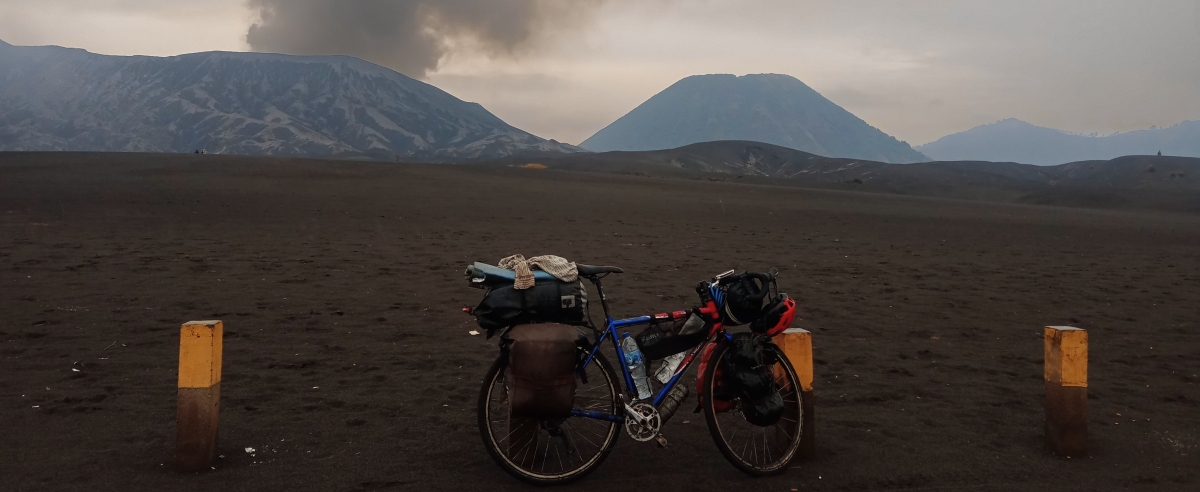
Heading east, I reached the lower slopes of the infamous Mt. Bromo, an active volcano. The climb was one of the toughest of the trip taking over 4 hours to complete, with steep inclines requiring lots of pushing my bike and I was under a bit of time pressure wanting to camp out on the top for sunrise.

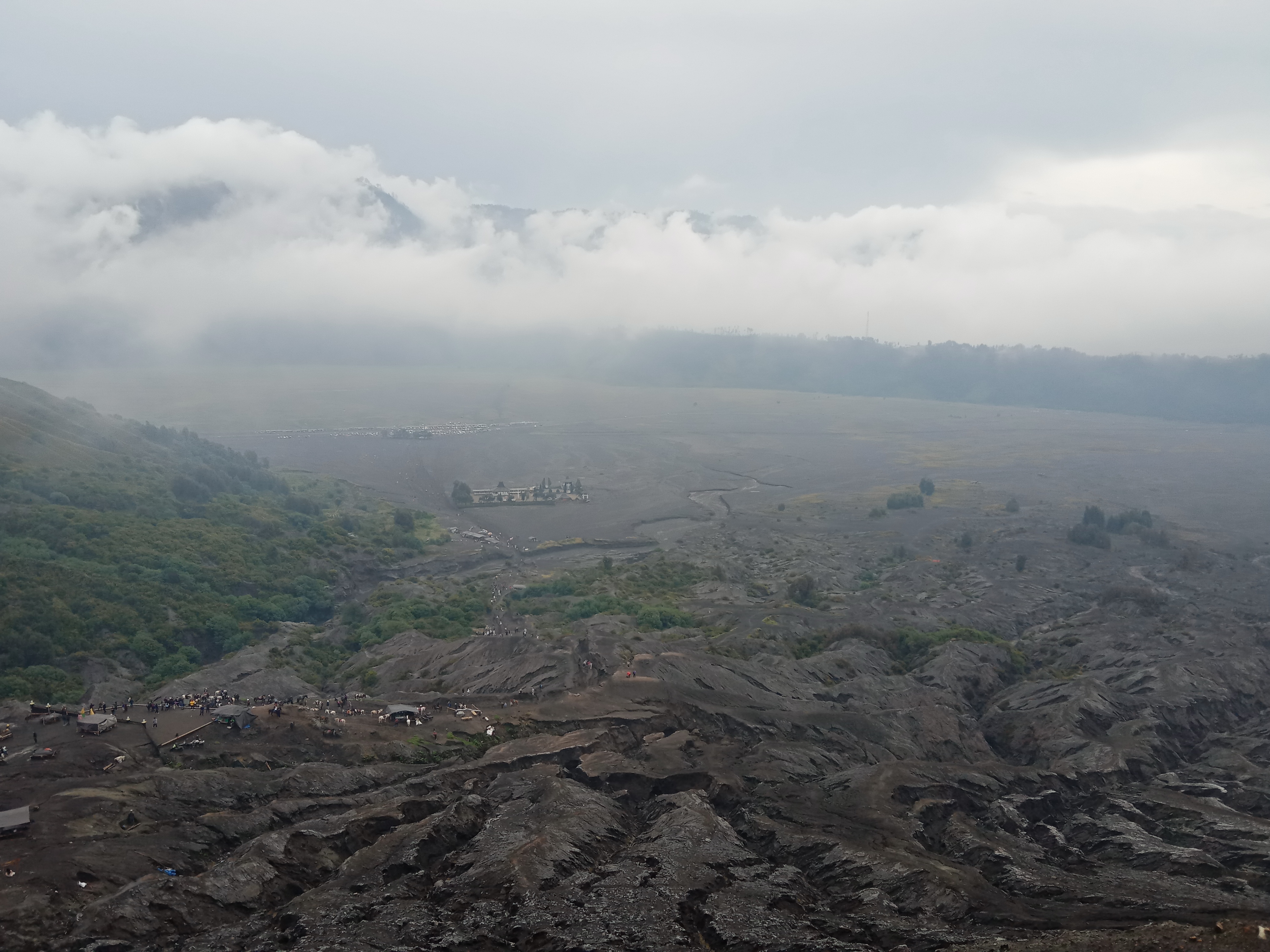
Waking up early, I was greeted with thick cloud cover and had a short ride across the black volcanic sand towards the base of the crater. Climbing up in order to look down into the volcano, I was definitely glad the wind was blowing the fumes away from me and there was a strong sulphur smell in the air. It was an amazing experience to look down into the crater with the mystery of not knowing what was below, due to the volcanic gases rising up.

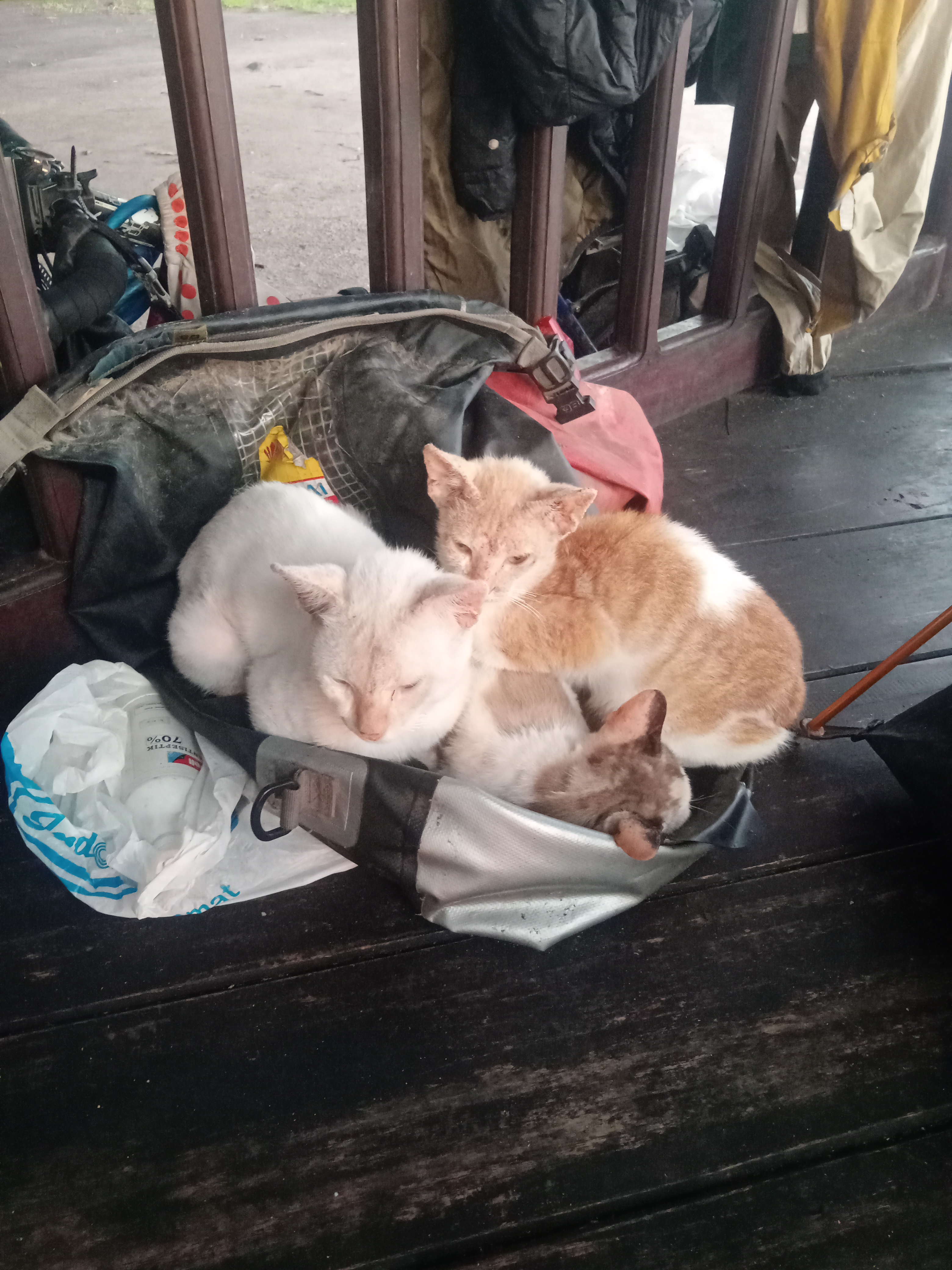
After an easy descent to the coast, I spent a night sleeping at a beach with three cats for company.

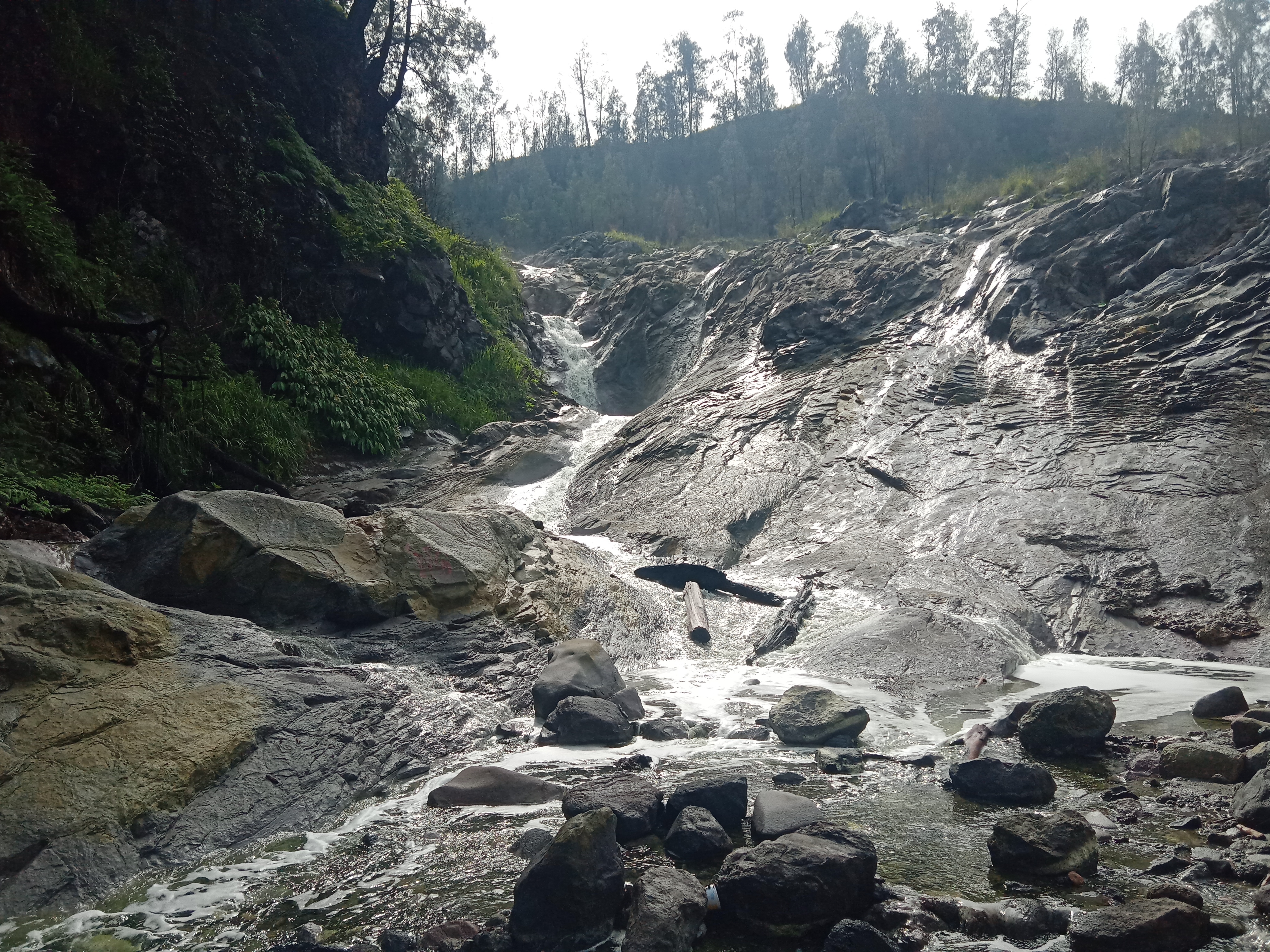
Now, I had to climb Mt. Ijen before reaching Bali. This was another tough climb with lots of rain on the way up. Near the top, I encountered a beautiful waterfall and stream with bright green water, a result of its acidity.

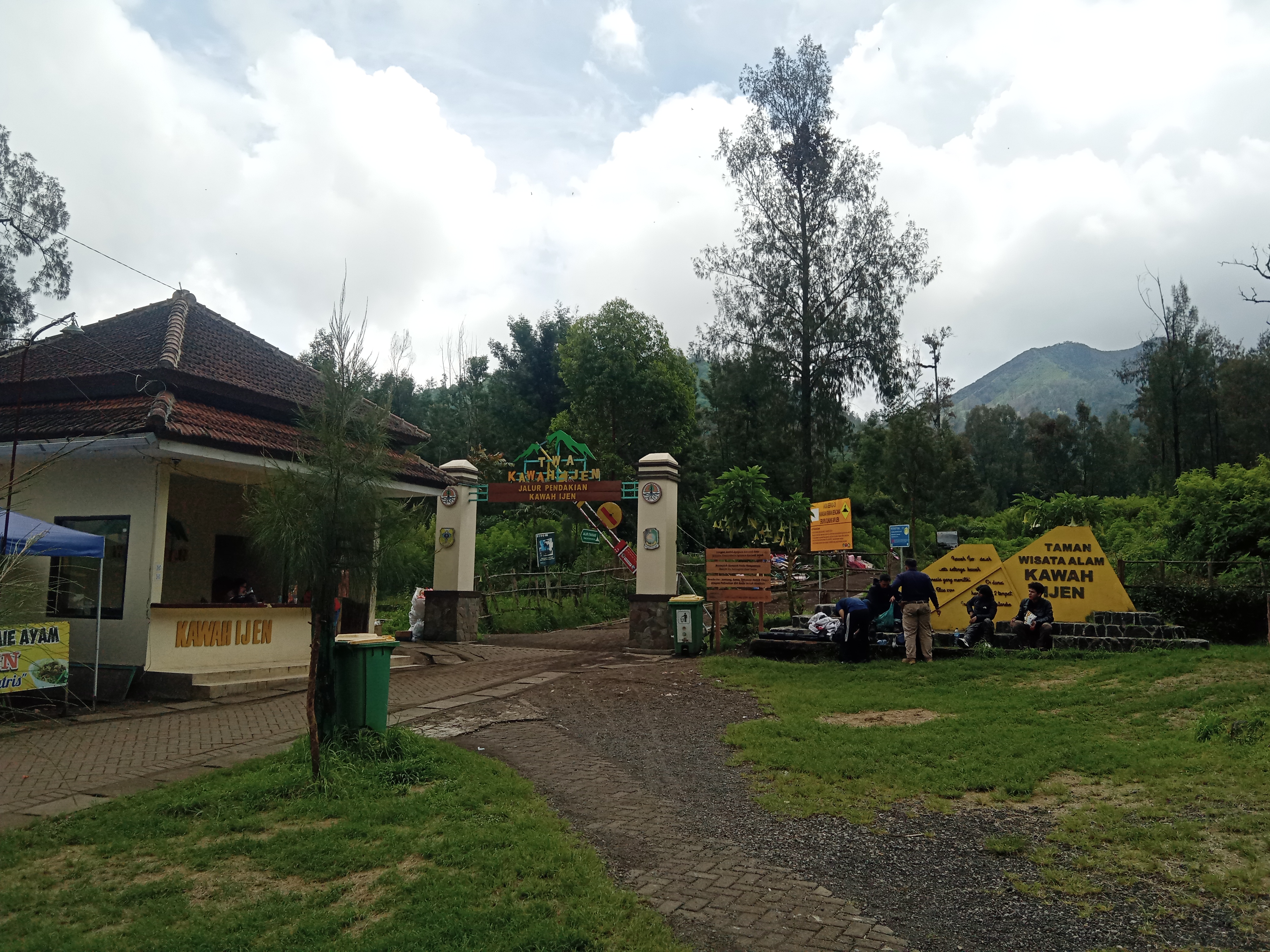
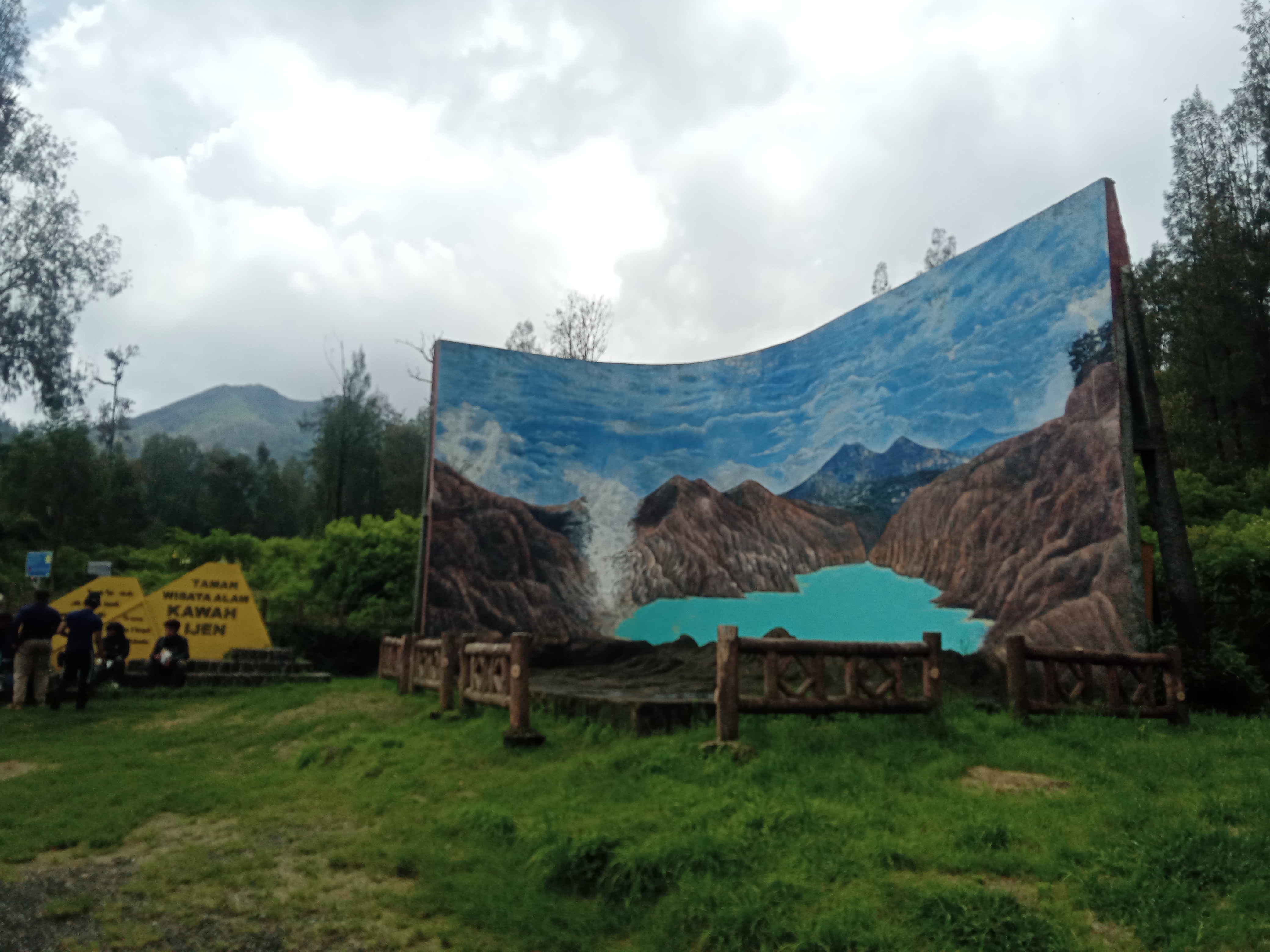
Arriving at the official national park section, I was disappointed to find I couldn’t buy a ticket without a doctor’s note certifying my fitness. It was quite clear I wasn’t going to change the ticket seller’s mind to let me walk the last 2km to the summit and see the volcanic lake. This really annoyed me and made me realise I didn’t truly appreciate the wilderness of central Asia where the incredible landscapes hadn’t been turned into a tourist attraction.

Frustrated, I descended to the ferry port on the east of Java, taking the boat to Bali.

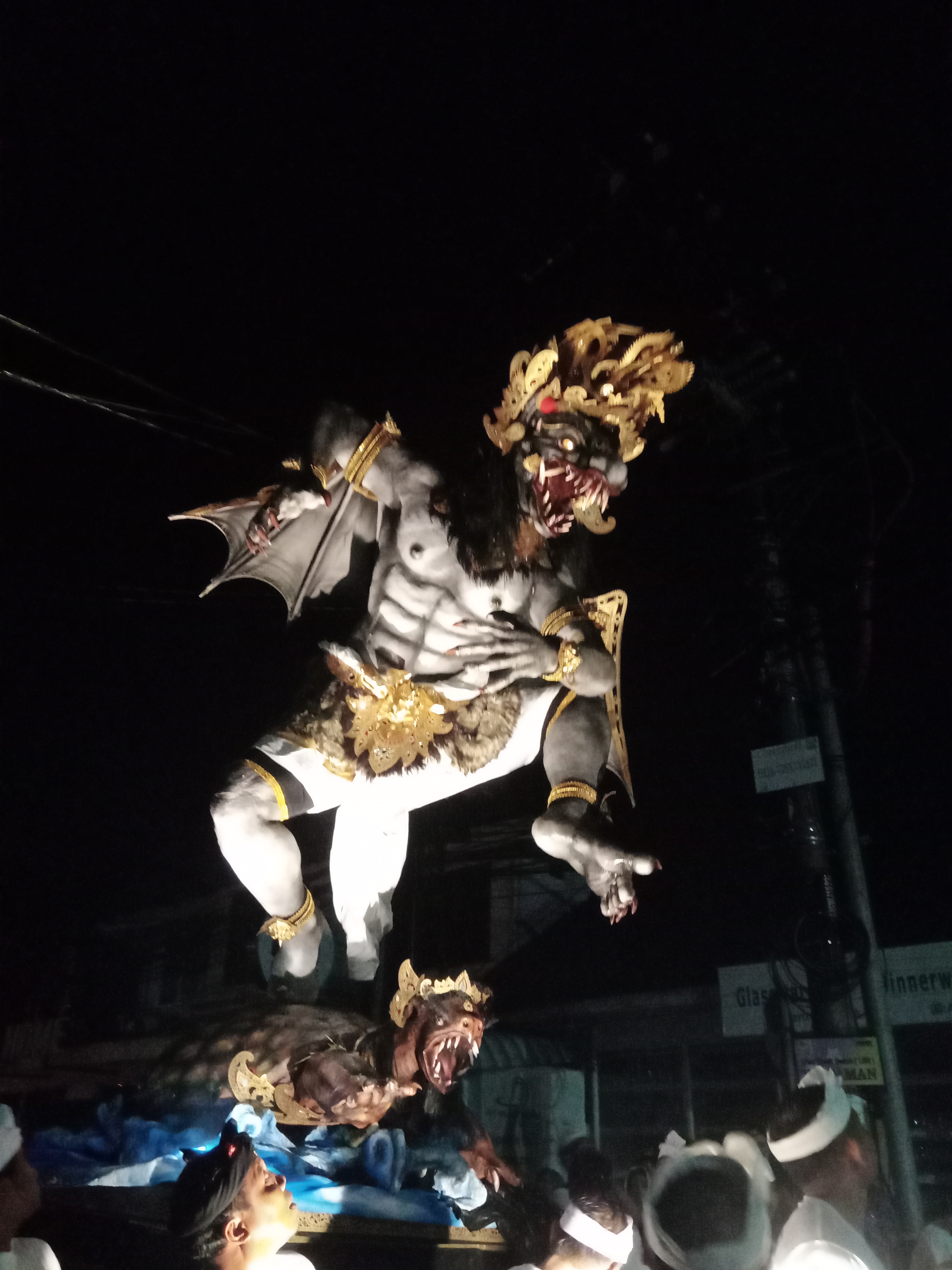
I spent a few nights in the surfing town of Canggu, celebrating Balinese New Year with an evening at the Ogoh Ogoh parade where local groups construct large figures to ward off unwanted spirits. This is only celebrated in Bali as the major religion of the island is Hinduism.

The day after is Nyepi, Balinese New Year where everything was shut and everyone stays home. This ended up being pretty tough not able to leave the hostel for a day.

The remaining days were spent relaxing, surfing and drinking coffee in the cheap bakeries. I was enjoying not doing much, in the utopian bubble of Bali. It had a very western feel and everyone just seemed to happy there, feeling so different to the traditional way on the other side of the island or on Java.

Finally, I spent two nights in Kuta near the airport washing all my gear, preparing it for the Australian border force and finding a box for my bike. Then I had the final ride of the trip, a 5km journey to Denpasar airport.

Overall, Indonesia was a hard country to travel through. The weather was tough, battling through rain and heat with the added challenge of making it to Bali in 30 days before my visa expired. The cultural experience was incredible however, I wasn’t expecting to have so many people helping me and I loved the food and enjoyed the company of the incredibly hospitable locals.

Landing at Sydney airport, I had no issues with taking the bike through customs and was greeted by my sister, after not seeing her for 2 years. I was feeling quite relieved to finally make it to Australia having achieved what I set out to do.

Sumatra

Getting the ferry to the island of Sumatra from Malaysia turned out to be a bit stressful due to my oversight of arriving at the ferry port with no local currency, just assuming they would accept card. Fortunately, Nathan lent me some cash and I managed to scrape by with my remaining USD, barely enough to cover the ferry fare, baggage, and my Indonesian visa.

The chaos continued at the arrival port, where bags were haphazardly thrown from the ferry, and I had to scramble to retrieve all my baggage and bike. After navigating a straightforward visa process, I had to unpack everything for an x-ray scan.

Dumai, my entry point to Sumatra, was a bustling and intense city. Upon leaving the ferry port, I quickly found a bank and food shop but annoyingly couldn’t set my phone up with an Indonesian sim despite a kind man driving me on the back of his motorbike to 5 different phone shops. The problem being my international phone wasn’t registered in the country, so I’d just have to rely on finding wifi in places.

Indonesia marked the final leg of my journey. I had a 30-day visa and a flight booked from Bali to Sydney in exactly 30 days. It was probably going to be too ambitious to cycle all the way, or at least result in me missing some of the highlights, so I planned to take at least one bus to skip some sections.

The people in Indonesia were the friendliest I’d encountered anywhere, often shouting at me with enthusiastic “hello mister!” greetings. While heartwarming, it often became annoying when occurring every 30 seconds through towns and when I’d find Wi-Fi, then get interrupted with people asking for photos or wanting to talk.

It was also still the rainy season, so I encountered daily downpours, typically starting around 3 pm and lasting into the night. In urban areas like Pikanburu, the streets often turned into rivers creating awful traffic.

One notable difference in Indonesia from other countries was the acceptability of sleeping anywhere, such as truck stops or cafes, which were often open 24 hours a day. However, the downside was occasional disturbances, such as people watching loud videos at 3 am. There were also many abandoned buildings to shelter in each night. I also spent nights at mosques, although the early morning call to prayer disrupted my sleep, but the benefits of clean toilets and showers generally out-weighted this.

The buildings were an interesting style with pointed roofs. Something I didn’t see anywhere else.

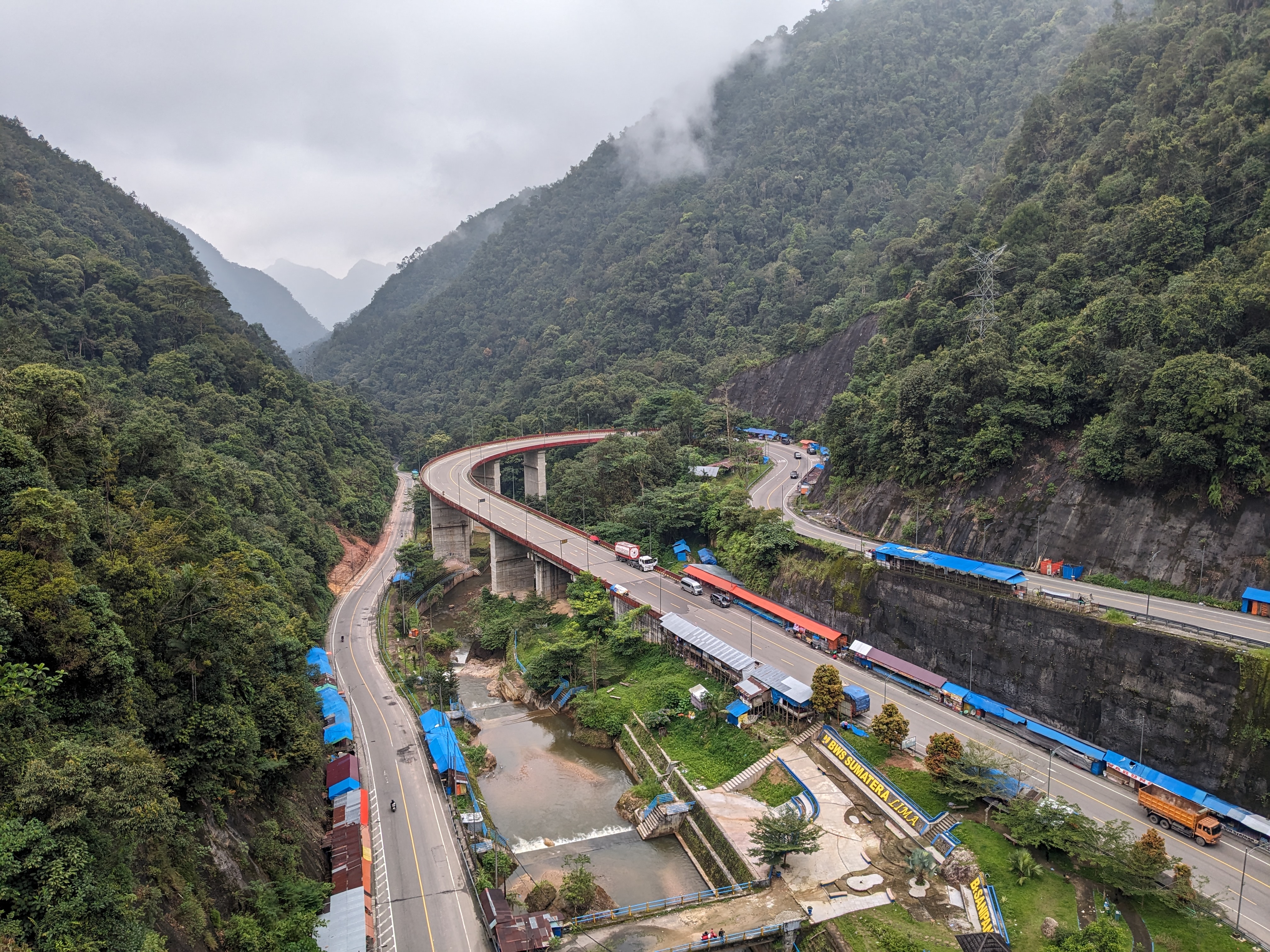
Heading towards the west coast, I traversed mountains and encountered the iconic Kelok 9, an impressive stretch of road.

From here, the road descended into the city of Penang, passing some amazing lakes.

The traffic has probably been the worst of anywhere so far. With the roads just being constant streams of motorbikes. In addition at all the junctions, men would be directing traffic taking payment before walking out into the road stopping the traffic for anyone trying to turn right. Every car was pretty much forced to pay them as they wouldn’t be able to turn otherwise.

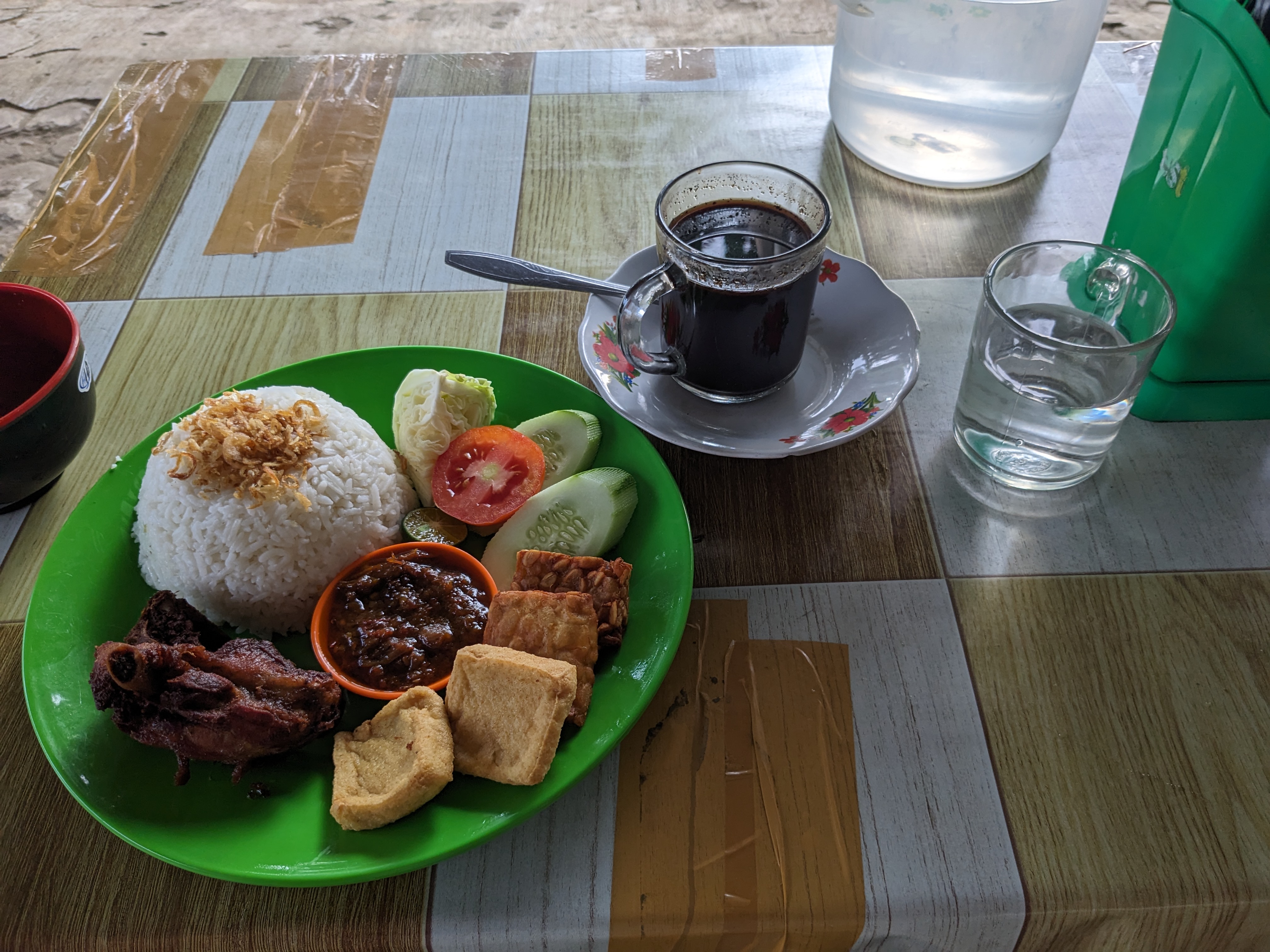
Along the coast, I sought shelter and food at a waterfront restaurant, where I met Donnie, a woodcarver who generously offered me a place to stay at his home. He spoke good english, having learnt it using TikTok. I shared a very spicy meal with his family, and he showed me around the house they’d built. The next morning, Donnie took me on his motorbike into his town to get breakfast.

Continuing along the coast was challenging, with steep climbs and rainstorms. One afternoon, I accepted an offer to sleep at a restaurant at 2pm deciding not to venture out into the relentless rain at all. This may have been a mistake as despite the place being quite during the day, it became filled in the evening with a lively atmosphere of coffee-drinking patrons playing cards late into the night.

Rejoining the main road, I continued along the coast for three more days sleeping on a beautiful beach one night.

From the city of Bengkulu, I took a 20-hour bus ride to Bandar Lampung. This bus was quite nice and kept interesting with buskers getting on at the start of towns playing a song then hopping off at the other end of the town.

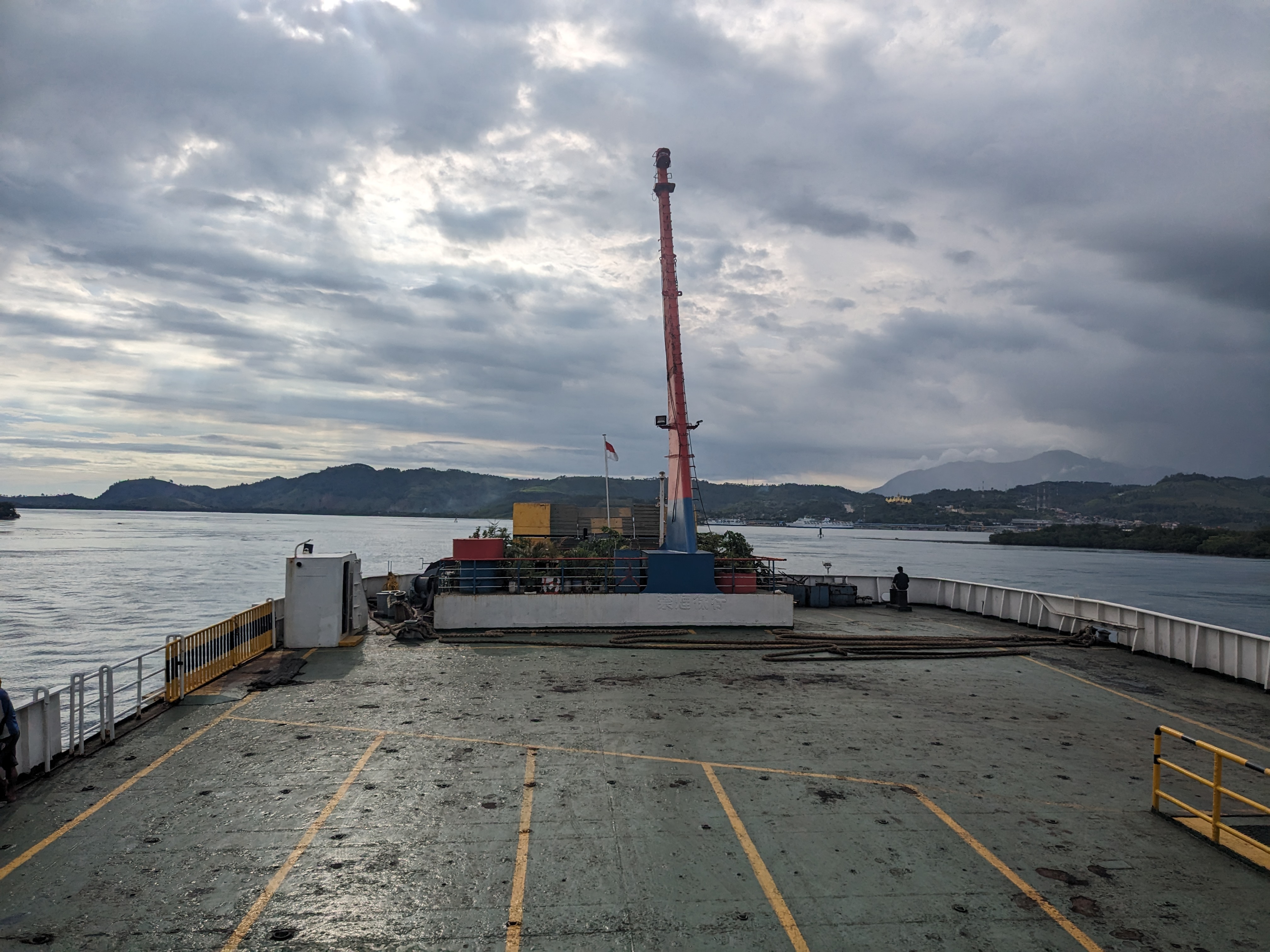
After leaving the bus, I rode for a few hours to the southern point of Sumatra then caught a ferry costing only £2 for the two-hour journey to the island of Java.

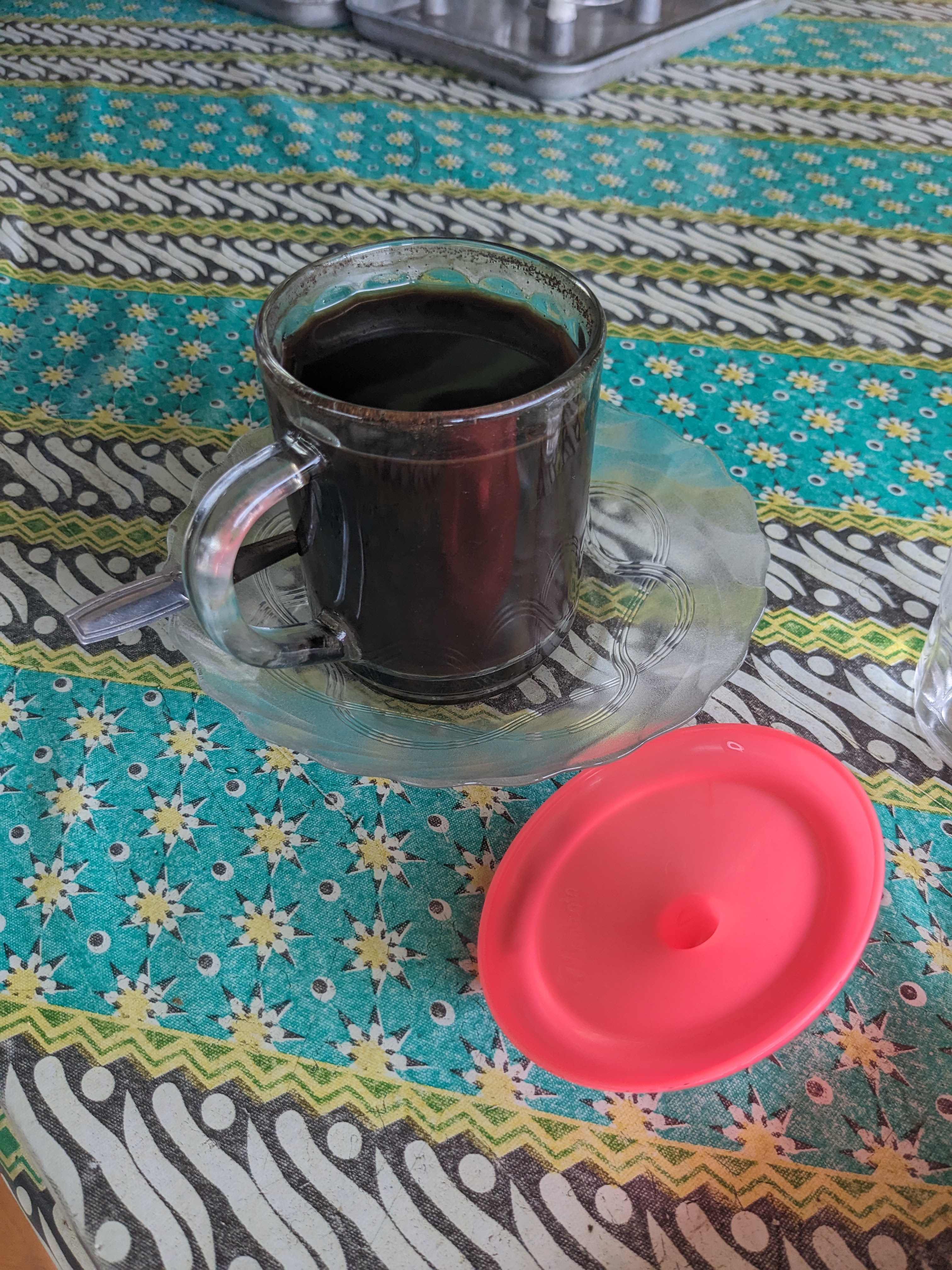
While Sumatra didn’t match my wilderness expectations, it offered a rich cultural experience. The food has been great but incredibly spicy, something that took me a week to get used to. I’ve really enjoyed the very sweet black coffee and I’ll remember the generosity of the people who have been wonderful.

Malaysia

The border crossing into Malaysia took a while. This was mostly my fault, rushing the form I needed to fill in, expecting them not to check too closely the details of where I was staying. With the border situated at the top of a hill, I had a nice descent down the flat farmlands of north Malaysia.

After riding for only 40 minutes, a car pulled up alongside me at some traffic lights, and after speaking for 30 seconds, the man handed me some money and told me to buy myself a drink. He said he wanted to help a traveller and had ambitions of his own of cycling around Malaysia. This money proved very useful as it was still 50 km until I found an ATM in the city of Alor Setar.

I’m always a bit anxious the first night camping in a new country, and in Malaysia, it was hard to find somewhere as everywhere was farmland. I headed for the coast, stopping at Bunting Island Bridge where I was hoping for a great sunset but arrived too late and the bridge was closed. Whilst there, I met some Bangladeshi men who were on holiday in Malaysia and very interested in what I was doing. It was eye-opening also hearing from them that Malaysia is one of the few countries they can easily get a visa for and go on holiday to.

The following day I made it to Georgetown, taking the ferry across to the island. Along the way, I passed a huge snake on the side of the road. I’m pretty sure it was dead as it wasn’t moving, but it really shocked me, and I couldn’t stop thinking about it whenever I was camping the following week.

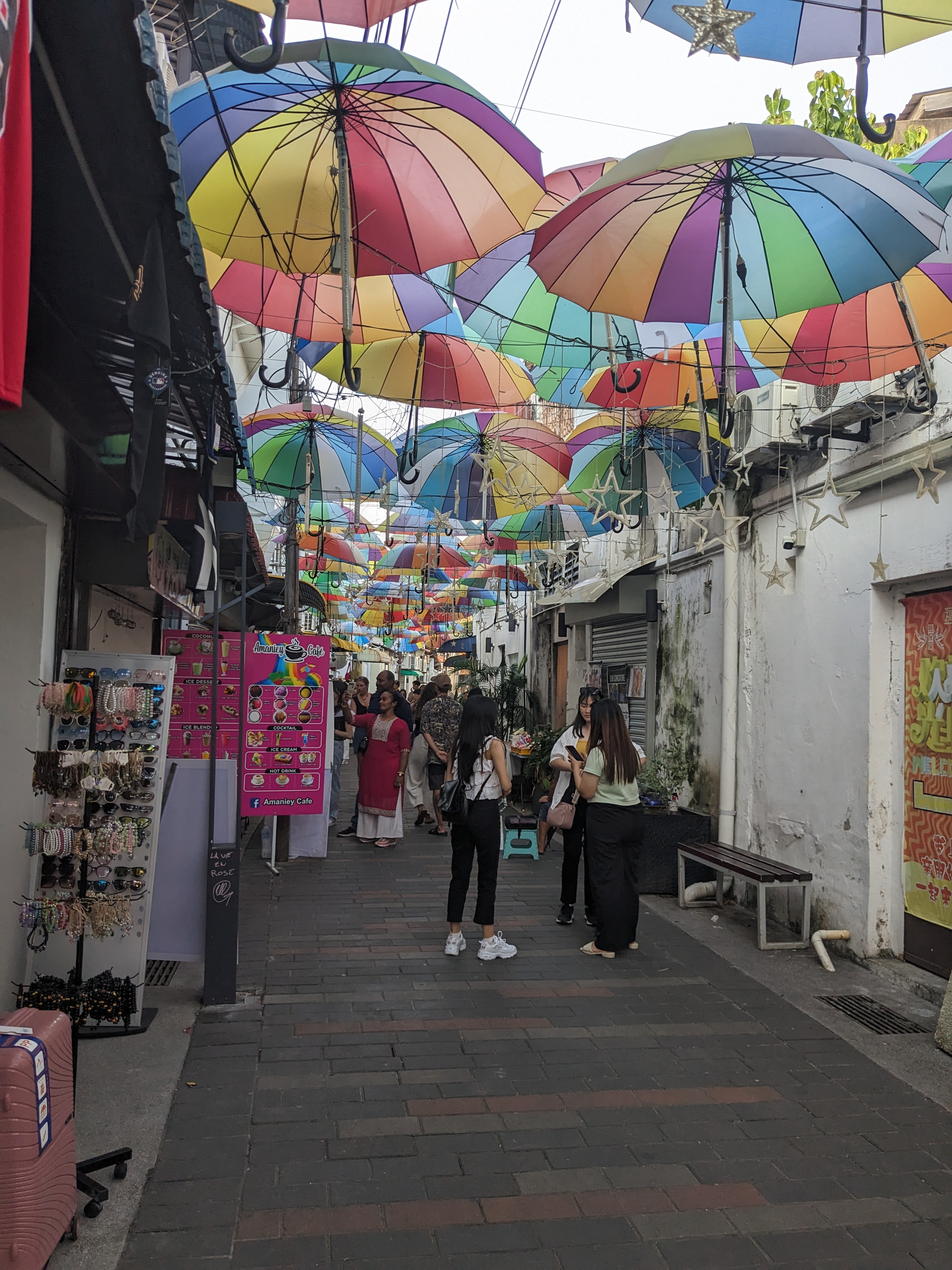
Georgetown was a pretty place, and the buildings definitely had a colonial feel to them. The previous day, the Bangladeshi men informed me I’d feel like I was back in London, which I’m not sure I’d really agree with. There was also a large Chinatown where I enjoyed a huge plate of egg fried rice for dinner. Whilst at the hostel, I met Nathan, another Brit cycling around the world. He’d been travelling for 22 months already.

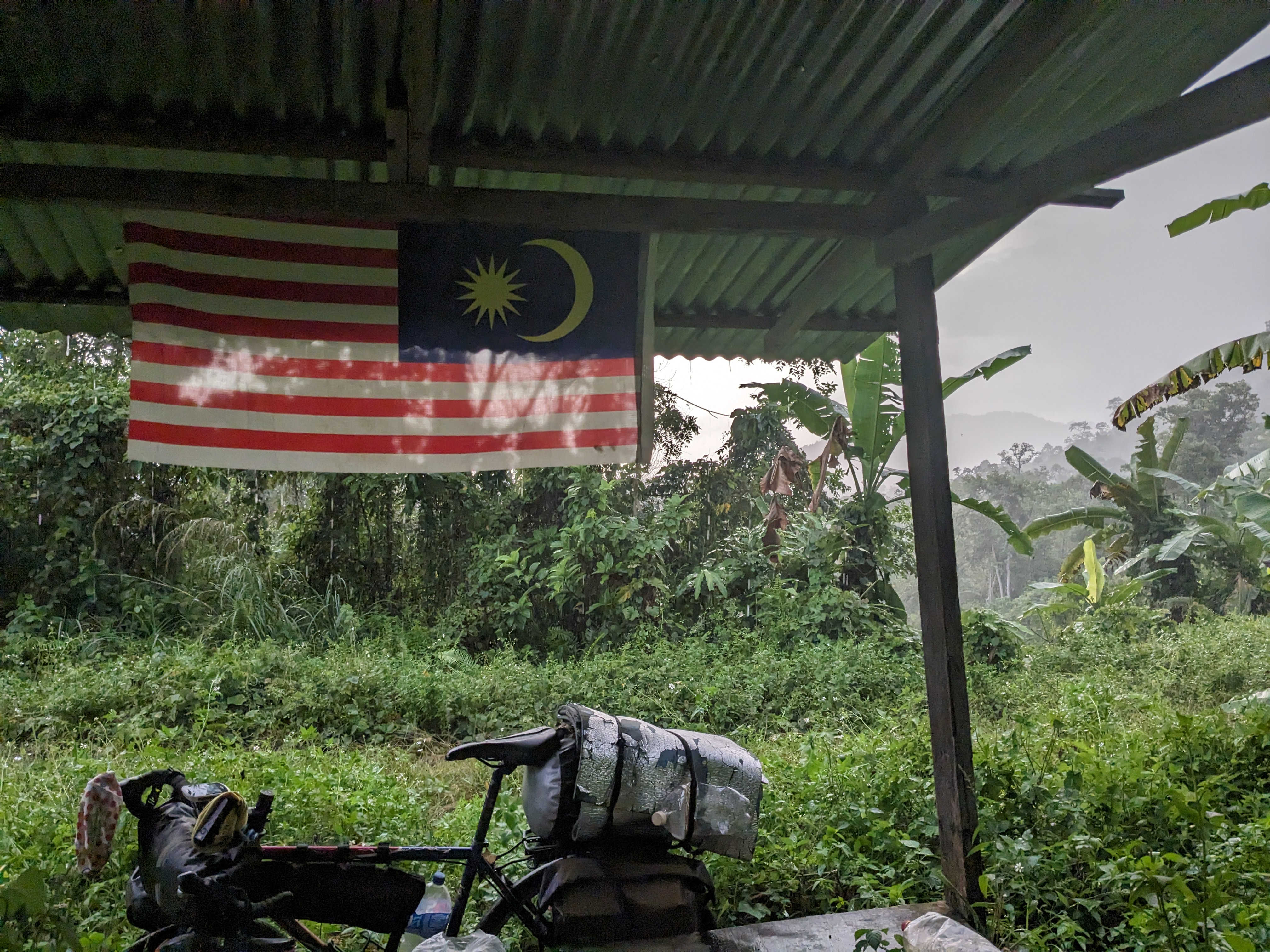
I just stayed for one night in Georgetown, deciding to detour towards the east coast and explore more of Malaysia. A very rainy day followed, and searching for somewhere dry to sleep led me to an old railway line where I found a small wooden shelter to sleep under. This was a very welcome relief from the elements.

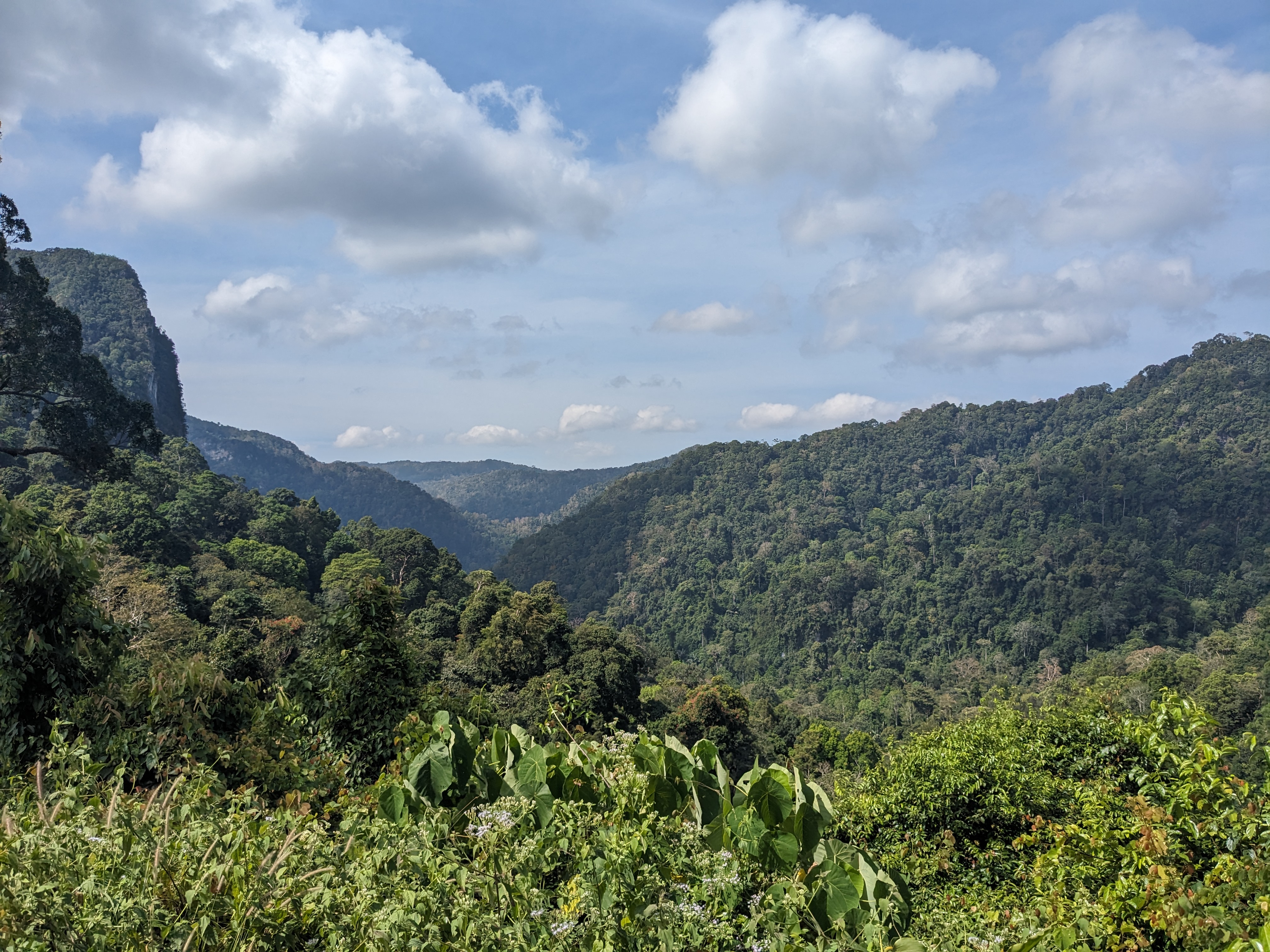
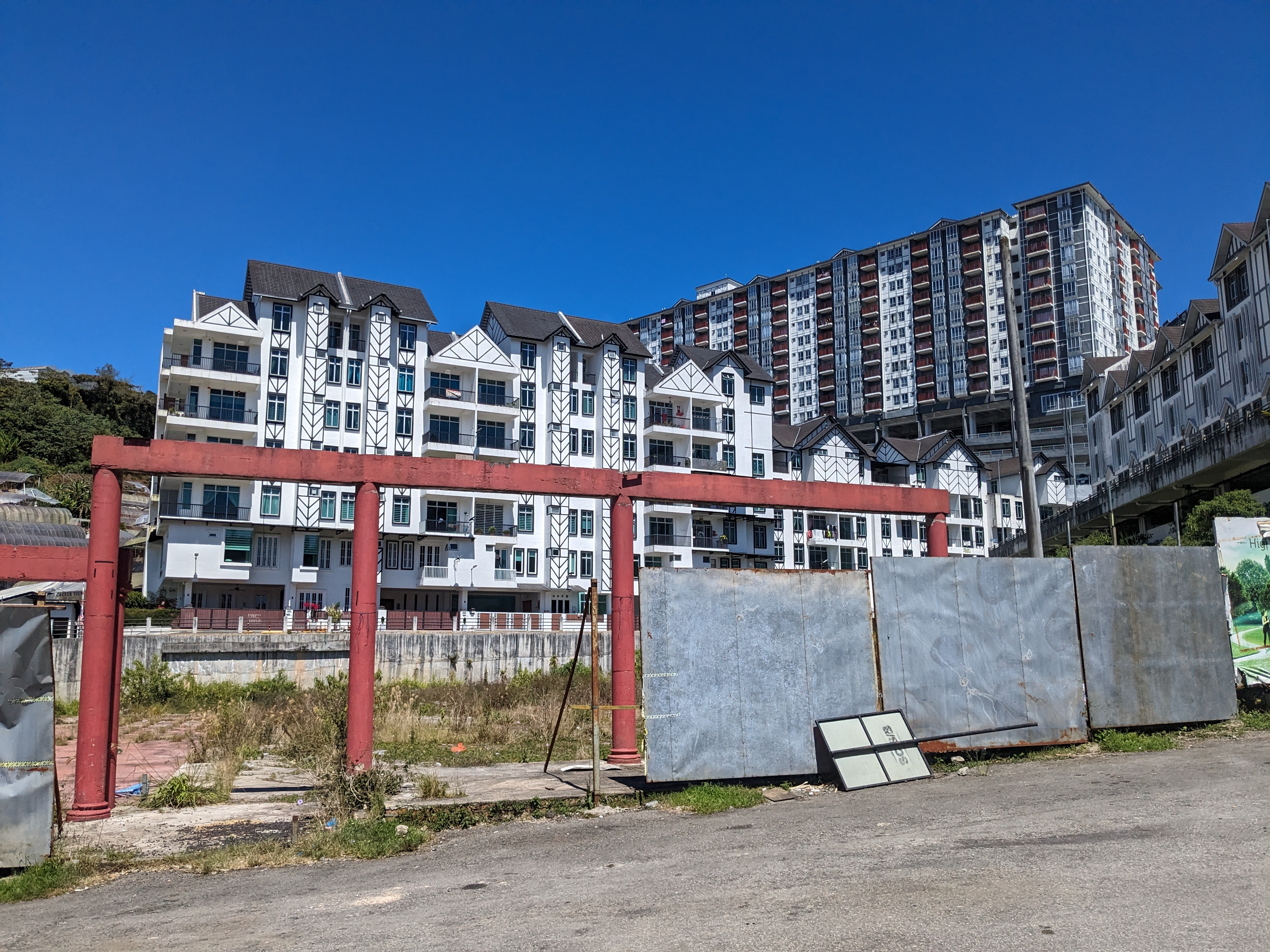
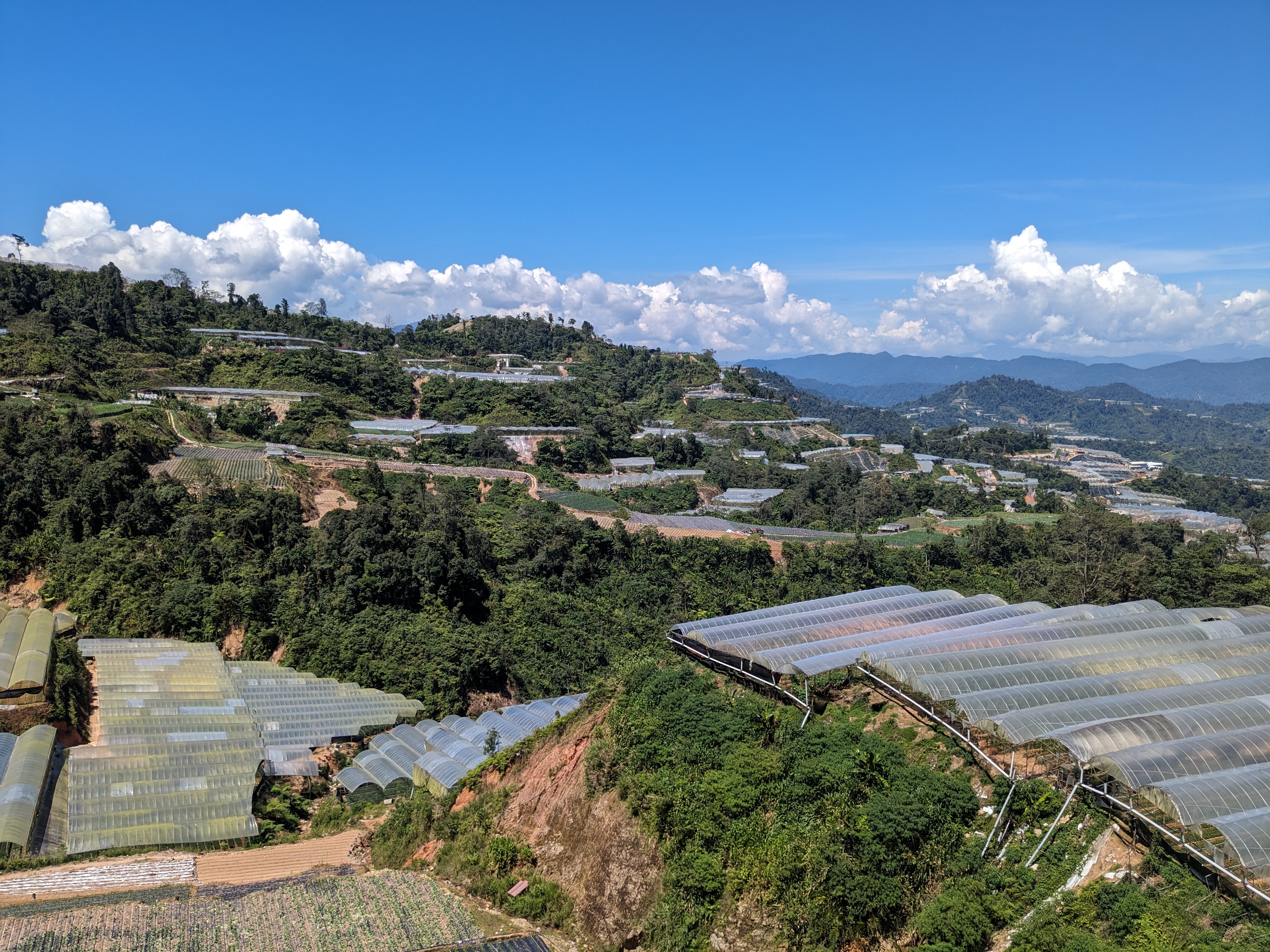
My route took me into the Cameron Highlands, a collection of resort towns in the mountains built by the British to get away from the heat on the coast. It is a similar idea to Dalat in Vietnam; however, the Highlands still kept their heritage of looking like a European ski town. It also featured large tea plantations and strawberry farms in the hills which has made the towns iconic for serving afternoon tea with scones and jam.

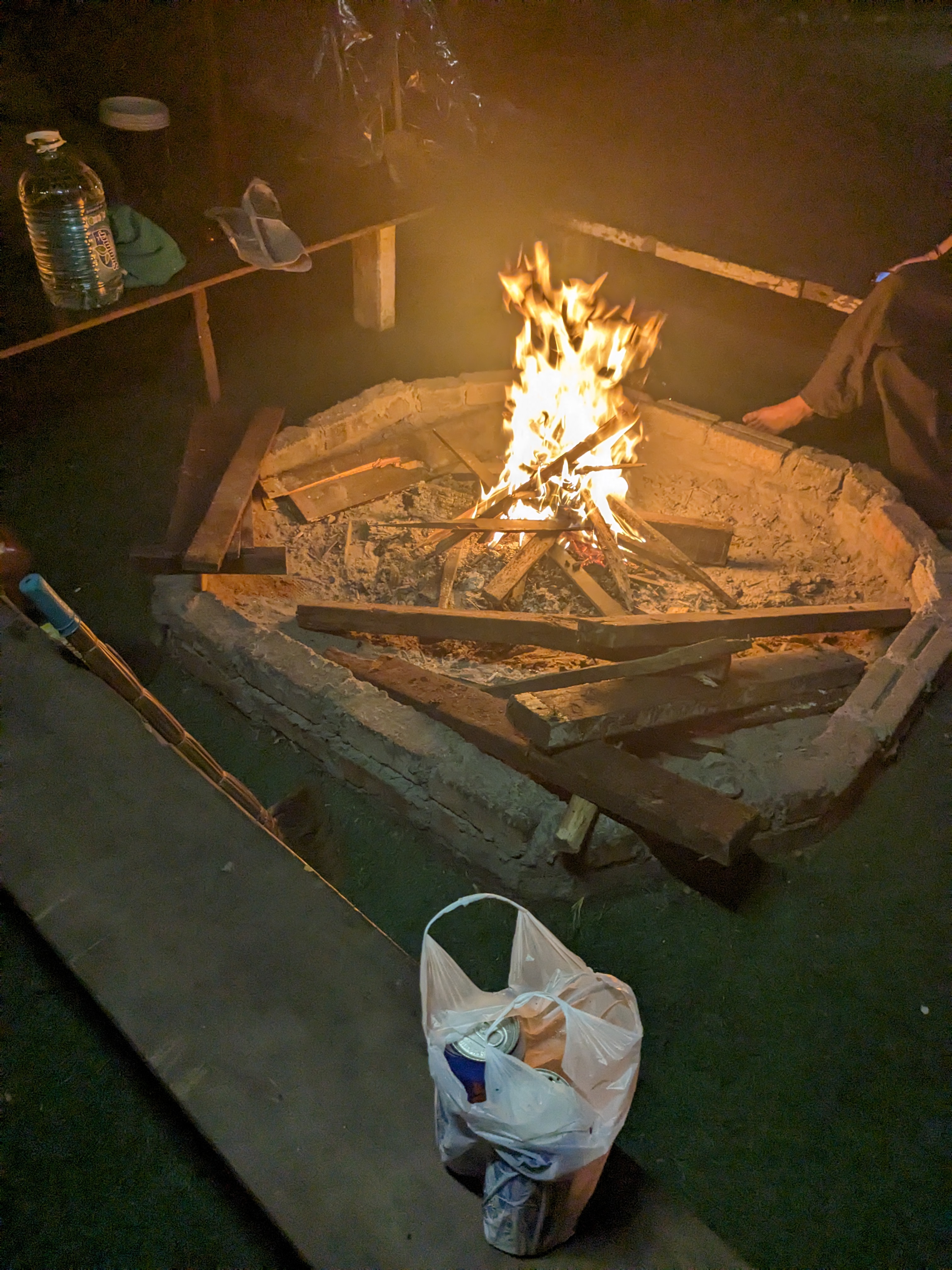
I spent a night in a strange hostel which was originally a colonial bungalow built on a hill above the town but had been converted into a few rooms and a dorm. It had very strange outbuildings decorated up as a wooden hunting lodge and bar. Along with all this, there were many log cabins which were all getting demolished, and so each night there would be a large fire trying to burn through all this junk wood.

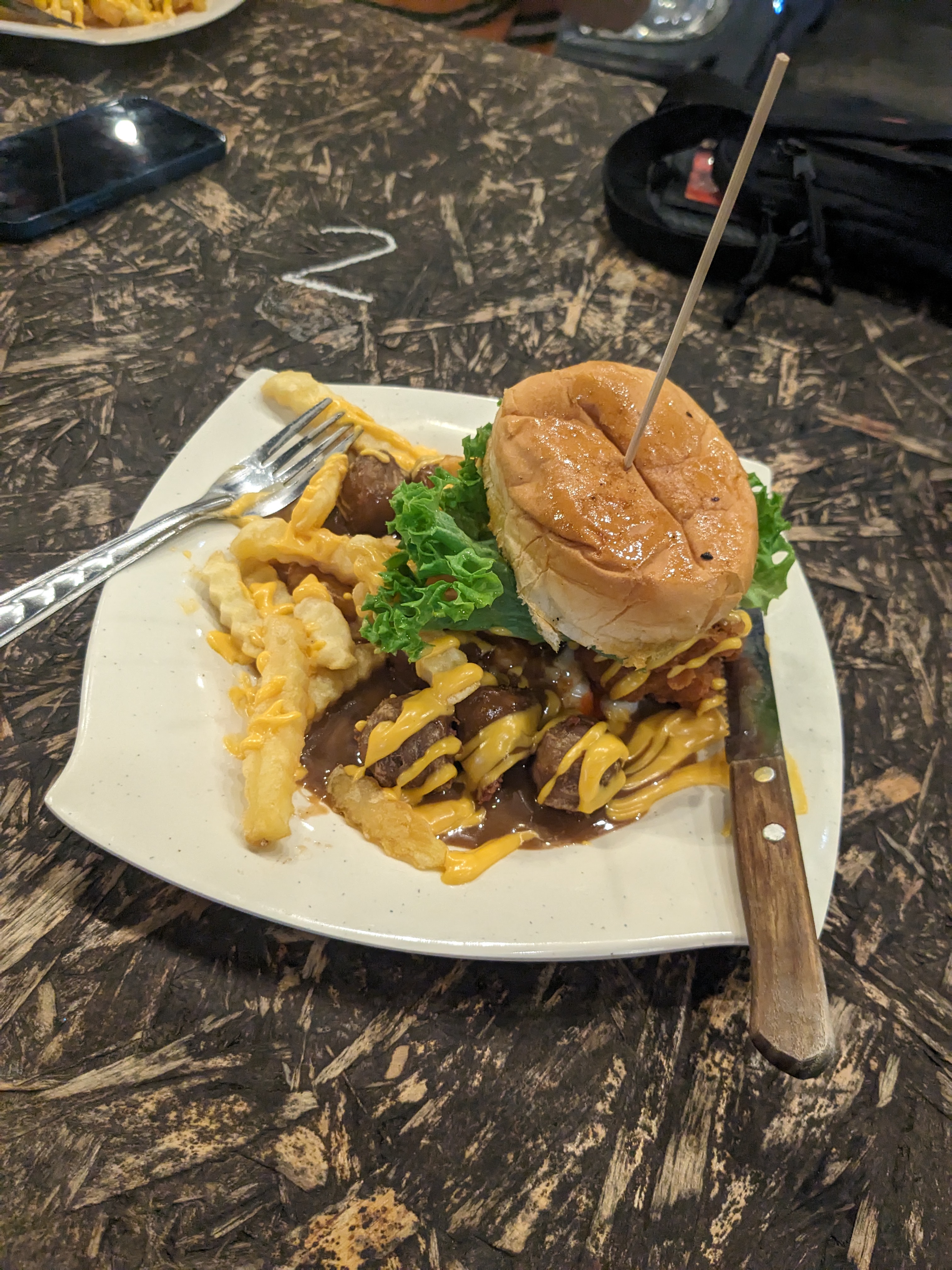
I also had my first burger of the trip in the Highlands. The Western food is similarly priced in Malaysia unlike the other Southeast Asian countries where it would cost 4x as much. I’ve also been able to find reasonably priced oats and chocolate for the first time in SEA which has been nice to have these home comforts.

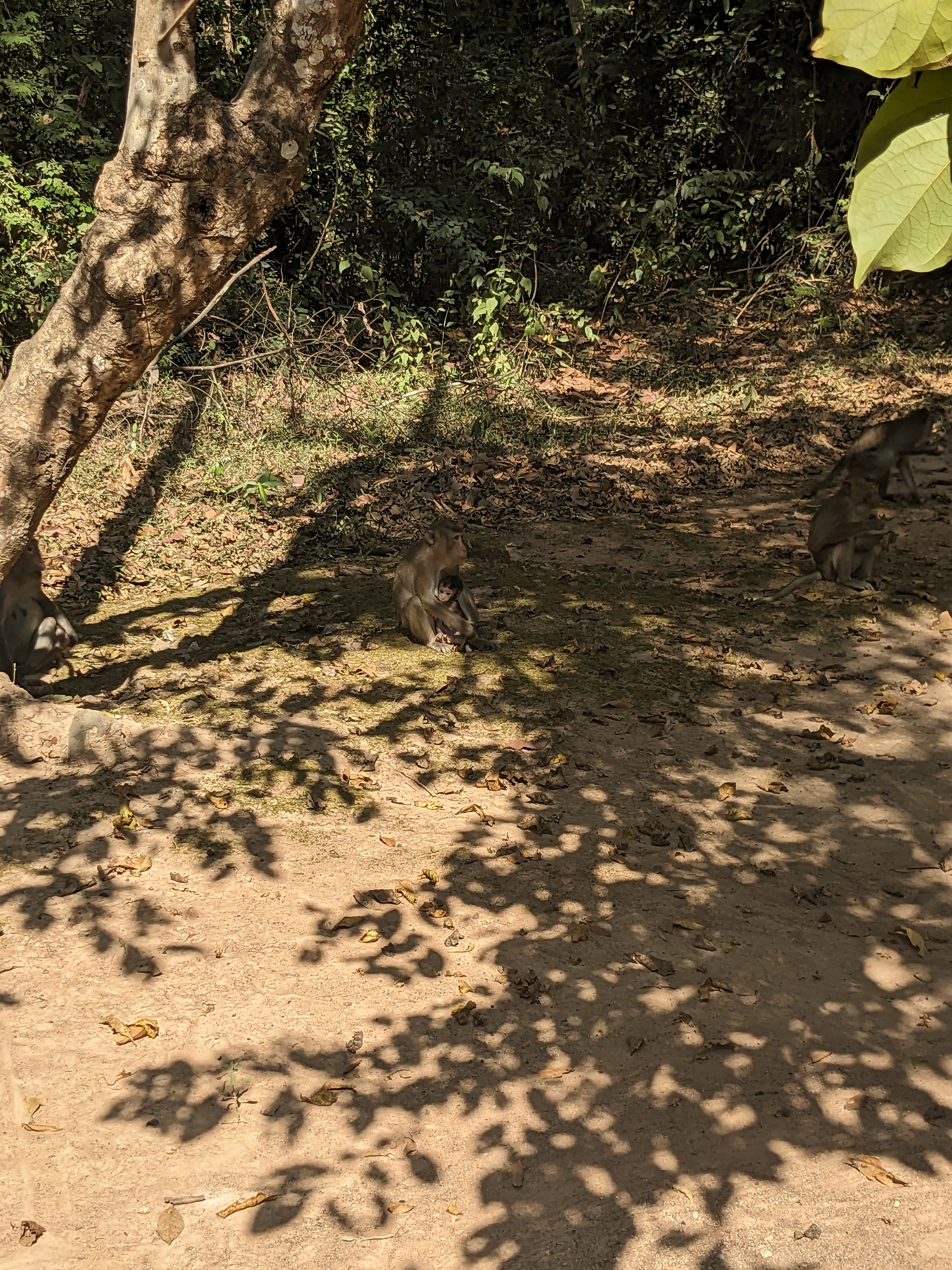
Leaving the Highlands, I descended down into the centre of the country and became quite sick with a stomach bug. I took the next few days pretty easy, crossing over to the east coast, seeing lots of wild monkeys and passing through many palm oil plantations. These at first looked quite beautiful, almost a forest of palm trees, but once I noticed the straight lines of trees all planted the same distance apart, they lost their charm. It’s Malaysia’s largest export and used in lots of food and cosmetic products which has resulted in much of the jungle having been cut down.

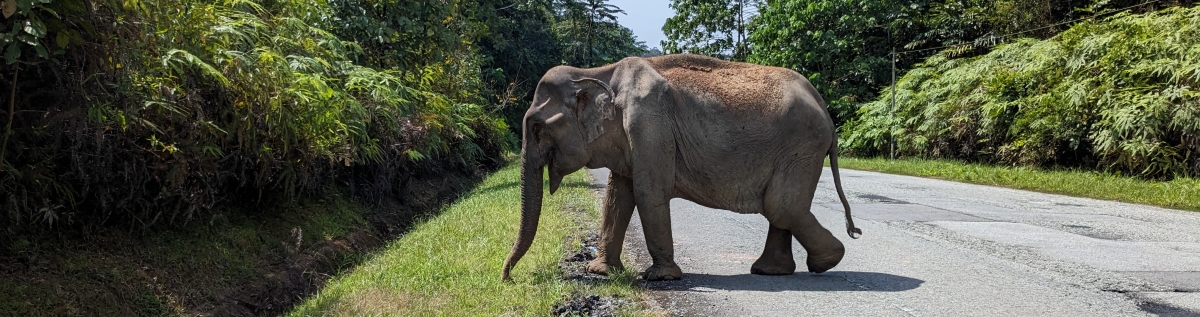
As I was cycling along a quiet road, a van coming the other way told me to slow down as there was an elephant ahead. Not wanting to miss seeing a wild elephant, I picked up the speed and came face to face with the creature on the side of the road. It looked very old and frail with a hole in its ear, and every step it took made it seem like it would fall over. I stopped for probably 10 minutes just watching it cool itself down, blowing water over its back, and tried to get close but was always frightened when it would turn towards me.

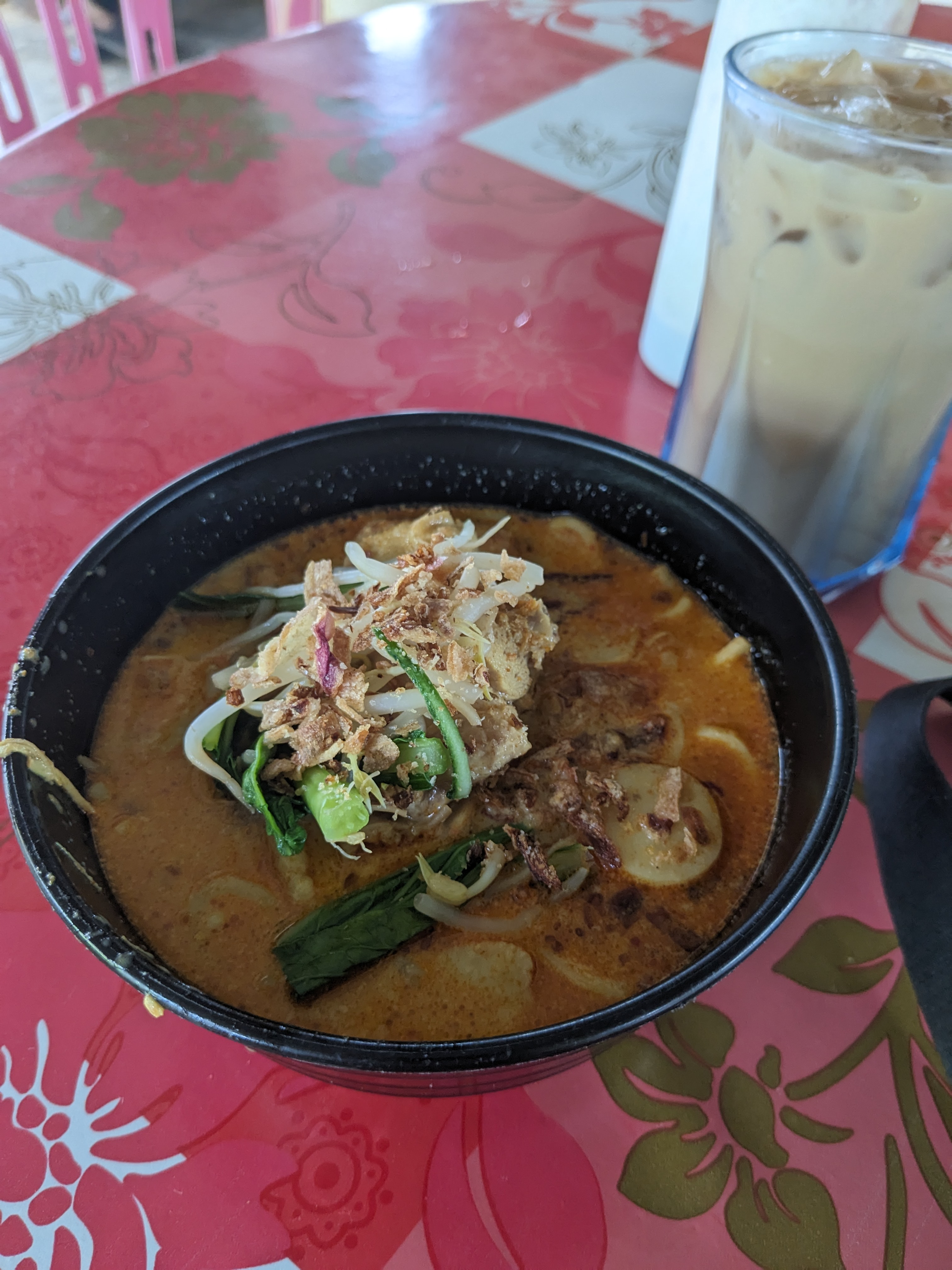
I reached the east coast and had my appetite back after being ill, so I started trying to catch up on all the great Malaysian food. The ethnic population of Malaysia is Malay, Indian, and Chinese, so the food reflects this with lots of really great Indian food reflecting these cultures. I’ve particularly enjoyed the Indian roti, Dosha, and all the curries. The restaurants are often self-service, letting you just pile the rice and curry onto a plate, with most meals costing about £1. The coffee or “kophi” has been great too, costing 40p at restaurants and being black coffee with condensed milk stirred in. The national dish “nasi lemak”, translating as “fat rice”, is rice cooked in coconut milk with sauce, fish, peanuts, egg, and often deep-fried meat. This has all been great fuel for cycling but has led to Malaysia having a very high rate of type two diabetes, something I was told by many people.

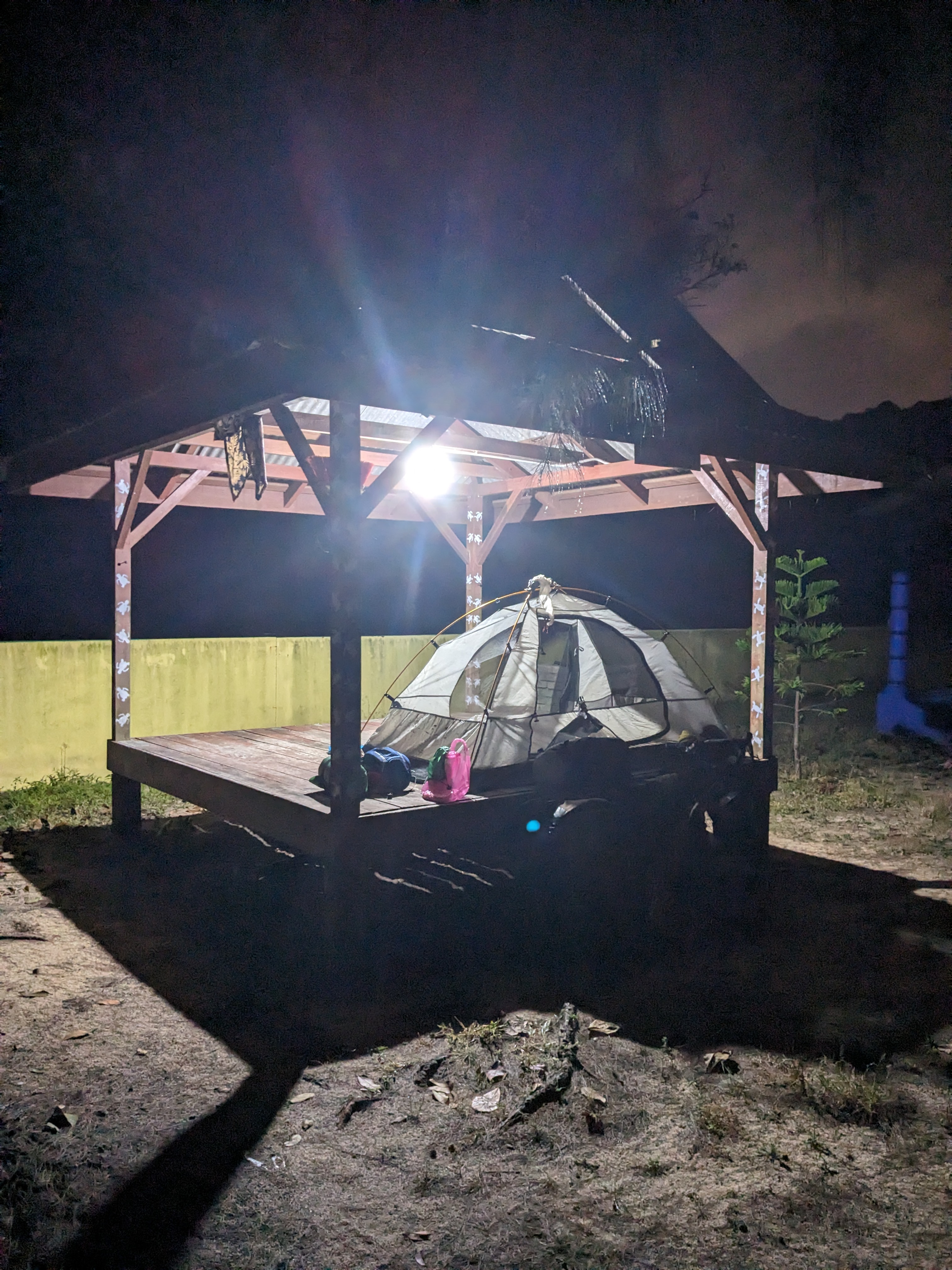
The east coast was industrial with a huge Petronas oil refinery. I did manage to find a beach, but it was a protected area for turtle nesting so I wasn’t able to sleep there. Fortunately, the man in charge guided me round the corner to the turtle hatchery centre where he let me stay before just driving off.
Before leaving the east coast, I spotted one more bit of wildlife, a huge lizard wandering around a rubbish dump. This was mesmerising to watch, and again I didn’t want to get too close.

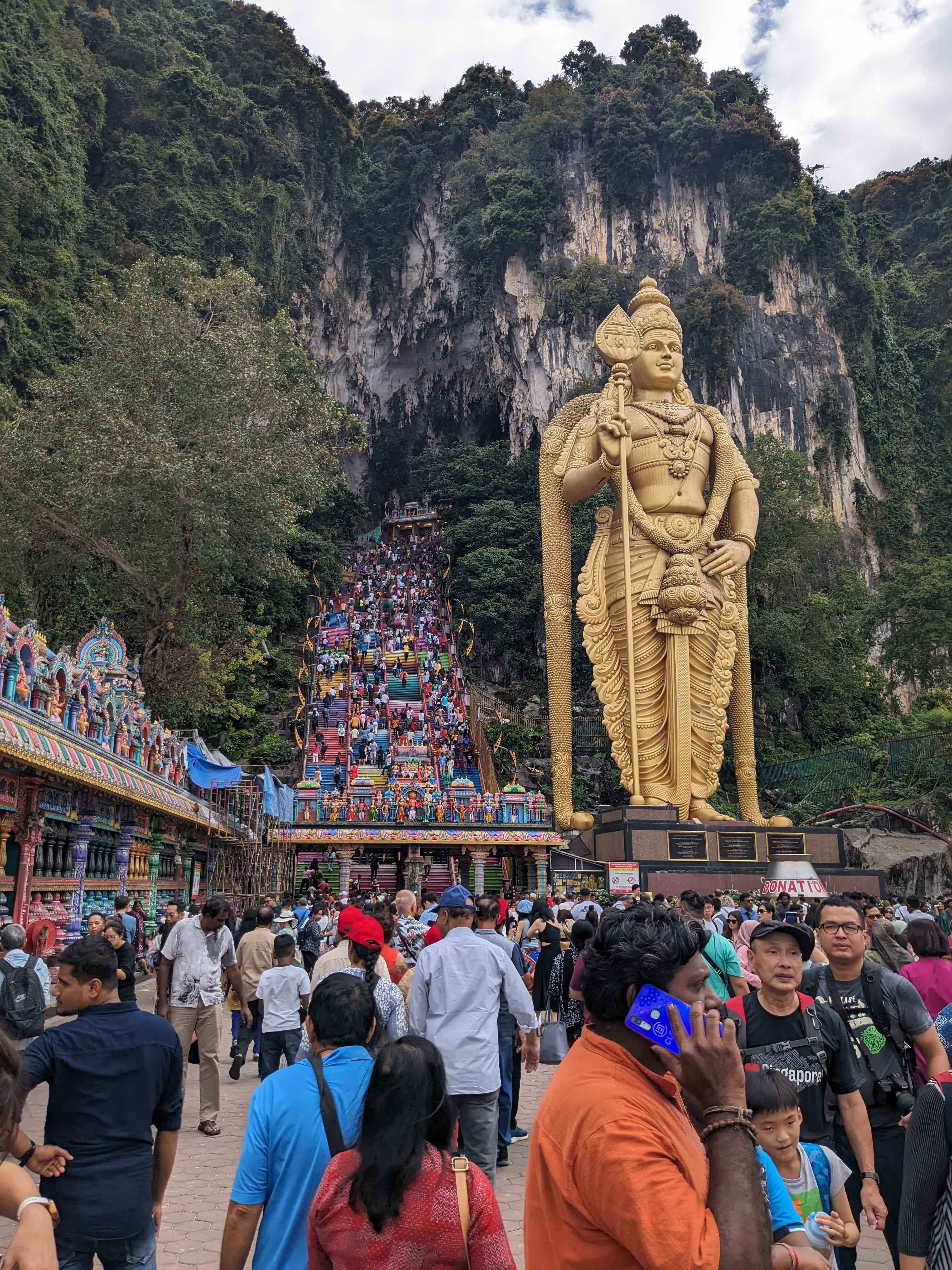
It took two more days to reach Kuala Lumpur where I found some hot springs open to the public, meeting a group of local uni students there who were very interested in what I was doing. Then, after a night in an abandoned building in the hills above KL, I descended down towards the Batu Caves. I should’ve arrived earlier as this tourist attraction was already very busy with people climbing the stairs up to the caves.

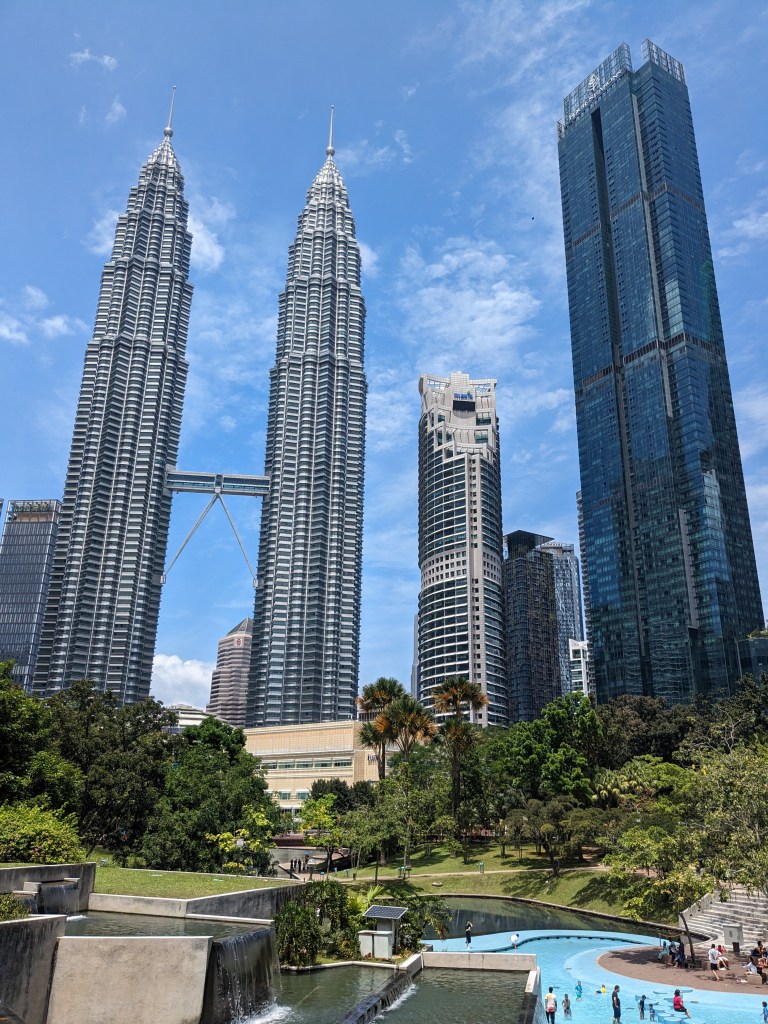
Kuala Lumpur felt very much like a western city with parks, skyscrapers, and all the generic shops you’d expect to find in the city centre. There were some interesting buildings with the Petronas Towers being the tallest in the world from their construction in 1999 until 2004, the old square consisting of a cricket pitch where in 1957 Malaysian independence was declared, and the national mosque where they were very strict on the dress code, giving us robes to wear inside. The food in the city was great too and surprisingly no more expensive than the rest of the country.
Coming into the city was easy, however exiting was quite a challenge, navigating the busy roads to the south heading for Port Dickson where I’d leave Malaysia by Ferry.

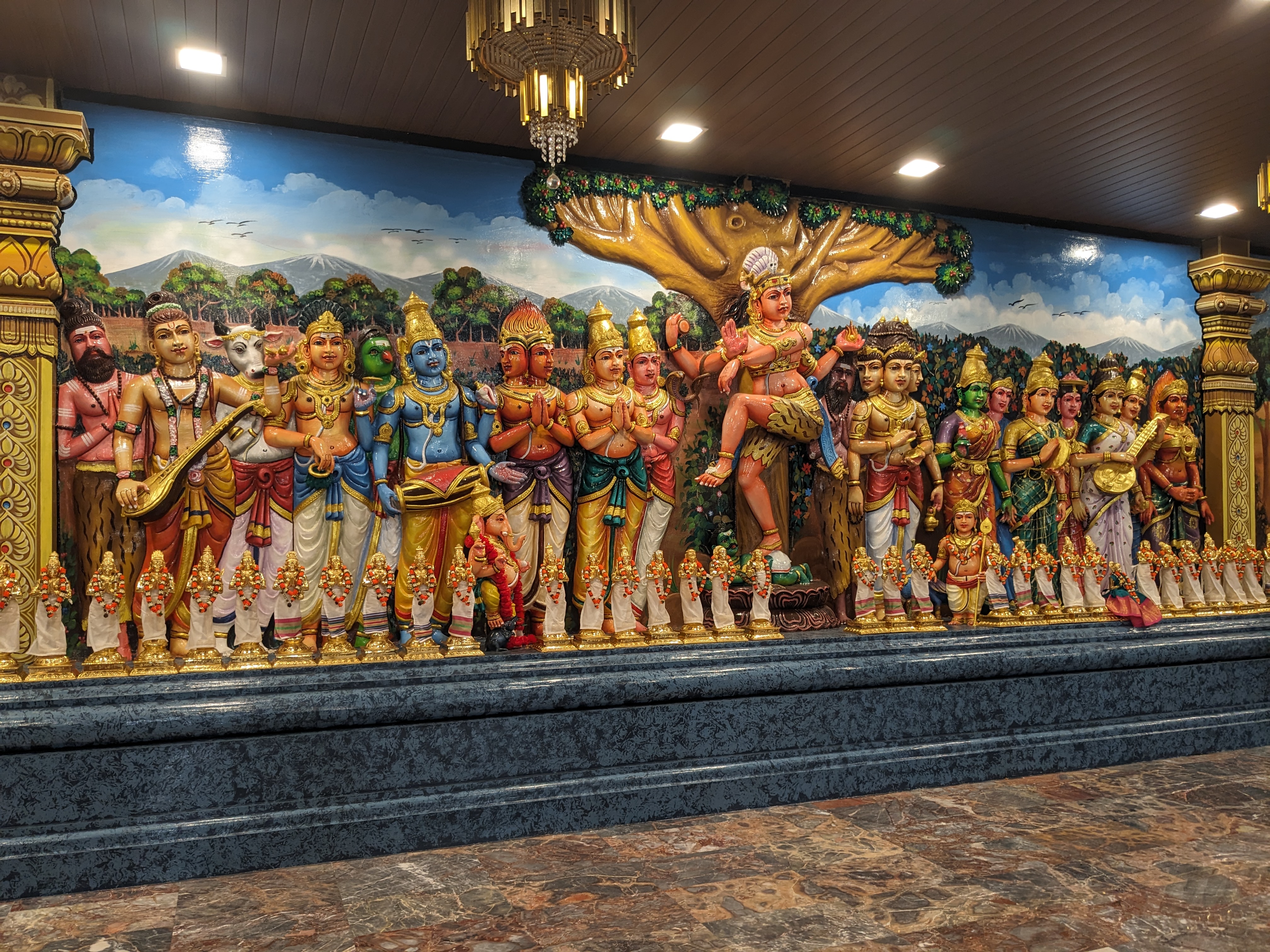
I was reunited with Nathan on the road, and we spent my final night at a Hindu temple before I headed to the ferry port and he continued south.

Malaysia has been one of my favourite countries to travel. The food has been the best of anywhere in Asia. The people have been incredibly generous and friendly too, as in the 16 days I’ve been in the country, I had 5 different people buy me a meal or refuse to accept payment at restaurants. The number of people that spoke English has been noticeably higher than almost anywhere else I’ve been, with lots of people in the non-touristy areas speaking very good English. This has been really nice, as I could talk to far more of the locals. The wildlife has been amazing too, seeing so many monkeys which I’ve struggled to take photos of. Finding places to camp has been quite easy too, and the locals have not been surprised when I’d say I’m just sleeping on the side of the road. Also there have been lots of abandoned huts or buildings I could sleep in to find some shelter. I’ll definitely be back to Malaysia and would love to have more time in the city of KL.

*** 26/3/24 Update ***

I’m now quite far behind on the blog having left Malaysia on 15th February so thought I should give a current update. My two excuses for not getting any posts out are: running out of website storage space for any more photos and breaking my phone. Now I have access to a laptop, I’ve upgraded the website (hence the new look) and hoping to get the phone fixed to recover some Indonesia photos. So expect the last few trip updates soon along with some final thoughts, cost breakdown and gear reviews.

I’m now in Sydney, having arrived in Australia on 15th March from Bali and having a few weeks of holiday with my family whilst I try and figure out what to do next…

South Thailand

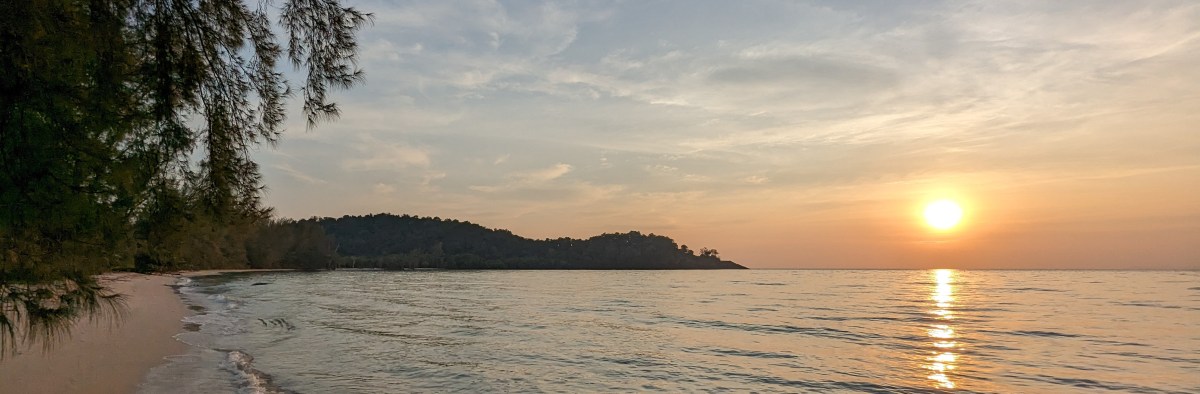
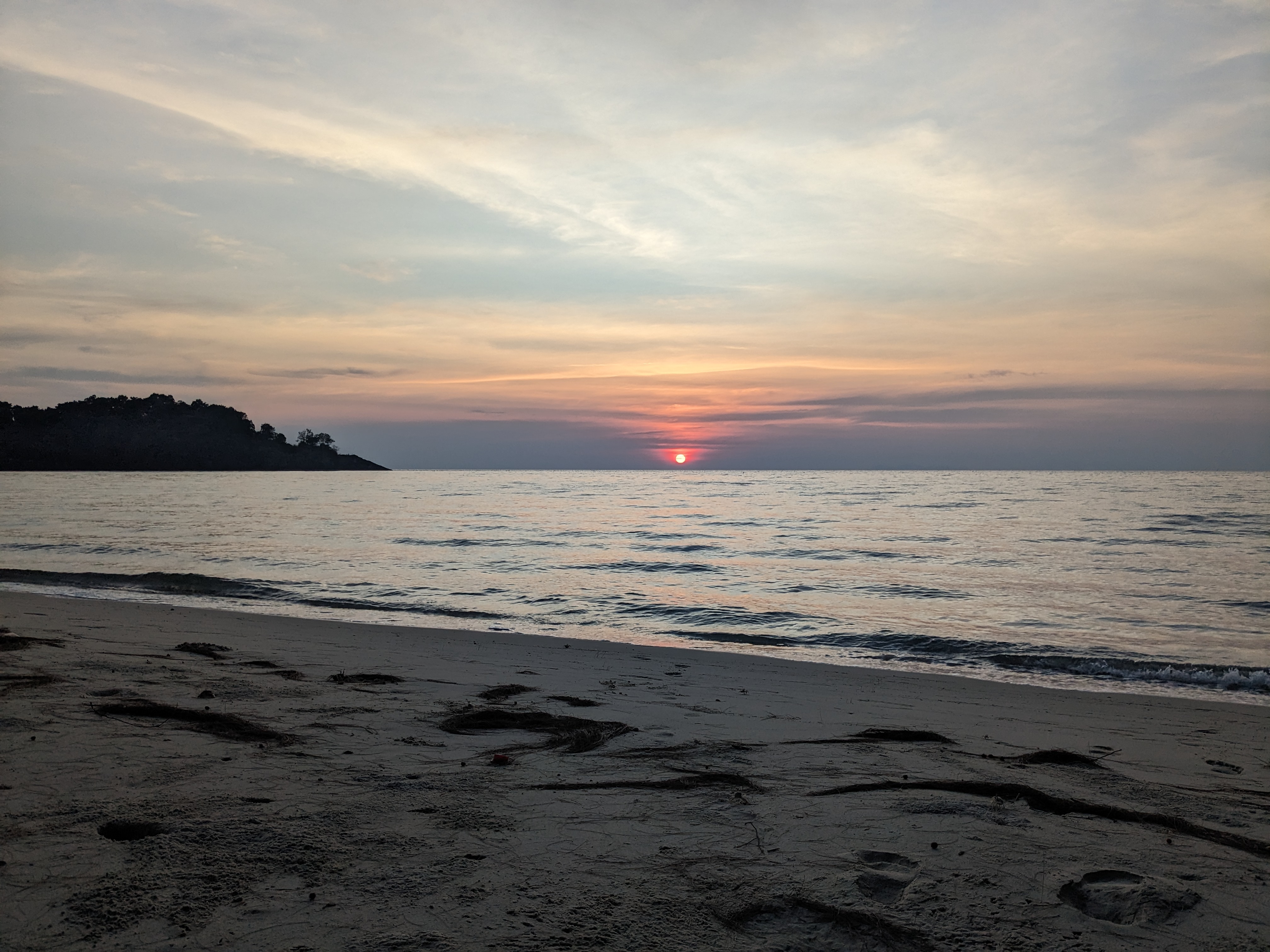
I was excited to cross back into Thailand, where I made good progress along the well-built roads. I took a brief stop at the narrowest point in the country, although it seemed more symbolic than an actual tourist attraction and the only thing of interest was the sign. My dream was to sleep on a wild beach that night, and after spotting a small track that lead to the coast I found the perfect spot offering an amazing sunset.

It took me two more days to reach Bangkok, where I spent nights at temples in the kind hospitality of the monks. Navigating through the intense traffic in the city was quite a challenge, but I eventually made it to my hostel.

I took a day to explore the city, having a very quiet morning as nothing opened until midday. Walking the infamous Koah San Road, it was a completely different place during the day and night with the day comprising of stalls selling touristy items and at night it was another road of bars extending into the street selling buckets of alcohol.

Deciding on my next destination, I had the choice of riding along the east or west coast. I opted for the more touristy east coast over the quieter west coast, aiming for Chumphon, where I planned to catch a ferry to Koh Tao. Just outside Bangkok, I met Daniel, a fellow cyclist with no set destination, and we spent most of the day riding together. I wanted to make it 130km to a beach for the night, but I think this might’ve broken Daniel in the process, as with 20km to go he stopped.

The next day, I encountered my second puncture of the trip but quickly fixed it and continued along some excellent cycle paths. Clearly all the other cycle tourists had also found this route as I encountered nine different bikepackers that day, including a family of 4. I spent the night camping on another amazing secluded beach, having fun riding along the wet sand.

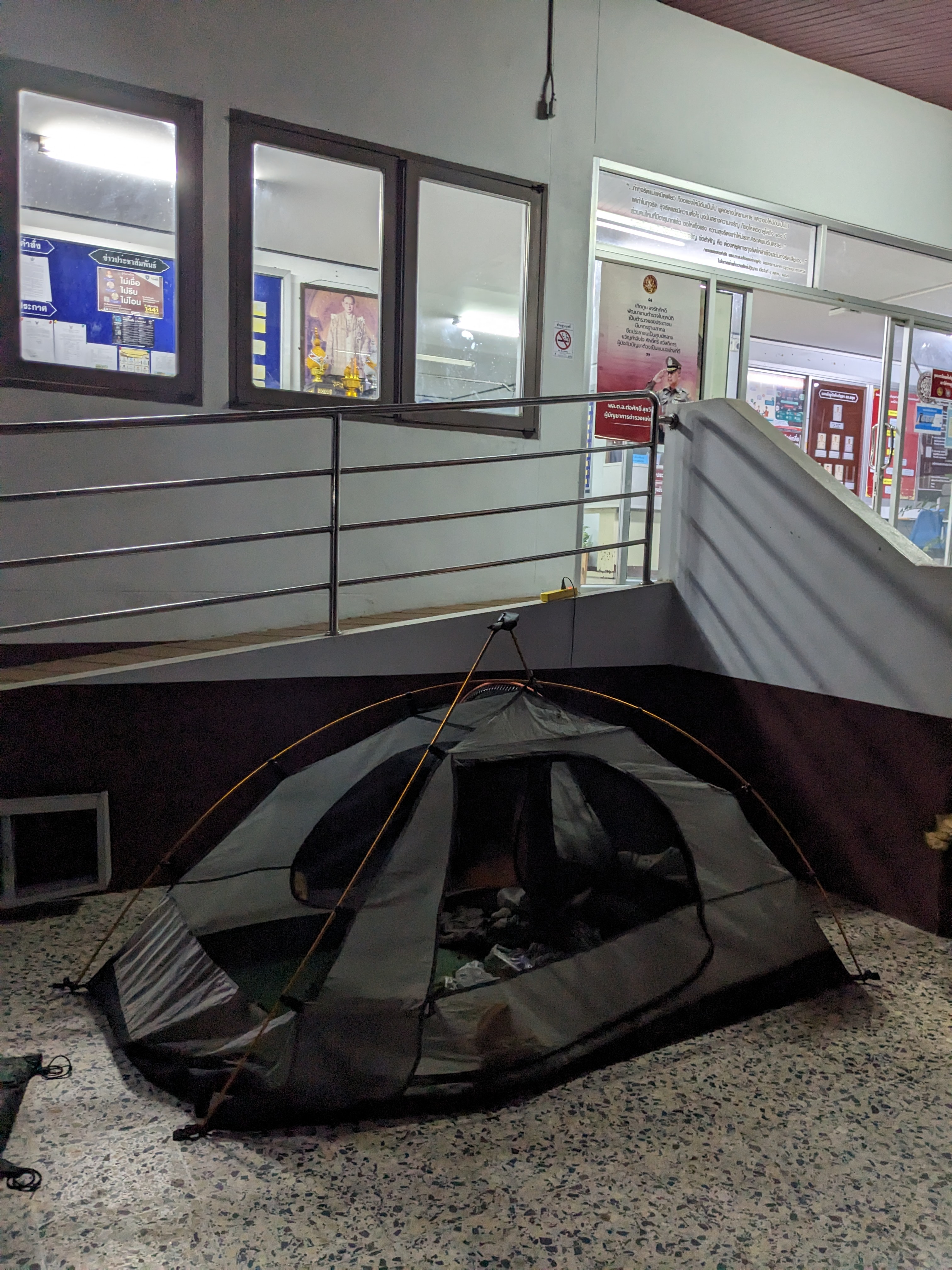
The following day, I attempted a 200km ride to Chumphon, to take the night ferry to Koh Tao. However, my plan was disrupted by heavy rain, which I didn’t want to ride through and I had to settle for sleeping at a police station, something I’d wanted to try in Thailand. The police were very hospitable providing me with an evening meal despite me insisting I had food and then packed me off the next morning with a huge bag of coffee sachets and some Nam Thom, a local energy drink.

The following day in Chumphon after booking the night ferry, I had to occupy myself for an afternoon in which I spent a few hours sheltered in a 7 eleven from the rain before heading down to a very quiet beach.

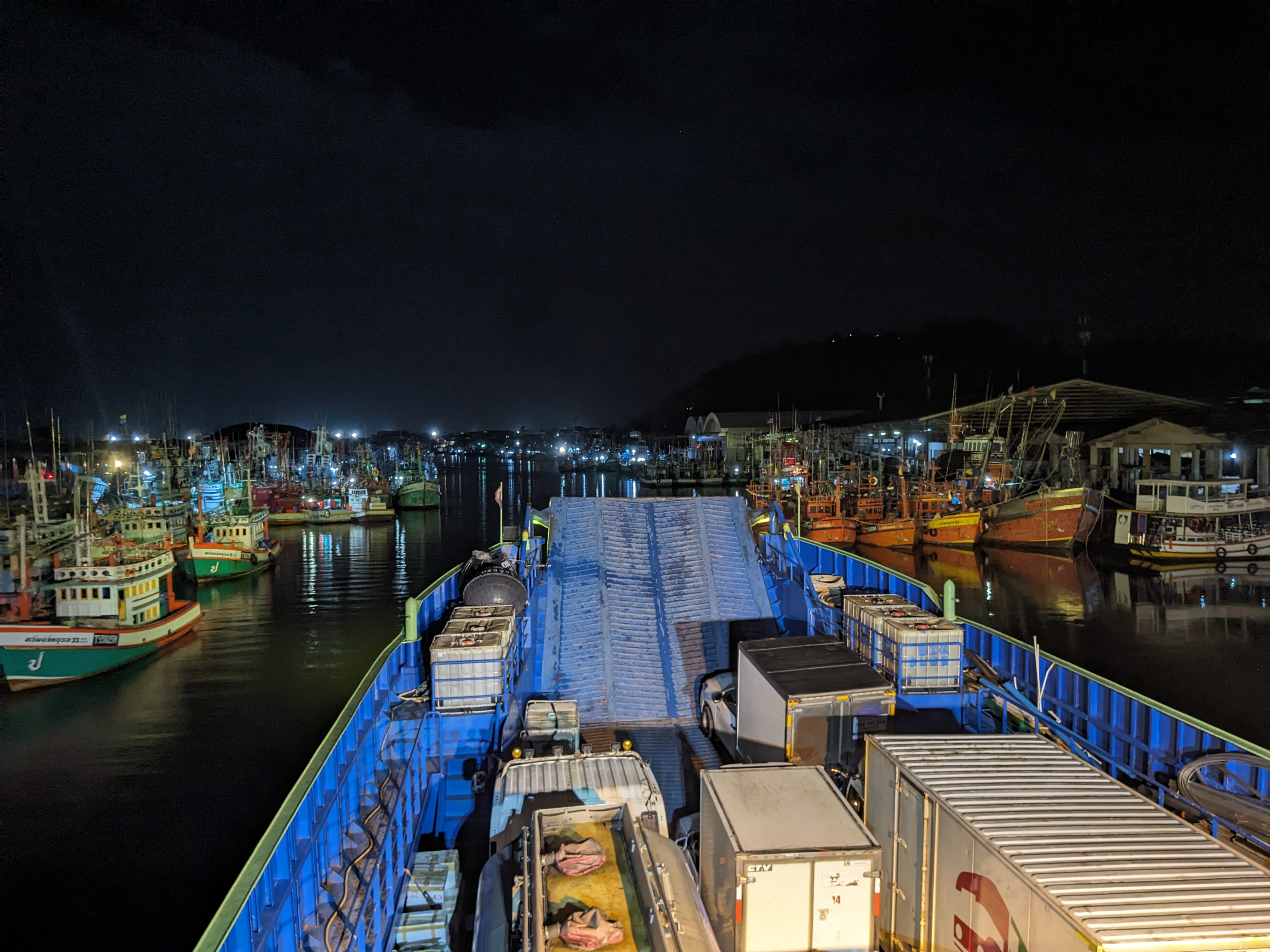
The night ferry was a great atmosphere with a few of the other Backpackers on board having the same idea as me, stocking up on some beers for the journey. Sitting on the top of the ferry enjoying beers was a great way to spend the evening, watching as the boat steered out of the harbour into the sea.

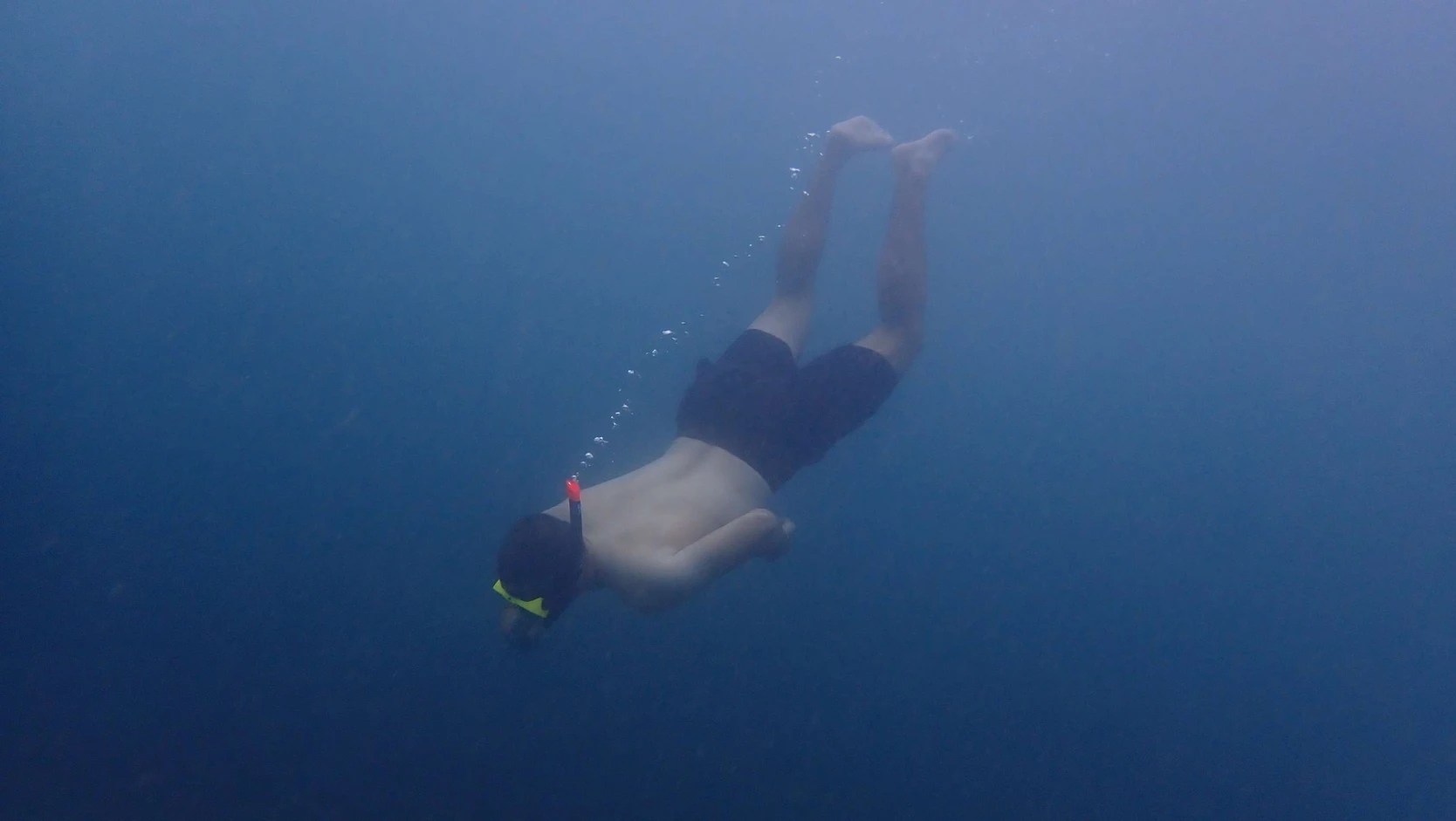
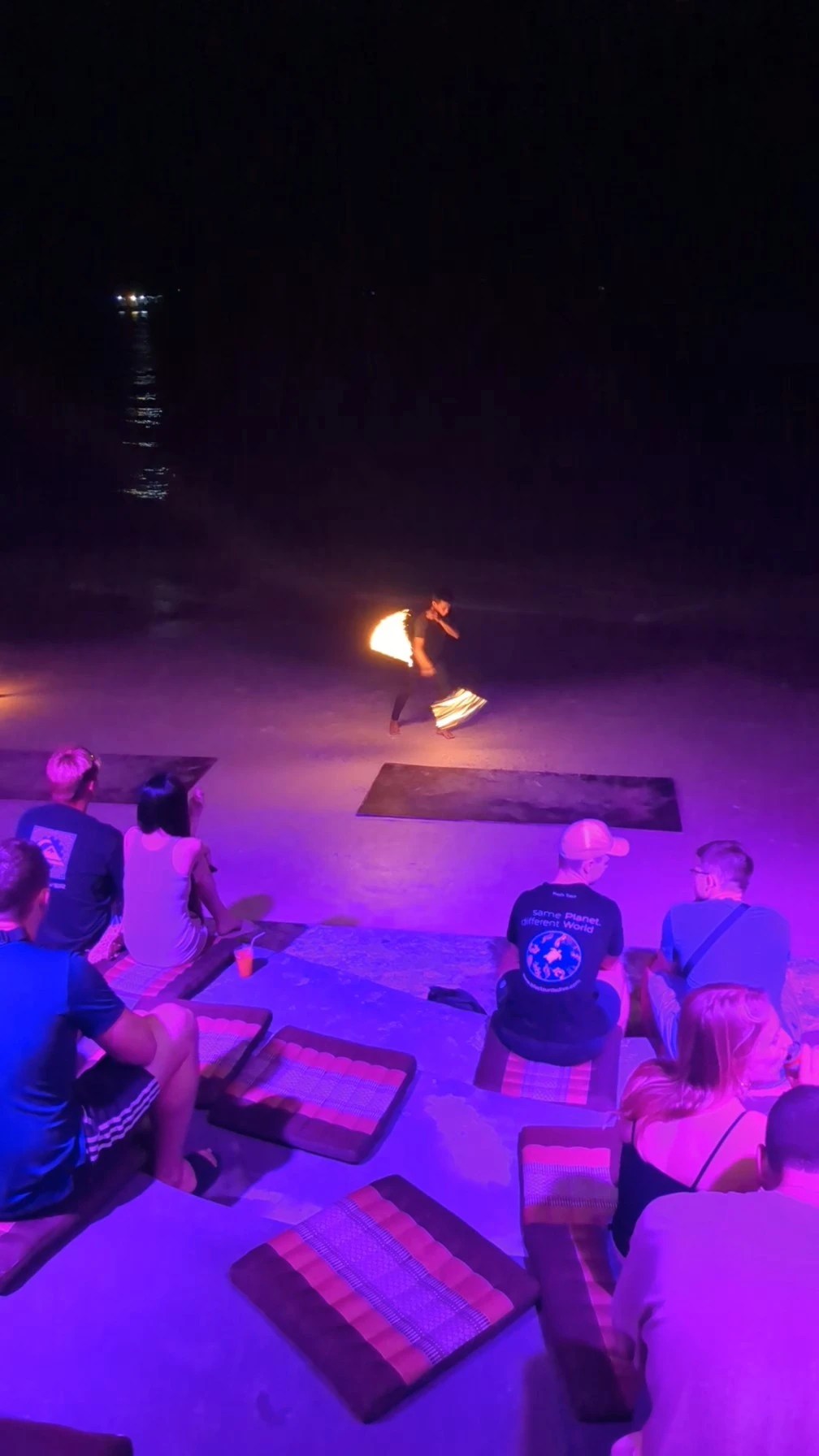
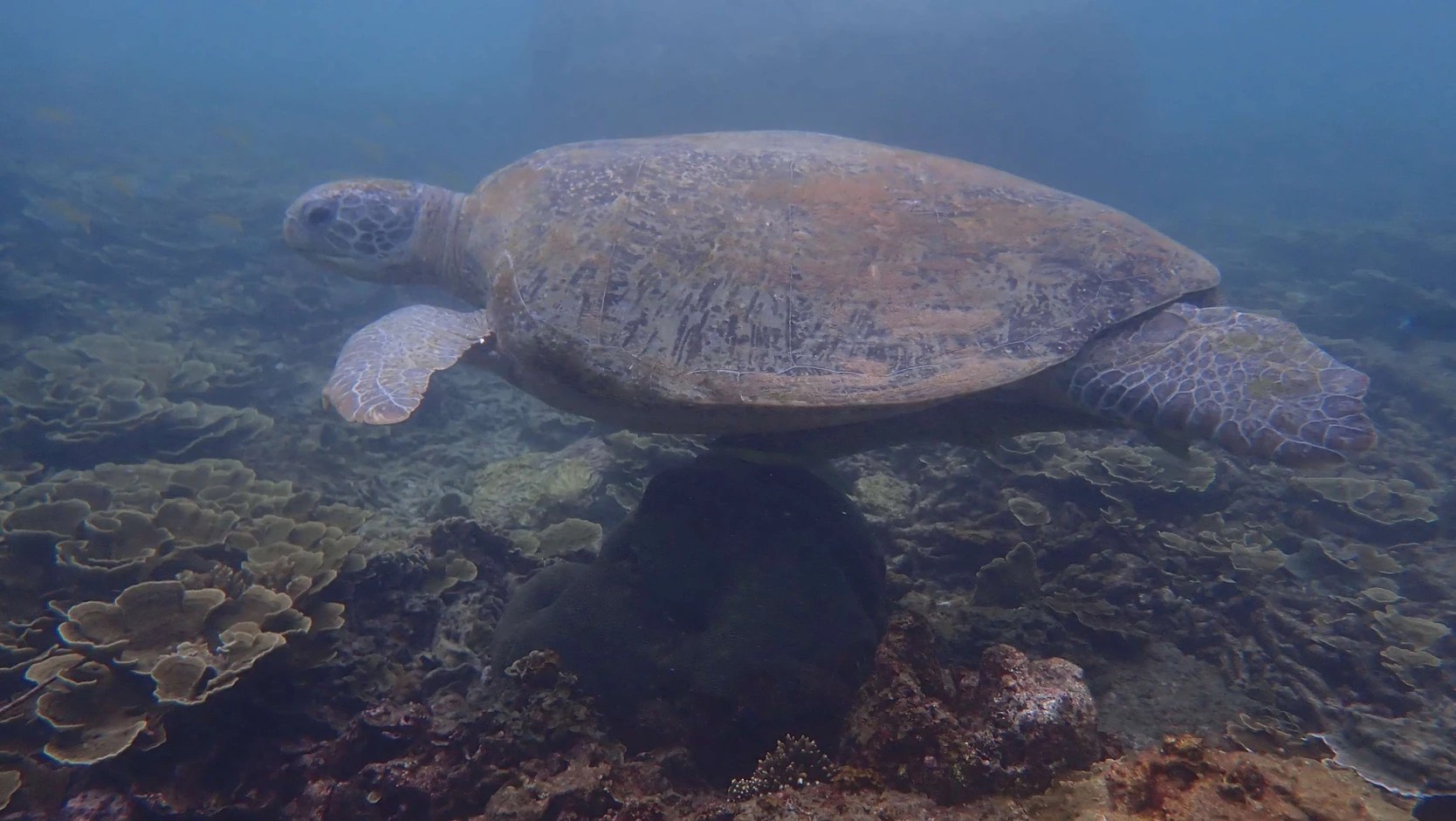
Arriving in Koh Tao just before sunrise was fantastic as we could watch the sun come up over the island as the ferry docked. I spent my first day on a snorkeling tour, visiting different bays around the island by boat seeing some beautiful fish and a huge turtle. That even was spent visiting some of the beach bars which had a great atmosphere.

The next day was a relaxing one, spent mostly at the hostel trying to get some admin done sheltering from some torrential rain.

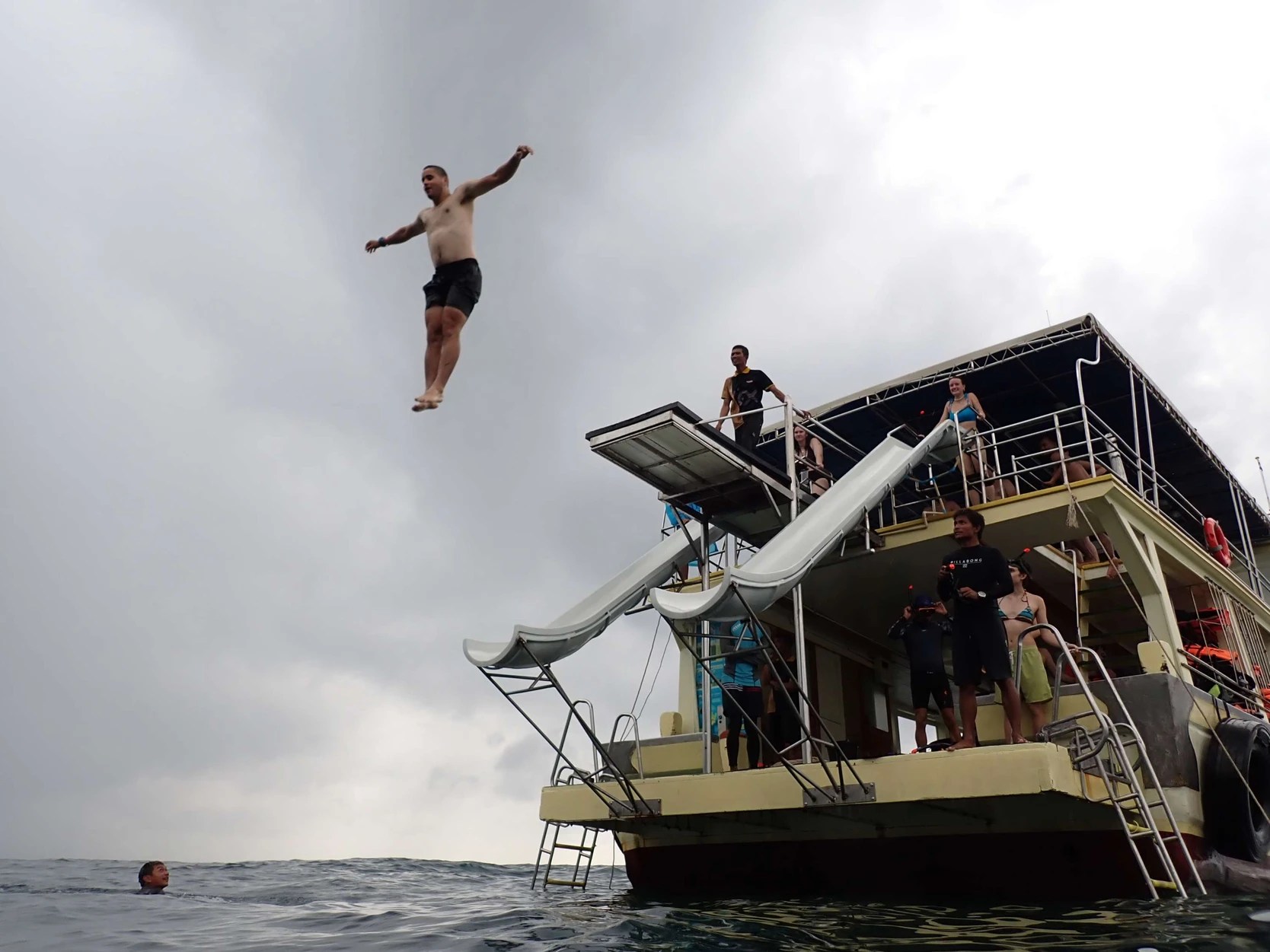
Then for my final day on the island, I explored the other side, encountering steep roads and beautiful beaches, including Tanote Bay Beach, a busy but nice beach with a huge cliff jump which I felt I must do.

After three days on the island, I looked forward to being back on my bike. The island was beautiful and I can see why people learn to scuber dive there, but it didn’t have much character to it. It was also full of Brits most of who were there on a drinking holiday. This was fun to join in with but after a few nights I was ready to leave.

Leaving the island, I took another night ferry to the south and crossed to the west. At the west coast beaches, I noticed tsunami warning signs saying to head inland at the feel of a earthquake, a reminder of the devastating impact of the 2004 Boxing Day tsunami killing 5000 people in Thailand alone.

In Southern Thailand, I’ve been asked more than ever where I’m going and I’m never really sure how to answer. I don’t know if they want the next town, the next big city or my final destination, so I normally just say Australia and get a bit of a confused look back.

For my final two nights, I stayed at temples. Nearing the Malaysian border, there were fewer temples with the majority of people being Muslim. It felt like the few temples often got cyclists visiting and quickly gave me a place to camp. For my final night, I was greeted by some Thai military at the temple who kindly shared their meal with me and enjoyed watching as I tried to eat their spicy food.

Travelling through Thailand has been very easy. The foods been great with my favorite being the noodle soups, everyone’s been friendly and finding places to sleep was easy. I think though it’s lacking the chaos and excitement of Laos or Vietnam but I’ve definitely enjoyed my time in the country.

Cambodia

Crossing into Cambodia, I was uncertain about what to expect, given the mixed reviews I had heard. Some described it as a beautiful paradise falling quickly in love with the country, while others saw it merely as a necessary transit from Vietnam to Thailand via Angkor.

The border guards were notably friendly. Acquiring the visa was very fast as after I’d filled in my name, nationality and passport number they declared that was good enough ignoring the other questions, stamping my passport. After a few photos with the guards, I was officially in Cambodia.

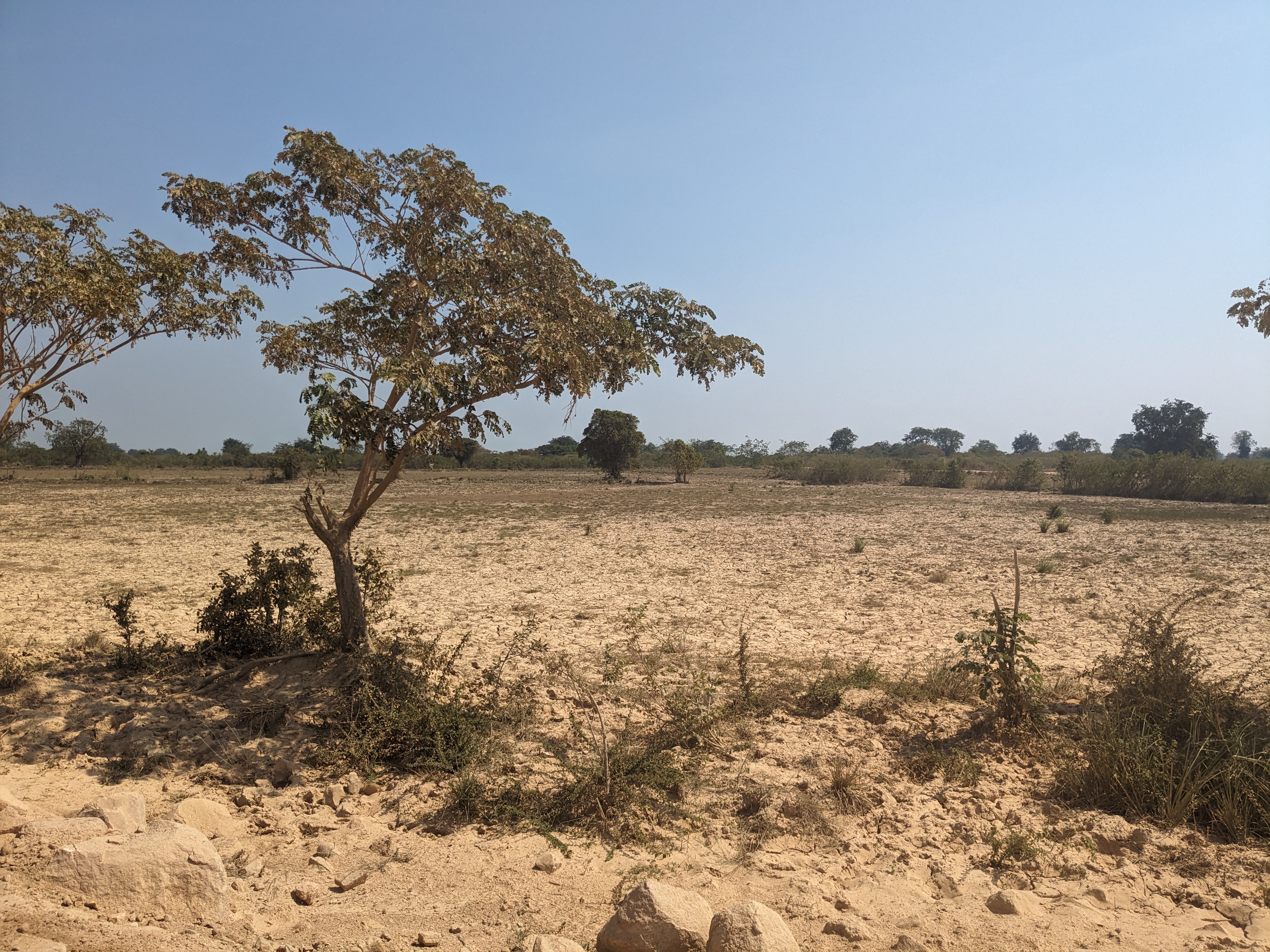
Immediately, I felt the country was less developed than Vietnam. I’m not too sure why as nothing really stuck out as being clearly behind, but I think it might’ve just been the amount of empty dusty land of that appeared everywhere. It then came as a surprise discovering the prices of everything were noticeably higher than anywhere else in south east Asia.

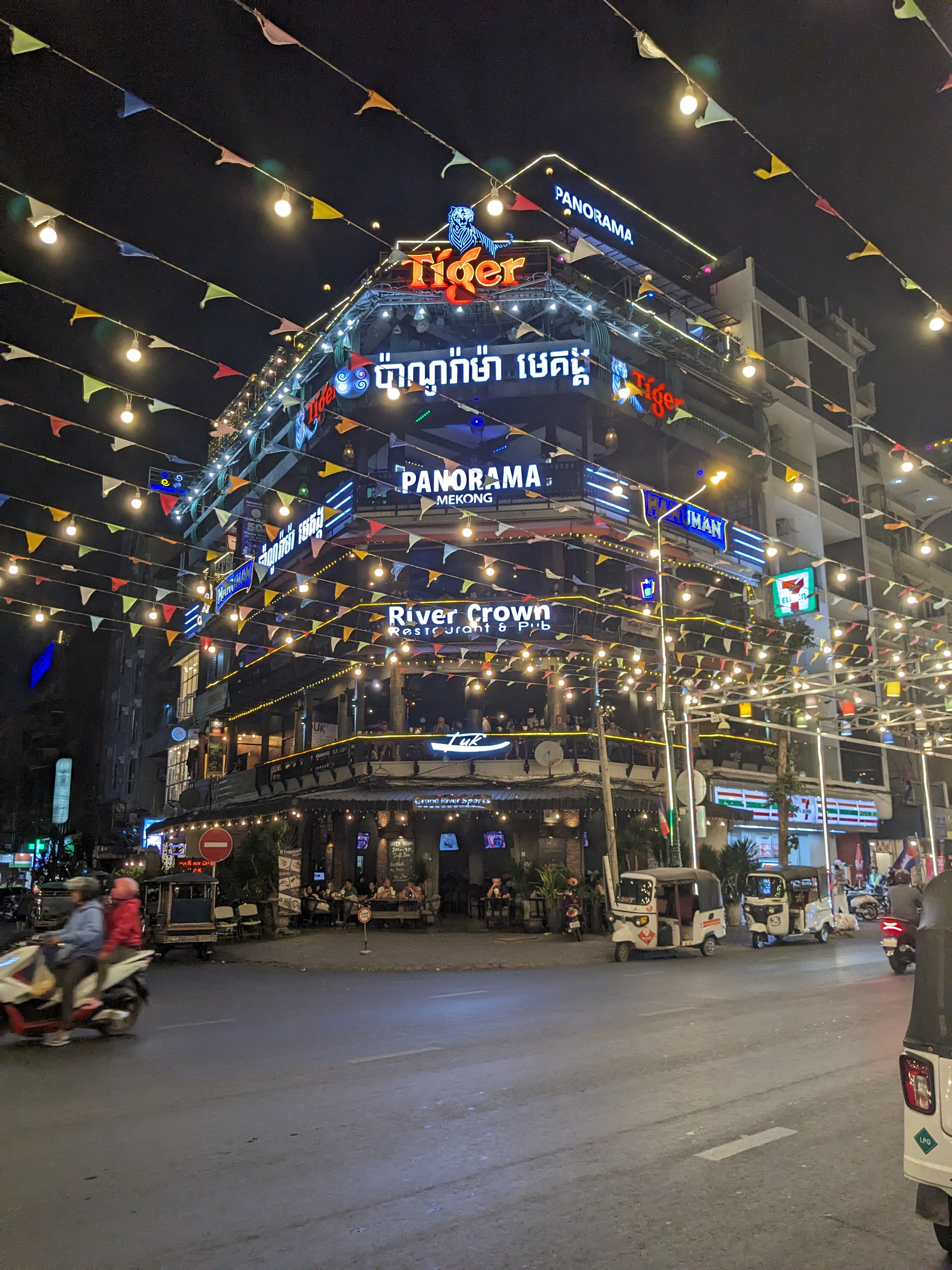
I first aimed for the capital city of Phnom Penh, where after checking into a hostel went for a walk around. The city was easy to walk and had lots to offer with markets, temples and a great embankment. As the sun set it became lit beautifully by night, with perhaps a touch of tackiness from a huge Carlsburg sign and Christmas decorations in mid-January.

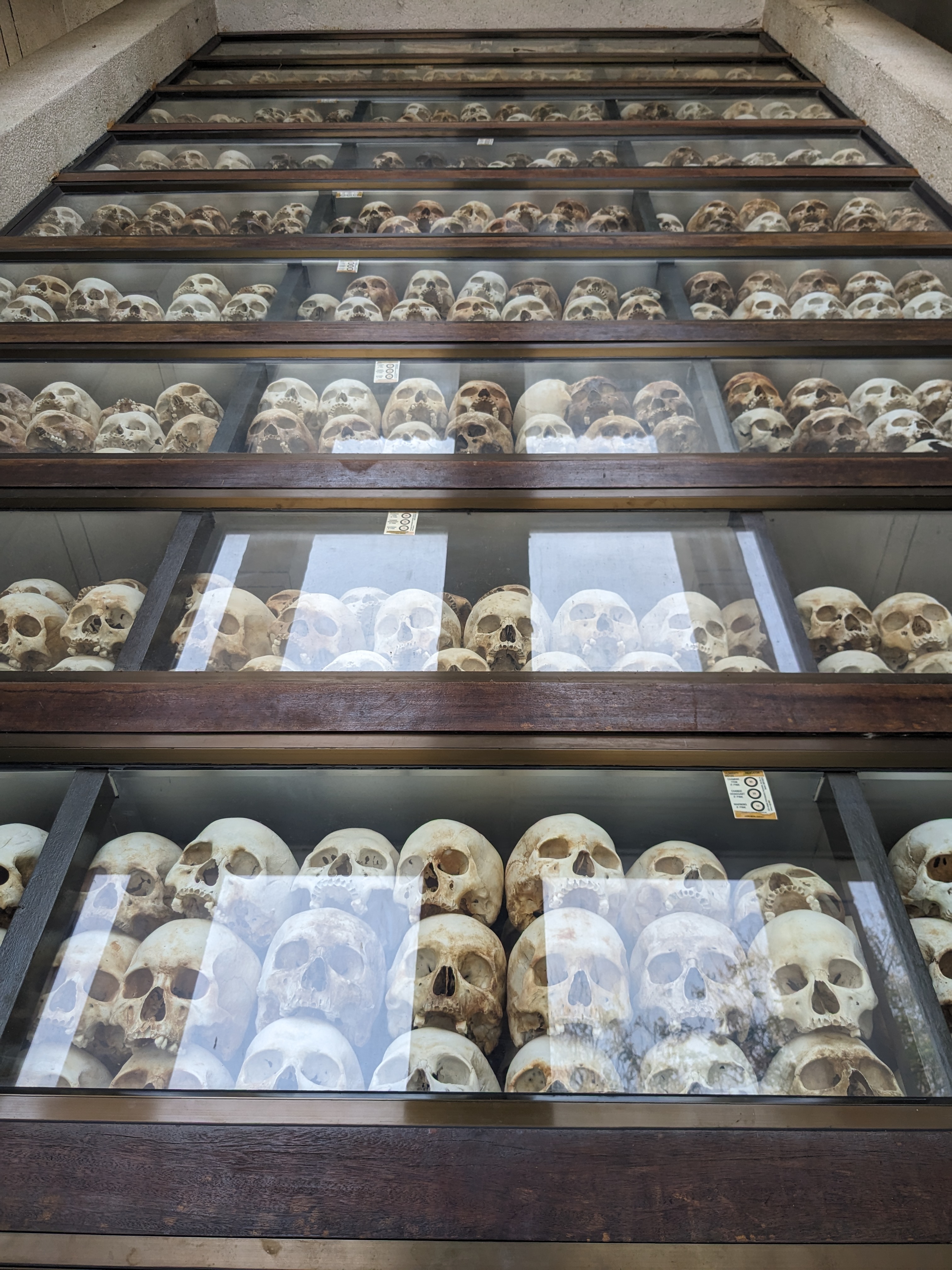
Departing the next morning, I visited the somber site of Choeung Ek Genocidal Center better known as the Killing Fields. This was one of many places where the Cambodian Genocide took place in which approximately 2 million people (a quarter of the whole countries population) were killed by the Khemer Rouge. It was tough to grasp the enormity of the tragedy with almost 9,000 people were killed at the location, as there is little that remains. The memorial built on the site, filled with human skulls and bones was a shocking reminder.

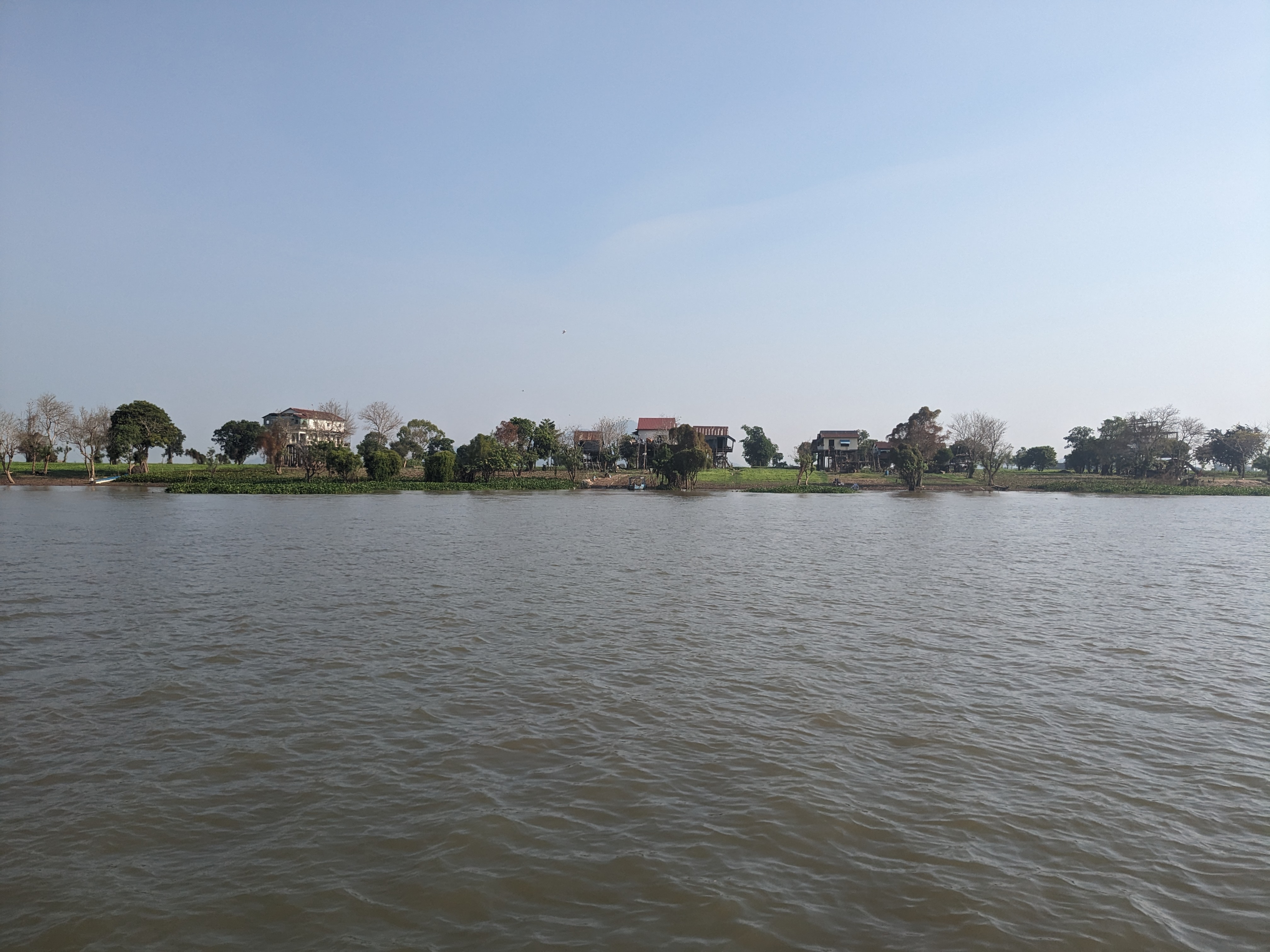
To reach my next stop of Siem Reap, I would need to cross the Tonle Sap river which I decided to do by a small ferry taking me off the main road. Heading north, after a day and a half, I made it to Kampong Chhnang somewhere which felt untouched by tourism. The town had a chaotic market and after spending a while trying to find the ferry port I managed to get a ticket and board with lots of strange looks from the locals. The boat ride was enjoyable, navigating round the islands of this huge river and witnessing people living in the middle in houses on stilts.

The other side of the river led to a dirt track, this made progress tough in the heat with no shade alongside the road. Joining the main road between Siem Reap and Phnom Penh was quite the relief and I was surprised by its quietness, expecting heavy traffic between the two cities.

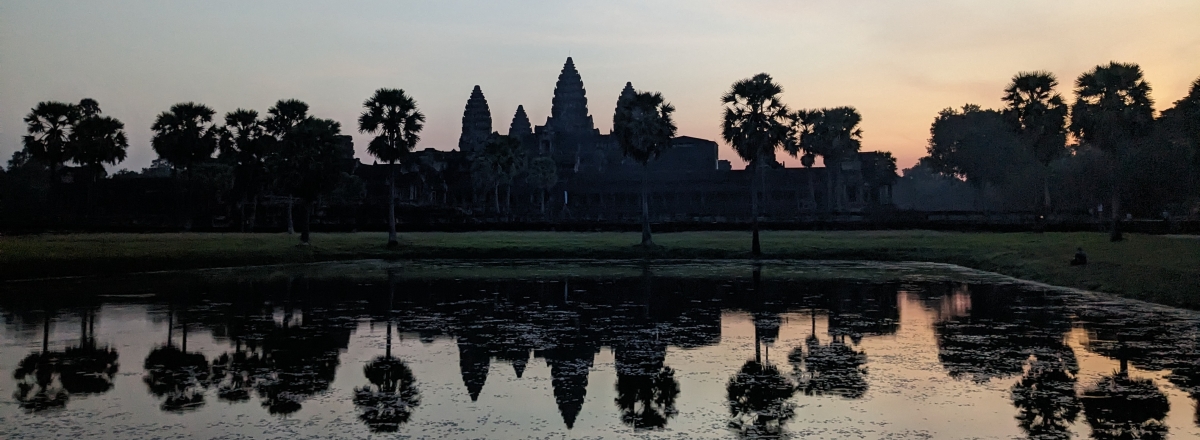
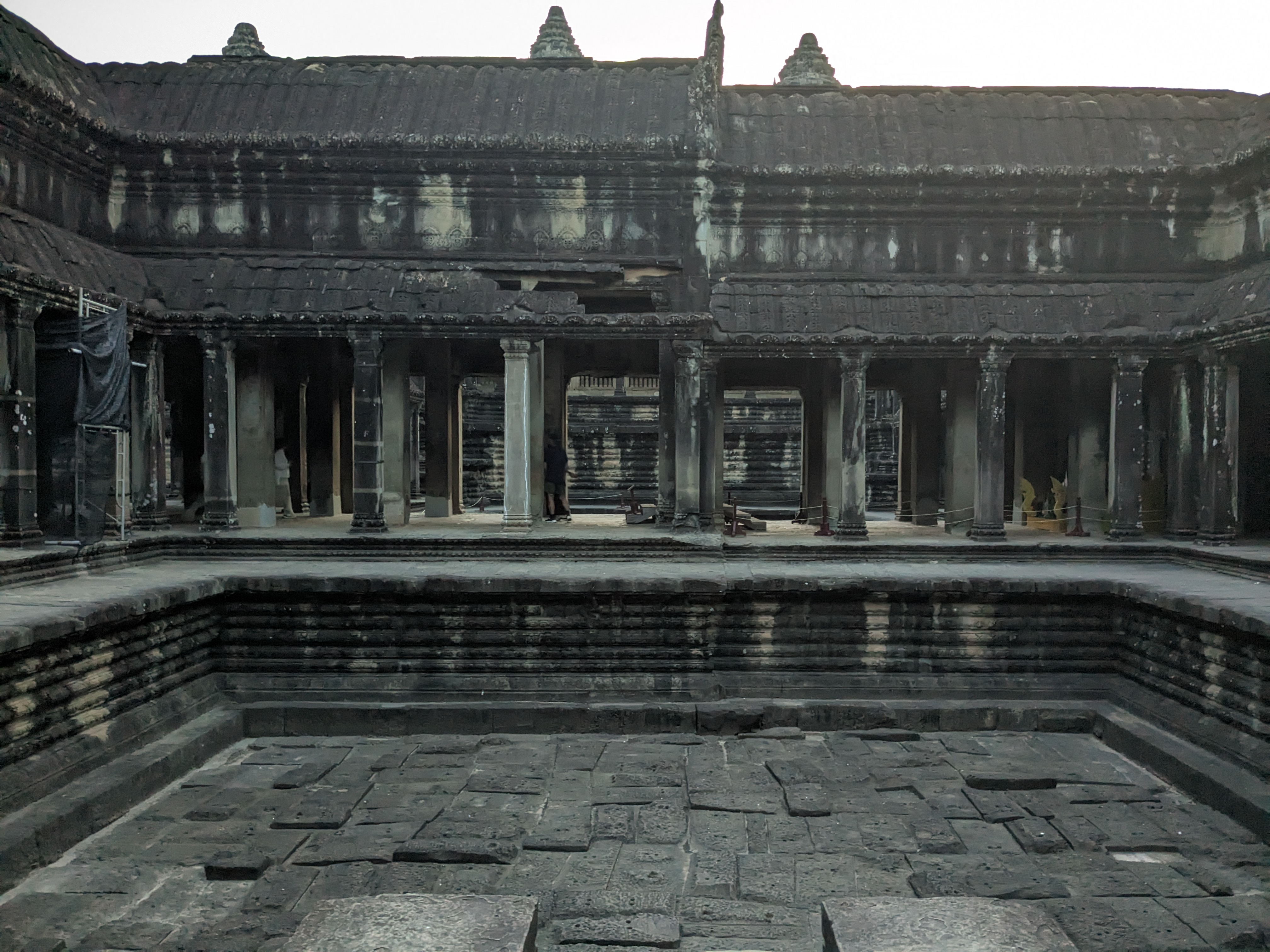
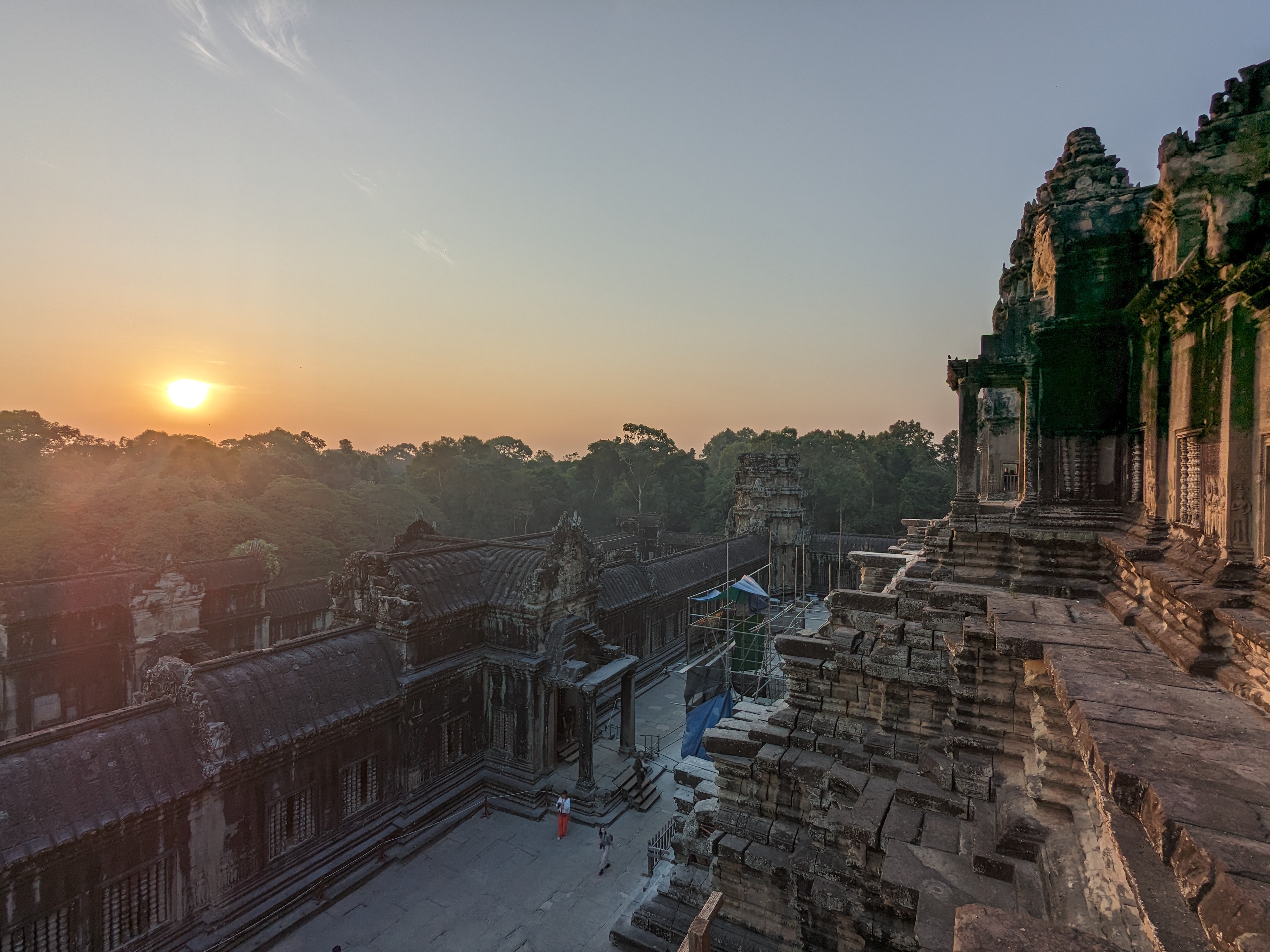
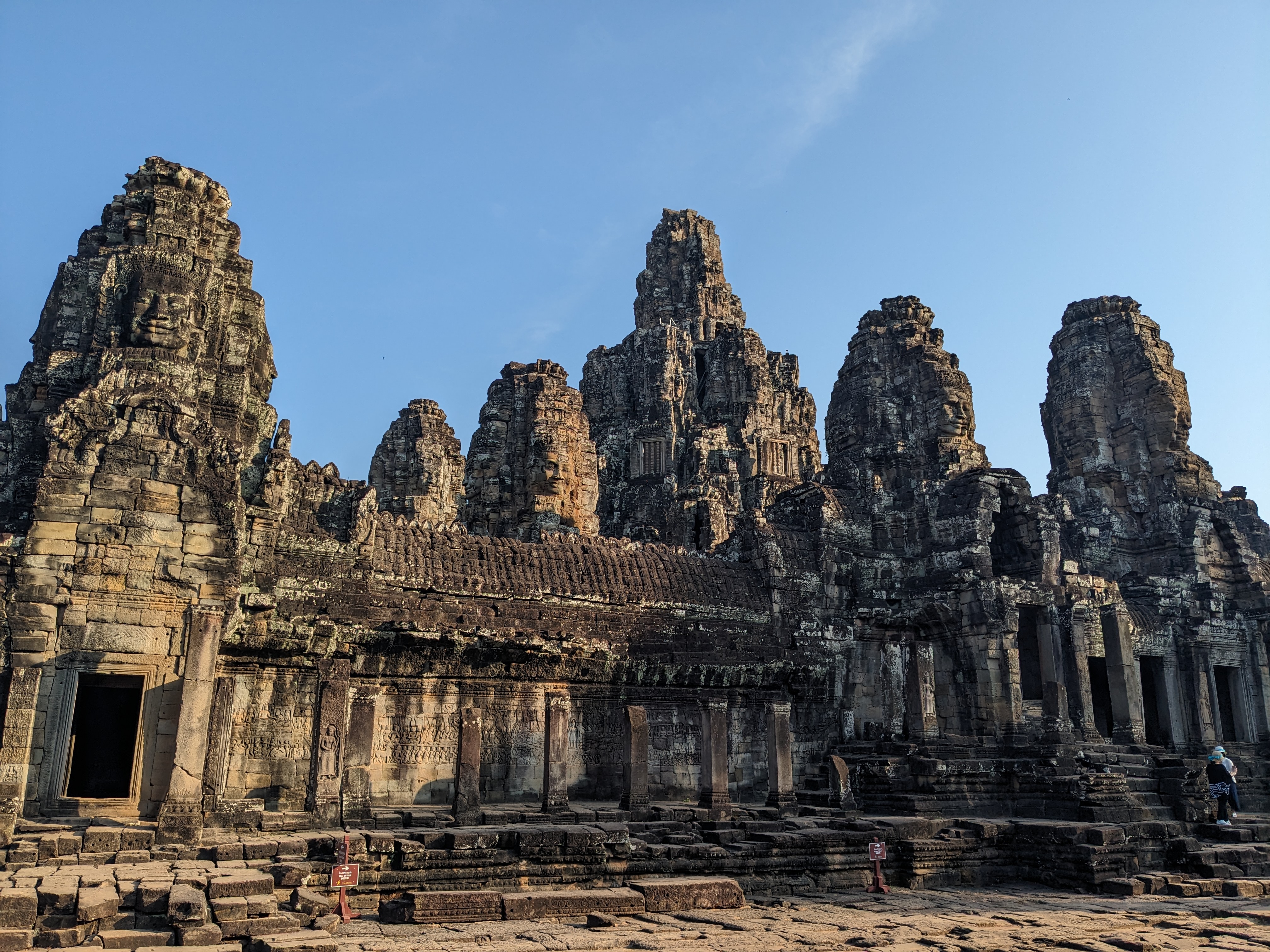
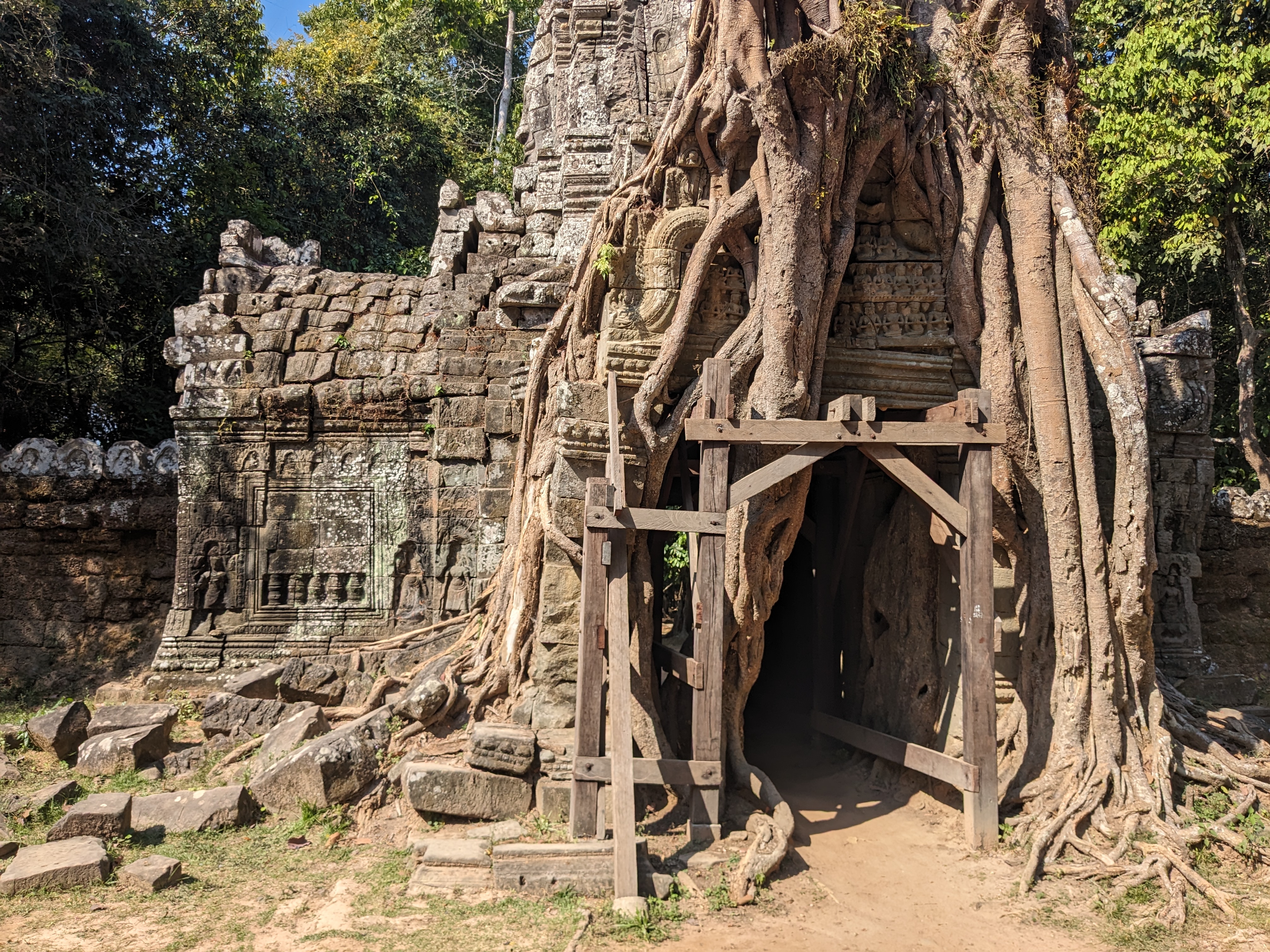
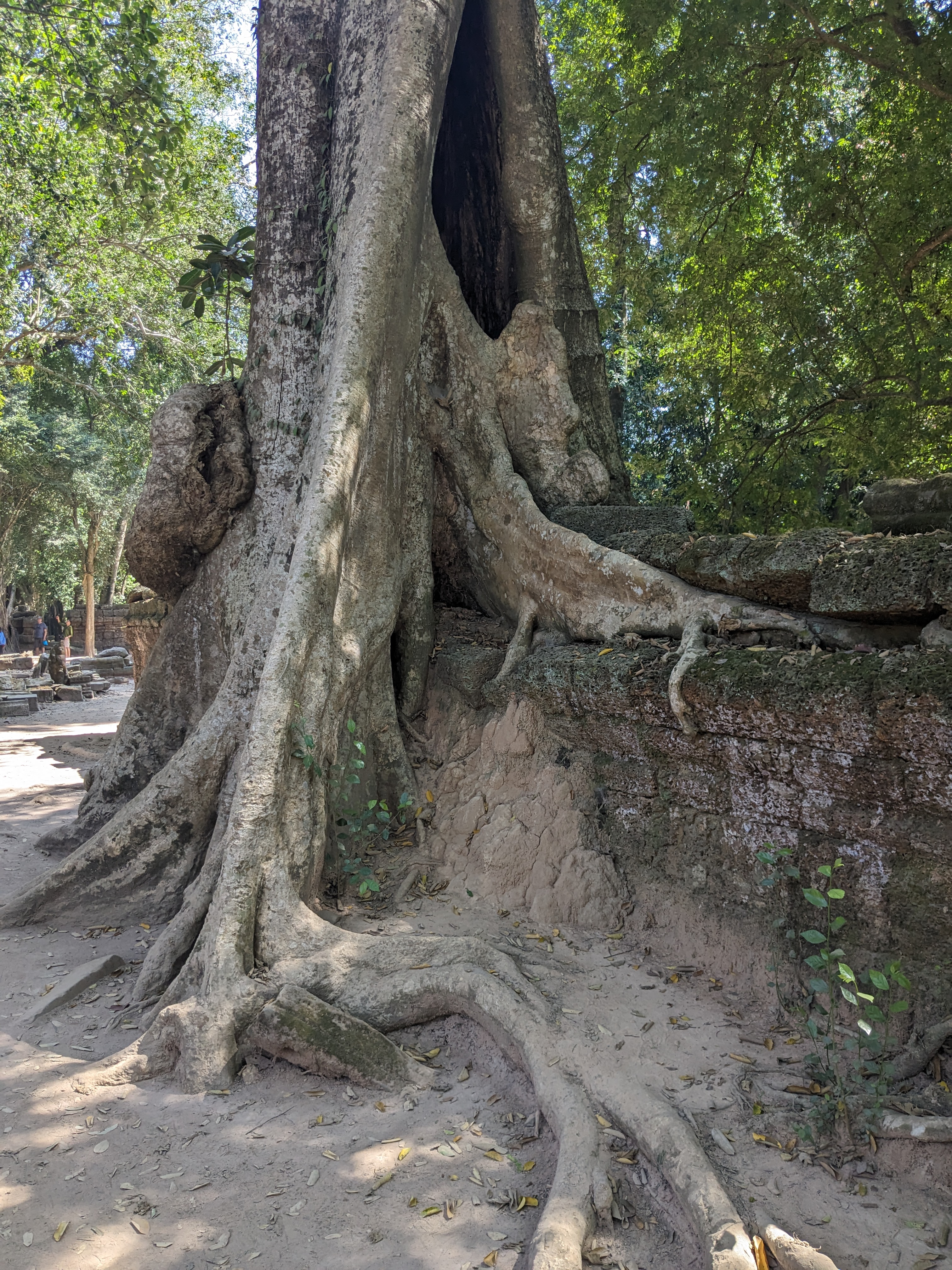
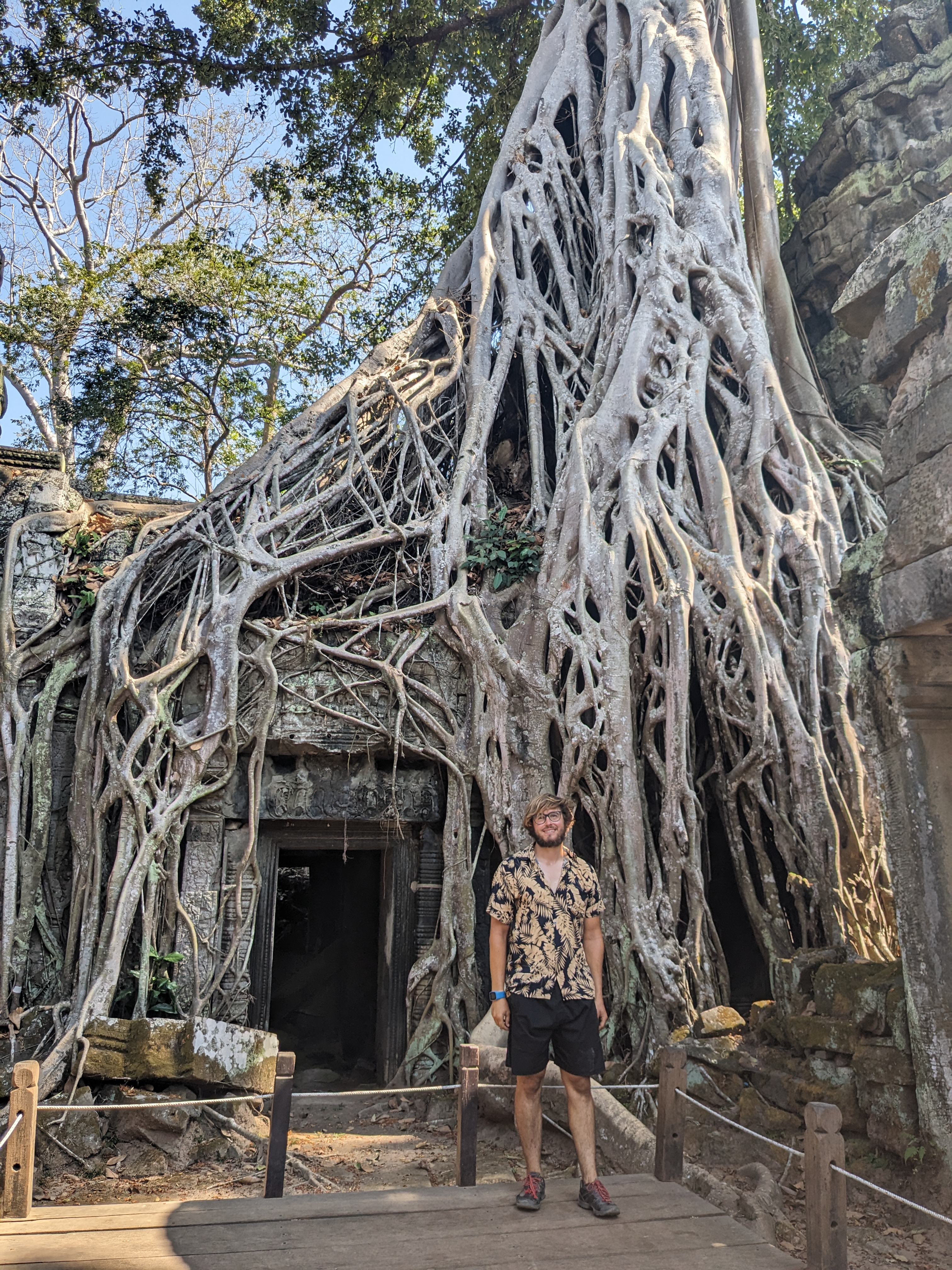
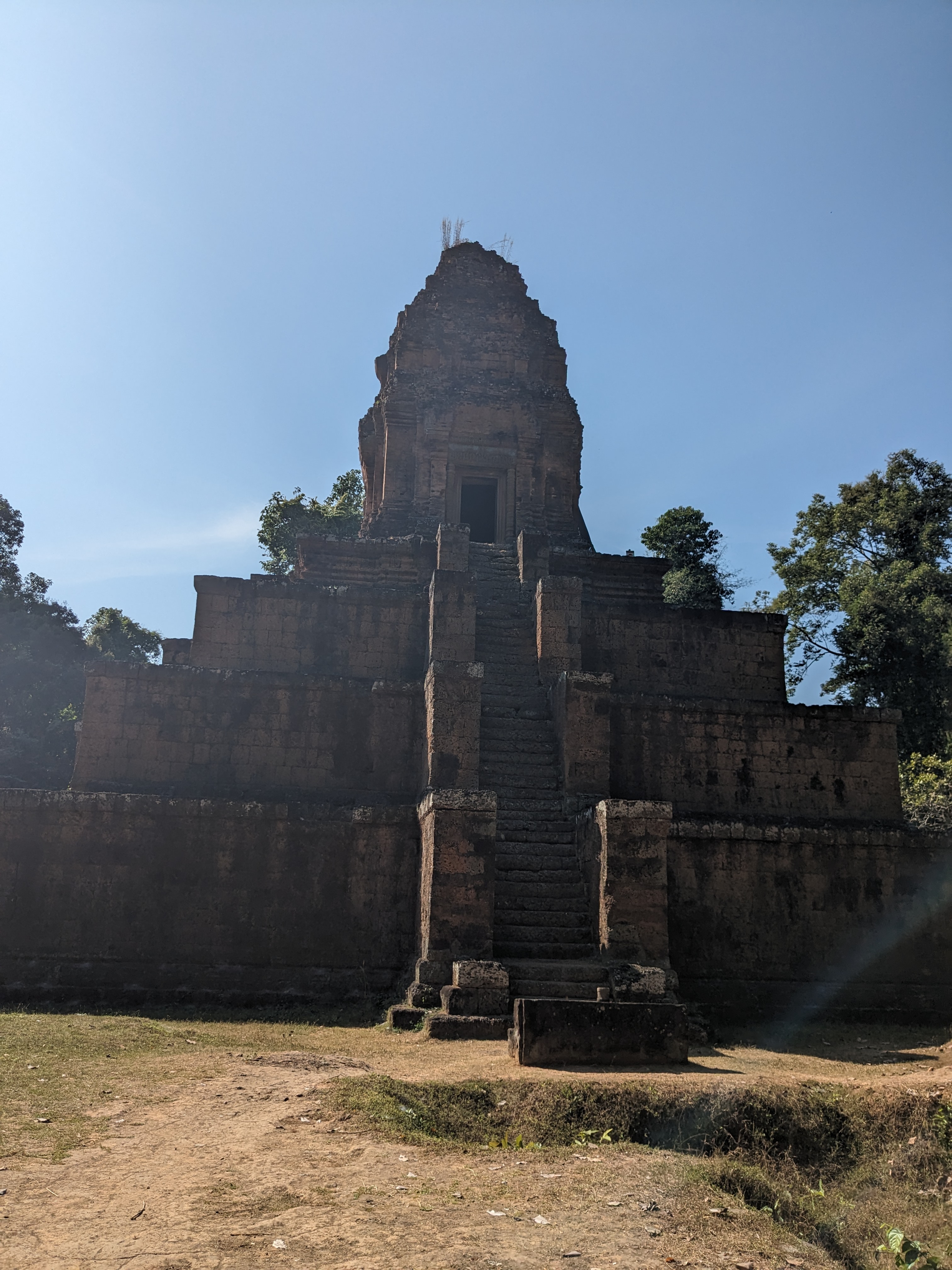
Siem Reap served as a base to explore Angkor, the ancient capital of the Khmer Empire home to many temples, the largest being the iconic Angkor Wat. The temples, built between the 9th and 14th centuries, stood in various states of disrepair, with some being restored and others quite dilapidated.

I arrived to Angkor Wat for sunrise and throughout the day went to about 10 different temples cycling between them. The lack of restrictions on exploring was notable, as you could climb everything or walk on the small ledges around the outside of each one, facing 3m drops. I was also impressed with how quiet it felt. Although it’s a huge tourist attraction, due to the huge size of the site with so many temples I almost felt I had the place to myself. I took lots of photos andv here are some of the highlights from a few of the temples…

Angkor Wat:

Tonle On:

Prasat Preah Khan:

Eastern Mebon:

Ta Prohm:

Phnom Bakheng:

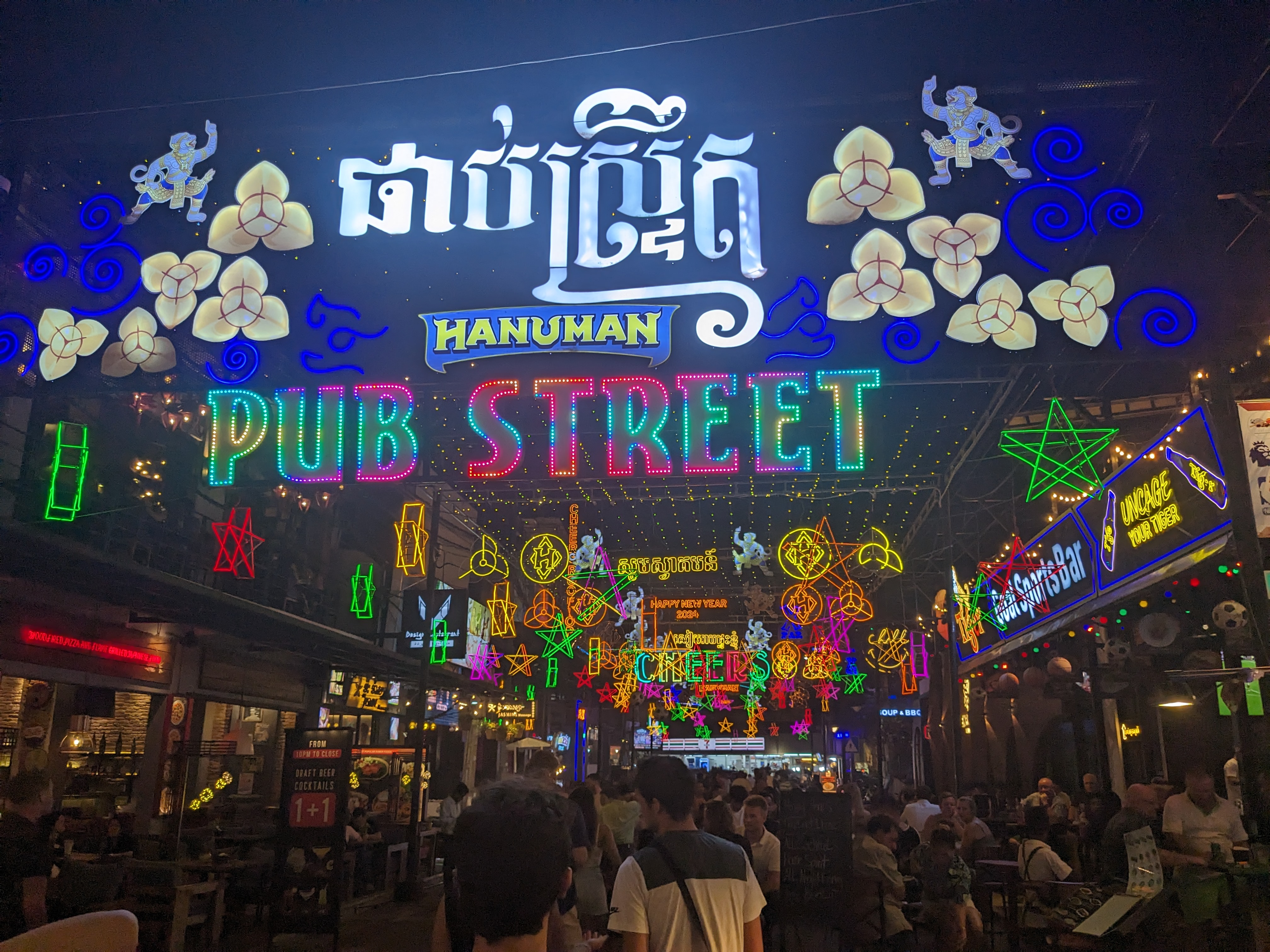
That evening, I ventured onto Siem Reap’s pub street offering pretty much the same night life as the other cities I’ve visited, with one street pumping out loud music although it was the first place where I felt a noticible precence of locals along with all the tourists.

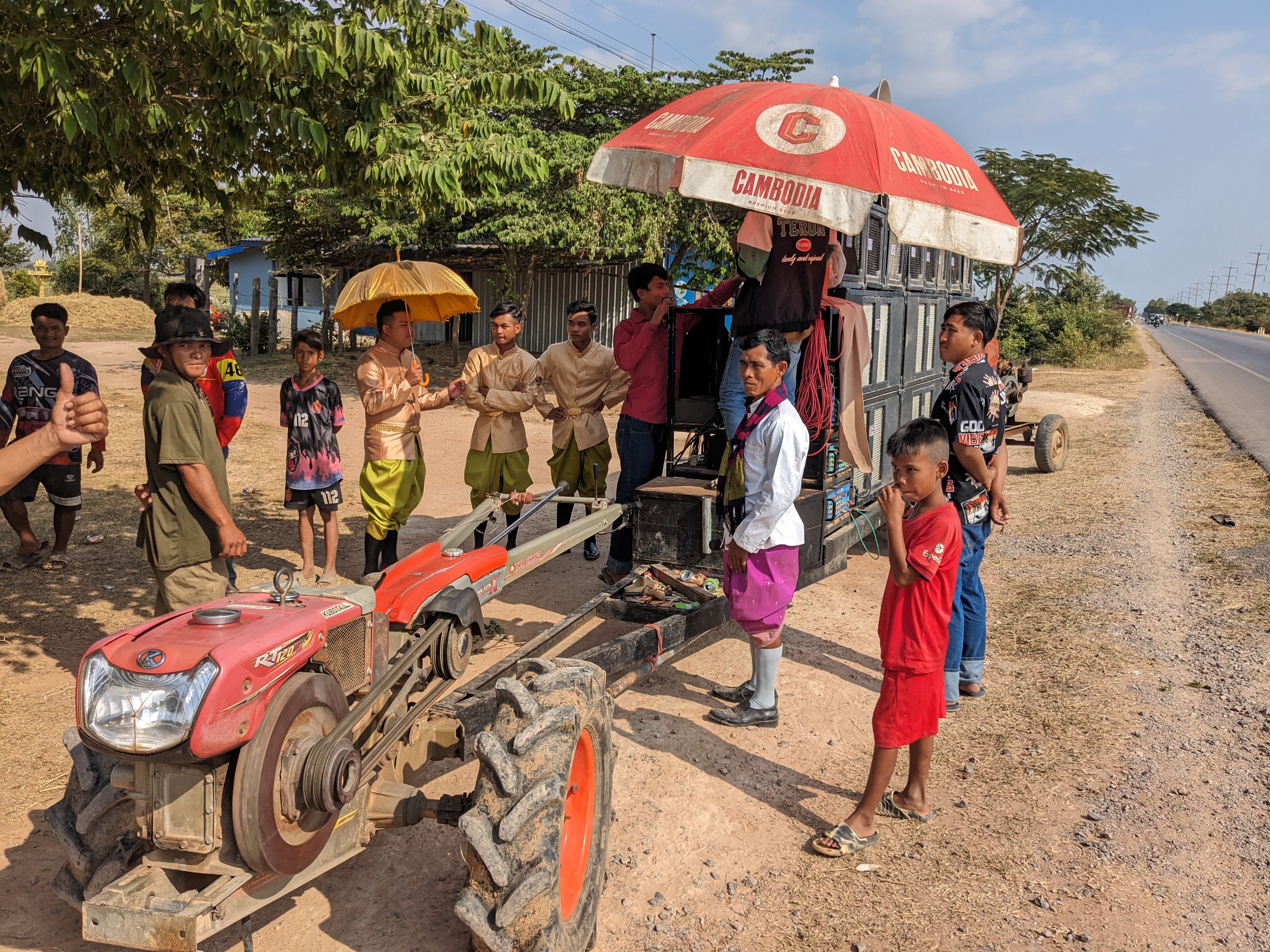
The following day after leaving Siem Reap, I encountered a group of guys offering me a cold beer in the middle of the day, accompanied by a tractor towing a large speaker system with a dj on top. I accepted their offer, and tried to get an answer as to why they were partying on a Sunday afternoon but never did. Soon, the police showed up but after they accepted a beer, they weren’t too bothered by what was going on. After about 30 minutes, the guys suddenly seemed quite keen to get rid of me and I got my answer as the what they were doing when a wedding party showed up.

Before leaving Cambodia, I took a detour through the Cardamon mountains. I was hoping for a few days riding small roads through the jungle however, this never came and instead I ended up on a dusty quarry road full of trucks. There were a few great views but not the feeling of being deep in the jungle I was hoping for.

After almost a week on intense heat, I finally decided to get a hair cut and shave at on of the many Cambodian barber shops. The barber was very amused when I showed him a photo of what I wanted.

Cambodia, while easy to travel with friendly people, hasn’t been on of my favorite countries. The dual-currency system using both local riel and USD added a layer of complexity, with large businesses accepting both, small places only accepting riels, and ATMs only dispensing dollars. Whenever paying in USD the change would be in riel, so it was quite challenging to not be left with any riel when I left the country and also check they had given the correct amount. I avoided the Cambodian coastline, as it would’ve been a large detour and was told the once paradise has become heavily developed over the past decade. Although Cambodia had its charm with amazing sunrises and sunsets every day, I found myself yearning for the unexplored allure of Laos, the natural beauty of Thailand, and the exquisite food of Vietnam. In the last few days riding through the country, I was longing for some wild beaches and began looking forward to being back in the familiar territory of Thailand.

South Vietnam

Leaving Hoi An on Boxing Day, I embarked on a southbound journey through two rainy days along the coast. On waking up on my birthday, a welcomed change in weather lifted my spirits. I was anxious about having no plans for my birthday as I wanted to celebrate it in some way, so found a homestay in Tuy Hoa for the night hoping to meet some people.

The town was touristy but only with Vietnamese people and surprisingly the beach was empty. I treated myself to a slap up meal of hot pot (costing £4), something I had wanted to try in south east Asia. Returning to the homestay to my delight I met Christian, and convinced him to join me for a birthday celebration in the town. I had a great evening enjoying some beers at a local bar and we got along great chatting into the night.

Continuing south on the 29th, I spent the night on a stony beach, watching the tide roll in. The peaceful night turned eventful as the tide came very close and waves splashed up over my tent intermittently. I knew it would be alright as high tide had passed but I still didn’t get much sleep. The next morning, the beach was full of locals foraging at low tide so I swiftly packed up and left for Nhà Trang.

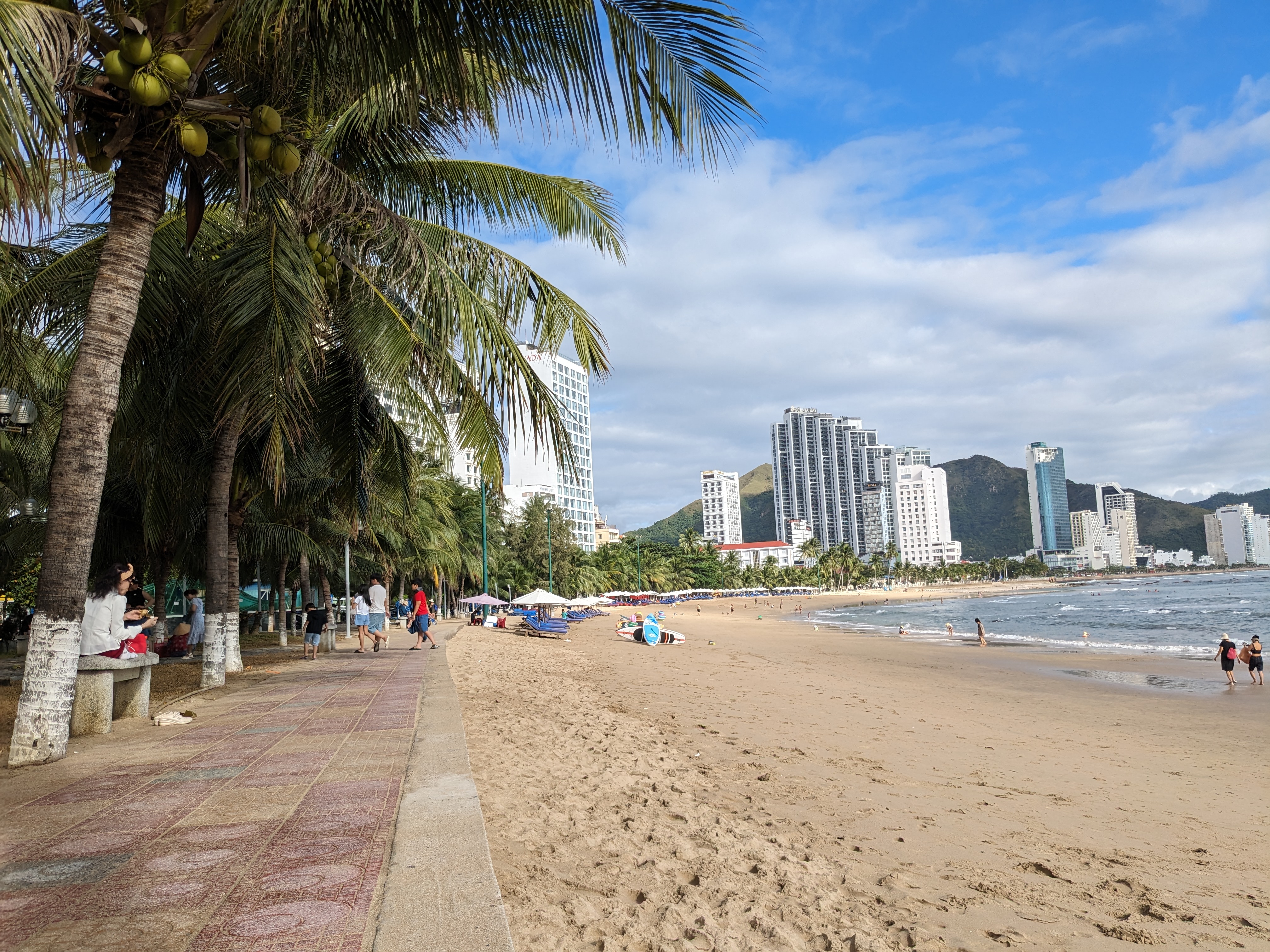
Nhà Trang, a popular beach town, felt somewhat sterile, dominated by hotels and palm-fringed beaches like it could be anywhere in the world. After a brief stop, I headed west into the hills heading for city of Da Lat. There was one big climb from sea level to 1500m with the sun was beating down on the black asphalt road. The road was beautiful and as I climbed I was rewarded with great views and cooler temperatures. I found a great camp spot for the night right on the side of the mountain.

Heading into Da Lat for New Year’s Eve, I checked into a budget hostel offering a NYE BBQ. The hostel was packed full and had a great atmosphere. The night unfolded with a local concert and fireworks at a stage in the town center followed by visiting a few bars.

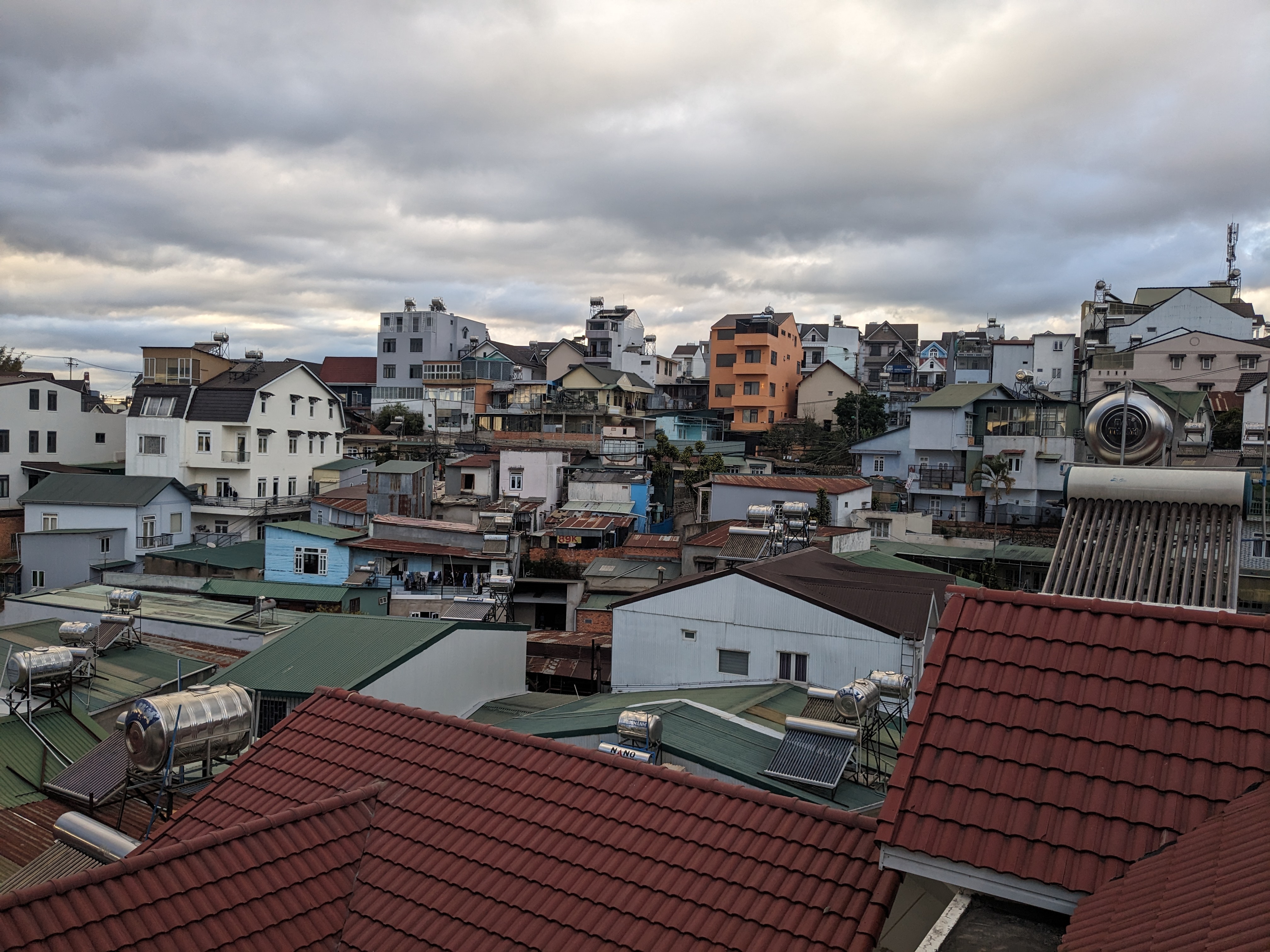
Da Lat was constructed as a French resort town in the mountains to get away from the heat but felt like any other Vietnamese city, impossible to walk around. The roads were full of motorbikes with no pavement anywhere and there was very little to see in the city.

I left Da Lat the following morning descending towards Ho Chi Minh City. Finding a camp spot seemed challenging amidst the roads lined with houses and tea plantations everywhere. Fortunately, an unfinished petrol station provided a suitable spot for my tent and I could finally tick off my goal of sleeping in an abandoned building.

The next day, I was feeling quite unmotivated so found a proper campsite costing £2 a night. Arriving early afternoon, I set my tent up next to the river and had a dip. Later, I met Lee and Dan, two British men on a motorbike adventure around south Vietnam. It was a very welcome surprise as I wasn’t expecting to meet anyone at this remote campsite. I help drink their beers and joined them for the evening around a fire.

I took a detour off the road to Ho Chi Minh to cycle around Hoi Tri An Lake. This route unexpectedly became single track used by the locals on motorbikes, but was fantastic fun to cycle. Navigating along these tiny tracks, I startled some cows being walked by a man, causing them to bolt over a fence into some woods. Unsure what to do, I froze which lead to him shouting at me and gesturing for me to go. Slowly moving away the final cow bolted. I felt bad but wasn’t really sure what I could’ve done.

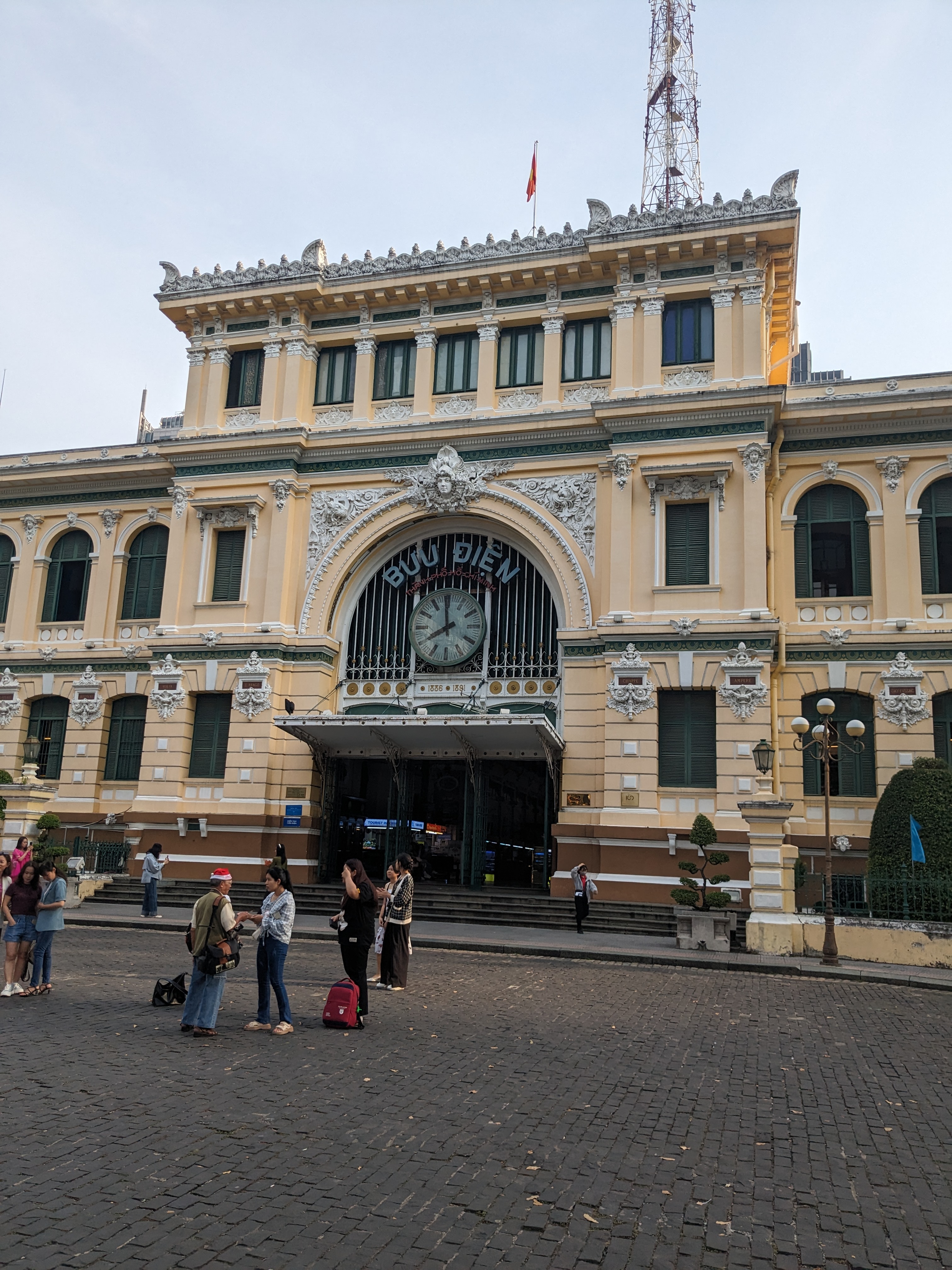
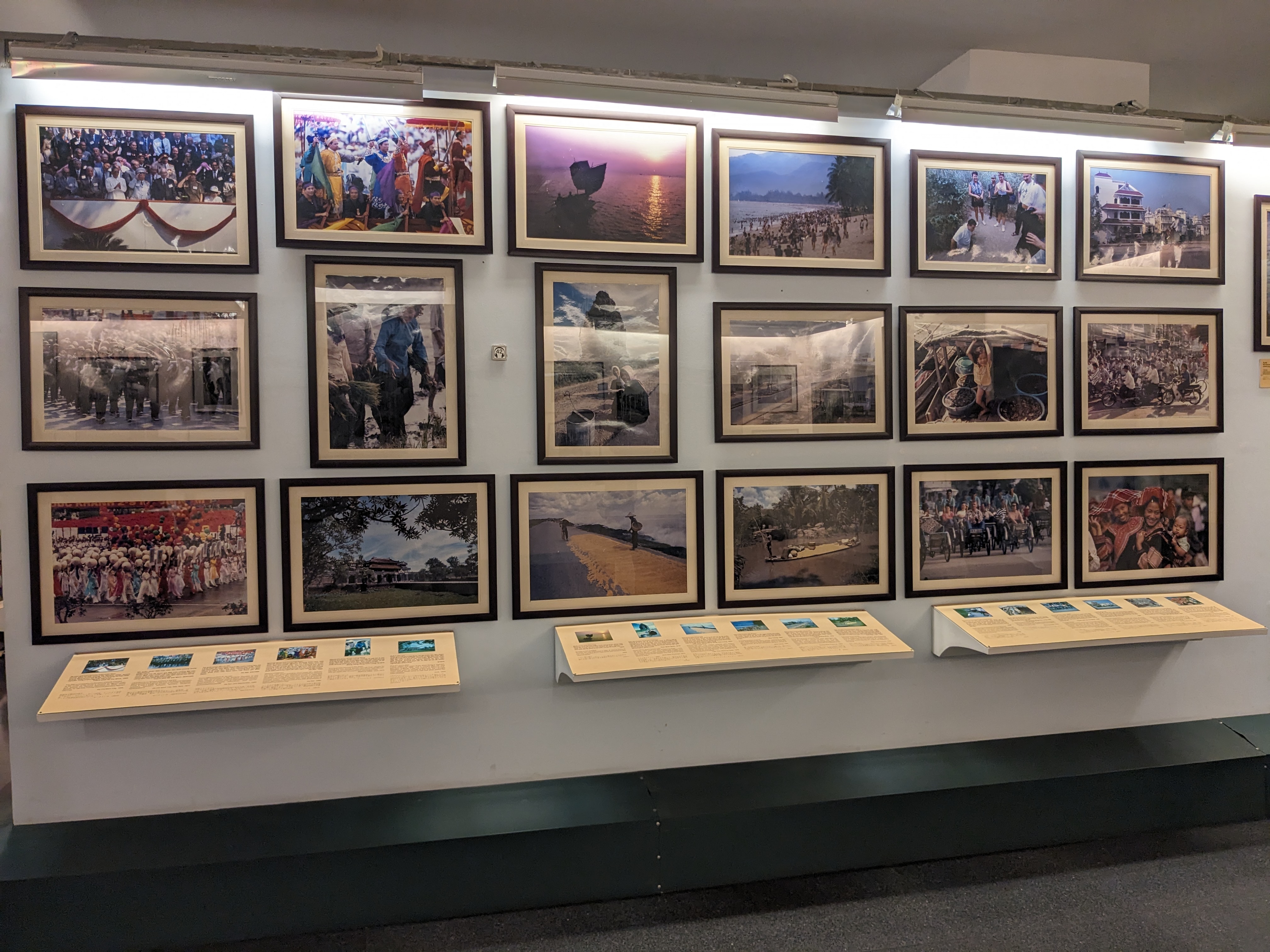
Approaching Ho Chi Minh city wasn’t a joyous ride, with busy main roads dominating from 50km out. In the city, chaos and skyscrapers mirrored Hanoi, but with more intensity. I spent a day going round the city visiting the sights and the war museum. This was a display of vivid, graphic images along with American tanks and aircraft.

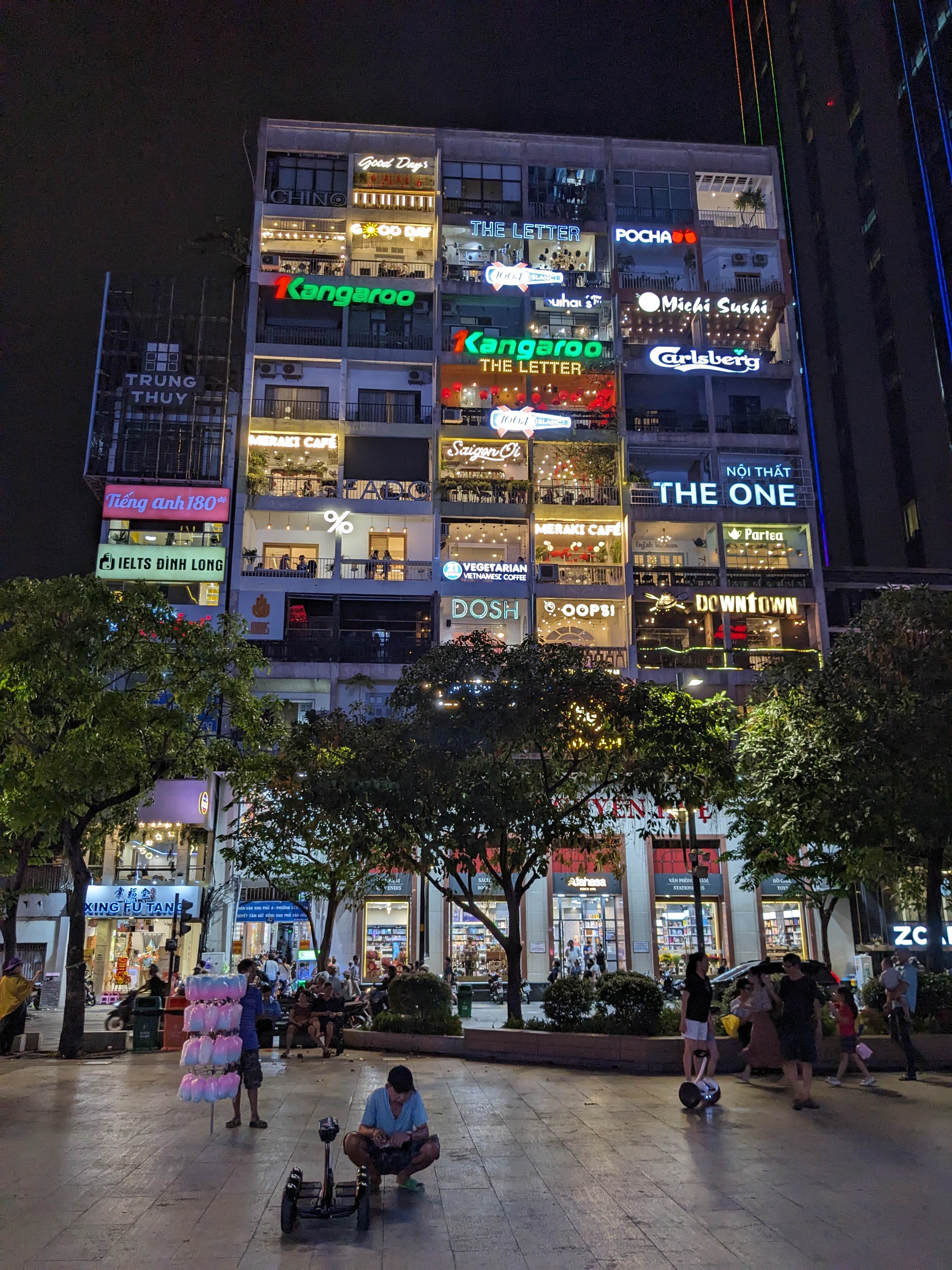
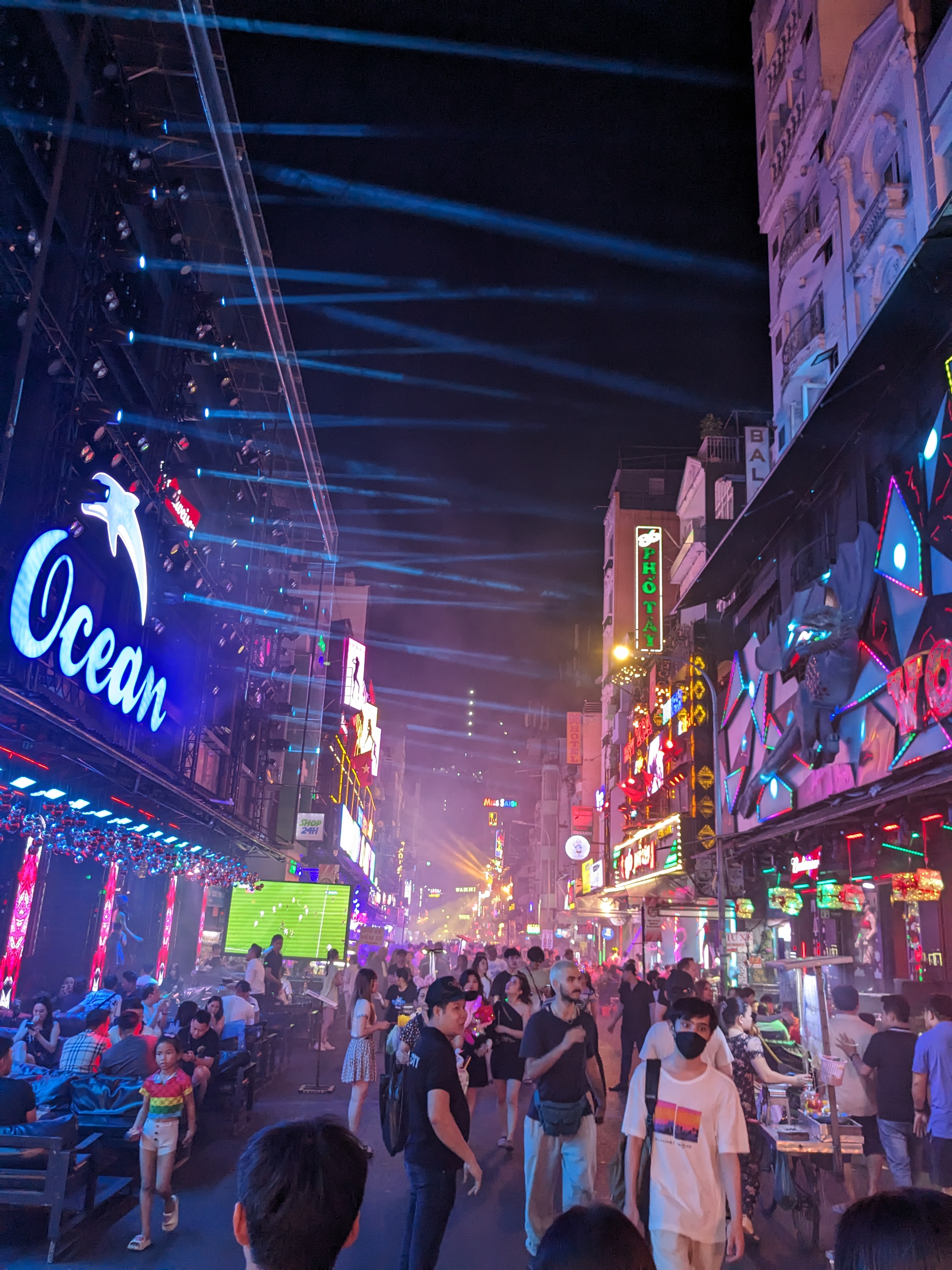
Once the sun set, the city became beautifully lit and had a vibrant night. The hostel was full of other solo travellers and I had a great time out with them. Bars were competing with incredibly loud music and people out front trying to lure us into each one. Also, the staff would also perform land grabs, extending their seating into the road before swiftly rearranging it when the police intervened.

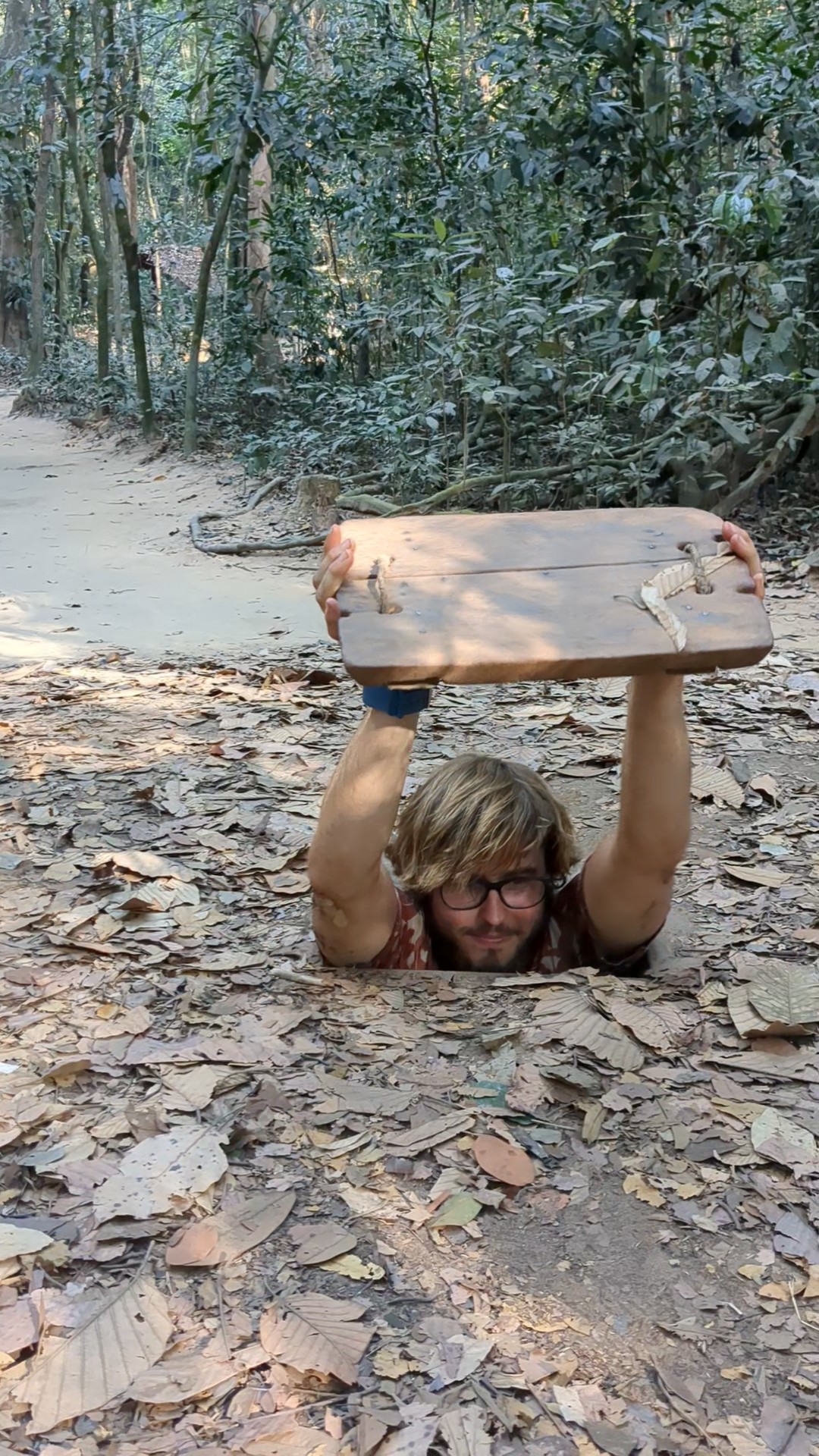
Before leaving Vietnam, I visited the Cu Chi Tunnels. These are old Viet Cong tunnels from the war and formed their base about 60km outside of the city. Crawling through the narrow passageways was an experience in the 40 degree heat. The tunnels had been widened for the tourists but were still a squeeze to fit through and I couldn’t imagine spending a long time underground or even worse fighting in them.

This blog post has taken me a while to write partly because I’ve been grappling with my impressions of Vietnam and partly because everytime I’ve sat down to edit it, I’ve been distracted chatting with people.

Travelling through the country, there were notable challenges, particularly with navigating the chaotic roads and finding suitable camping spots. Fortunately, I managed to avoid having any incidents on the roads and eventually always found somewhere to camp. Vietnam stands out as the cheapest country for food, although prices tend to escalate noticeably in touristy areas. The people, while generally friendly, displayed an assertiveness in shops, often pushing for sales, and I often encountered groups of teenagers on scooters following me and filming—a slightly uncomfortable experience.

The northern and southern regions presented distinct atmospheres. The north, reminiscent of Laos, felt more rural, while the south showcased a more developed and tourist-oriented environment, complete with supermarkets, bakeries, and great coffee shops offering Espressos for 50p.

Vietnam wasn’t a particularly relaxing country to cycle through and feel that maybe bicycle isn’t the best way to travel it with long streaches on main roads. I didn’t realised before quite how big the country really is and towards the end I was just wanting to move onto the next country. Now since leaving, I look back fondly on my time there. I spent 40 days in the country, which is by far the longest I’ve spent in one country on this trip and feel it is the first country I have visited which I have truly completed.

Hanoi to Hoi An in 8 days

The plan was to reach Hoi An by Christmas Eve, covering a challenging 1000km in just 8 days. Before leaving Hanoi, I fueled up on the hostel’s buffet breakfast and enjoyed many cups of coffee helping me to focus through the chaos of leaving Hanoi.

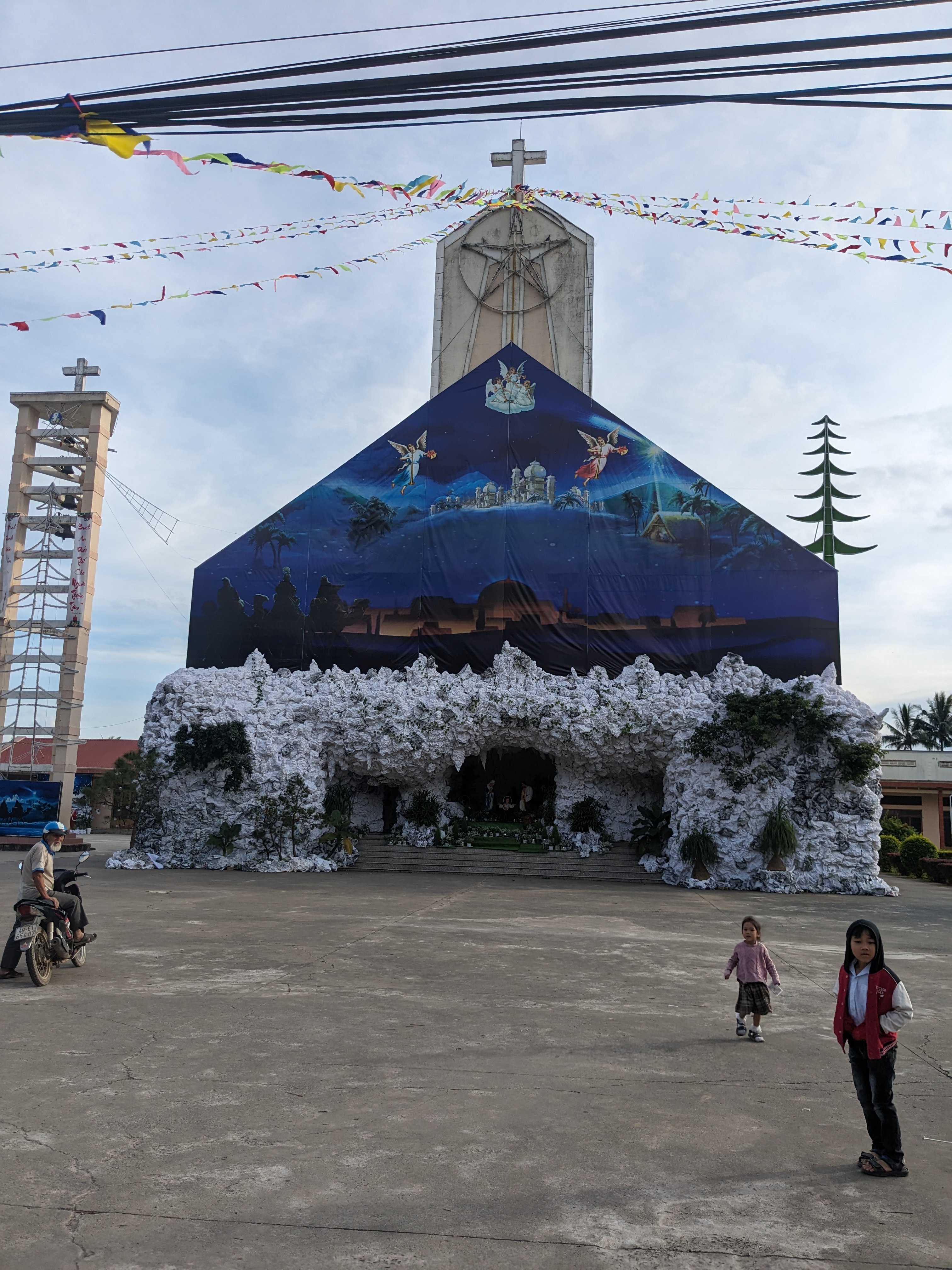
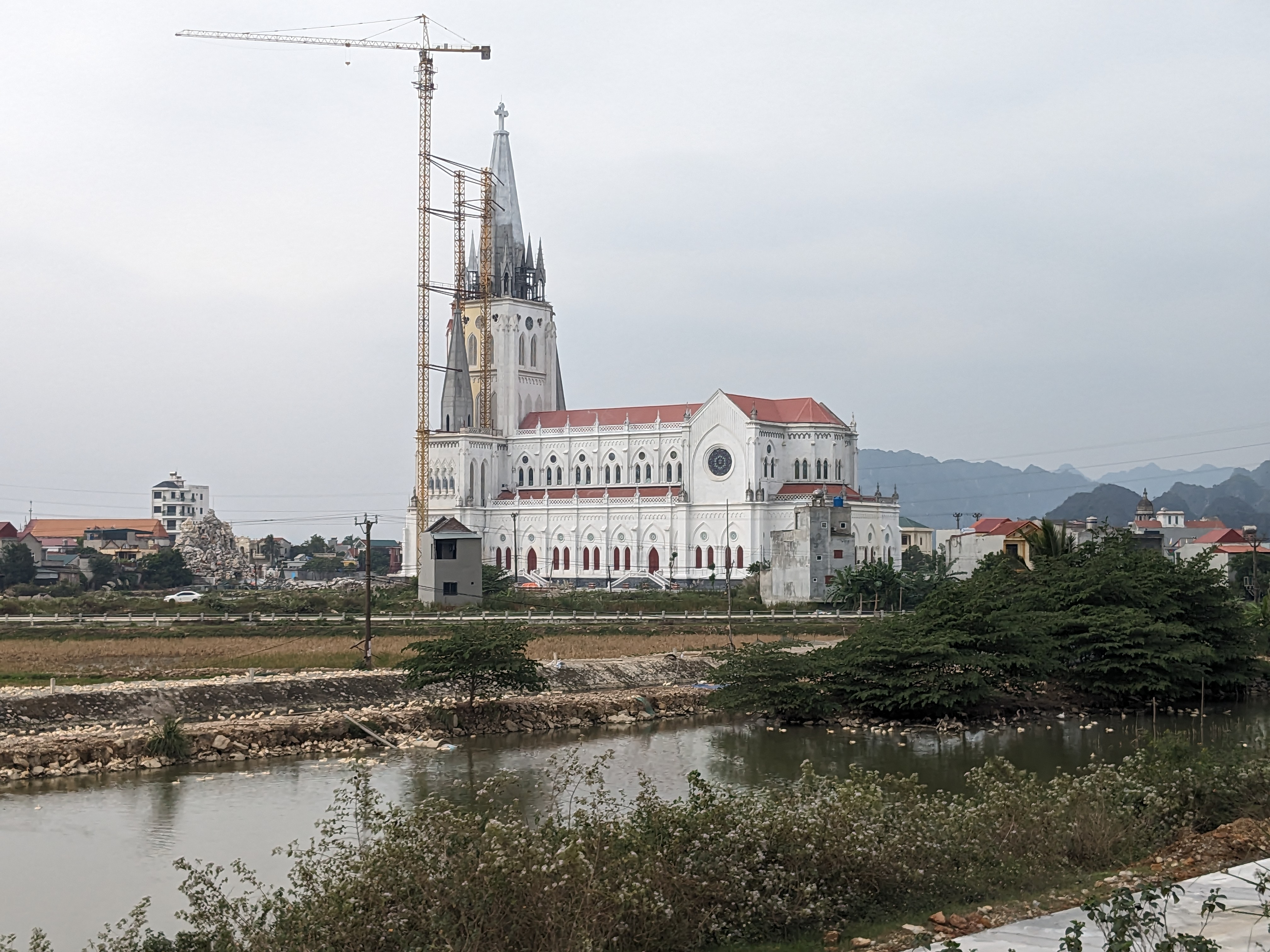
The initial three days were spent on the flat riding with a favorable tailwind where I’d hoped to cover substantial ground before venturing into the hills. Ninh Binh welcomed me with its incredible terrain, a captivating landscape of paddies and limestone formations. The area is also littered with huge churches, built by the French in the 19th and 20th Century which are still well maintained. Exiting the World Heritage site, I rejoined the main road and found a peaceful spot in nearby woods to camp for the night.

Day two saw me spending most of my time on a main dual carriageway, an efficient but somewhat monotonous route. The journey took an unexpected turn when I met Marc, a Swiss cyclist heading in the same direction. We rode together for most of the day before parting ways in the afternoon. I headed for the coast to find a quiet beach to spend the night, discovering a deserted haven all to myself.

The tranquility of the beach was disrupted by nightfall rain, leaving all my stuff covered in wet sand. The rain persisted through the day, prompting a kind lady on a motorbike to gift me a poncho. She looked like she instantly regretted it, when riding off without anything to protect herself from the rain. Covered in a layer of dirt from all the spray off the road, I opted for a hotel that night, relishing the luxury of a shower and somewhere to dry all my gear.

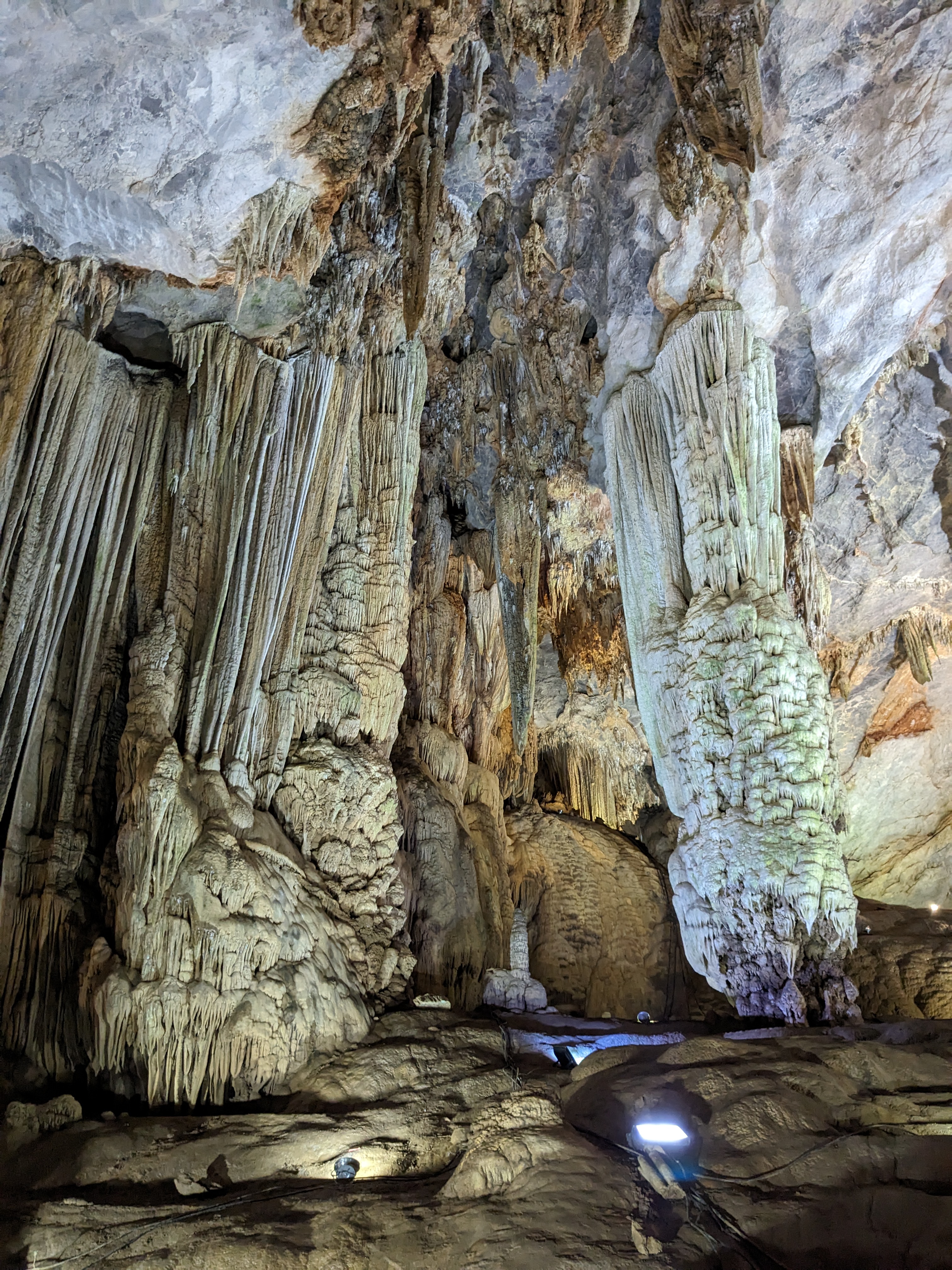
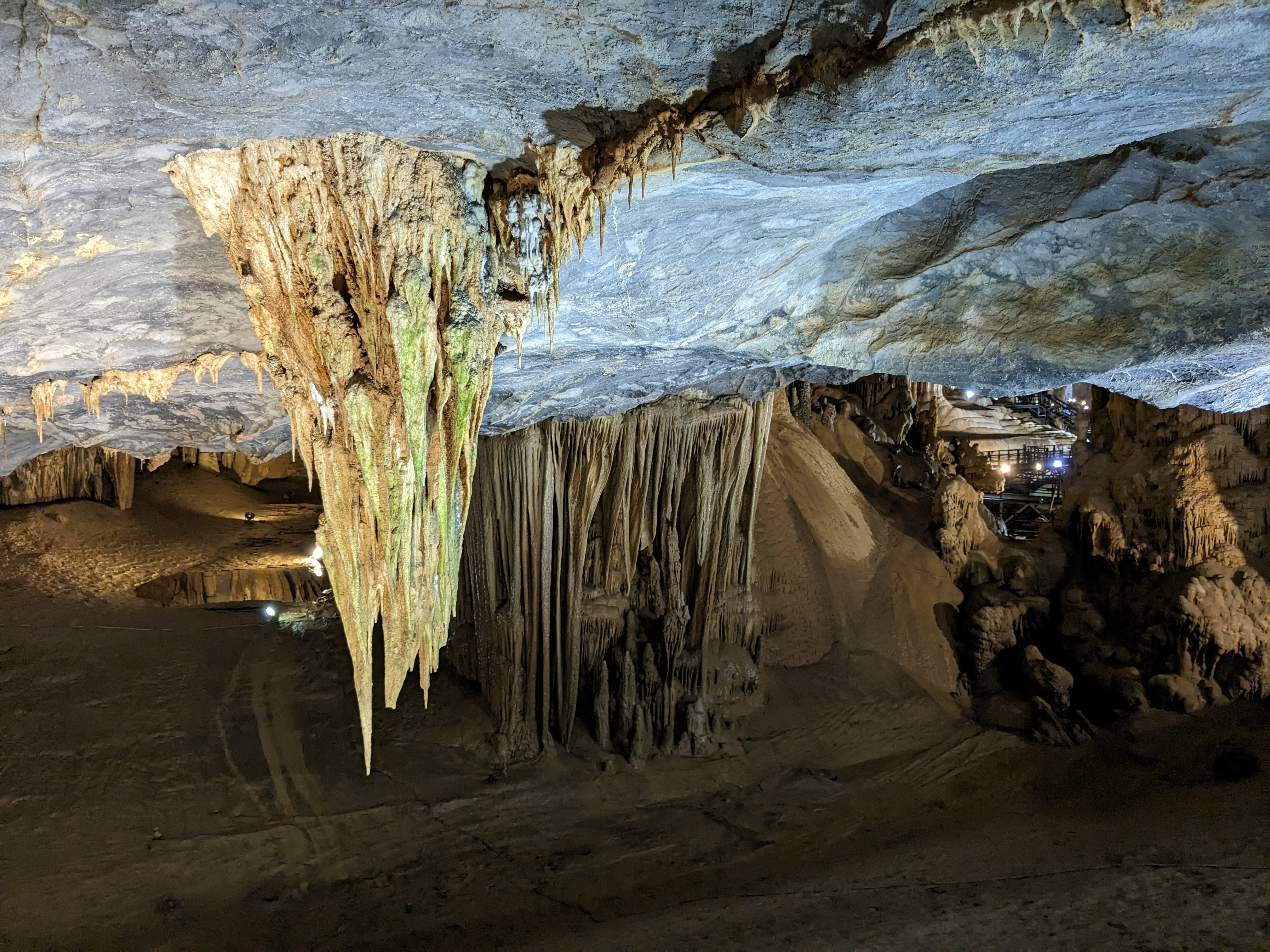
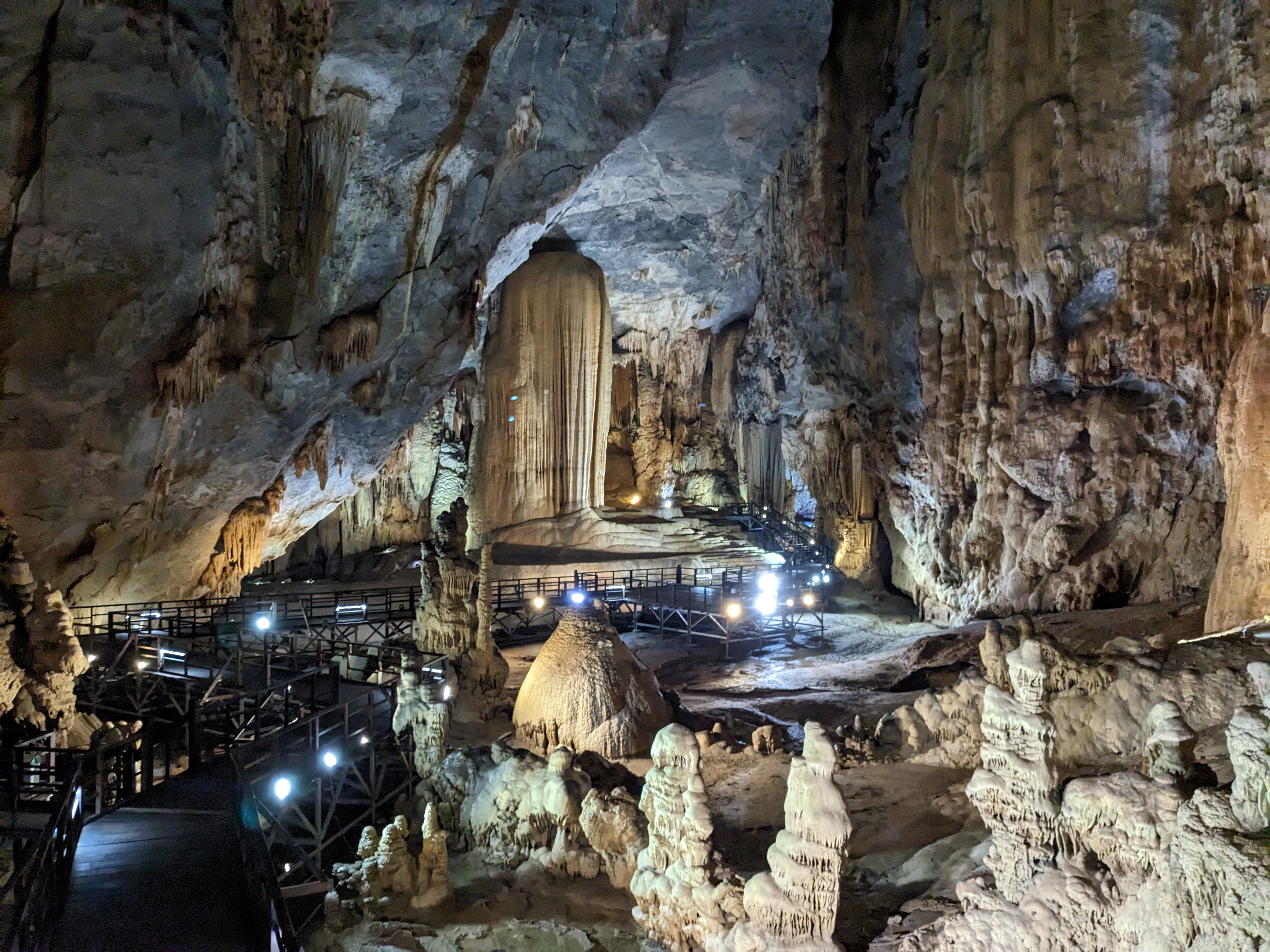
The rain started around 9am the next morning, continuing through the whole day. I found shelter in Paradise Cave, the world’s longest cave adorned with impressive stalagmites and stalactites. The cave had the feel of a cathedral with its echoes, lighting and whispering visitors.

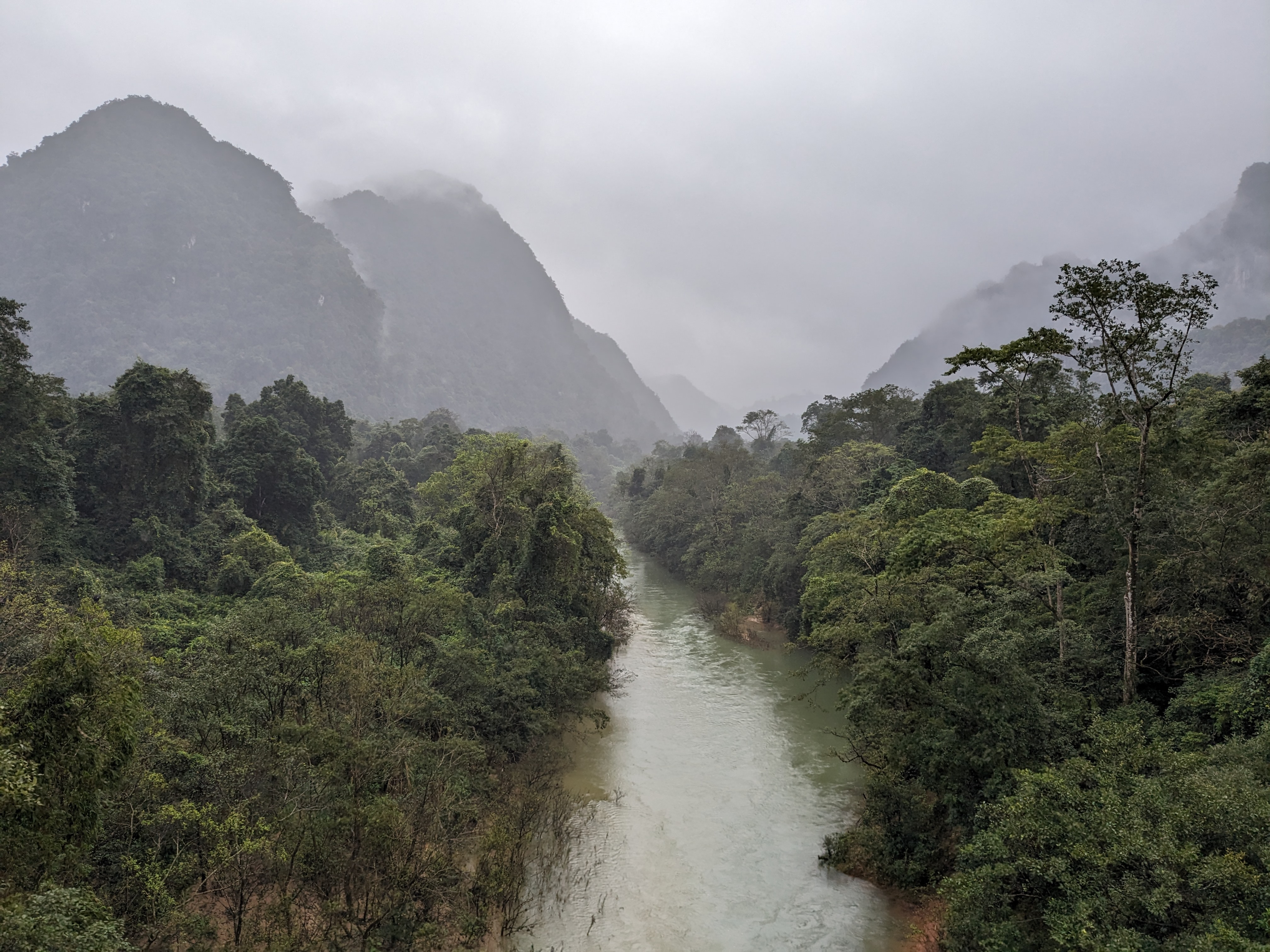
Venturing into the hills along the Ho Chi Minh trail, I discovered untouched landscapes and a fantastic mountain road. That night I found relief under a bridge, a lucky find of a great camp spot next to a stream.

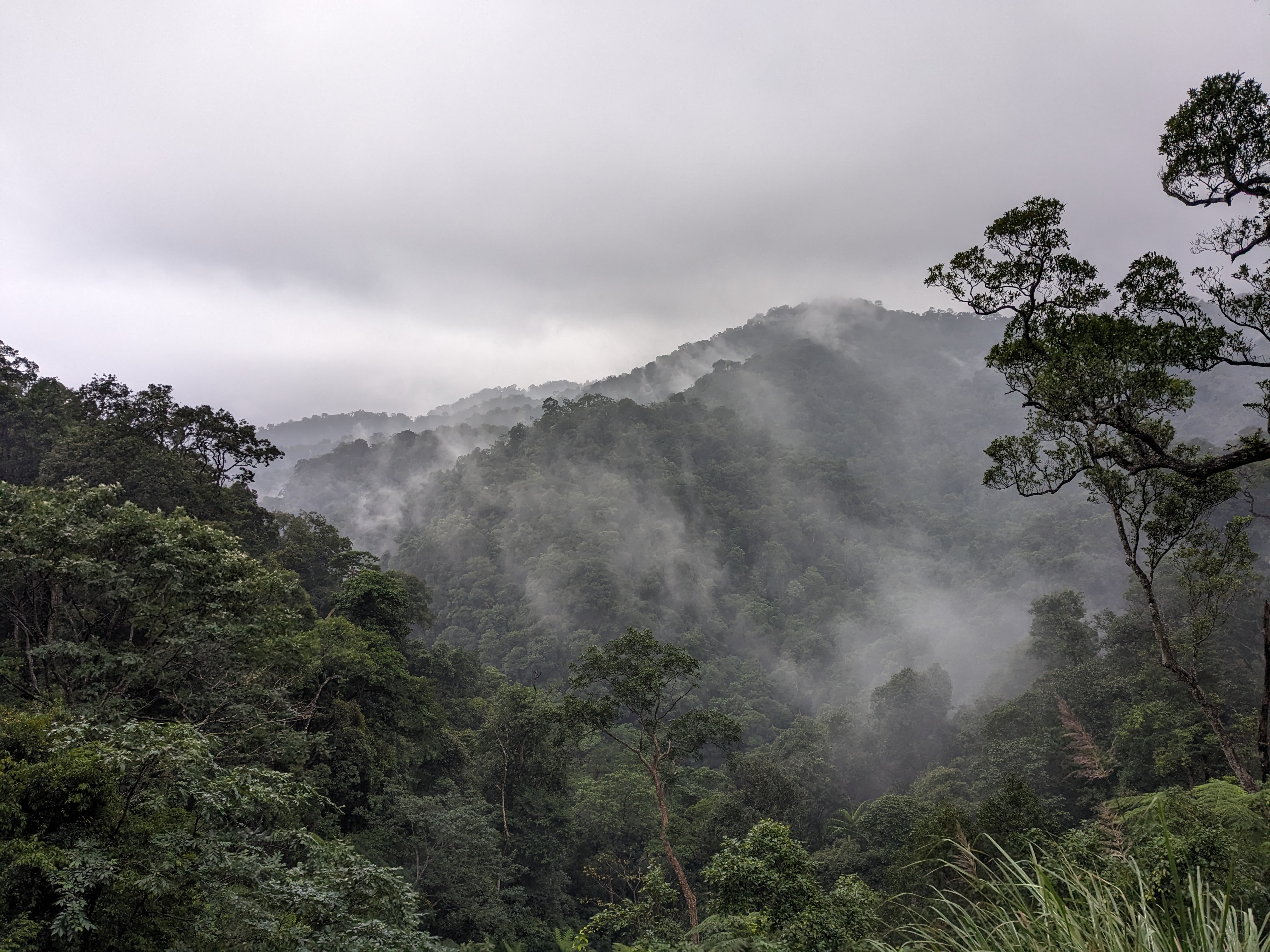
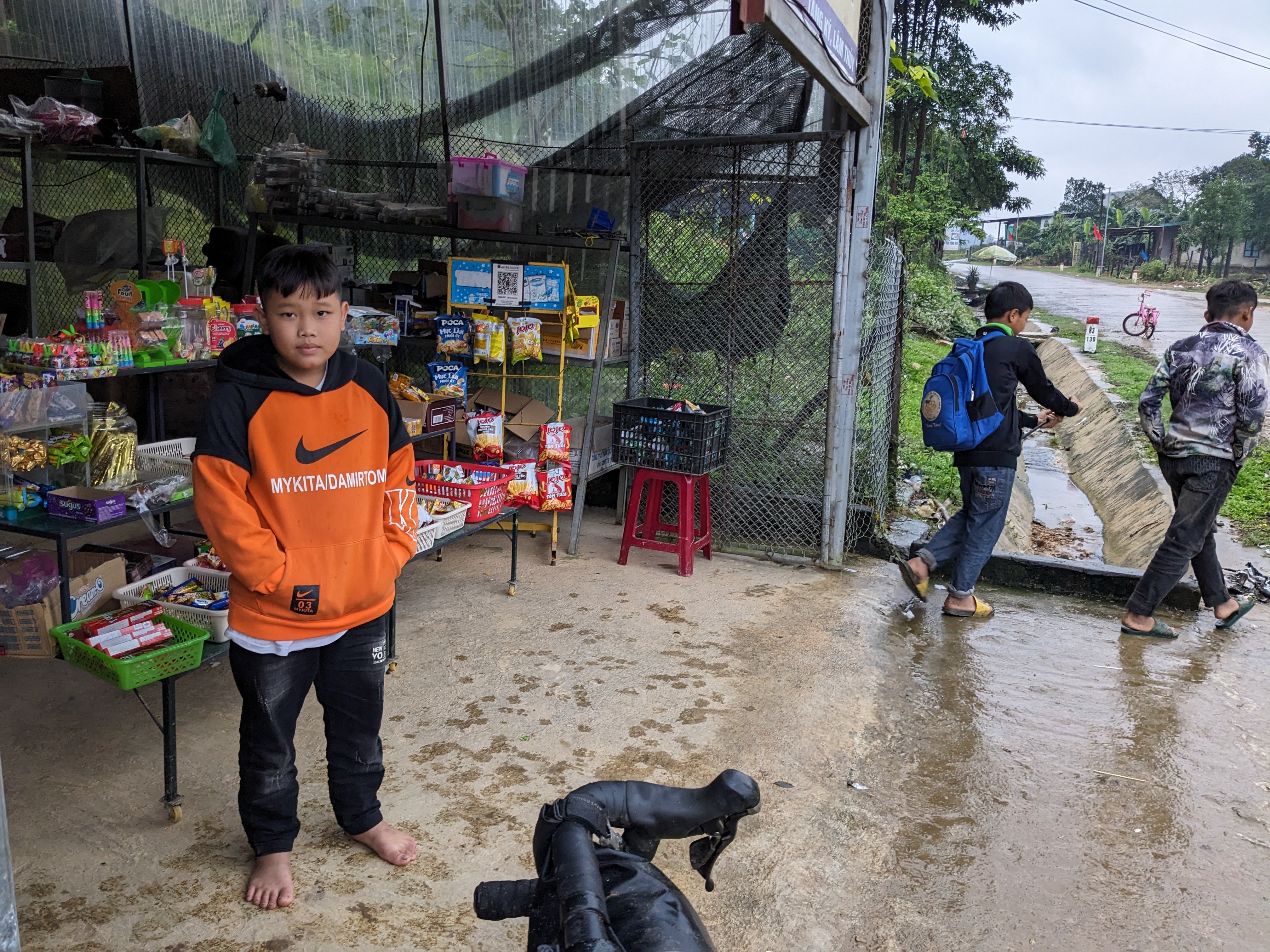
I awoke with a cold the next morning which slowly became worse over the next few days and coupled with more rain, I wasn’t feeling at my best. The jungle and thick clouds provided a stunning backdrop to ride through and the road was almost empty as the route wasn’t the direct way to get anywhere. This resulted in a scarcity of shops, most containing very little stock. One such shop was run by a very young vendor who seemed quite surprised I was buying eggs. I understood why this was later when I cracked into the fetal duck eggs I’d purchased.

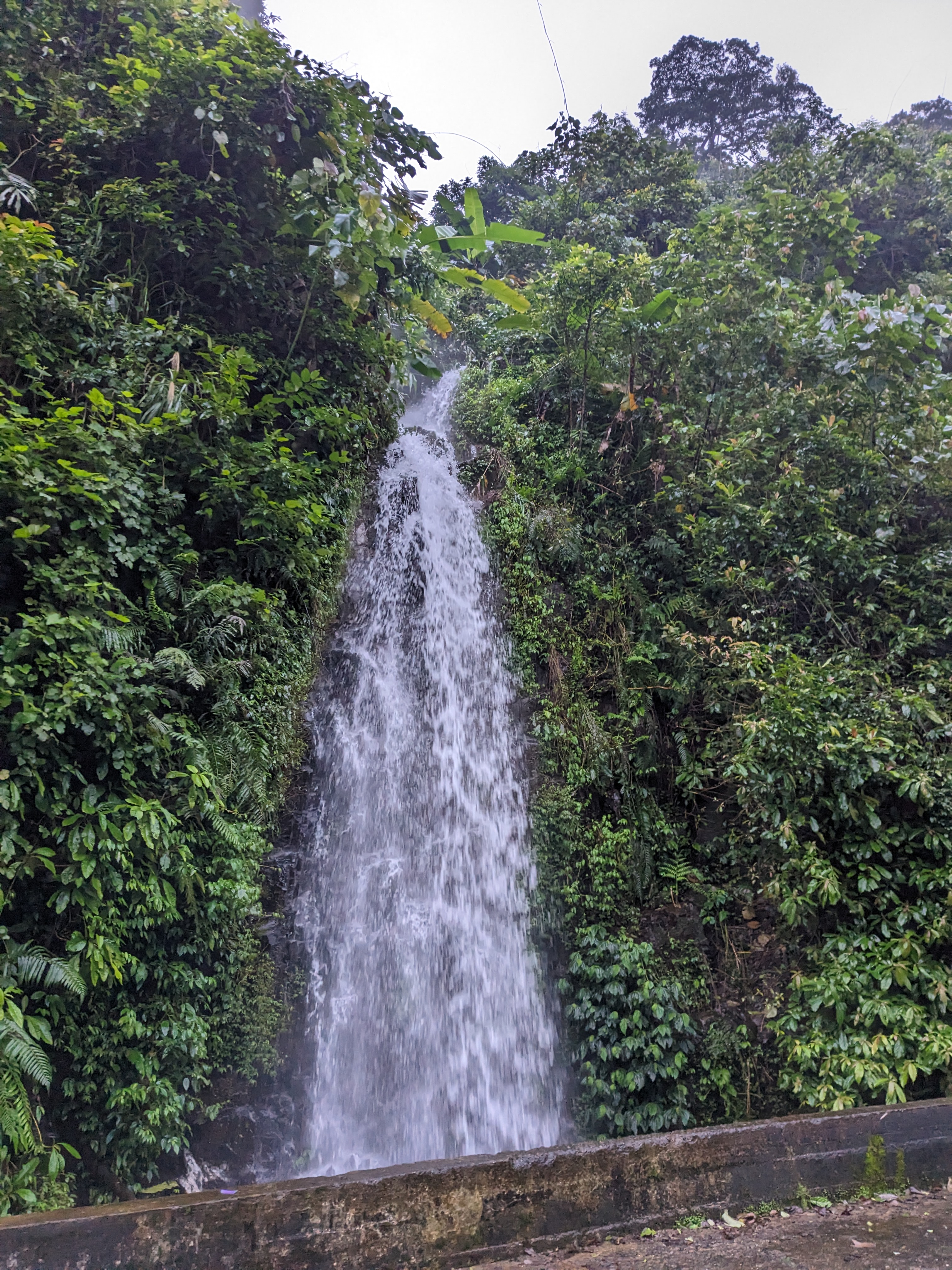
One benefit to the rain was the obundance of impressive waterfalls just on the side of the road. I also finally justified carrying a big coat, hat and gloves needing to put them all on at one point as I became very cold after descending one of the hills. I soon warmed up again on the next hill. Once I’d reached the top and descended down out of the cloud, the weather dramatically changed to warm sunshine. This was a welcome surprise as I rode back toward the coast.

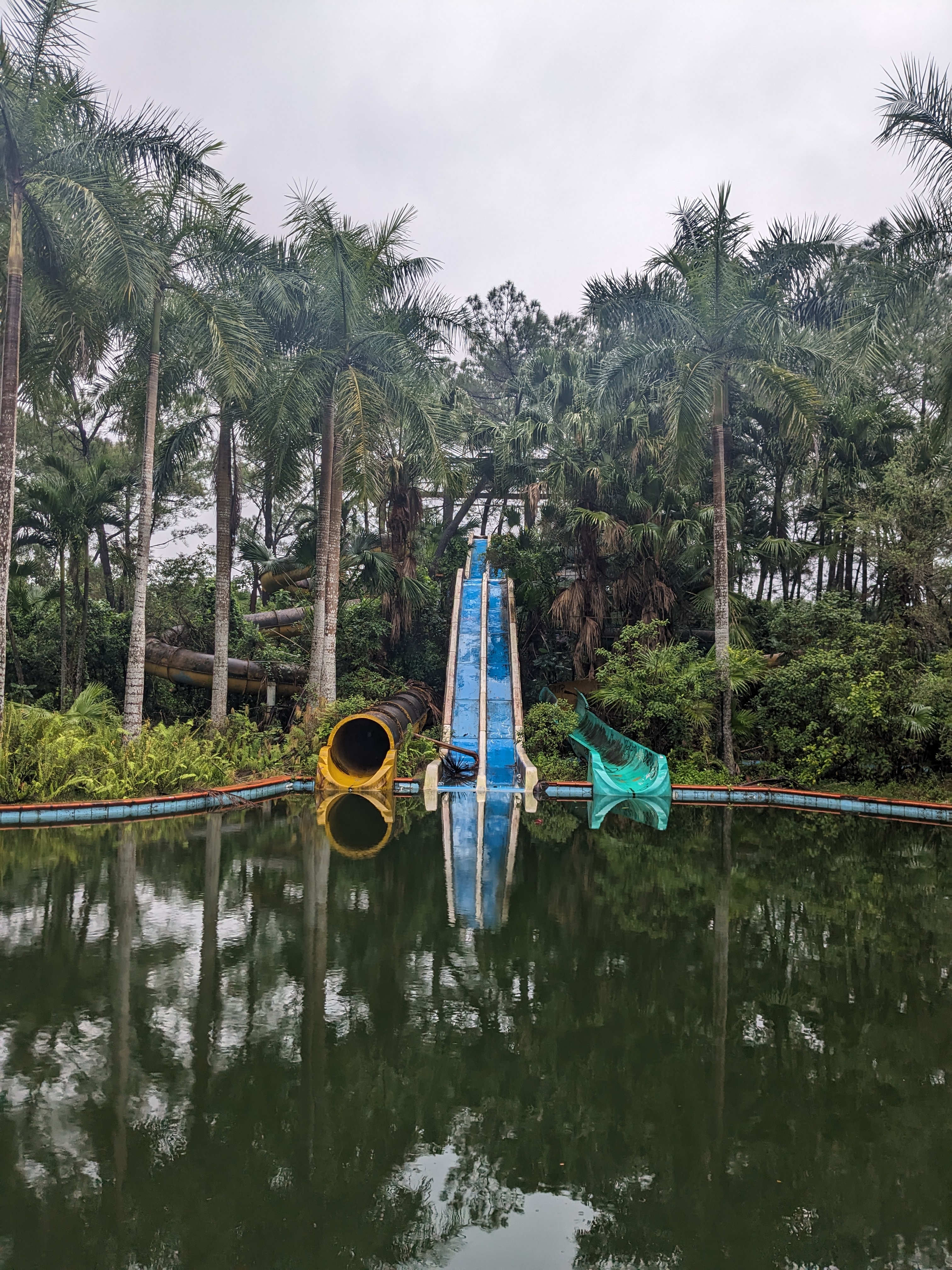
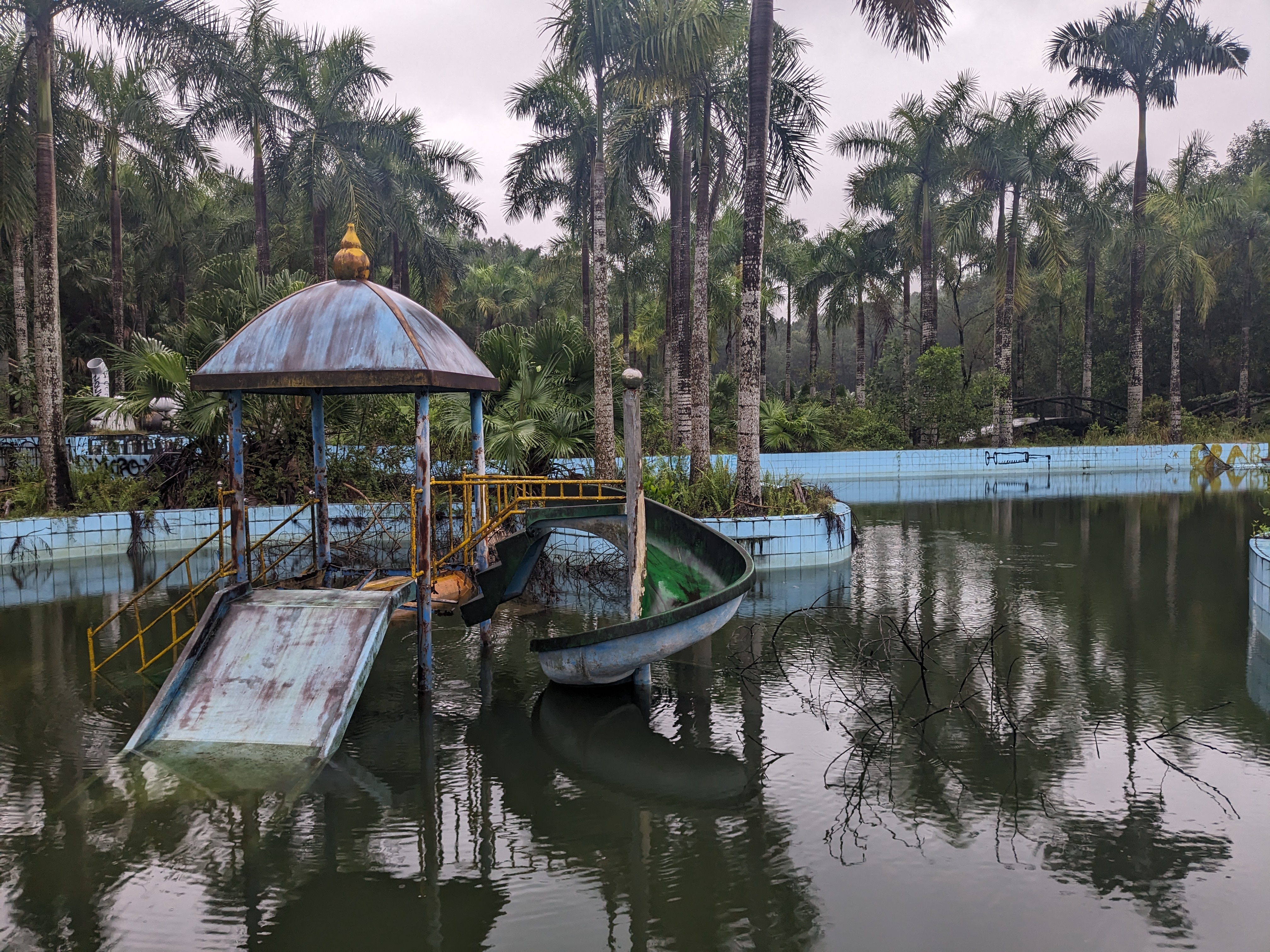
Arriving in the Ancient capital city of Hue, the drizzly weather didn’t deter me from seeing the old walled city briefly. As I left, I visited an abandoned water park which I had been told excitedly about by a motorbiker. I had a great time exploring this strange place trying to imagine what it was like before it closed.

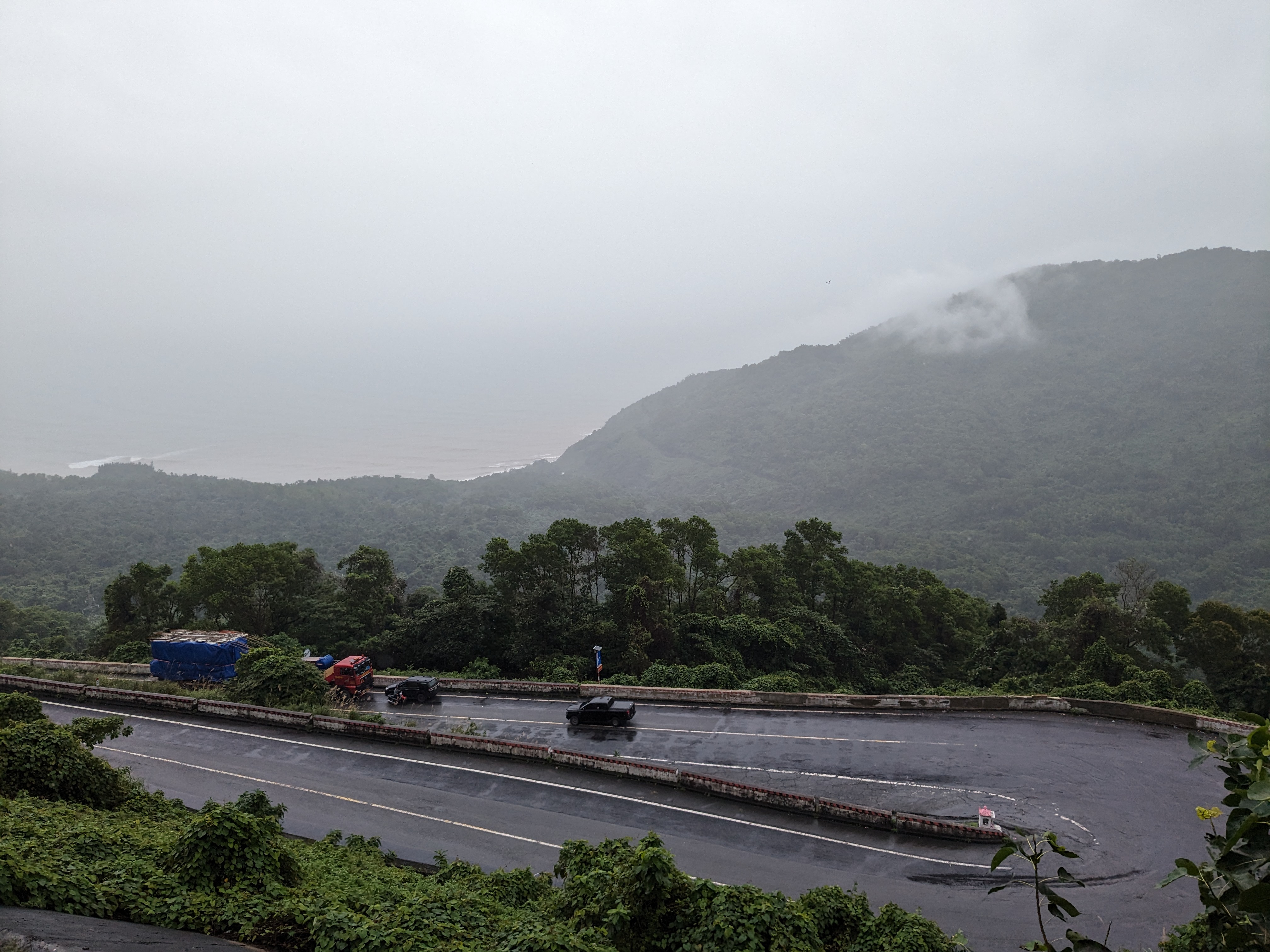
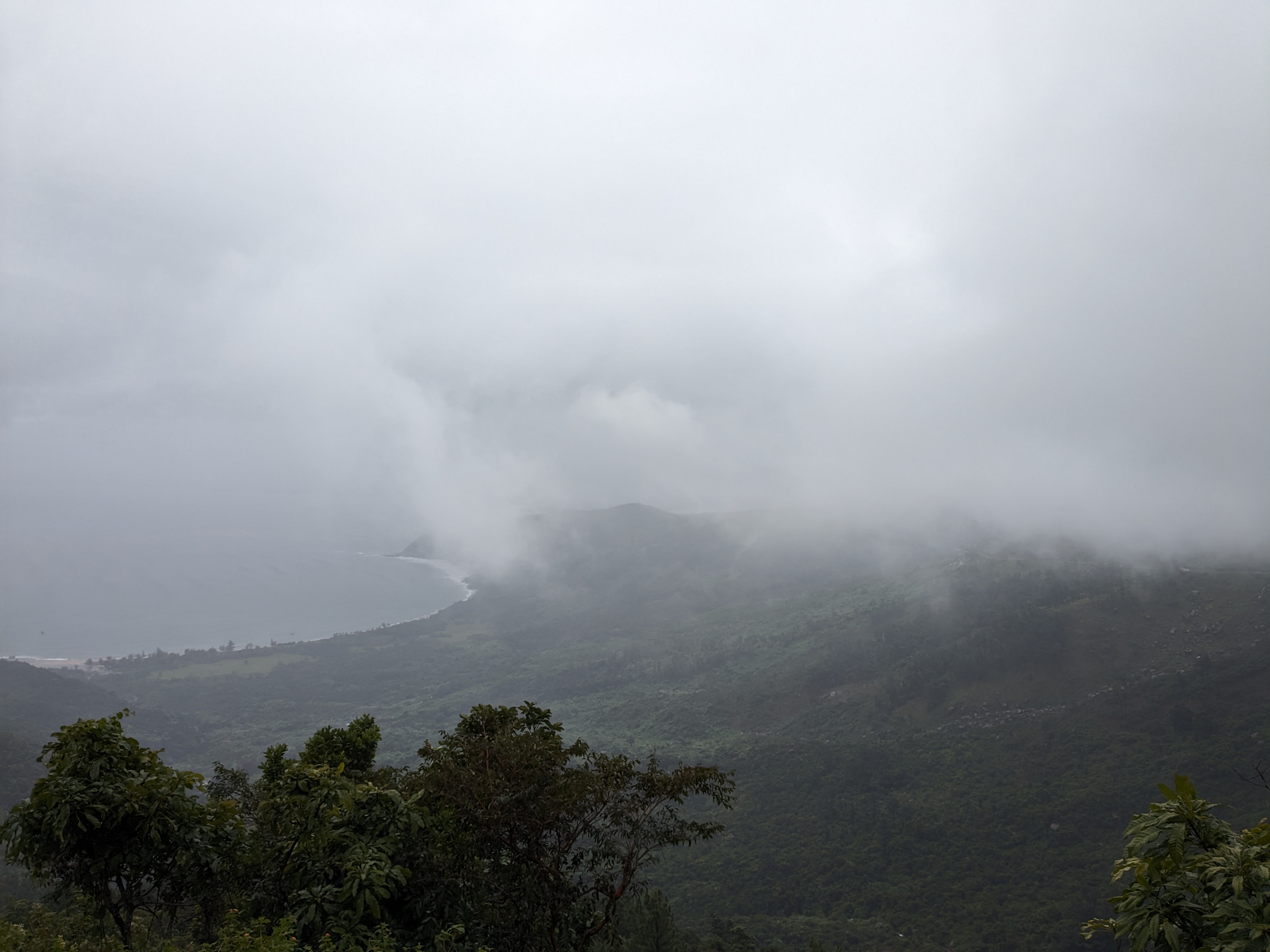
The final day saw me conquering the Hai Van Pass, a breathtaking stretch of coastal road and mountain pass, before a few hours of riding through Da Nang led me to Hoi An.

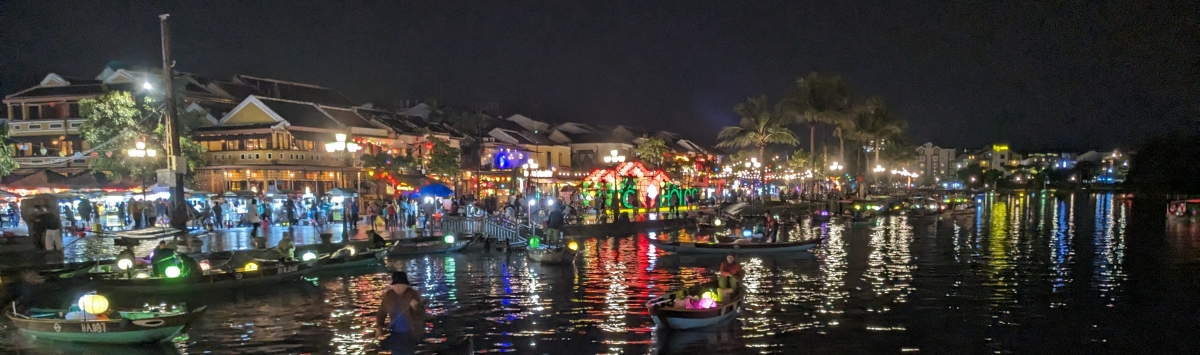
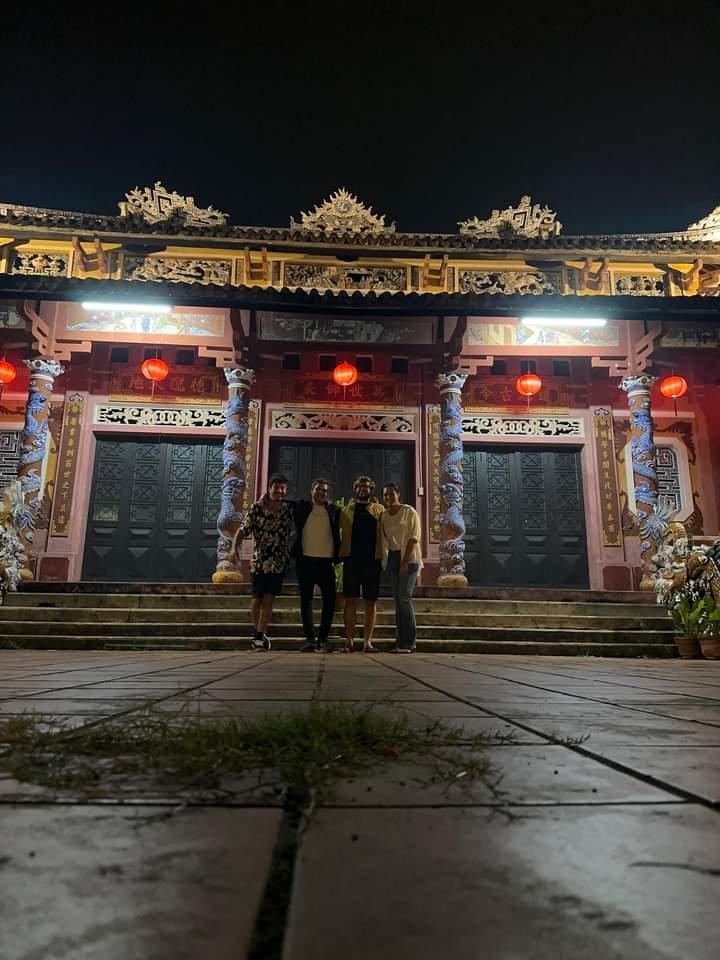
Christmas Eve was spent enjoying the beauty of the town lit up by lanterns everywhere possible.

Christmas Day did not unfold as planned. The envisioned day in the sun on a beach never happened. Partly due to the weather and party due to the nearest beach being 5km away. I definitely didn’t feel very Christmasy and did miss a good Christmas feast but still had a good day relaxing at the hostel in great company.

Cao Bang to Hanoi

Leaving the small town of Cao Bang, my journey towards the coast would take me through winding roads and hidden gems. The hostel, more of a motorbike rental shop with attached rooms, was quiet with me getting an entire dorm to myself, reminiscent of my stay in Ha Giang.

The road to Thac Bang Gioc waterfalls took me past Angel Eye Mountain, offering a mesmerising viewpoint of a mountain with a hole in it. I wasn’t expecting much from it, just a quick detour off the route but it was inspiring and the photos taken in the drizzle don’t quite do it justice.

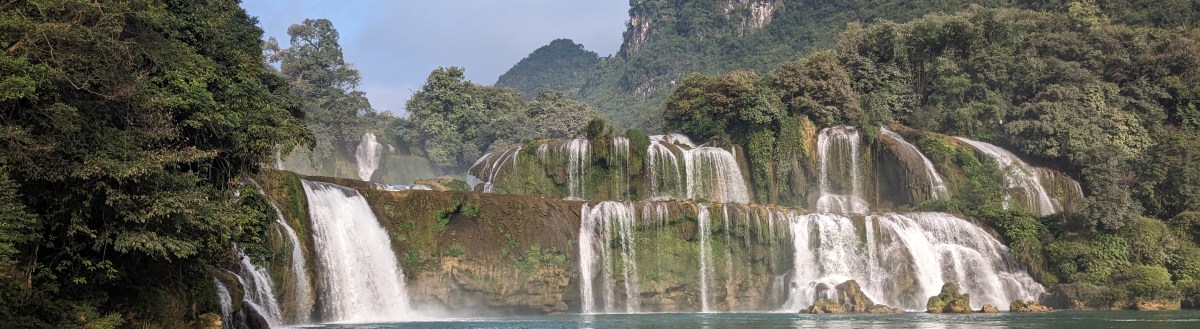
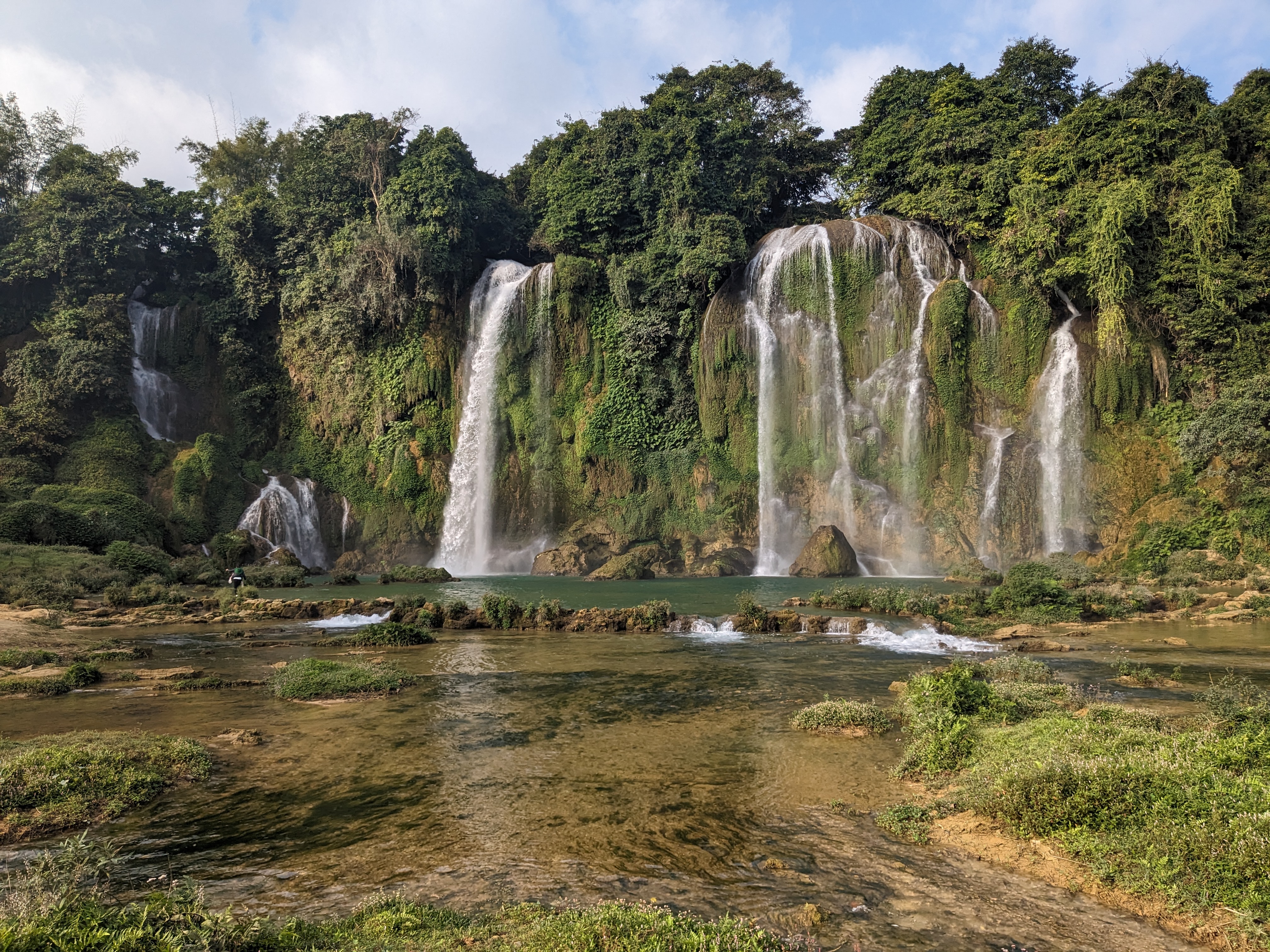
The route to the waterfall was a picturesque journey along quiet roads, leading to the impressive falls on the Chinese border. These are the 4th largest waterfalls on a international border and apparently even better in the rainy season.

Staying close to the China border, I encountered more serene roads winding around the hills that even traversed through a cave at one point.

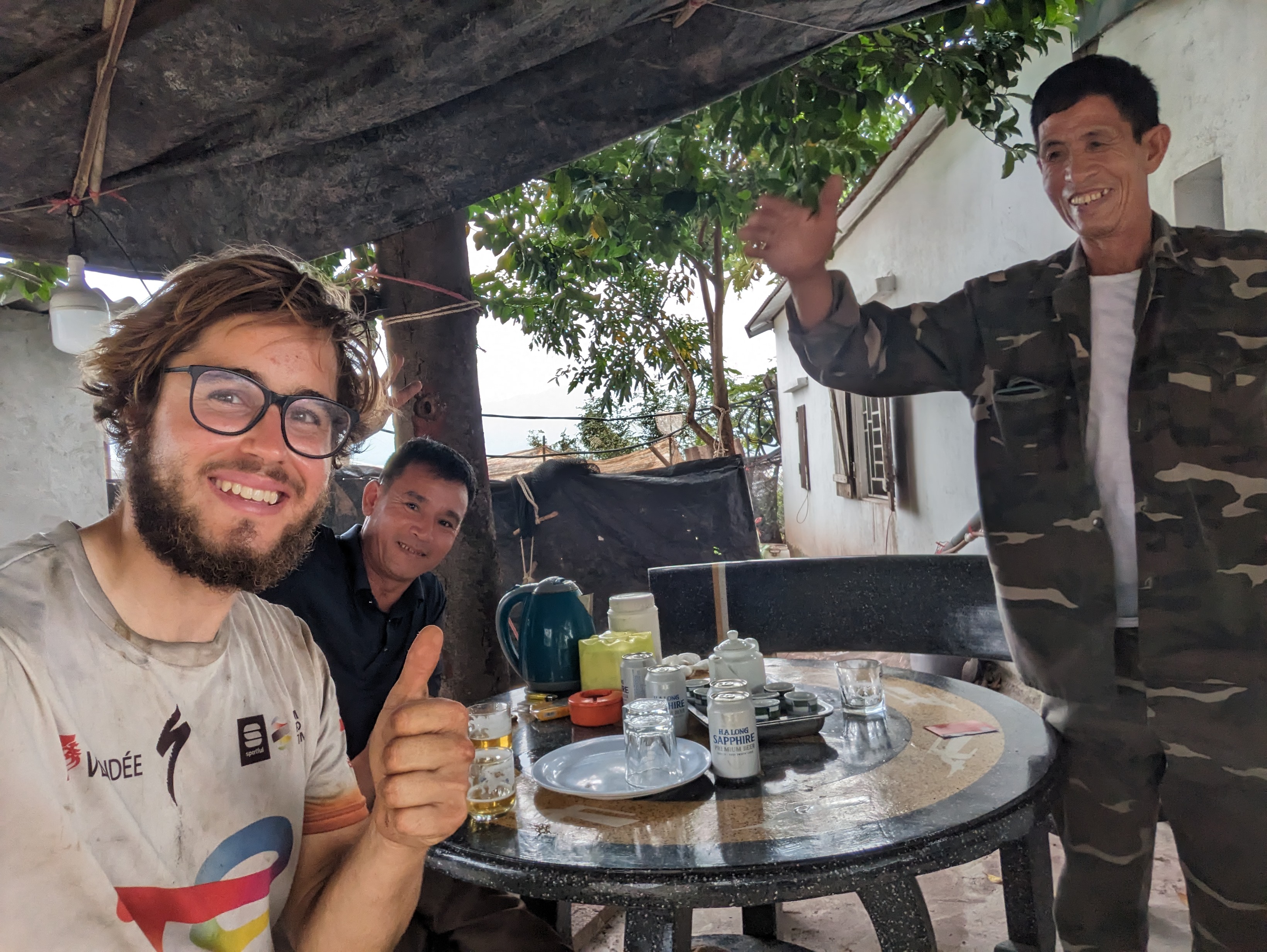
With the coastal allure beckoning, I embarked on two big days riding mostly on the flat helped by a good draft behind one motorbike. On the 2nd day, it was a bit of a race to catch the final ferry to Cat Ba Island but I still managed to find time to share some beers with the locals.

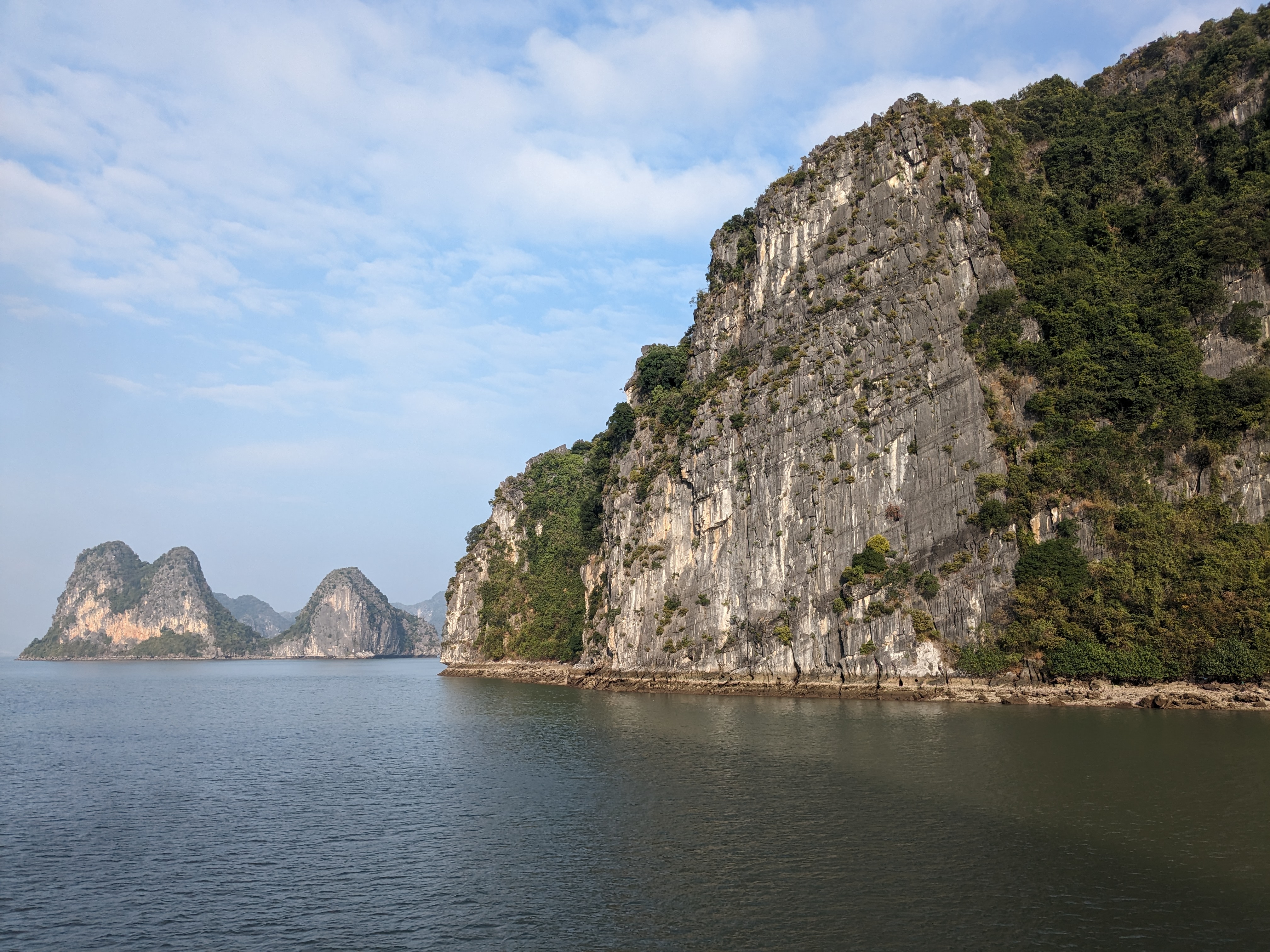
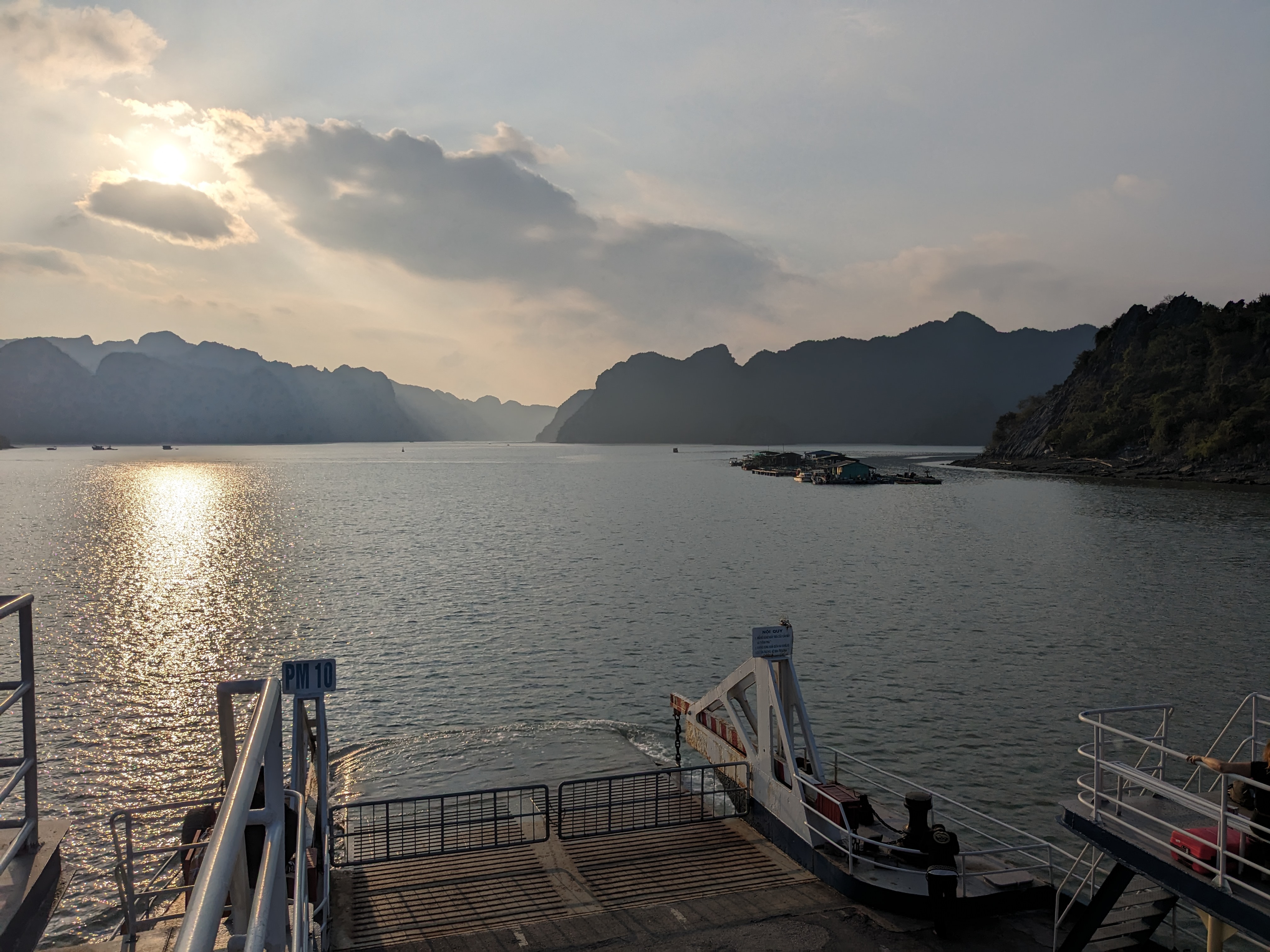
At the ferry port, a chance encounter added charm to the journey as I met a cycling couple exploring Vietnam on folding bikes. The ferry ride itself proved to be a spectacle, weaving through the mesmerising islands of Ha Long Bay. The sheer number of islands was staggering, with almost all of them having no trace of humans ever stepping foot on them. This left me yearning for a kayak to explore this wilderness in.

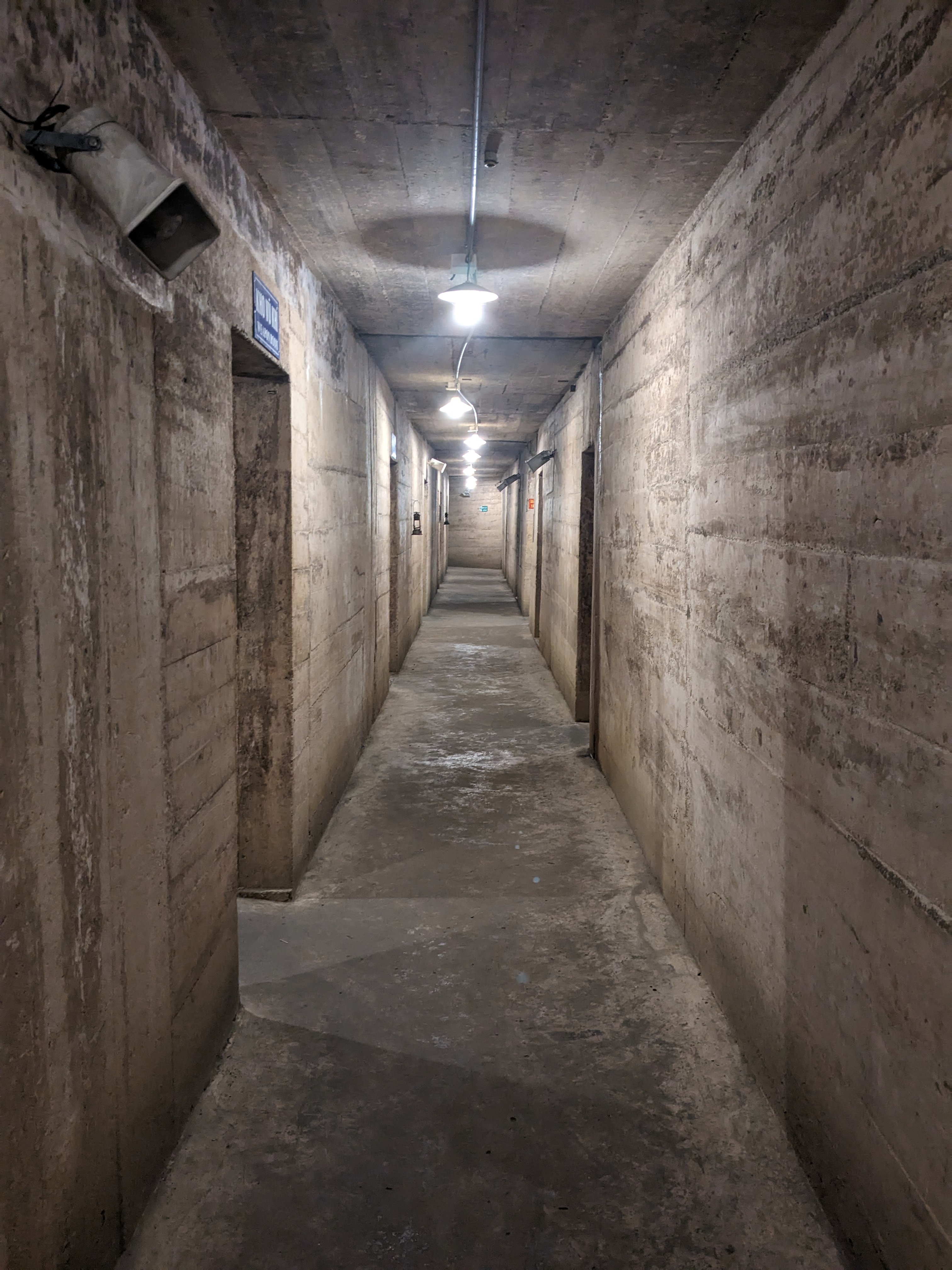
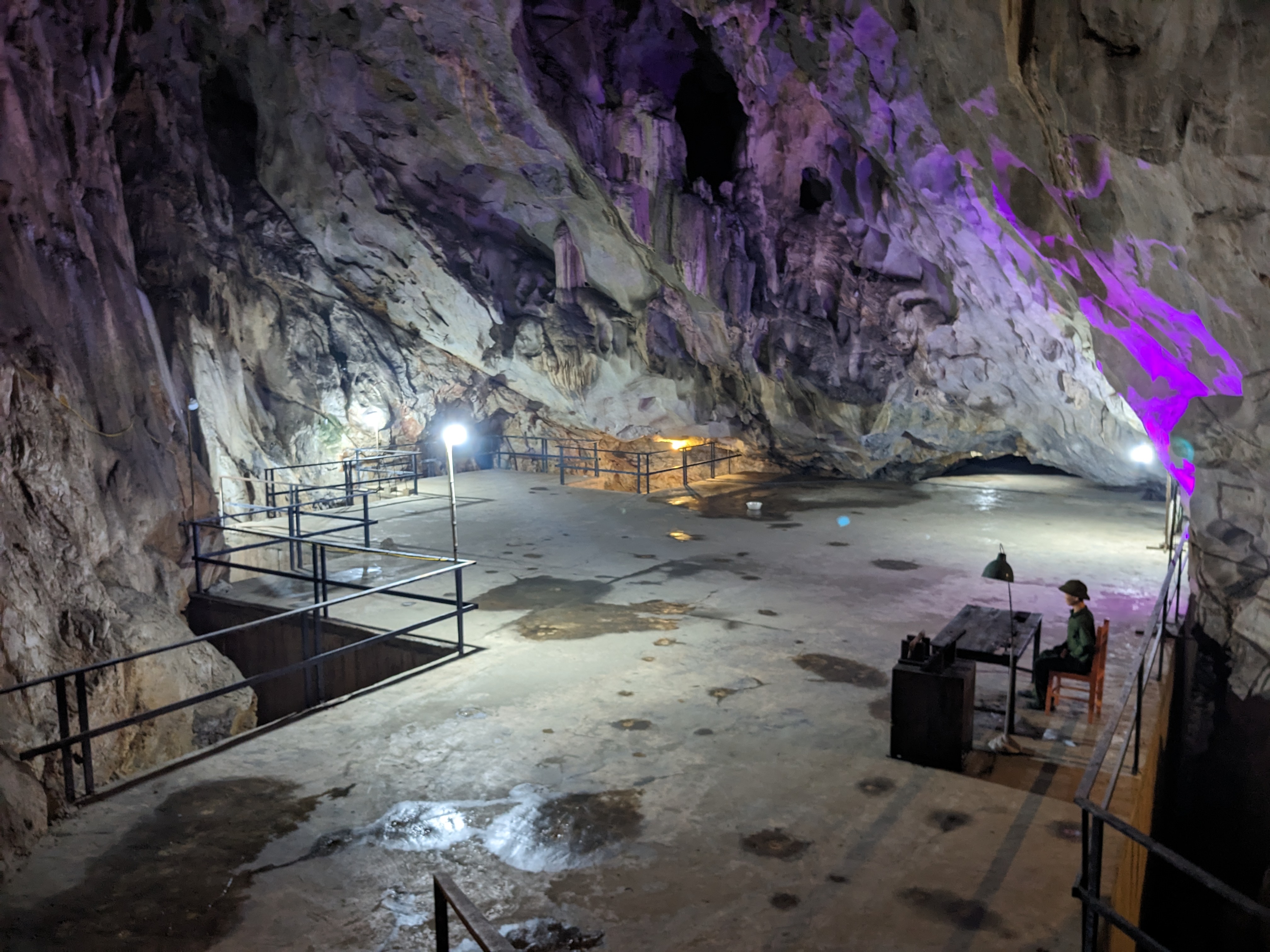
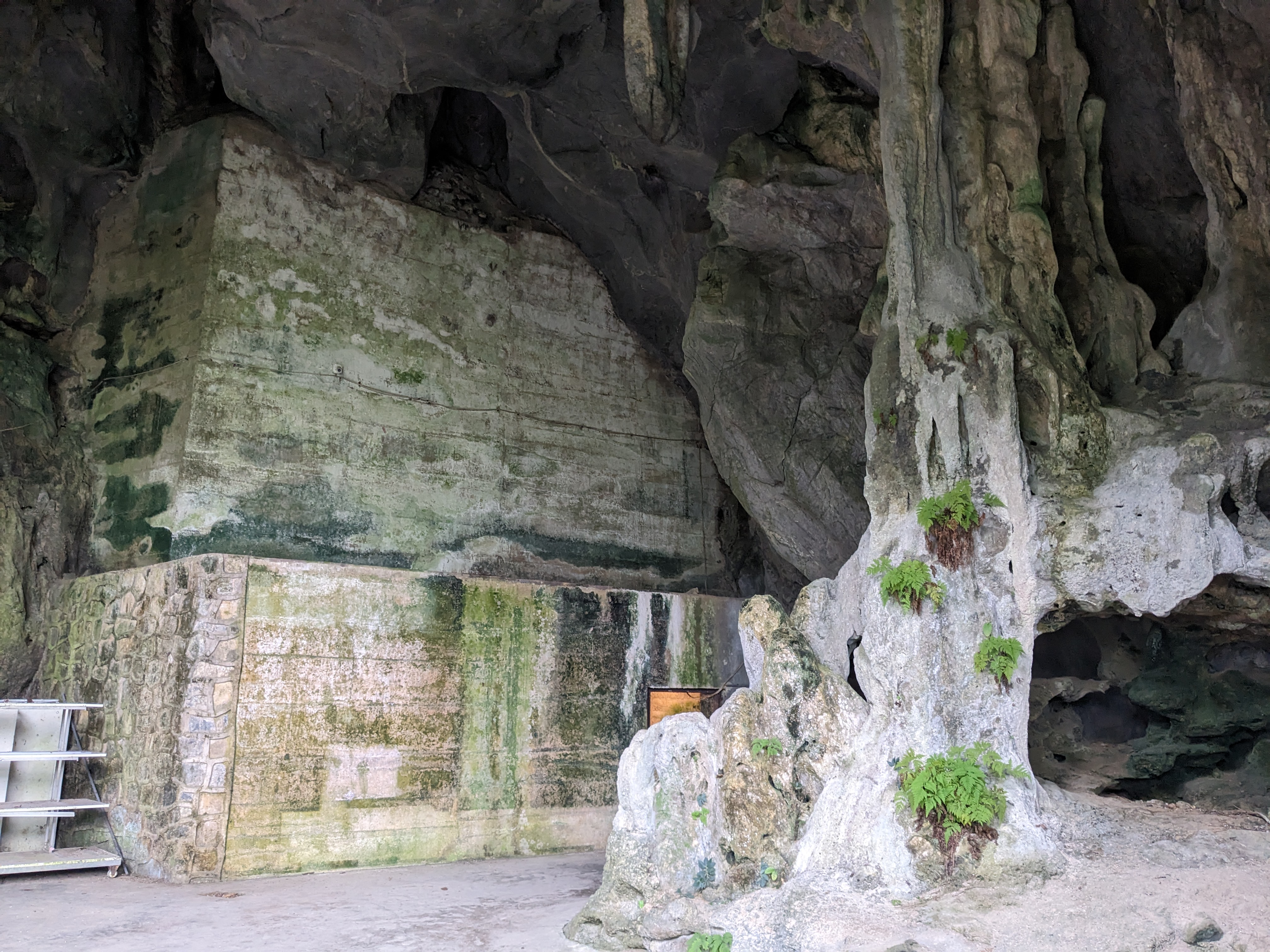
Cat Ba Island, the largest of the islands in Ha Long Bay was mostly covered in lush forests, providing a perfect camping spot for that evening. The following day I took very easy, exploring the island and relaxing at the beach. I delved into a cave with a wartime hospital built into it, enjoyed a coffee while planning the next leg of my journey, and cycled it’s amazing costal road before spending another night camped on the island.

Despite its beauty, the island had its quirks, with many unfinished holiday resort building skeletons, reminiscent of those I sighted on Albania’s coast. It was also quite an expensive place, I think just because some shop keepers knew they could charge tourists more. This was confirmed to me when I was able to haggle down the cost of a packet of crisps. I took the direct ferry off the island, then a 130km ride led me to a hostel in Hanoi. This wasn’t a very scenic ride, mostly on duel carriageways but the bustling traffic made the time pass quickly as it forced me to stay attentive.

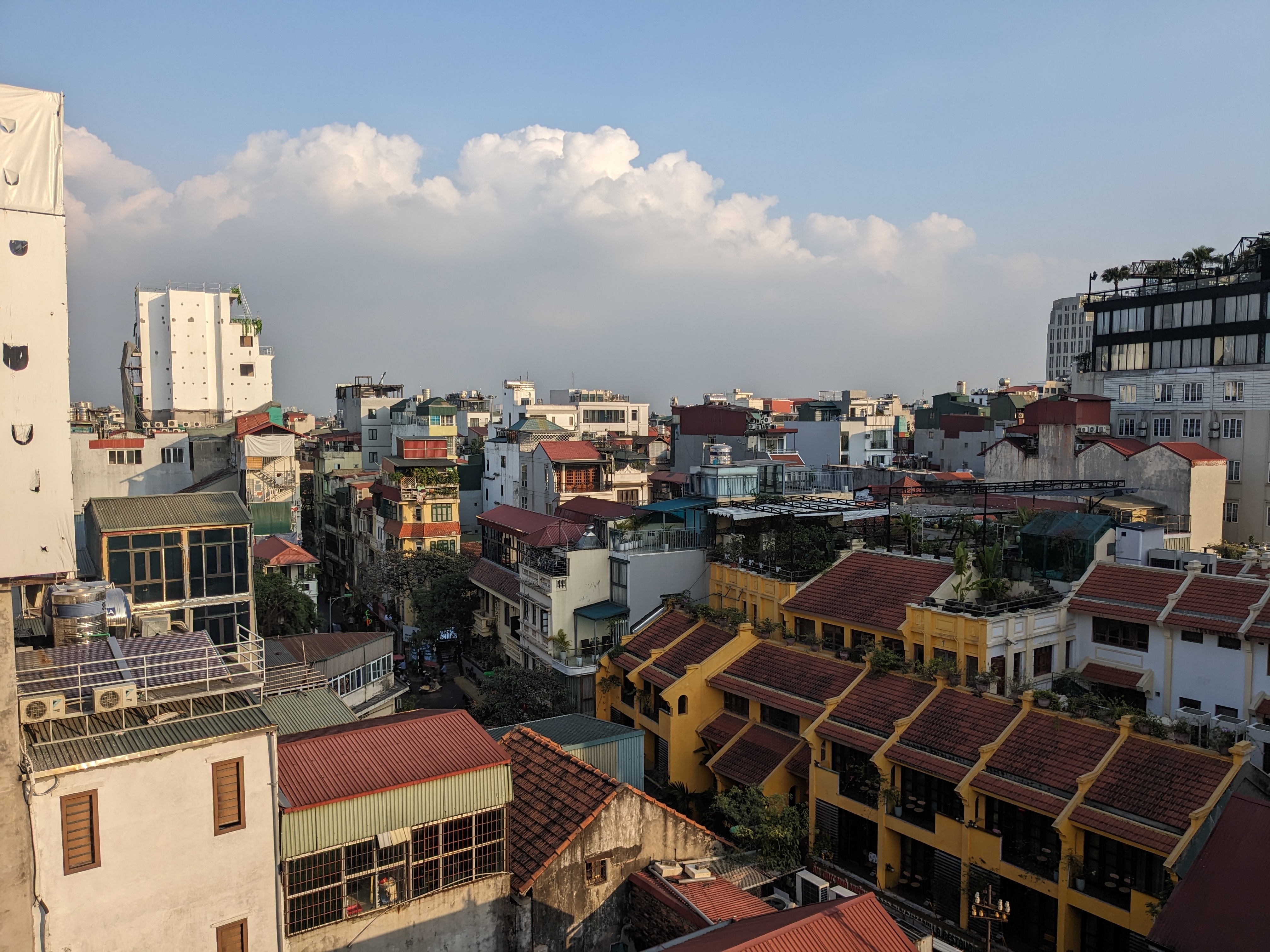
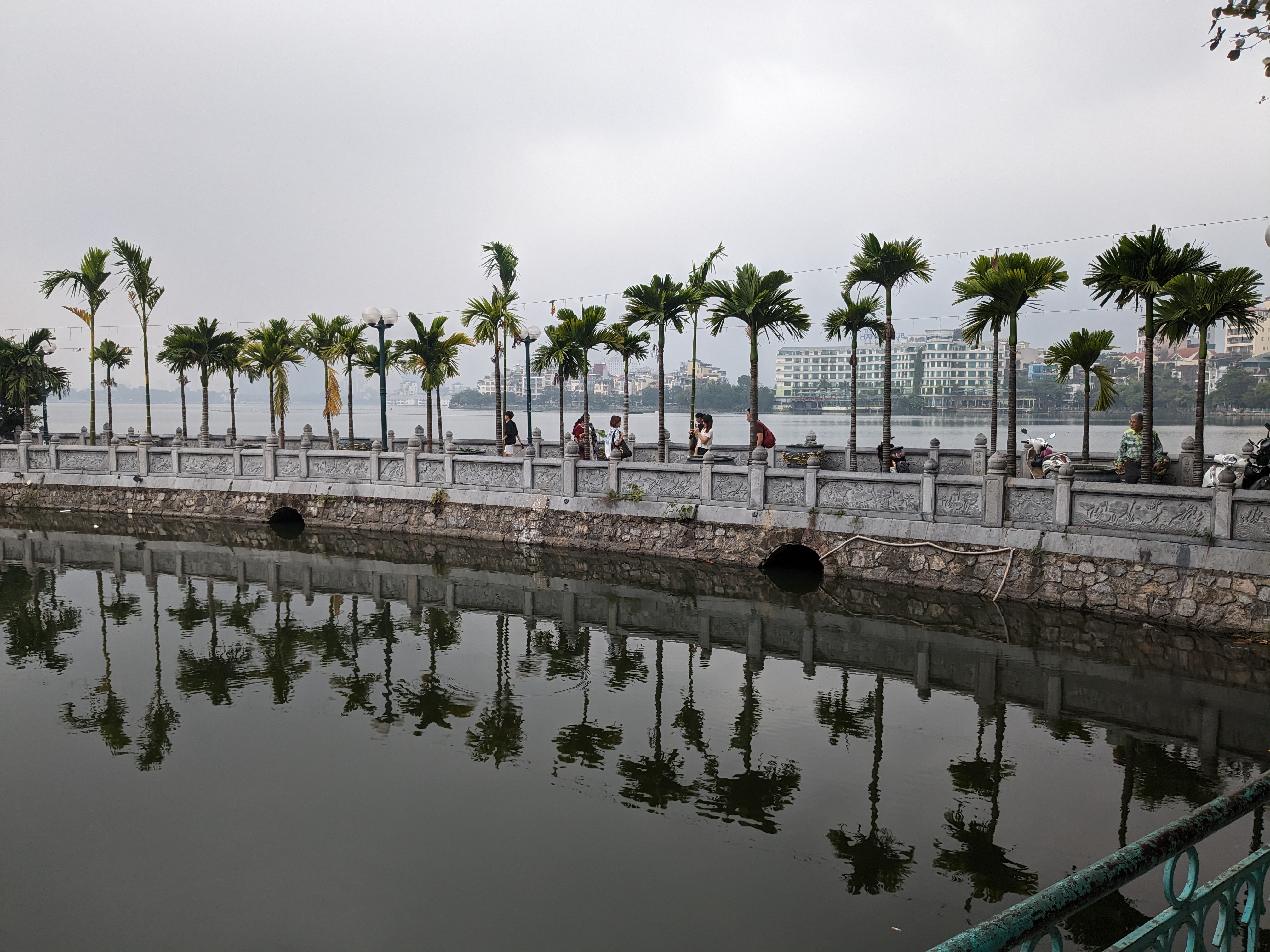
Taking a stroll through Hanoi, it took around three hours to see the sights. There wasn’t much to do in the city except enjoy the food and nightlife, with it being more of a hub from which travellers explore the north of the country from. The hostel I stayed at was over 7 floors with a nice rooftop terrace and an excellent free breakfast. I also treated myself to a few early Christmas presents, indulging in a new helmet, bike saddle, and headphones.

I had planned earlier this month to spend Christmas in Hanoi, but after making good progress through the north, now the goal is to reach Hoi An for Christmas. This may be too ambitious however, as I’ll need to average 130km a day for the next 8 days to make it. The challenge ahead excites me, as I’m not sure if it’ll be possible but the thought of spending Christmas on the beach will help spur me on.