
My flight from Auckland to Melbourne landed to the tune of the Jetstar music. After a pretty cold and restless night on my airbed in Terminal 4, I was back on another flight to Perth.
I was spoilt in Perth; a great week was spent camped out in Libby’s lounge, eating some good food and trying to plan out a bit of Australia. Consulting my map of the continent, it was pretty daunting drawing on the 1,000 km Munda Biddi Trail which barely filled the southwest corner of the continent. The track heads south from Perth to Albany, mostly through forest, and seemed like a good place to start riding, with huts every 70 or so kilometres and a well-documented route.
Leaving the city was easy, following the river then a rail trail taking me to the official start where I’d be following the yellow posts with blue arrows for the next fourteen days or so.
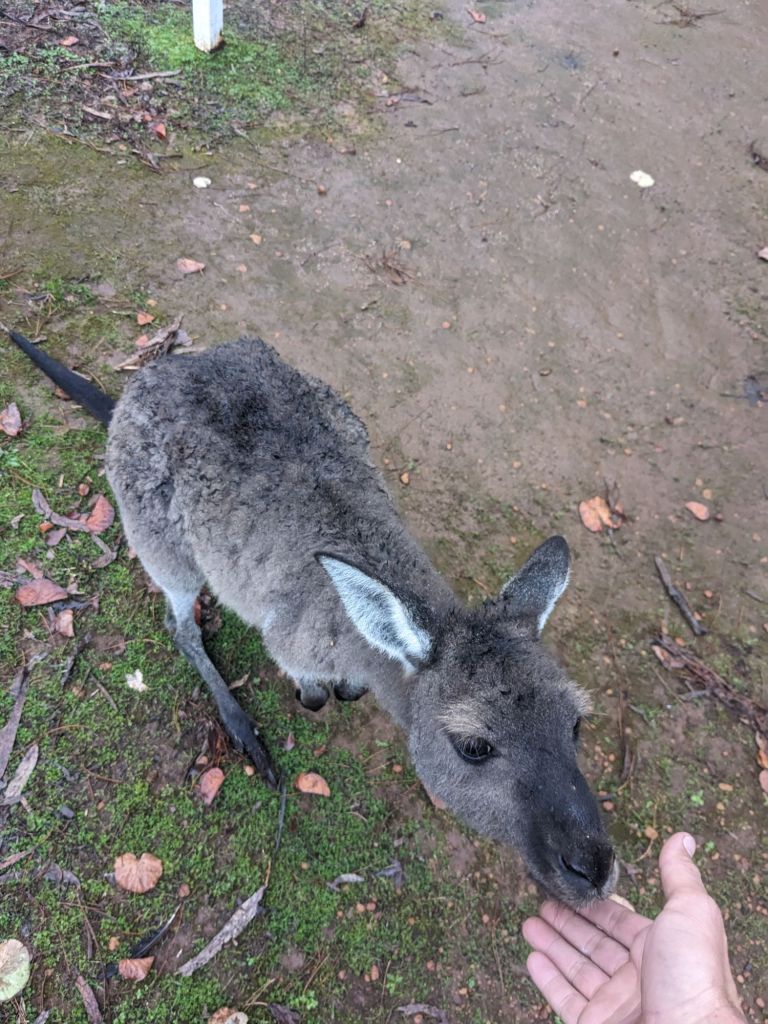
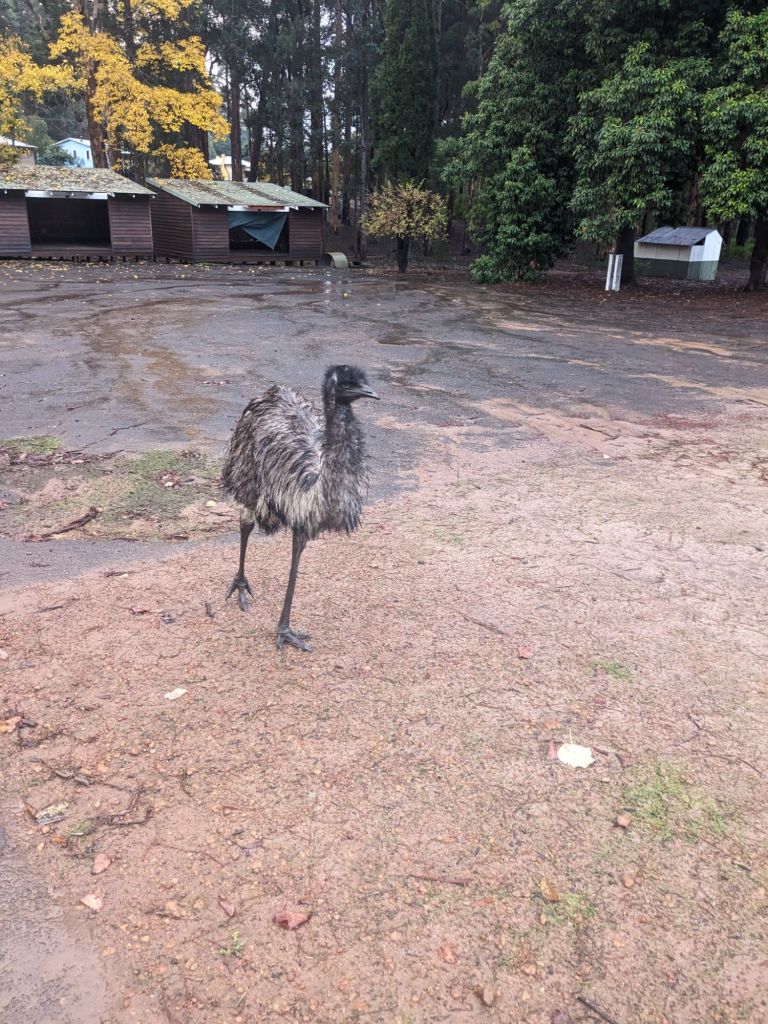
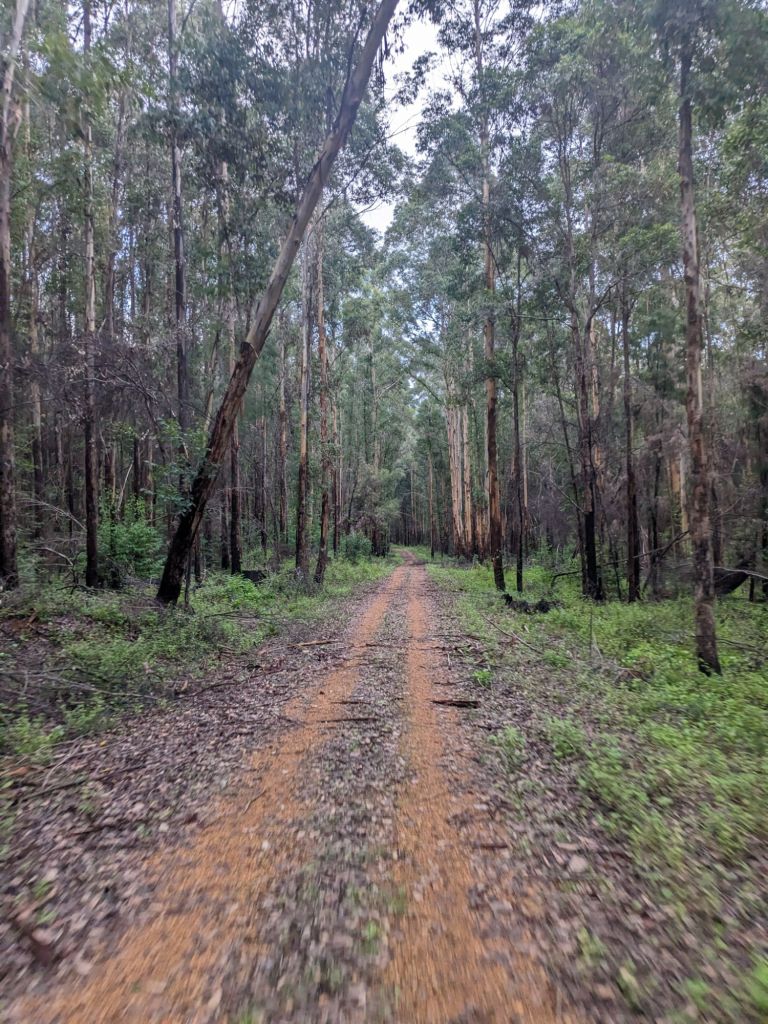
The first few days were fantastic. I was really able to enjoy the single-track sections on my new bike with bigger tyres, and having a hut each night was a welcome relief from the overnight rain. The wildlife was also a big change. I was chasing countless emus and kangaroos down the trail and getting totally disorientated in the forests, just following the signposts and not really knowing where I was going.


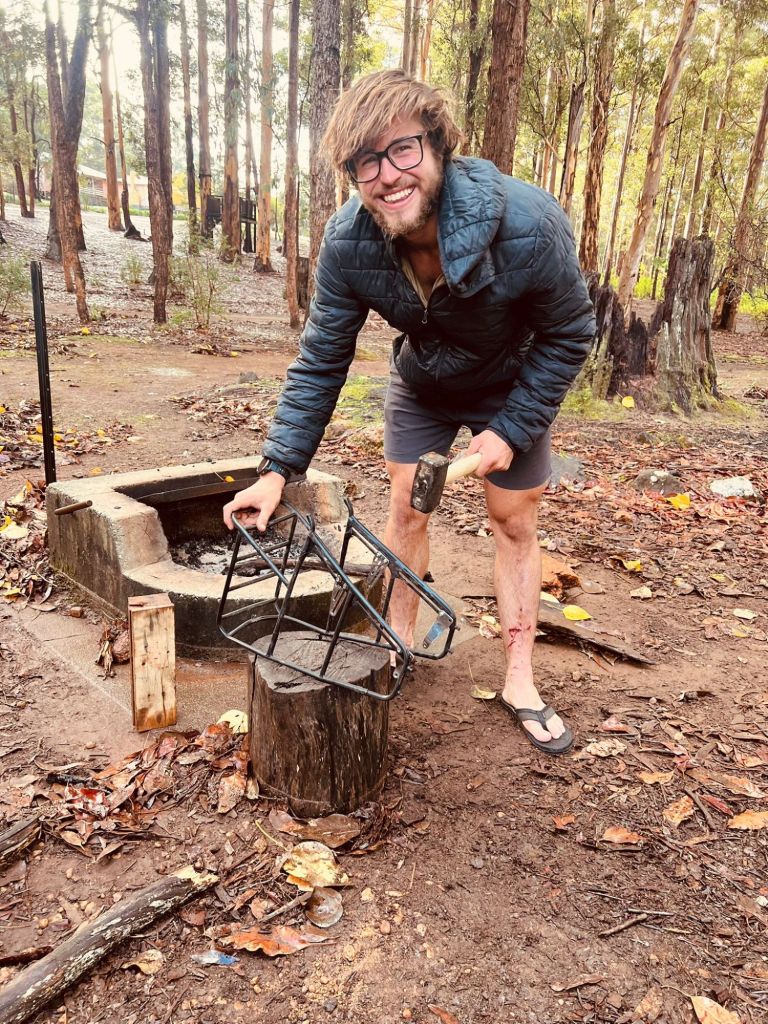
On day six, however, things took a downturn. My brake pads were almost completely worn out. Fortunately, I had spares, but I couldn’t undo the bolt to loosen the current ones. After failing a few times, I managed to strip it (I later learned this was due to my old multi-tool being too worn down) and now had no hope of fixing it without some better tools. Not really having a choice but to keep moving, I set off early that morning with barely functioning brakes into what was predicted to be 80 mm of rain. The first 50 km went well, but then the brakes failed altogether on a downhill and I came off, heading straight into a tree. After getting up, the front rack had taken all the impact, wrapping around the tree, and I also punctured the front tyre. I wasn’t too badly damaged, but my leg had a nasty cut and I was getting cold standing in the rain, unsure what to do. After fixing the front flat, I kept moving, mostly just walking my bike, occasionally riding on an uphill or flat section, when I came upon Donnelly River. This was an old timber-felling settlement that had now been converted into a remote holiday village. When arriving, I was greeted by Gus and Harry, two other cyclists who had been there a few days sheltering from the rain and seemed pretty confident they could fix my bike, looking for something to do, stuck in this tiny village with no internet signal.
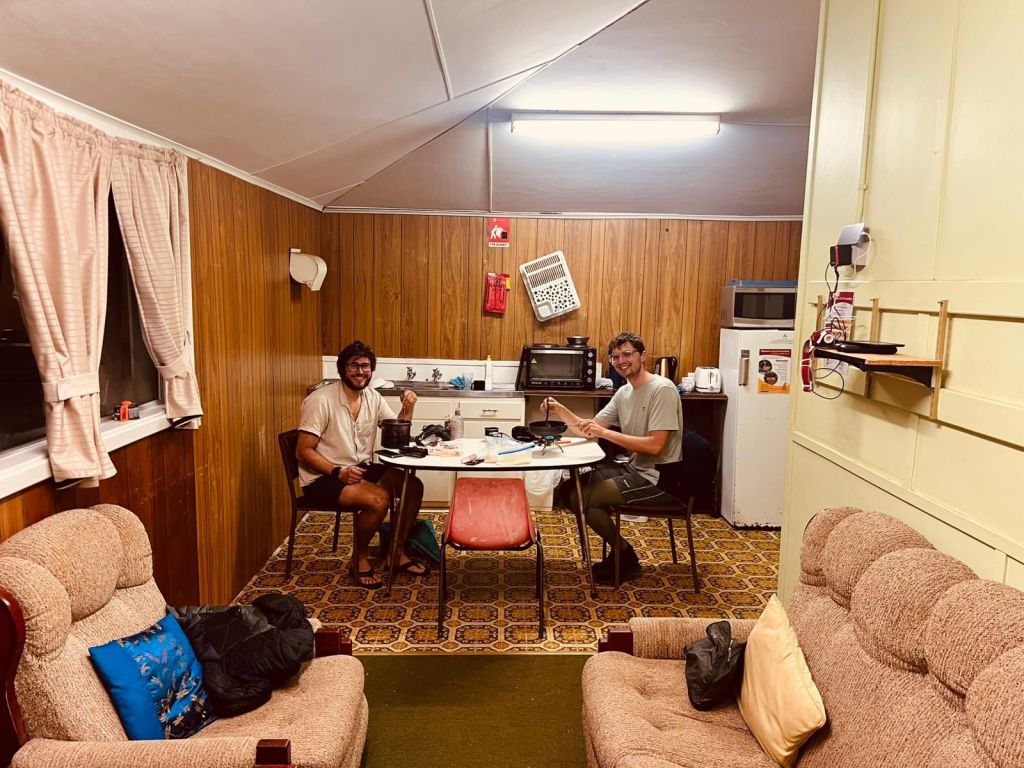
There were a few options for accommodation: a house which was definitely out of my budget. Then also the old primary school had been converted into dorms and a kitchen and shower. For $30 you could get a night in a dorm, or for $15 you could get access to the facilities but had to find your own place to sleep. I chose the latter, opting for the sofa in the kitchen. After a warm shower and a packet of noodles to eat, we were ready to repair the bike. With a pair of multigrips to undo the brake bolts and a mallet to bash the rack back into place, the bike was mostly rideable again. This meant I could enjoy the evening relaxing in the shelter, which felt straight out of an ’80s sitcom.
The rain continued through day seven and I opted for a short 20 km ride to the next hut in an opening in the weather.
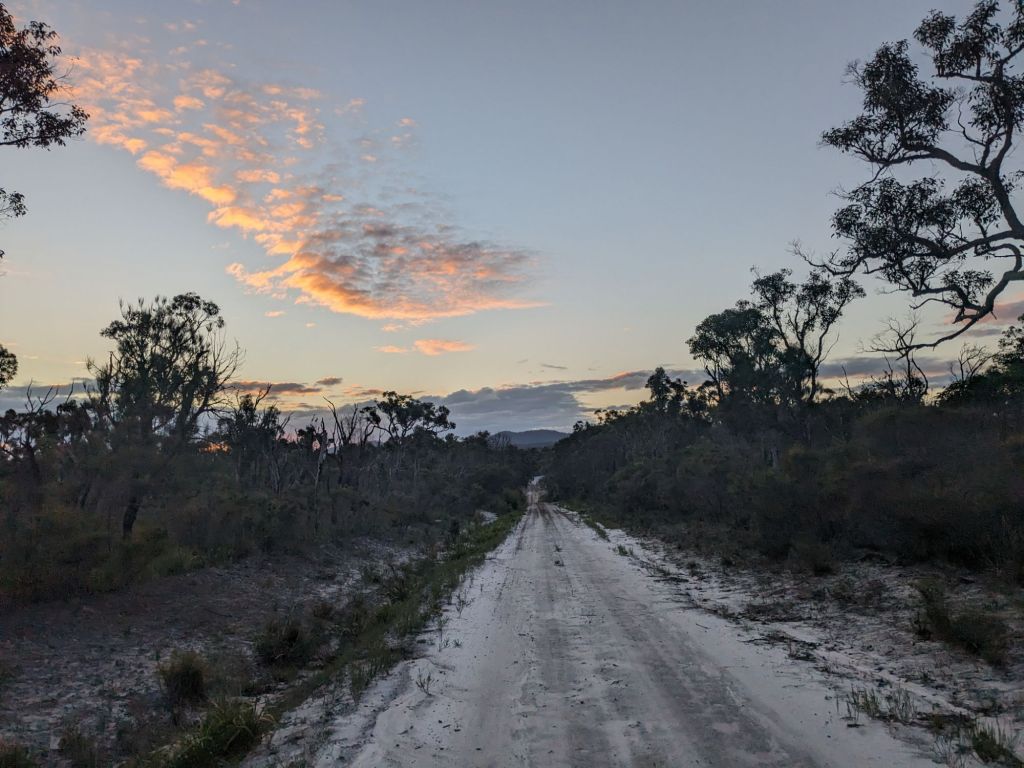
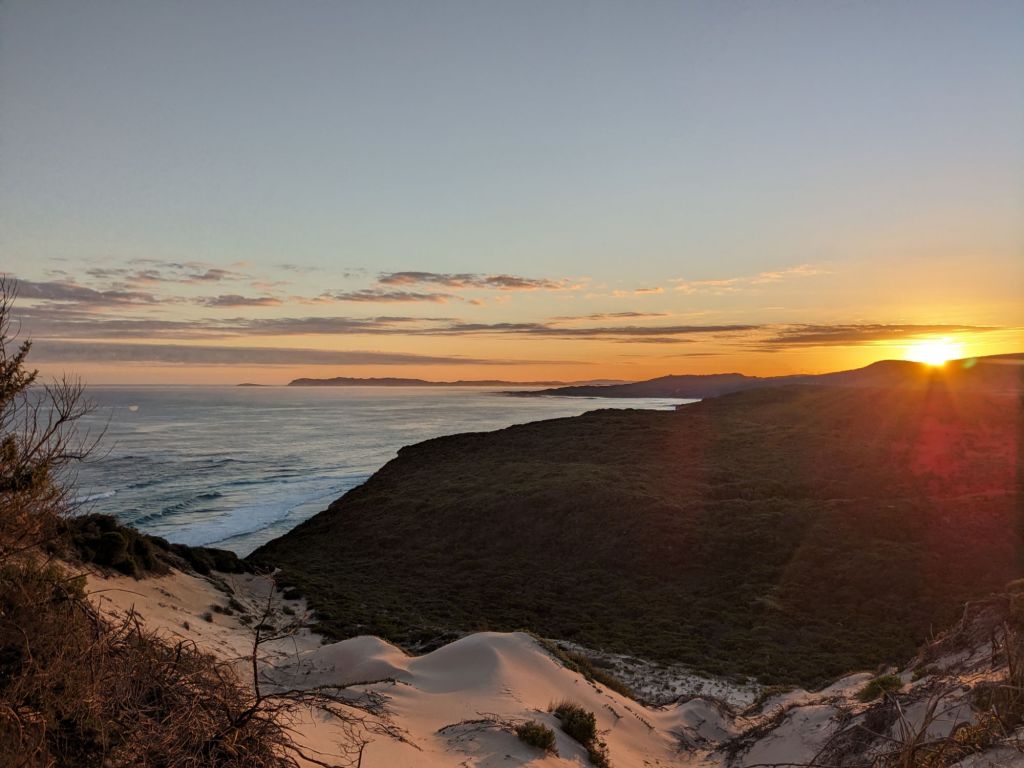
The next few days went better, making it to the coast and enjoying the amazing views out into the Southern Ocean. The final stretch of the track took me through a wind farm perched on the hills west of Albany; listening to the sound of the turbines was impressive. In Albany, it felt strange seeing the final trail marker. From here it would be mostly on the highways. I booked into a campsite for a few days, repaired the bike, also attaching as many water bottle cages as I could squeeze on, preparing for the next section across the Nullarbor.


 Will Scam