Gear Review

This will probably be the final update from the trip, going into depth on the kit I brought with me. It’s not really a review of the gear, but more just my opinions of everything I brought and how it compared to other peoples setups.

Bike
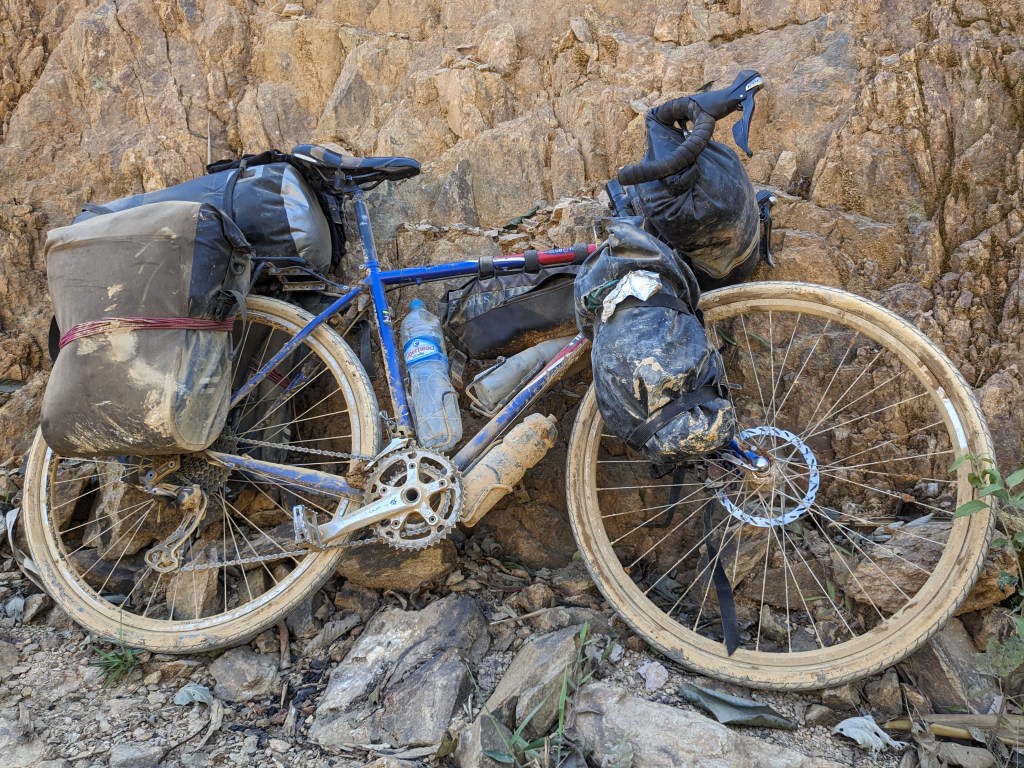
It was definitely a love hate relationship with the bike depending on if I was experiencing any problems. I never really had a chance to put it through its paces before setting off, but I had no major issues the whole way. The disc brakes required quite a bit of maintenance: tightening, cleaning or replacing the pads frequently due to the extra stress from the weight of the gear, but I’m not sure calliper brakes would’ve been any different. I would’ve liked to have the room for larger tyres, although I managed with 38mm and the Schwalbe Marathon plus tyres were incredibly durable and puncture proof lasting the entire trip. 
Pannier bags
I had some cheap waterproof ones costing £30 each from Halfords. The material held up most of the way, getting a small rip from the seam on one bag and the hook holding them to the rack came off too. I was able to fix this with some nuts, bolts and bungee, however I think I’ll upgrade them for the next trip to the twice as expensive Ortlieb branded bags.

Waterproof bags
I had two big thin waterproof bags I used inside the panniers, as before the trip started I wasn’t sure how waterproof the pannier bags would be. These were useful just to keep the clothes organised and doubled up as a pillow.

Pannier Rack
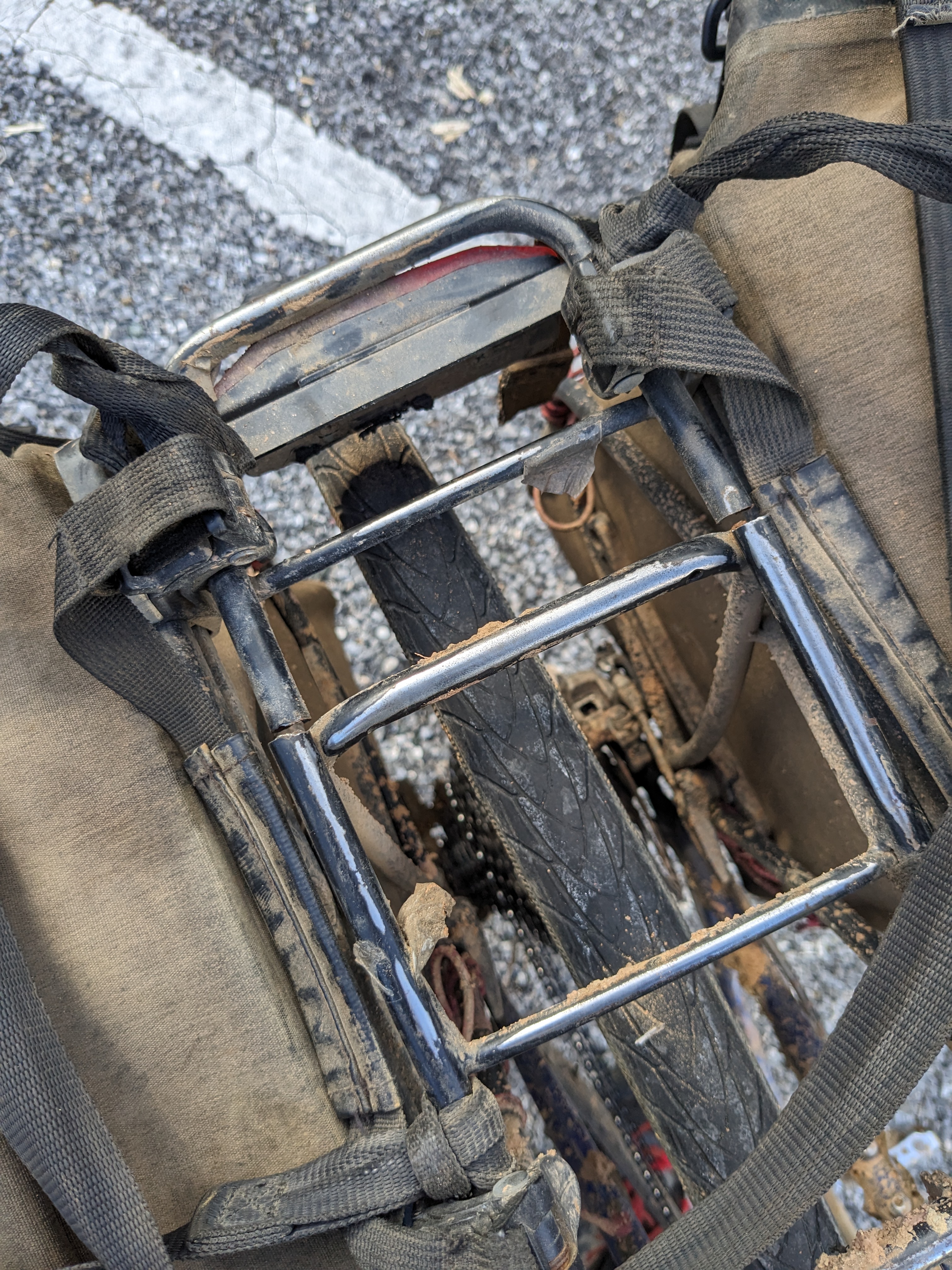
This was taken off an old bike before the trip and snapped in Laos. Fortunately, as it was steel I could get it welded back together. I think it’s probably one of the most important bit of kit, as it would be incredibly challenging to carry everything if it broke.

Fork cages
I will definitely be upgrading to a proper front rack and front pannier bags for my next trip, but chose the front fork cages and waterproof bags as it was a significantly cheaper alternative. They took too long to put on and off the bike along with never feeling very secure bouncing around lots on bumpy roads. This was probably partly my fault trying to carry too much with them and toward the end, they were only held on with zip ties.

Frame bag
This was another cheap bag and worked well. It claimed to be waterproof, but I never trusted it and one of the zips broke. This was vital to be able to store bits to access whilst riding along.

Large Dry Bag
This worked well just being strapped to the top of the rack filled with light bulky stuff: sleeping bag, air bed, rain coat and tent poles. The straps soon broke, my fault wrapping them up in the wheel and I should’ve cut them shorter. I’ll keep this for the next trip, but get a new dry bag with backpack straps which can double up as a day bag for when I’m not cycling.

Bottles and Bottle Cages
The bottles I started with quickly became disgusting with a thin layer of slime on the inside and got thrown away after a few months. I ended up using 1.5L plastic coke or water bottles most of the time which worked better as the screw lids kept the mouth piece from getting coated in dirt and I could regularly swap them out. The metal bottle holders were forgiving, with the flexibility to be bent to fit pretty much any size or shape bottle.

Camelbak
I brought both the bladder and backpack with me and used it regularly because it was a good way to carry some extra water without adding weight onto the rear rack. It was also great on the bumpy roads as it was a quick way to drink without having to reach down grab a bottle, then unscrew the top whilst riding along. The one problem is in the heat it just makes you hotter as where its in contact with your back it’s like wearing another layer of clothing.

Handlebar bag
This is where I stored my tent and it worked well storing it separate to the air bed and sleeping bag as it was often damp. Most of the other cyclist I met had Orlieb handlebar bag that looked great for keeping valuables in and to quickly unclip from the bike to take with them into a shop. It’s also another storage bag easily accessed when on the move or to grab stuff from without going through the slow process of unclipping then unrolling the pannier bag.

Bumbag
This was stored in my pannier bag and used to store my valuables mainly passports, money and cards. I had 4 bank cards with me but would mainly just use my Monzo travel card and occasionally the starling card if I’d withdrawn the monthly limit of cash using the Monzo. It would’ve been good to also have a visa travel card as occasionally places would not accept Mastercard. I was also travelling with a few hundred USD which I was able to withdraw from Georgian ATMs which I’m glad I had for emergencies.

Clothes

It was difficult deciding how much to bring, as the clothes quickly piled up packing for the negative temperatures of the Pamir mountains, the heat of the Kazakh desert and the humidity of Indonesian wet season. I think the solution is to pack light and just buy items when you need it, then dump them when you don’t. Toward the end of the trip, I had some extra layers and just three outfits, one for wearing on the bike, then two other sets of shorts and t-shirt for wearing at camp which I’d swap between trying to keep one set clean for if I was staying somewhere or able to wash.

Cycling Shorts
I started with bib shorts but once these were destroyed after wearing them for 3 months I just got a pair of cheap Decathlon cycling shorts. The bib shorts were an annoyance when you needed to go to the toilet whilst wearing lots of layers and then too warm in the South East Asian humidity.

Cycling Tops
I began with a lightweight cycling jersey which was good to have the pockets on the back, but once it was ruined I just wore button up shirts which were nice to be able to unbutton to stay cool. Having a long sleeve was also useful to not have to worry about applying suncream or insect repellent. Picking a darker coloured top would’ve been smart to hide the dirt. 

Bike Shoes
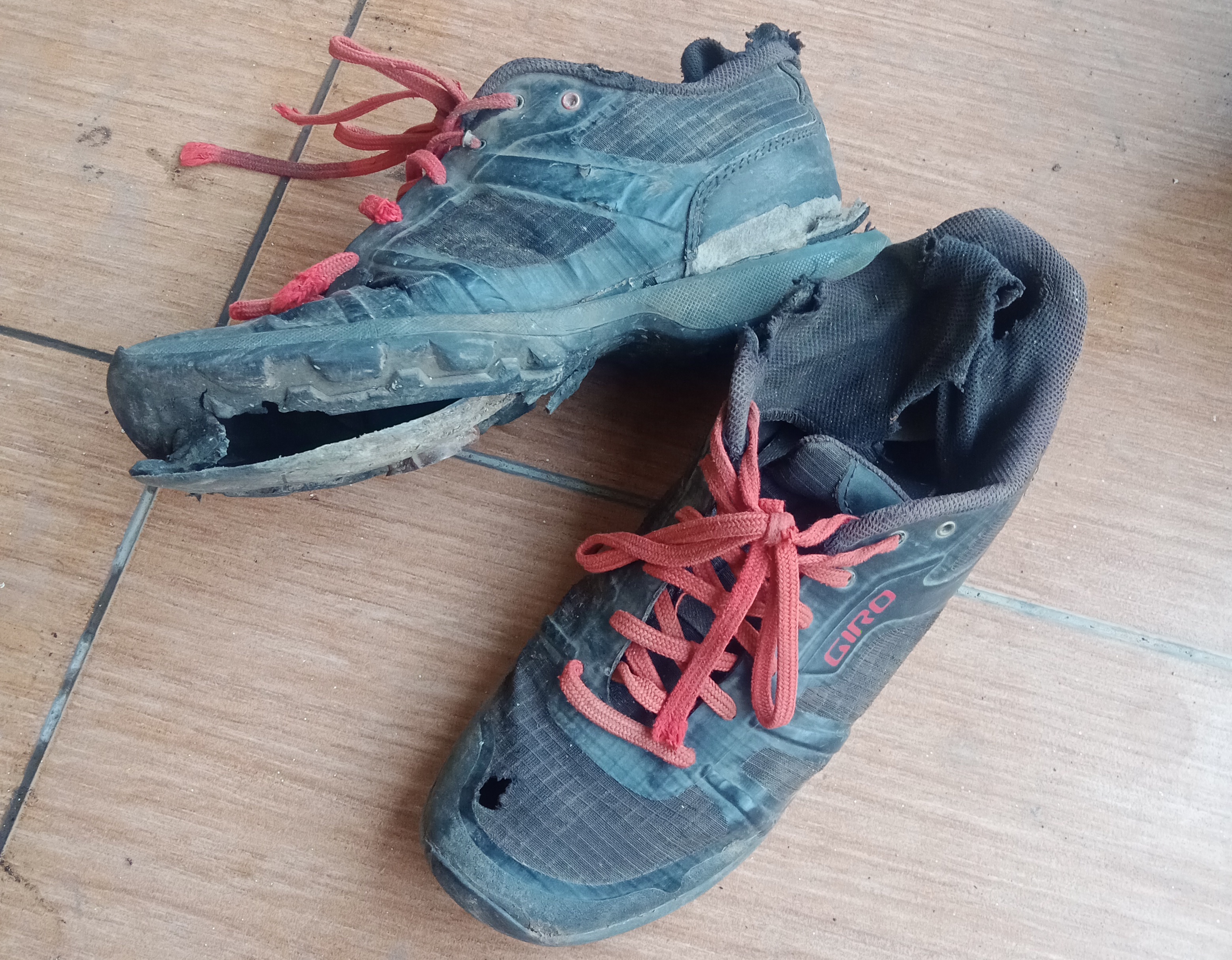
I had clip in bike shoes and I’m not sure they were necessary. Most other bikepackers just had good walking shoes. After 8 months these got binned in Bali, as they were in pieces.
Puffer Jacket
This was great. It packed up really small and was a warm layer. Mine was a cheap Primark one although I’d love a Rab down jacket but I’m not sure I could justify the cost of one.

Arm Warmers/Leg Warmers
I’d never tried these before the trip but liked them. They packed away really small and effectively gave an extra layer that I’d quickly throw on before descending the mountain passes. 

Thermals
I brought 2 thermal with me on the trip but probably could’ve managed with one. It was nice to have one for sleeping in and one for cycling in but I only wore both of them at the same time for a single night. Generally, it would be the last extra layer I’d go for when it was cold just because it was a pain to take on and off and I’d often get too warm wearing them.

Trekking Trousers
These were trousers with zips so you could wear them as shorts and ended up being really useful. These were good to put on whilst cycling when it got really cold as they acted as a windproof layer covering my legs. It was important to have a pair of long trousers with me for when I visited mosques and these were a good light option.

Hat, Gloves and Buff 
All more essential layers for when it got cold. The buff was also good when the sun was really strong or after soaked in water to breath through on the very dusty roads.

Waterproofs
I’m not sure the best solution for a waterproof jacket, I brought two, a lightweight cycling one and a large gortex jacket. The gortex jacket was quite bulky but was a great windproof layer that I could fit it over the top of the puffer jacket. The cycling jacket was great to quickly throw on if it rained or as an extra layer in the morning before the sun rose. I always felt the gortex jacket was taking up too much room but was still an important item to have.

Flip flops 
They were nice for camp in the evenings just to get out of the cycling shoes I’d worn all day. I think I’d prefer crocks as then I could cycle in them too when it was raining as it wasn’t nice wearing wet cycling shoes all day long.

Socks
I ended up buying lots of pairs along the way as they would get so dirty. I tried going without socks for a bit too but it wasn’t comfortable doing this all day.

Towel
I had a small microfiber towel which I really don’t like, but there’s no good replacement for them as they’re quick drying, lightweight and small.

Camping Gear

Tent
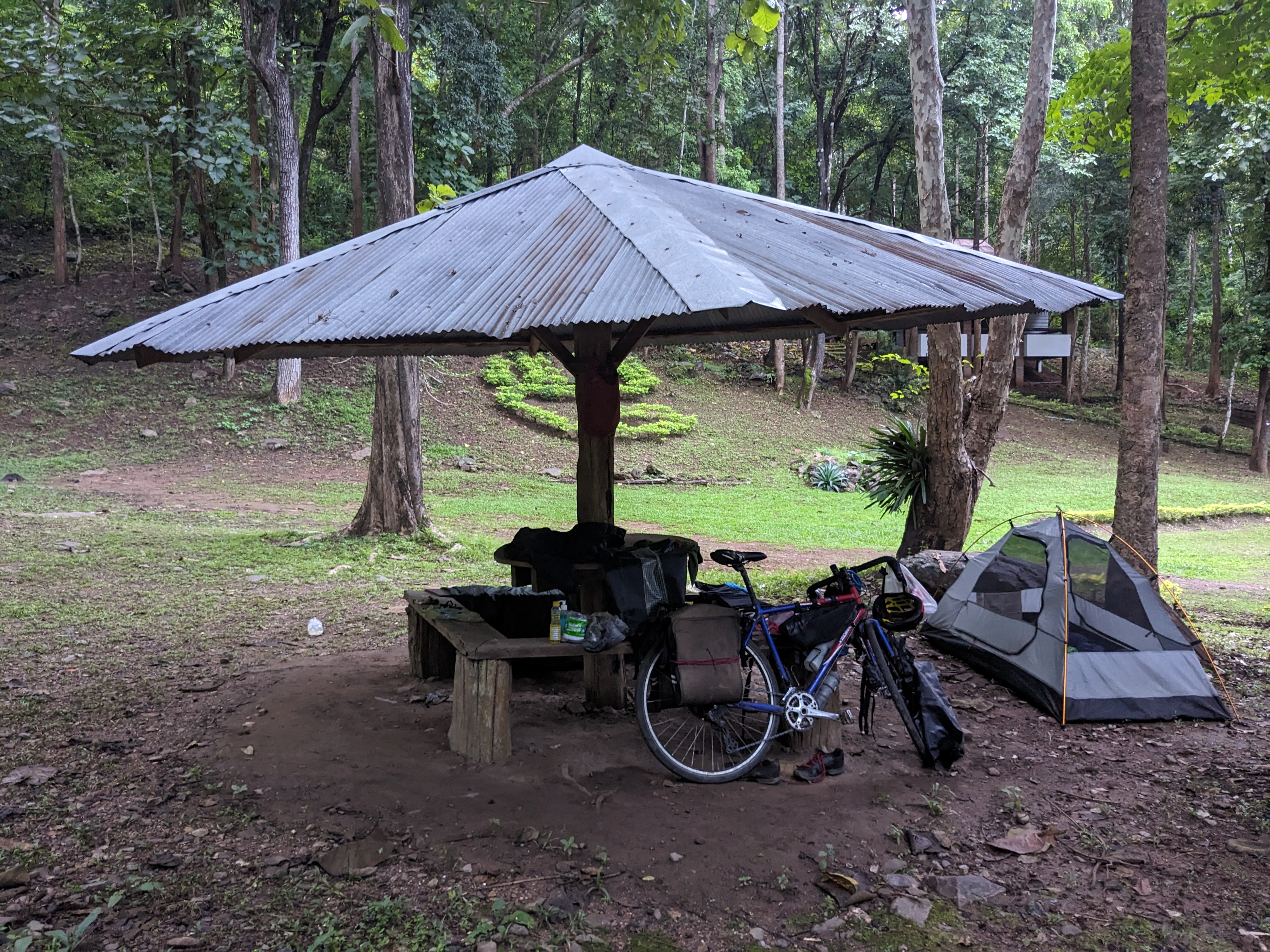
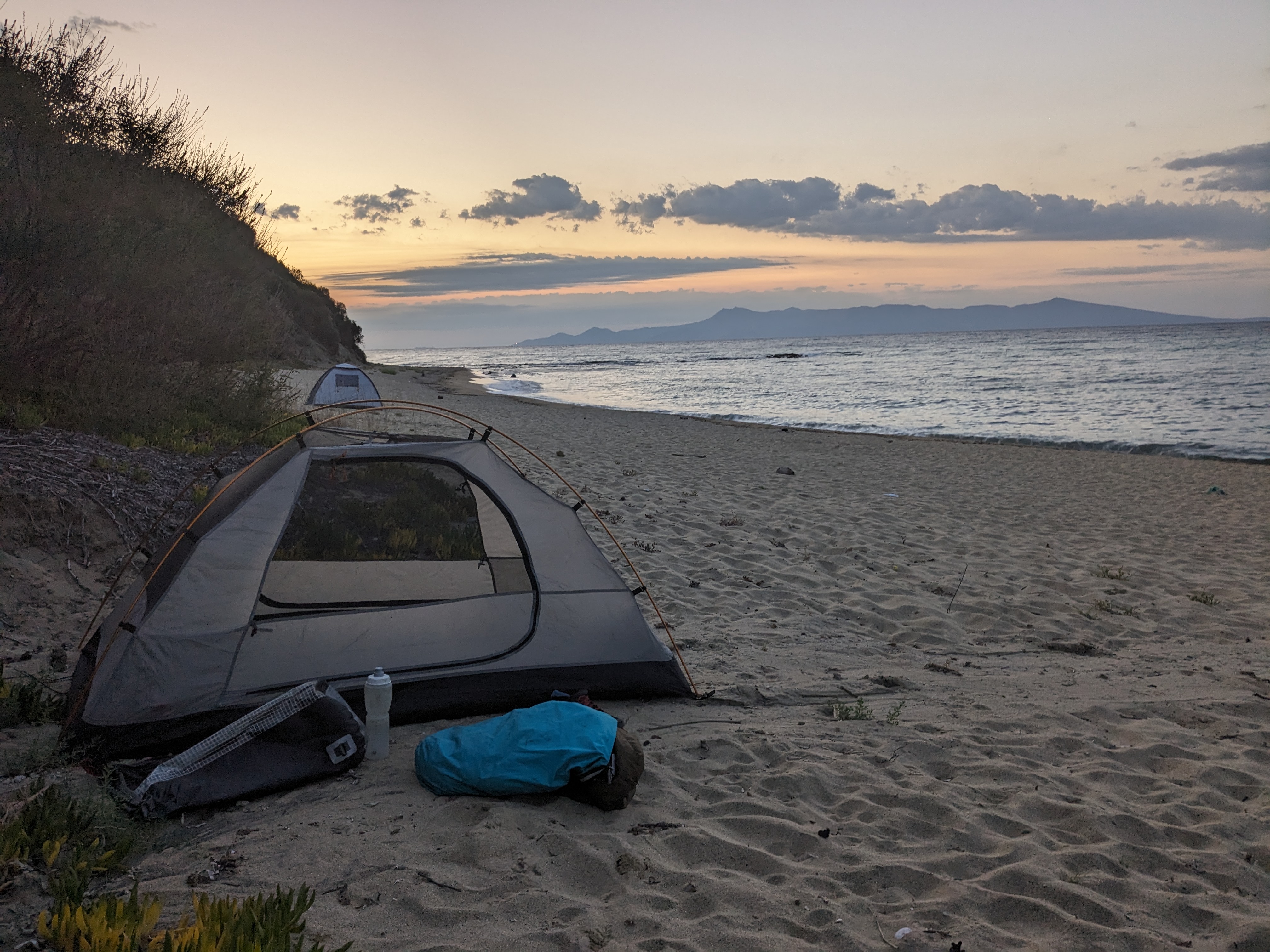
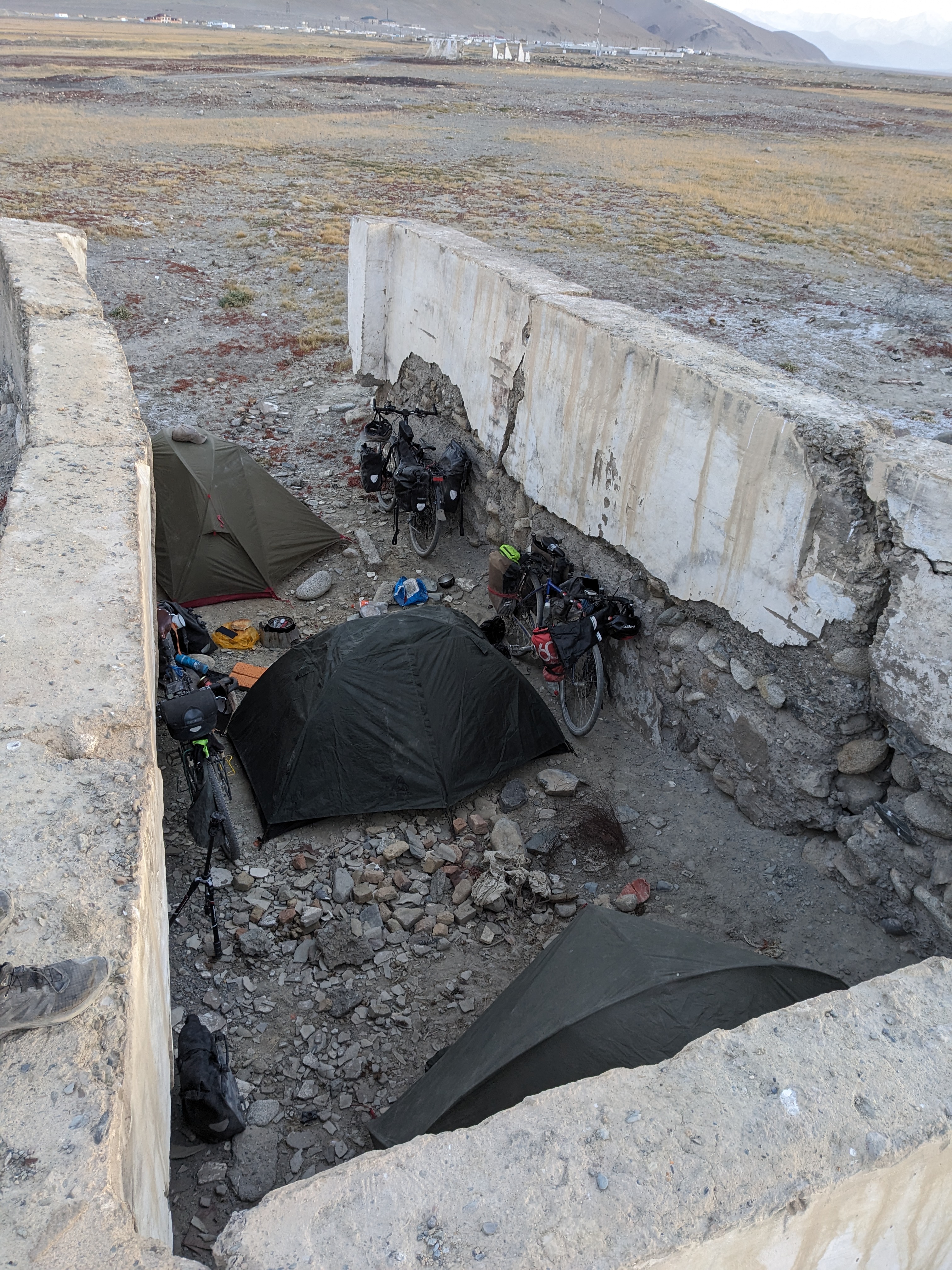
By the end of the trip, the tent was pretty wrecked. The pole had snapped and there were holes in the base material where ants could crawl in. Having said that however, I still have the tent with me and really liked it. It was a Trespass 2 man costing under £100 and weighed about 2kg. Having a 2 man tent was definitely worth it just for the extra room to store bags inside. It also had a removable outer waterproof layer which was really nice when sleeping in the heat as it kept you cooler with the air blowing through. Being freestanding was vital as I was often camping out on gravel or concrete so could set the tent up without needing to use the pegs.
Sleeping mat.
I made it through two sleeping mats on the trip.  The inner structure broke on the first mat, giving it a large bubble when inflated making it useless and so I got a new one in Bangkok. Both were just cheap ones and worked fine. They were both durable, never getting any punctured in them but I’ve heard lighter, more expensive ones puncture more easily. One problem was the cold from the ground would come up through the mat but after taking a foam mat for free from a hostel, this solved the problem. The foam mat was also great for just sitting on when cooking or using as a pillow so it stayed with me for the rest of the trip.

Sleeping bag
This was one of the fancier bits of kit I picked up before leaving, buying a down bag rated to -16 degrees. It was too warm most of the time but I was glad to have it for some cold nights. I wish I’d brought a sleeping bag liner to use when it was warm and also to stop the bag getting so dirty, as I was unable to wash the downs material whilst on the road. It also didn’t pack up too small but was a good balance between warmth, size and cost.

Cooking set
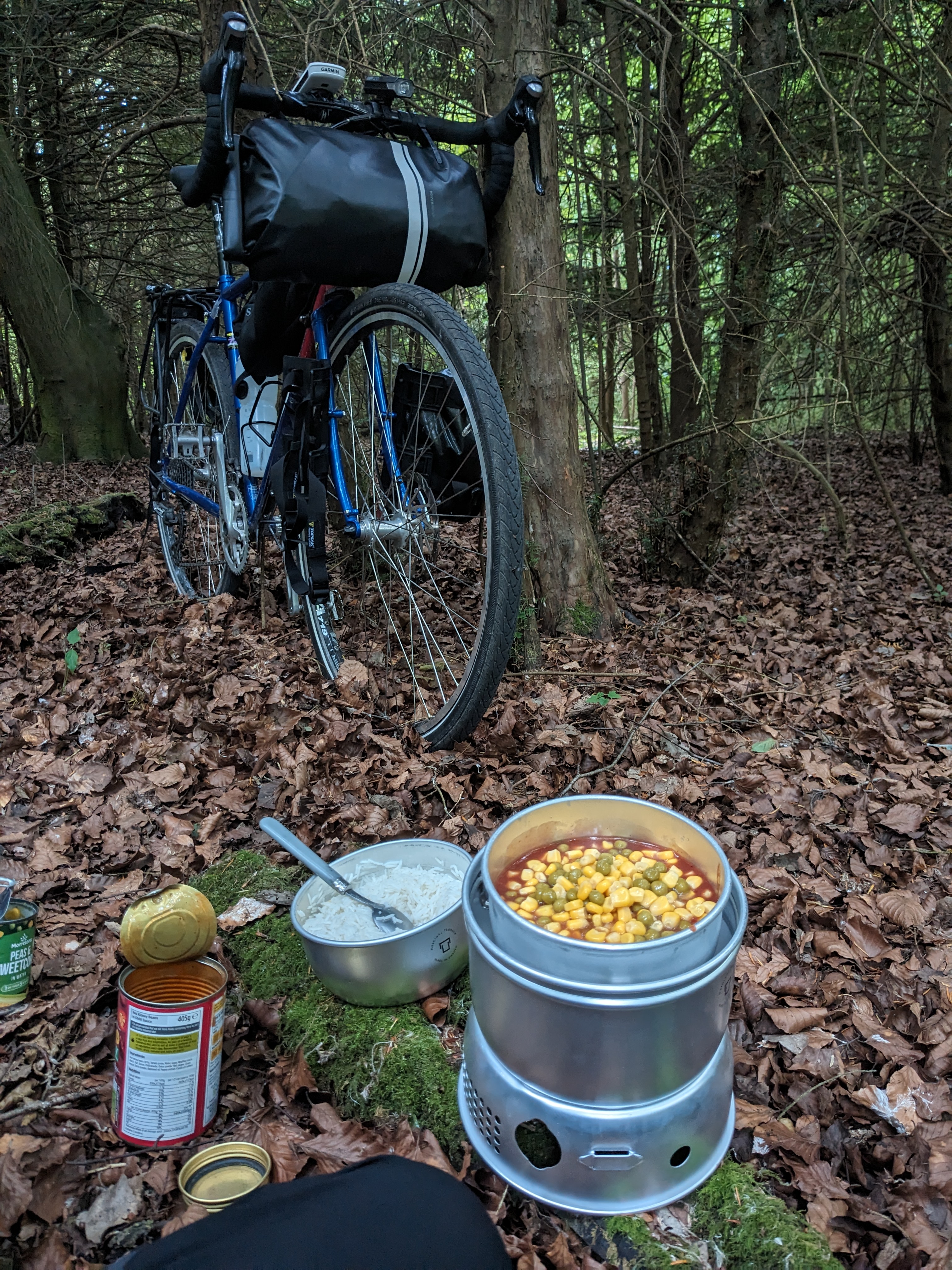
I went for an alcohol burning Trangia stove. This kit came with two bowls both 1L which were too small and I’d often need to make two bowls of pasta in the evenings. I think just one big pot would be better. I was able to find fuel everywhere occasionally resorting to burn paint thinner or hand sanitiser. This kit was cheaper than the petrol burning stoves but I think I’d upgrade to one of them in the future to allow me to use a larger pot and boil water faster as this kit struggled a bit in the cold.

The only bit of cutlery I brought was a spoon, which was all I needed. I wasn’t particularly doing complicated cooking, mostly just some pasta or rice then veg and some kind of protein source out a tin. To wash everything, I’d just scrub it with my hand under a tap or in a stream.
Swiss army knife
I mainly used the knife and tin opener when cooking but by the end of the trip I’d used every other feature it offered. 

Cigarette Lighters
I’d always carry two with me as always be leaving them out overnight, then it being too wet to light the stove the following morning. 

Water filter 
I could’ve survived through Central Asia without it, as in the villages we could find water and in the mountains the streams were so clear they seemed safe to drink. I used it frequently in South East Asia, filtering the tap water everywhere I was told it was unsafe to drink in order to save buying bottled water. Filtering the water took some time and effort, taking probably about 3mins to fill up a 2L bottle and just not bothering to filter anything that wasn’t already clear as this would just clog the filter.

Bike Tools and Spares

Inner tubes, puncture repair kit, tire levers and good pump
It was good having the puncture repair kit in addition to the spare tubes as it’s such a small kit and just gives you more redundancy if tubes burst.

Spare spokes
They’re so small and light I think it’s work carrying a few. I managed to snap two spokes on separate occasions when pushing my bike through branches in the forest. Also with all the extra weight on the bike it puts more pressure on the spokes so snapping one is more likely.

Gear cables, brake cable and brake pads
They’re all so small and light so defiantly worth bringing spares. I’d try to always have two sets of new brake pads as they were sometimes quite hard to find.

Bike Multitool
It’s a lightweight option for being able to adjust every bolt on the bike. Also good to have a chain tool and spoke wrench on it.

Cable ties, paracord, duct tape and super glue
Should be able to bodge anything back together for a bit with these.

Spare bolts
I was glad to have replacement bolts for everything on the bike. Especially the pannier racks as these were always coming loose.

Bike lock
It was hard to decide what sort of lock to choose. A D lock is probably overkill so I went for a decent combination cable lock. I reckon where the bike is left is more of a factor than what lock you use.

Chain lube and old tooth brush
For trying to clean everything and keep it running smooth.

Toiletries and First Aid

Toothbrush, Toothpaste and Dental floss
Good to keep them where you can reach it on the bike to save time in the mornings by brushing your teeth on the move.

Toilet paper
I’d grab this from public toilets or hostels.

Bar of soap
All I took for washing myself and clothes.

Bug spray
I really liked the one from 7eleven in South East Asia, it was strong and a nice small bottle.

Suncream
I found the Lidl factor 50+ kids waterproof one worked best and I’d only need to apply it every few days. I’d often buy suncream before leaving a country if I had any cash left over as it’s something small and expensive to spend it on.

Glasses, sunglasses and contact lenses
I just had 3 pairs of contact lenses in case the glasses broke to give me a few days to find somewhere to get them fixed. Luckily, I had no problems.

Sudocrem
This was about the only thing I used in the first aid kit. It can be used for almost anything minor that is likely to happen: burns, sunburn, bites, blisters, chafing and as an antiseptic for cleaning wounds.

Paracetamol
I think I took it once to help with altitude sickness but always good to have.

Spray plaster
I really like the stuff, just being able to clean a small wound and spray this over to cover it up. Then just regularly apply more layers to keep it covered. I never ended up using it though.

Tweezers/tick remover
This was used a few times getting ticks camping out in French forests. 

Bandages, plasters, steri strips and dressings
I took a selection of different sizes. I think it’s hard to know if you’ve overpacked for this as you don’t expect to or want to use any of it and fortunately I didn’t.

Electronics

Bike Computer
This was very much a love hate relationship. The first problems occurred leaving Europe and losing all maps as it only had the one continent downloaded. Eventually, I found a computer to borrow and load the rest of the countries I needed. Next, I’d have issues with it not charging or just freezing. I don’t think it was designed to be left on for 10 hours a day every day. When it did work, it was great though being able to see the roads, see the gradients to know the size of all the hills coming up and record everything for Strava without burning through phone battery.

Phone
Mostly just used for researching places and planning a route along with taking photos.

Waterproof phone case
This was really great, just one of those pouches to put the phone in and seal up. I’d often leave my phone in it just to give it some extra protection from either the dust or rain. Then pretty much always use it after having to buy a new phone when mine became water damaged.

Headphones
I went through a few pairs of cheap headphones but it was really nice to be able to listen to music or podcasts during dull days of riding.

Bike Lights
I didn’t use them that often but glad to have.

Head Torch
Really useful. I’d often wear it cycling at night just to be more visible and be able to look to the side of the road for camp spots. It was also used lots when I was staying in hostels to find stuff in the dark rooms. The red light feature was nice too to use when reading before bed.

Power Banks
I took two large power banks with me and could go about two weeks before I needed to plug them in. I didn’t carry a solar panel as it worked out cheaper to just take an extra power bank. One Problem I had was that my older power bank just took too long to charge and so if it was fully out of juice it wouldn’t charge up completely overnight.

Sim tool
A safety pin worked fine but I’d always end up losing this tiny tool when I actually needed it.

Charging cables
Definitely worth having two of each type as they were often breaking, I think from getting dirt inside.

This has been quite a long post, but it has been nice to reflect on the kit as I begin planning the next trip. I’m sure I’ve forgotten to include a few obvious things from the list, writing it 4 months later from memory. The truth is the gear really doesn’t matter, anything can be bought whilst on the road and if anything fails, this only adds to the adventure.
West Laos

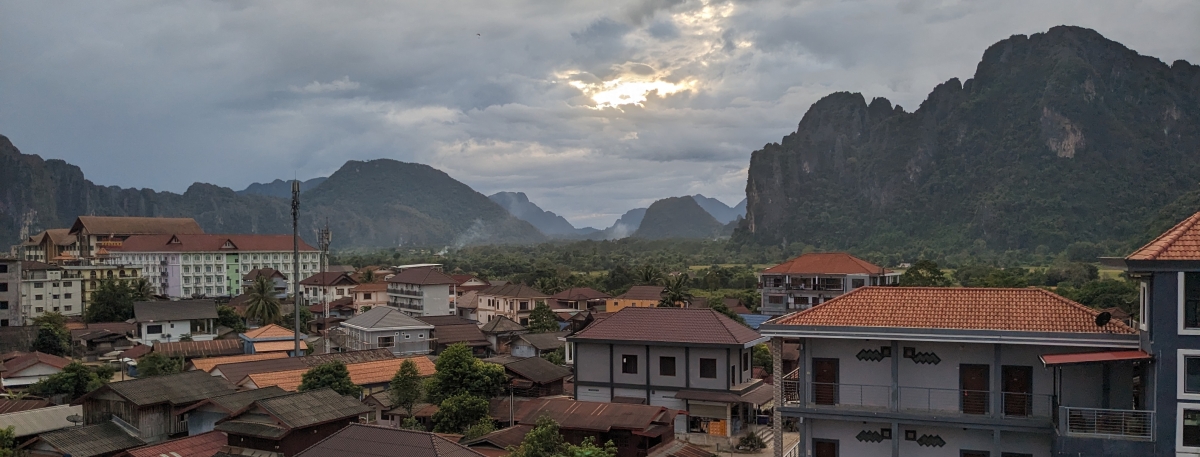
Crossing into Laos proved more challenging than expected. After leaving Thailand, I couldn’t cycle over the Thai-Lao Friendship Bridge No.4 and had to pay for a bus, a short 5-minute journey that involved a 30-minute wait for enough people to fill the bus up. At Laos passport control, despite completing the online forms for the eVisa and paying the fee, I had to fill in a similar form again. The official didn’t bother reading it, and it was pretty illegible anyway due to my poor handwriting from not touching a pen in 4 months. After stamping my passport and adding the visa, he then attempted to charge $1 for the stamp. I’d heard reports that the border officials often try to get extra money from tourists and it’s almost become a game for all the cyclists to kick up a fuss and dodge paying despite it being such a small amount. Therefore, I pretended I didn’t understand and upon reaching for my passport, he handed it over. Then after it got checked again, I entered Laos.

In the first town, I withdrew money from the bank and tried to get a SIM card. For £4, I could get 30GB of data, but the process was very prolonged. The shop assistent had to record all my passport details and was understandably struggling to use the QWERTY keyboard as he wasn’t used to the Latin alphabet. He also seemed very confused that my country was United Kingdom dispite me having a British passport.

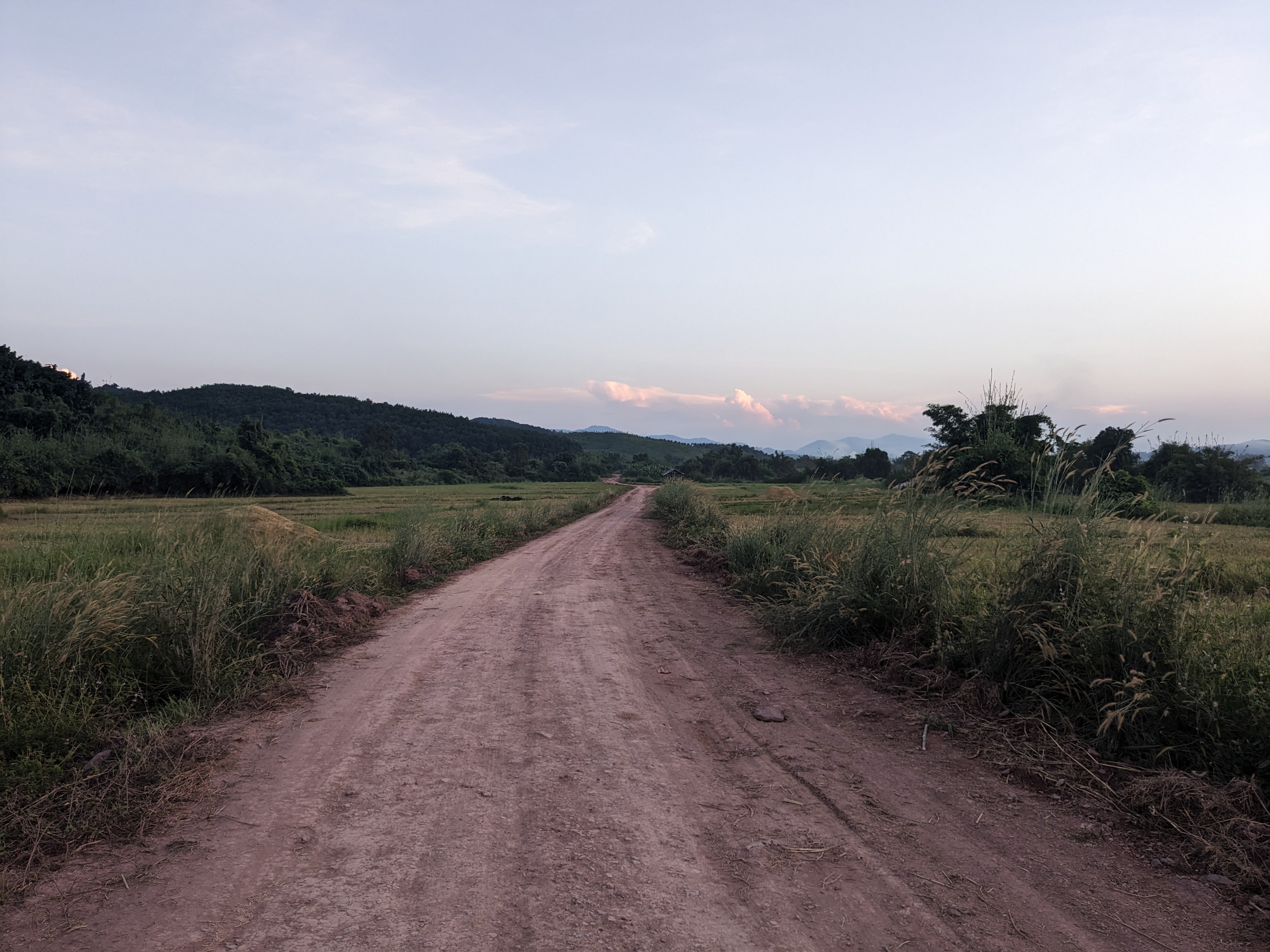
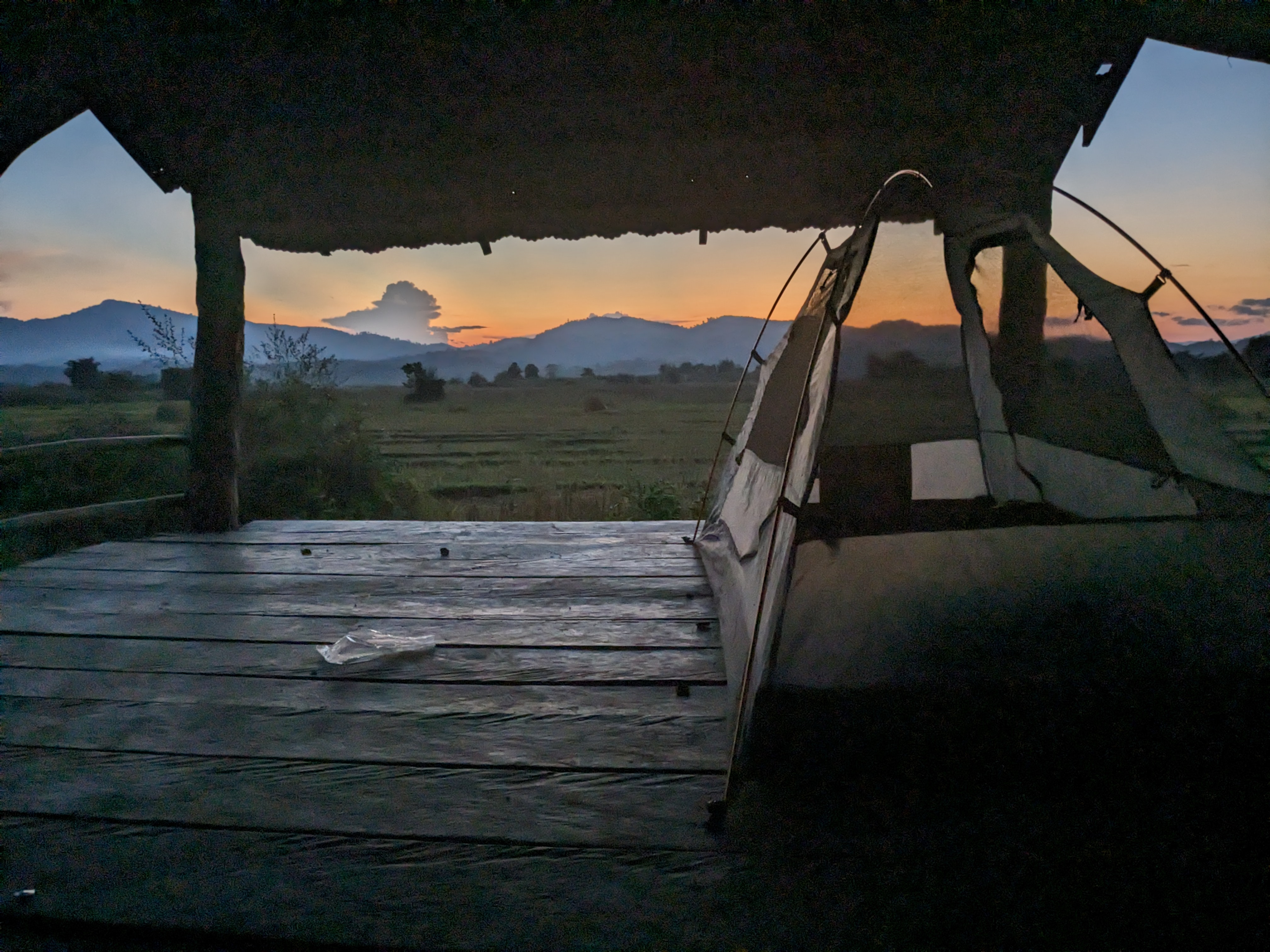
Finally, I got moving again and my first destination in Laos was Luang Prabang. I decided to take the mountainous route over the longer main road to get there. Passing through farmland on the first night, I asked some farmers if I could camp in their shelter. They agreed, but it felt like they just wanted to get rid of me and resume their dinner. That night, I witnessed a stunning sunset and was grateful for the shelter during a huge lightning storm.

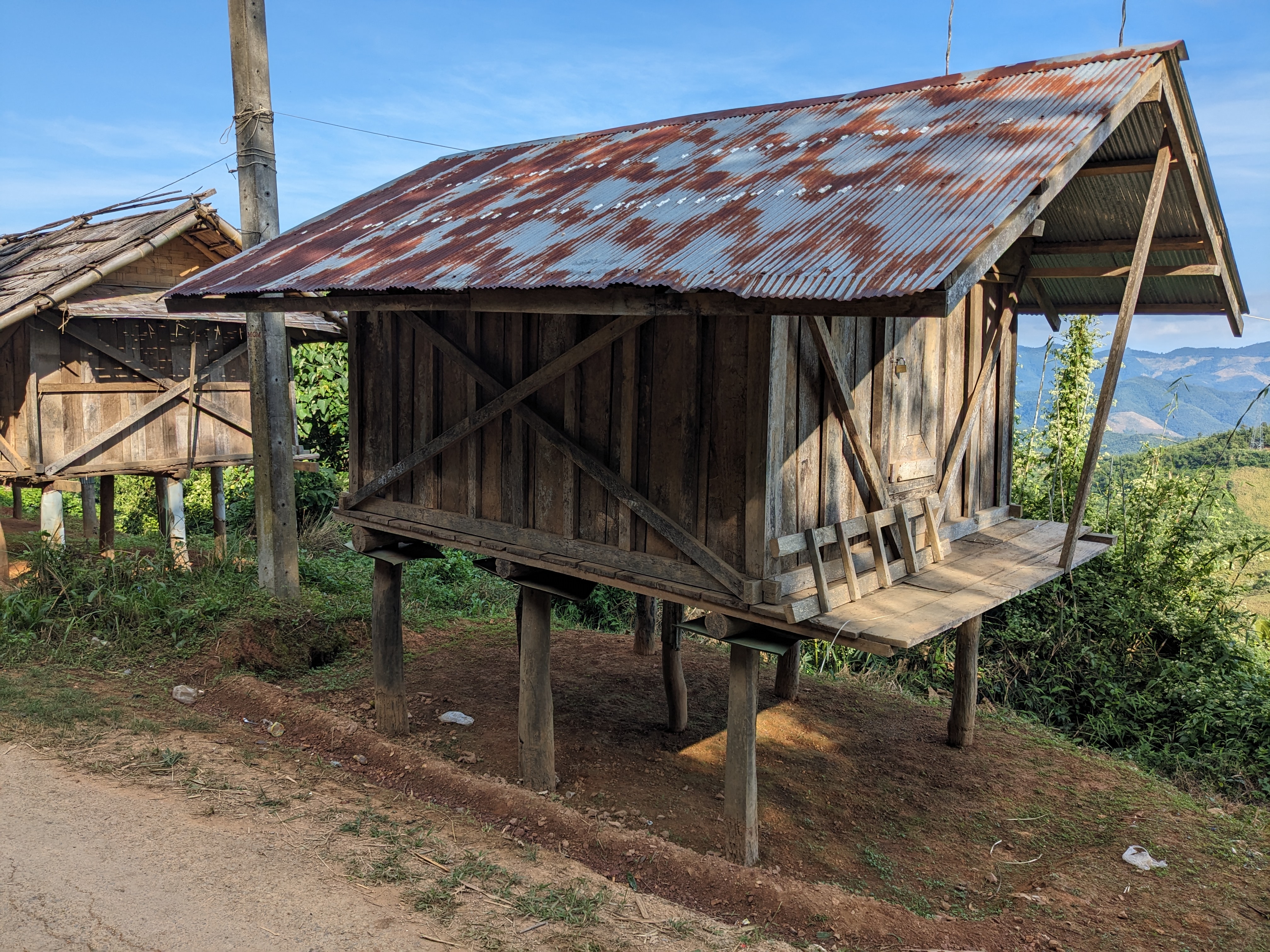
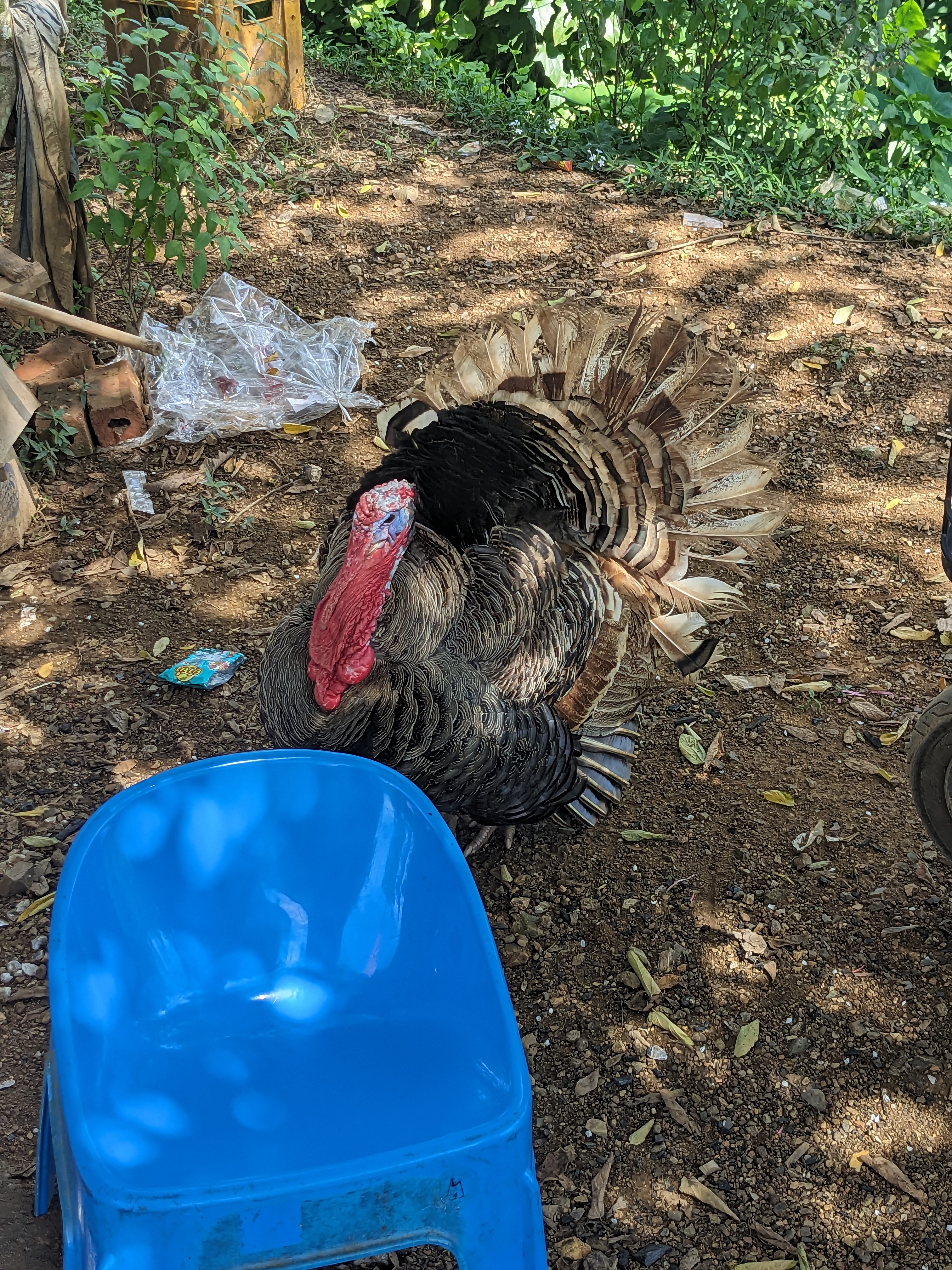
The next day took me deeper into the mountains, where the road started to deteriorate. In each village a crowd would gather whenever I stopped, with both children and adults staring curiously at me. This felt very strange as they wouldn’t say anything or acknowledge me but just stare. Laos has felt less developed than Thailand, marked by many houses in the villages not having electricity or water. Chickens, pigs and occasionally even Turkeys are often roaming freely in villages getting fattened up on scraps of food.
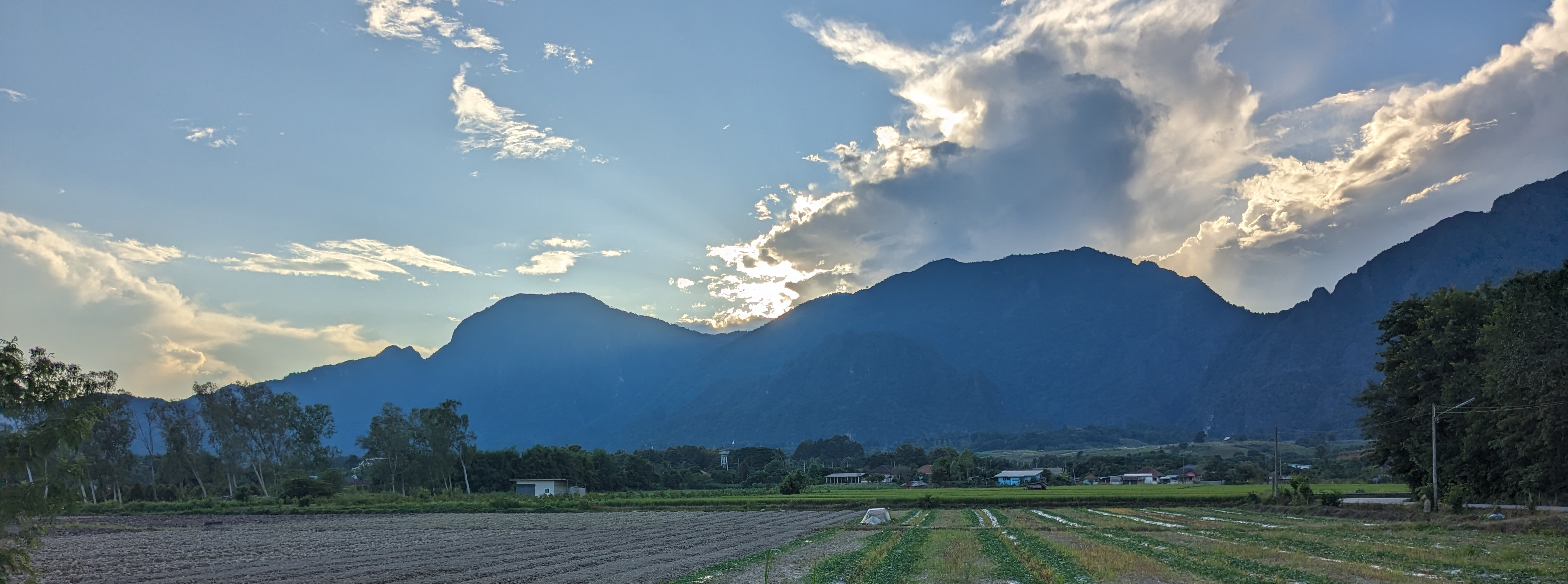
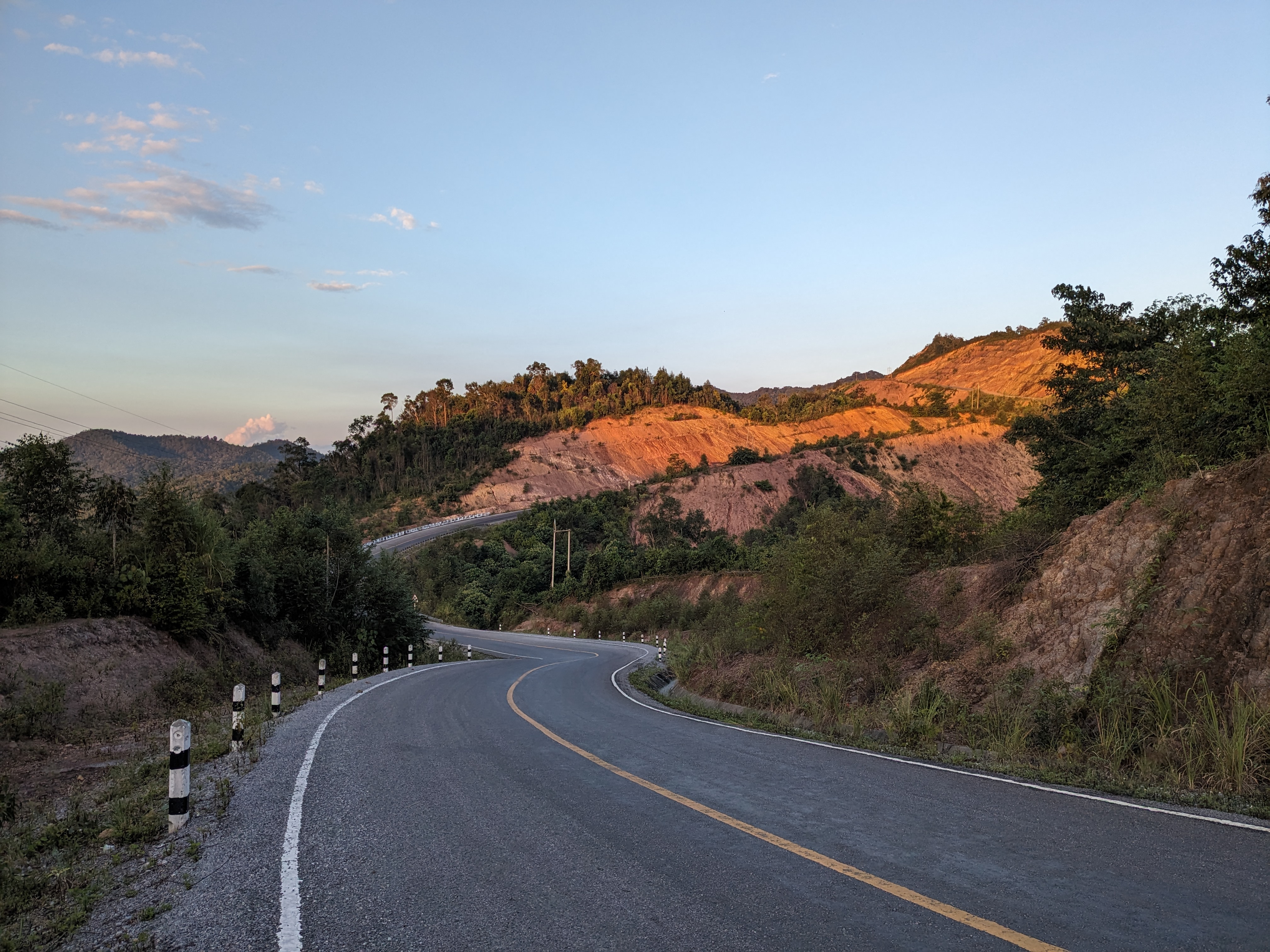
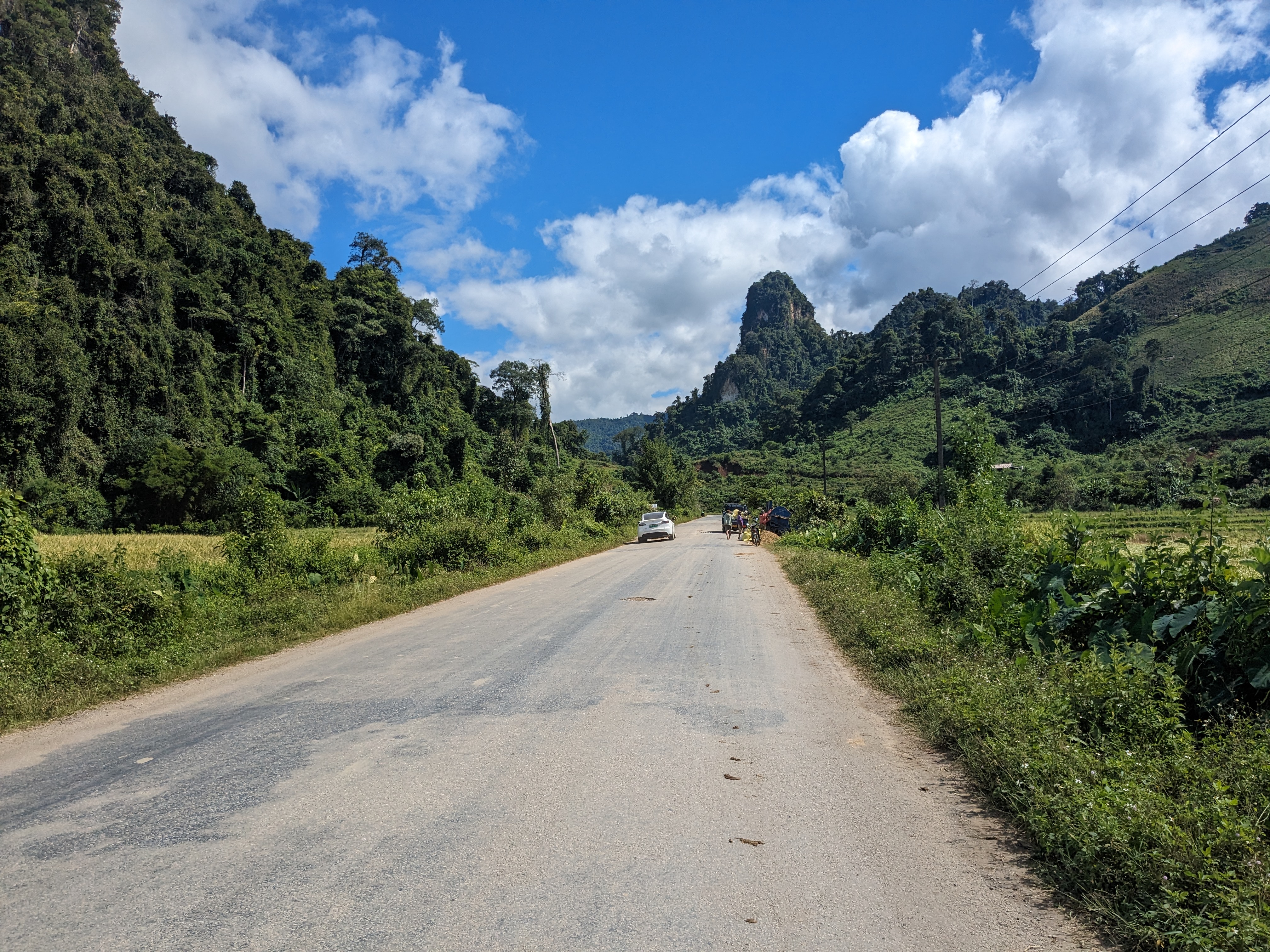
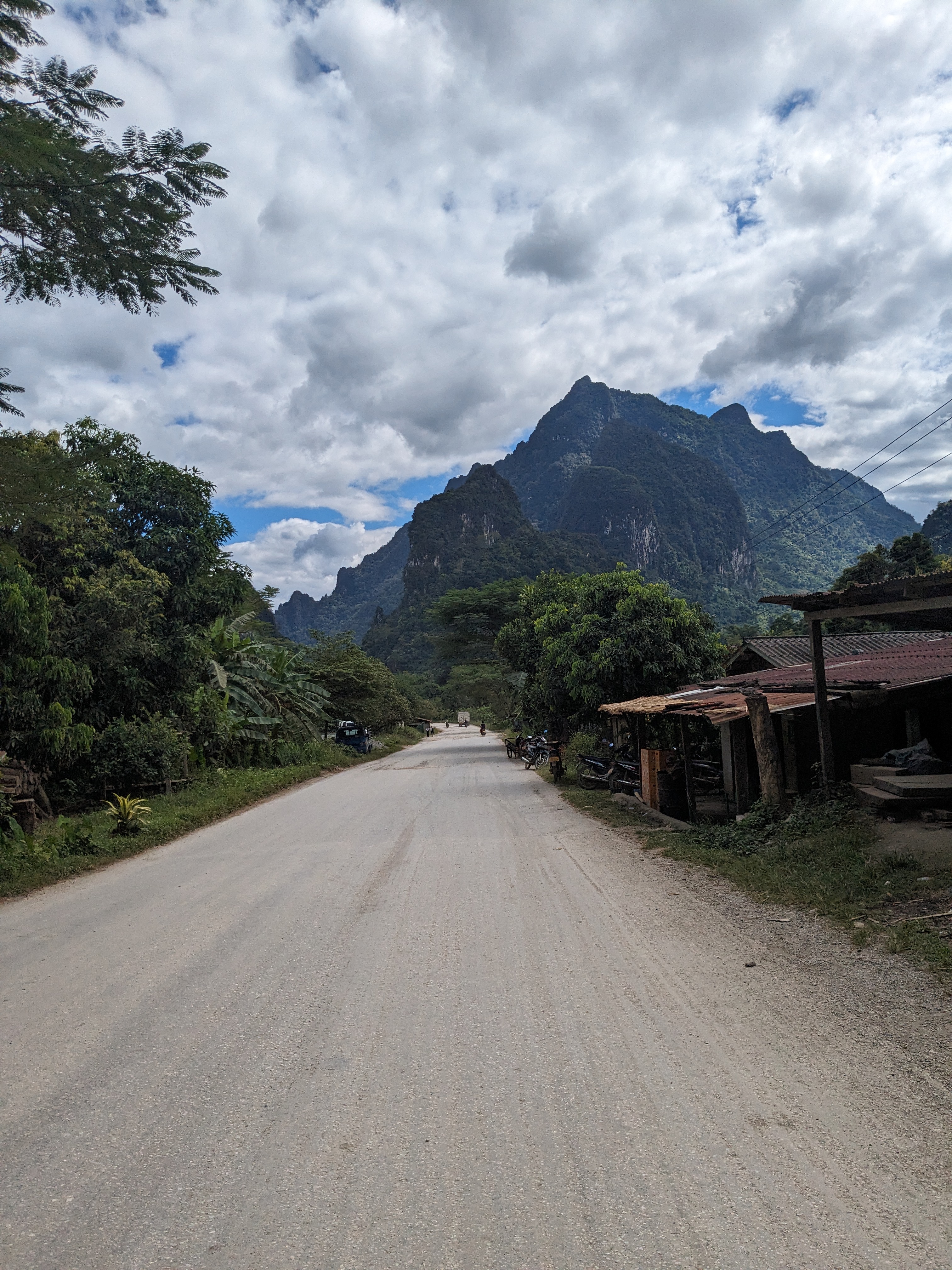
After crossing the Mekong River, I joined the new 4B road to Luang Prabang, a challenging but rewarding route through the mountains. This was one of the best roads of the trip so far being almost empty, fantastic tarmac and weaving through some amazing mountains.

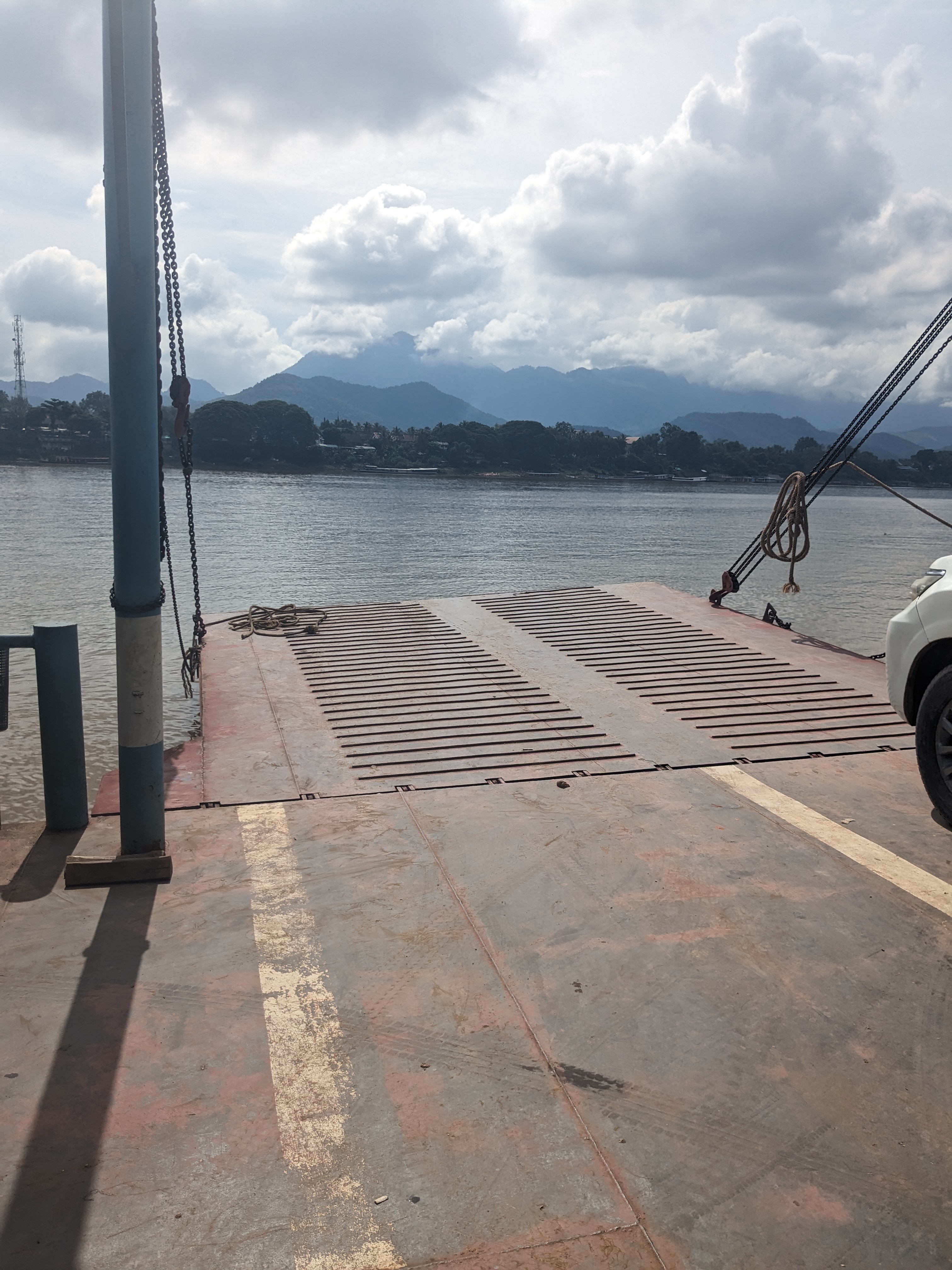
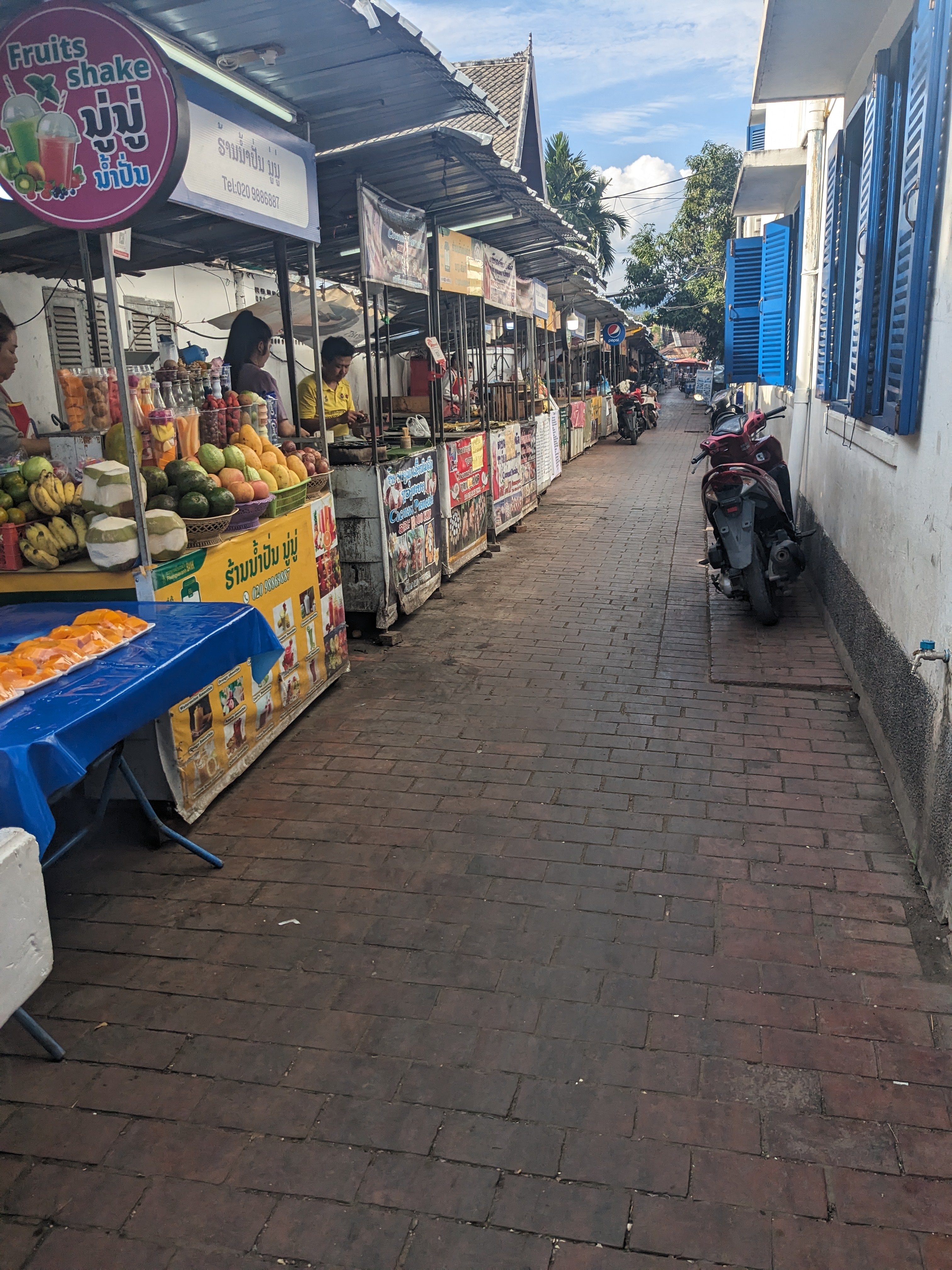
I crossed into Luang Prabang by ferry and treated myself to a hostel with a pool spending two nights there relaxing. The town had a fantastic night market where you could get almost any meal all for around £1.50 and one evening I went bowling, a tradition among backpackers due to it being the only place in town open late.
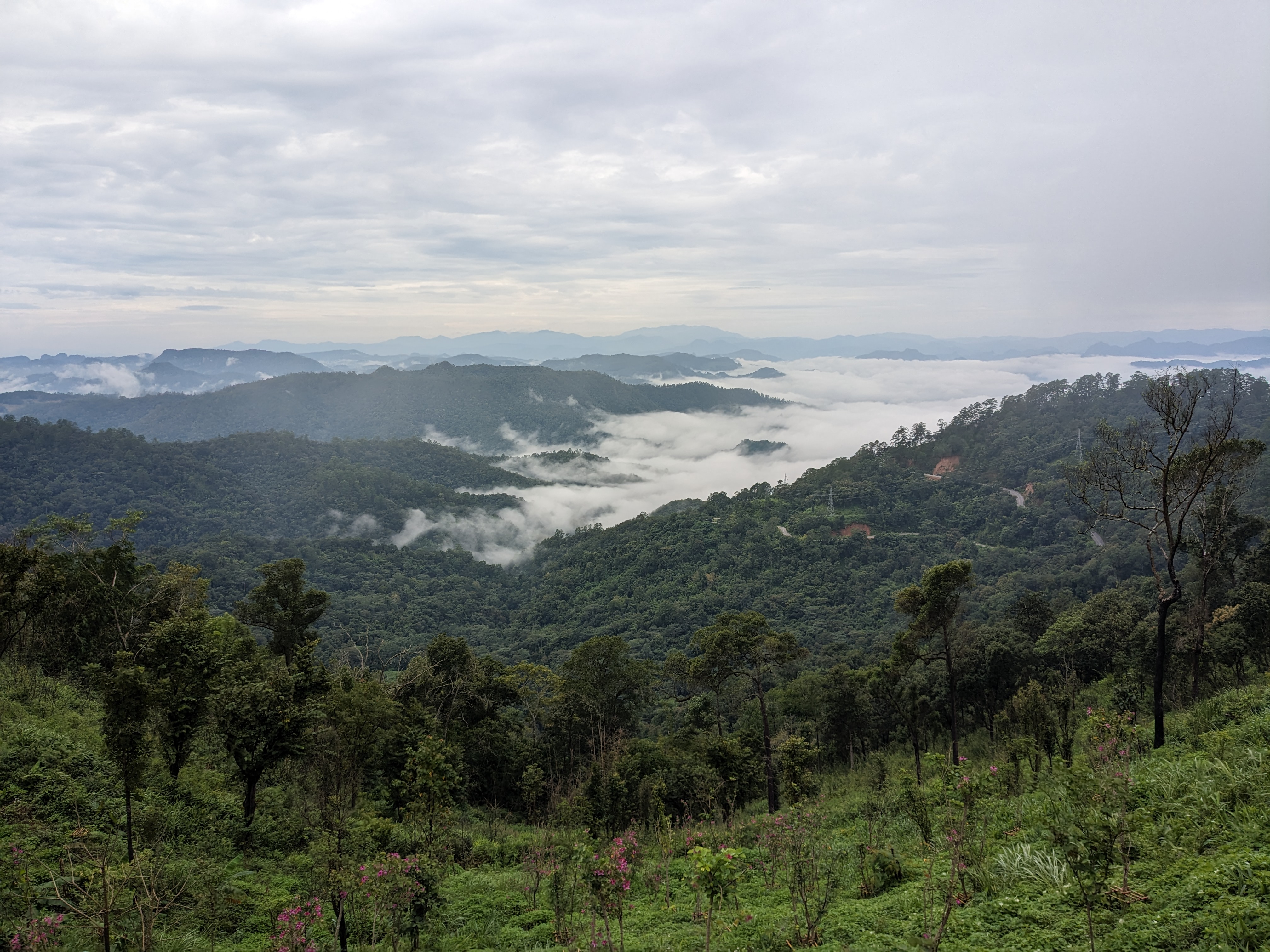
After managing to snap my pannier rack the previous day, I also ventured out to find somewhere to get it repaired. It was currently held together with some string, but I hoped to find somewhere to get it welded back together. This was surprising easy as there were plenty of motorbike repair shops and I quickly got it done for £2.

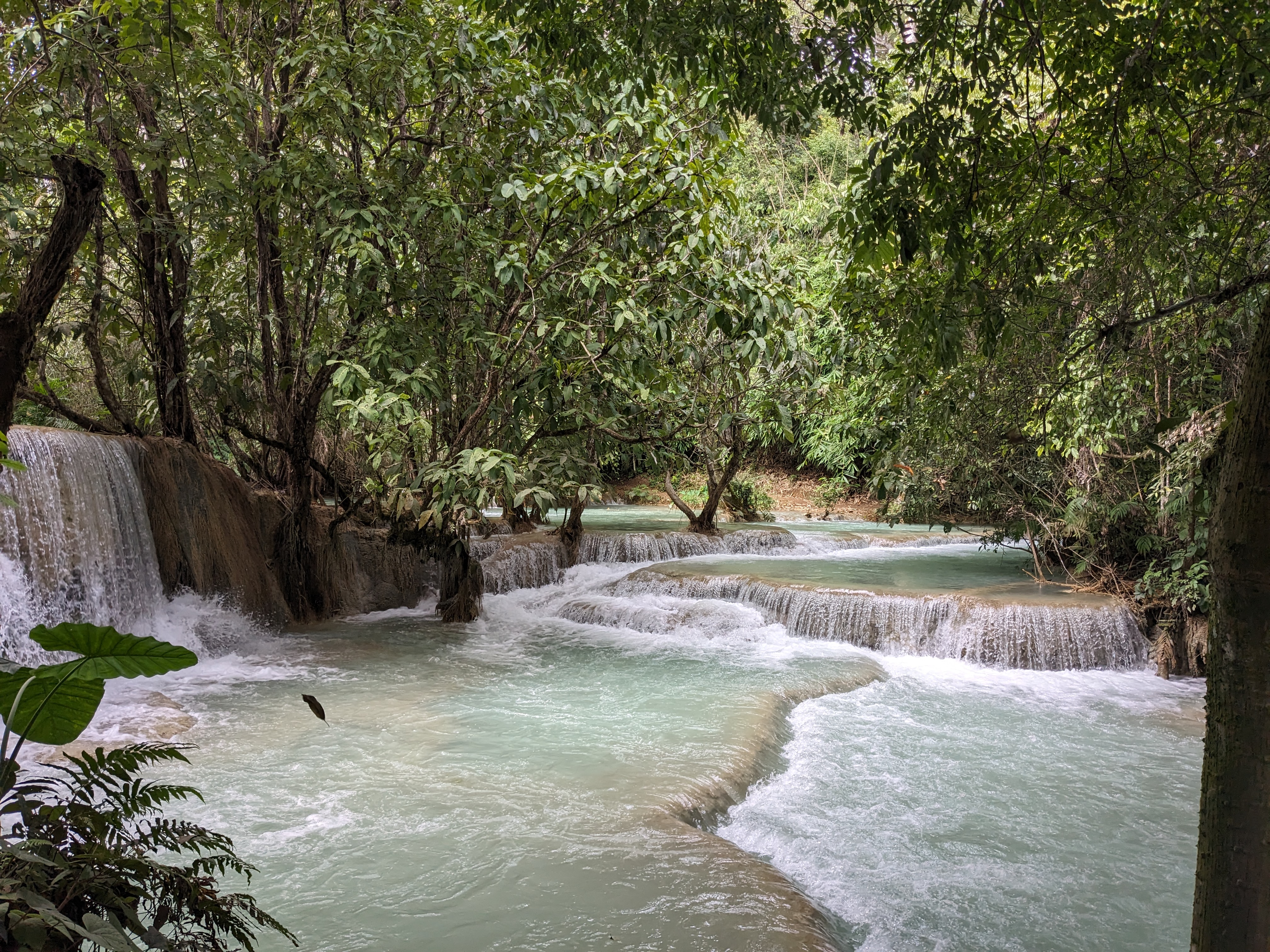
Leaving Luang Prabang, I visited the Kuang Si waterfalls after meeting people from the hostel on the way there. This was a spectacular sight, and great that it was possible to swim in all the pools.

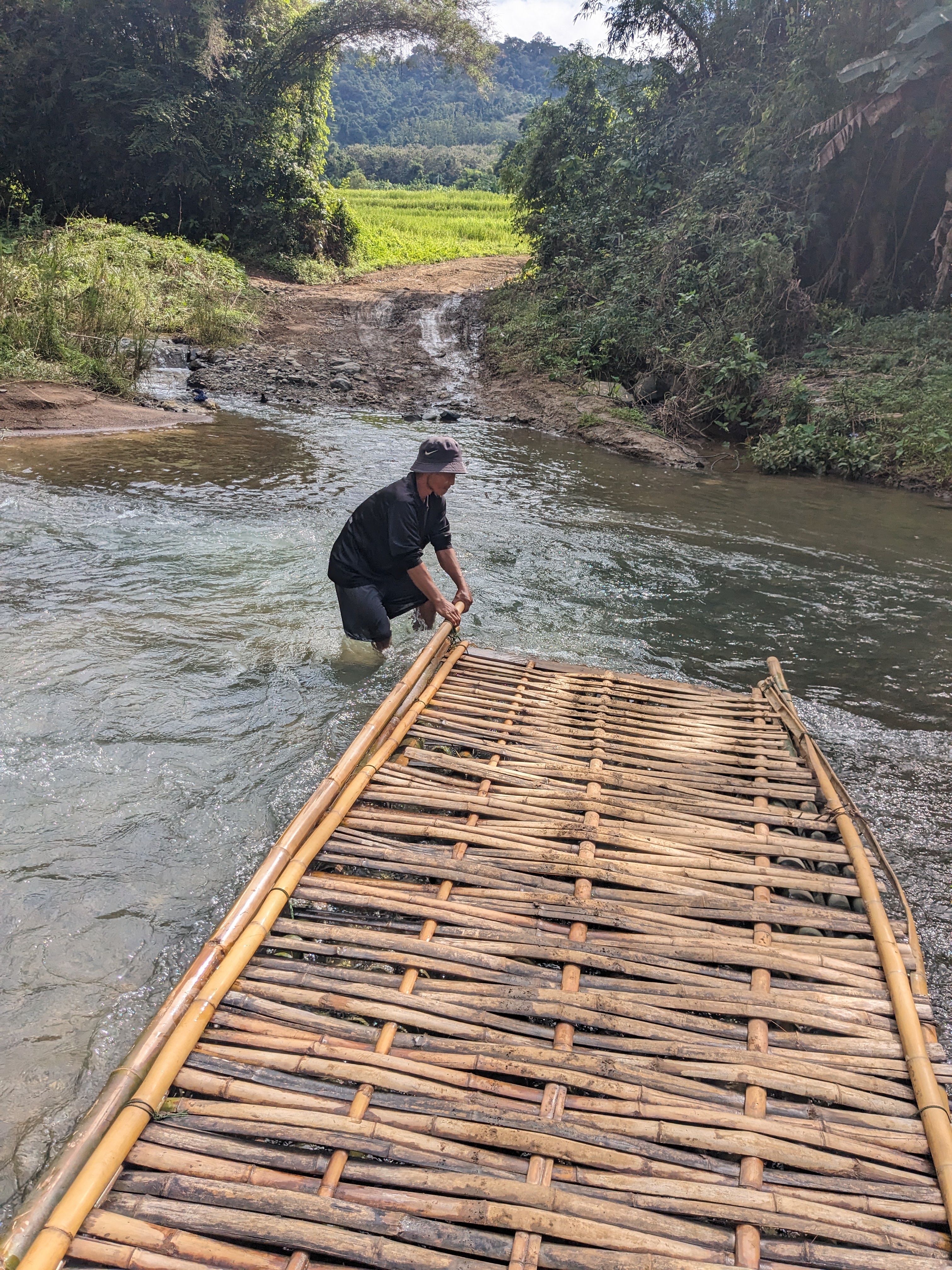
Continuing on a dirt road alongside the Mekong, I encountered a deep ford across a stream. Fortunately, there was a man with a bamboo raft who’s job was to help ferry bikes across. This was a very funny experience, but I’m sure he overcharged me for the crossing!

I was now heading toward Vang Vieng and had a beautiful cool night camped atop a huge hill. This has been quite the contrast from Pamir, where I’d sought lower altitudes for warmth. All that remained was descending down the mountain to arrive at the town.

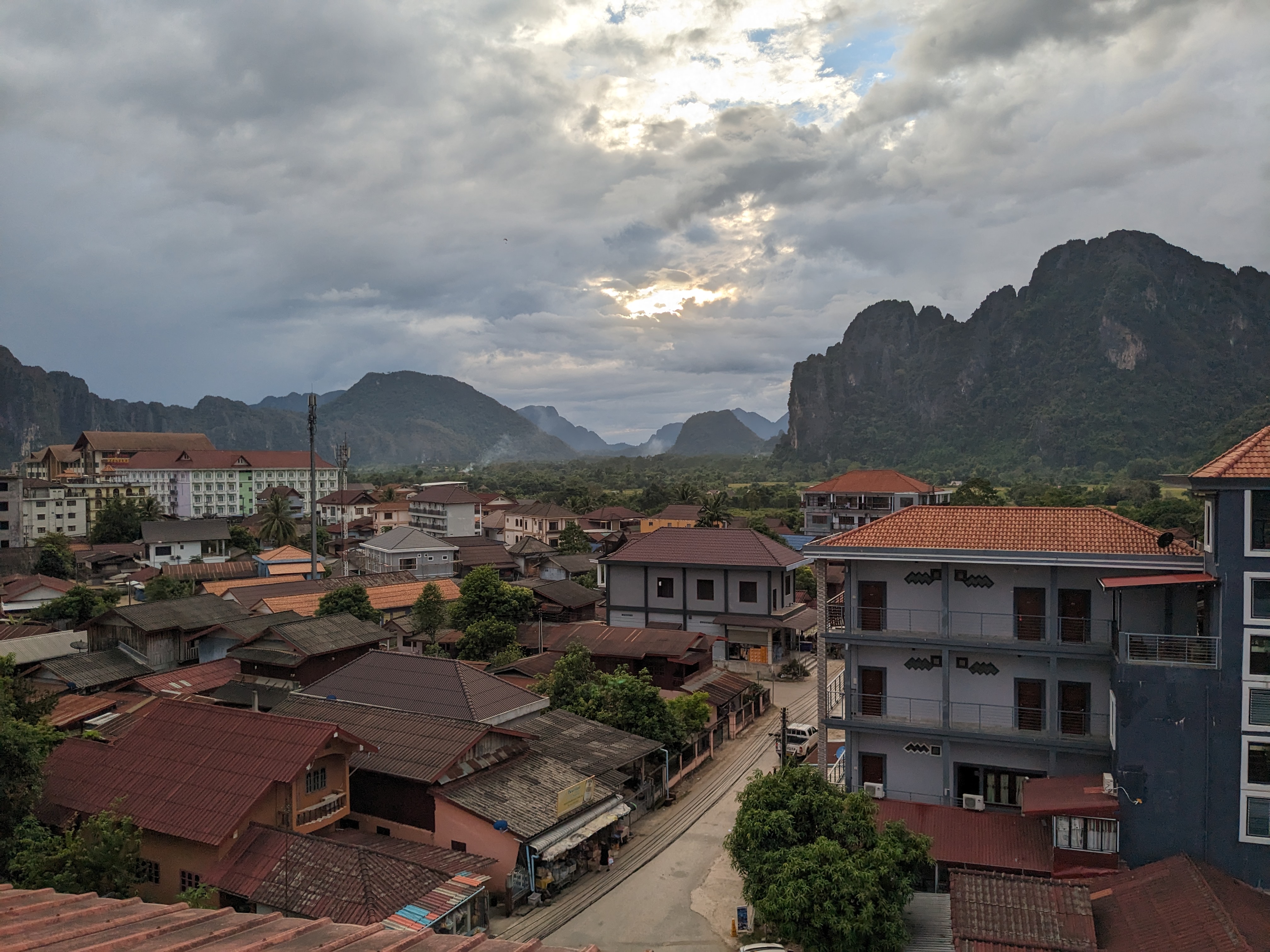
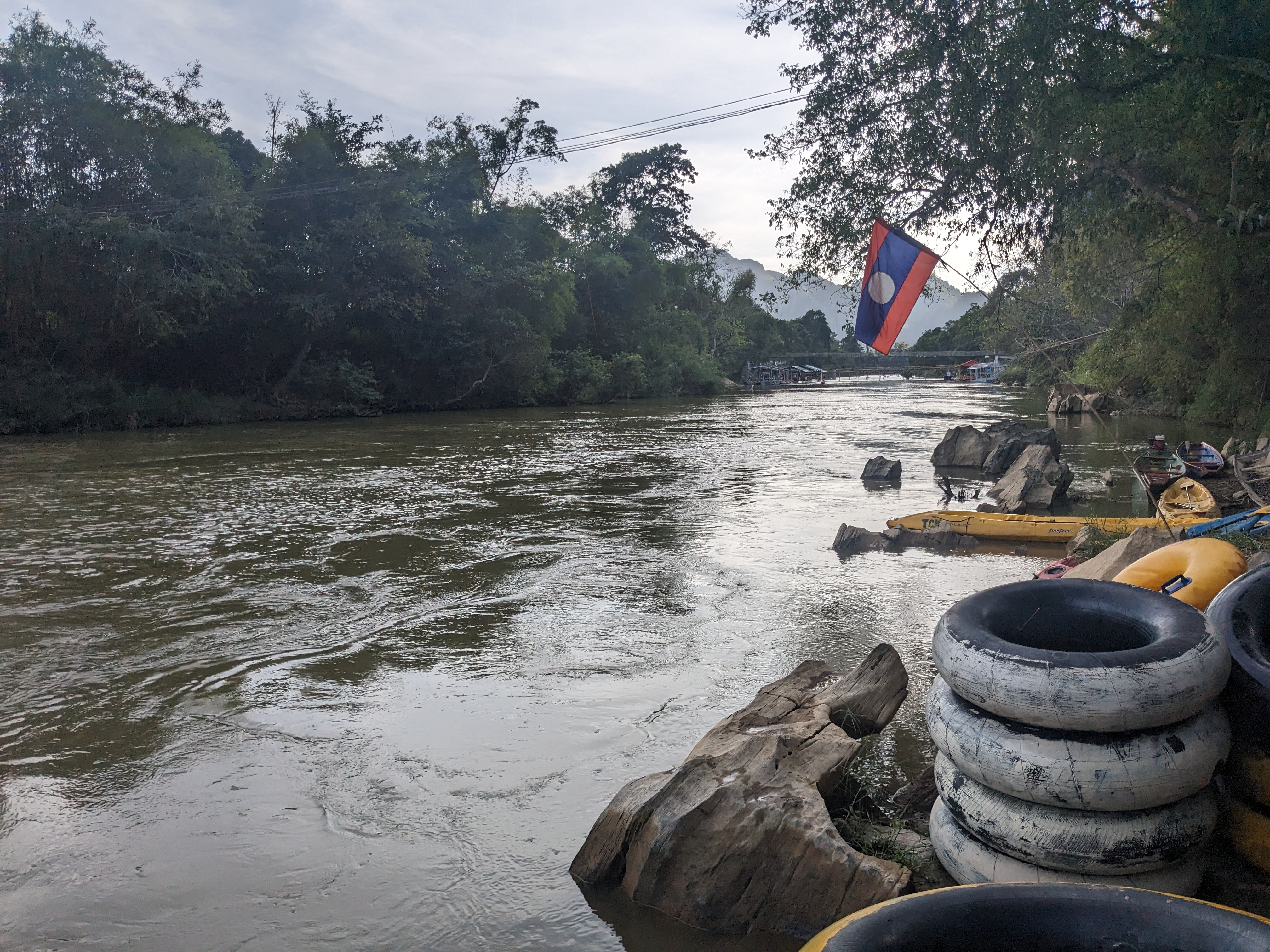
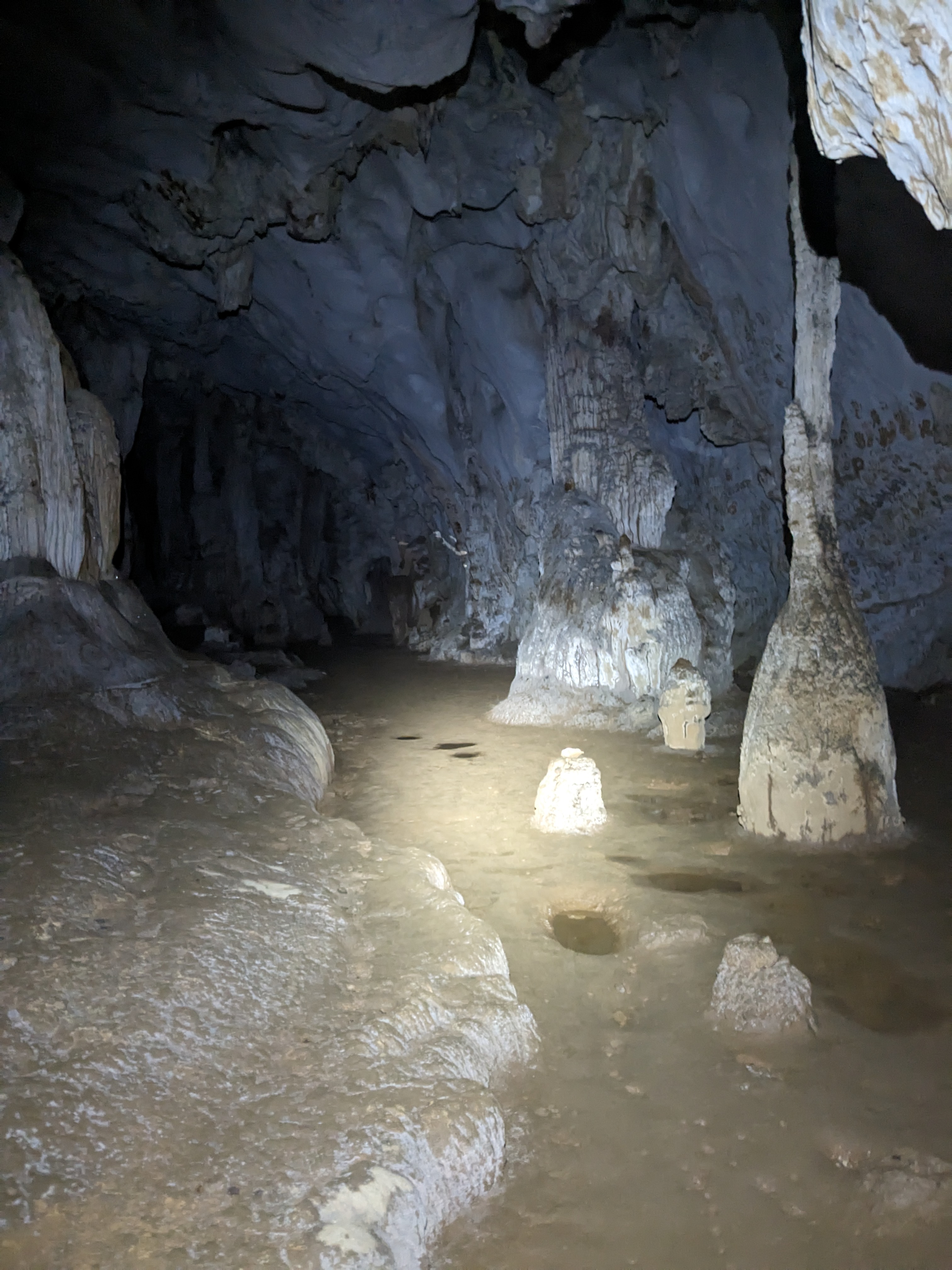
Vang Vieng is a notorious party town on the south east Asia backpacker loop, however has calmed down considerably in the last 10 years after at least 27 tourists died there in 2011. Once there, I stayed in a £2-a-night hostel that had barely finished being built. Despite this, it had a great atmosphere and suited my needs. I enjoyed a rest day and spent my time with me exploring caves, swimming in lagoons, and trying the local beer: BeerLao. This beer is a nice larger and made from local rice grain.

Laos has been great fun to travel so far and I’ve really enjoyed the contrast in south east Asia of the cycling alone through the countryside for a week followed by a stay in a busy hostel. The next step of my trip will take me north east towards the Vietnam border, and I look forward what more this country has to offer.

Mae Hong Son Loop

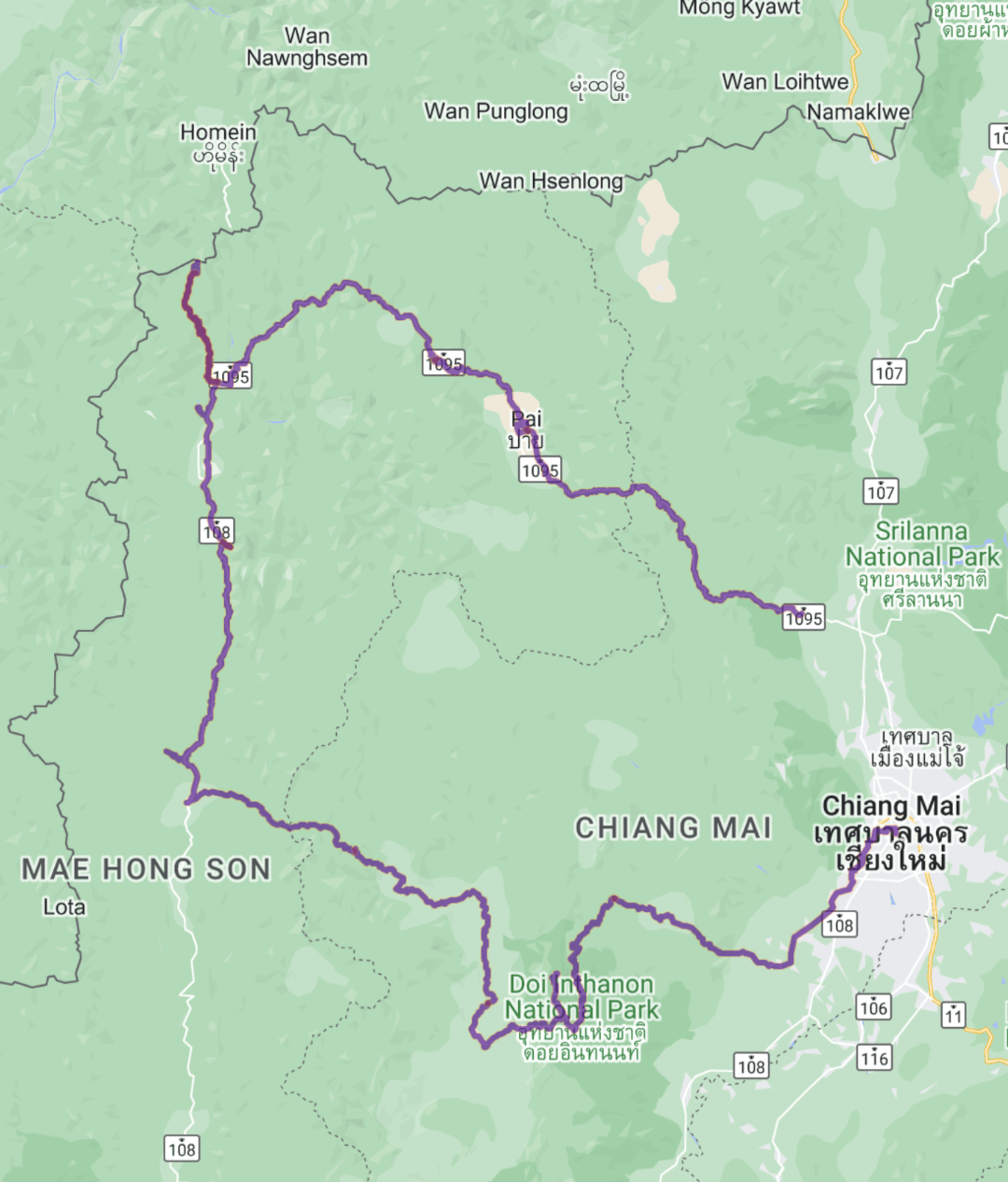
The Mae Hong Son Loop is a renowned motorbike route traversing the northwest of Thailand mostly in the Mae Hong Son province. It’s stunning landscapes and scenic allure drew me in and enticed me want to ride it.

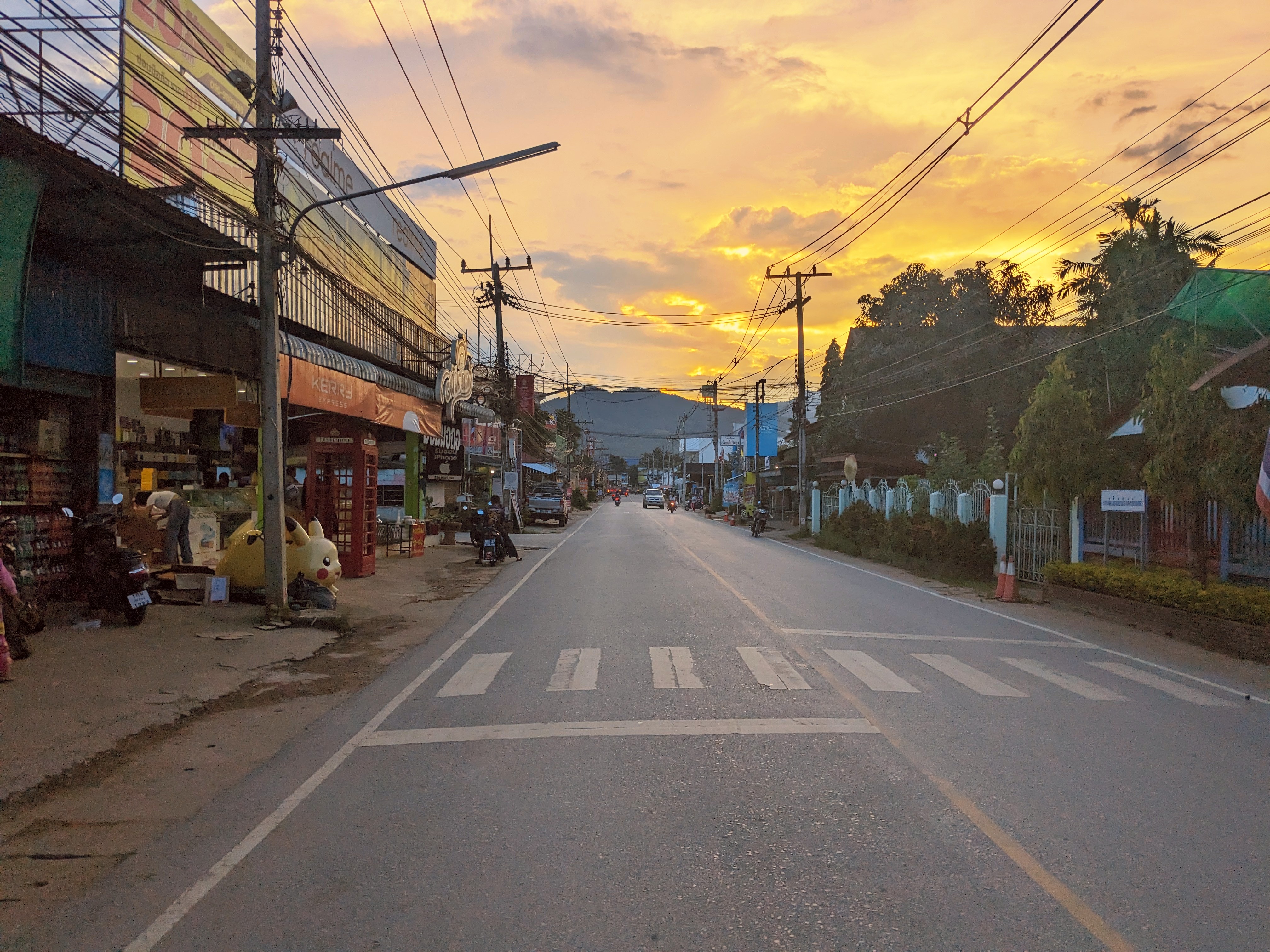
Leaving Chiang Mai that morning was a relif, as I relished the sensation of escaping the bustling city. Entering the mountains once more, I passed several elephant sanctuaries and was always amazed by these animals. Also along the route, water buffalo grazed peacefully. They always looked angry however, so I’d pass them cautiously but they never paid any attention to me.

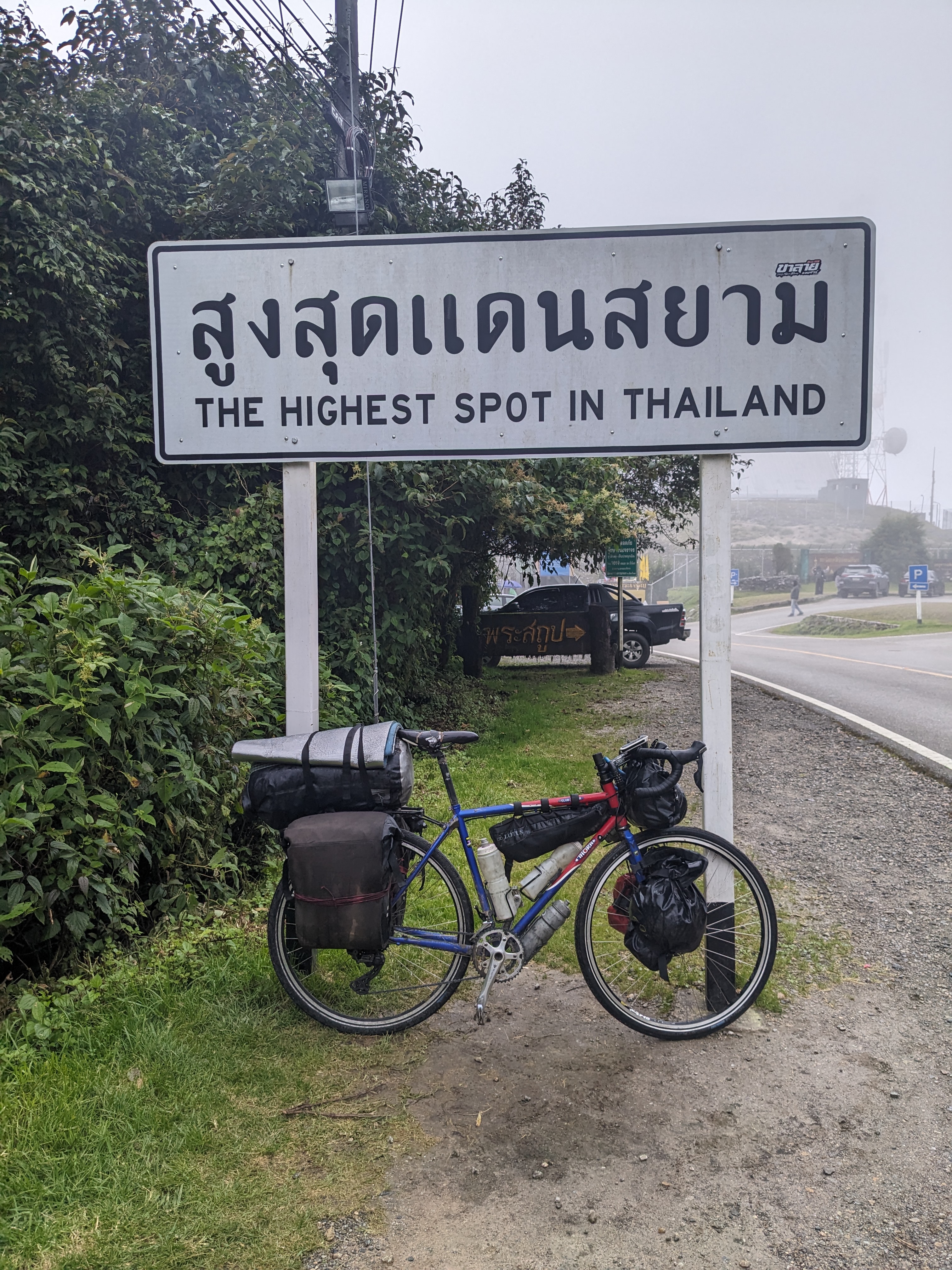
My journey took me to Doi Inthanon National Park, home to Thailand’s highest peak. Eager to conquer the summit, I undertook the challenging climb, though the descent presented an unexpected hurdle—a steep fine of around £20 for cyclists. This was apparently due to local riders cycling bicycles without even a chain down the hill recklessly, resulting in numerous accidents. When I inquired how I was supposed to get down, the guard at the base chuckled and told me to just ride slowly.

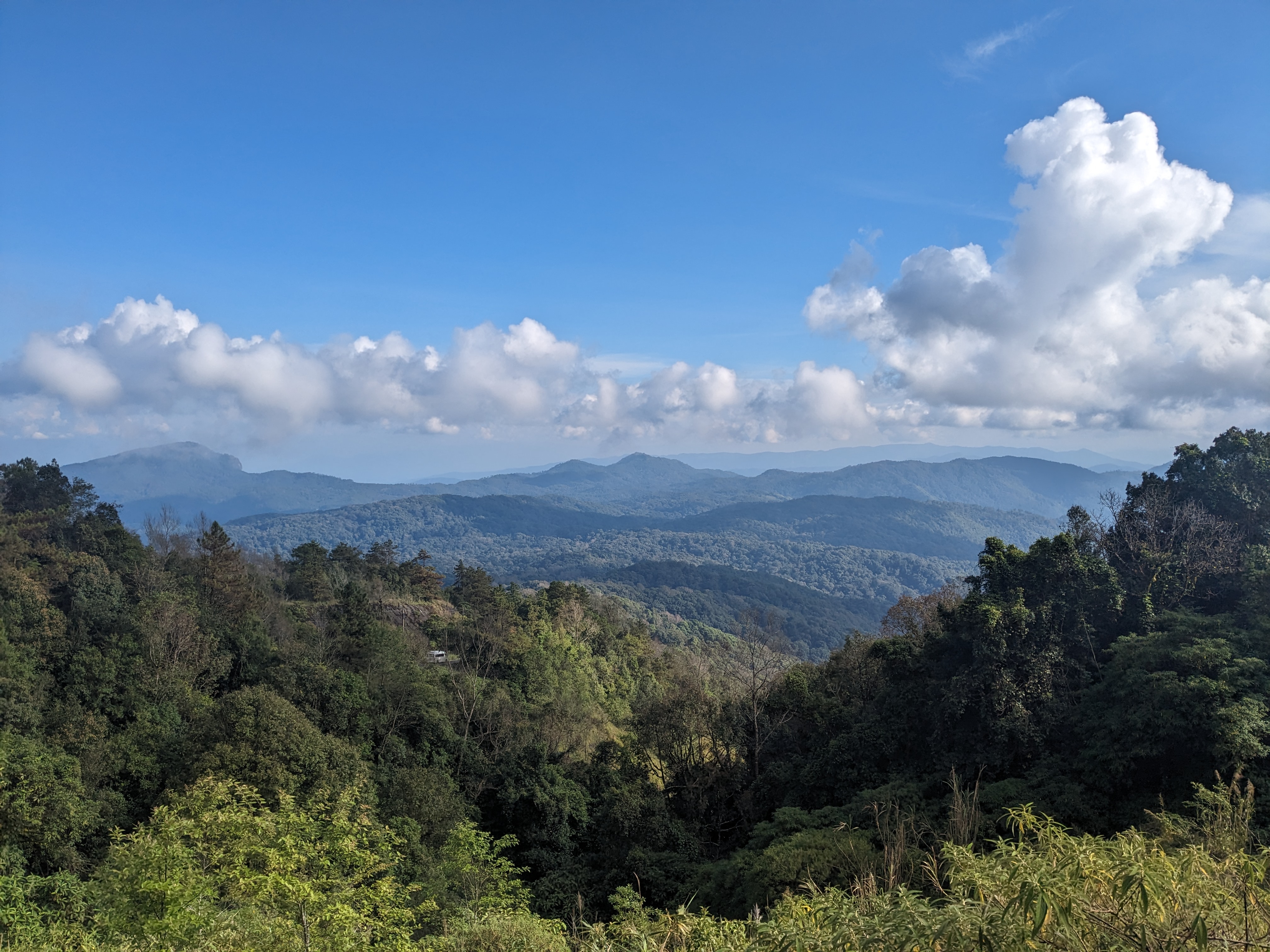
After a strenuous 2-hour ascent, my efforts were met with a disappointing lack of a view at the cloud-covered summit. However, the descent provided a stunning panorama once I emerged from the mist. Unsure how slow I was supposed to go, I cautiously maneuvered past the spots where I’d noticed guards were stationed on the way up and avoided any unwanted encounters.

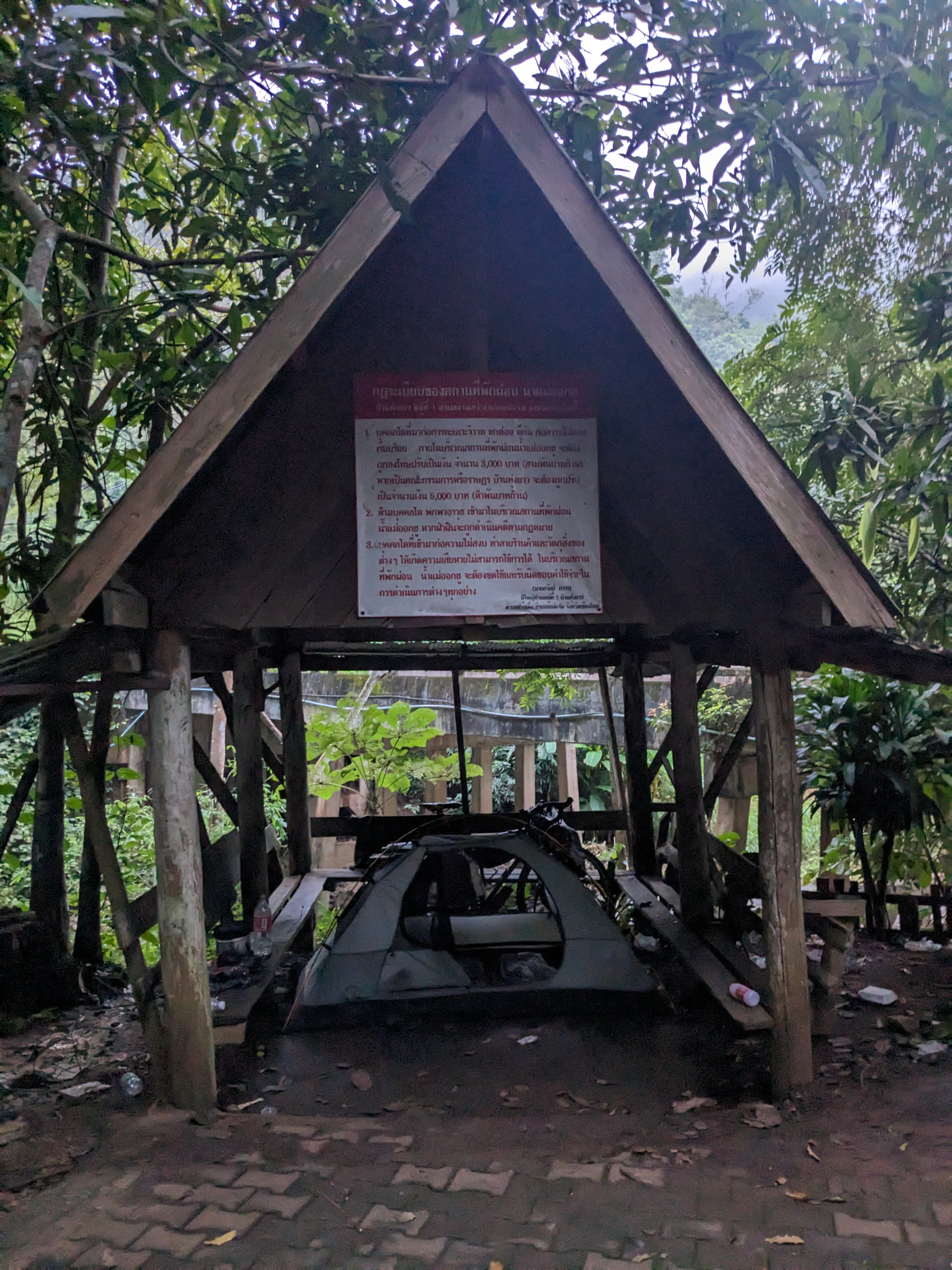
That evening, I settled at a picnic area equipped with a swimming pool, opting to camp in a shelter for protection from the rain. However, my refuge was not without its drawbacks. I found myself under siege from a relentless army of ants that had infiltrated my tent through holes in the bottom, waking me repeatedly as they crawled over me and bit me.

The poor sleep, huge climbs and probably not eating enough left me feeling pretty exhausted the next morning, a bad start to another big day full of climbs. Pushing on, I eventually crossed into the Mae Hong Son province and reached the town of the same name.

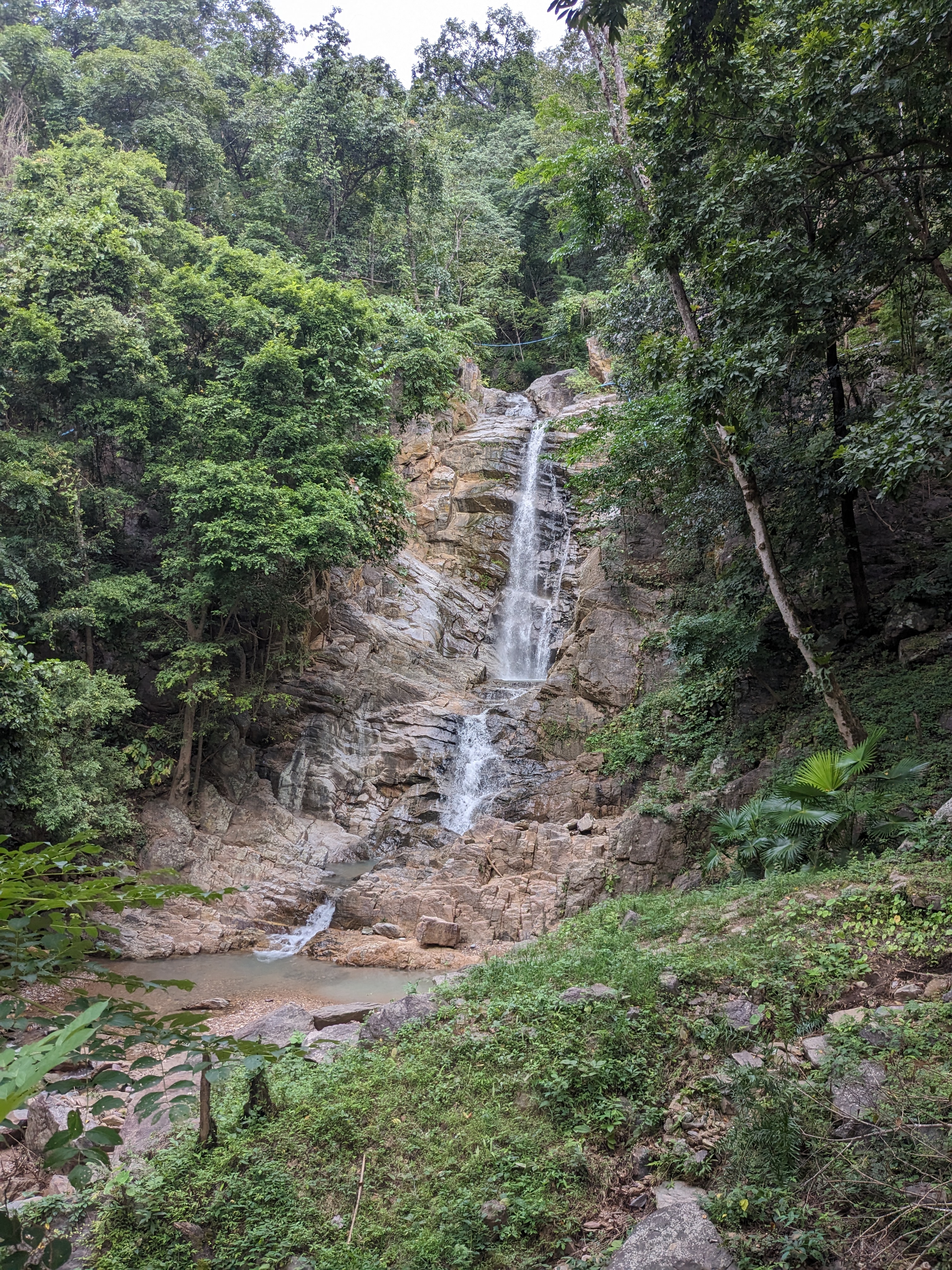
Early afternoon I decided to find somewhere nice to camp so I could have a relaxing evening. I ventured 4km off the loop to a lake which had camping, only to find it under renovation and closed. This was quite frustrating having to do an extra 8km with no purpose. Next, I saw a sign at the side of the road for camping in what felt like just someone’s garden. The man wanted 300 Baht for one night, twice what I paid for a hostel in Chiang Mai. Attempting to negotiate a better price proved fruitles, leading me to settle by a secluded waterfall for the night. This was a beautiful spot where I could enjoy a wash in the waterfall and very quiet, only seeing one other person the whole evening. I set about patching the holes in my tent but to no success, with the ants still found a way in that night.

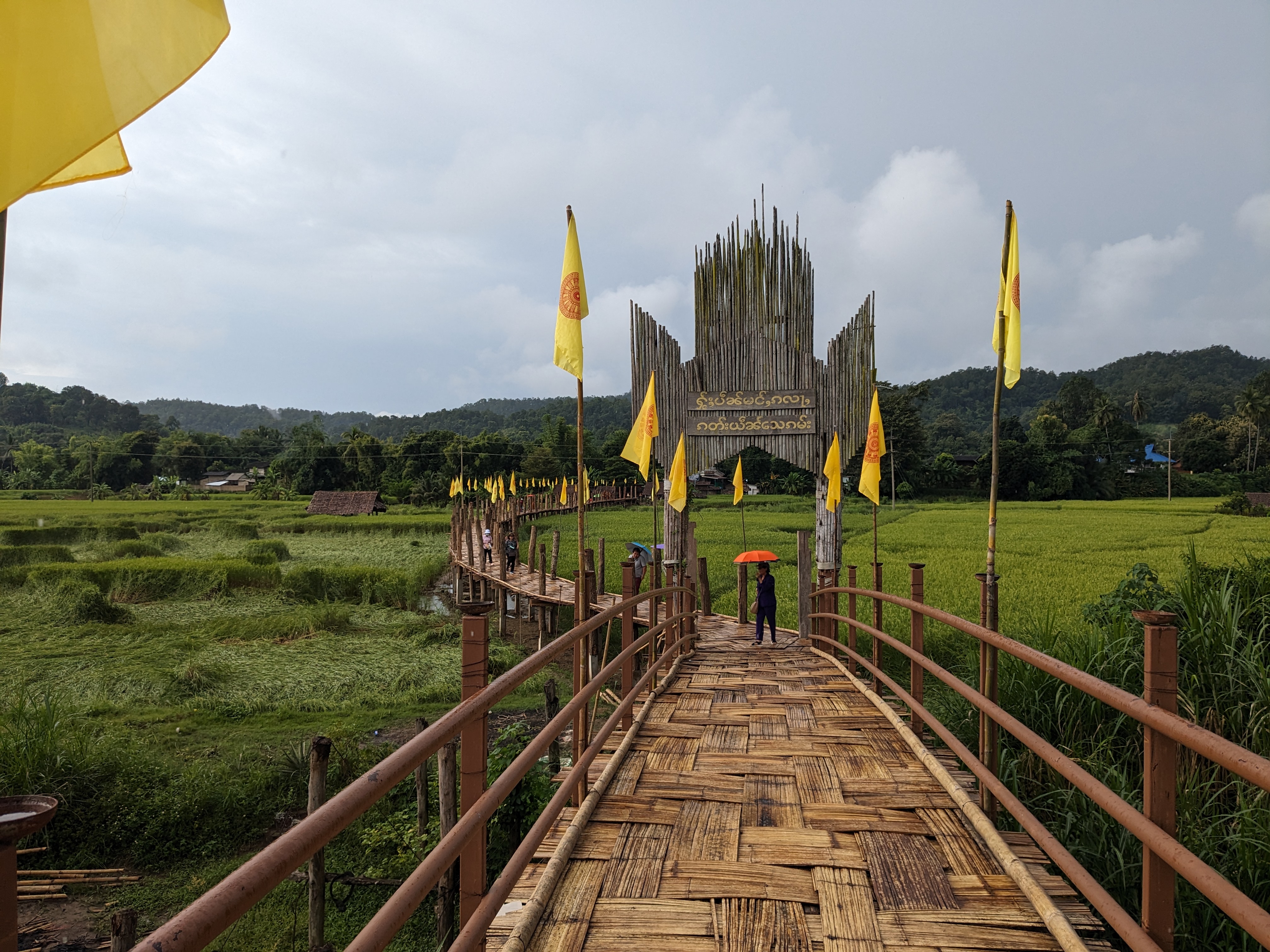
Continuing my journey, I reached the Su Tong Pae bamboo bridge. This was built in 2012 to connect the village with the temple each on opposite sides of the river and was an amazing sight. The route I had planned went over the bridge, but after getting a stern look from a monk when I arrived and seeing all the stairs on the far side I decided against crossing it with my bike. I therefore just walked around admiring this structure for a while before continuing.

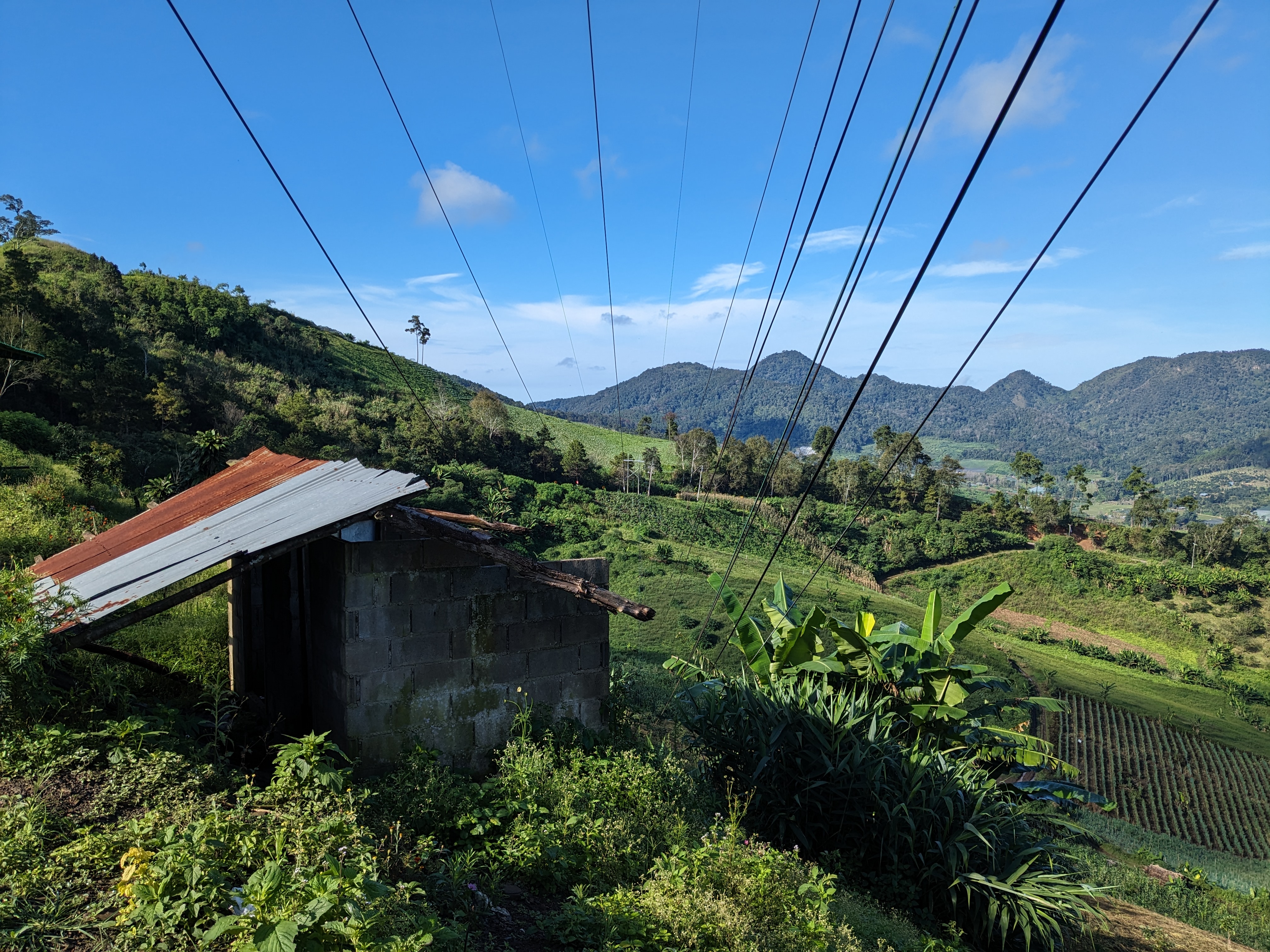
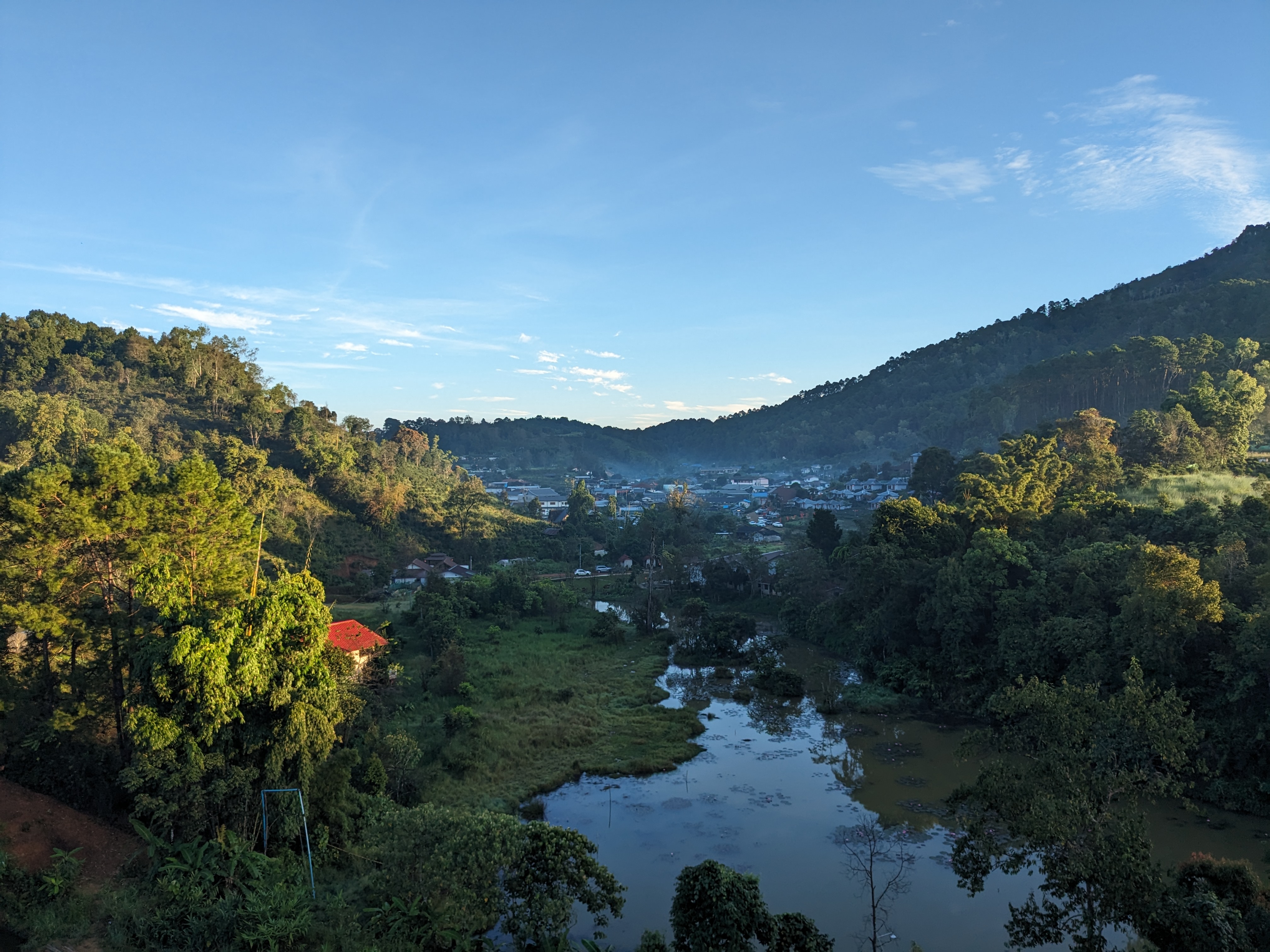
That afternoon, I pedaled up a significant hill toward the Myanmar border, arriving in the surreal atmosphere of Ban Rak Thai village. This town felt very up market filled with beautiful holiday villas. Whilst venturing into the surrounding hills, I encountered four Myanmar men who kindly let me camp outside their residence that night. They were very friendly and keen to tell me about the ongoing civil unrest in their home country which they’d escaped and were now working as builders in Thailand.

Battling through relentless rain the following day, I sought refuge a few times in restaurants and cafes using it as an excuse to stop and eat. I also encountered my first other bikepackers in the country, a group of Thai men heading in the opposite direction.

I now had one more big hill between me and Pai. I hoped to get as much of it done as I could that evening to give myself an easy ride into the town the following morning. By 6pm it was getting dark and I couldn’t find anywhere good to camp, so ended up just on the side of the road slightly hidden under an abandoned hut. I didn’t sleep well that night due to the sound of trucks and motorbikes often waking me combined with the anxiety from being clearly visible from the road. Fortunately, I did managed to get up most of the climb complete so had an easy ride into Pai the next day.

Pai was an interesting place, definitely not what I expected. It didn’t feel like I was in Thailand, but definitely had it’s own vibe of being the quintessential hippy town. The place seemed to only cater for backpackers with almost every shop being tattoo parlours, bars or indy cafes and often being a combination of two these.

I checked into a hostel run by a French man and this was clearly the place the French speaking expats hang out as there were about 5 older men sitting round the bar smoking weed and drinking beer when I arrived at midday. They were very entertaining and it was fascinating to hear how they’d ended up living here. From about 5pm it started raining and continued the entire night, making me very relived I had a roof over my head.

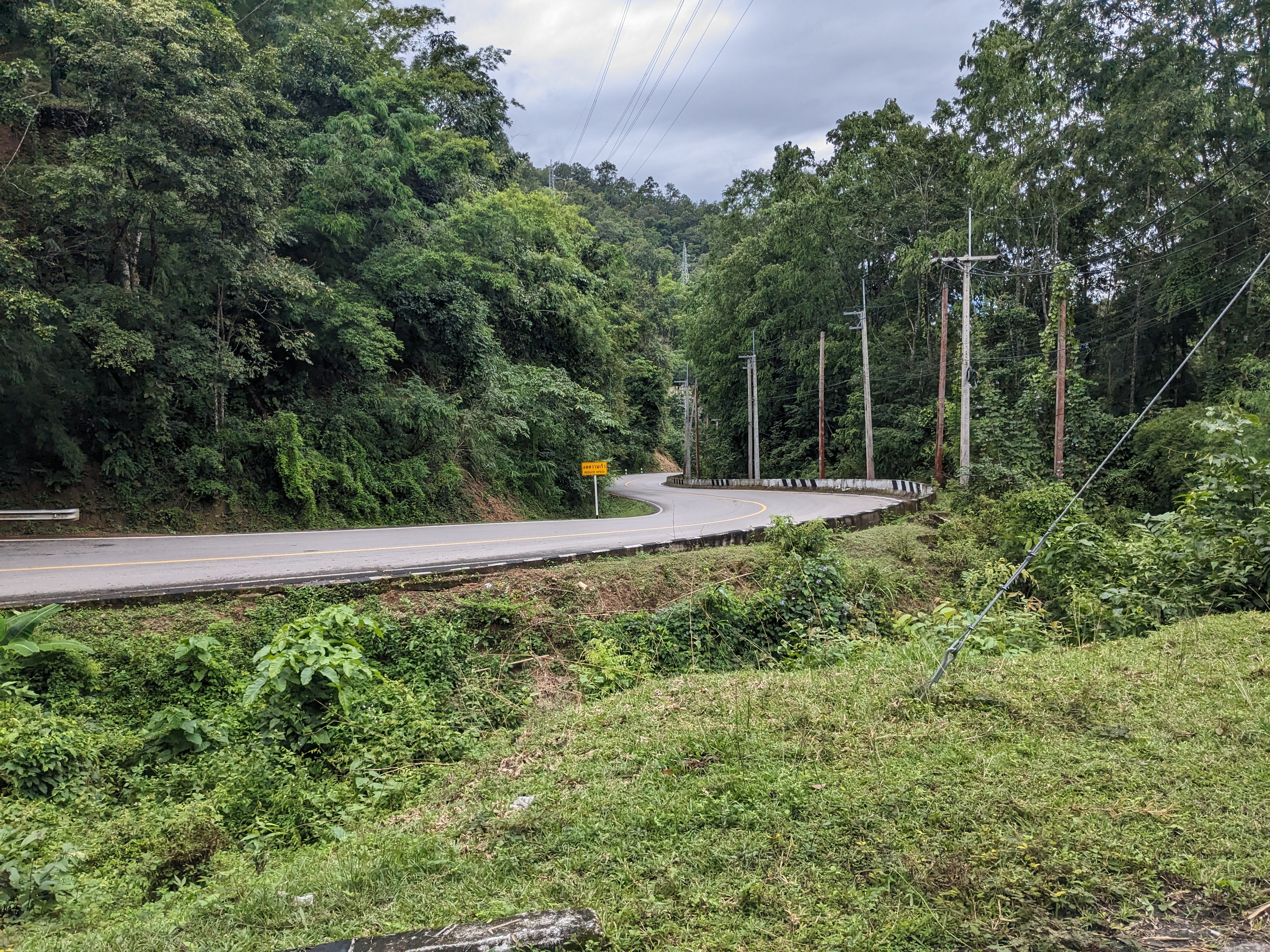
The following day was again plagued by more rain however, the road was one of the best cycling roads I’d ever been on. After a long climb to start the day, the rest was spent going down a fantastic mountain road with some spectacular corners. So far, most of the descents have been very steep making them hard to enjoy but the low gradients of this one were brilliant.

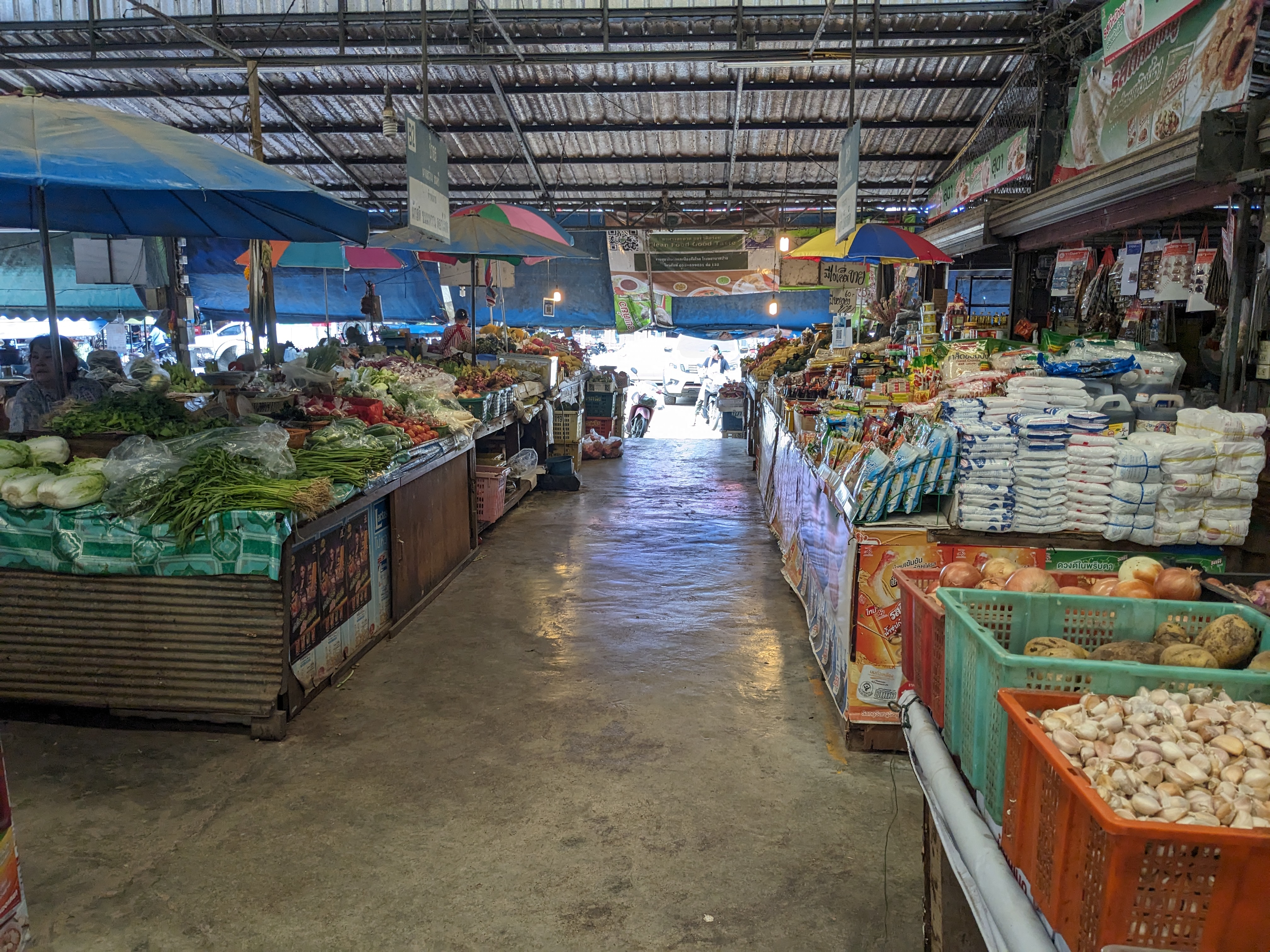
After picking up some food from a market, I stopped at a temple to camp wanting some shelter from the forecast storm coming that night. I was greated by friendly monk, who spoke very good English as he was a pupil at a temple in Runcorn for two years. He didn’t seem too impressed by the north of England however, complaining that it was too cold!

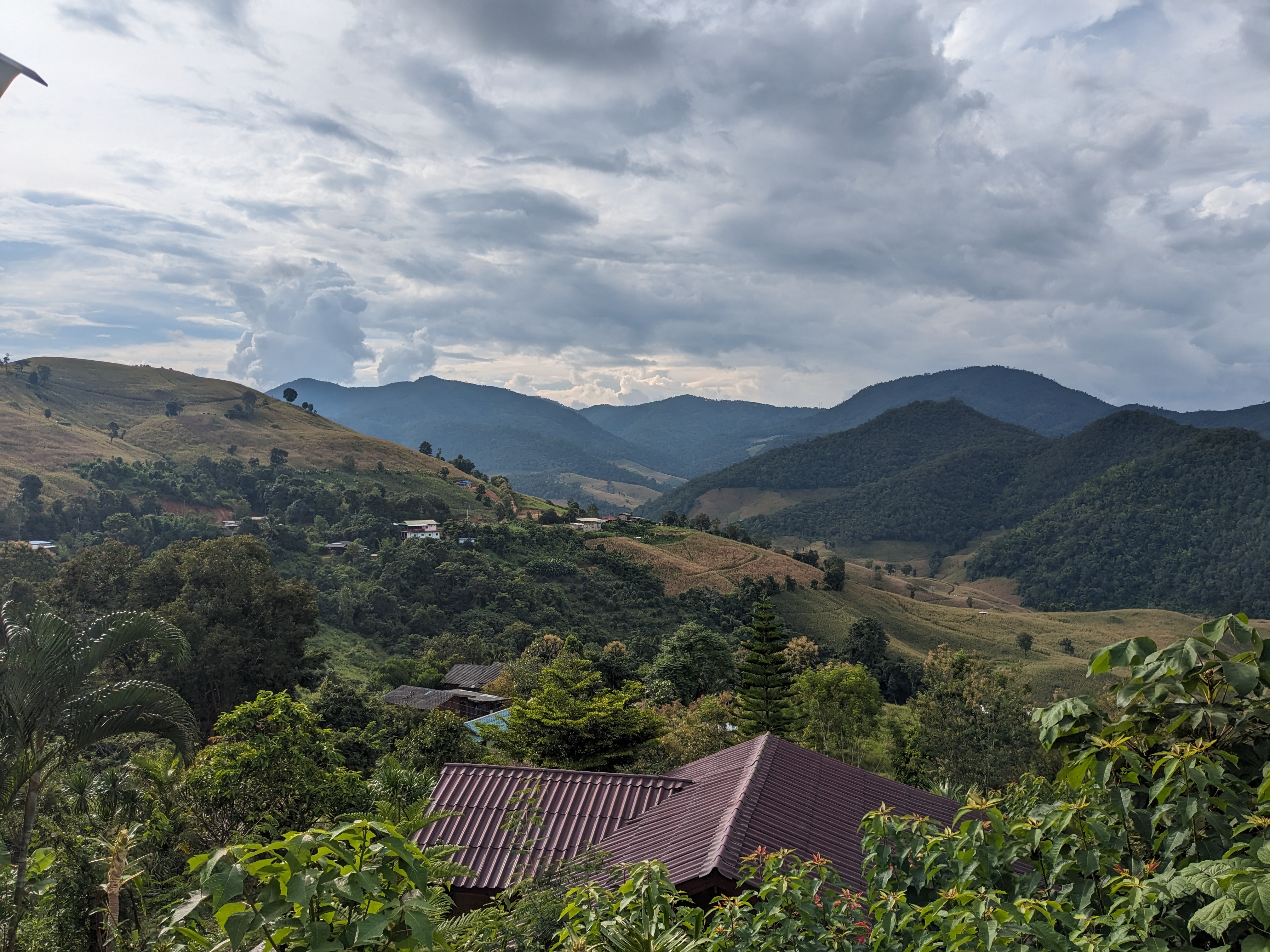
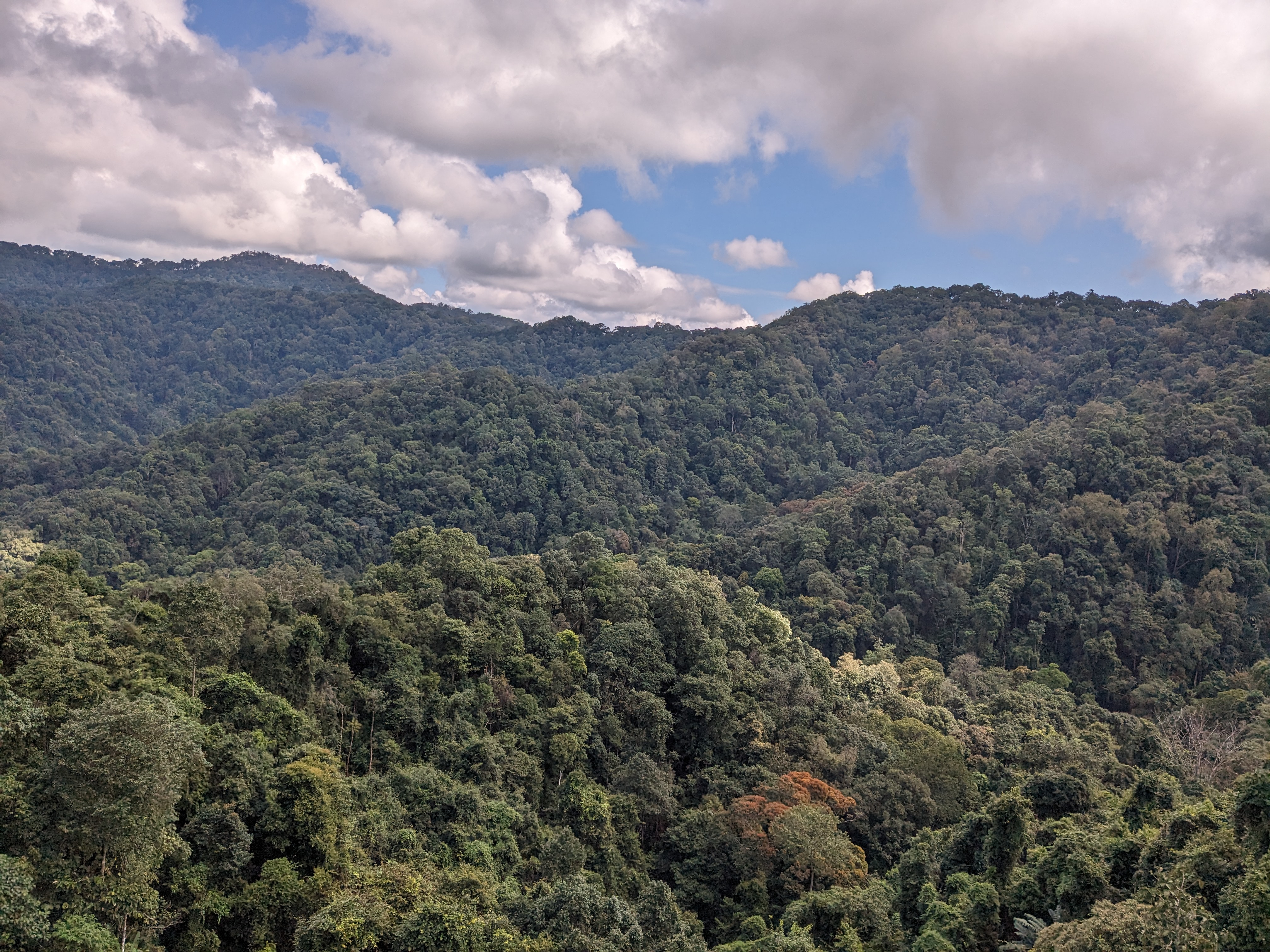
Deciding against a return to Chiang Mai, my next leg involves an eastward journey through more national parks toward Chiang Rai. The loop proved to be more demanding than anticipated, with a multitude of steep hills presenting quite the challenge for my heavily loaded bike. Nevertheless, the breathtaking vistas along the way and feeling of being back in the wild when pedaling through the jungle make it an unforgettable experience.

West Kazakhstan

At Tbilisi airport before flying to Kazakhstan, I had about four hours before my flight, so I was just sitting there using some wifi when I met Joris, a French man cycling around the world. He was the first bike tourist I had met since my first day in Turkey and it was great to have someone to navigate the airport with.

Once check-in opened, we were both worried our bikes would be too heavy, not knowing what they weighed or what the maximum weight would be. Fortunately, neither did the check-in staff, and they were fine with mine weighing in at 38.8kg.

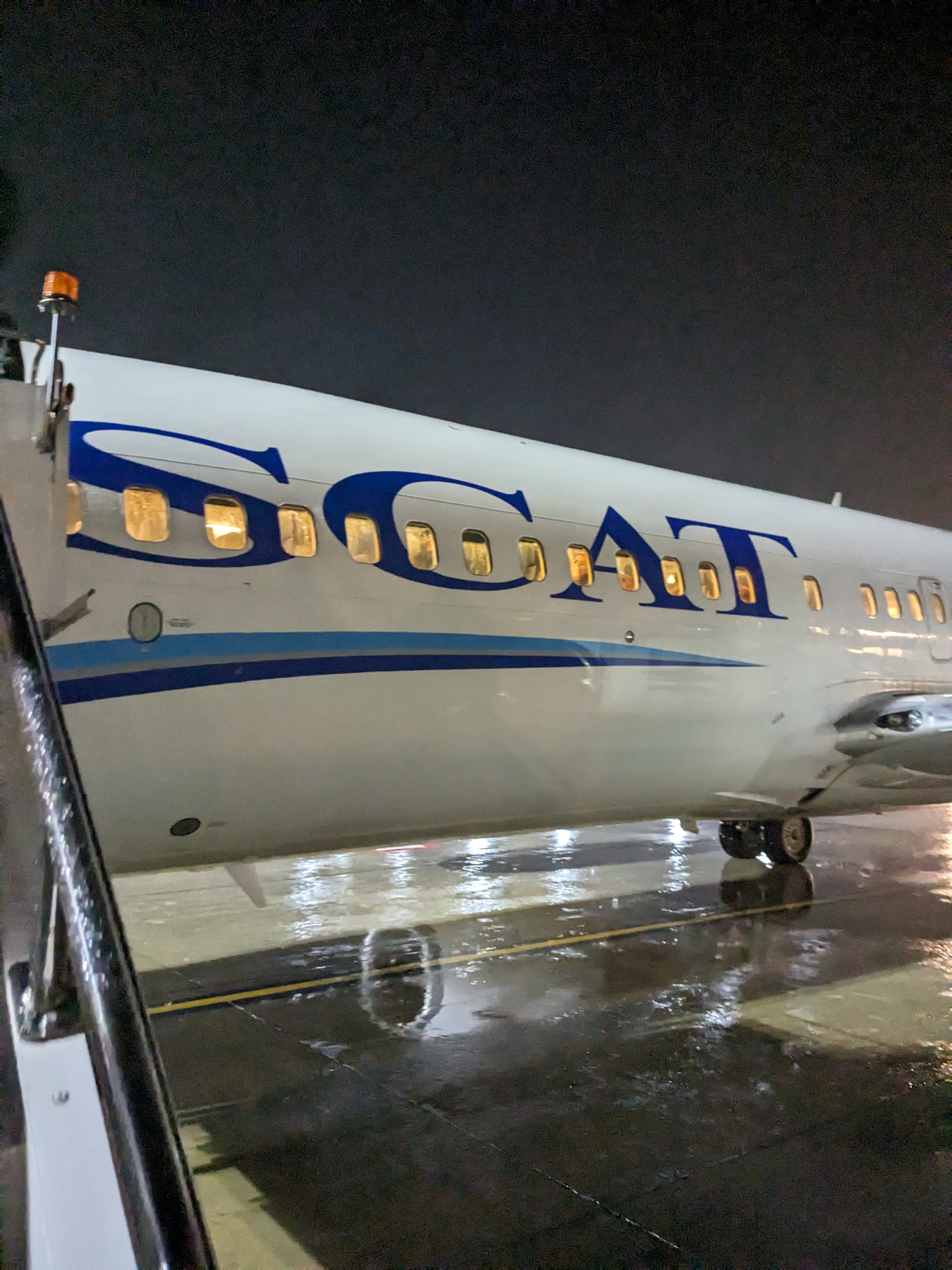
There was a lot of turbulence on the flight, with it being lightning in Georgia when we left. Fortunately, I slept the whole way, and we landed at 2am in Aktau.

Our first task upon arrival was to reassemble our bikes, much to the amusement of the local Kazakh taxi drivers who watched with curiosity. My initial plan was to find a quiet corner in the airport and sleep until sunrise, but Joris shared that the airport was situated in the middle of nowhere. So, we pedaled a kilometer away from the terminal, finding a spot to camp amid the desert’s solitude.

With the morning sun, we cycled into the city of Aktau, greeted by the Caspian Sea and an opportunity to swim. The city itself felt very empty but this could be due to it being the Constitution Day of Kazakhstan a national holiday.

For the first time on my journey, I had to purchase water, as it seemed that bottled water was the only option in this desert landscape. Furthermore, with the towns approximately 100km apart we had to stock up on the essentials.

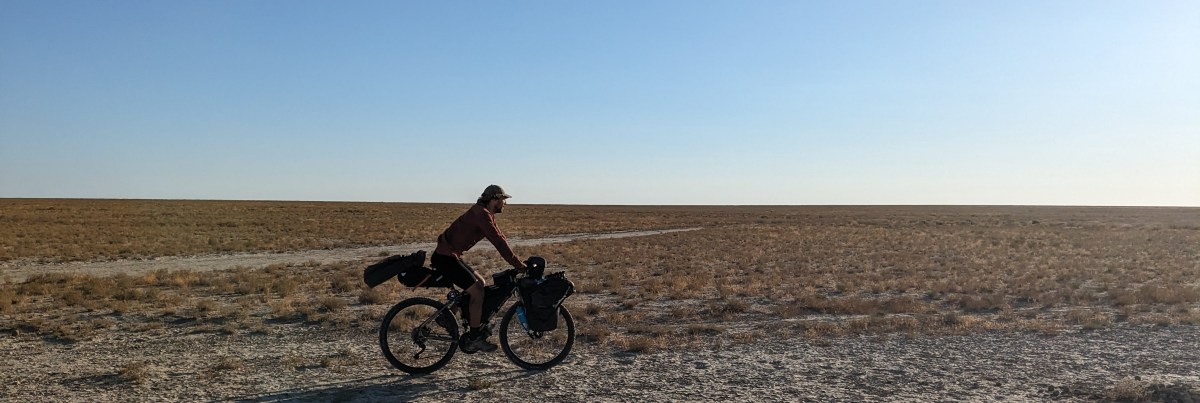
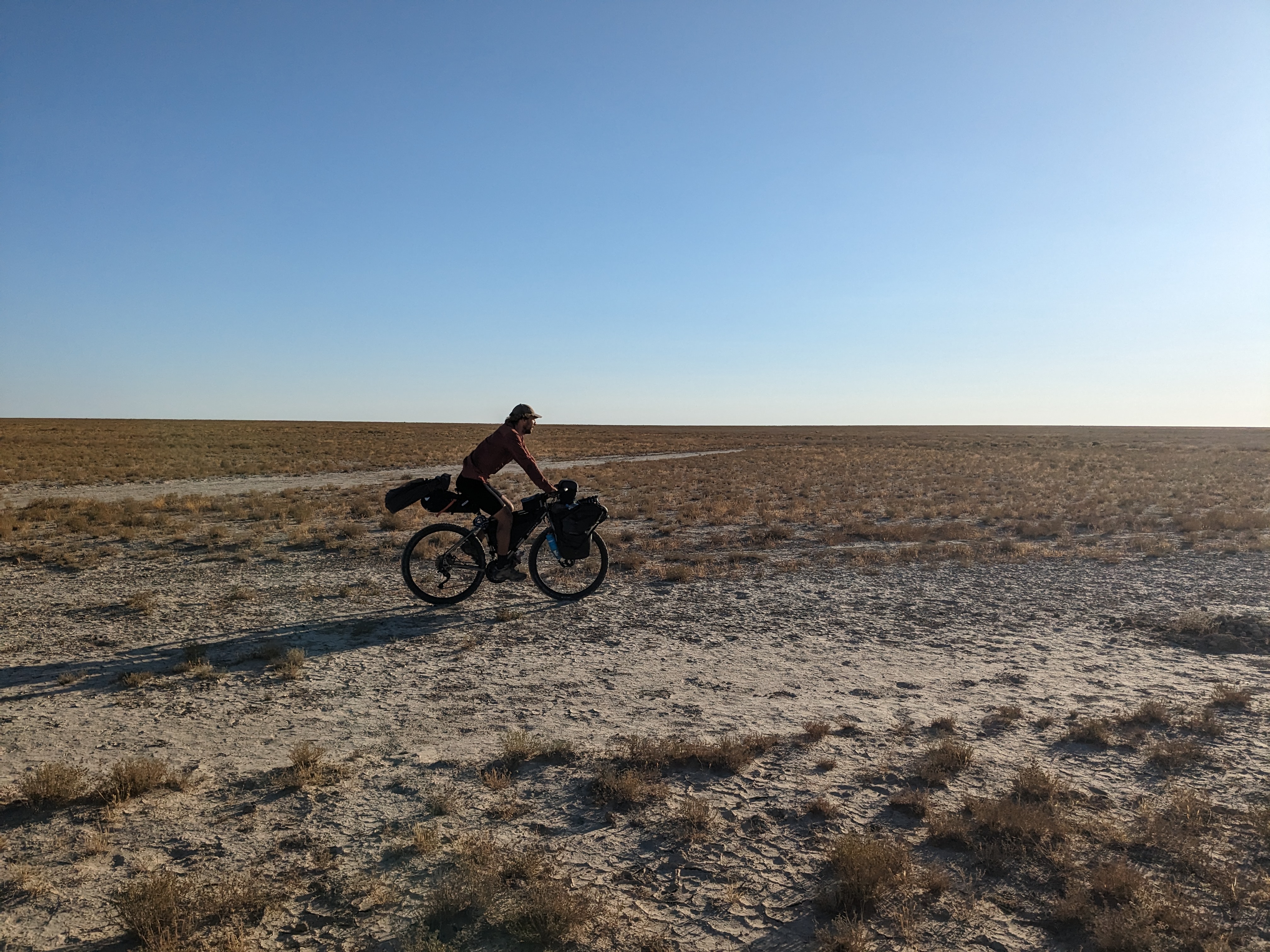
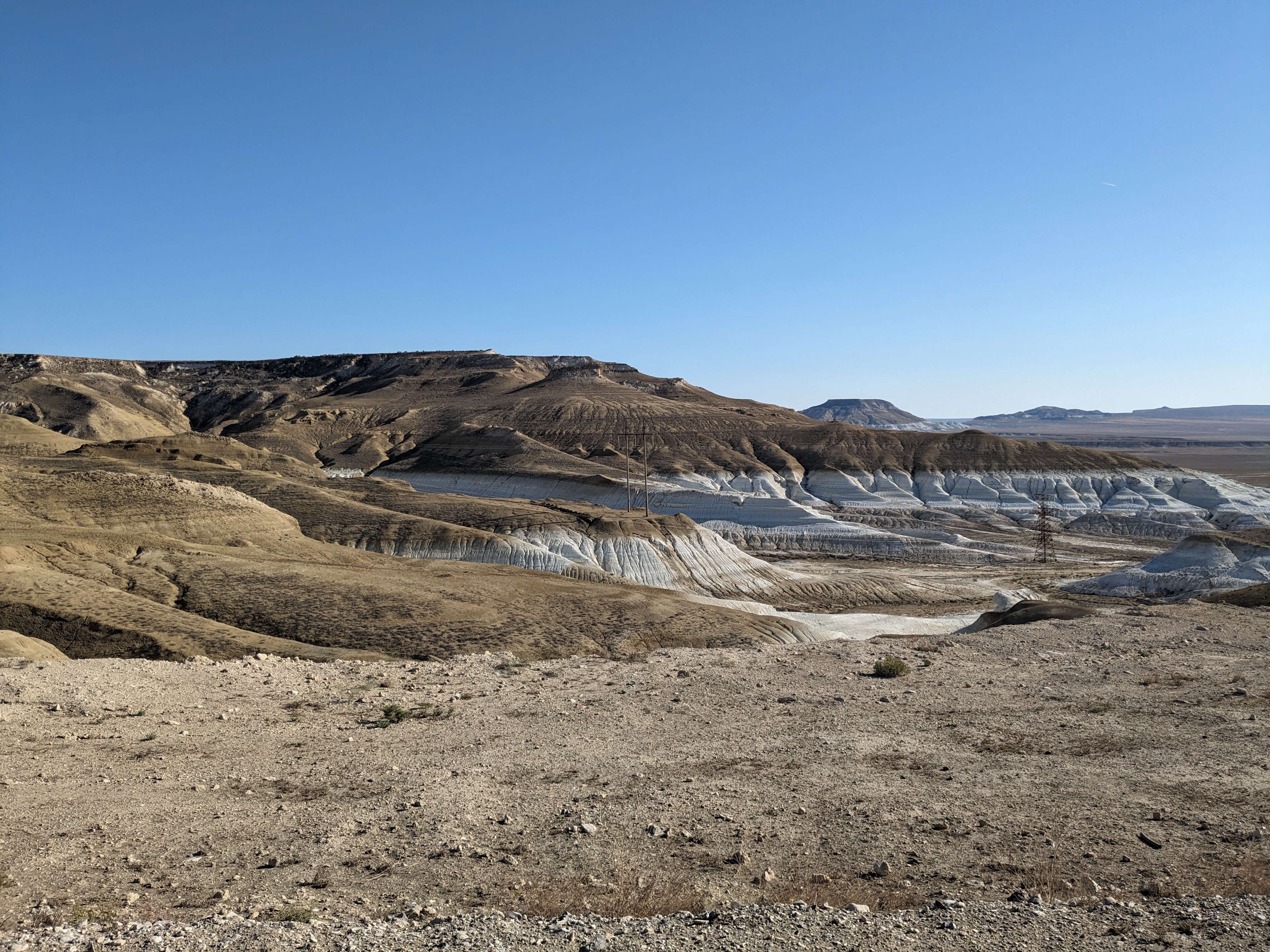
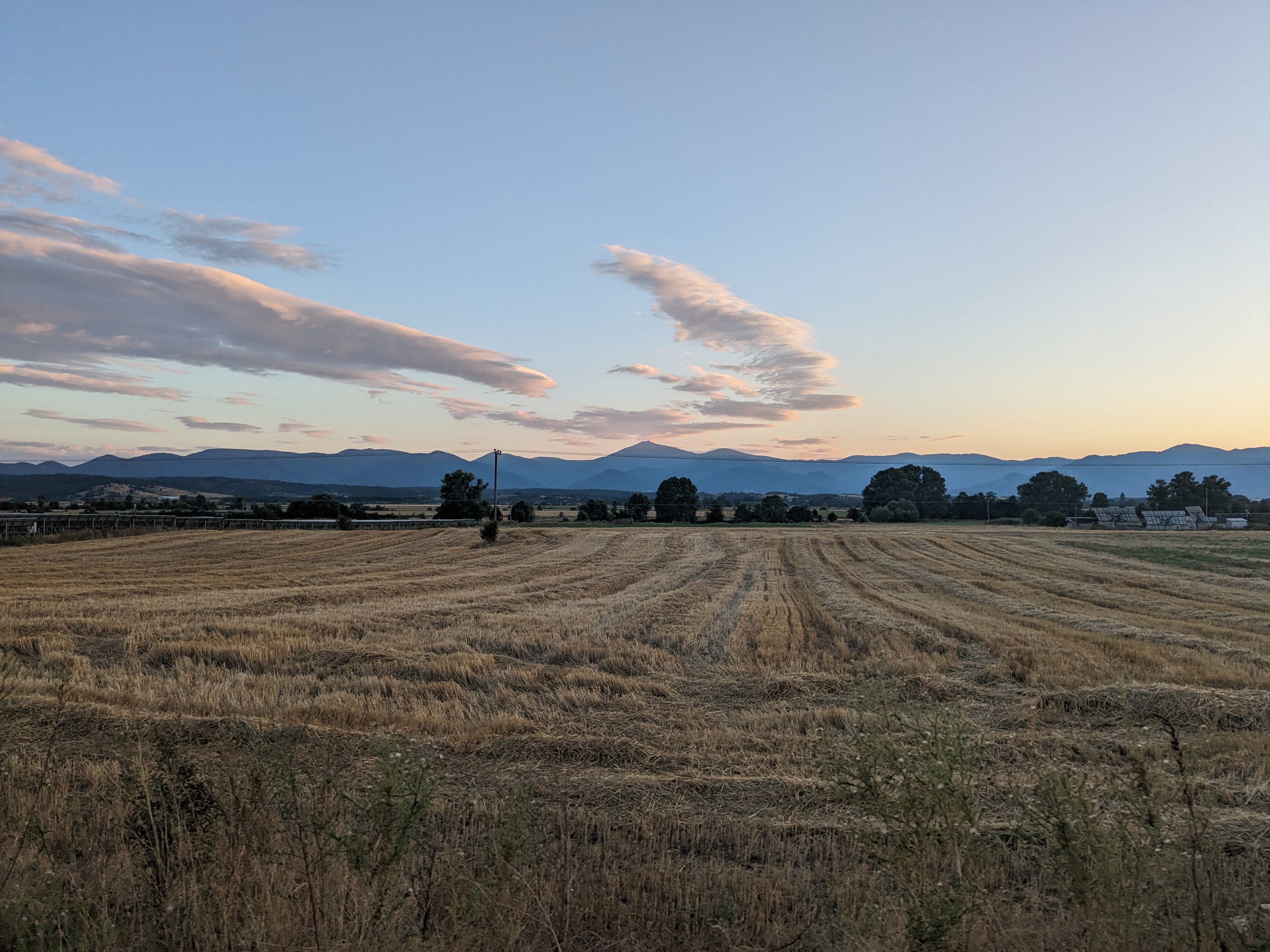
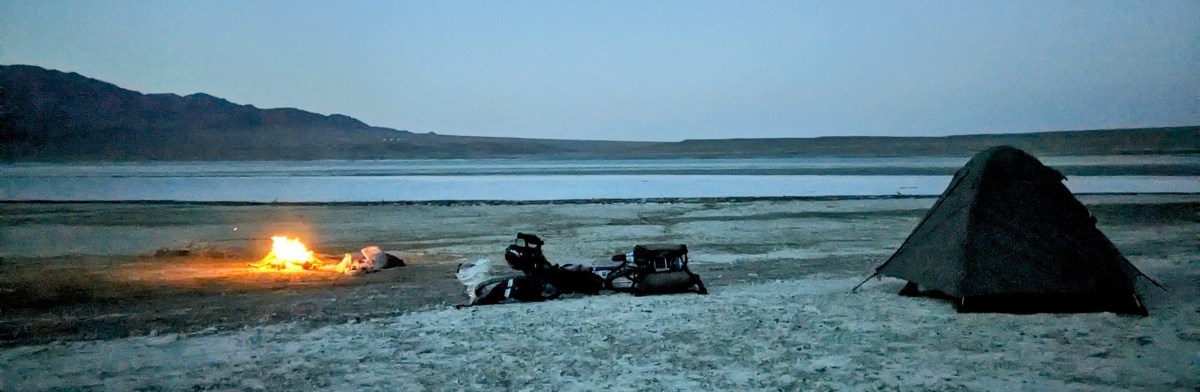
The next three days were all spent very similarly, cycling through the desert and stopping anytime we could find any shade to rest and eat. Finding places to camp was incredibly easy; just cycling a few hundred meters from the road, but every night we’d get a beautiful sunset across the flat baron landscape.

One day, a friendly truck driver offered us a lift. Having cycled nearly 90km in a straight line, we welcomed the respite. Our bikes nestled in the truck bed, with us squeezing into the front cabin, sharing the limited space with our generous driver. To avoid unwanted attention from the police, I had to lie on the bed keeping my head down as there were only two seats in the front. After a 140km ride, we disembarked in the final Kazakh town before the Uzbekistan border, where we once again found ourselves camping beneath the desert stars.

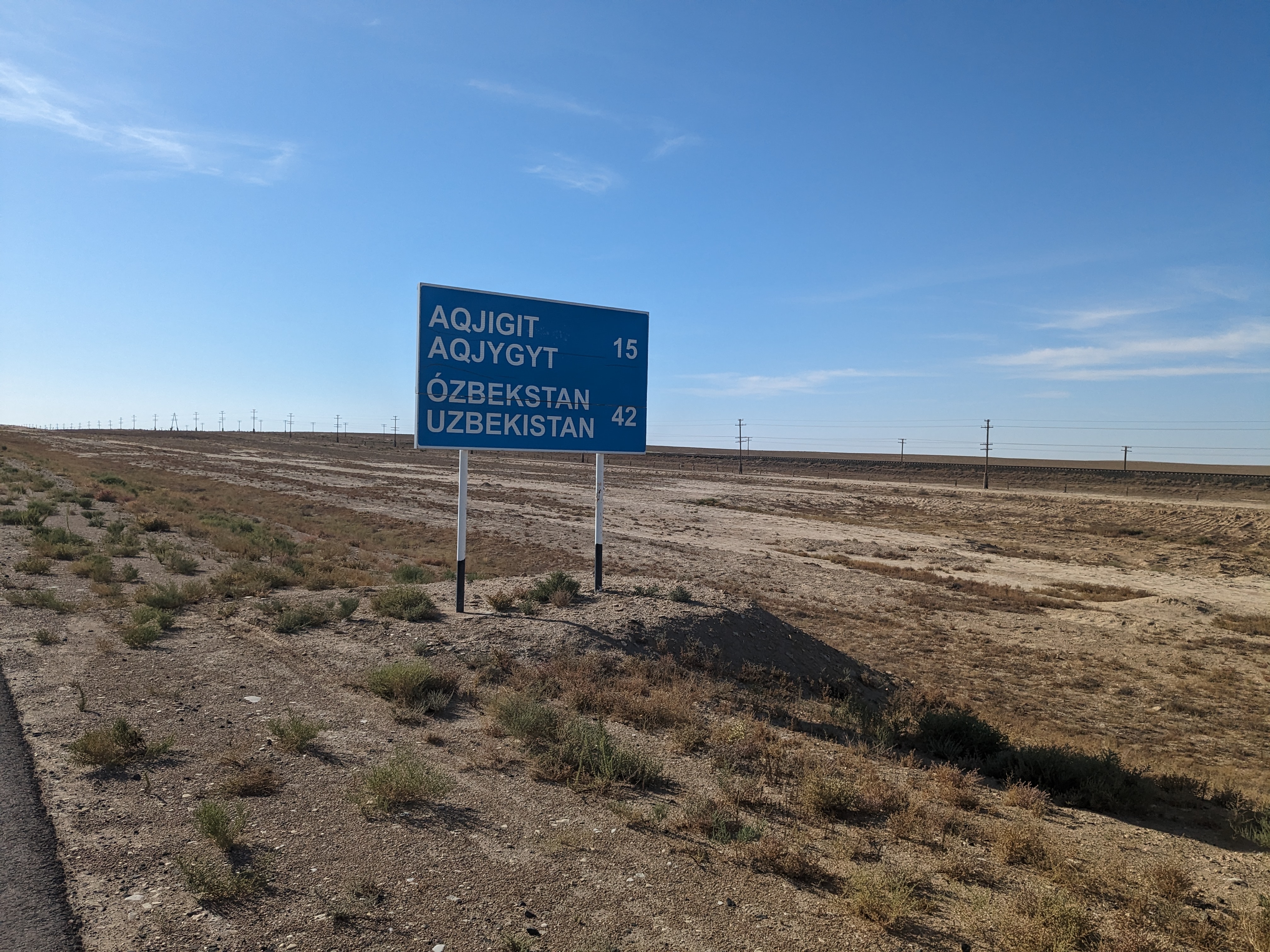
The following day marked our entry into Uzbekistan. The Kazakh border was formidable, with long queues and strict procedures. However, our status as tourists afforded us preferential treatment, to the clear displeasure of fellow travelers. On the Uzbek side, we underwent thorough checks, including X-rays of every item packed on our bikes – a minor inconvenience compared to the motorists forces to remove every bag from their cars before passing them all through the scanner.

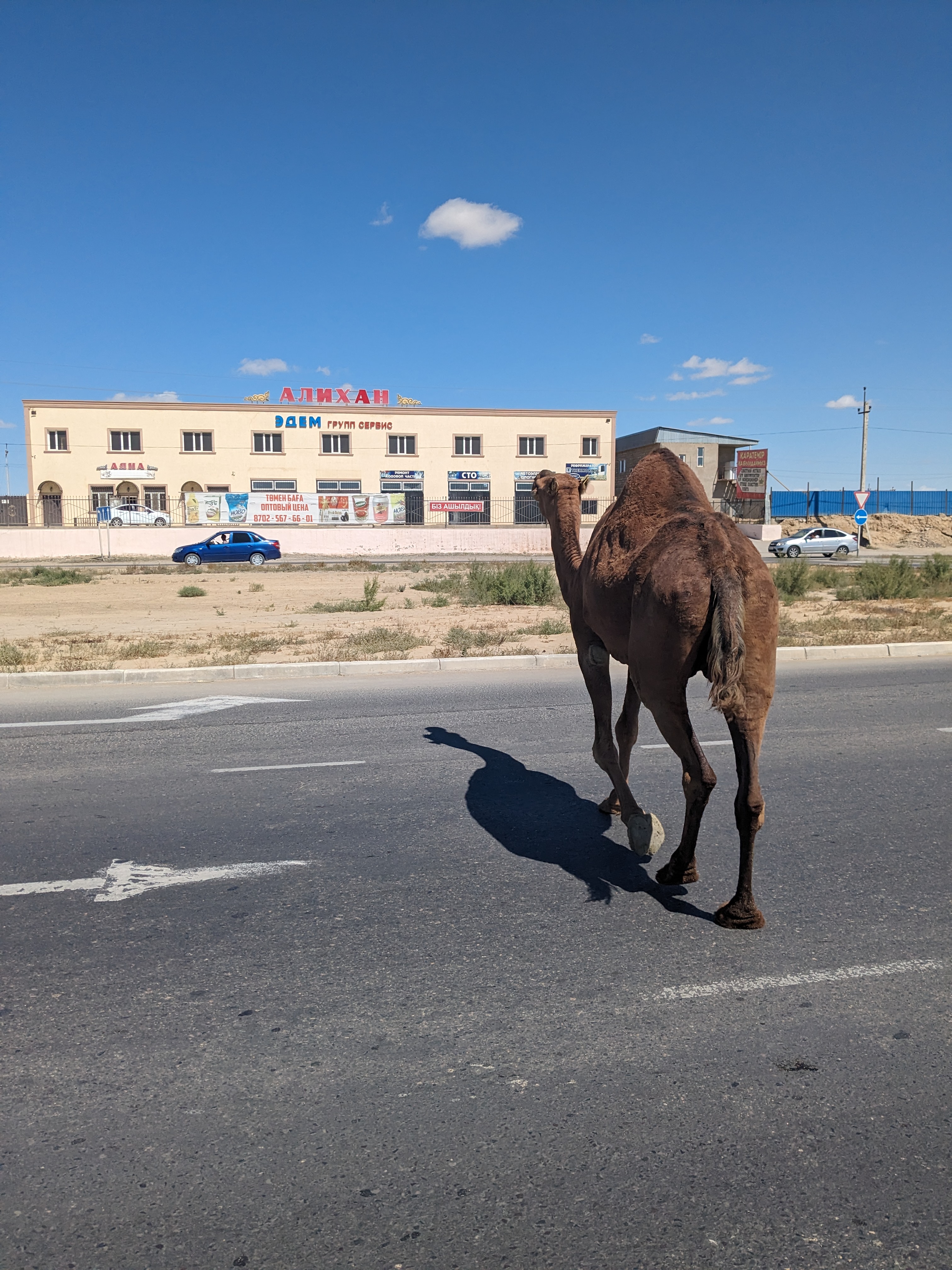
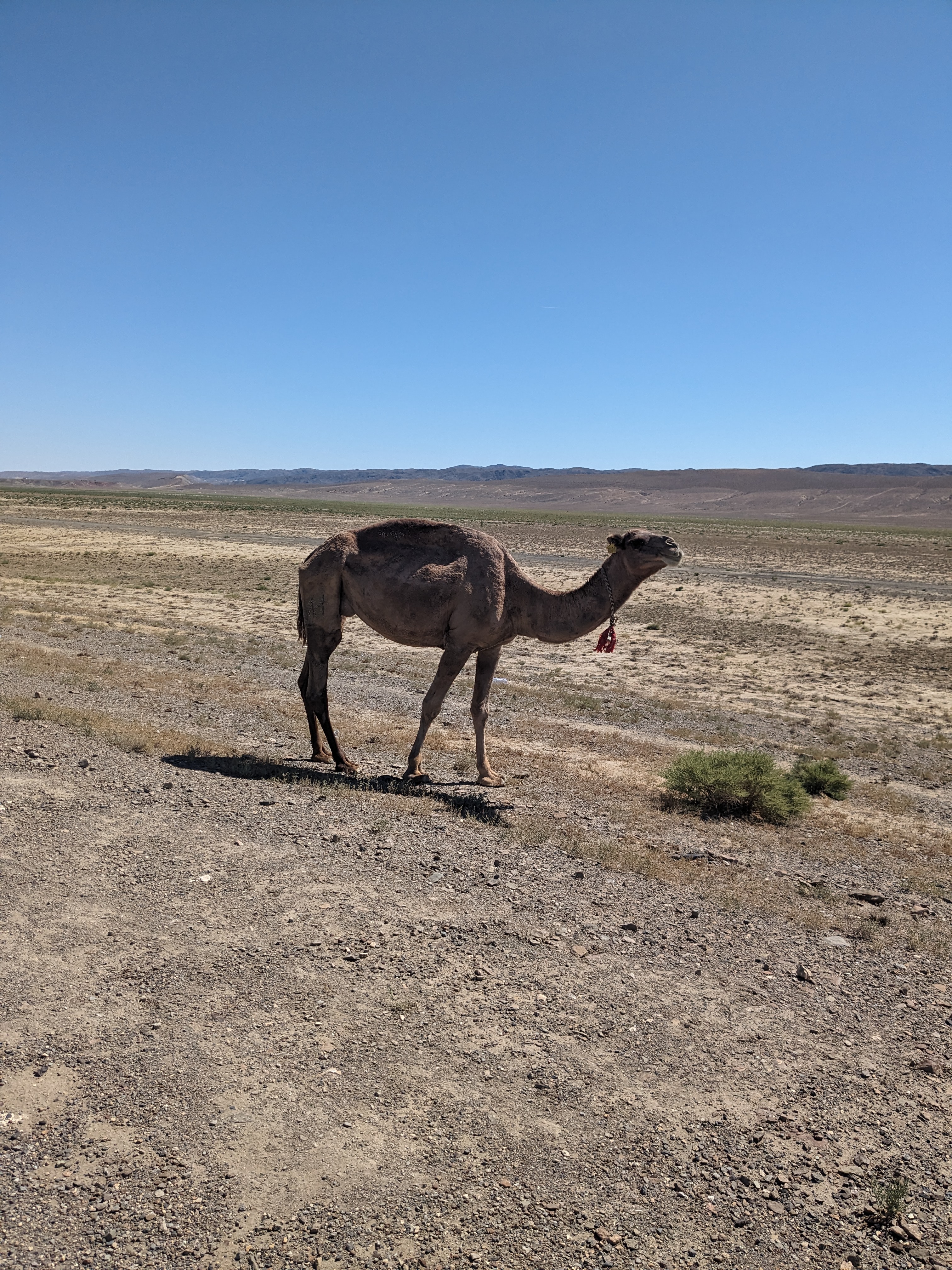
In the 4 days spent in Kazakhstan I feel like I didn’t really learn anything about this country. The people were friendly but we didn’t communicate with them any more than “where are you from?” and “where are you going?”. I found the desert to be amazing and was in ore anytime I’d look out to see nothing on the landscape and also amused anytime I’d see a camel. The food has been different and I’ve mostly been eating tinned fish, loads of biscuits and even some horse milk. I’ll hopefully be returning to Eastern Kazakhstan in October if it hasn’t got too cold in the northen hemisphere by then!

Georgia

Upon entering Georgia, I followed the Black Sea coast north to reach the city of Batumi. Serge’s words from the bus journey resonated with me – he had predicted that I might not enjoy Batumi. According to him, it was a place where affluent Turks would showcase their wealth. As I arrived, the city’s architecture stood out, I felt it was attempting to emulate the ultra-modern Middle Eastern city vibe. However, due to these new builds being constructed around the existing soviet structures, the blend didn’t quite work. My stay in Batumi was brief, just enough to grab some food and money before heading east into the mountains.

For the remainder of the day, I headed east, ascending through a gorge on a breathtaking road. Rain finally greeted me, the first since Istanbul, and it appeared that the night would be wet.

Luck led me to a great picnic area where I set up camp. This sheltered spot allowed me to avoid using the tent, sleeping on a table while keeping both myself and my belongings dry. A friendly cat joined me, providing company by resting directly on top of me throughout the rainy night.

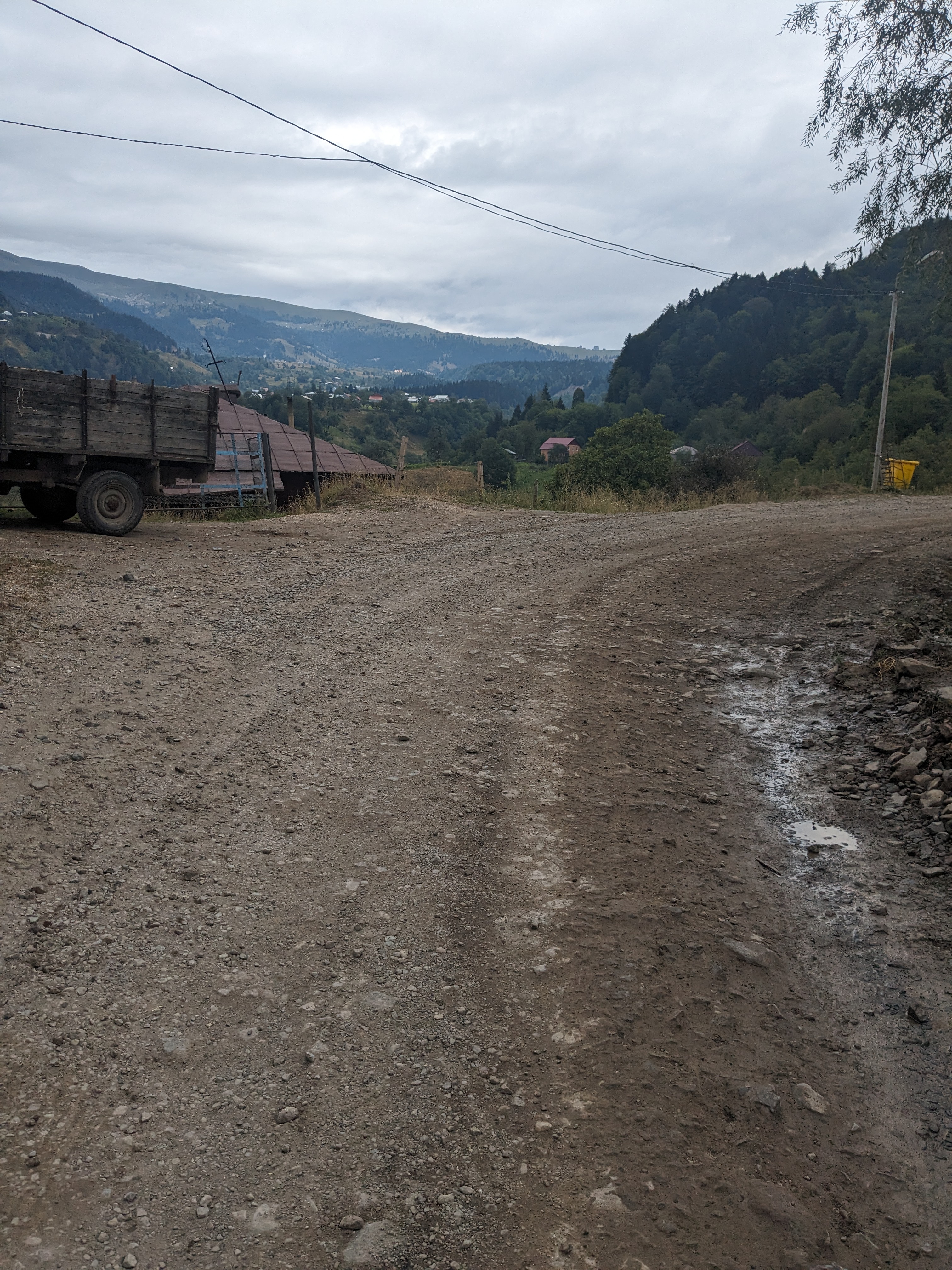
The subsequent day, I climbed to an elevation of 2000 meters. While I expected a challenging ascent, I hadn’t anticipated such poor road conditions. The slow pace kept the climb engaging, requiring me to constantly survey the road for holes to avoid.

In one village, a man offered me a drink outside his home, presenting a bottle of fizzy water. Accepting his kindness, I realised as shot glasses emerged that water wasn’t what was being poured. It turned out to be some sort of raki, which at 11am did little to help me up the mountain.

Eventually, I reached the summit, only to face road works on the descent. The road was constantly transitioning from fresh tarmac to deep gravel. In one of these sections, I came off my bike right in front of the workers. They kindly assisted me in cleaning up, but I think found the whole thing quite funny.

As the road conditions improved, I made steady progress and camped by a river that night, accompanied by a friendly dog who slept outside my tent the whole night.

The following day demanded a long climb to a plateau, accompanied by a persistent headwind. The higher altitude brought cold temperatures, with me finding myself amidst the clouds once at the summit.

Descending through a village, a group of men beckoned me over while enjoying a meal by the church. They extended their hospitality, offering me a plate of lamb stew cooked over an open fire, along with bread. The meal was a welcome reward after a strenuous day. With each empty plate, they refilled it promptly. There was also plenty of vodka to go round, with toasts followed by shots about every 15 minutes. I never knew what I was drinking to as these men spoke no English but I still had a great time joining in.

As the night fell, one of the men gestured for me to follow him, offering me a room in his home. I took him up on his offer and it was fascinating observing his way of life. The house was very simple with no running water and an outside toilet.

After spending a day descending, reaping the rewards of the climbs I had conquered. I established camp 20km outside Tbilisi and headed into the city the following morning.

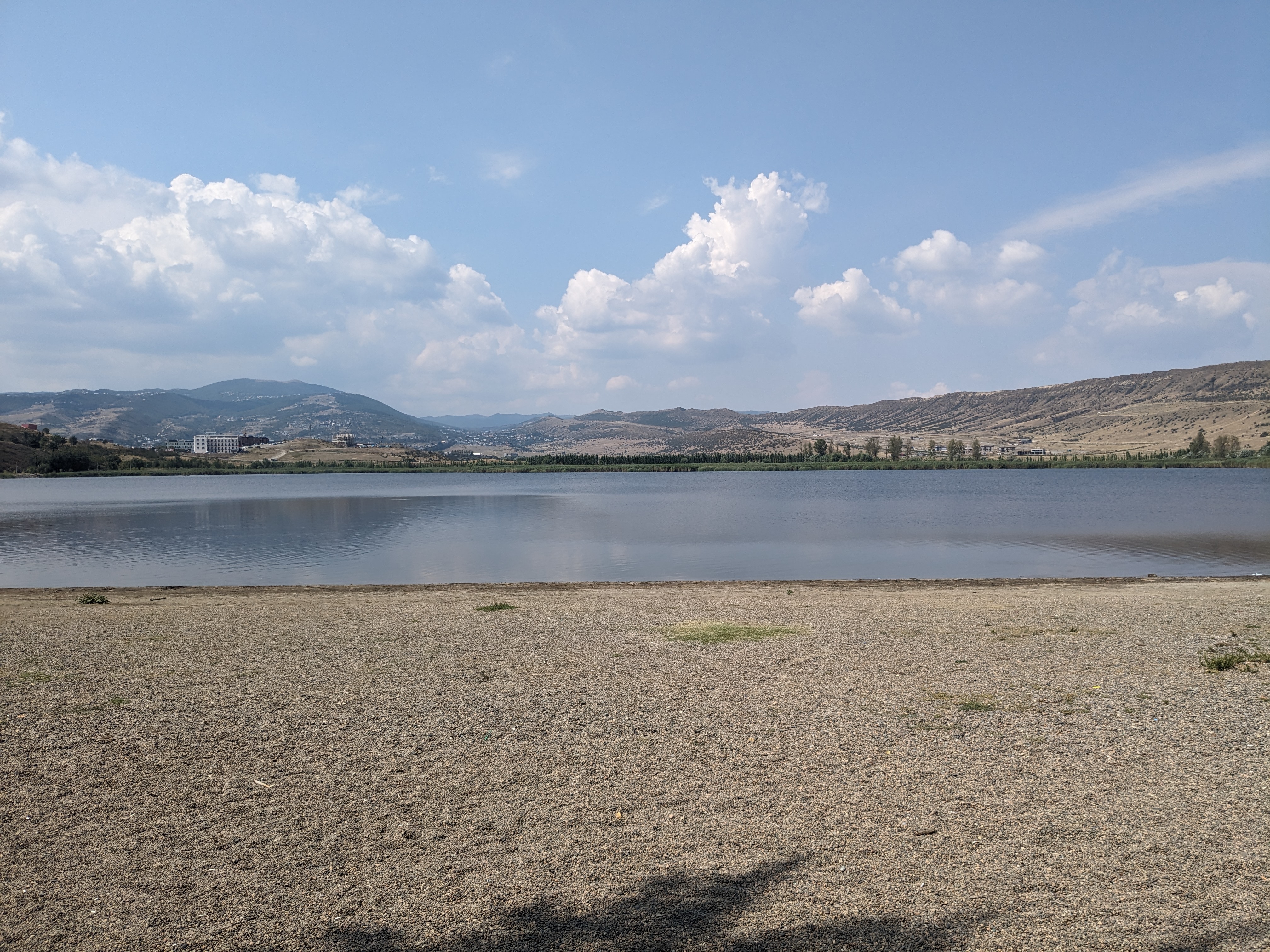
Within an hour, I realised that I had already explored much of what the city had to offer. It wasn’t particularly touristy, so I decided to head to a nearby lake for a refreshing swim and a much-needed wash.

My next task was to aquire a box for my bike. Finding one was relatively straightforward, and I managed to get one at the fourth bike shop I visited. However, I was charged around £10 for it, which I later learned was the norm in Tbilisi. Due to the Georgia-Azerbaijan border closure, to reach Kazakhstan, one must either pass through Russia, Iran, or take a flight. Most people opt for the latter, resulting in high demand for bike boxes in the city.

I decided to attempt cycling the 20 km to the airport with the cumbersome box. This proved to be quite a challenge, carrying it under my arm, and it became a bit nerve-wracking when the wind picked up. Nonetheless, I managed to make it to the airport.

Upon my arrival at the airport, I encountered five cyclists who had just arrived from Japan and were embarking on a journey around Georgia. They were busy assembling their bikes and trying to get rid of 5 bike boxes!

I packed my bike into the box, along with most of my bags, sealed it up with plenty of tape, and headed into the airport.

Georgia had emerged as my favourite country to travel through so far. The cycling had been exceptional, featuring remarkable mountain passes, and the locals had consistently displayed genuine friendliness. My culinary experiences had also been a highlight, with a variety of sweets and fantastic bakeries offering delicious savoury pastries which are always a surprise as to what they are stuffed full of.

Eastern Turkey

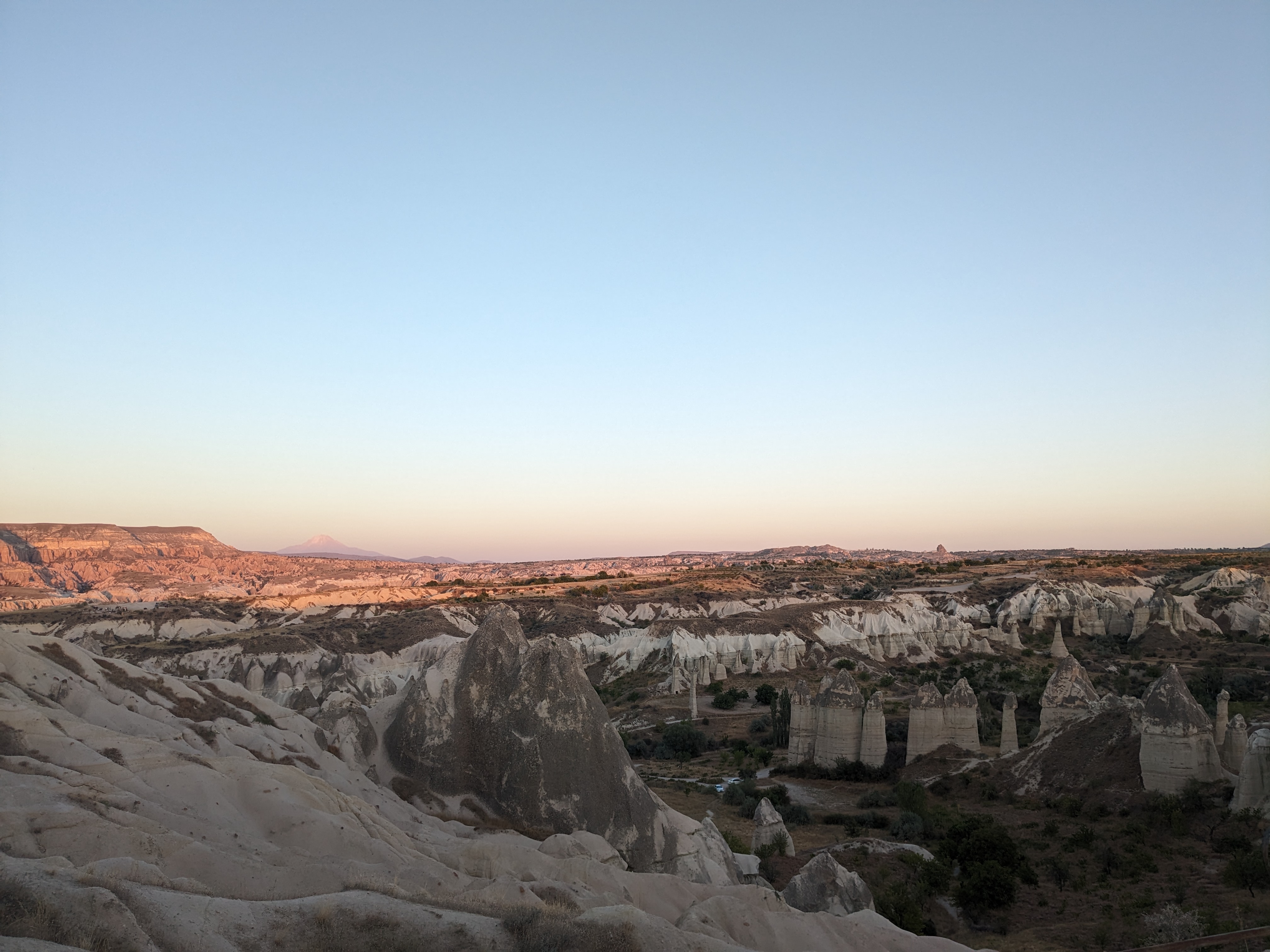
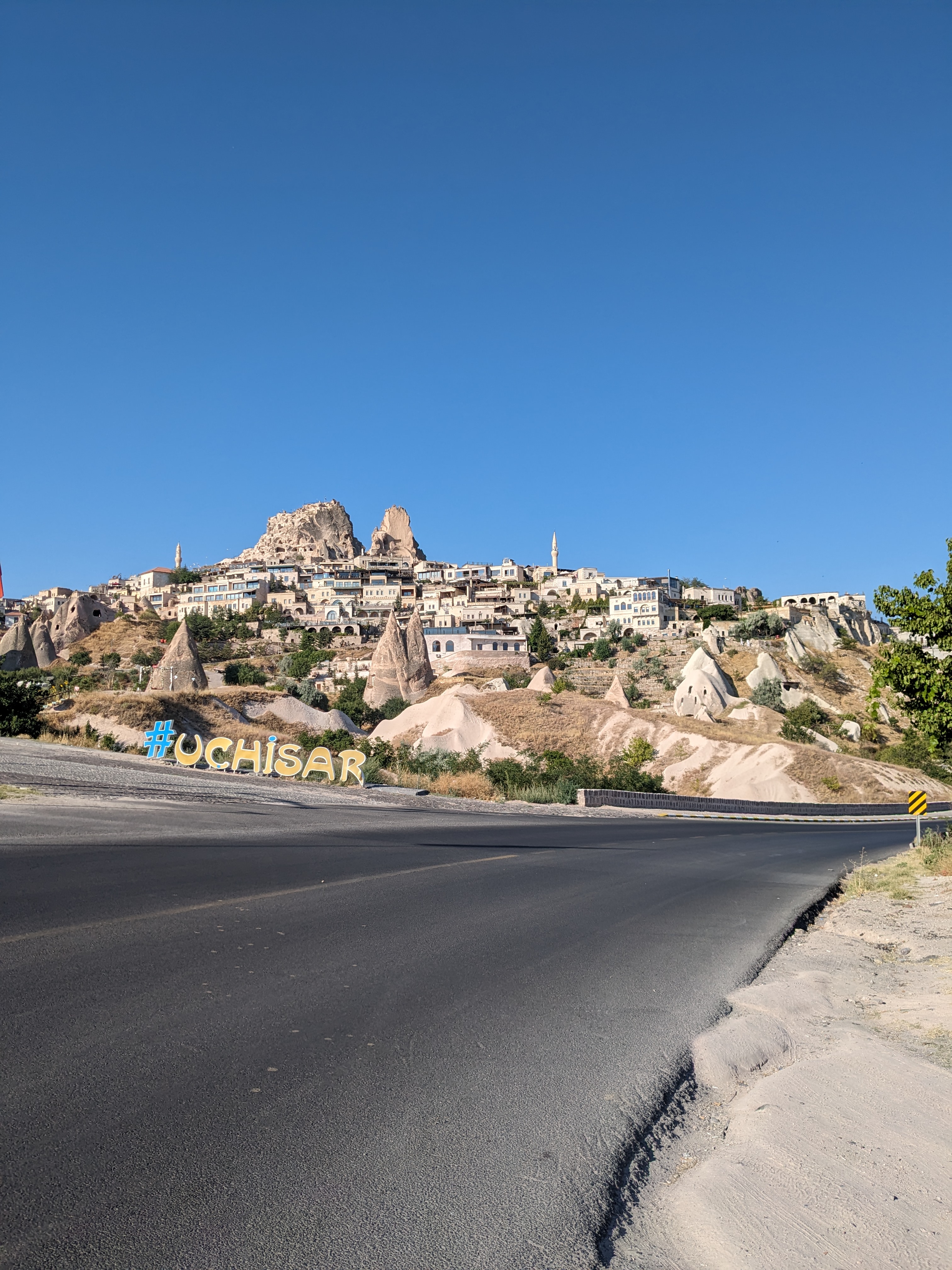
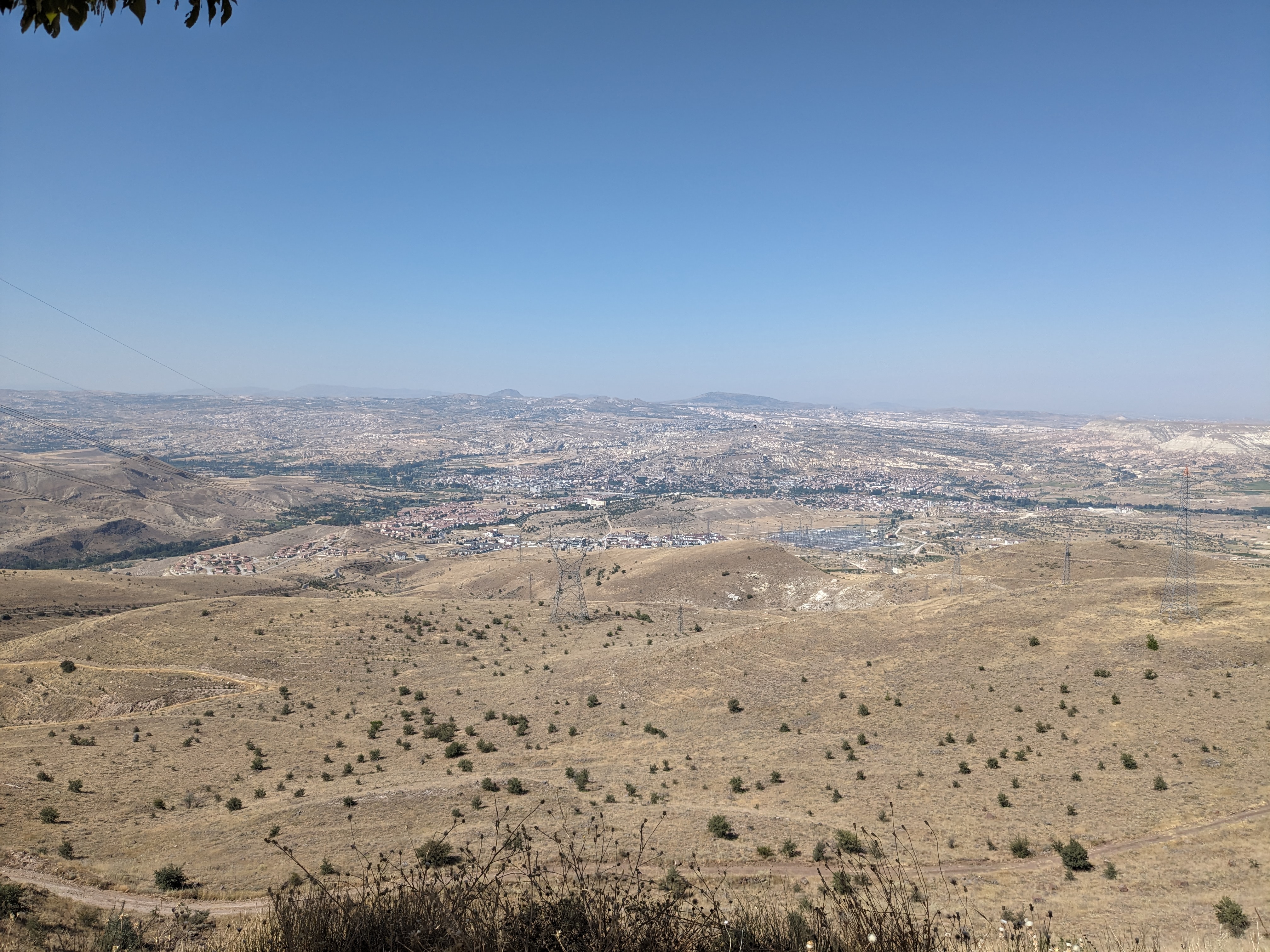
Once my bike was repaired, I set my course for Cappadocia. Even though it meant cycling back west, I was determined to explore this UNESCO World Heritage site renowned for its unique rock formations. Covering the 80km distance in good time, I had the opportunity to explore the area before needing to find a camping spot. The distinctiveness of this small region within Turkey stood out remarkably with such a different geography.

In the evening, I headed to one of the viewpoints overlooking the town of Göreme, where I intended to camp. Engaging in conversation with a man who ran a pony riding business, he advised me on a suitable camping spot and informed me I’d need to wake up at 5am to see the mesmerizing spectacle of the balloons. With this knowledge, I got an early night in anticipation.

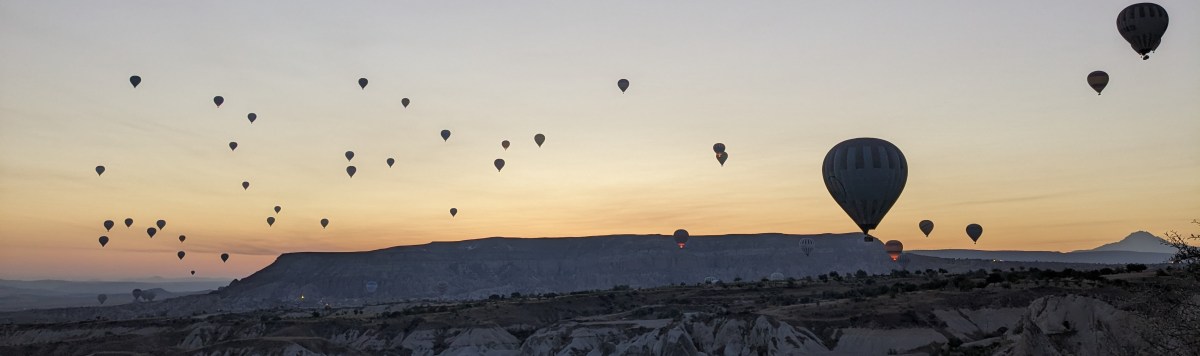
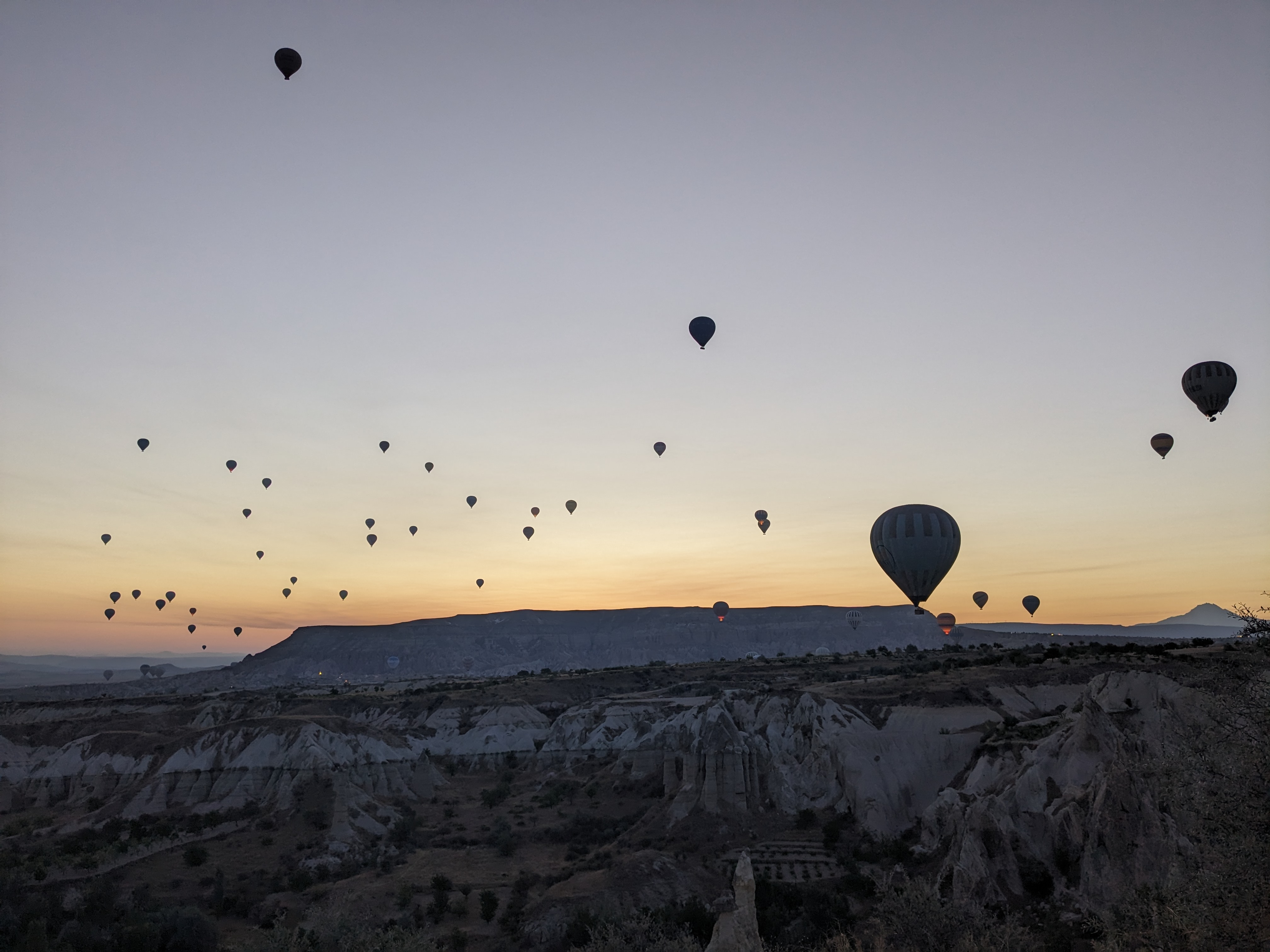
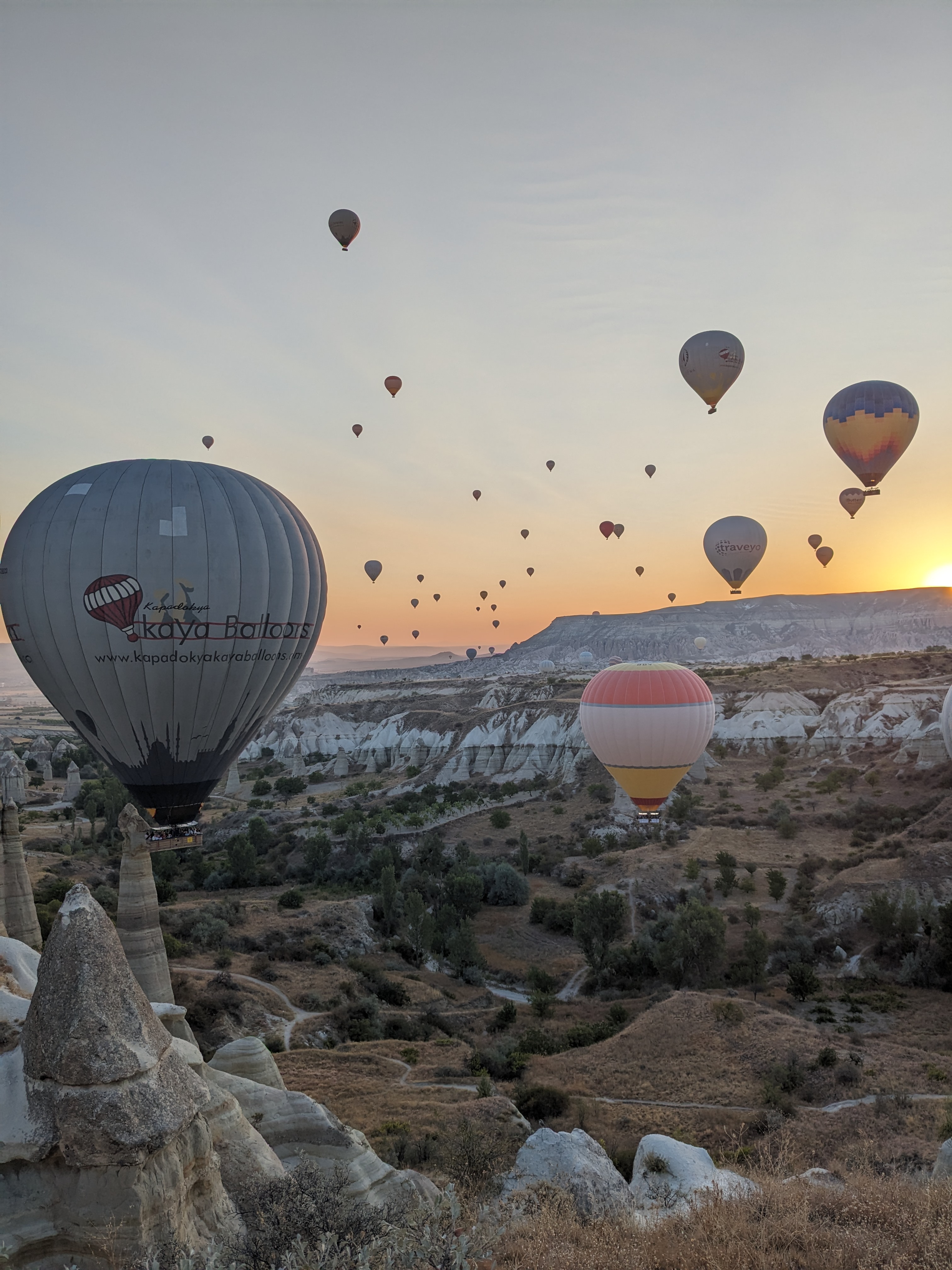
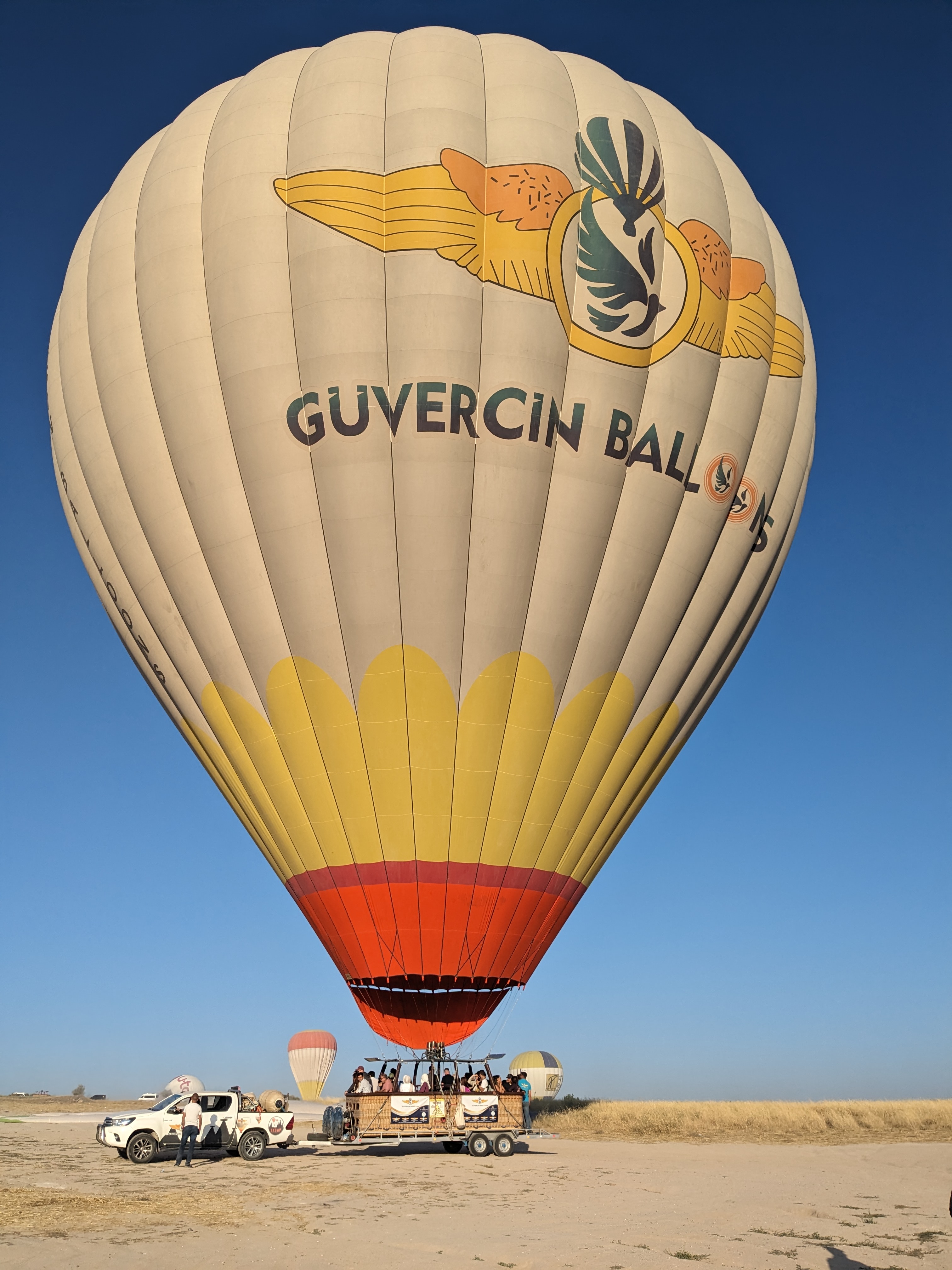
The following morning, as the sky started to exhibit hues of color during sunrise, the first balloons gradually ascended, initially appearing as silhouettes against the sky. With the ignition of the hot flames within the balloons, they illuminated, creating a spectacular display against the backdrop of the rising sun. As the balloons approached, their vibrant colours became more pronounced, and I witnessed their graceful descent, some landing impressively onto trailers by the road. It was truly a breathtaking sight to behold.

Later that morning, I explored more of Cappadocia, visiting the town of Ürgüp before returning to Kayseri.

My next plan involved taking an overnight bus covering a distance of around 800 km towards Georgia. Procuring the bus ticket was relatively straightforward, but loading my bike onto the bus posed a challenge. The staff member responsible for loading the bus insisted there was no space underneath the coach for my bike, despite evidence to the contrary. Eventually I just placed my bike on the bus, and he reluctantly helped me pack items around it, clearly unimpressed.

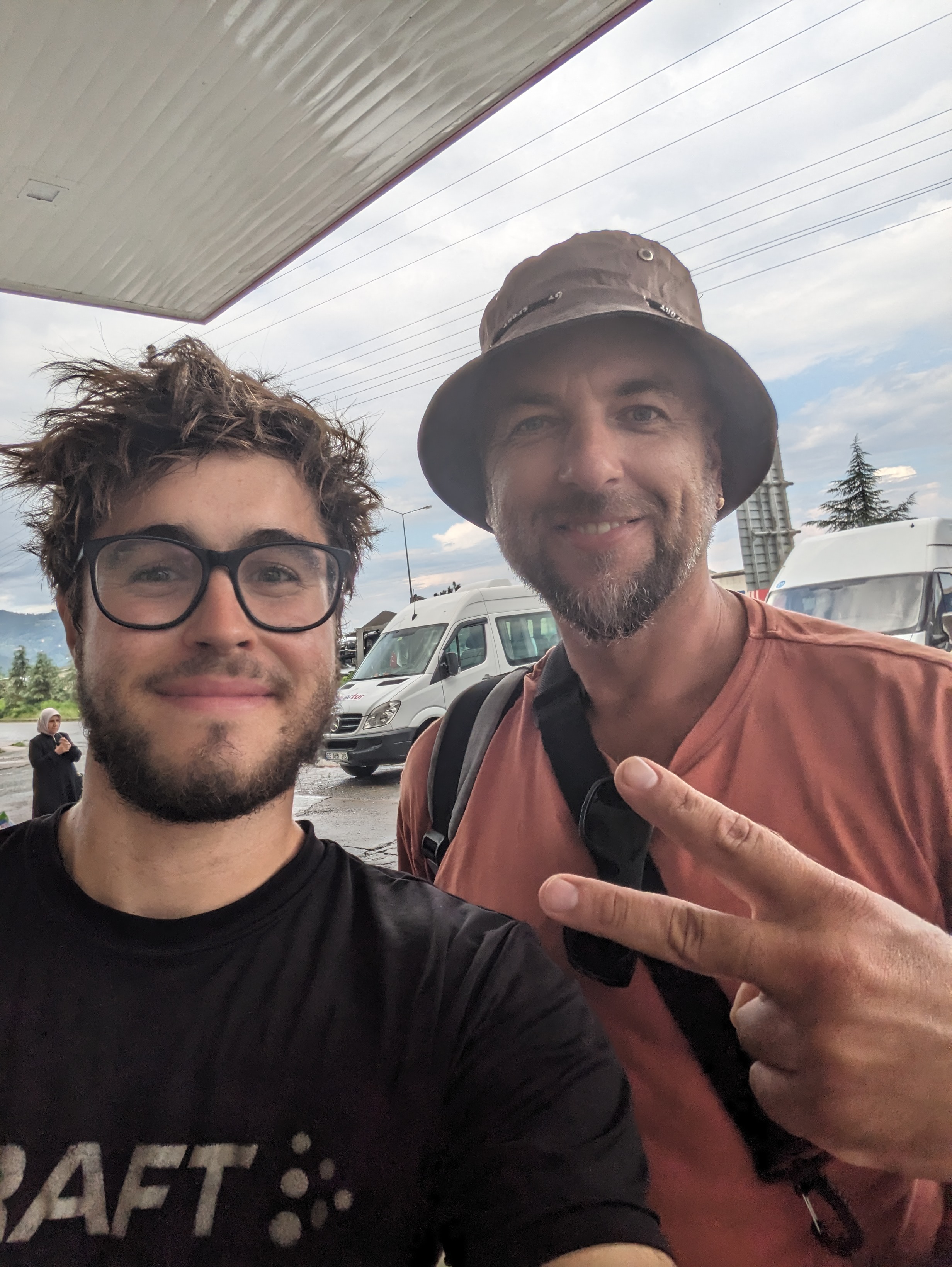
At the bus stop, I encountered Serge, a Russian traveler heading to Sochi. He was on the same bus, undertaking a three-day bus journey due to the unavailability of flights to Russia. He had been working in Turkey as an engineer and spoke English and Turkish fluently. We shared travel experiences and he was incredibly helpful guiding me through the Turkish bus experience.

The 15-hour bus ride was made more bearable with onboard Wi-Fi. I spent the journey planning, doing admin, and managing to catch some sleep.

As the sun rose, the bus traveled alongside the Black Sea amidst a storm, providing a stark contrast to the dry climate I’d experienced for the last week.

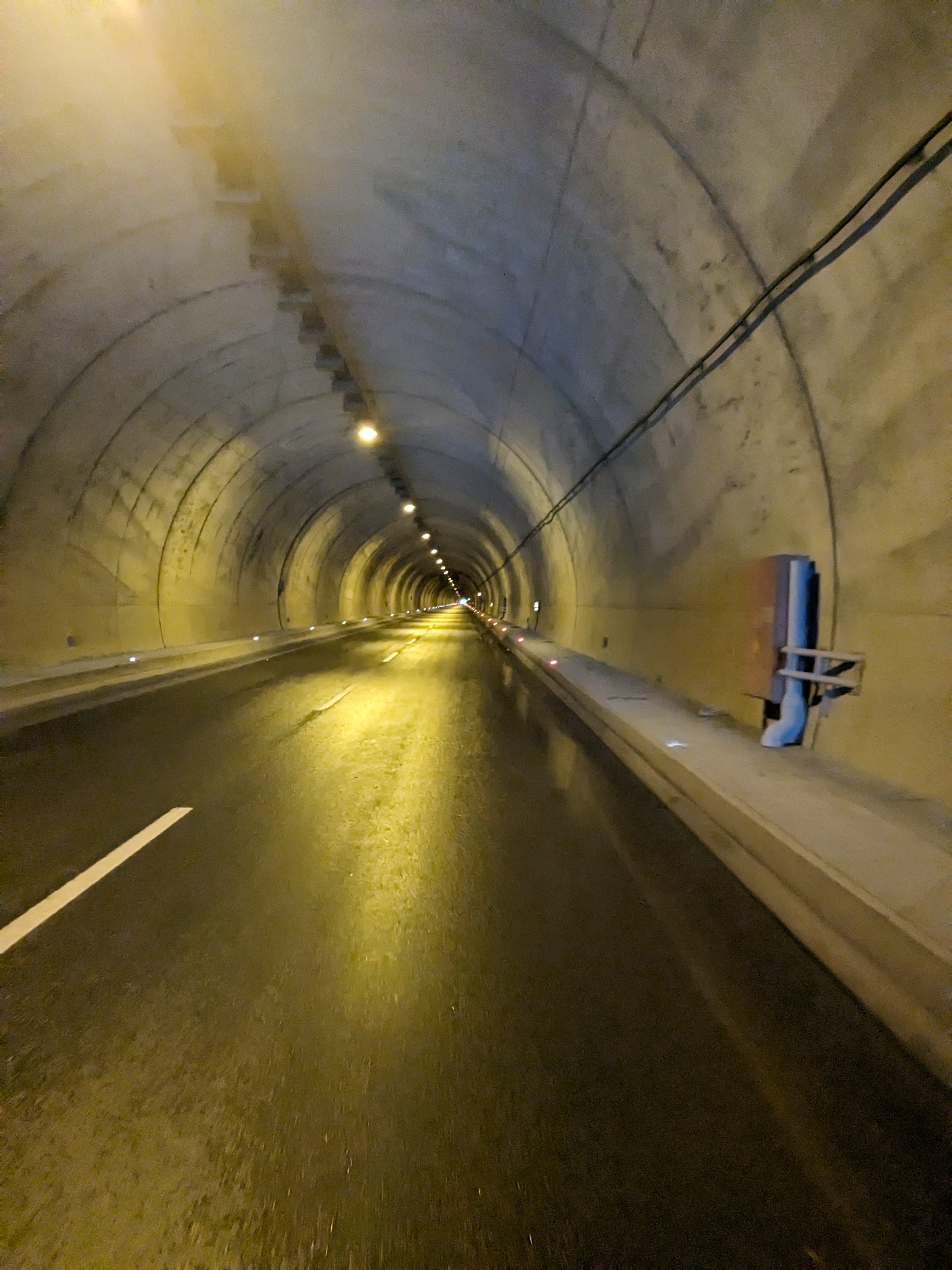
It was nice to get the legs moving again after the bus journey. I set off from the town of Hopa on the Black Sea coast and short 20km ride remained before reaching Georgia. Despite online reports about the challenges of cycling through the Black Sea tunnels in Turkey, I found them manageable. The echoing sounds of approaching lorries within the tunnels could be intimidating, but I quickly became accustomed to it.

Crossing the border proved time-consuming. A 45-minute wait in a queue of cars marked my exit from Turkey. On the Georgian side, the process resembled navigating through an airport terminal, wheeling my bike along. Georgian border officials meticulously inspected my passport, using magnifying glasses and testing my knowledge of its contents but let me through with no problem.

I found Turkey’s heat and cycling along busy roads very draining at times and unfortunately didn’t have time to take a longer route on the smaller roads. However, I very much enjoyed the people and the food of this country. With my favourite foods from Turkey included Turkish sausage, various kebabs, and my newfound addiction to Fuze tea, a very sweet iced tea drink. I now look forward to the change in scenery and culture that Georgia promises.

Central Turkey

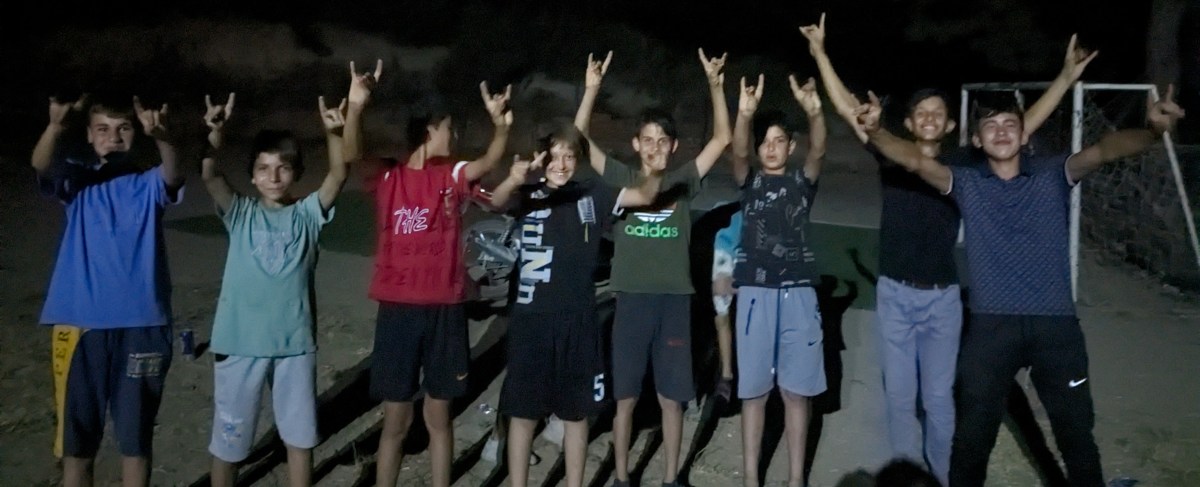
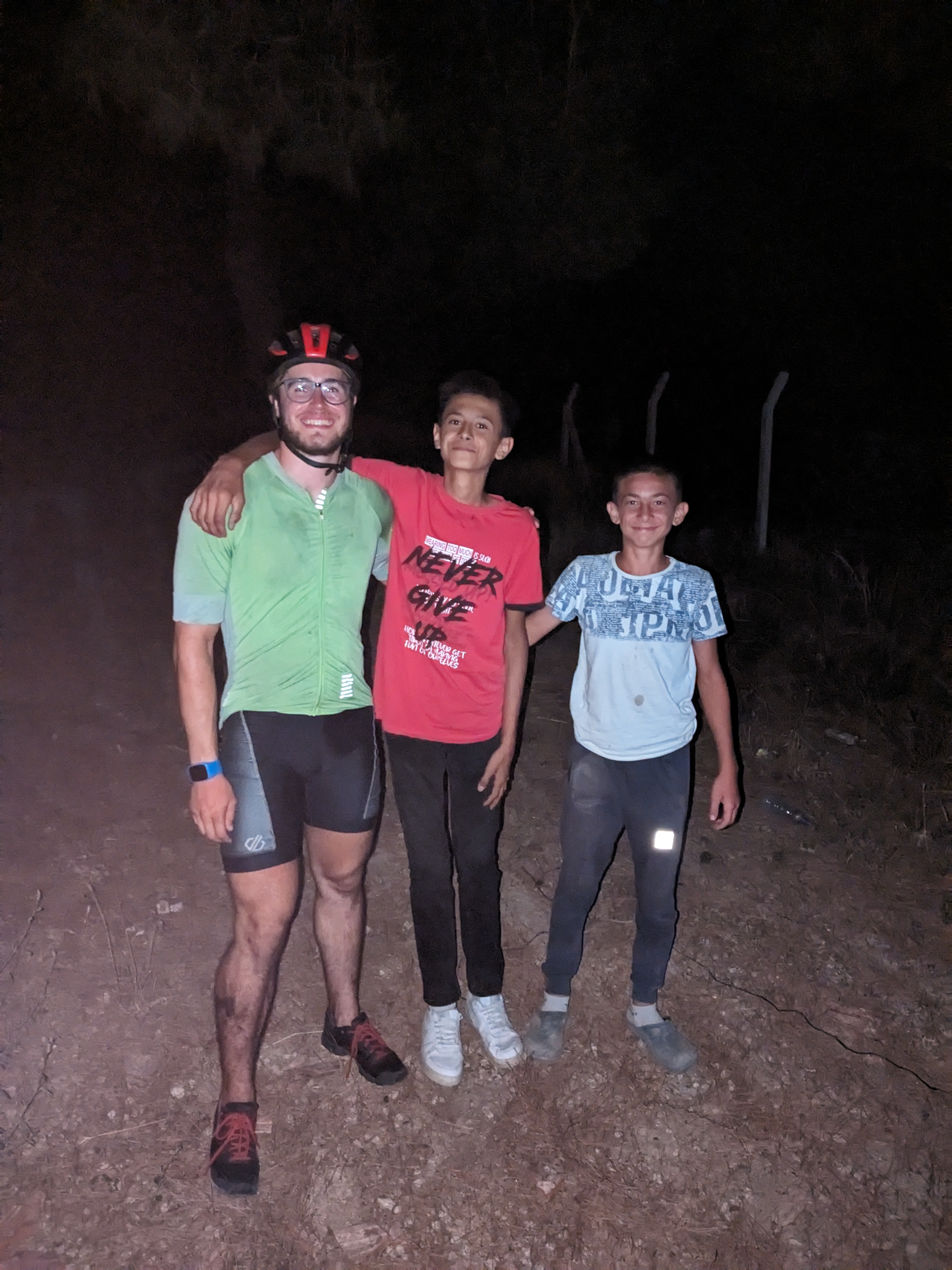
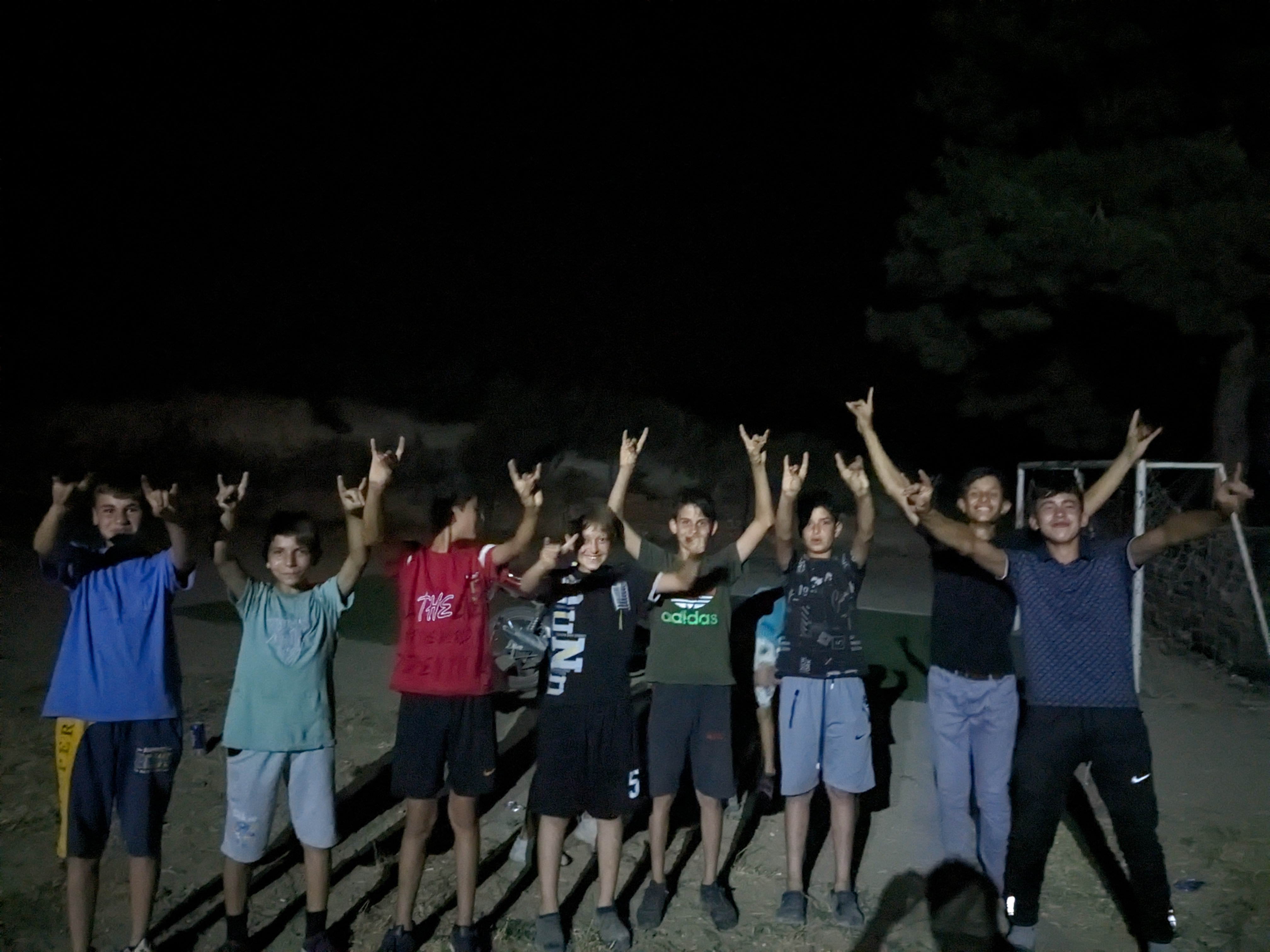
On my first evening, I ventured into a small village to find water and a suitable camping spot. That’s when I crossed paths with Muhammad and Ismail. Through the aid of Google Translate, we engaged in conversation, shared food, and then I was escorted by them on their motorbikes to the village’s football pitch, where they indicated I could camp for the night. As I finished setting up my tent, they returned, accompanied by what seemed like most of the village’s children on motorbikes, emitting a sense of curiosity. My original plan of having dinner and retiring for the night was derailed, as the children were intrigued by the presence of an Englishman camping in their village. The evening evolved into an impromptu football match and answering alot of questions.

The following day brought scorching heat, reportedly reaching 46 degrees according to my GPS, although I remained somewhat skeptical of that. Cycling through the intense heat posed a challenge. I’m still not sure the best course of action as sometimes I feel the breeze while riding is more refreshing than being stationary.

Passing through the ancient city of Eskisehir, I located a mosque where I was able to have a wash and refill my water supplies. Finding water in Turkey has been incredibly easy with every village having a mosque and almost every mosque having drinking water.

That evening, I slept in a park, awakening to the sight of a friendly shepherd leading a flock of goats through the area. Although language barriers impeded our conversation, I tried my best to explain to this curious man why I was camped there and where I was going.

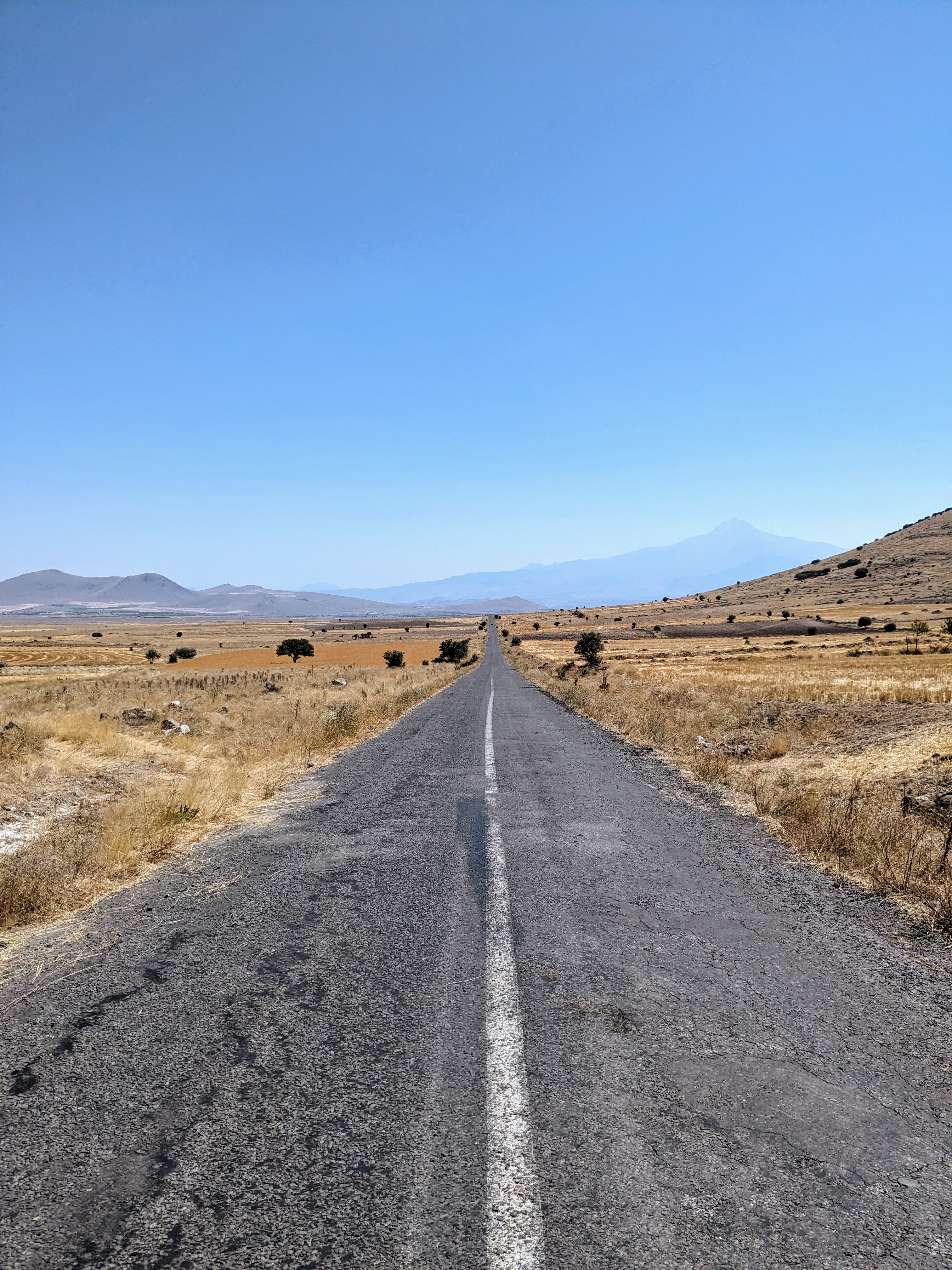
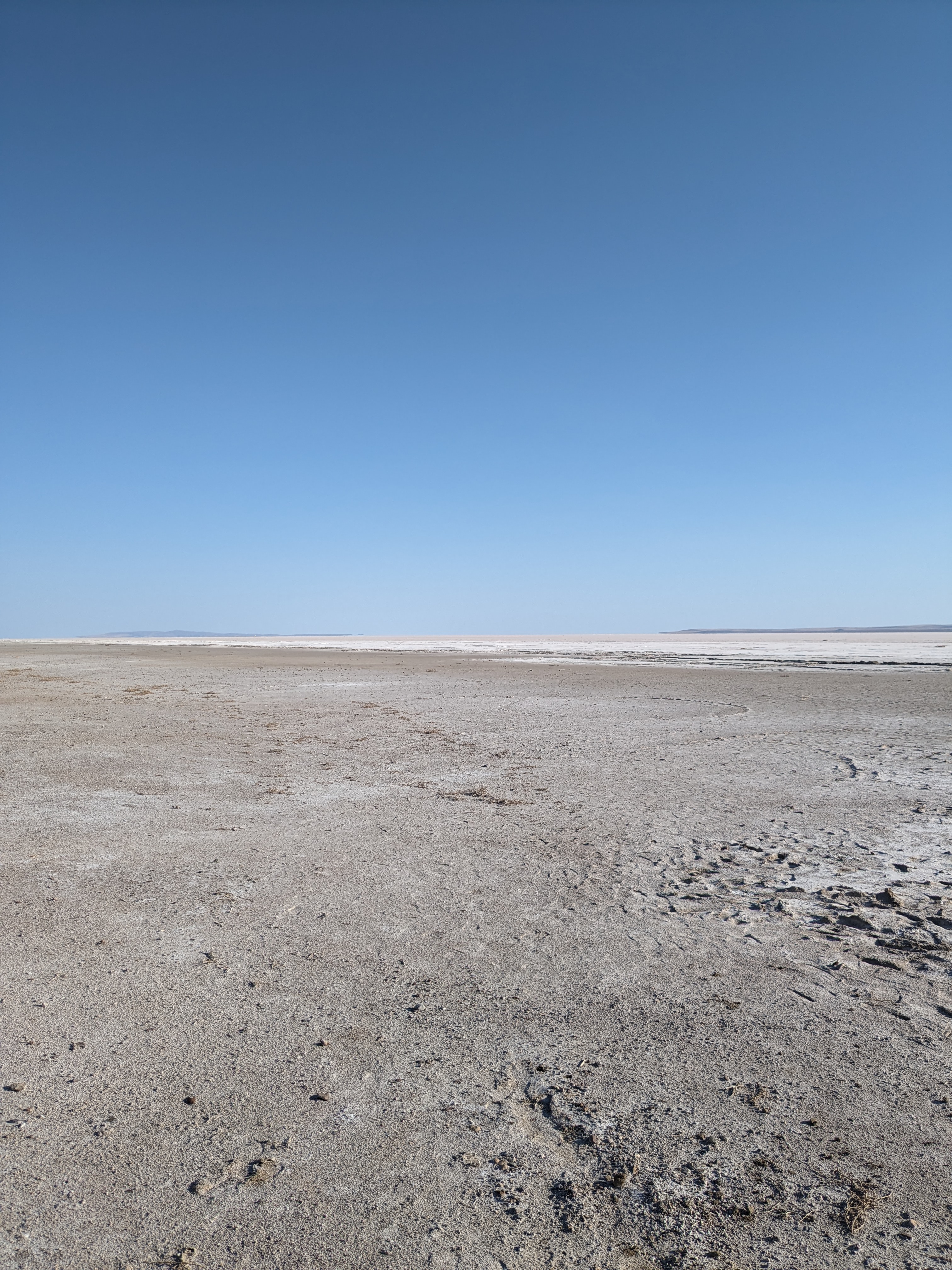
The day’s objective was to reach Lake Tuz, a salt flat. Throughout the day however, I cycled through some fantastic landscape and it was clear by now I’d left Europe.

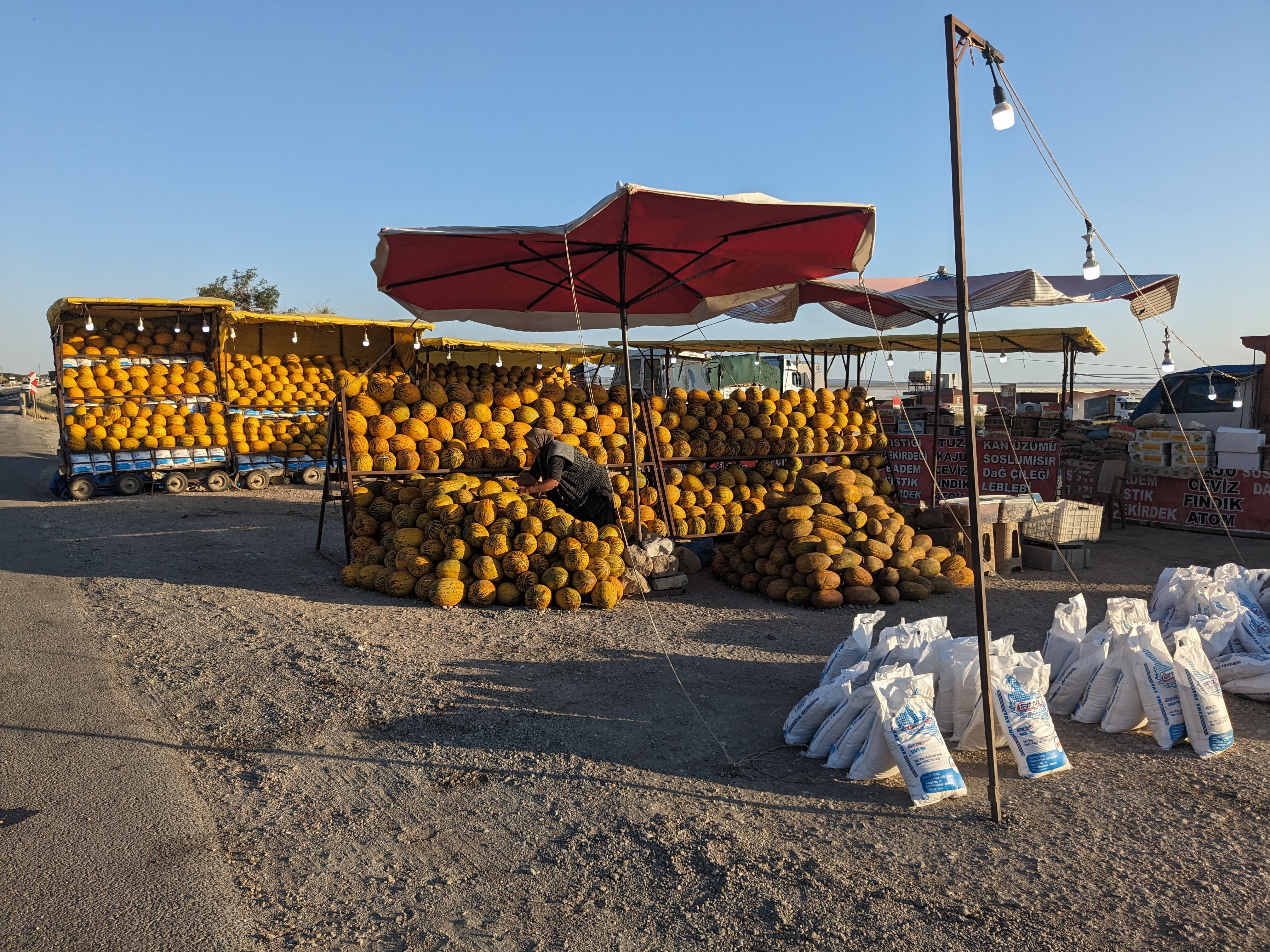
Once at Lake Tuz, the sight of an expansive horizon with nothing but emptiness was impressive. That evening, I stopped at one of the numerous melon stalls that have become commonplace since my time in Croatia. While I was in Turkey, the prevalence of these stalls seemed unparalleled. I’ve never seen any melons being grown anywhere, so I’m still not too sure where they all come from. The vendor running the stand was happy for me to camp there, allowing me to witness a picturesque sunset over the lake.

The subsequent day proved difficult due to significant issues with my bike. Sensing that something was amiss, I located a bike shop in Aksaray. They were helpful but indicated that fixing the bike there was unfeasible due to the required parts’ unavailability, requiring a wait of four days. I opted to take a bus to Kayseri, where I could find a shop capable of addressing the issues. After a two-hour bus ride, I located a shop that could fix it – a new rear hub and bottom bracket were required. They promised to have the bike fixed by the following afternoon. Feeling a bit down, I treated myself to a night in a hotel although my spirits were quickly lifted by the

friendly hotel staff offering me drinks. That evening was then spent chatting and drinking with these three men before I headed up to my room for some rest.

By 1 pm the next day, my bike was repaired and I set off westward towards Cappadocia.

The recent days have been both mentally and physically demanding for several reasons.

Firstly, a significant aspiration of my trip is to cycle through the Pamir mountains in Tajikistan. To accomplish this, I must reach the area by mid-September to avoid extreme cold temperatures. This target required me to cover approximately 130 km per day, which initially seemed feasible. However, the experience of spending eight hours on the bike daily and feeling obligated to press on took a toll on my enjoyment of the trip. My solution to this is taking a bus across most of Turkey to reduce the distance I need to cycle.

Transitioning into Asia marked a distinct culture shock. Access to Wi-Fi became more challenging, English speakers became scarce, and I often sensed that I was being overcharged for food and beverages. The toilets were also a stark contrast at first!

Nonetheless, most people I’ve encountered have been remarkably friendly and intrigued by my journey, with the younger people often wanting to connect on Instagram and take photos together. I have also shared tea and food with some interesting people whilst amongst some great scenery.

European Turkey and Istanbul

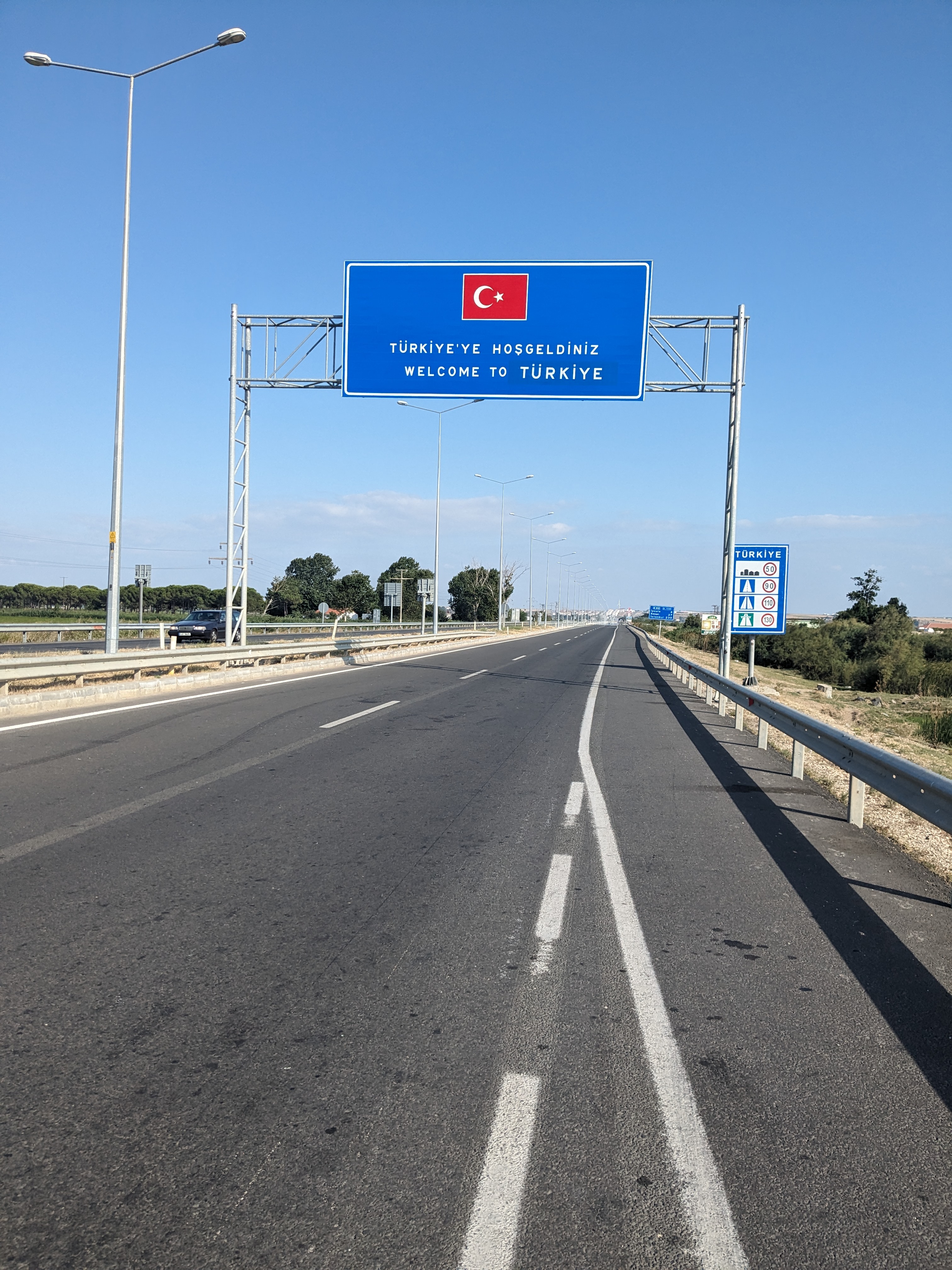
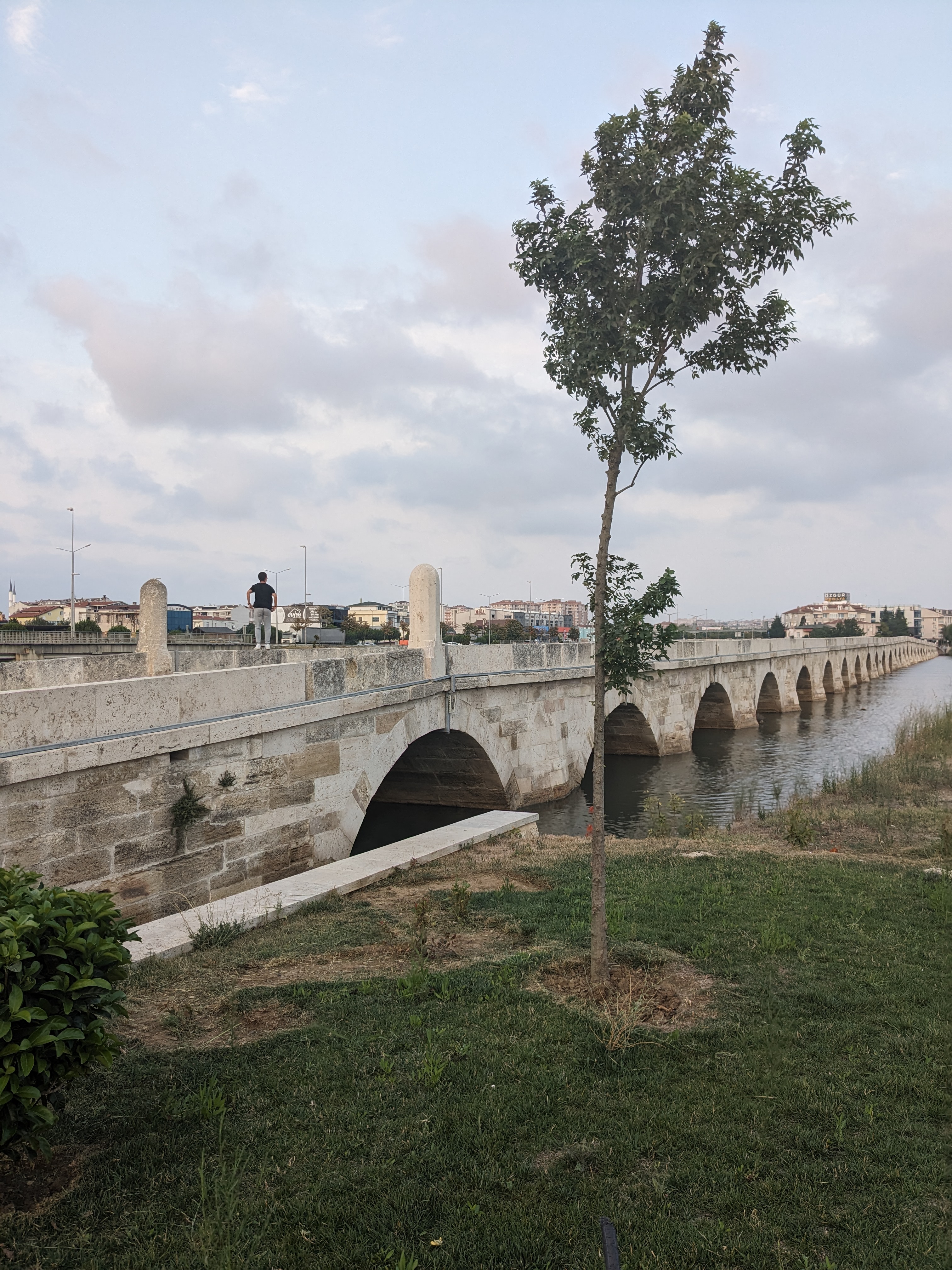
The Turkish border crossing carried a significant air of seriousness. The demarcation line was the Maritsa River, where Greek and Turkish armed guards stood watch on either side of the bridge. As I entered Turkey, my passport underwent thorough scrutiny. Three separate individuals examined it, with the final officer meticulously inspecting each stamp to trace my journey. This look quite a while but eventually my passport was returned, and I was officially in Turkey.

Though another day plagued by a persistent headwind, I managed to reach Kesan, where I sought refuge in a local park for the night. Interestingly, in Turkey, it seemed acceptable to camp in city parks and the café owner in the vicinity was very encouraging I camp there. This was a fantastic place to camp with toilets, drinking water and even WiFi for the night!

Continuing my journey, the subsequent day saw me cycling along a dual carriageway for the most part. Stopping in Tekirdag, I withdrew cash and visited the supermarket, where I was pleasantly surprised by the affordability of everything. A shop that would have set me back £15 in Greece now cost only £10.

That evening, I made my way to the beach in Silivri, with hopes of camping there for the night. However, my plans took an unexpected turn when I spoke to a worker at one of the beach huts. He cautioned against camping due to police patrols in the area. Nonetheless, I seized the opportunity for a refreshing swim before eventually ending up camping between some trees in a junction off the main road.

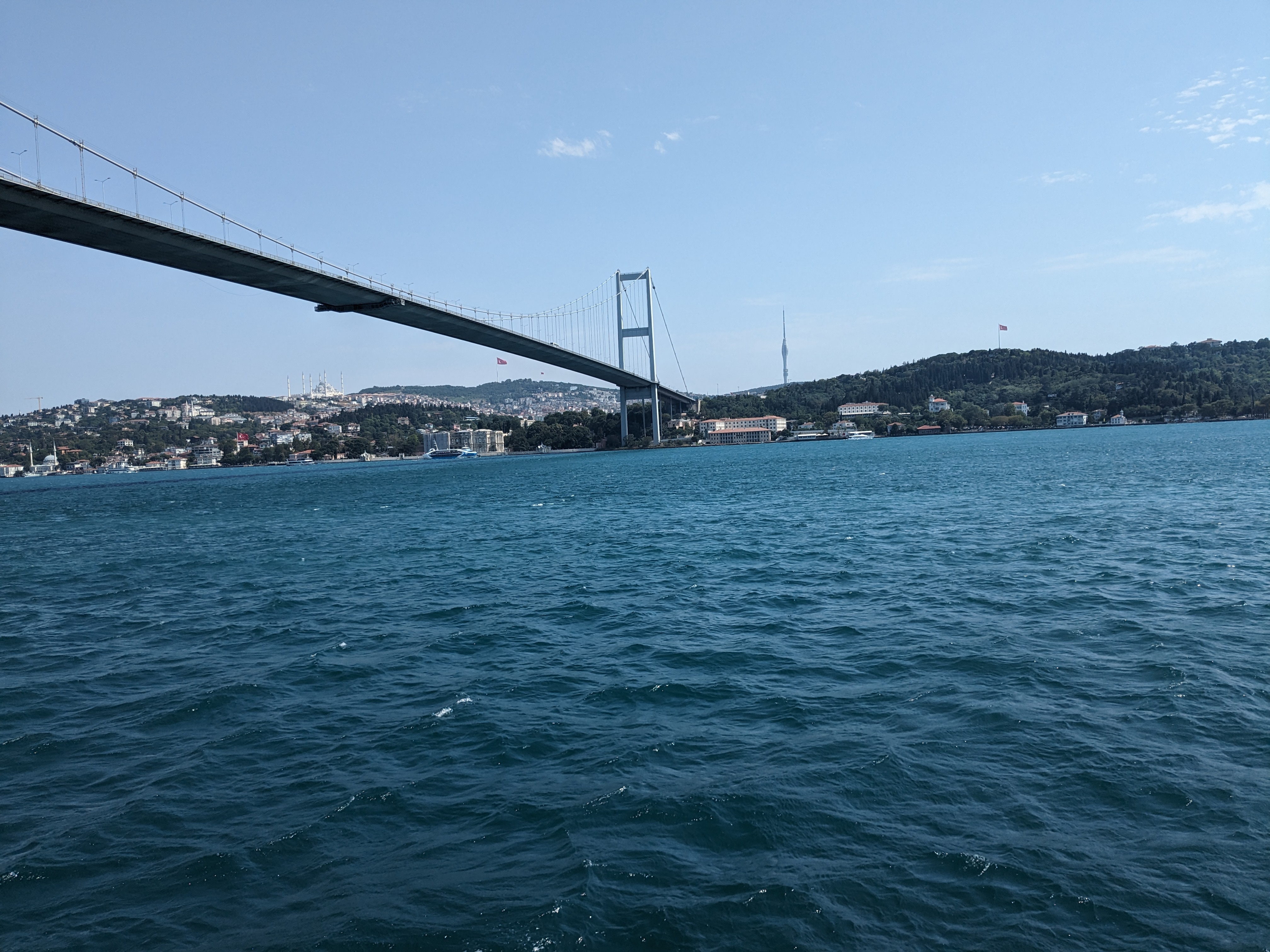
My goal for the following day was to reach Istanbul. I’d been warned by numerous sources that cycling into the city was a daunting prospect due to heavy traffic and drivers lacking consideration for cyclists. While some recommended taking a longer route through the hills to the north, following the Bosphorus Strait into the city, this would have added around 100 km to my journey. I opted to stick to the main roads, ready to divert if conditions became unbearable.

The roads were indeed congested, but the slow-moving traffic, primarily due to city centre congestion, made it manageable to cycle through. A driver even handed me a can of coke at one point out of his window! Eventually, I veered off the main roads and navigated my way into the old city, often tracing the tram lines.

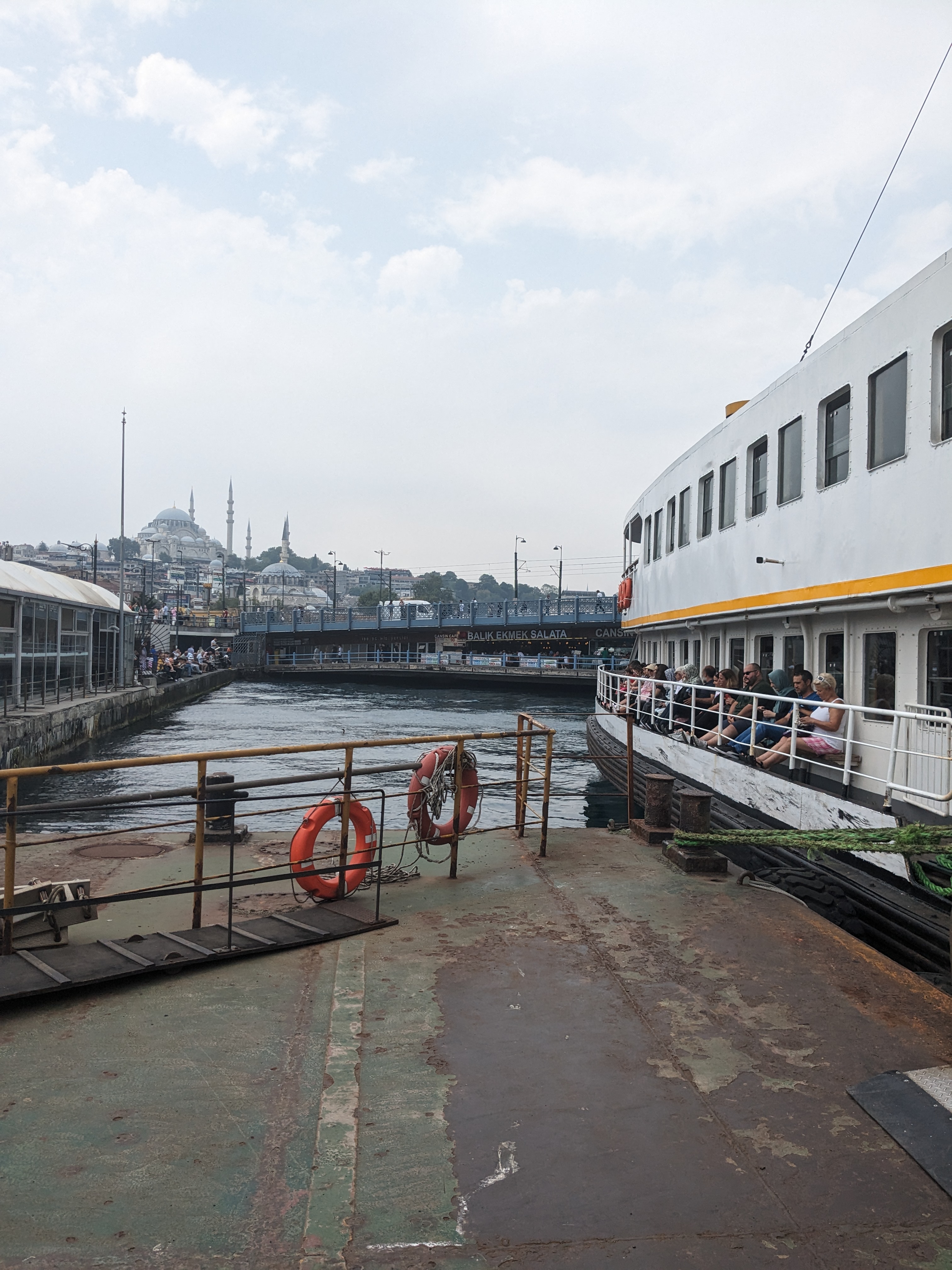
I then hopped on the ferry to cross the Bosphorus Strait. Once across, I reached the home of William, an American now residing in Istanbul. He warmly welcomed me, cooking me to a fantastic lunch. To my surprise, he entrusted me with the keys to his apartment, extending an open invitation to stay for as long as needed.

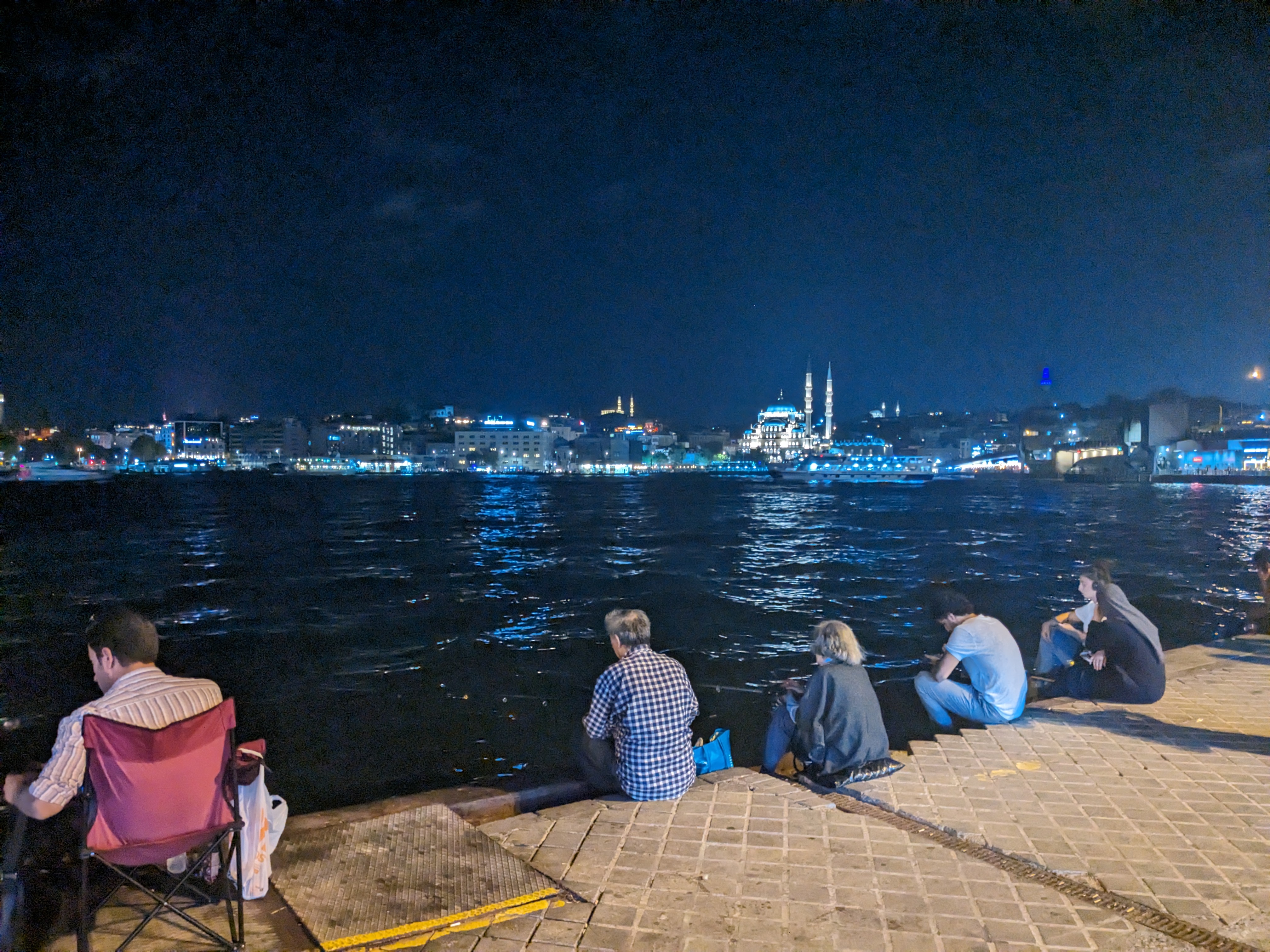
Venturing back to the European side of the city that evening, I explored the old town. Its charm was enhanced after dark, with bars and restaurants illuminating the surroundings.

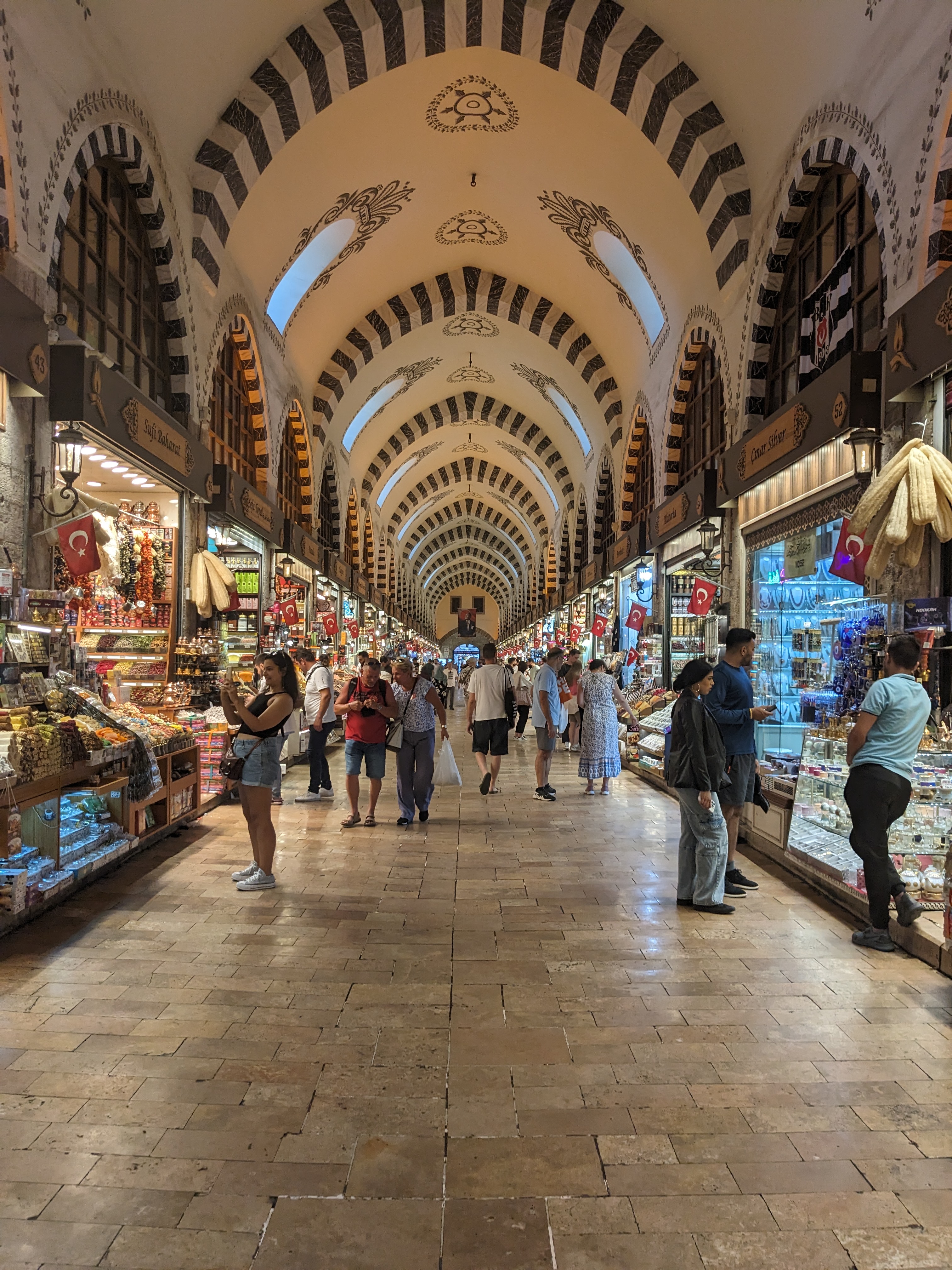
The following day, I embarked on an early exploration of the old city before the heat and crowds set in. It proved to be an enjoyable day, walking around unburdened by my bicycle. I also indulged in a boat ride up the Bosphorus Strait.

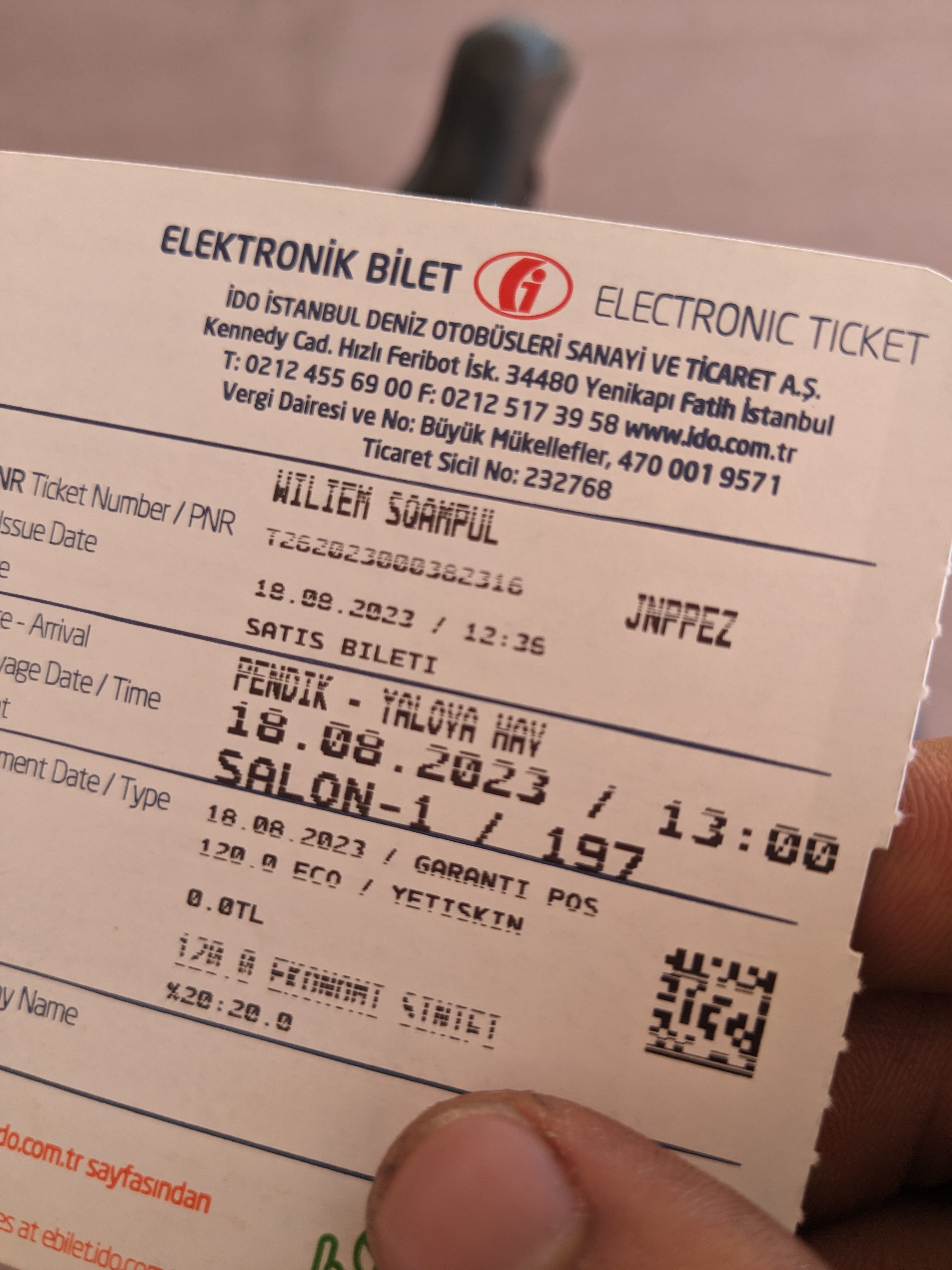
Despite the temptation to linger in Istanbul, I knew my journey must continue. Departing was smoother than my arrival, as I joined a 20 km coastal cycle path before taking a ferry to Yalova, avoiding some of the busier eastern roads. The hour long ferry only cost £4 and was very easy even if they didn’t quite get the name on my ticket right!

Istanbul left an indelible impression. Its ambiance was distinct from Western European cities, striking a balance between tranquility and chaos. After 37 days and 15 countries, I have now completed Europe. My route now directs me eastward into Asia, roughly tracing the path of the ancient Silk Road.

Greece

When I looked at the map, I realized that finding a suitable camping spot for my first night in Greece would be a challenge. The landscape seemed to be primarily farmland, and my attempt to camp by an abandoned building was thwarted by a group of barking sheepdogs. I hurriedly left the scene to avoid the shepherd’s intervention.

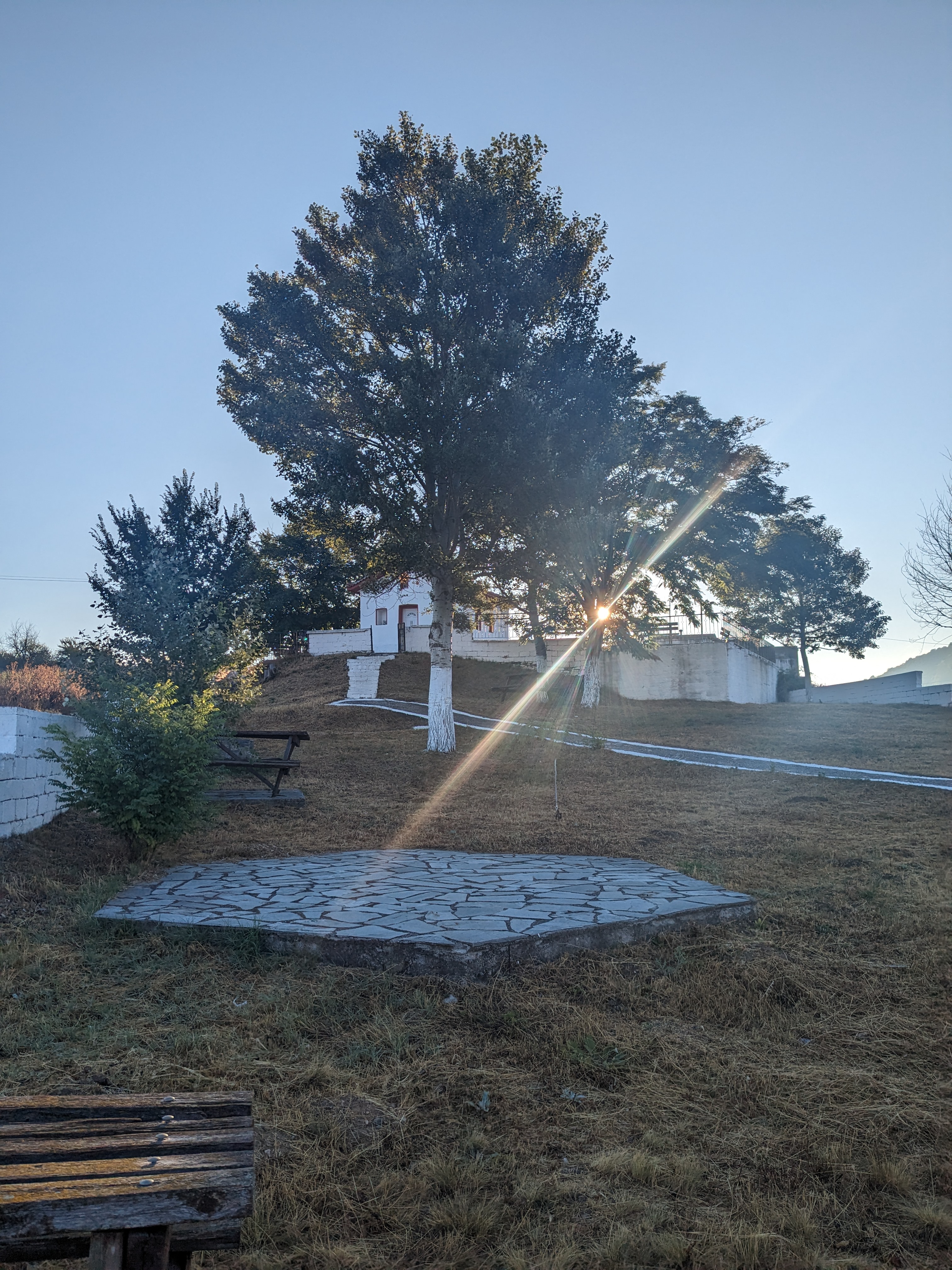
About an hour later, I encountered Lazarus, who recognised my predicament and suggested I camp in the churchyard. Although initially hesitant, he assured me it was safe and that the walled garden would shield me from wild dogs, though perhaps not from the bears which had been spotted in the village that week!

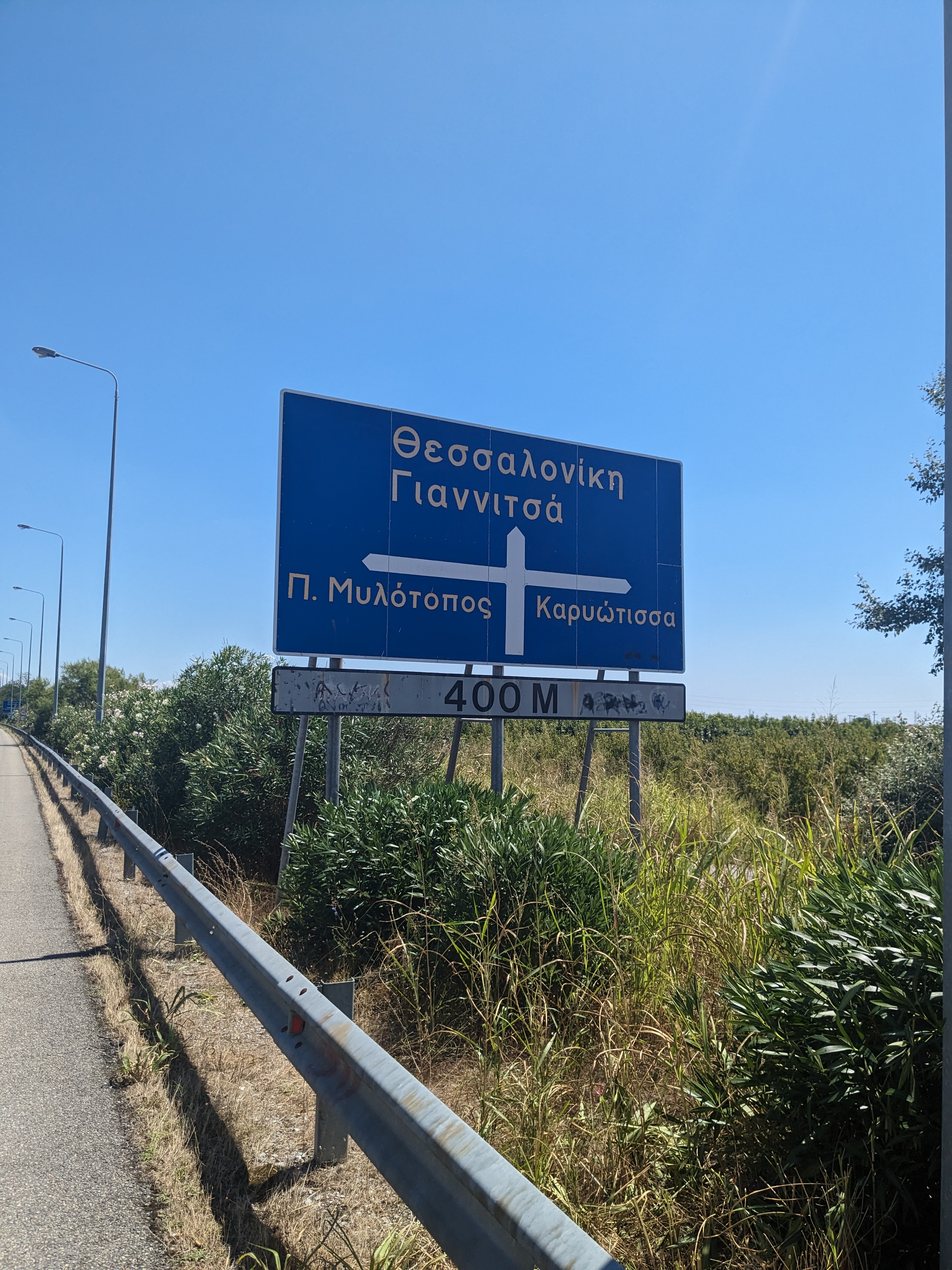
The following day, I embarked on an extensive cycle toward Thessaloniki. Covering 140km, my goal was simply to reach the coast, as the monotony of cycling through farmland had started to take its toll.

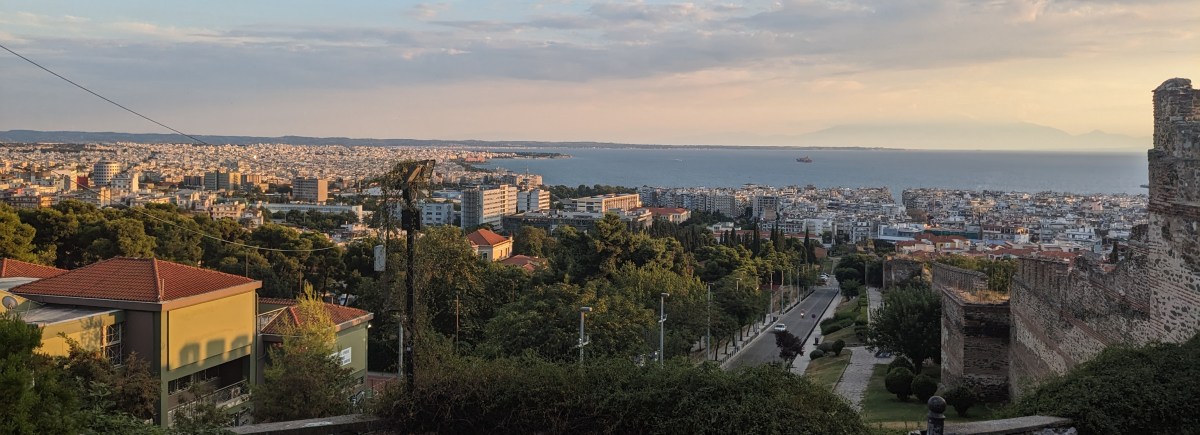
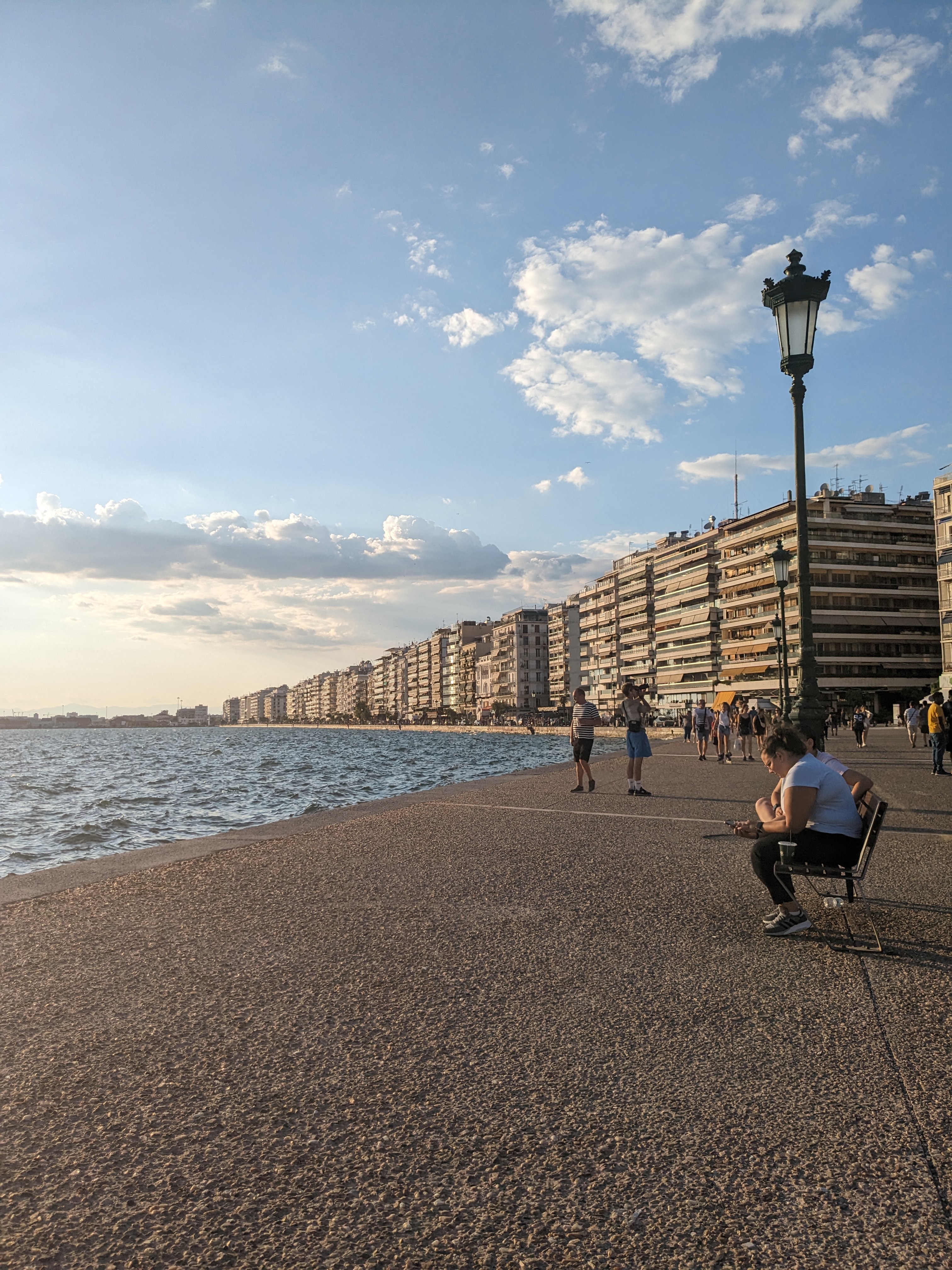
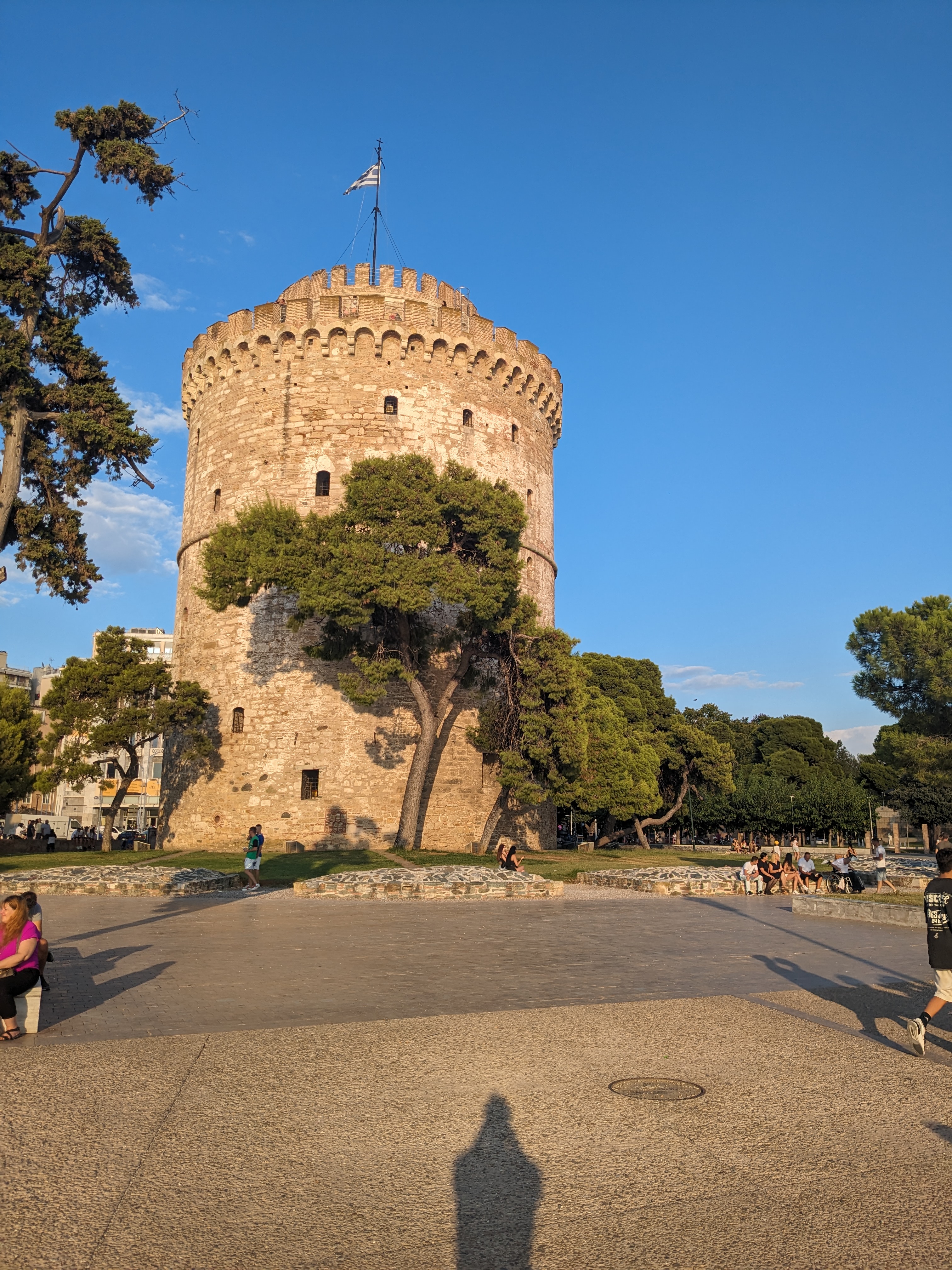
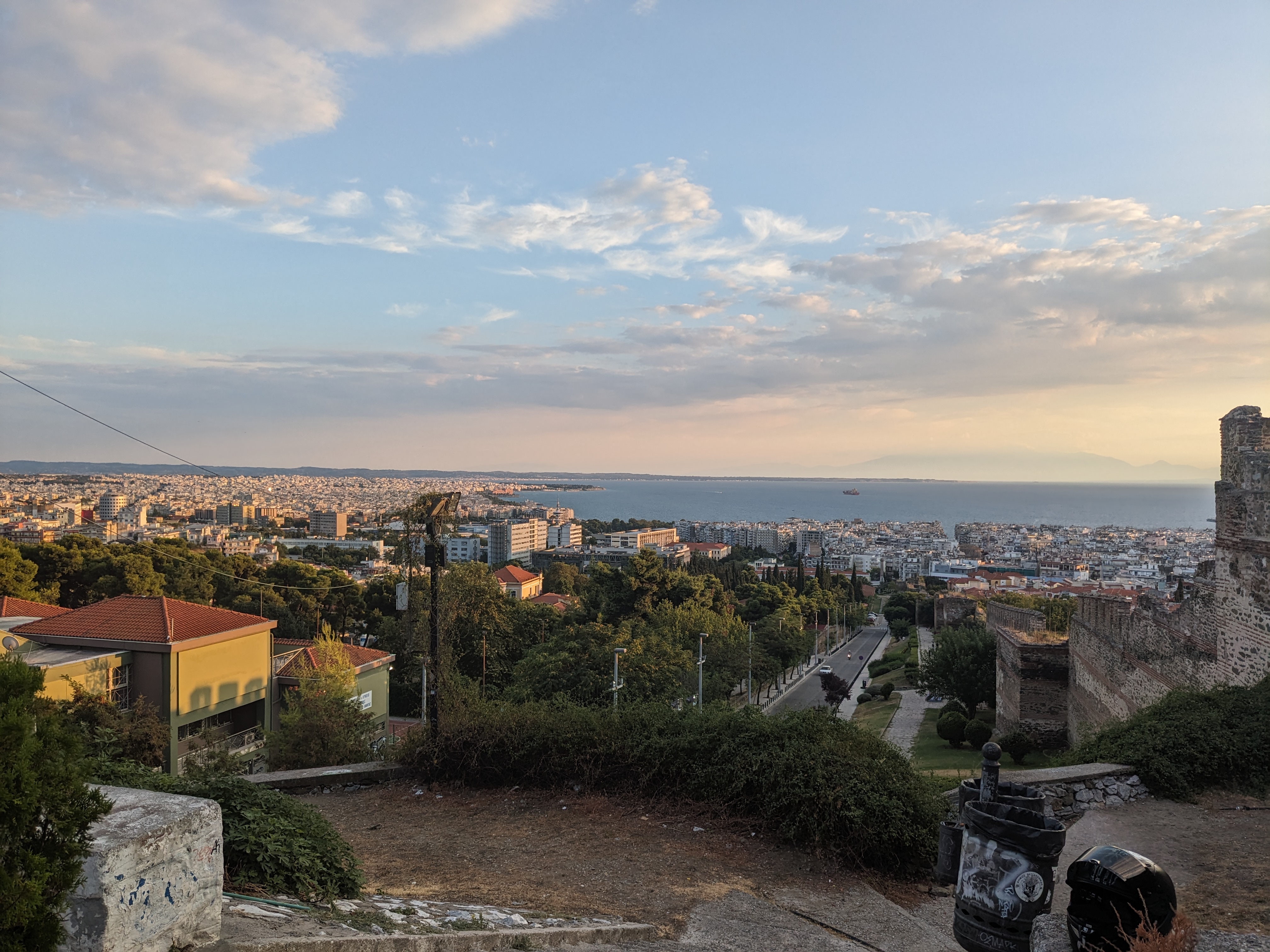
Thessaloniki proved to be a busy touristy city with a large harbour but nowhere really to swim. That evening, I peddled into the nearby hills to set up camp and enjoyed a view overlooking the city.

On the third day, I joined a road that would essentially lead me to Turkey. The towns along the way boasted bustling beaches with rows of umbrellas and vendors selling shade, which made the cycling somewhat mundane. Nonetheless, the main road facilitated efficient progress. That night, I ventured to a beach for dinner and a swim, hoping to camp there if it was quiet enough. There were a few tents set up already on the beach and when enquiring with one of the campers if I could sleep there for free he said it should be fine.

The following day’s cycling proved strenuous. Battling a headwind from the start, I knew it would only intensify as the day progressed. Since my route headed east all day, the relentless wind gave me no respite, and certain stretches became particularly grueling, especially when the road became exposed running alongside a lake.

That evening posed another camping challenge with little wilderness on route. I ended up finding refuge in some bushes behind a local park, enduring the persistent barking of dogs – a sound I had grown accustomed to. Throughout Greece I’ve had many dogs chasing me and barking relentlessly at me as I’ve cycled past them.

Forming an opinion about Greece has proven tricky. While I’ve cherished moments on picturesque sandy beaches, there have also been instances where the monotonous stretches of road, lasting up to 50 km, have tempted me to try and hitchhike. I’ve noticed that Greece tends to be pricier than the preceding countries, including Croatia. I’m eagerly anticipating the change as I transition into Turkey, and I’ve also made the decision to extend my journey by an additional 2,000 km. I’ll be continuing through Istanbul and heading towards Tbilisi, Georgia, before finally flying to Aktau, Kazakhstan.

Albania and North Macedonia

Crossing into Albania marked another straightforward border encounter. The Montenegrin police scanned my passport on one side, then threw it over the desk to their Albanian counterparts, who glanced at it for a mere second before returning it to me.

Positive remarks about Albania had been a common theme, with many individuals mentioning the kindness and hospitality of its people, though warning of challenging road conditions and assertive drivers.

Initially, I intended to acquire an Albanian SIM card, anticipating a four-day stay in the country. However, after spending an hour in an Albanian Vodafone store, we couldn’t get it to work with my phone. This was not a major setback, as in Albania it was possible to get some Wi-Fi and electricity while enjoying a 50p coffee.

The north of the country was mostly rural farms and small villages. A local assured me that I could pretty much camp anywhere without issue. Thus, on my first night, I set up camp in a lay-by beside a tranquil road.

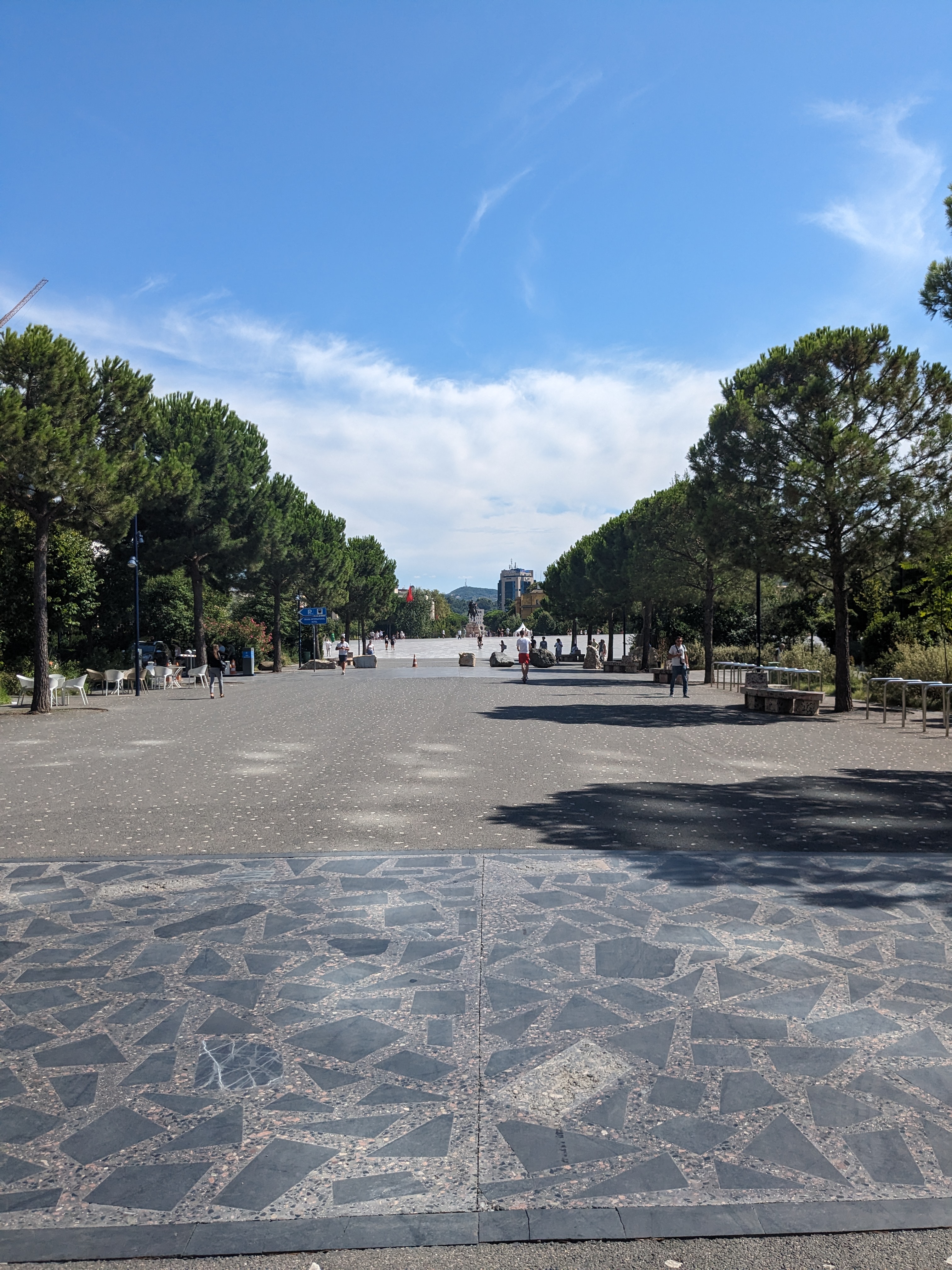
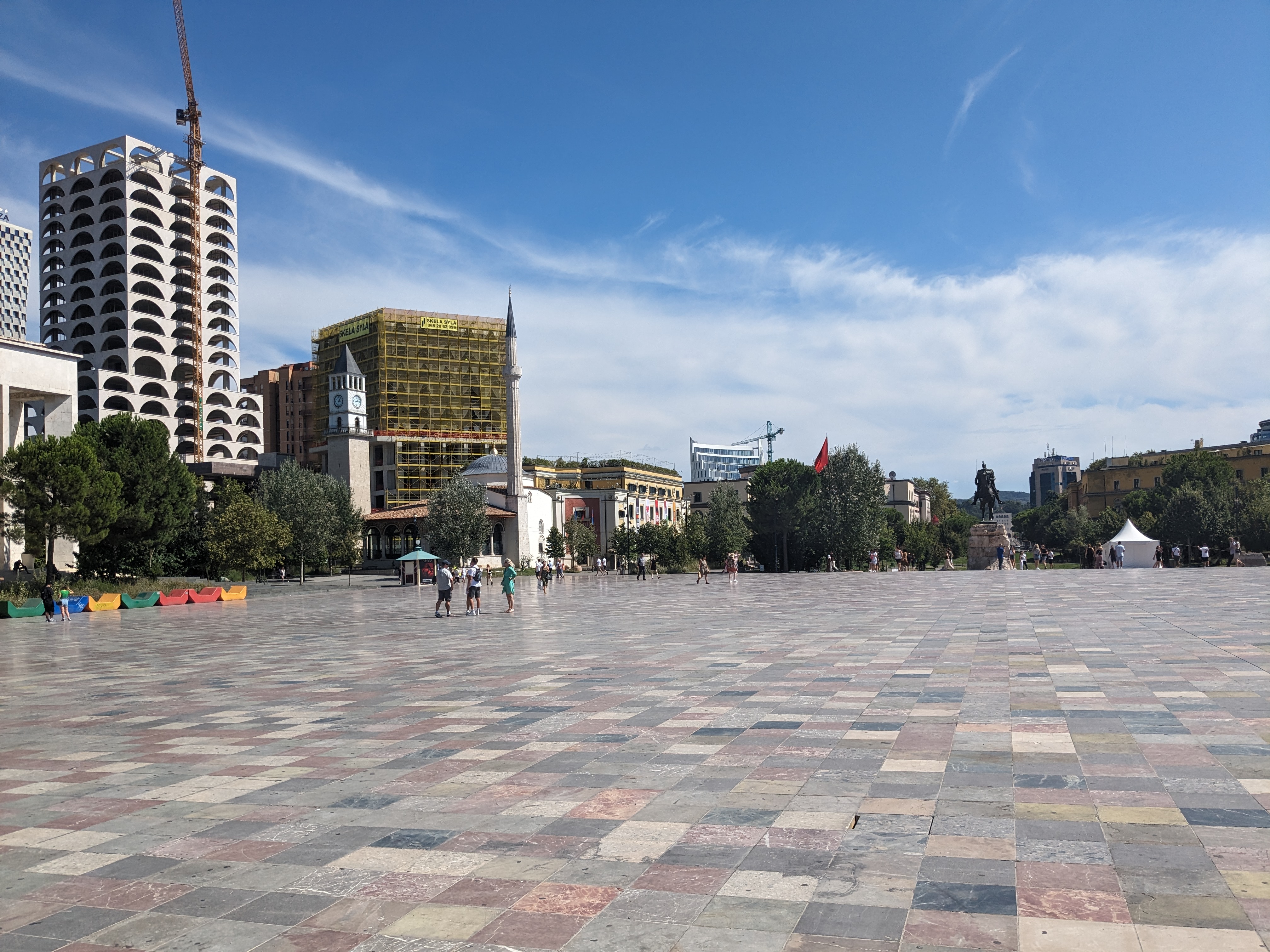
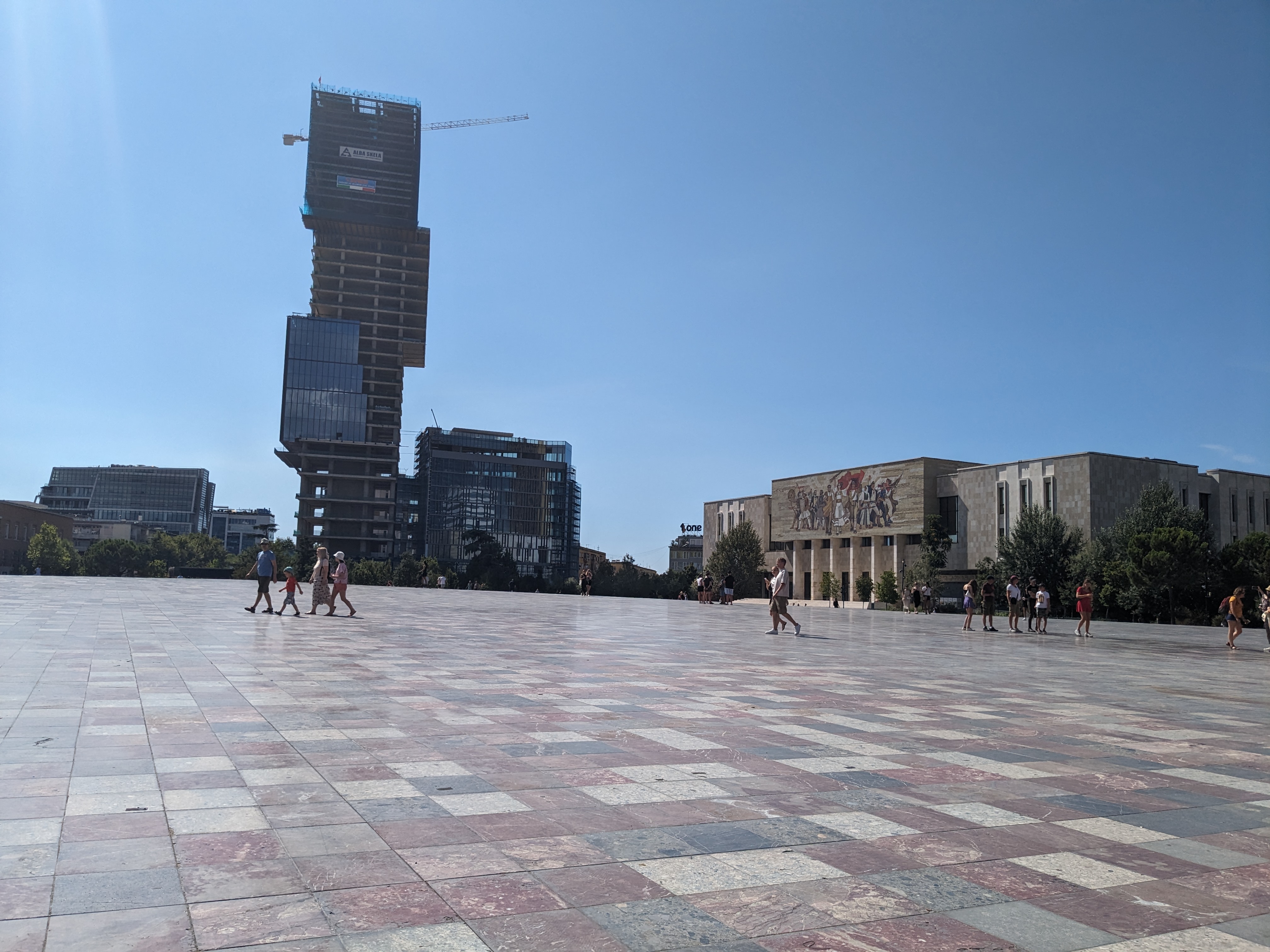
My second day in Albania lead me to the capital city, Tirana. Cycling into the city was a whirlwind of chaotic traffic and assertive drivers. Yet, despite the frenetic atmosphere, cycling through was good fun and I always felt safe, even when I inadvertently ended up on the motorway.

In Tirana, I rendezvoused with Adriatik and his two brothers. Adriatik, an avid cyclist and friend of a friend of my mother’s cousin Phil, had generously agreed to host me during my stay. After a traditional Albanian lunch of chicken and rice with soup outside his brother’s jewellery shop, I headed to his brother’s apartment for a refreshing shower. That evening, Adriatik’s brother treated me to a delightful meal, followed by a visit to Adriatik’s mother-in-law’s dessert shop where we gathered around a table chatting late into the night.

It was tough leaving Tirana and the friends I’d made there the following morning. I felt very lucky to have spent my time in the city with some wonderful people. As I left I headed eastward. This meant I would not get to explore the scenic south of the country, however this was the more direct route towards Istanbul and would allow me to visit North Macedonia.

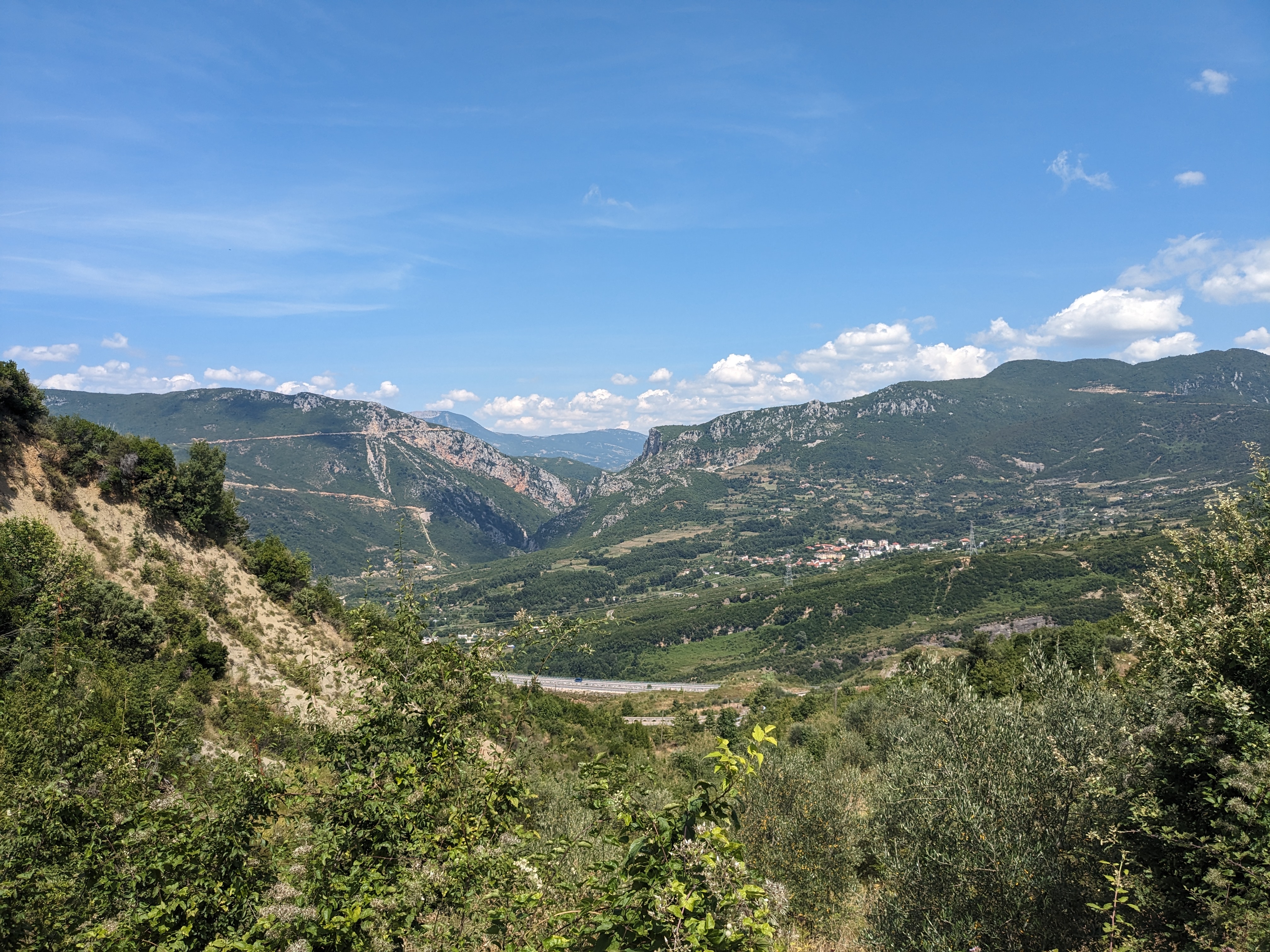
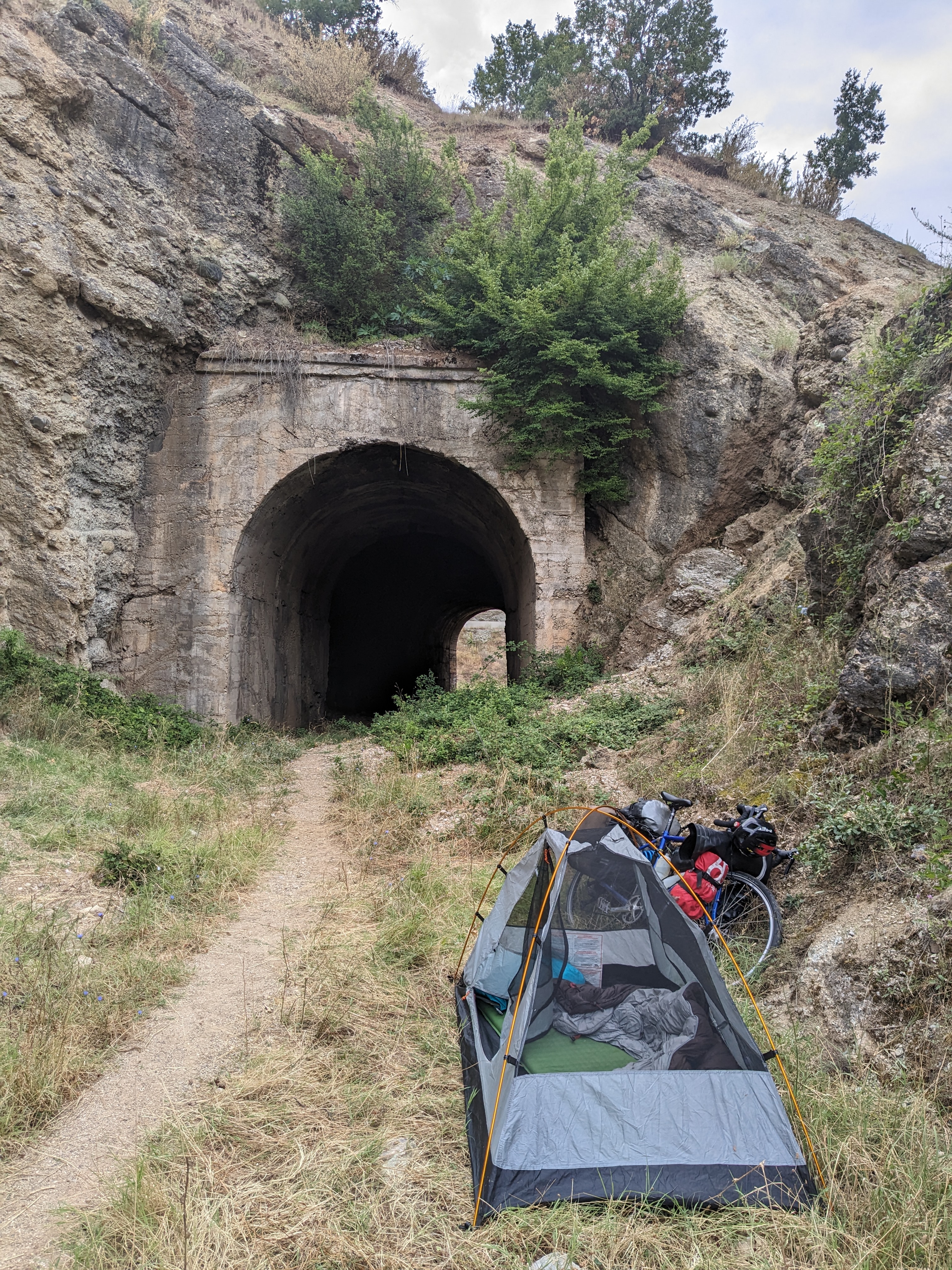
The route towards North Macedonia proved demanding, with significant climbs dotting the landscape. Alongside the road, an abandoned railway line intrigued me, tunneling through mountains and spanning valleys with impressive viaducts. As I gazed at its level path, I couldn’t help but wish it was suitable for cycling. That night, I found a great camping spot next to it.

The following morning, I was awakened by the sound of a cowbell and a man leading his cow past my tent. He seemed unperturbed by my presence. I set off for Pogradec, spending my remaining Albanian Lek before crossing into North Macedonia.

Albania proved to be a delightful country to traverse. The friendliness of its people led to numerous conversations, and while the roads were no worse than those in the UK, some drainage holes posed a challenge.

In North Macedonia, tourists were required to register with the police within 24 hours of arrival, often done through accommodation or at the police station. Preferring to avoid complications due to my wild camping, I opted to spend only a day in the country.

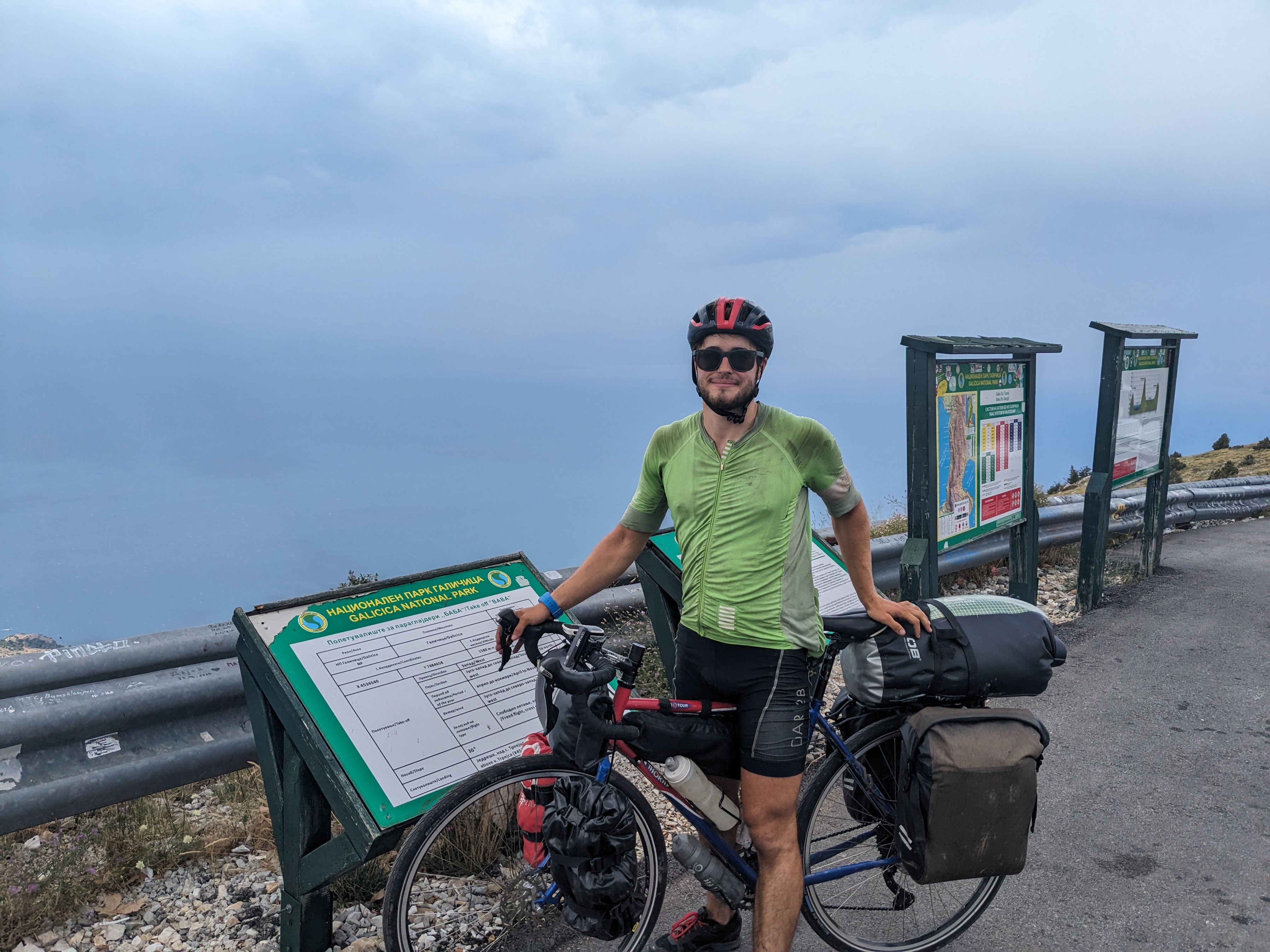
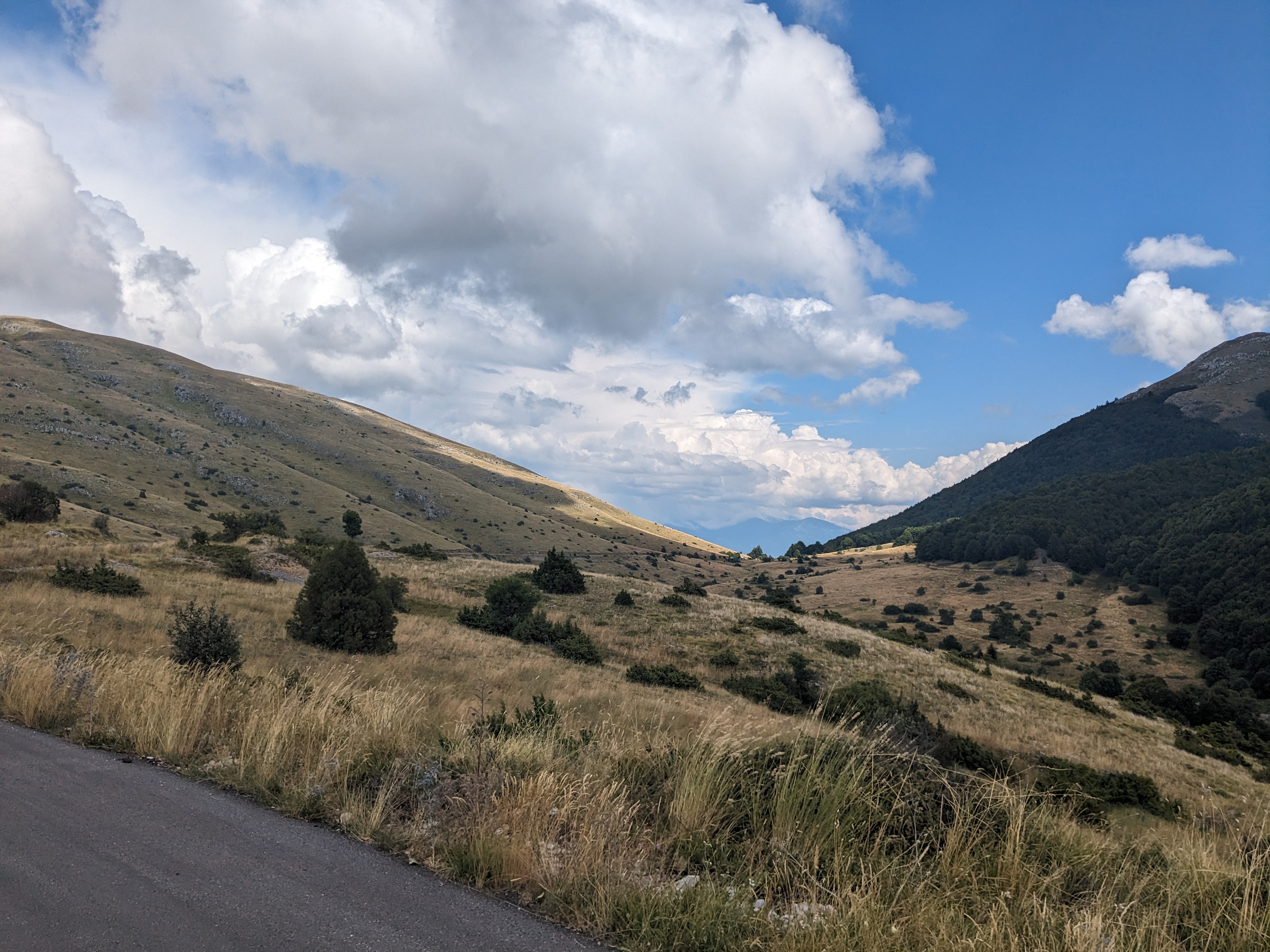
The journey into North Macedonia involved a long climb of 690 meters, taking over an hour. Unfortunately, the clouded sky offered no panoramic view at the summit, though the subsequent descent was thoroughly enjoyable.

I directed myself towards Bitola, the country’s second-largest city. A man approached me in the city center, attempting to convince me to stay at his hostel. However, upon learning of my intention to head for Greece that night, he advised me to “enjoy it while it’s cheap” before cycling away. I heeded his counsel, stocking up on supplies before proceeding to the Greek border.