West Laos

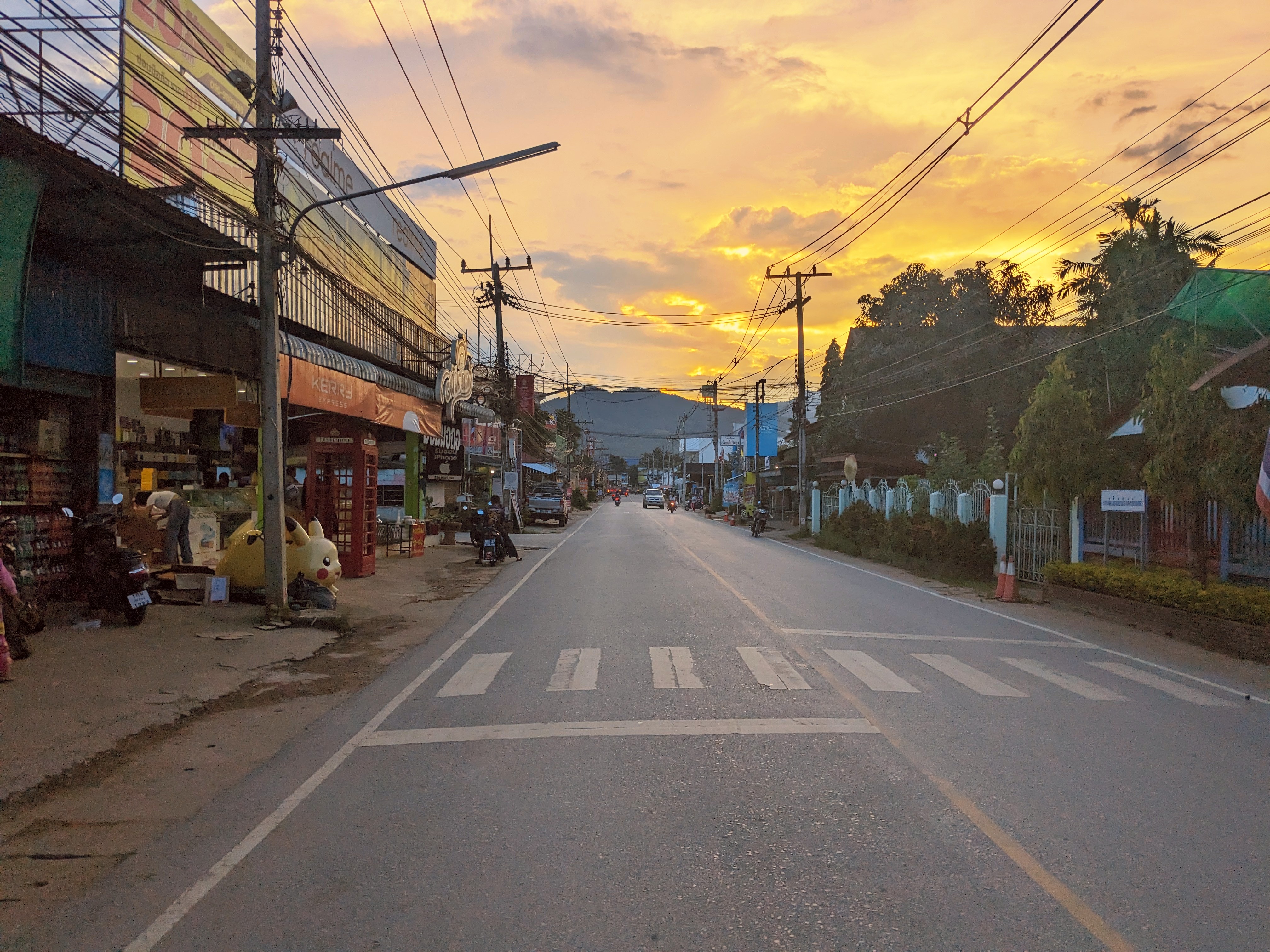
Crossing into Laos proved more challenging than expected. After leaving Thailand, I couldn’t cycle over the Thai-Lao Friendship Bridge No.4 and had to pay for a bus, a short 5-minute journey that involved a 30-minute wait for enough people to fill the bus up. At Laos passport control, despite completing the online forms for the eVisa and paying the fee, I had to fill in a similar form again. The official didn’t bother reading it, and it was pretty illegible anyway due to my poor handwriting from not touching a pen in 4 months. After stamping my passport and adding the visa, he then attempted to charge $1 for the stamp. I’d heard reports that the border officials often try to get extra money from tourists and it’s almost become a game for all the cyclists to kick up a fuss and dodge paying despite it being such a small amount. Therefore, I pretended I didn’t understand and upon reaching for my passport, he handed it over. Then after it got checked again, I entered Laos.

In the first town, I withdrew money from the bank and tried to get a SIM card. For £4, I could get 30GB of data, but the process was very prolonged. The shop assistent had to record all my passport details and was understandably struggling to use the QWERTY keyboard as he wasn’t used to the Latin alphabet. He also seemed very confused that my country was United Kingdom dispite me having a British passport.

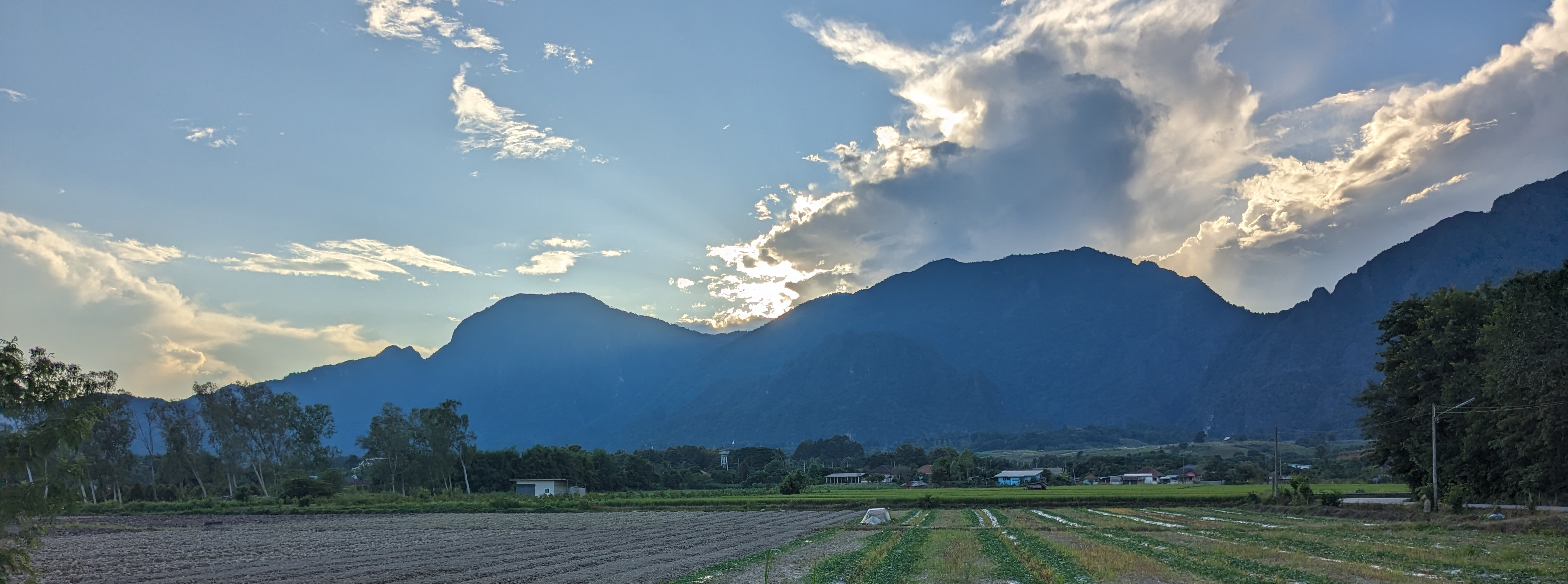
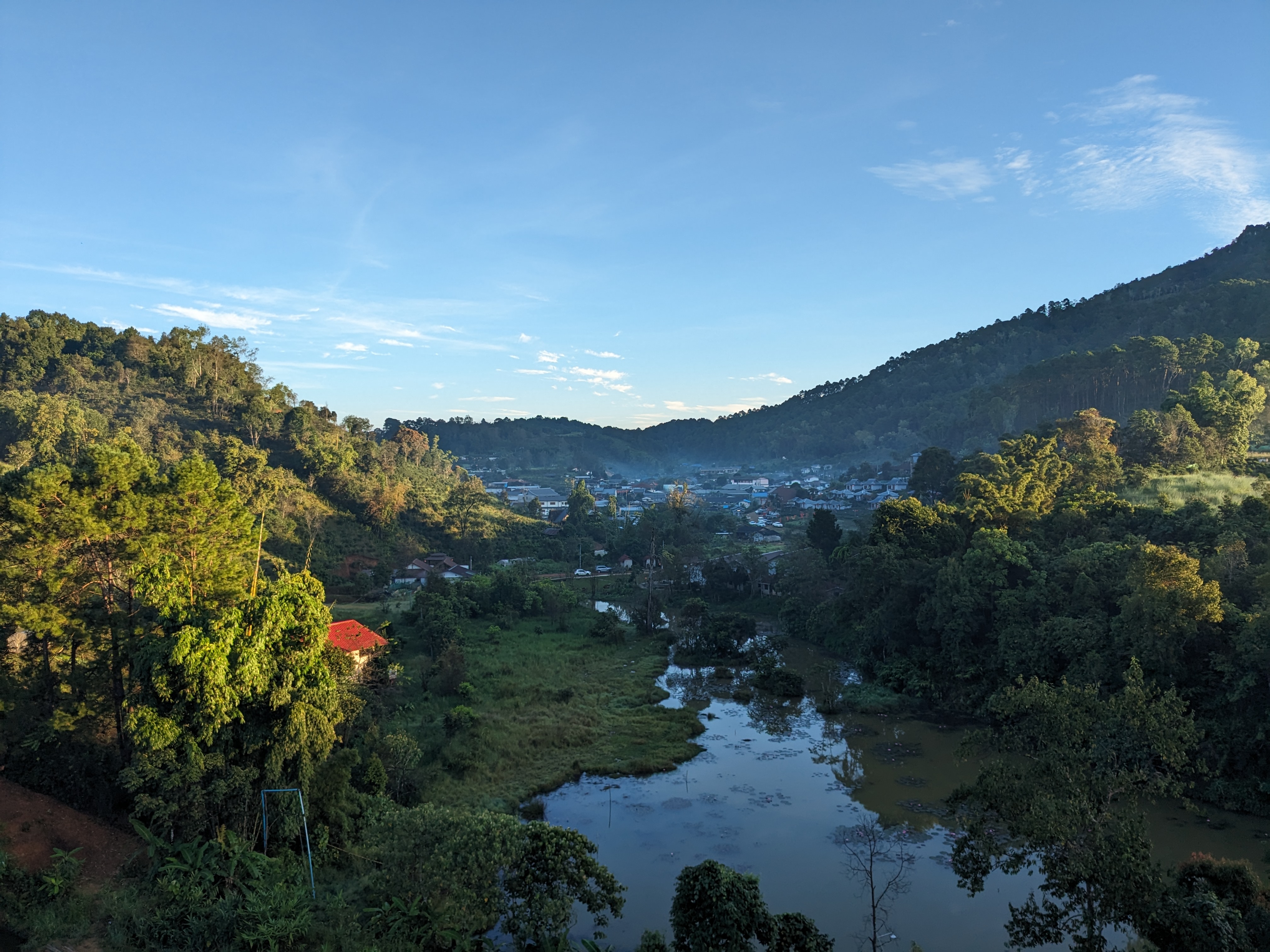
Finally, I got moving again and my first destination in Laos was Luang Prabang. I decided to take the mountainous route over the longer main road to get there. Passing through farmland on the first night, I asked some farmers if I could camp in their shelter. They agreed, but it felt like they just wanted to get rid of me and resume their dinner. That night, I witnessed a stunning sunset and was grateful for the shelter during a huge lightning storm.
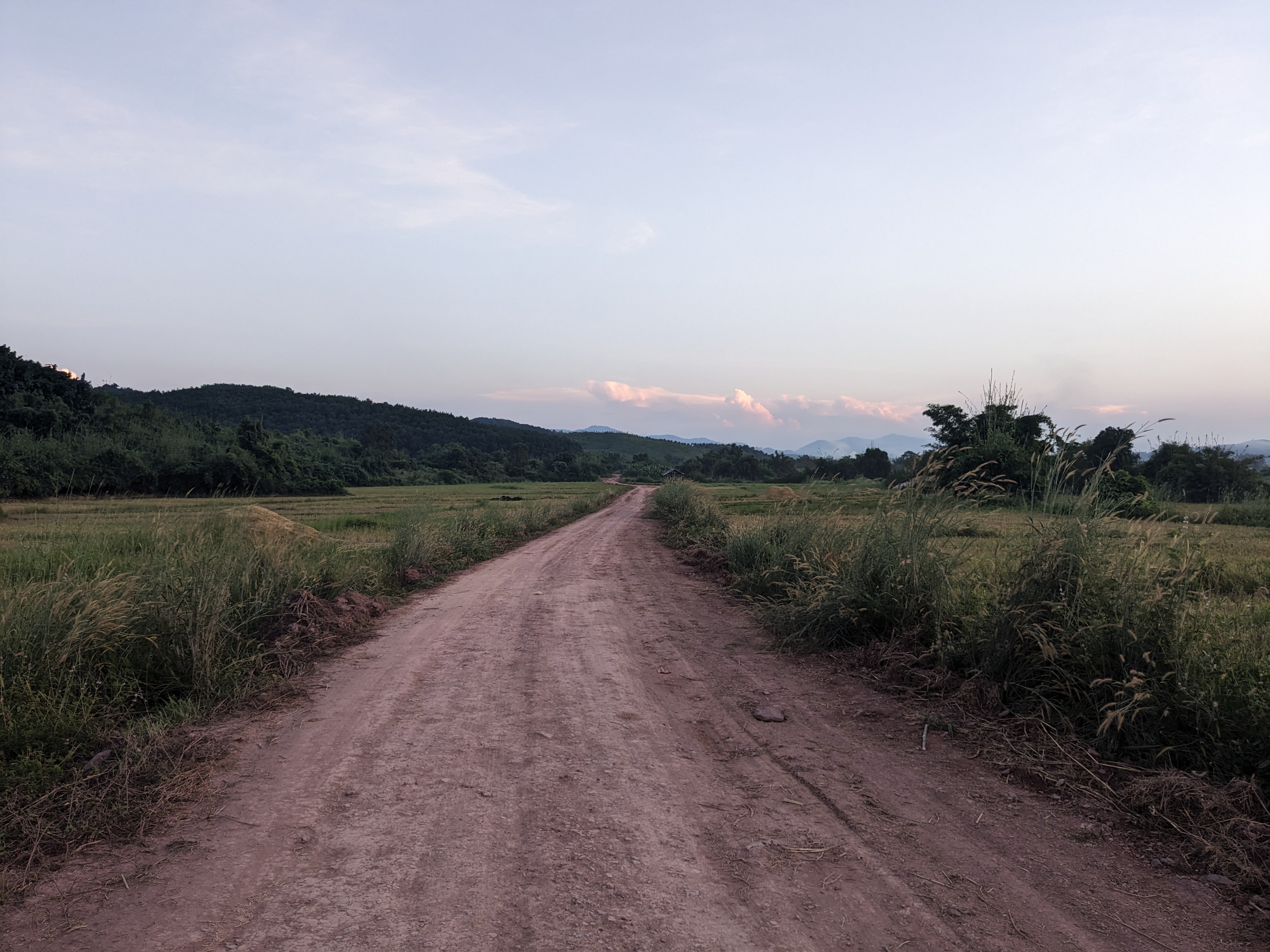
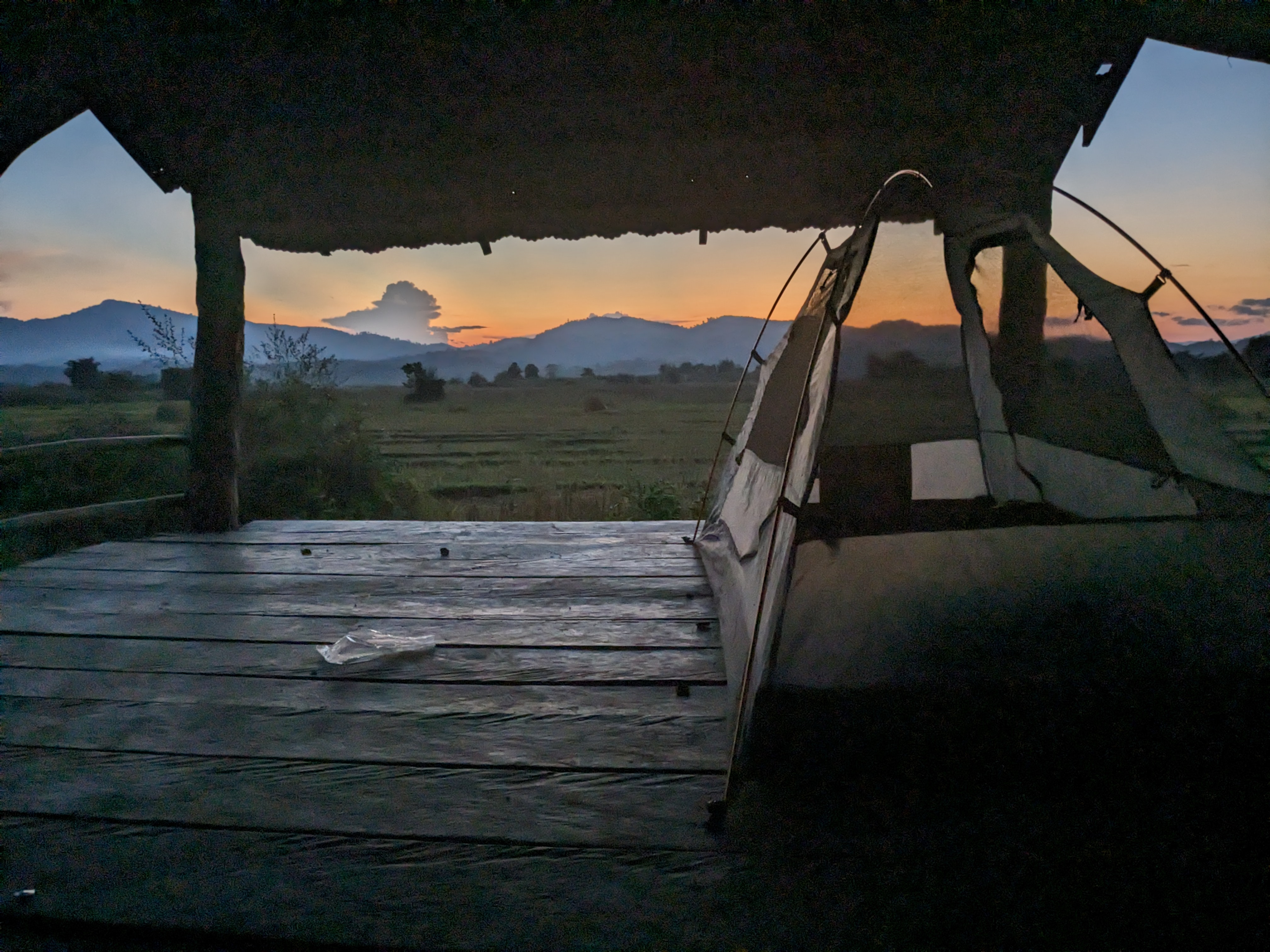
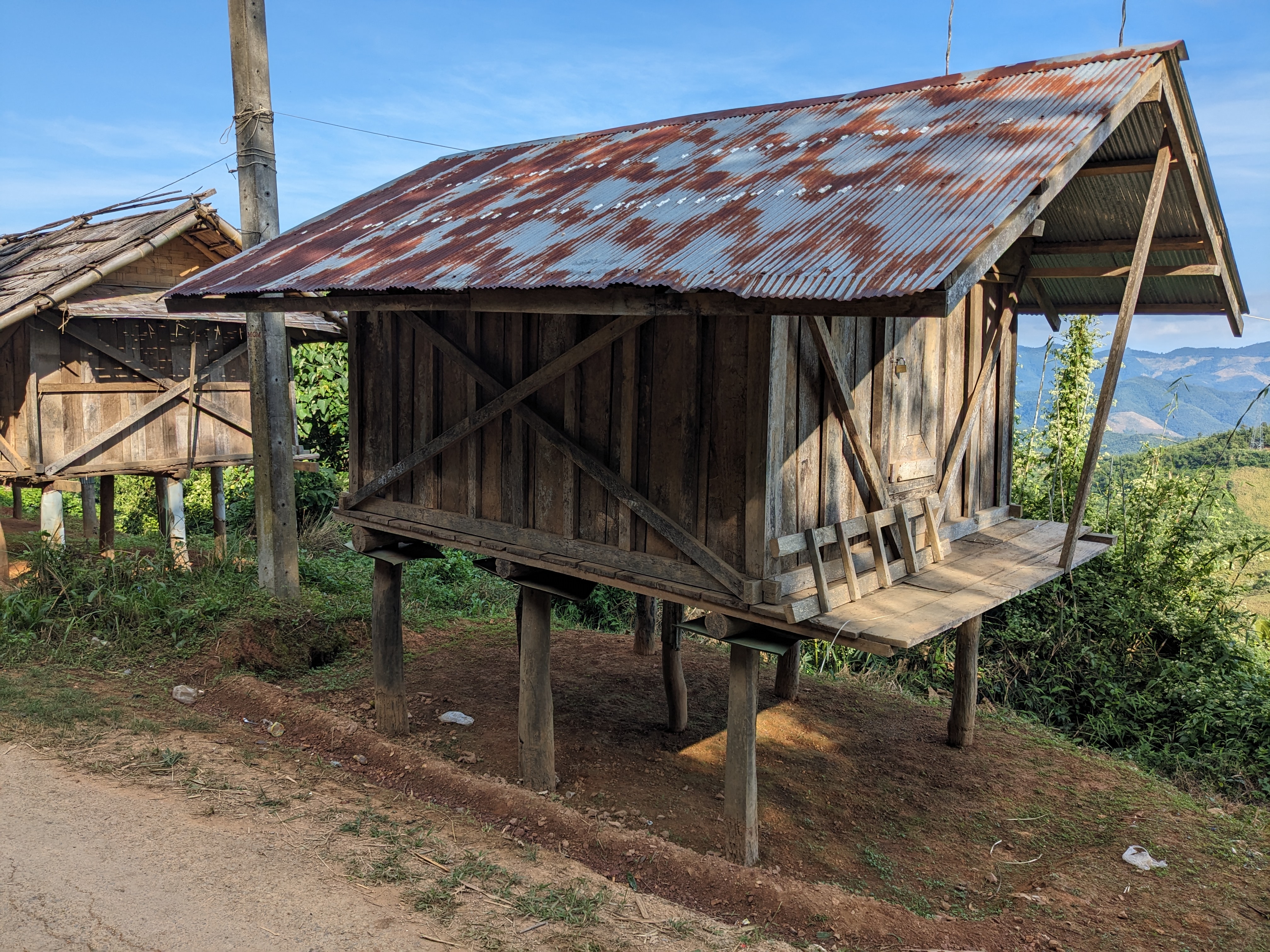
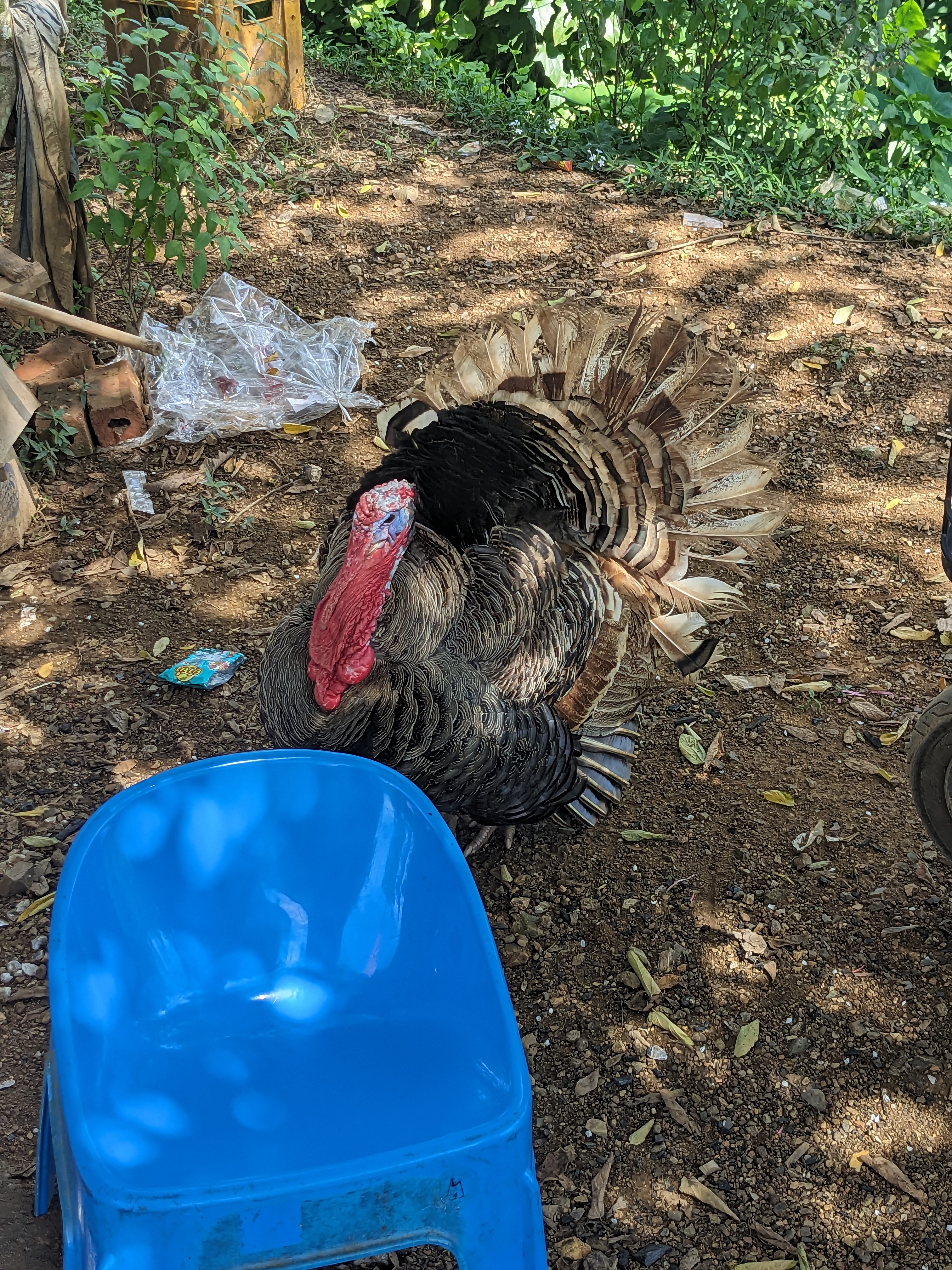
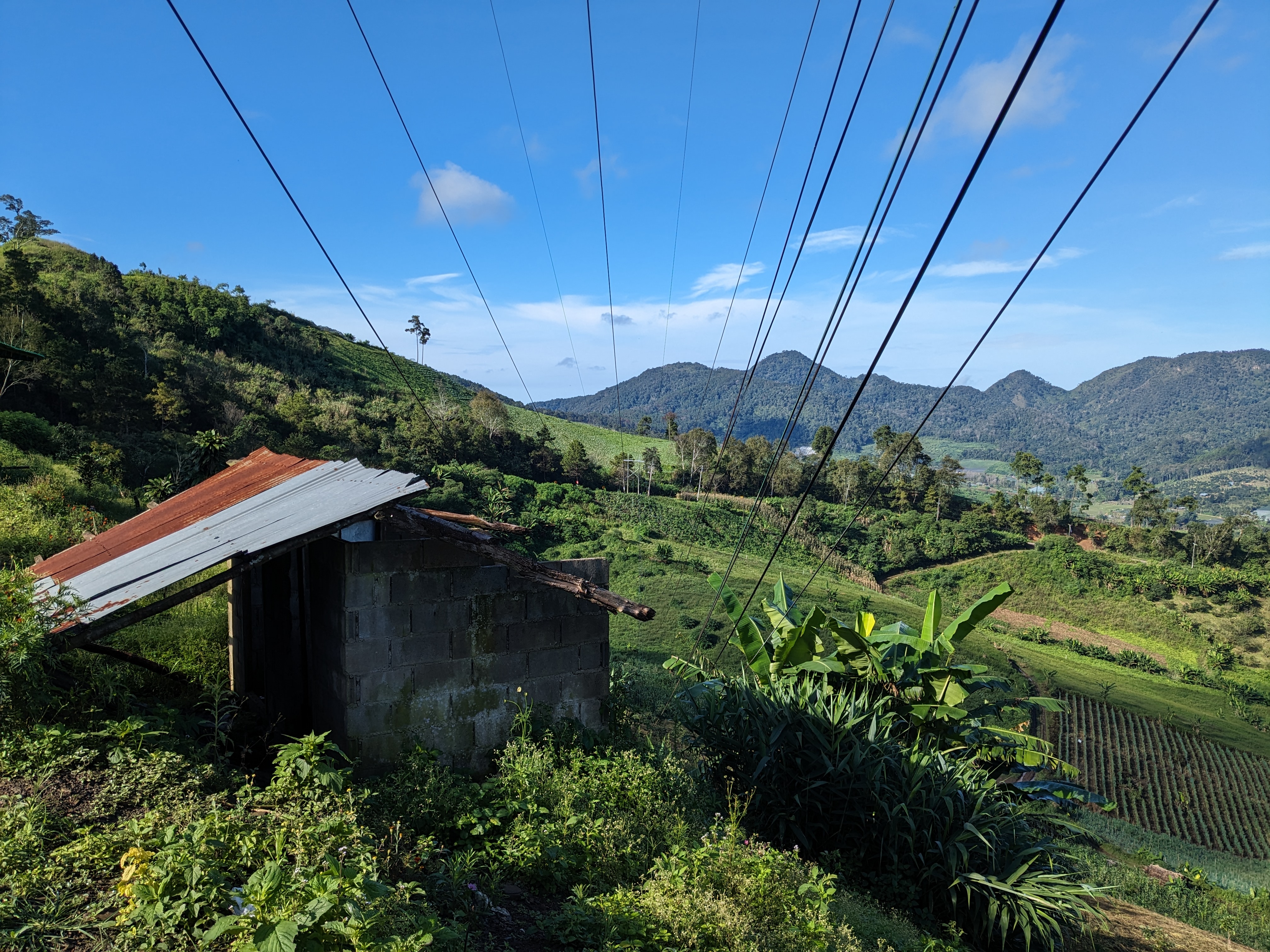
The next day took me deeper into the mountains, where the road started to deteriorate. In each village a crowd would gather whenever I stopped, with both children and adults staring curiously at me. This felt very strange as they wouldn’t say anything or acknowledge me but just stare. Laos has felt less developed than Thailand, marked by many houses in the villages not having electricity or water. Chickens, pigs and occasionally even Turkeys are often roaming freely in villages getting fattened up on scraps of food.

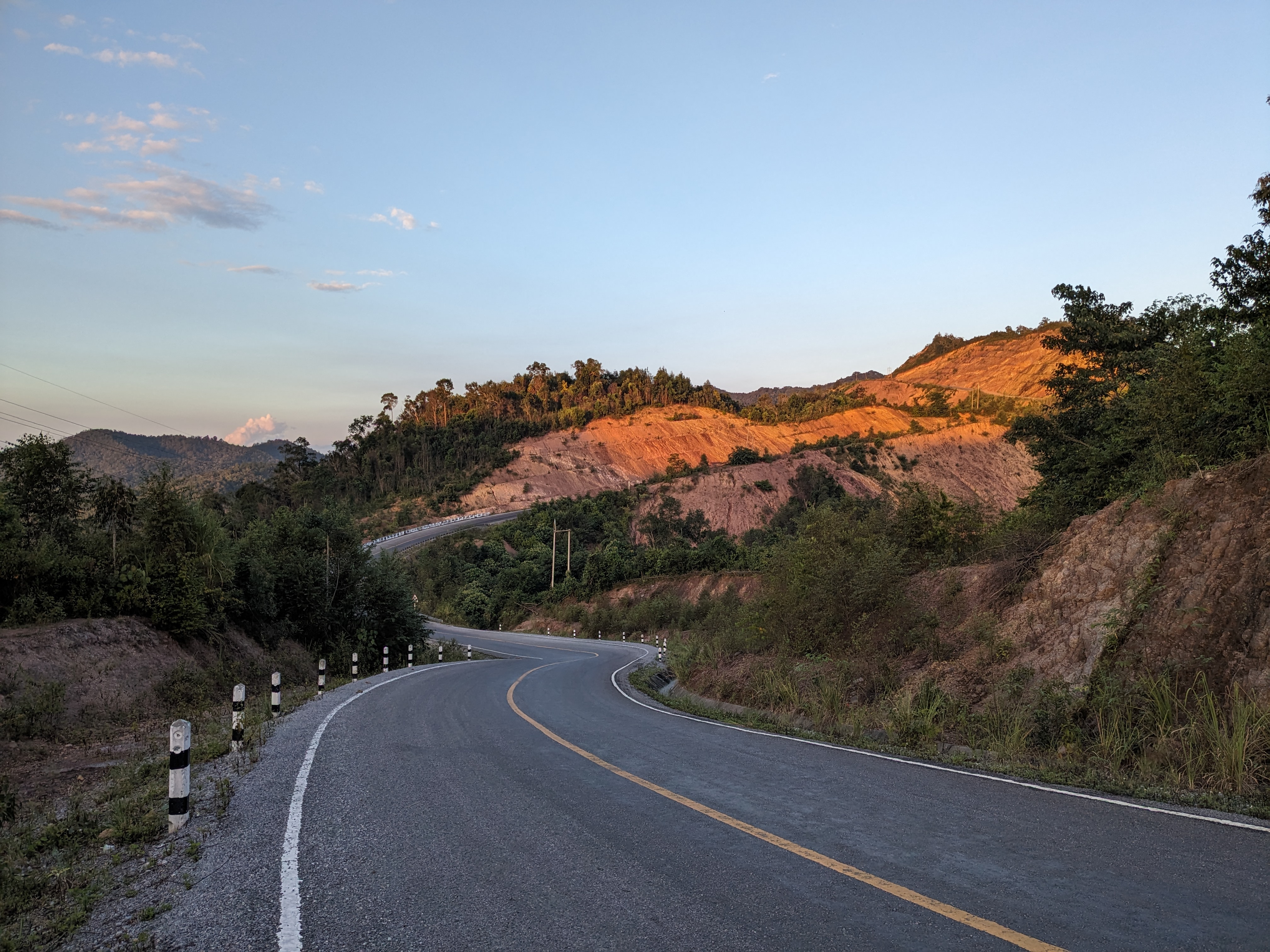
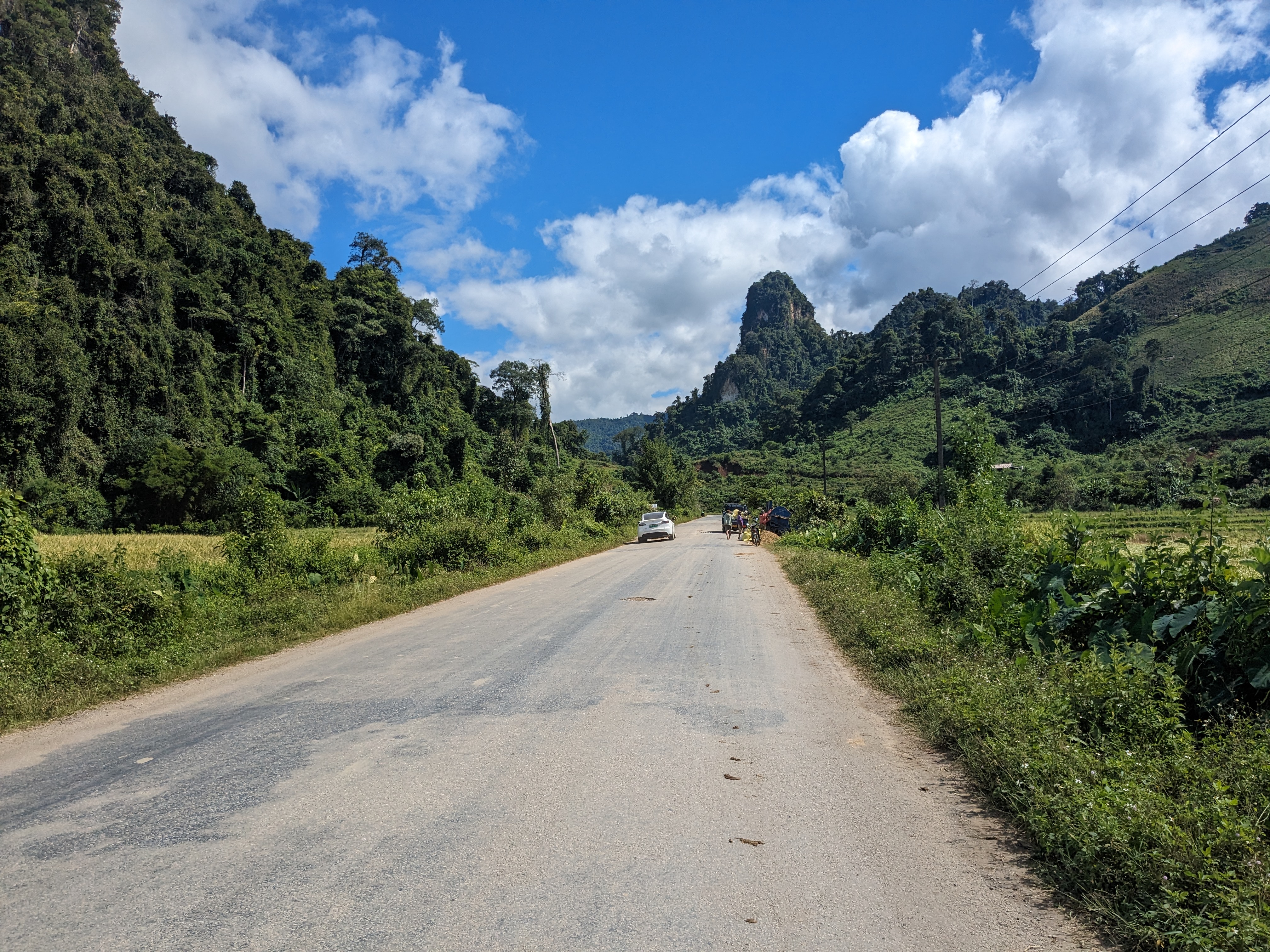
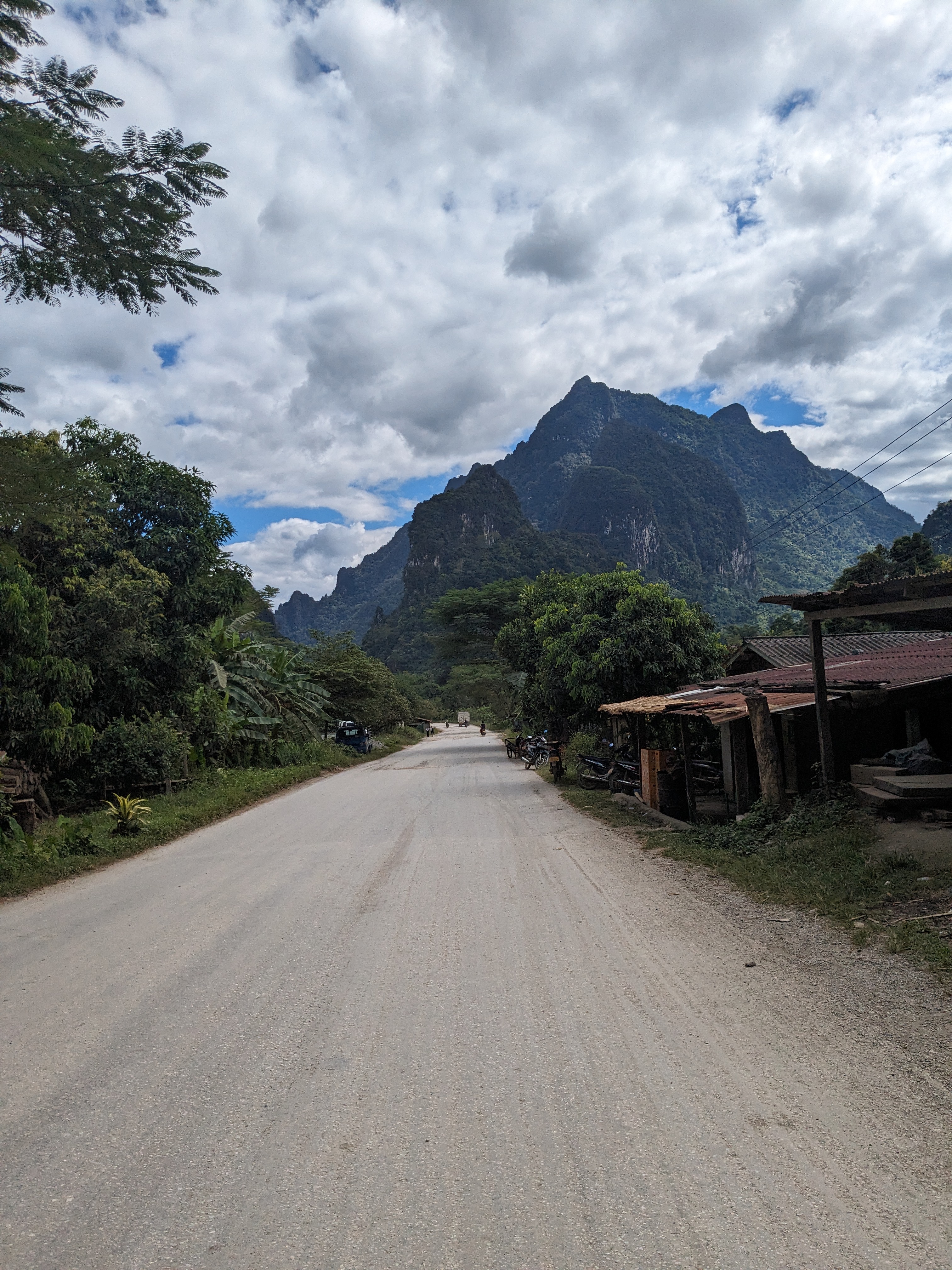
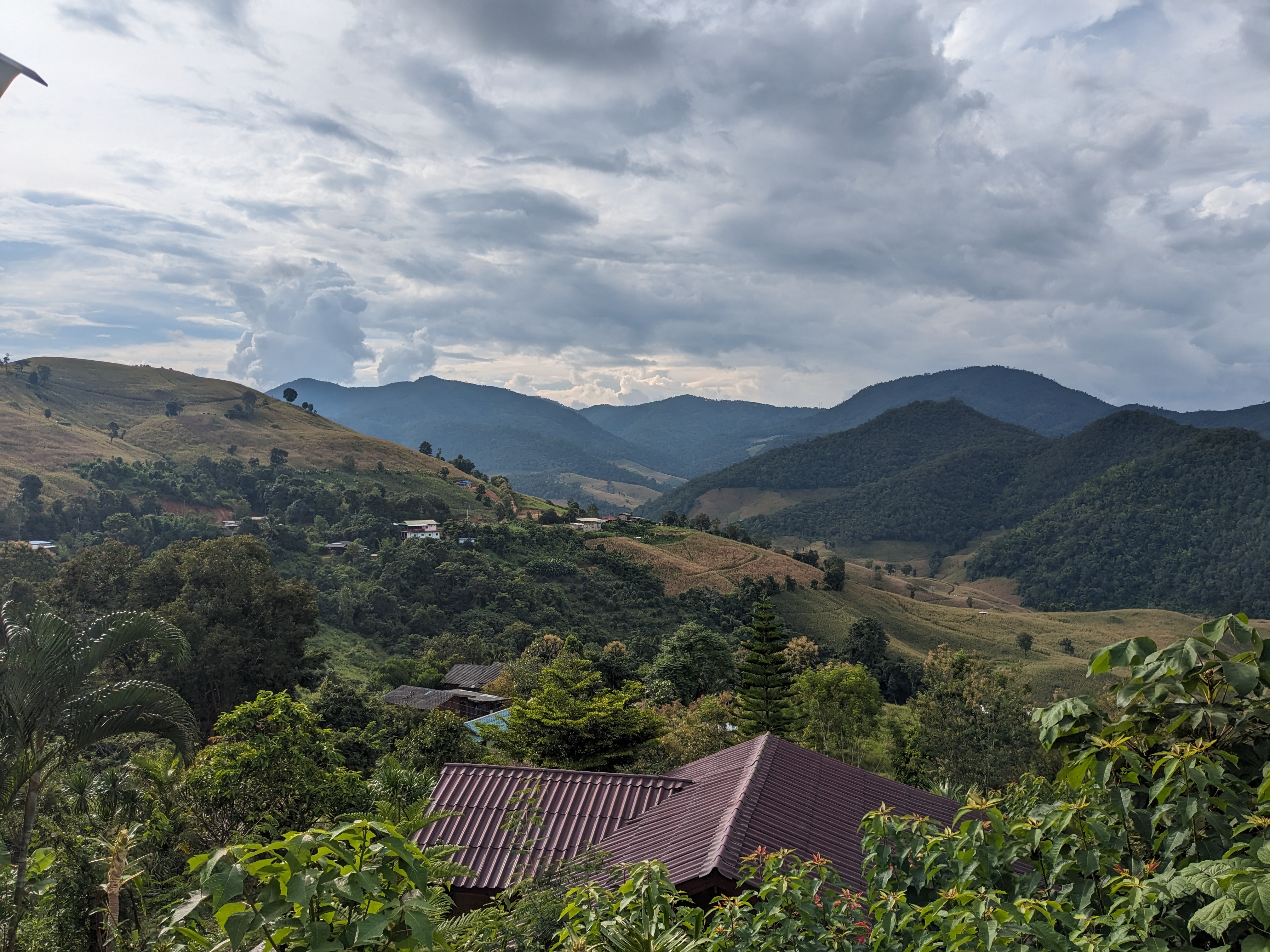
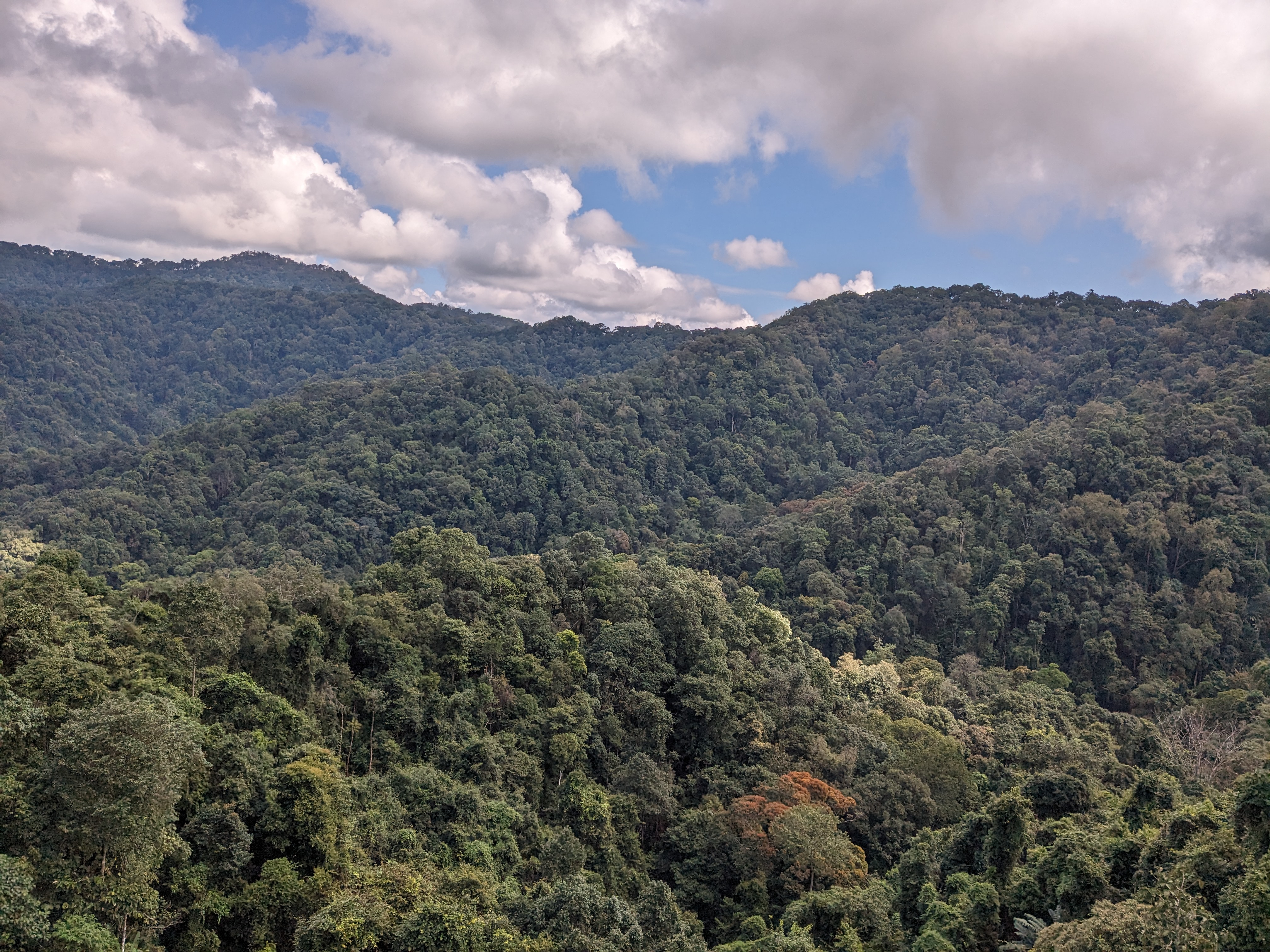
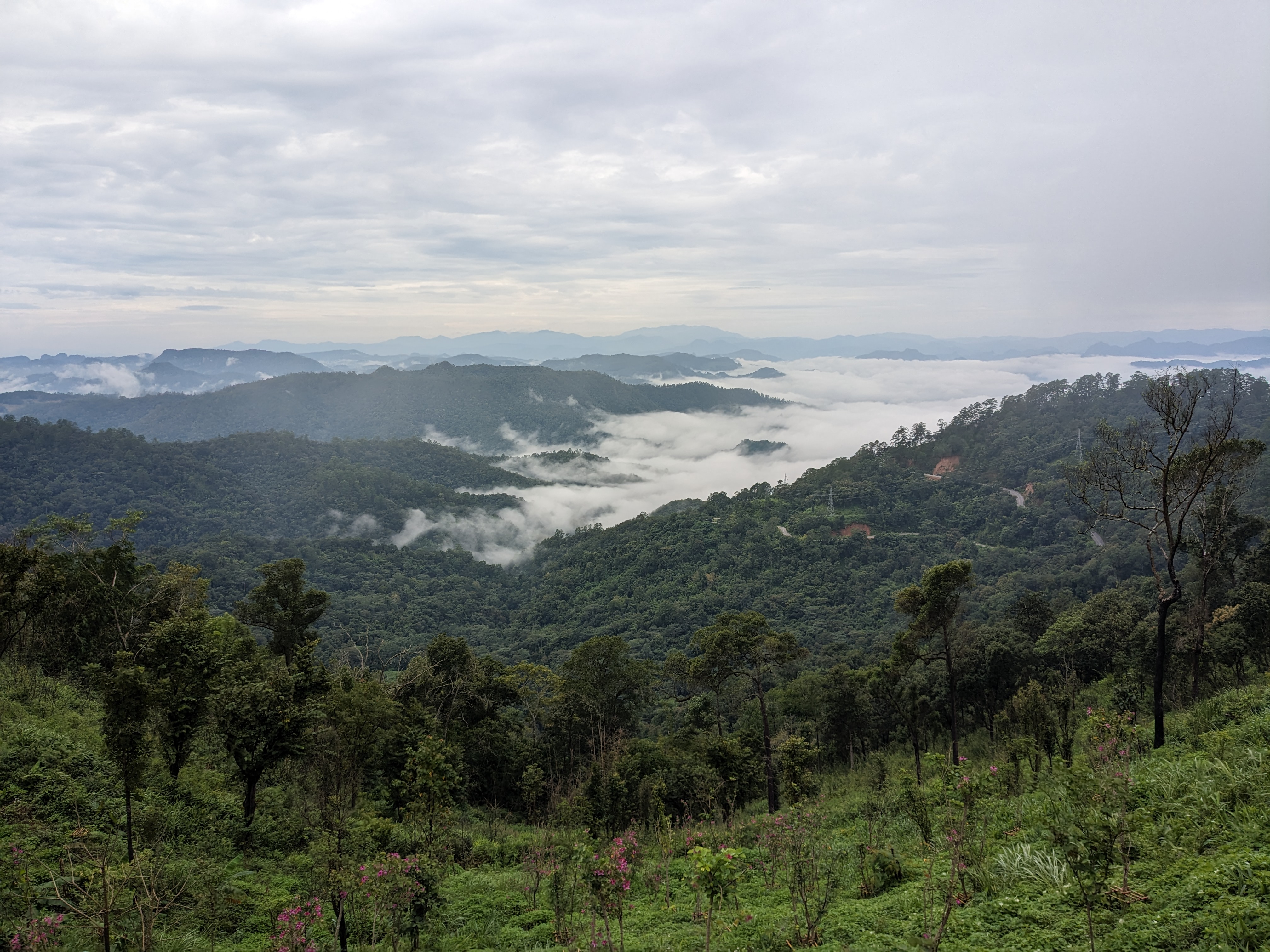
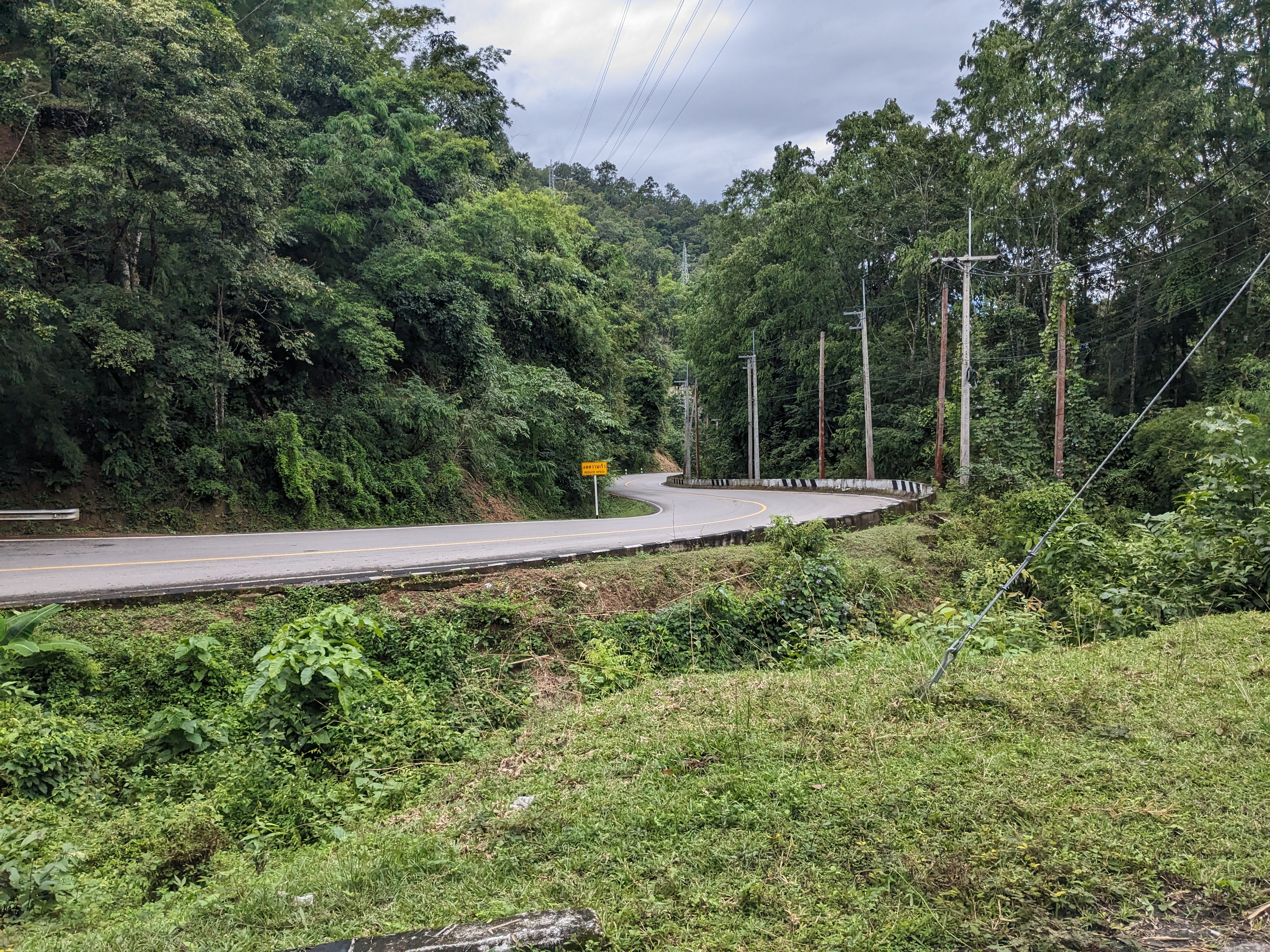
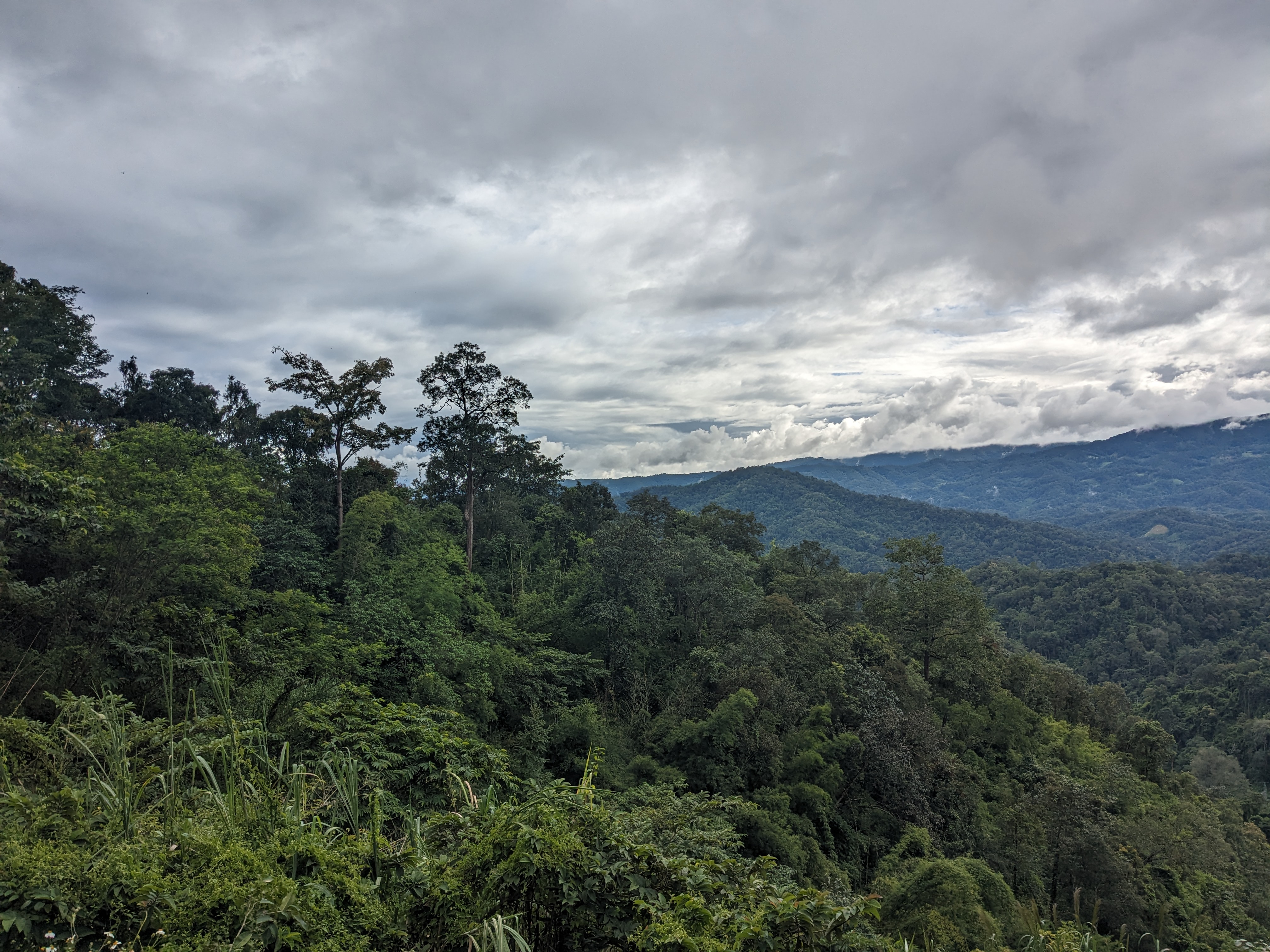
After crossing the Mekong River, I joined the new 4B road to Luang Prabang, a challenging but rewarding route through the mountains. This was one of the best roads of the trip so far being almost empty, fantastic tarmac and weaving through some amazing mountains.

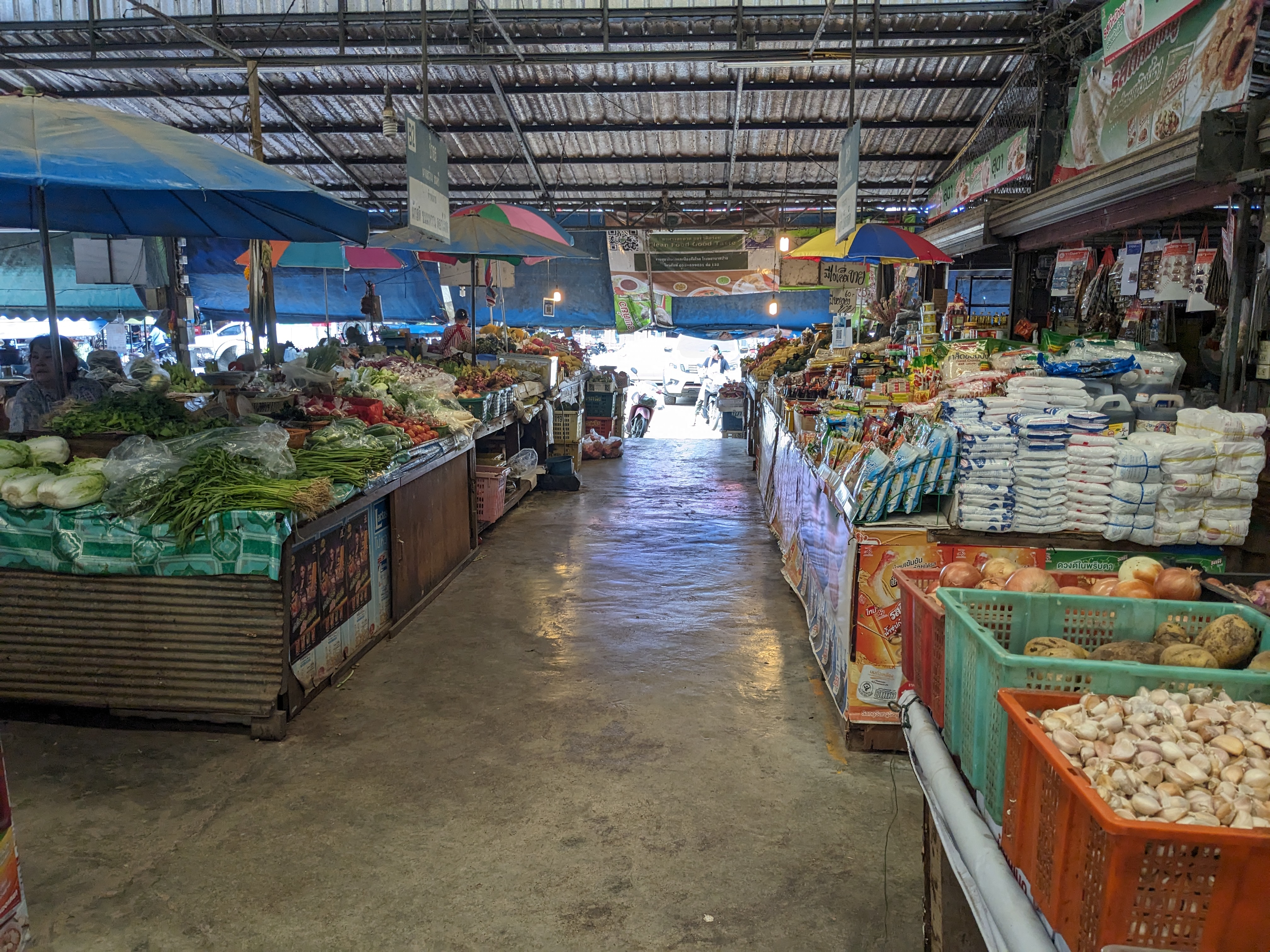
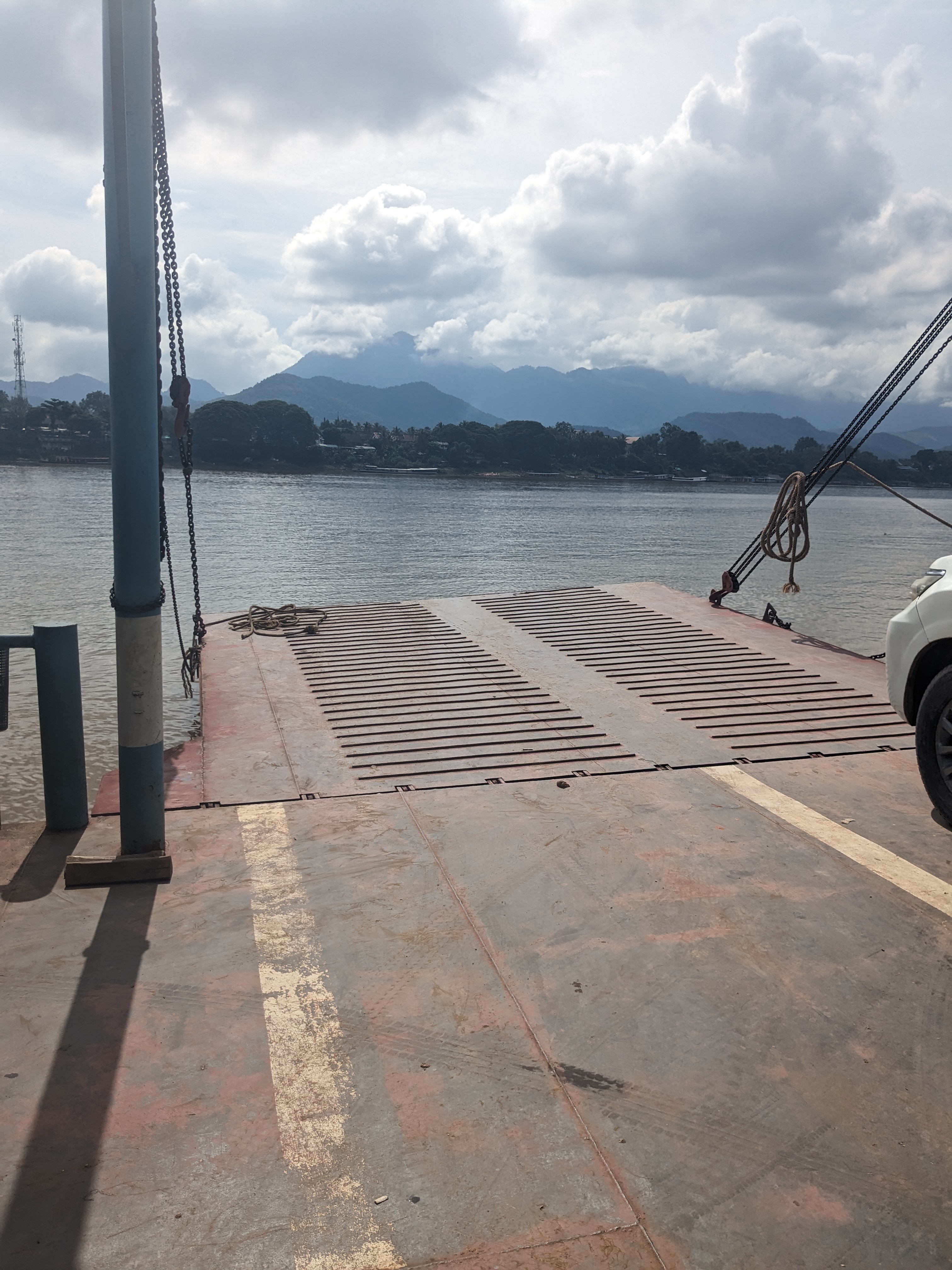
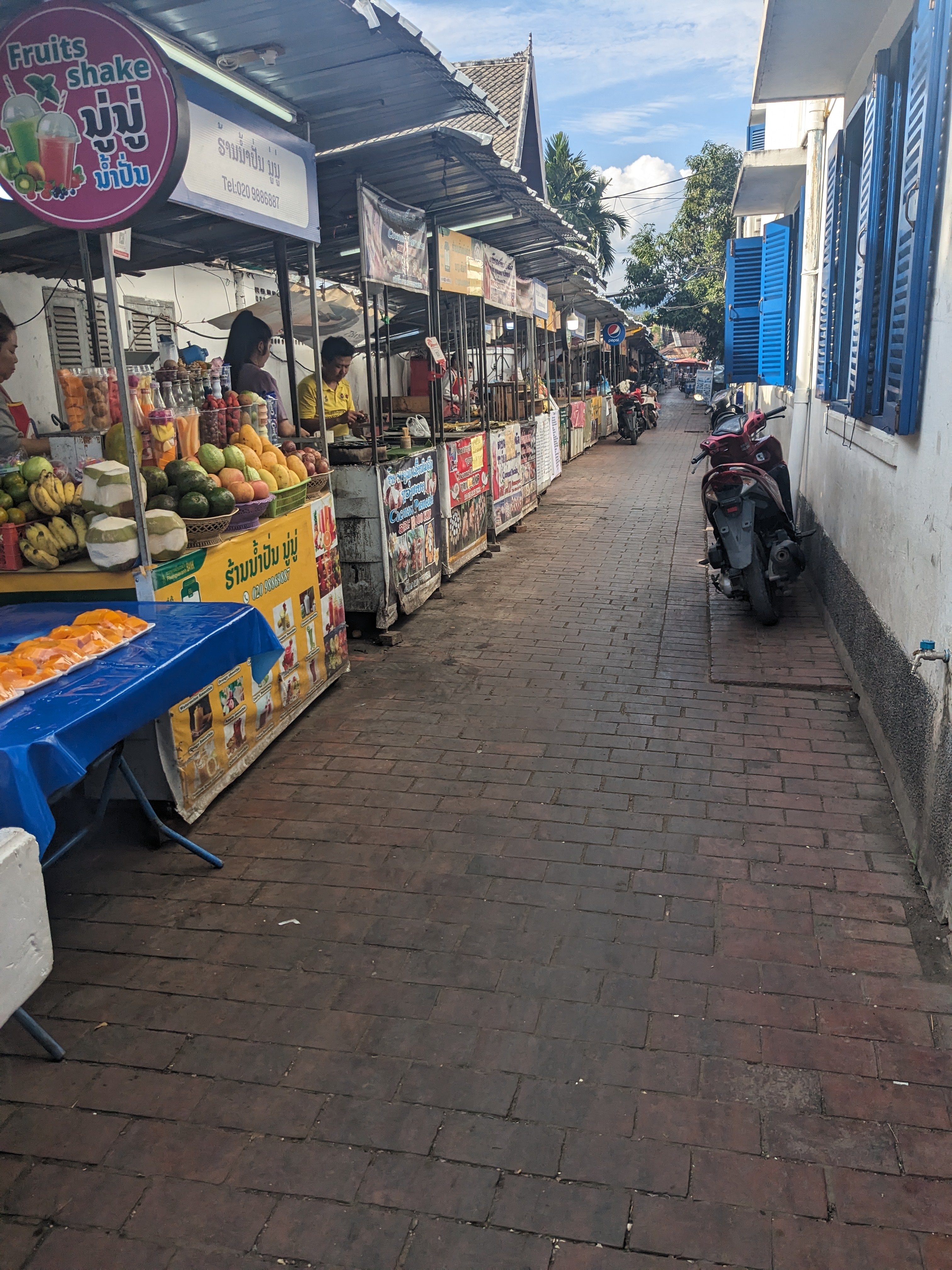
I crossed into Luang Prabang by ferry and treated myself to a hostel with a pool spending two nights there relaxing. The town had a fantastic night market where you could get almost any meal all for around £1.50 and one evening I went bowling, a tradition among backpackers due to it being the only place in town open late.
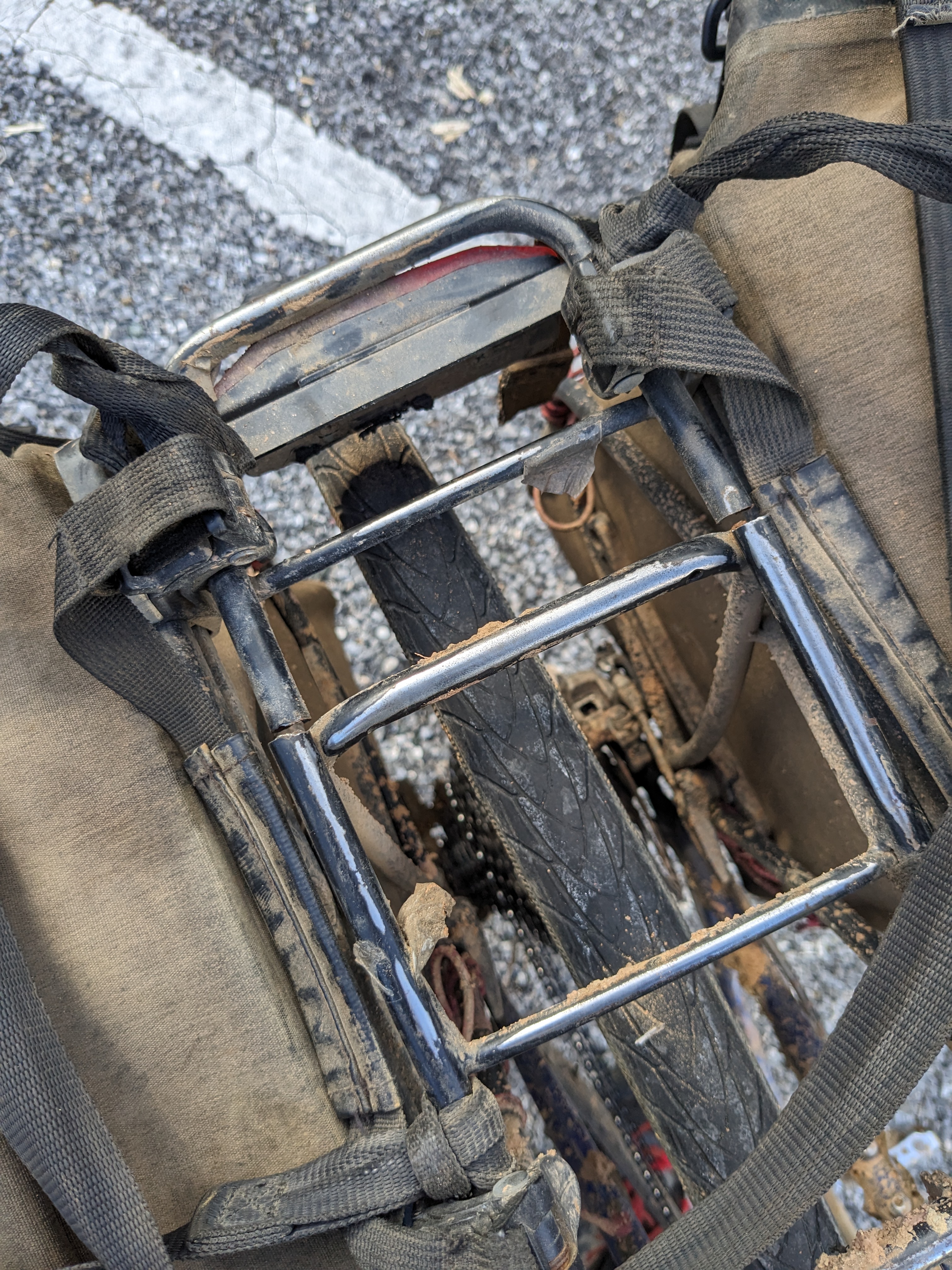
After managing to snap my pannier rack the previous day, I also ventured out to find somewhere to get it repaired. It was currently held together with some string, but I hoped to find somewhere to get it welded back together. This was surprising easy as there were plenty of motorbike repair shops and I quickly got it done for £2.
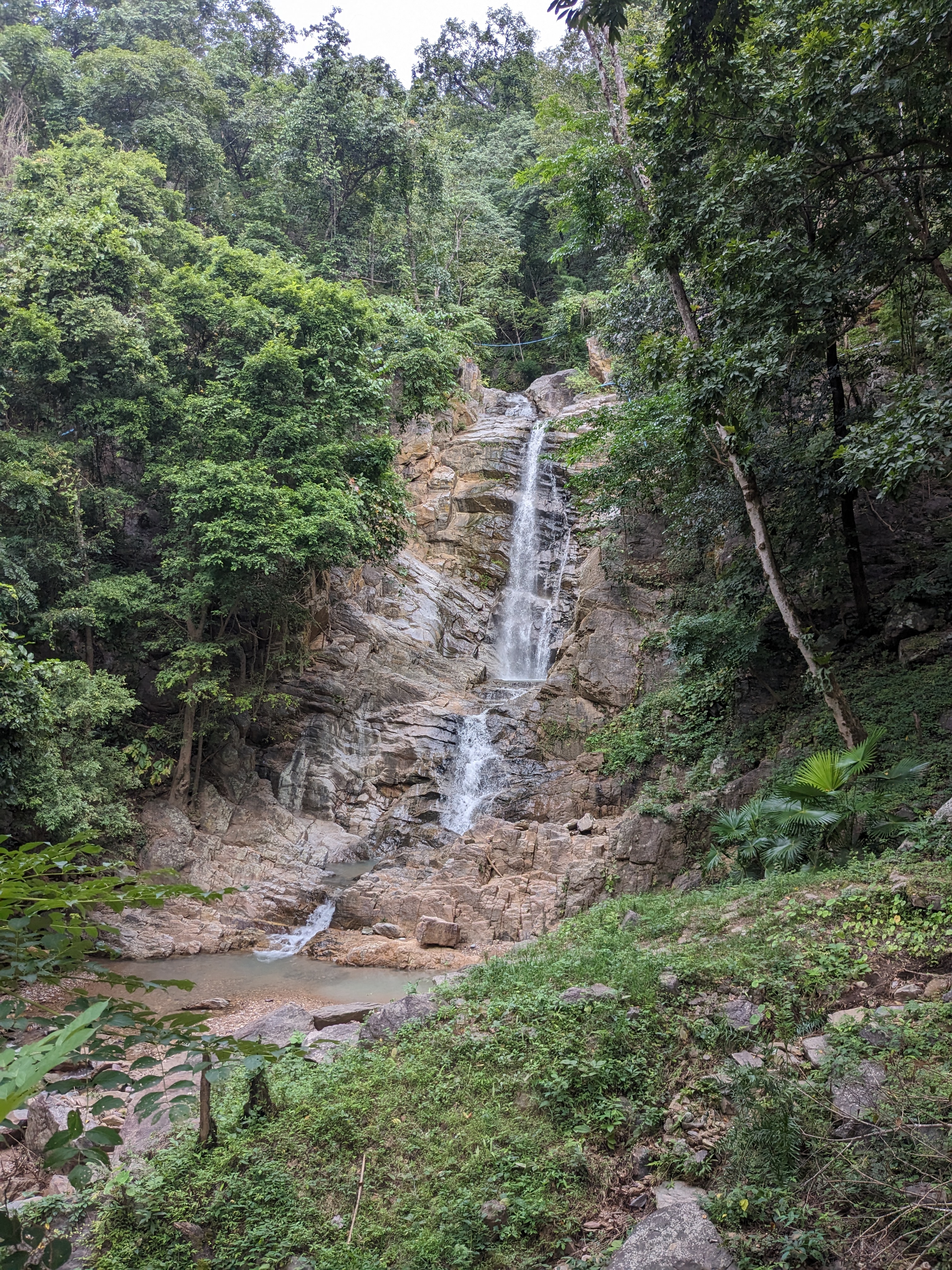
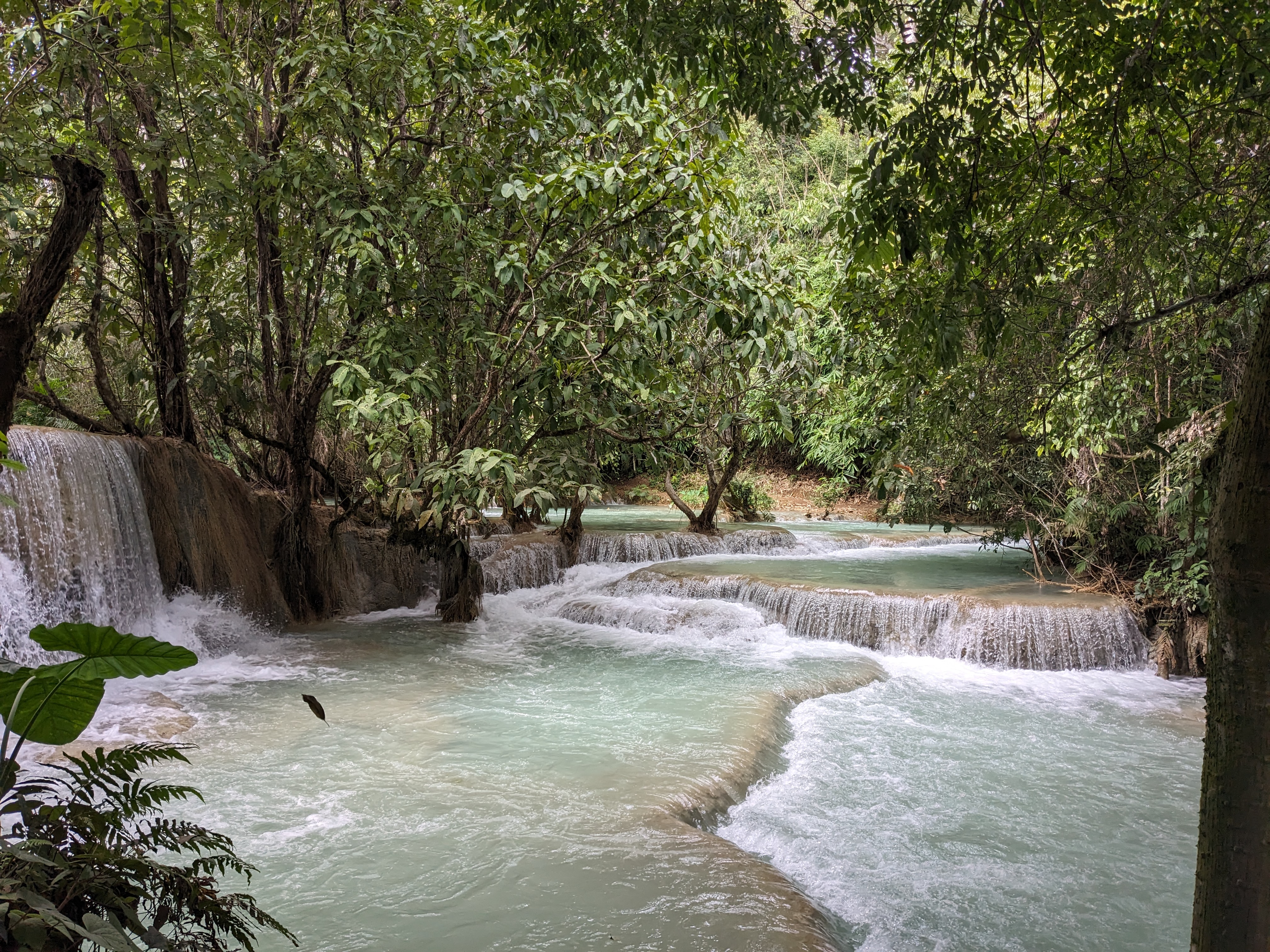
Leaving Luang Prabang, I visited the Kuang Si waterfalls after meeting people from the hostel on the way there. This was a spectacular sight, and great that it was possible to swim in all the pools.
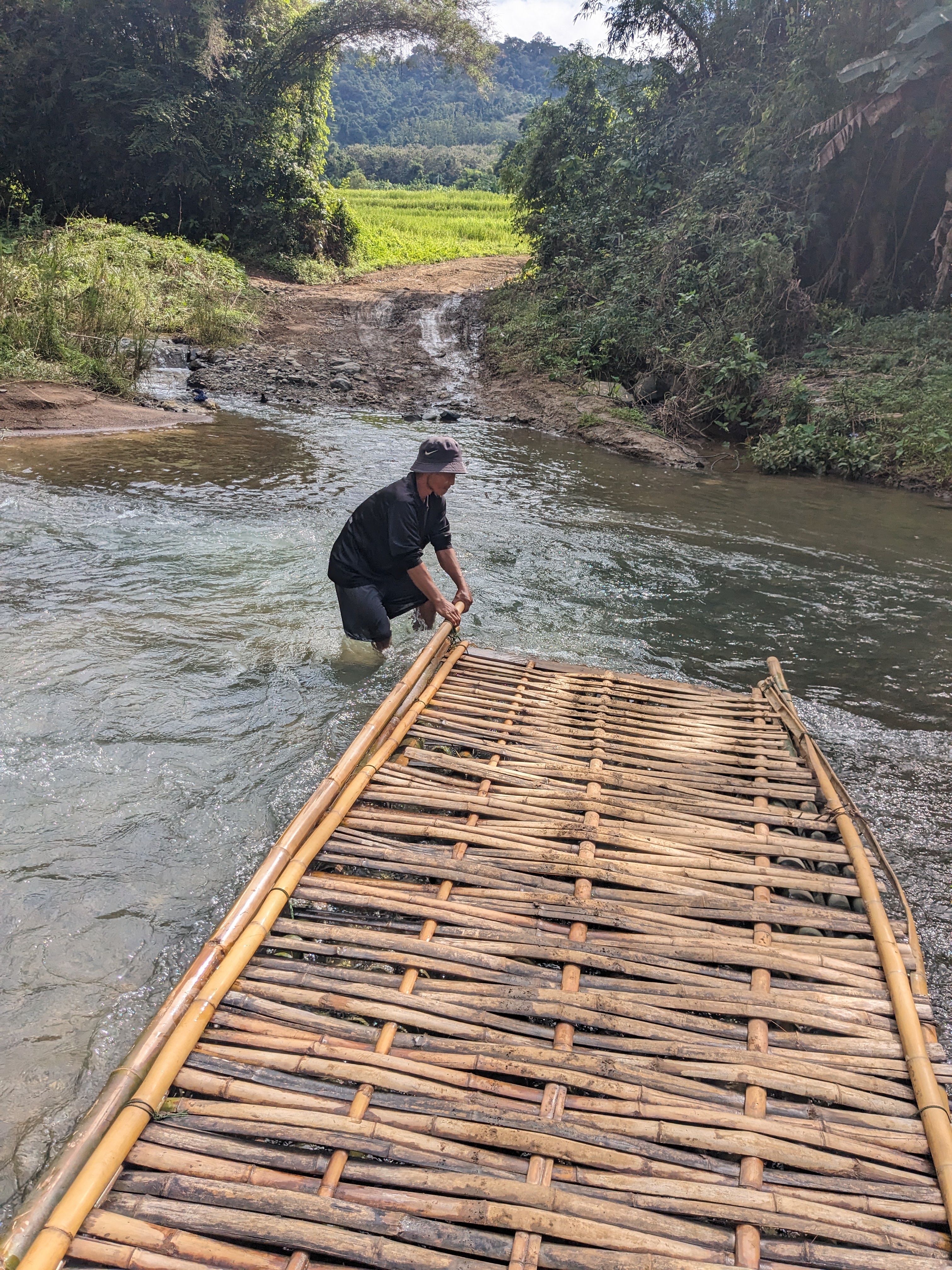
Continuing on a dirt road alongside the Mekong, I encountered a deep ford across a stream. Fortunately, there was a man with a bamboo raft who’s job was to help ferry bikes across. This was a very funny experience, but I’m sure he overcharged me for the crossing!

I was now heading toward Vang Vieng and had a beautiful cool night camped atop a huge hill. This has been quite the contrast from Pamir, where I’d sought lower altitudes for warmth. All that remained was descending down the mountain to arrive at the town.

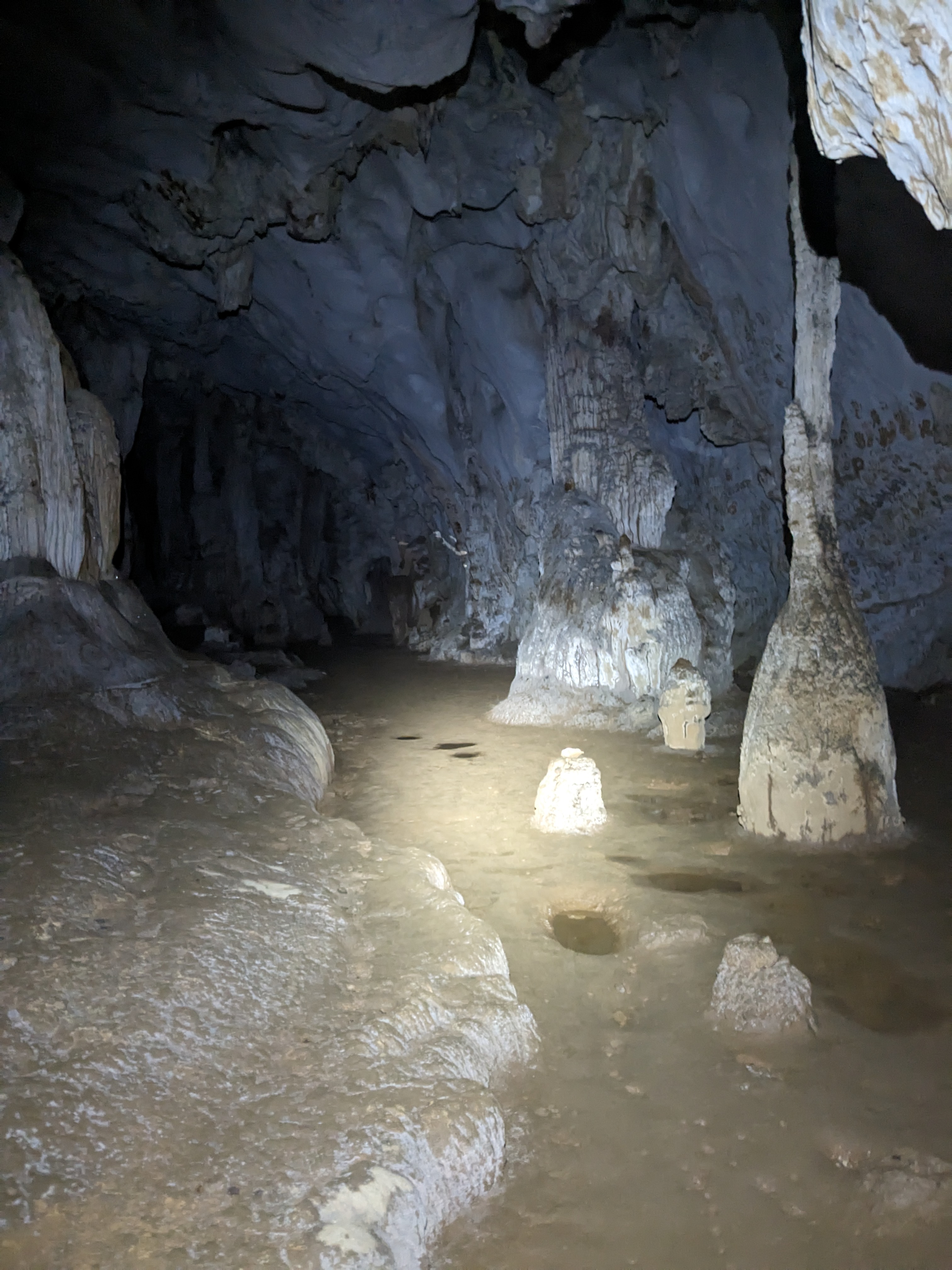
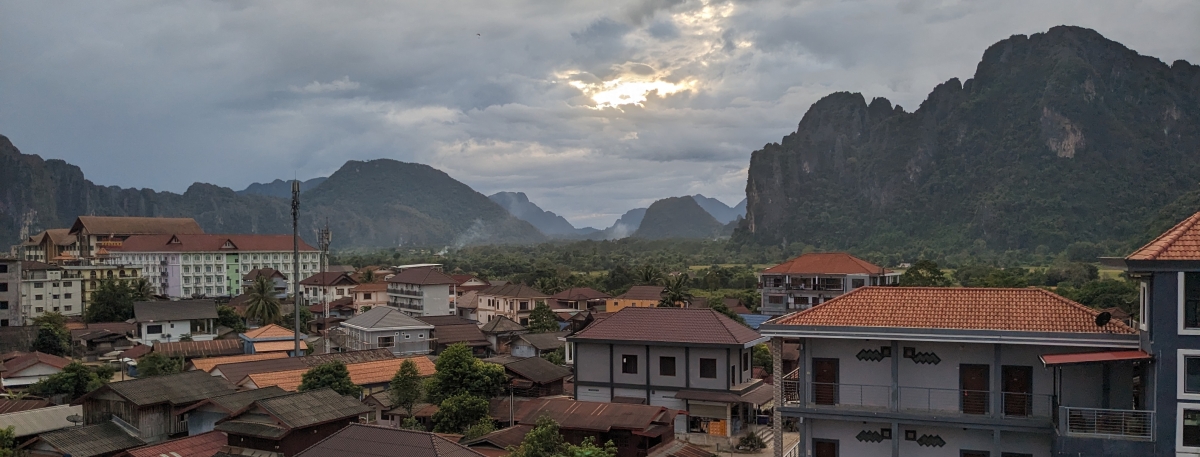
Vang Vieng is a notorious party town on the south east Asia backpacker loop, however has calmed down considerably in the last 10 years after at least 27 tourists died there in 2011. Once there, I stayed in a £2-a-night hostel that had barely finished being built. Despite this, it had a great atmosphere and suited my needs. I enjoyed a rest day and spent my time with me exploring caves, swimming in lagoons, and trying the local beer: BeerLao. This beer is a nice larger and made from local rice grain.
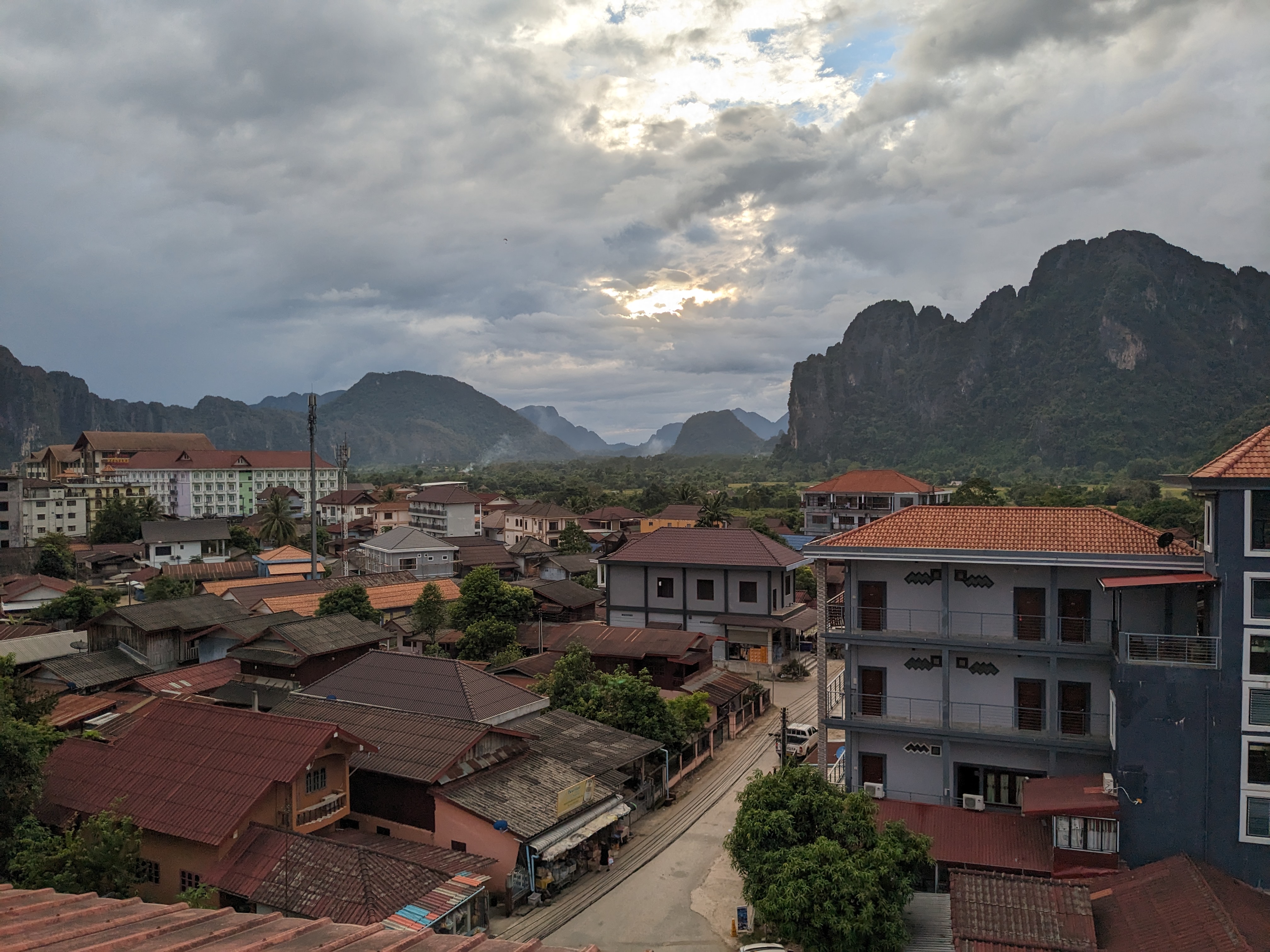
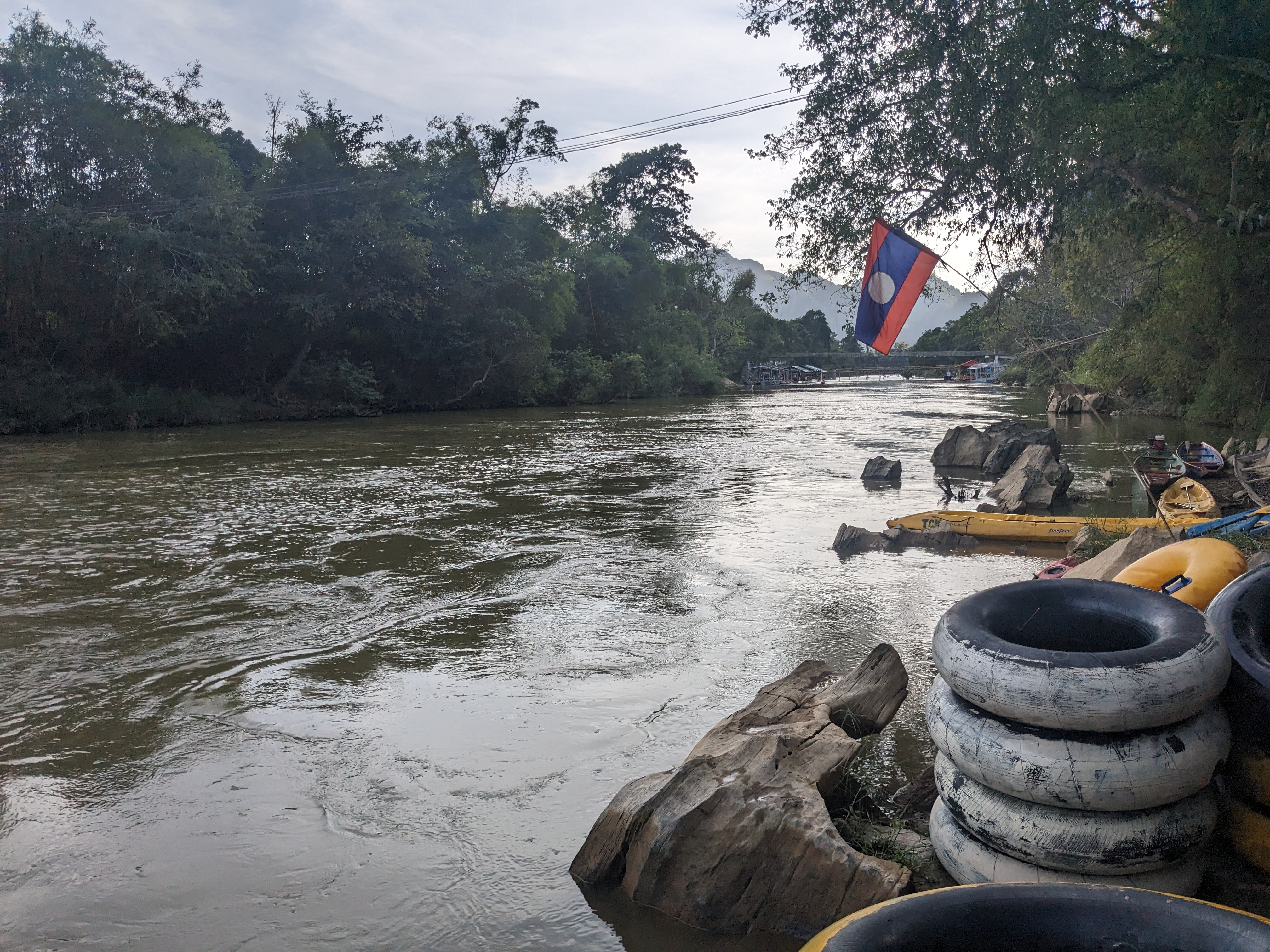
Laos has been great fun to travel so far and I’ve really enjoyed the contrast in south east Asia of the cycling alone through the countryside for a week followed by a stay in a busy hostel. The next step of my trip will take me north east towards the Vietnam border, and I look forward what more this country has to offer.
Mae Hong Son Loop

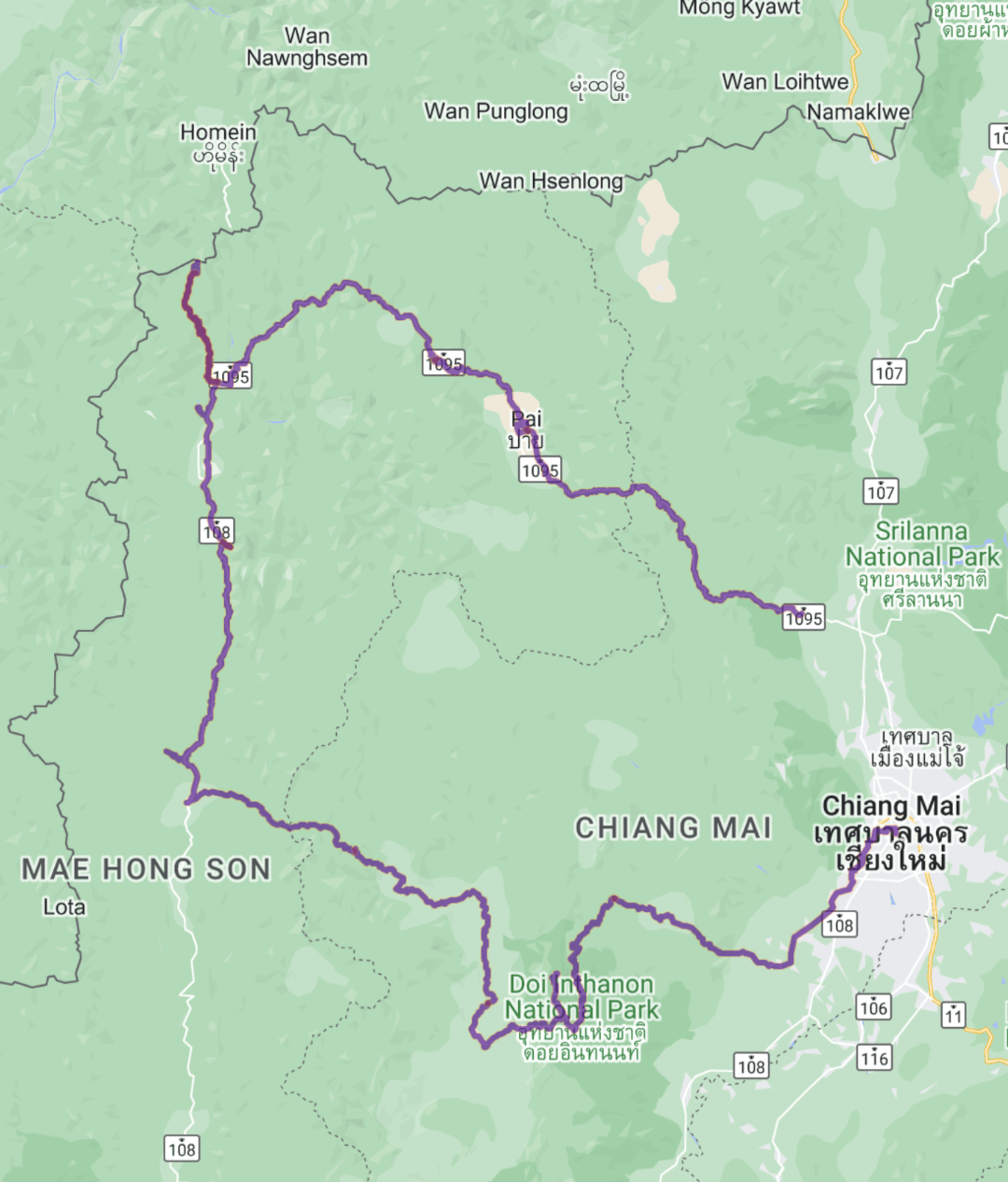
The Mae Hong Son Loop is a renowned motorbike route traversing the northwest of Thailand mostly in the Mae Hong Son province. It’s stunning landscapes and scenic allure drew me in and enticed me want to ride it.

Leaving Chiang Mai that morning was a relif, as I relished the sensation of escaping the bustling city. Entering the mountains once more, I passed several elephant sanctuaries and was always amazed by these animals. Also along the route, water buffalo grazed peacefully. They always looked angry however, so I’d pass them cautiously but they never paid any attention to me.

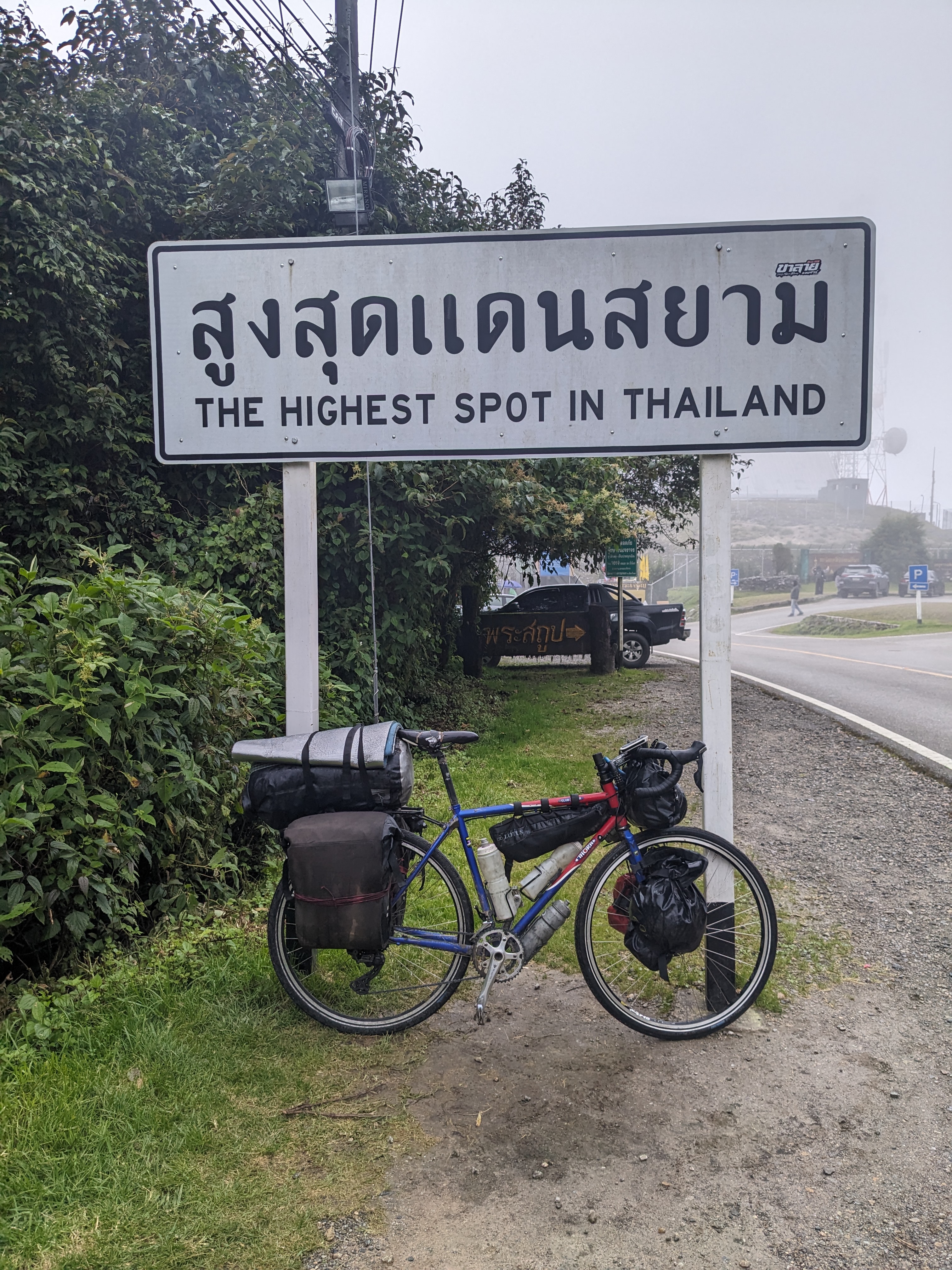
My journey took me to Doi Inthanon National Park, home to Thailand’s highest peak. Eager to conquer the summit, I undertook the challenging climb, though the descent presented an unexpected hurdle—a steep fine of around £20 for cyclists. This was apparently due to local riders cycling bicycles without even a chain down the hill recklessly, resulting in numerous accidents. When I inquired how I was supposed to get down, the guard at the base chuckled and told me to just ride slowly.

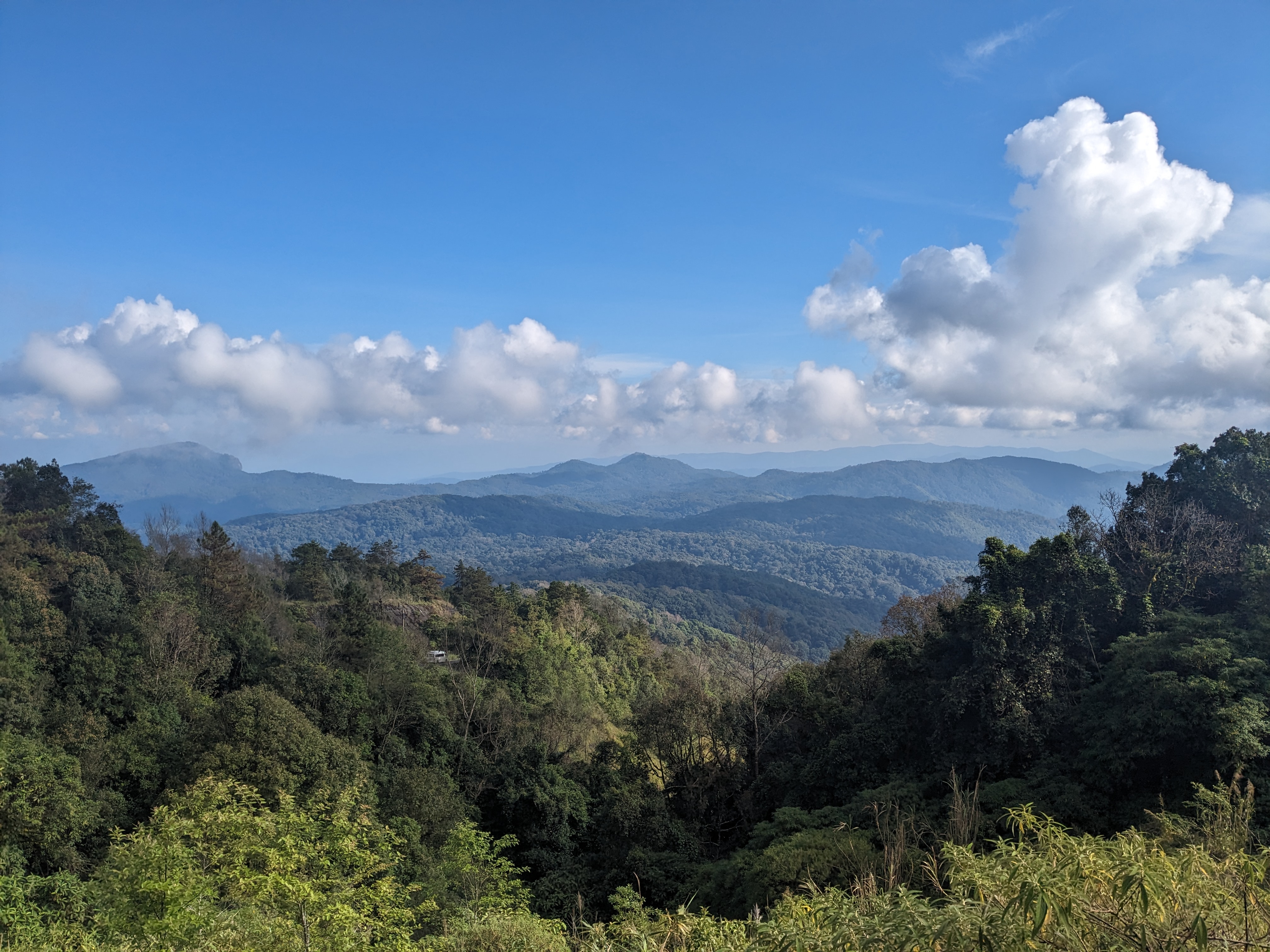
After a strenuous 2-hour ascent, my efforts were met with a disappointing lack of a view at the cloud-covered summit. However, the descent provided a stunning panorama once I emerged from the mist. Unsure how slow I was supposed to go, I cautiously maneuvered past the spots where I’d noticed guards were stationed on the way up and avoided any unwanted encounters.

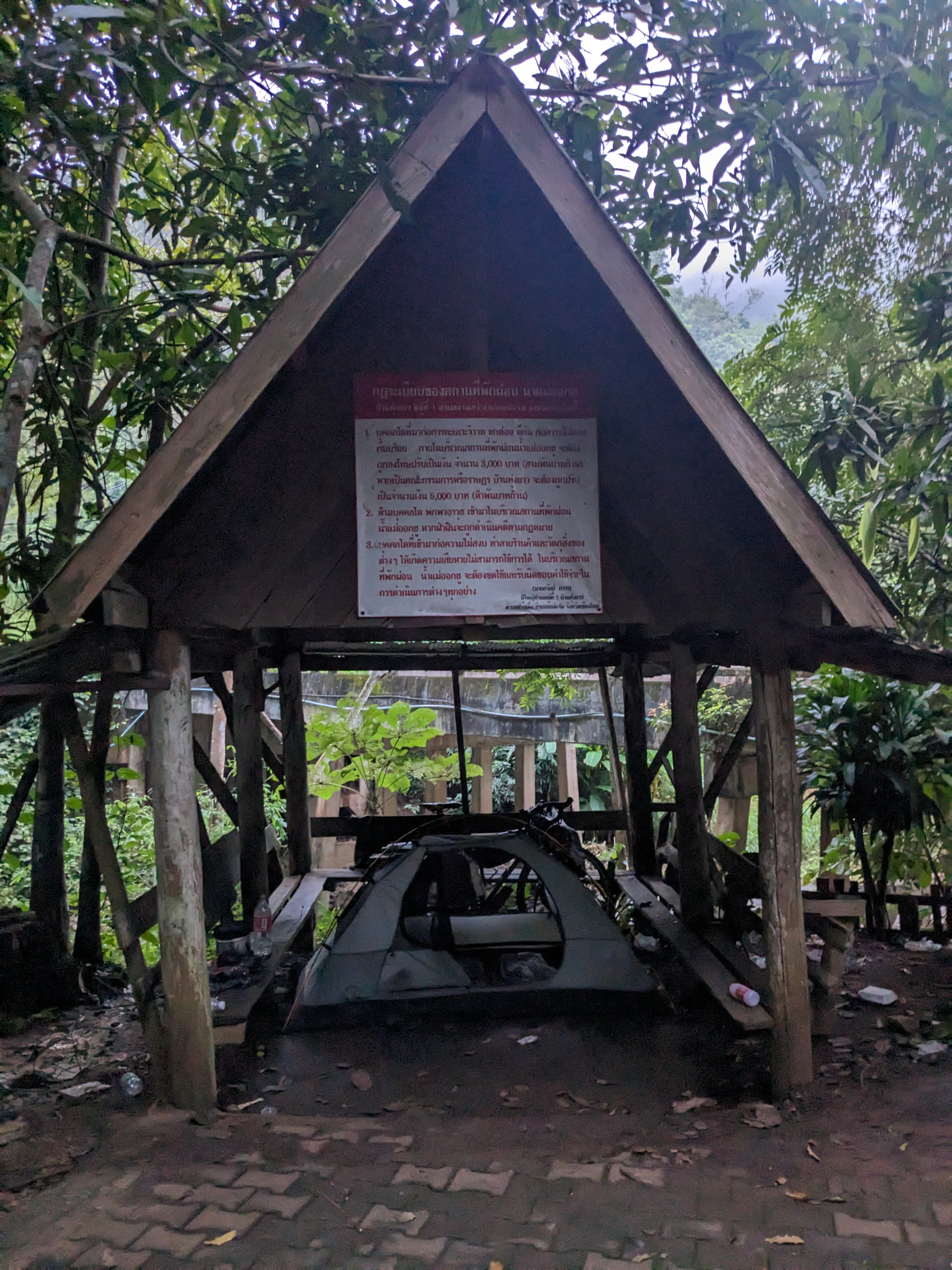
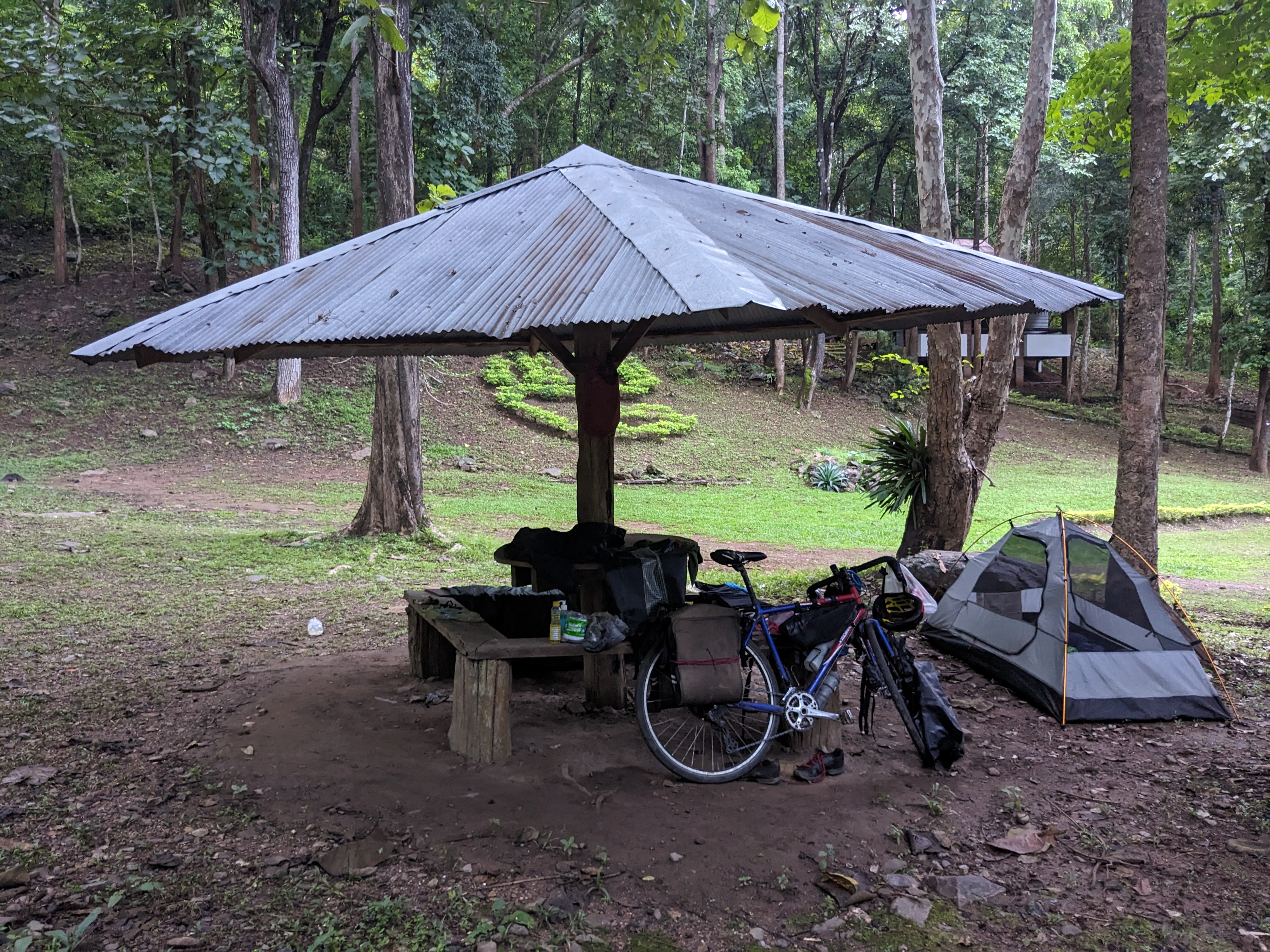
That evening, I settled at a picnic area equipped with a swimming pool, opting to camp in a shelter for protection from the rain. However, my refuge was not without its drawbacks. I found myself under siege from a relentless army of ants that had infiltrated my tent through holes in the bottom, waking me repeatedly as they crawled over me and bit me.

The poor sleep, huge climbs and probably not eating enough left me feeling pretty exhausted the next morning, a bad start to another big day full of climbs. Pushing on, I eventually crossed into the Mae Hong Son province and reached the town of the same name.

Early afternoon I decided to find somewhere nice to camp so I could have a relaxing evening. I ventured 4km off the loop to a lake which had camping, only to find it under renovation and closed. This was quite frustrating having to do an extra 8km with no purpose. Next, I saw a sign at the side of the road for camping in what felt like just someone’s garden. The man wanted 300 Baht for one night, twice what I paid for a hostel in Chiang Mai. Attempting to negotiate a better price proved fruitles, leading me to settle by a secluded waterfall for the night. This was a beautiful spot where I could enjoy a wash in the waterfall and very quiet, only seeing one other person the whole evening. I set about patching the holes in my tent but to no success, with the ants still found a way in that night.

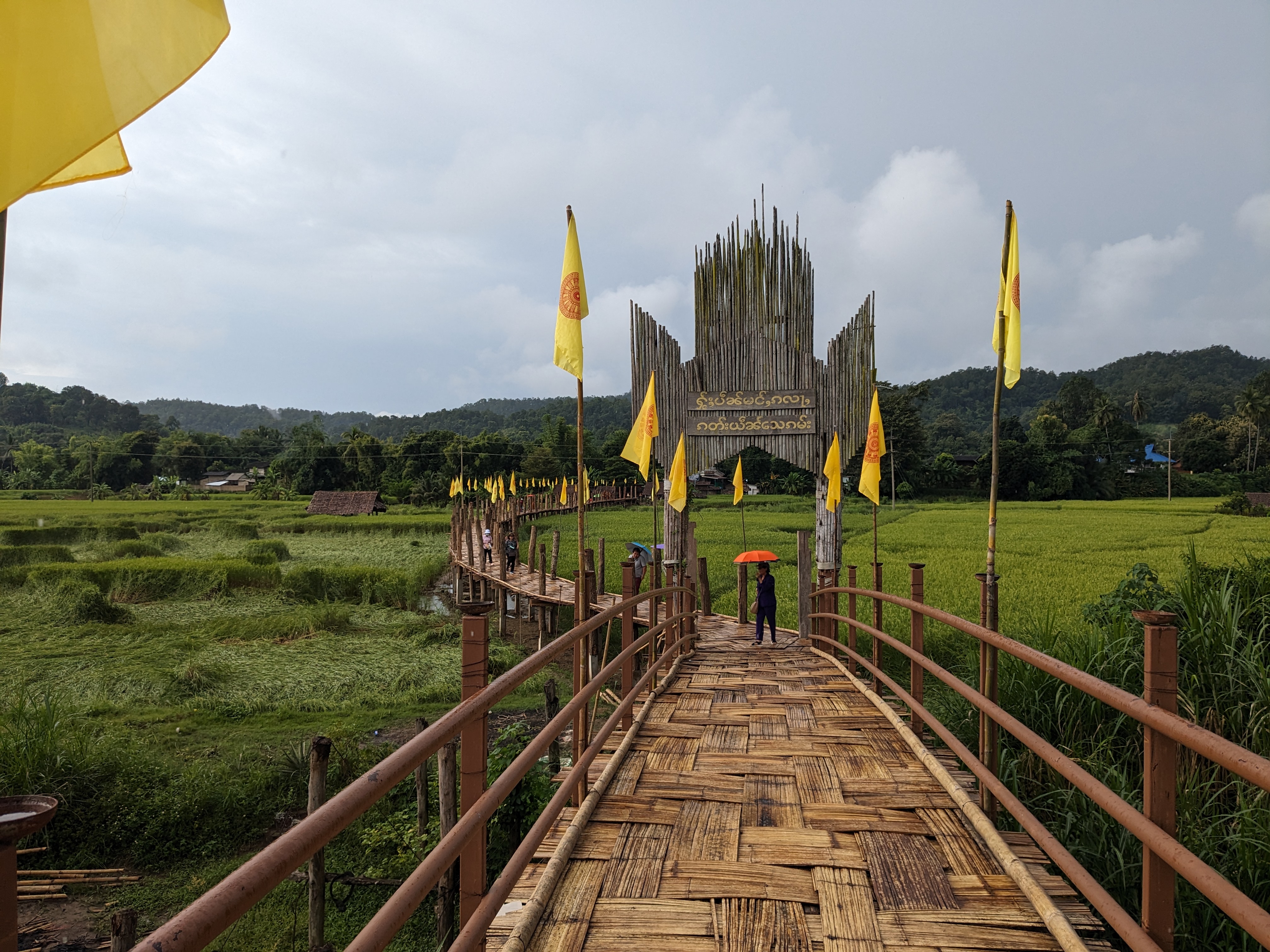
Continuing my journey, I reached the Su Tong Pae bamboo bridge. This was built in 2012 to connect the village with the temple each on opposite sides of the river and was an amazing sight. The route I had planned went over the bridge, but after getting a stern look from a monk when I arrived and seeing all the stairs on the far side I decided against crossing it with my bike. I therefore just walked around admiring this structure for a while before continuing.

That afternoon, I pedaled up a significant hill toward the Myanmar border, arriving in the surreal atmosphere of Ban Rak Thai village. This town felt very up market filled with beautiful holiday villas. Whilst venturing into the surrounding hills, I encountered four Myanmar men who kindly let me camp outside their residence that night. They were very friendly and keen to tell me about the ongoing civil unrest in their home country which they’d escaped and were now working as builders in Thailand.

Battling through relentless rain the following day, I sought refuge a few times in restaurants and cafes using it as an excuse to stop and eat. I also encountered my first other bikepackers in the country, a group of Thai men heading in the opposite direction.

I now had one more big hill between me and Pai. I hoped to get as much of it done as I could that evening to give myself an easy ride into the town the following morning. By 6pm it was getting dark and I couldn’t find anywhere good to camp, so ended up just on the side of the road slightly hidden under an abandoned hut. I didn’t sleep well that night due to the sound of trucks and motorbikes often waking me combined with the anxiety from being clearly visible from the road. Fortunately, I did managed to get up most of the climb complete so had an easy ride into Pai the next day.

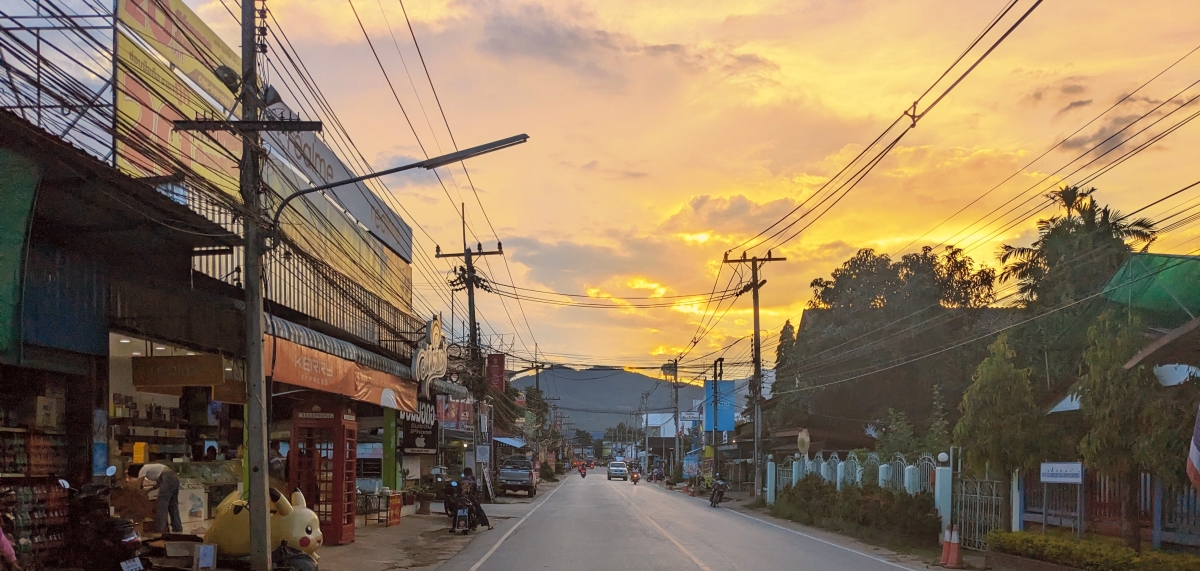
Pai was an interesting place, definitely not what I expected. It didn’t feel like I was in Thailand, but definitely had it’s own vibe of being the quintessential hippy town. The place seemed to only cater for backpackers with almost every shop being tattoo parlours, bars or indy cafes and often being a combination of two these.

I checked into a hostel run by a French man and this was clearly the place the French speaking expats hang out as there were about 5 older men sitting round the bar smoking weed and drinking beer when I arrived at midday. They were very entertaining and it was fascinating to hear how they’d ended up living here. From about 5pm it started raining and continued the entire night, making me very relived I had a roof over my head.

The following day was again plagued by more rain however, the road was one of the best cycling roads I’d ever been on. After a long climb to start the day, the rest was spent going down a fantastic mountain road with some spectacular corners. So far, most of the descents have been very steep making them hard to enjoy but the low gradients of this one were brilliant.

After picking up some food from a market, I stopped at a temple to camp wanting some shelter from the forecast storm coming that night. I was greated by friendly monk, who spoke very good English as he was a pupil at a temple in Runcorn for two years. He didn’t seem too impressed by the north of England however, complaining that it was too cold!

Deciding against a return to Chiang Mai, my next leg involves an eastward journey through more national parks toward Chiang Rai. The loop proved to be more demanding than anticipated, with a multitude of steep hills presenting quite the challenge for my heavily loaded bike. Nevertheless, the breathtaking vistas along the way and feeling of being back in the wild when pedaling through the jungle make it an unforgettable experience.

West Kazakhstan

At Tbilisi airport before flying to Kazakhstan, I had about four hours before my flight, so I was just sitting there using some wifi when I met Joris, a French man cycling around the world. He was the first bike tourist I had met since my first day in Turkey and it was great to have someone to navigate the airport with.

Once check-in opened, we were both worried our bikes would be too heavy, not knowing what they weighed or what the maximum weight would be. Fortunately, neither did the check-in staff, and they were fine with mine weighing in at 38.8kg.

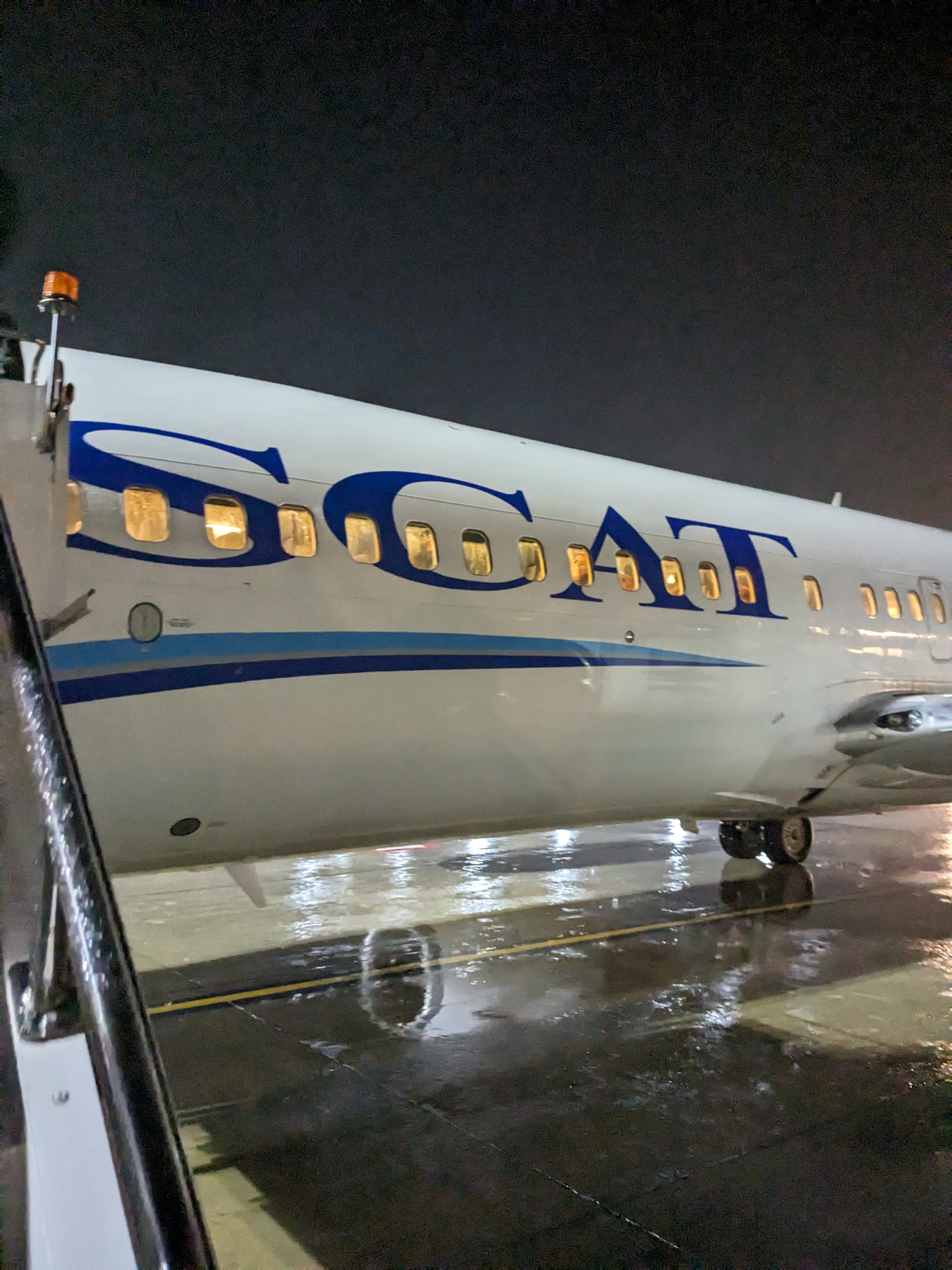
There was a lot of turbulence on the flight, with it being lightning in Georgia when we left. Fortunately, I slept the whole way, and we landed at 2am in Aktau.

Our first task upon arrival was to reassemble our bikes, much to the amusement of the local Kazakh taxi drivers who watched with curiosity. My initial plan was to find a quiet corner in the airport and sleep until sunrise, but Joris shared that the airport was situated in the middle of nowhere. So, we pedaled a kilometer away from the terminal, finding a spot to camp amid the desert’s solitude.

With the morning sun, we cycled into the city of Aktau, greeted by the Caspian Sea and an opportunity to swim. The city itself felt very empty but this could be due to it being the Constitution Day of Kazakhstan a national holiday.

For the first time on my journey, I had to purchase water, as it seemed that bottled water was the only option in this desert landscape. Furthermore, with the towns approximately 100km apart we had to stock up on the essentials.

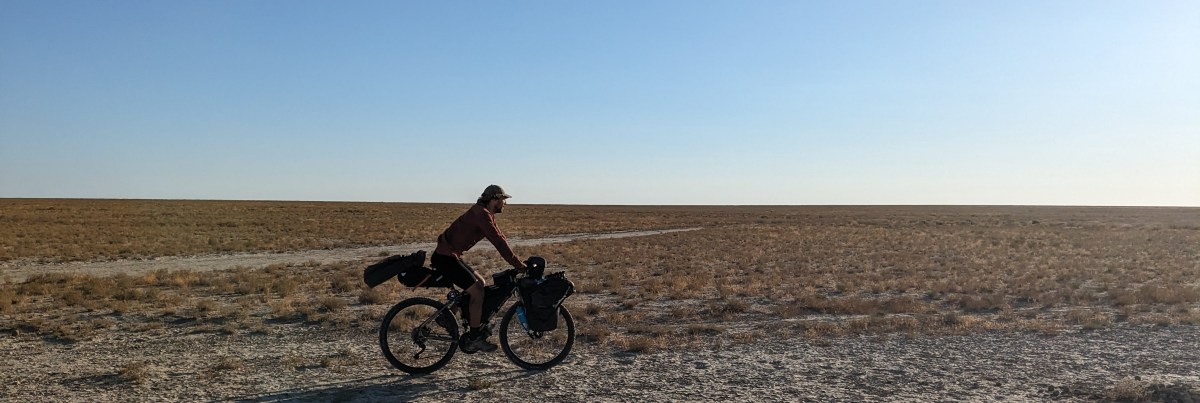
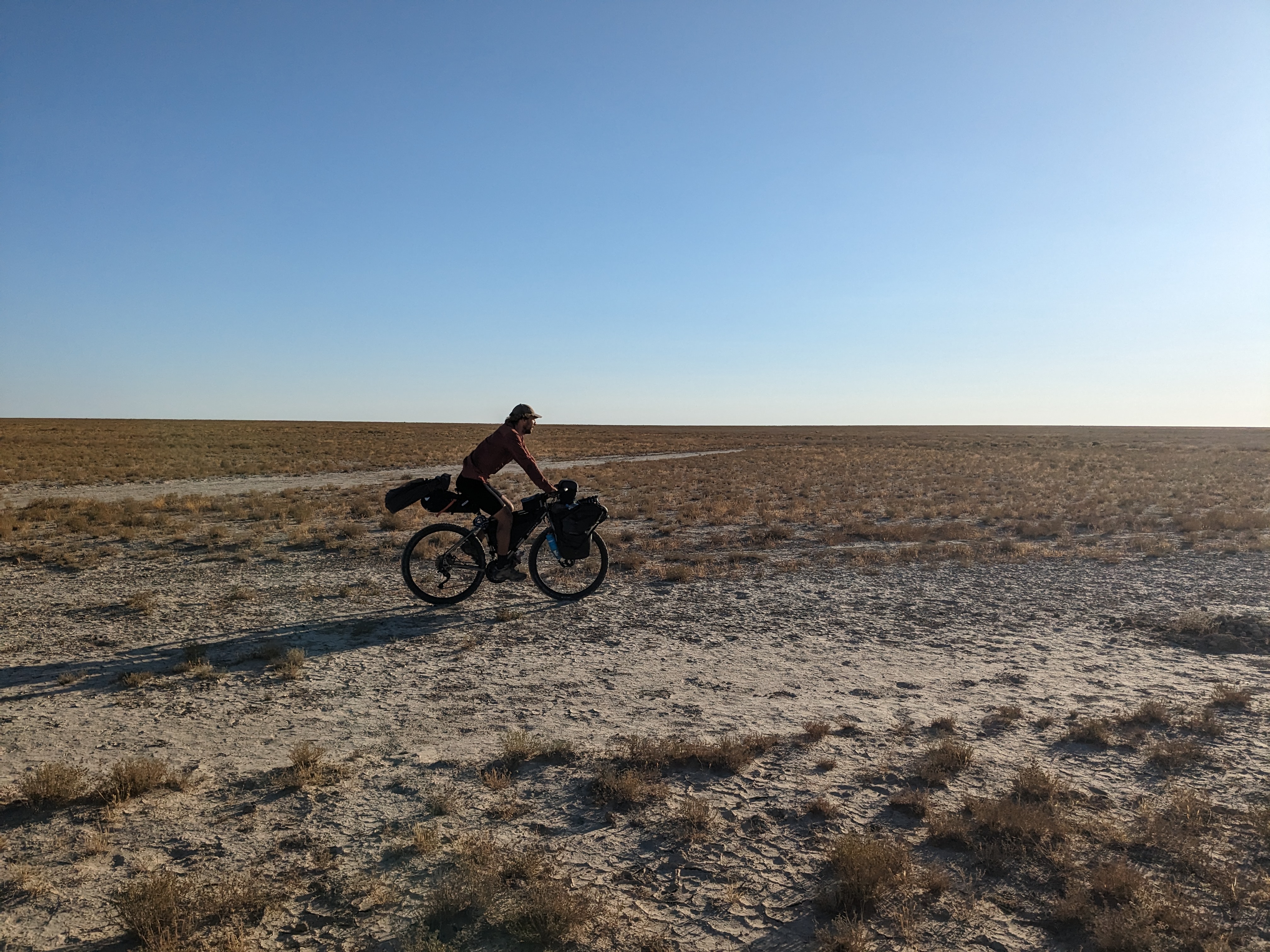
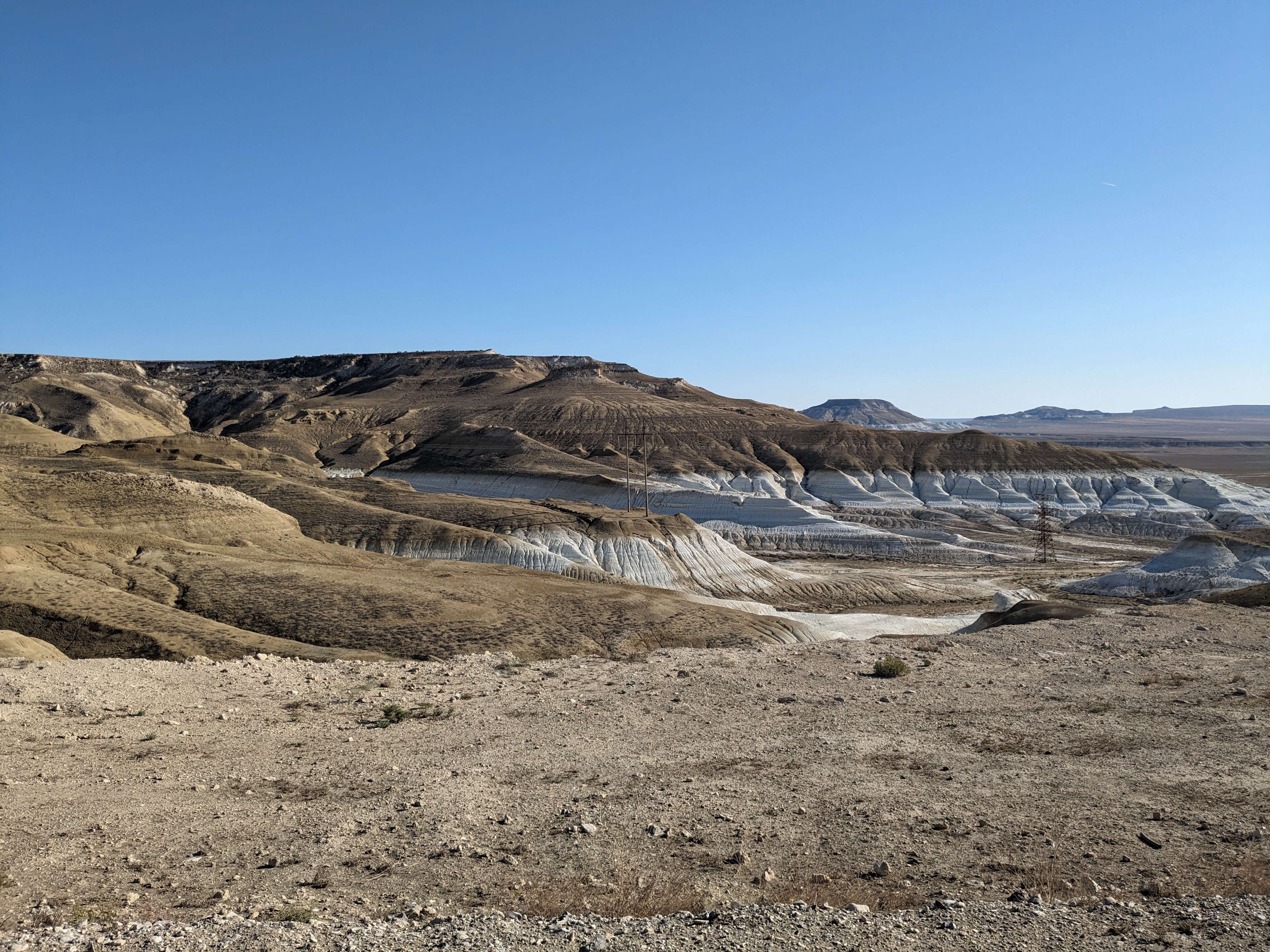
The next three days were all spent very similarly, cycling through the desert and stopping anytime we could find any shade to rest and eat. Finding places to camp was incredibly easy; just cycling a few hundred meters from the road, but every night we’d get a beautiful sunset across the flat baron landscape.

One day, a friendly truck driver offered us a lift. Having cycled nearly 90km in a straight line, we welcomed the respite. Our bikes nestled in the truck bed, with us squeezing into the front cabin, sharing the limited space with our generous driver. To avoid unwanted attention from the police, I had to lie on the bed keeping my head down as there were only two seats in the front. After a 140km ride, we disembarked in the final Kazakh town before the Uzbekistan border, where we once again found ourselves camping beneath the desert stars.

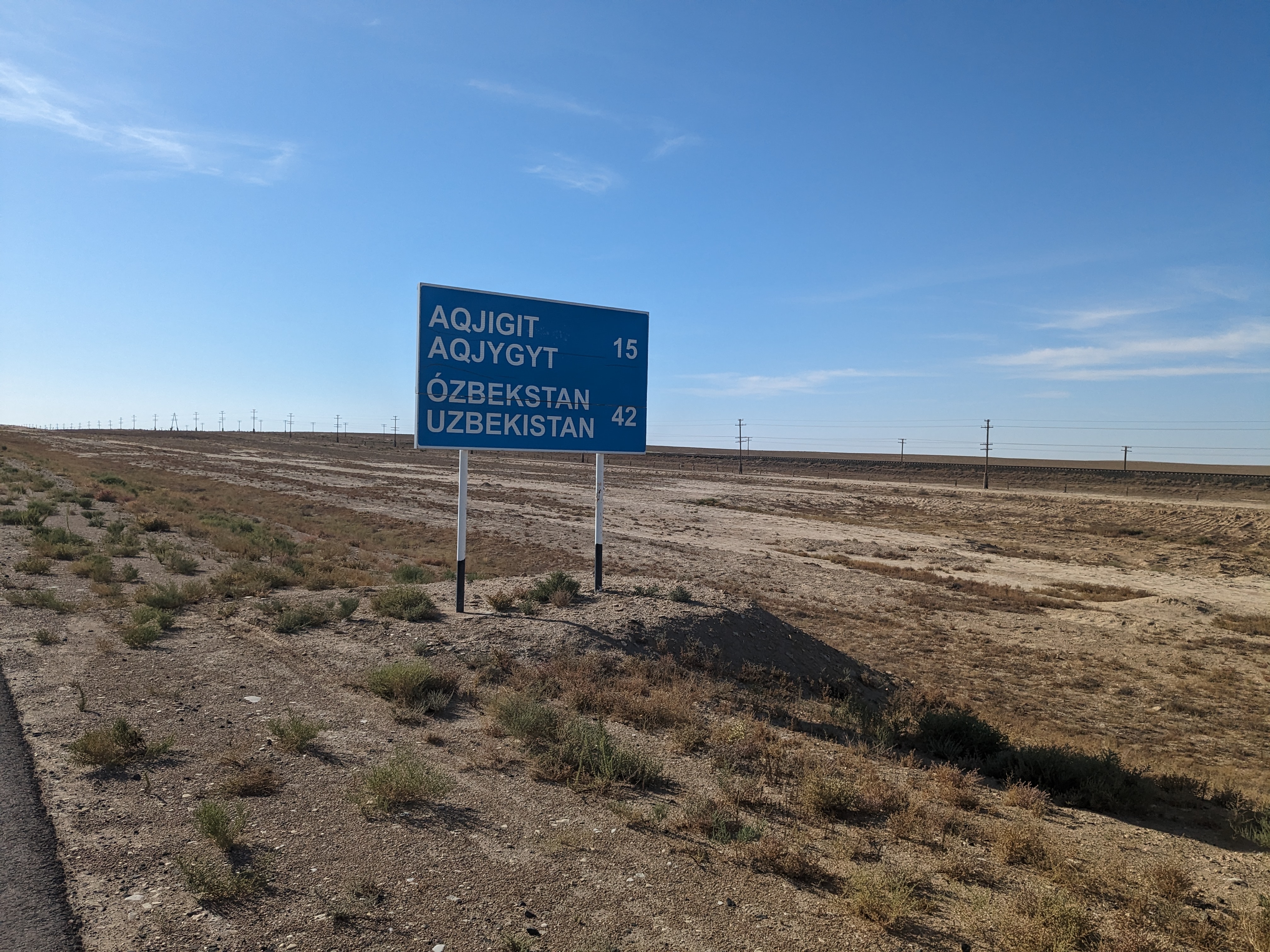
The following day marked our entry into Uzbekistan. The Kazakh border was formidable, with long queues and strict procedures. However, our status as tourists afforded us preferential treatment, to the clear displeasure of fellow travelers. On the Uzbek side, we underwent thorough checks, including X-rays of every item packed on our bikes – a minor inconvenience compared to the motorists forces to remove every bag from their cars before passing them all through the scanner.

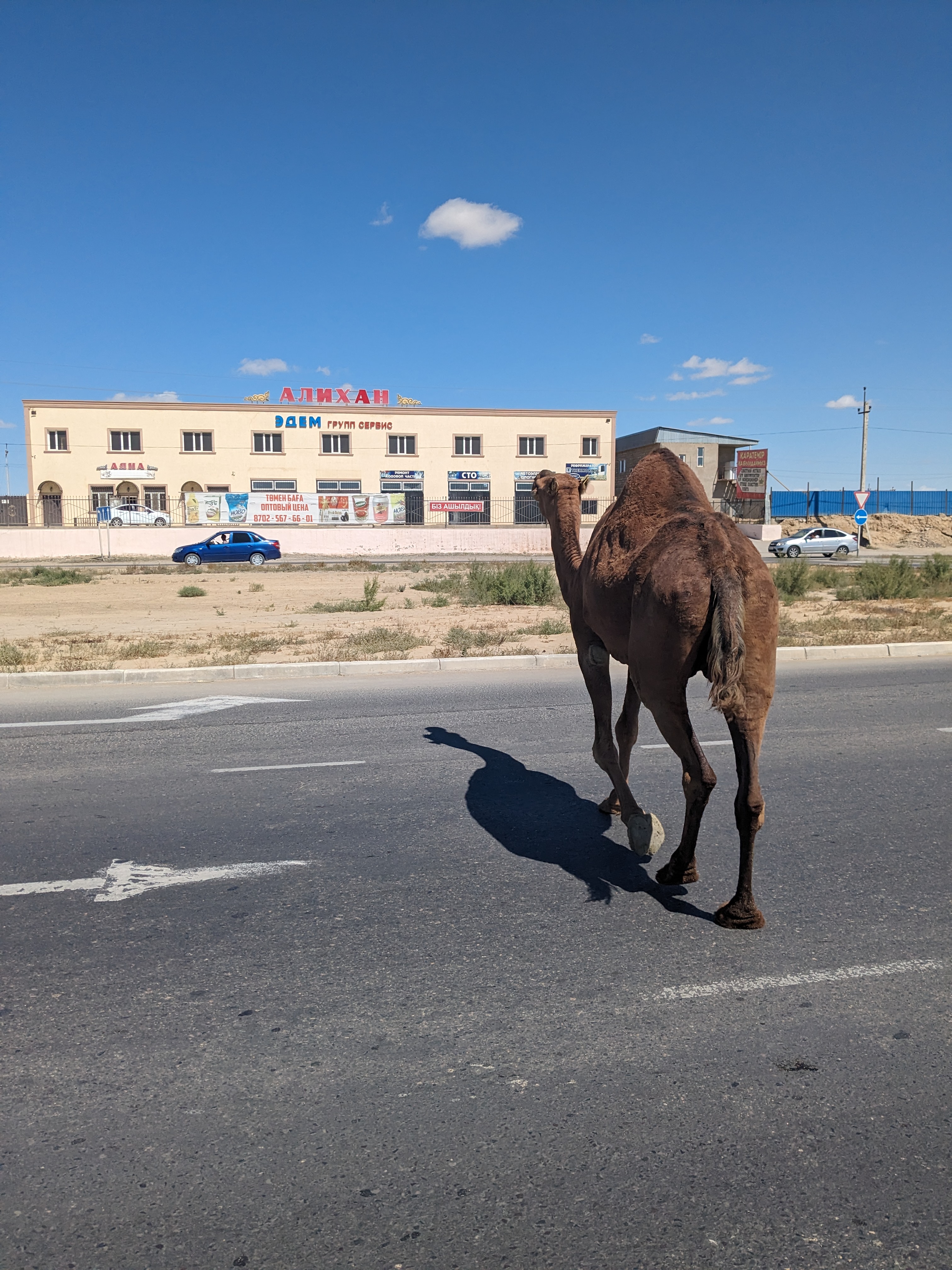
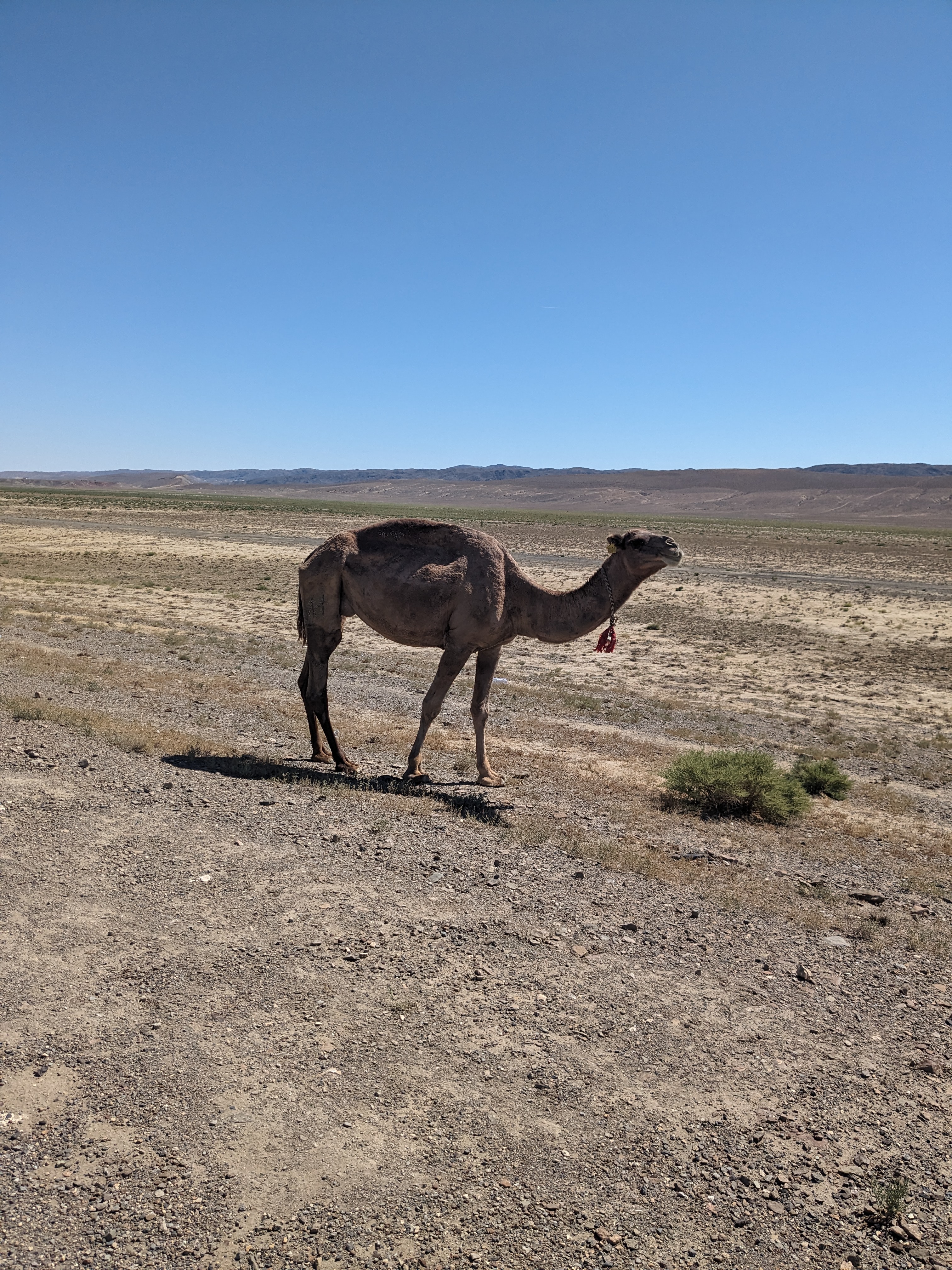
In the 4 days spent in Kazakhstan I feel like I didn’t really learn anything about this country. The people were friendly but we didn’t communicate with them any more than “where are you from?” and “where are you going?”. I found the desert to be amazing and was in ore anytime I’d look out to see nothing on the landscape and also amused anytime I’d see a camel. The food has been different and I’ve mostly been eating tinned fish, loads of biscuits and even some horse milk. I’ll hopefully be returning to Eastern Kazakhstan in October if it hasn’t got too cold in the northen hemisphere by then!

Central Turkey

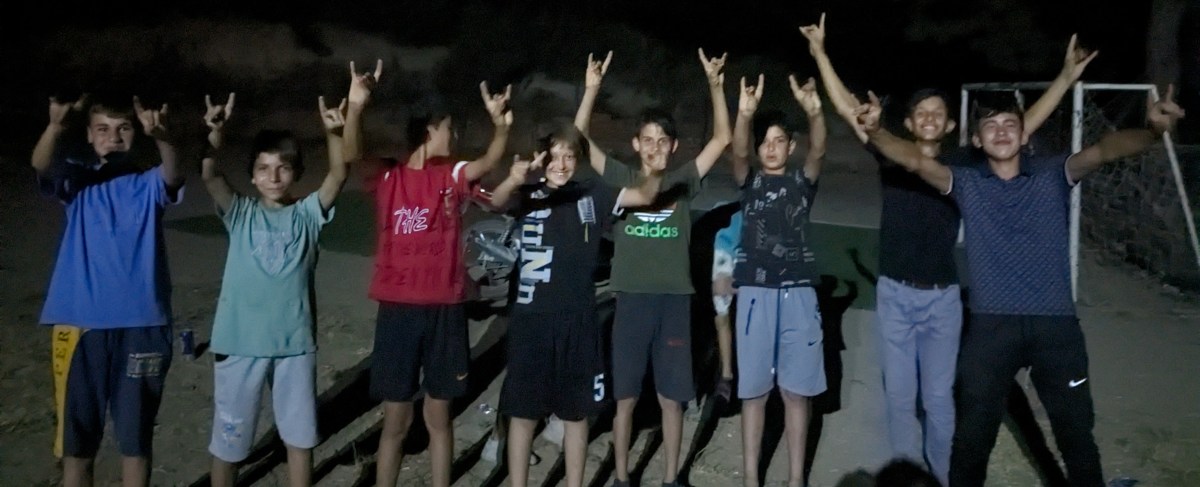
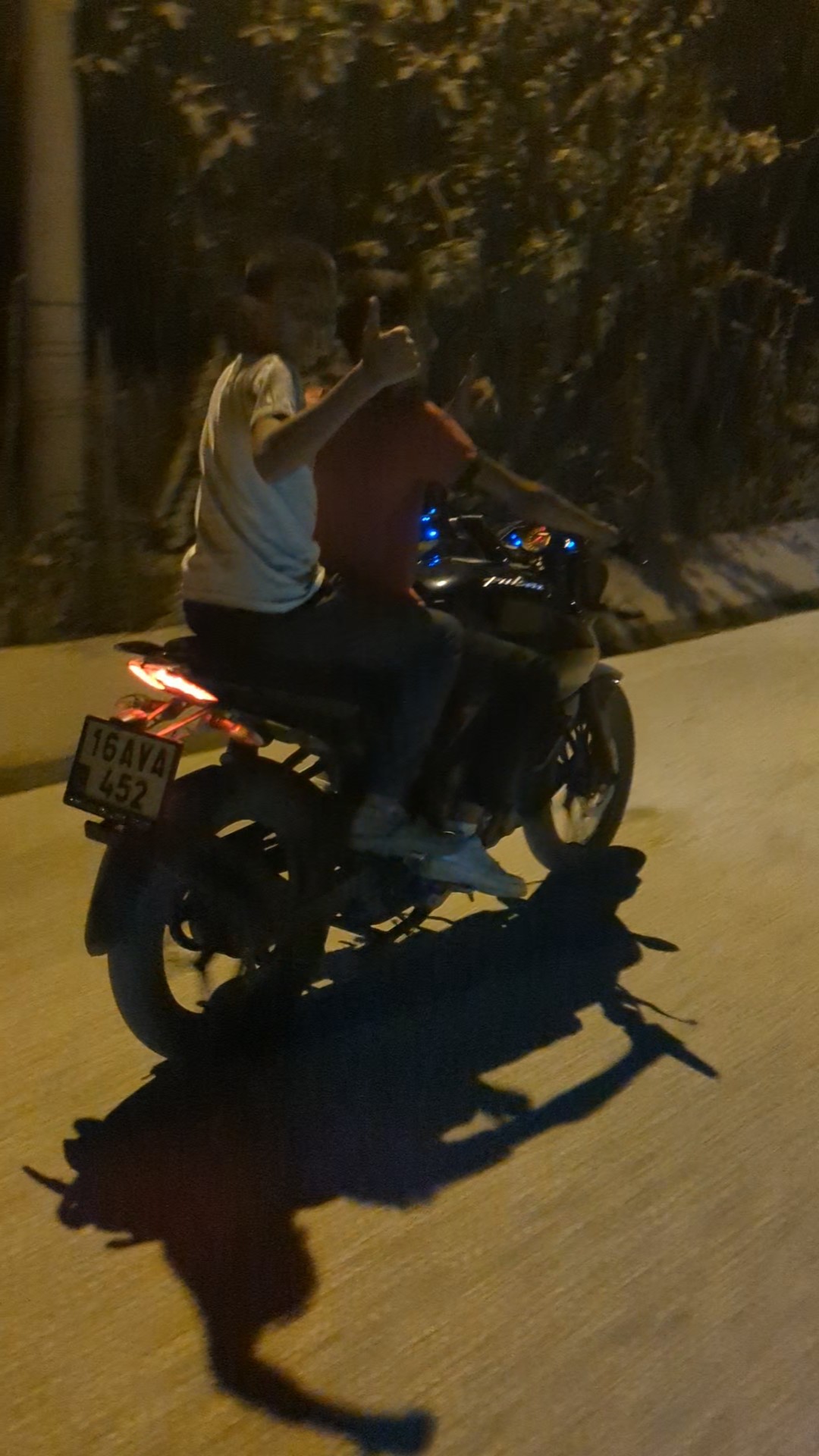
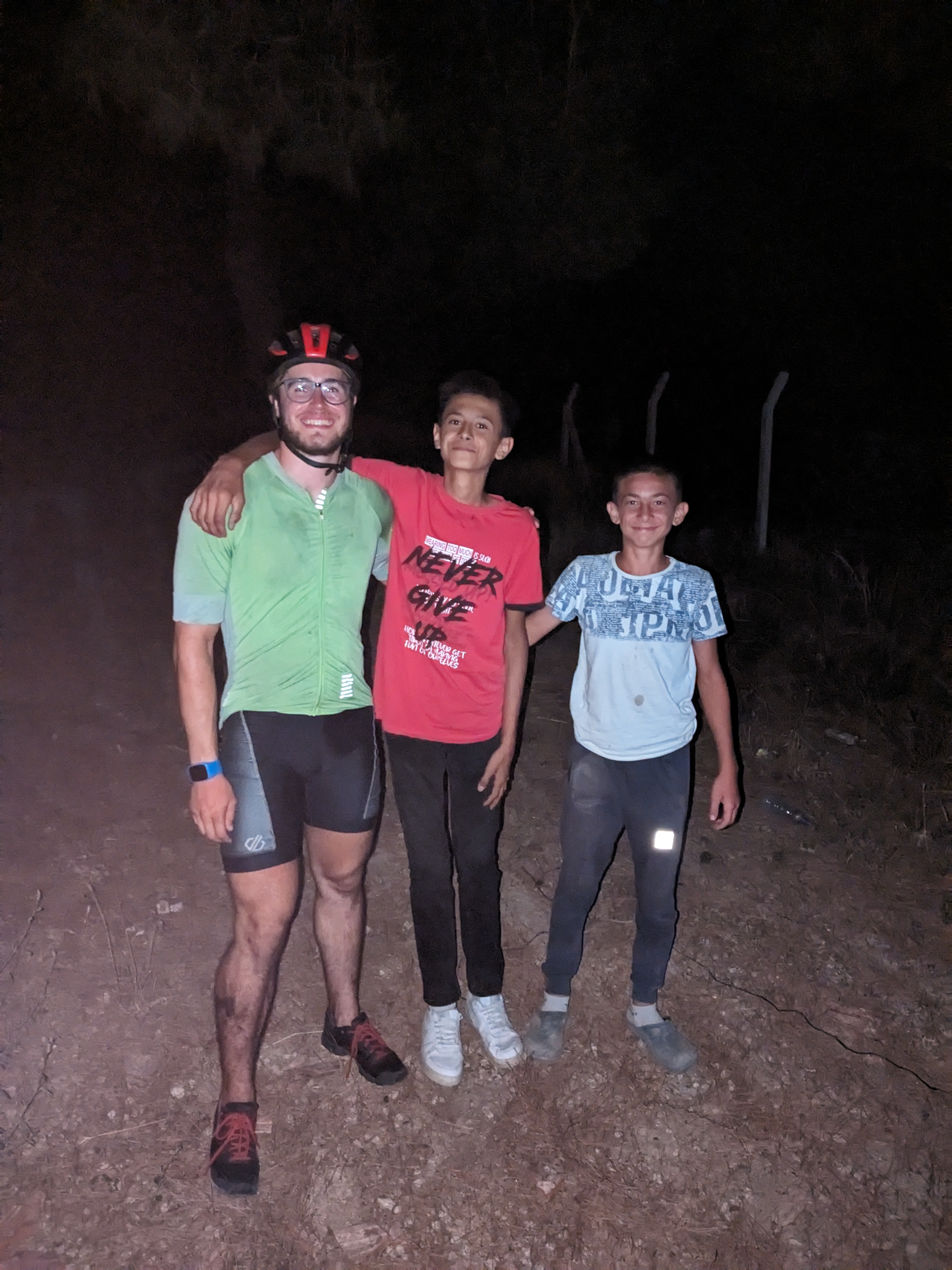
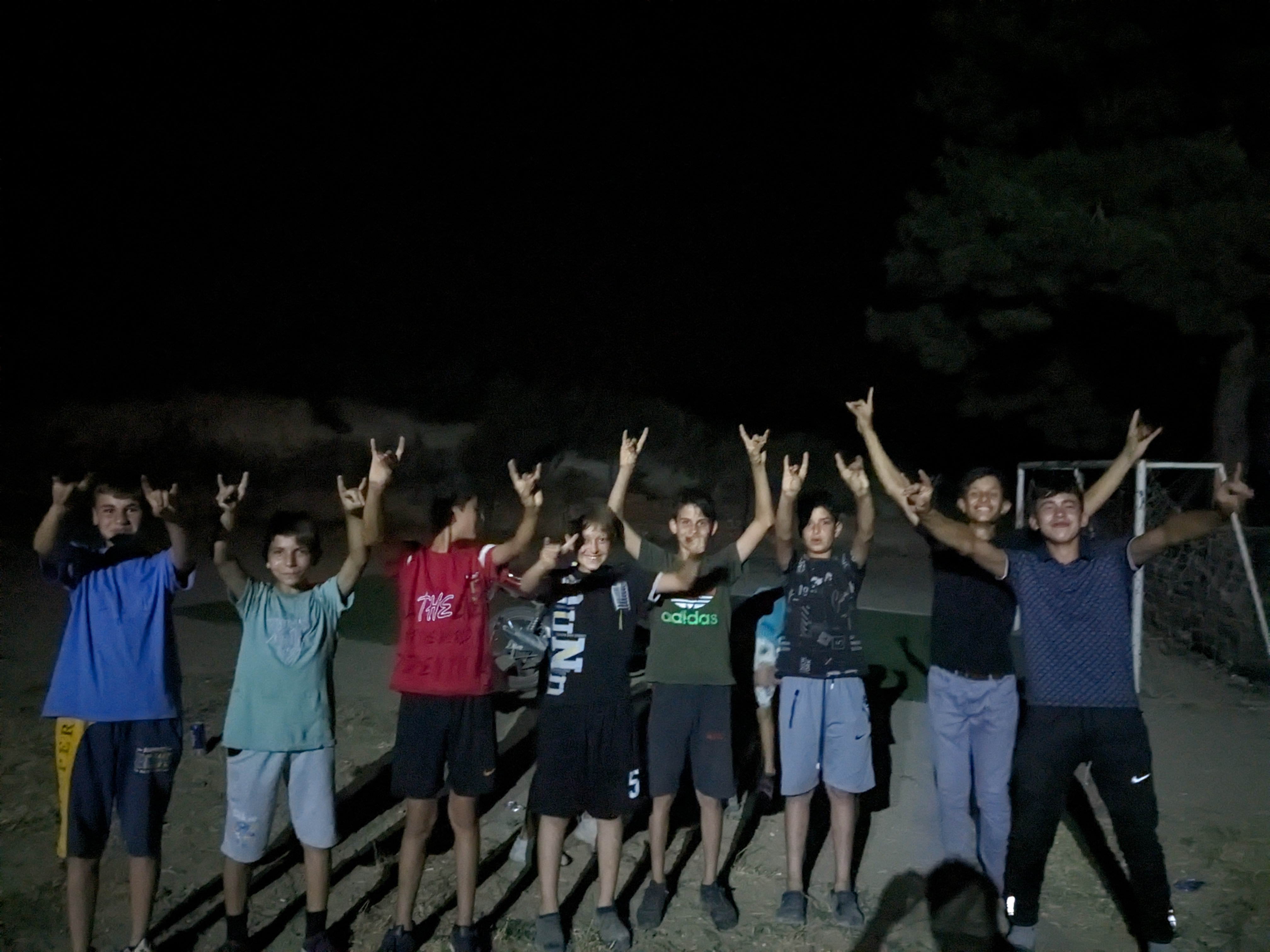
On my first evening, I ventured into a small village to find water and a suitable camping spot. That’s when I crossed paths with Muhammad and Ismail. Through the aid of Google Translate, we engaged in conversation, shared food, and then I was escorted by them on their motorbikes to the village’s football pitch, where they indicated I could camp for the night. As I finished setting up my tent, they returned, accompanied by what seemed like most of the village’s children on motorbikes, emitting a sense of curiosity. My original plan of having dinner and retiring for the night was derailed, as the children were intrigued by the presence of an Englishman camping in their village. The evening evolved into an impromptu football match and answering alot of questions.

The following day brought scorching heat, reportedly reaching 46 degrees according to my GPS, although I remained somewhat skeptical of that. Cycling through the intense heat posed a challenge. I’m still not sure the best course of action as sometimes I feel the breeze while riding is more refreshing than being stationary.

Passing through the ancient city of Eskisehir, I located a mosque where I was able to have a wash and refill my water supplies. Finding water in Turkey has been incredibly easy with every village having a mosque and almost every mosque having drinking water.

That evening, I slept in a park, awakening to the sight of a friendly shepherd leading a flock of goats through the area. Although language barriers impeded our conversation, I tried my best to explain to this curious man why I was camped there and where I was going.

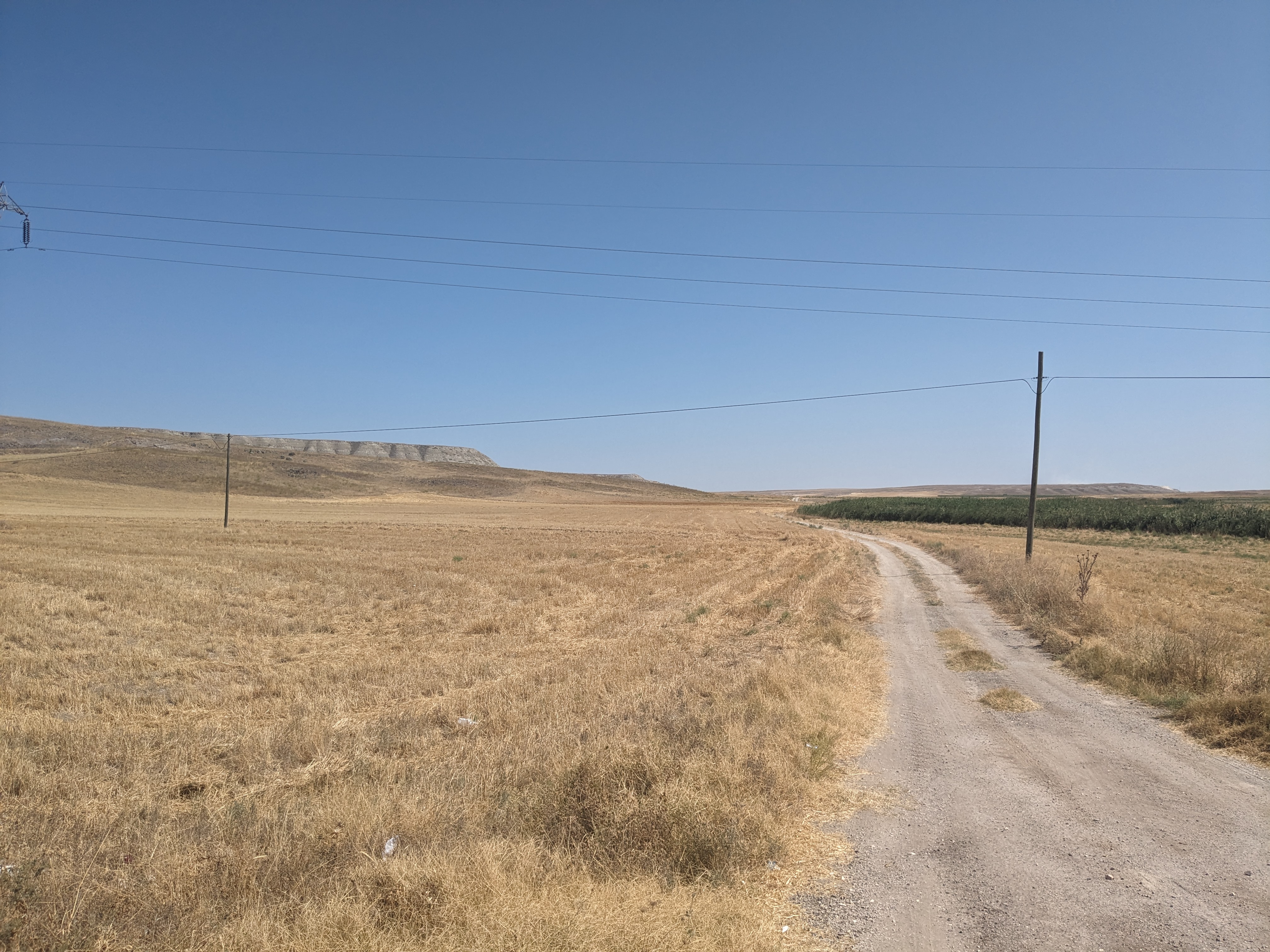
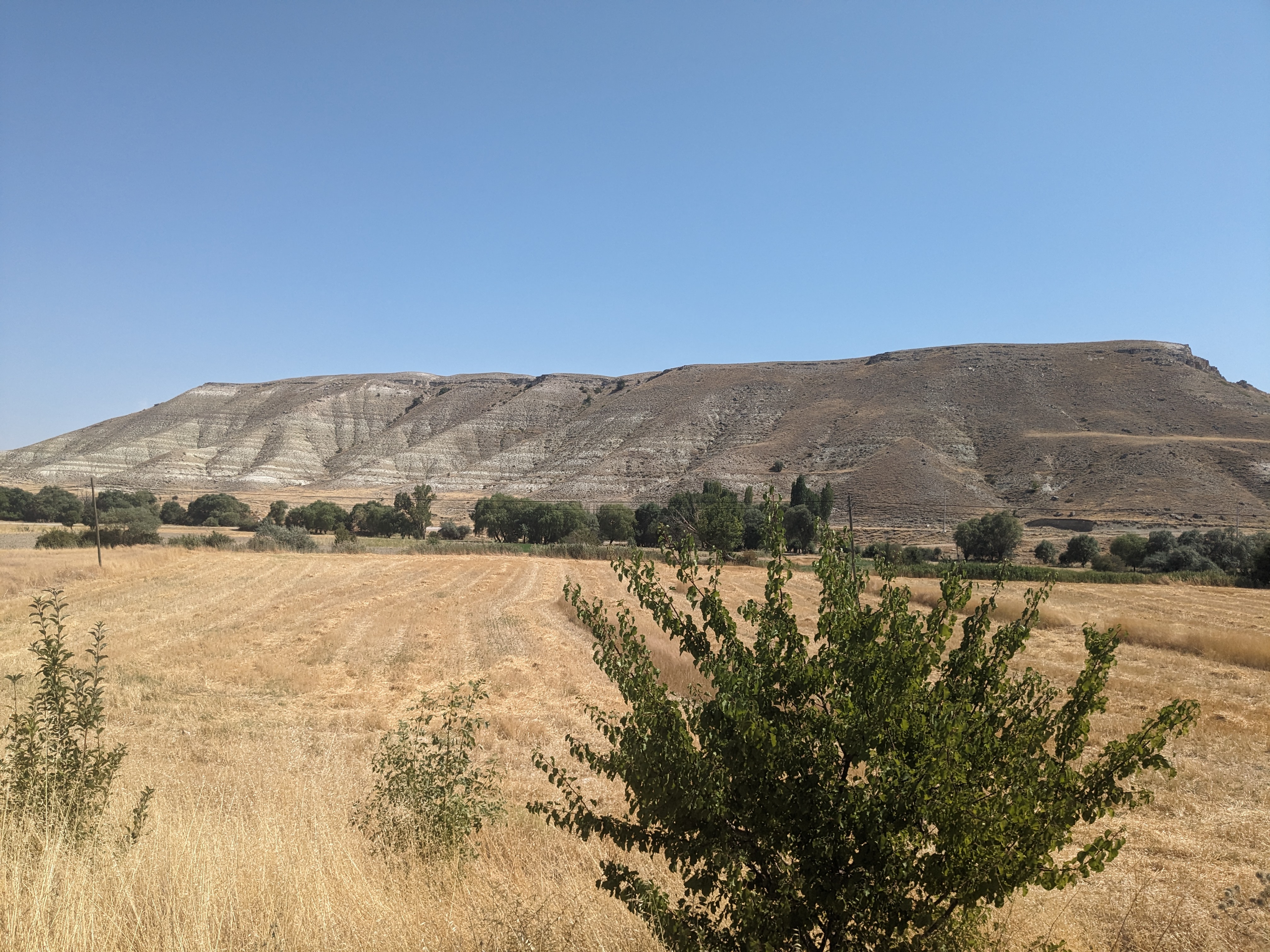
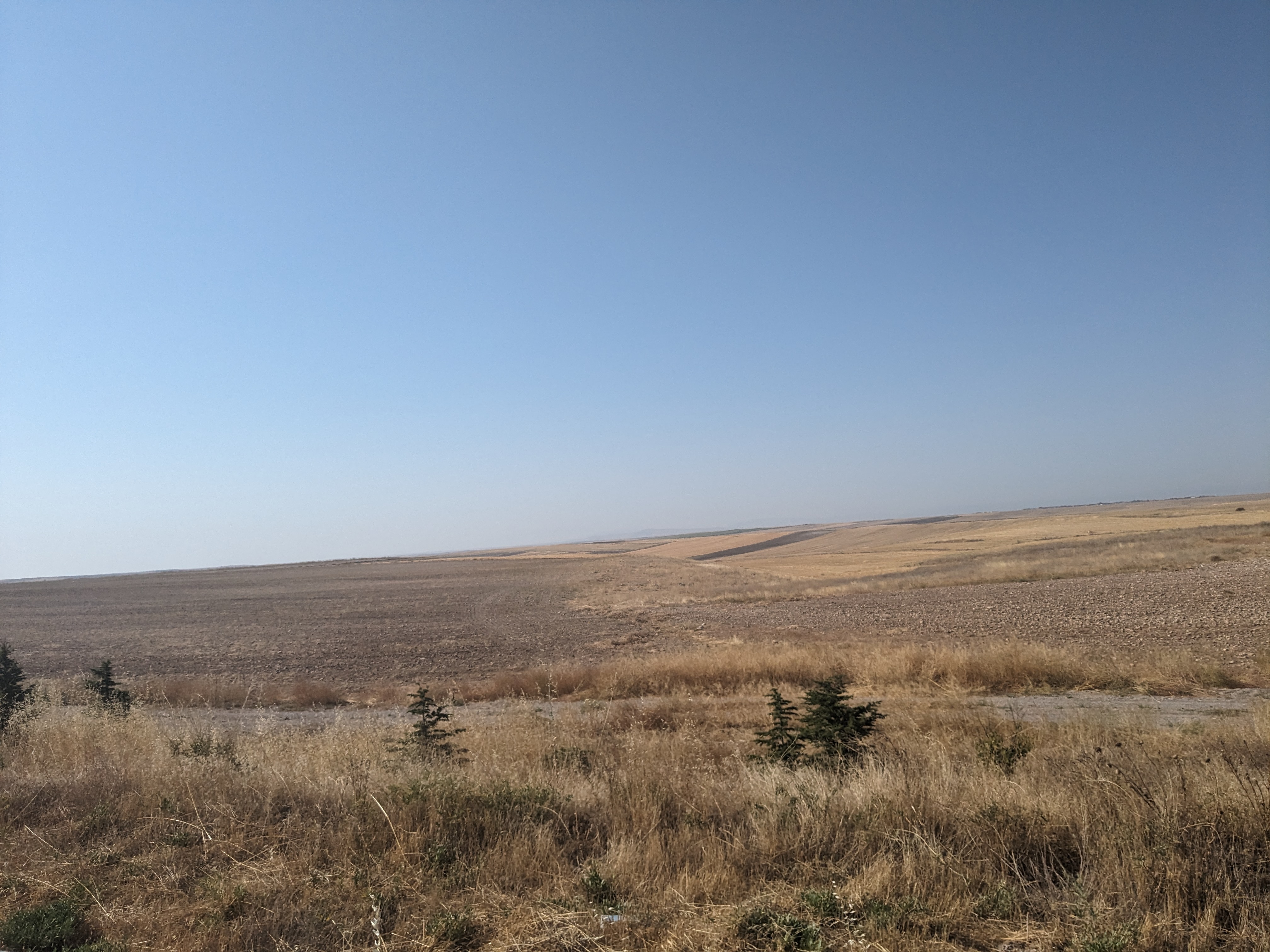
The day’s objective was to reach Lake Tuz, a salt flat. Throughout the day however, I cycled through some fantastic landscape and it was clear by now I’d left Europe.

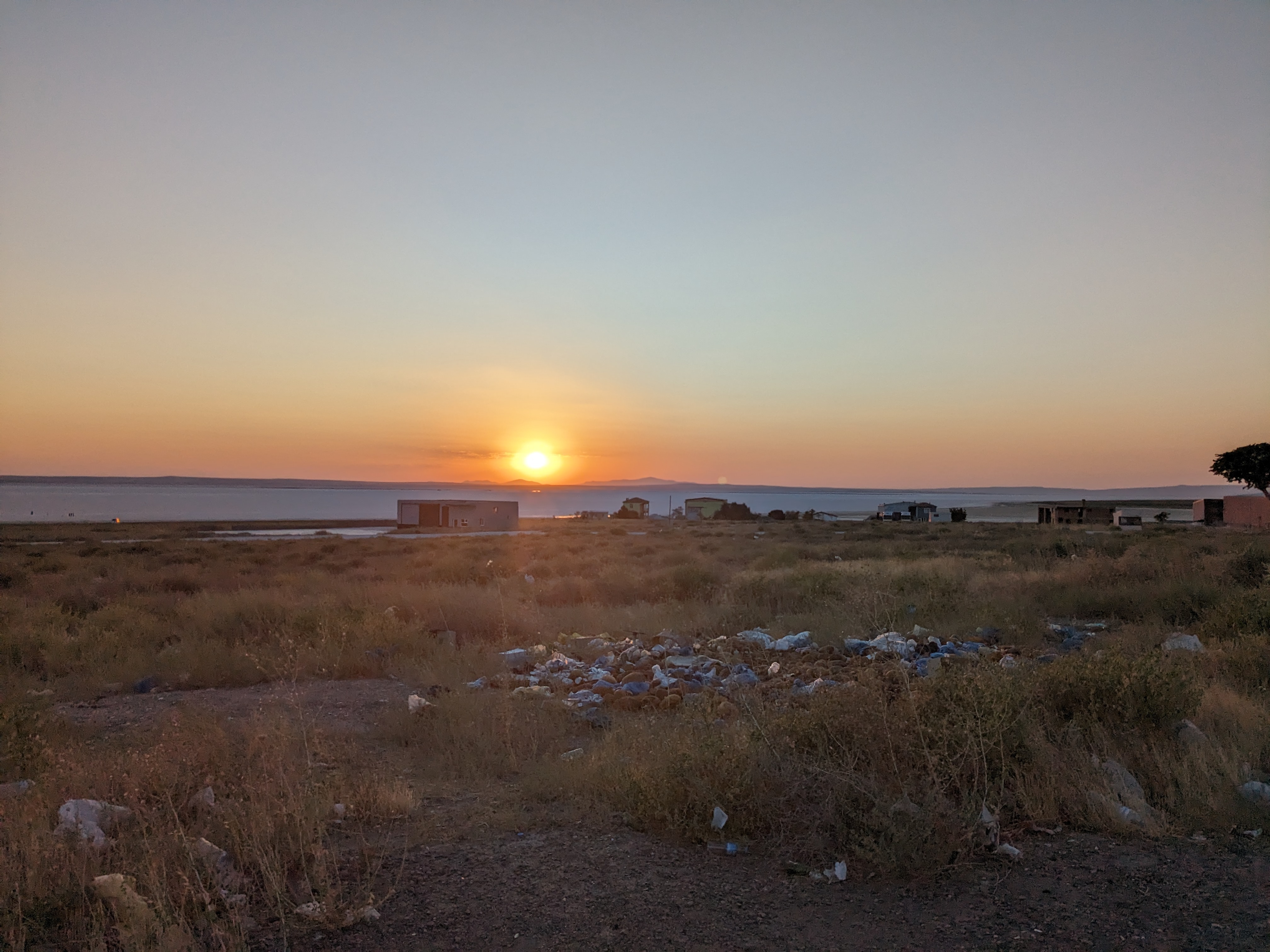
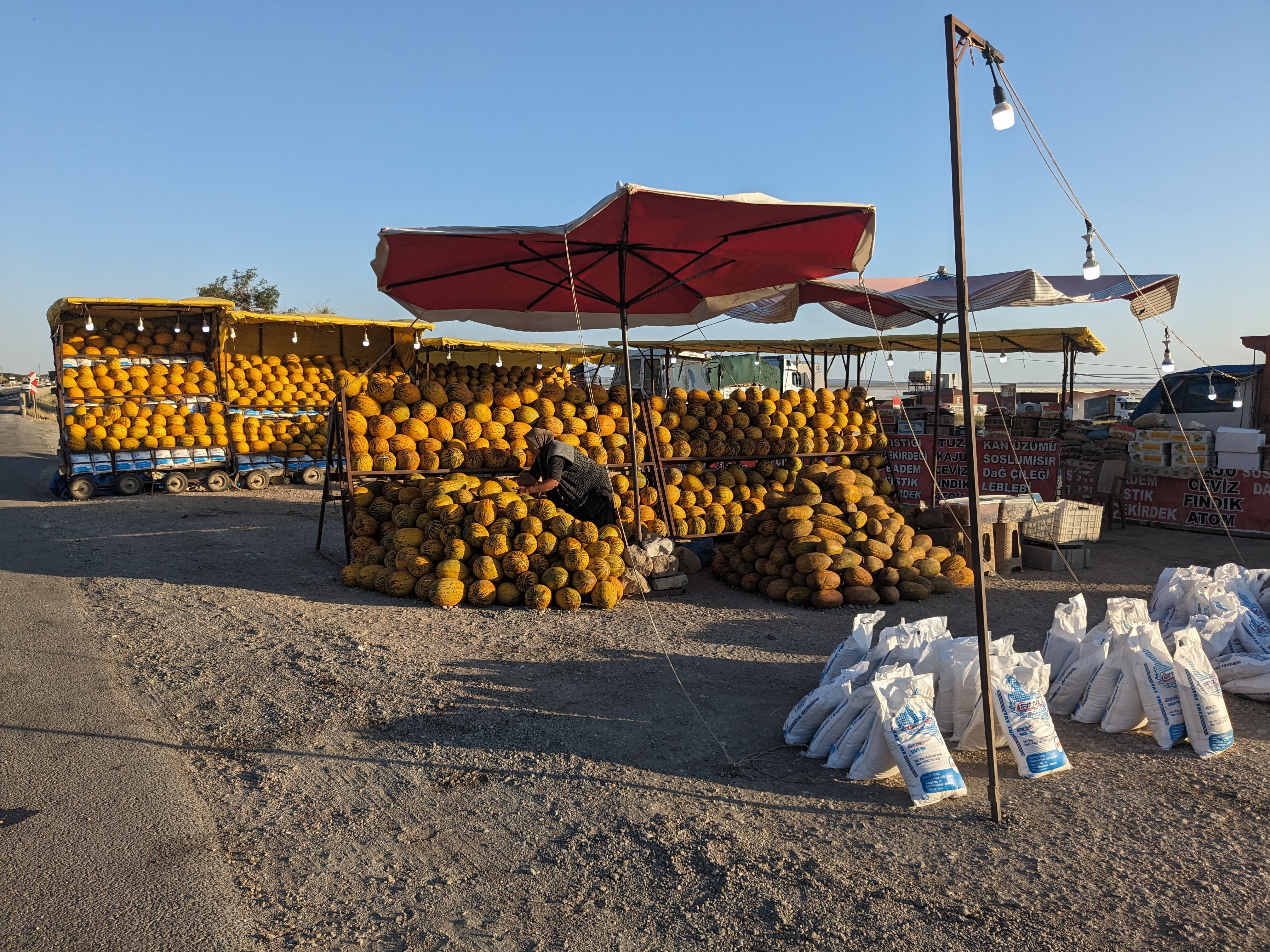
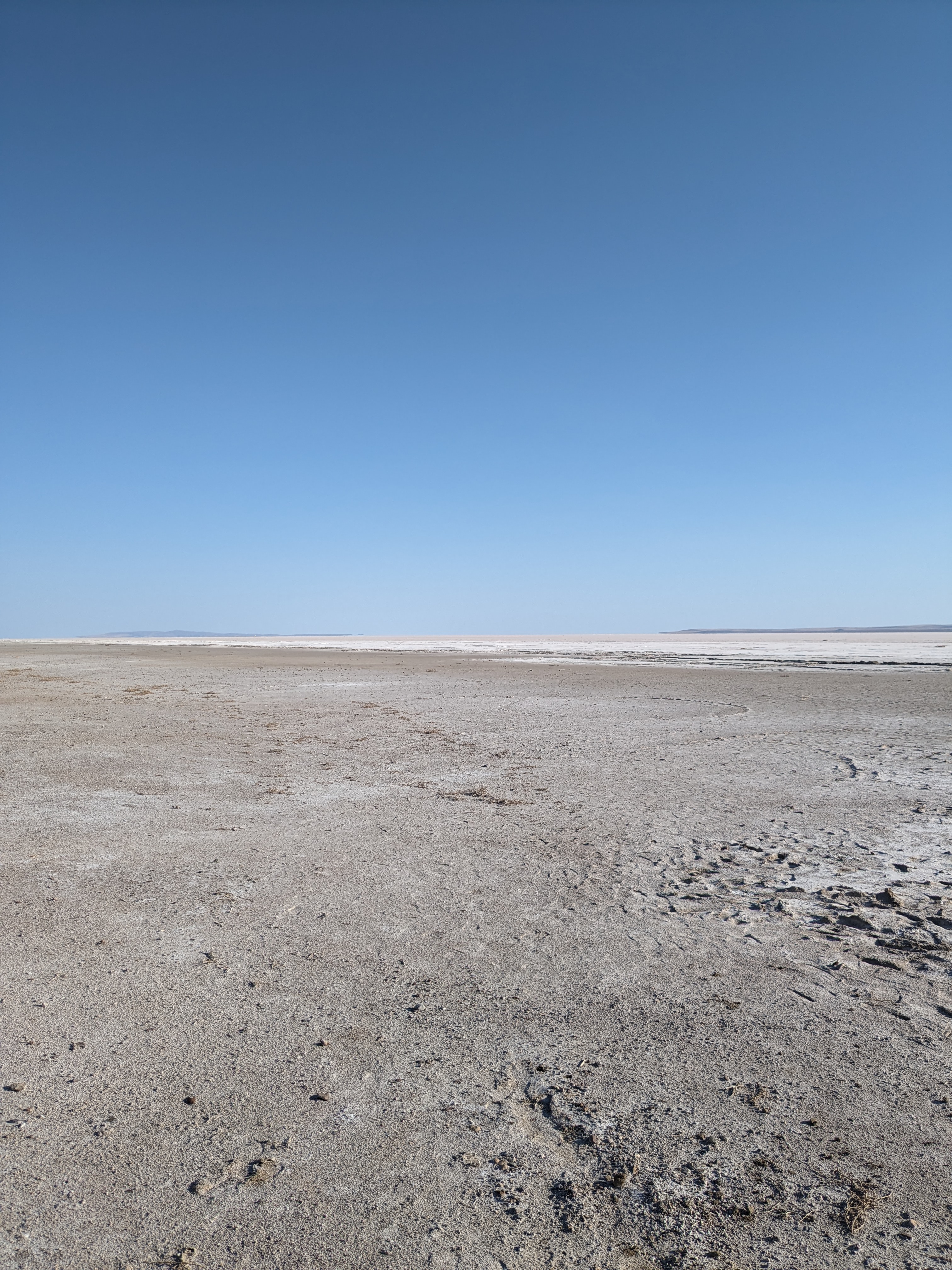
Once at Lake Tuz, the sight of an expansive horizon with nothing but emptiness was impressive. That evening, I stopped at one of the numerous melon stalls that have become commonplace since my time in Croatia. While I was in Turkey, the prevalence of these stalls seemed unparalleled. I’ve never seen any melons being grown anywhere, so I’m still not too sure where they all come from. The vendor running the stand was happy for me to camp there, allowing me to witness a picturesque sunset over the lake.

The subsequent day proved difficult due to significant issues with my bike. Sensing that something was amiss, I located a bike shop in Aksaray. They were helpful but indicated that fixing the bike there was unfeasible due to the required parts’ unavailability, requiring a wait of four days. I opted to take a bus to Kayseri, where I could find a shop capable of addressing the issues. After a two-hour bus ride, I located a shop that could fix it – a new rear hub and bottom bracket were required. They promised to have the bike fixed by the following afternoon. Feeling a bit down, I treated myself to a night in a hotel although my spirits were quickly lifted by the

friendly hotel staff offering me drinks. That evening was then spent chatting and drinking with these three men before I headed up to my room for some rest.

By 1 pm the next day, my bike was repaired and I set off westward towards Cappadocia.

The recent days have been both mentally and physically demanding for several reasons.

Firstly, a significant aspiration of my trip is to cycle through the Pamir mountains in Tajikistan. To accomplish this, I must reach the area by mid-September to avoid extreme cold temperatures. This target required me to cover approximately 130 km per day, which initially seemed feasible. However, the experience of spending eight hours on the bike daily and feeling obligated to press on took a toll on my enjoyment of the trip. My solution to this is taking a bus across most of Turkey to reduce the distance I need to cycle.

Transitioning into Asia marked a distinct culture shock. Access to Wi-Fi became more challenging, English speakers became scarce, and I often sensed that I was being overcharged for food and beverages. The toilets were also a stark contrast at first!

Nonetheless, most people I’ve encountered have been remarkably friendly and intrigued by my journey, with the younger people often wanting to connect on Instagram and take photos together. I have also shared tea and food with some interesting people whilst amongst some great scenery.