

Upon arriving in Uzbekistan, Joris and I initially planned to take trains across the Uzbek desert to speed up our journey to Tajikistan. However, when we reached the train station in the first town, it appeared deserted with no one around to assist us. Our next step was to visit a nearby bank to withdraw some Uzbek som from the ATM. To our dismay, the ATM was empty and incapable of dispensing cash.
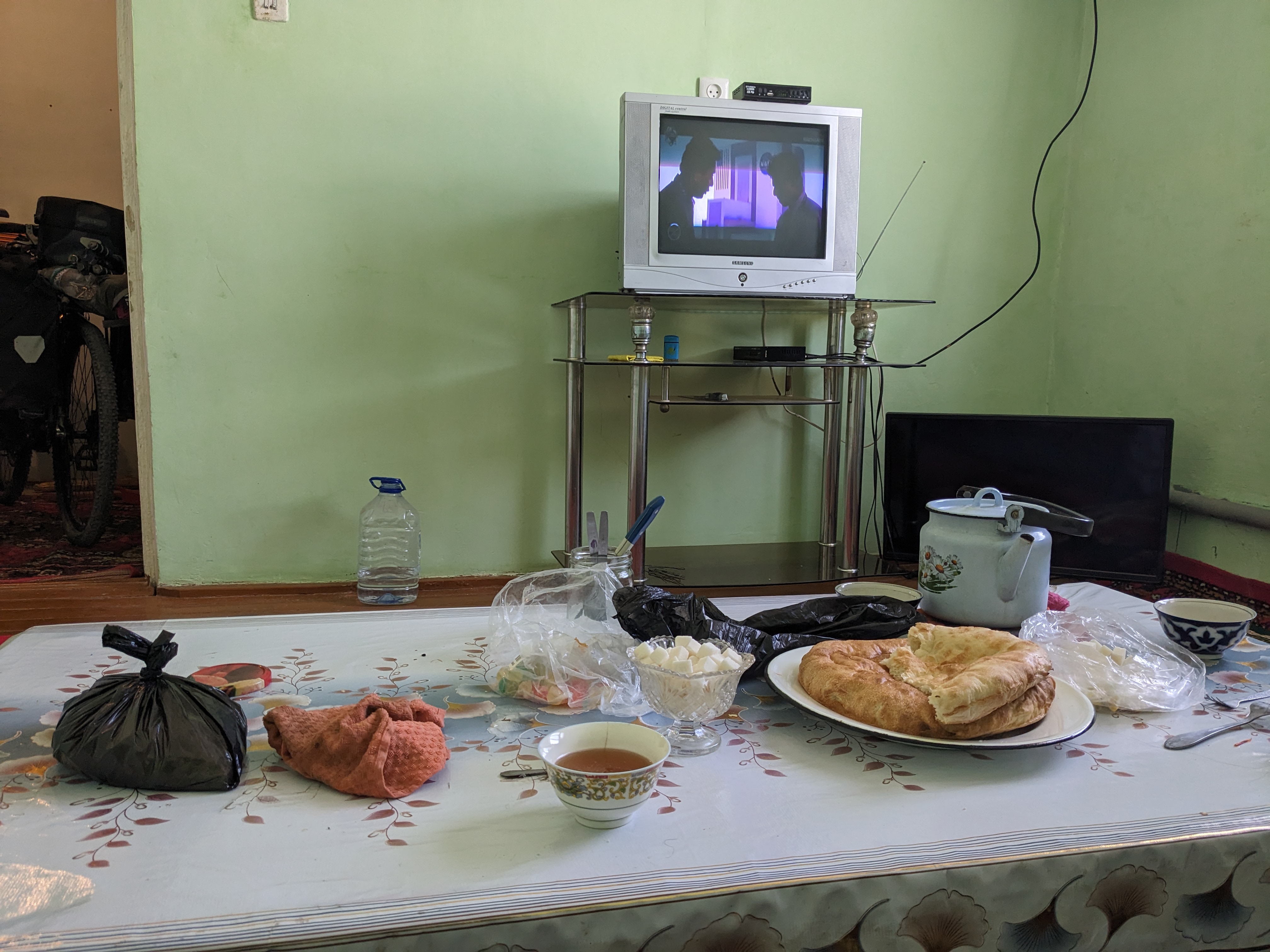
Uncertain about our next move, we were graciously invited into the home of a local gentleman who offered us tea and food. During our conversation, he informed us that there would be no access to money for the next 140 kilometers, and there were no available trains.

Faced with this challenge, we decided to cycle back to the main road and try hitchhiking with passing trucks. After several attempts, we managed to catch a ride, although we had to take separate trucks driving in convoy as they each only had one spare seat. Our journey entailed a grueling 7-hour drive across a poor desert road, and we stopped for the night around 2 am. Fortunately, we were offered the truck’s bunks to sleep in, a treat to have a proper bed.


The following morning, after enjoying an Uzbek breakfast consisting of beef, bread, and eggs, we continued our journey in the trucks for another 5 hours before being dropped off at an unknown location along the road 500km away from where we got picked up.
After consulting a map, we headed to the city of Urdench, hoping to catch a train to Samarkand. This was a strange city, feeling very empty with few people around but huge 3 lane roads everywhere and almost plastic fake looking building.
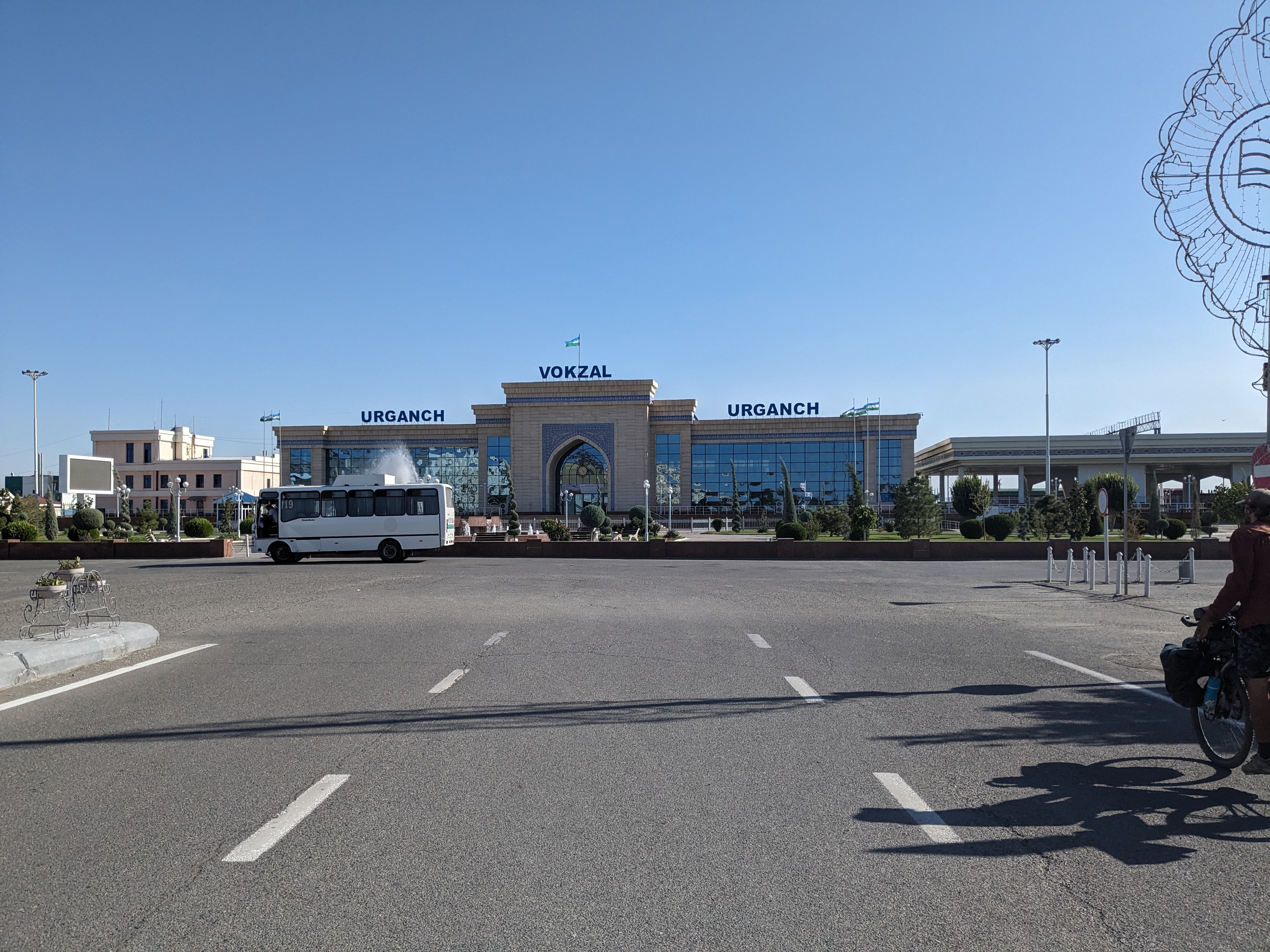
At the train station we were informed the next train wasn’t until the following morning. Our efforts to find affordable lodging proved fruitless, as the hotels charged tourist rates double that of Uzbek locals. Faced with this challenge, we decided to cycle out of the city in search of a suitable camping spot. Eventually, we came across a hut near some fields and asked the residents if we could camp there.
To our surprise, the hut was attached to a restaurant, and the kind hosts not only allowed us to camp but insisted we join them for a meal. The food was exceptional, with fresh bread, kebabs and potatoes stew.

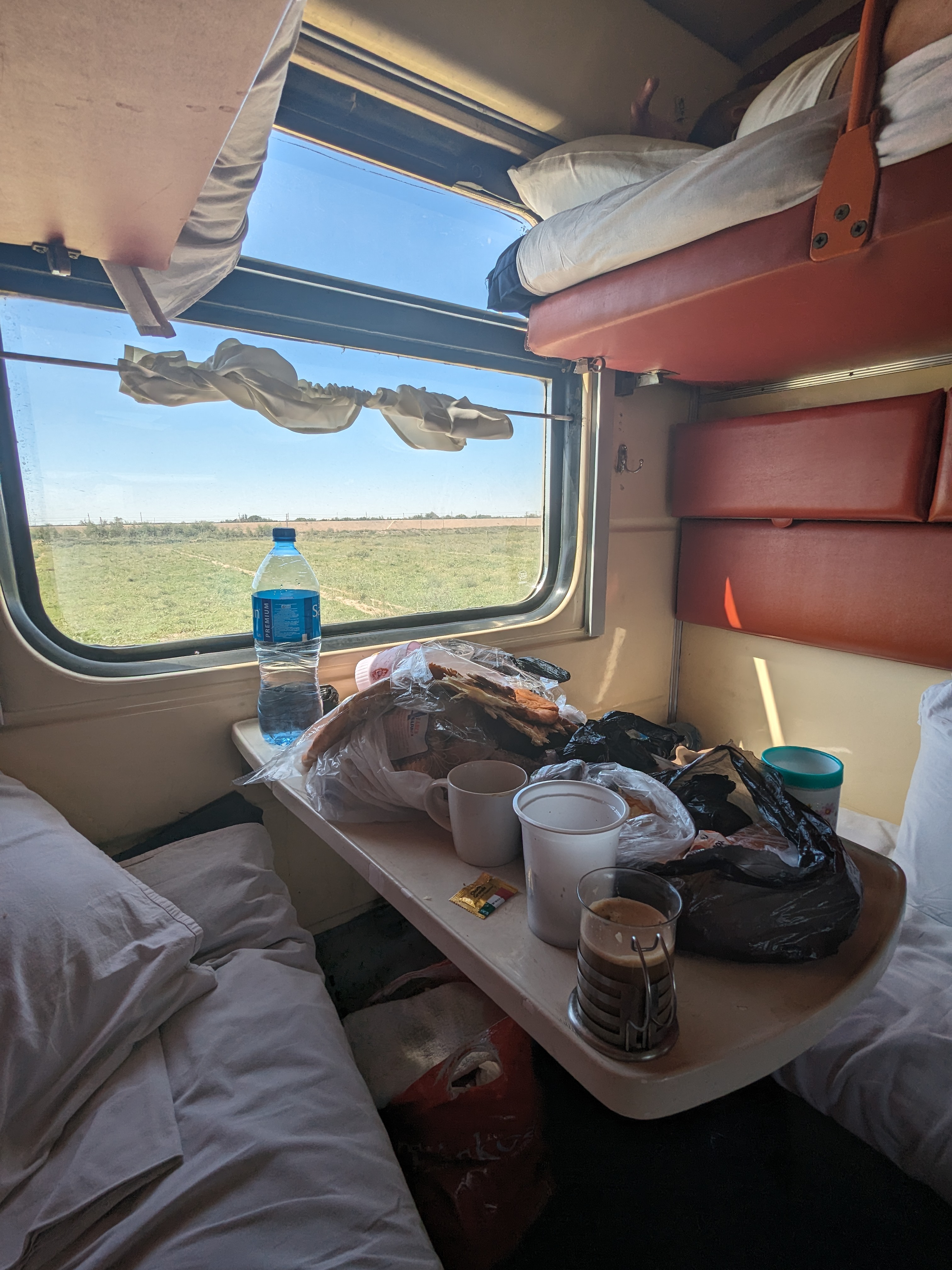
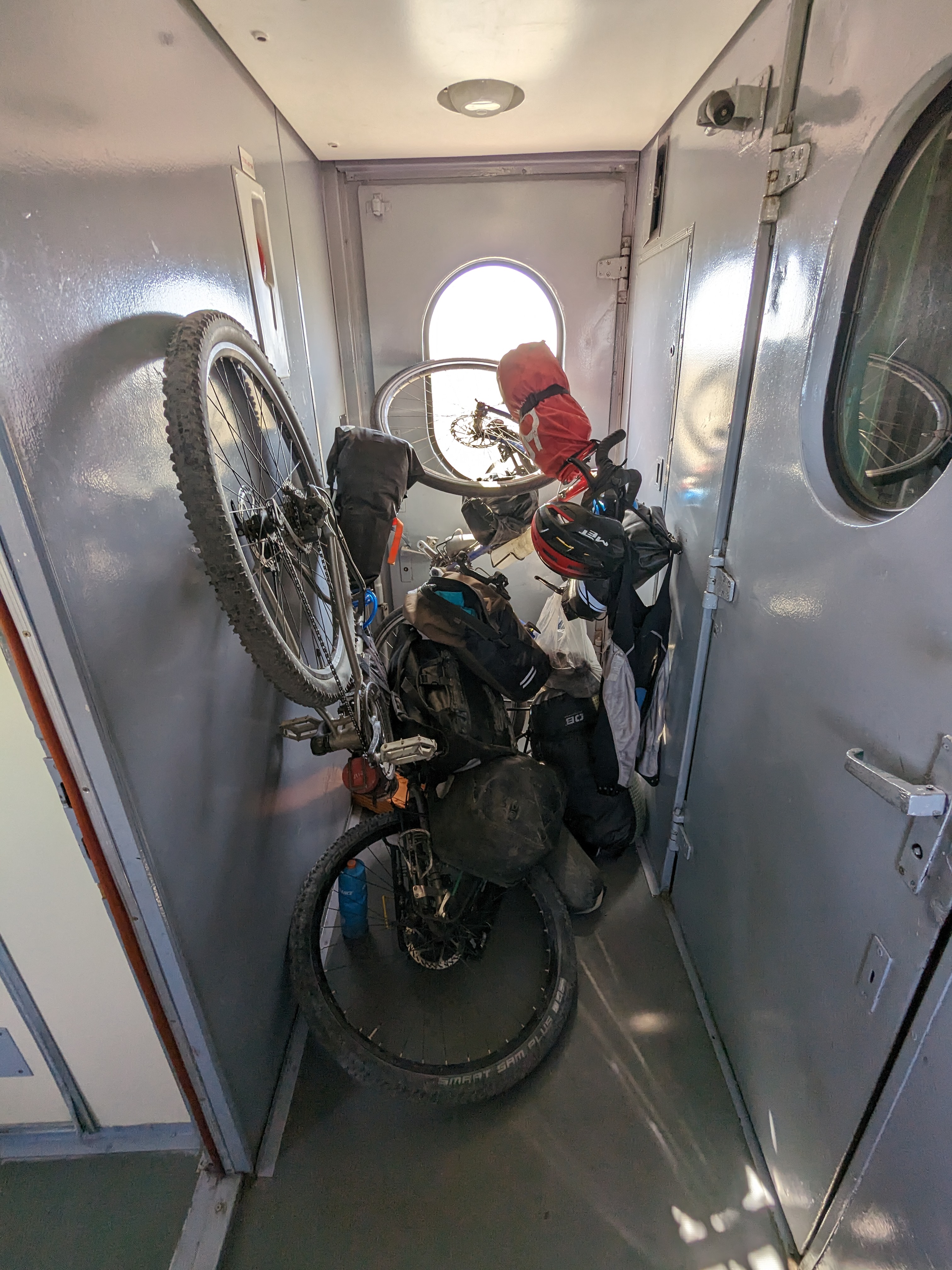
The next day, we embarked on a 10-hour train journey. It was quite a challenge getting the bikes on the train and squeezing them into the corner whilst a rather unimpressed train guard watched on. During the journey, we met a friendly family accompanying their son to university who generously shared their food with us. All the passengers on the train were not only friendly but also well-educated, many of them holding positions as lawyers, nurses, teachers, or students heading back to university for the start of the term. Conversations revealed that while they praised their president and government, most students aspired to leave Uzbekistan for opportunities in Japan or Europe, with many attending international universities.

The following day, we explored the city of Samarkand before making our way to the Tajikistan border.


I had concerns about crossing the border because we lacked the necessary registration to exit the country. Officially, within three days of entering Uzbekistan, visitors are required to register at a hotel and present this documentation at the border. However, we had not completed this process, and it seemed like a 50/50 chance whether we would be asked for the document.
Additionally, British citizens needed a $30 visa to enter Tajikistan, whereas citizens of most other countries, including Europeans and Australians, did not require one. My plan was to swap to my Australian passport when entering Tajikistan to save on visa fees.
Exiting Uzbekistan proved straightforward, with a border official stamping our passports without questions. However, entering Tajikistan presented challenges. The Tajik border official was concerned that my Australian passport lacked an Uzbekistan exit stamp. When I showed him my British passport, he remained unimpressed and instructed me to wait while he made a phone call. After 20 minutes, he informed me that I must enter using the same passport I used to exit Uzbekistan and that I needed to obtain a visa.
Next, his boss arrived and escorted me to a back room, where he scrutinized my passport details for approximately 5 minutes. Recognizing that my possession of two different passports had caused confusion, I clarified that my father was Australian, and my mother was British. This explanation seemed to put them at ease, and they became very friendly telling me how great Tajikistan is and issuing the required stamp.
After one final passport check, I was granted entry to Tajikistan with the words, “Welcome to paradise.”
My short time in Uzbekistan has been great. The people were exceptionally hospitable, often expressing surprise at encountering tourists in their country. While we missed some planned destinations, such as Khorg, the journey was enriched by the delicious cuisine, characterized by simple yet great meat, bread, and savory pastries.
 Will Scam