Tasmania

The flat coastal riding south of Adelaide was a nice way to ease back into things. I’d made some good mates at the hostel where I’d been living and working, so it felt strange to leave that little routine behind and hit the road again.

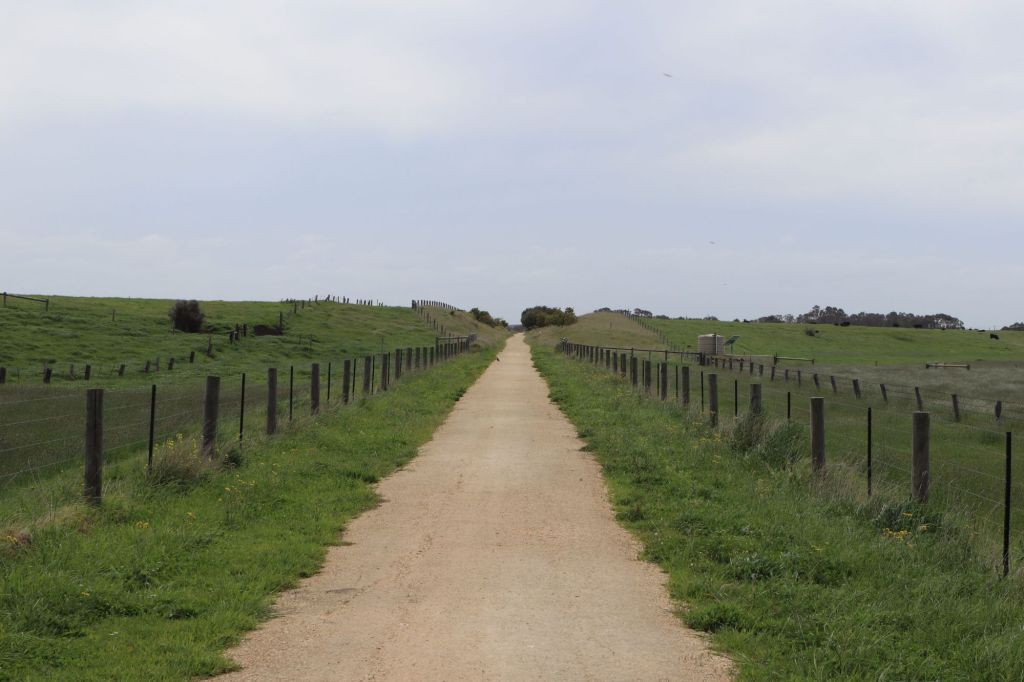
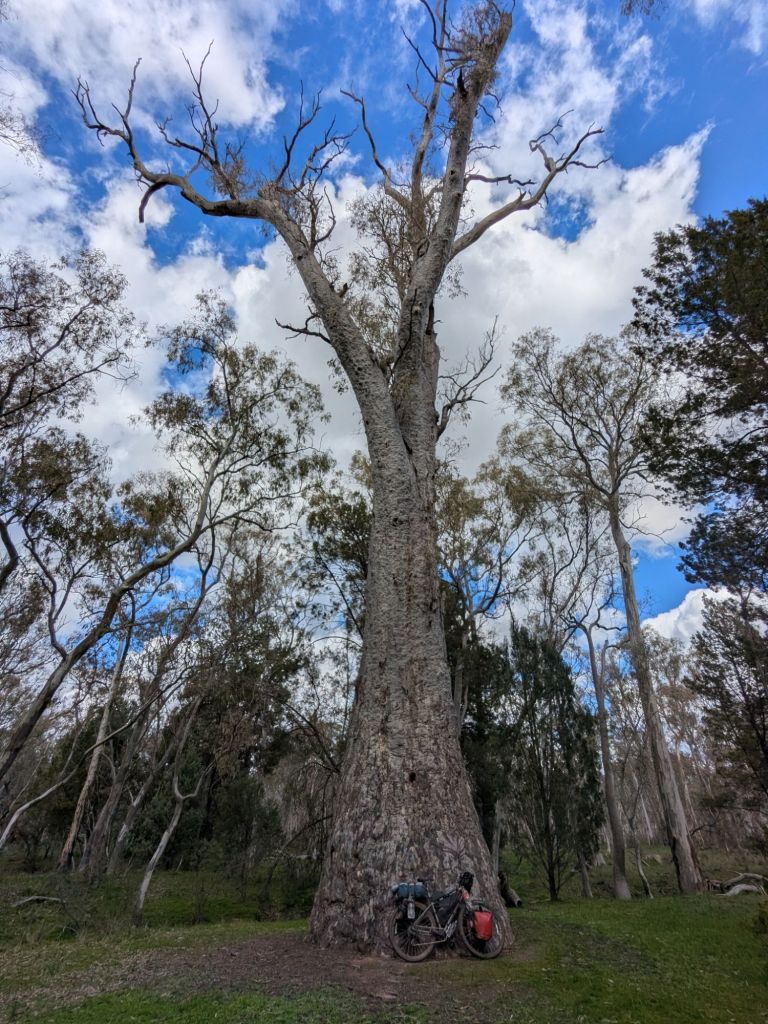
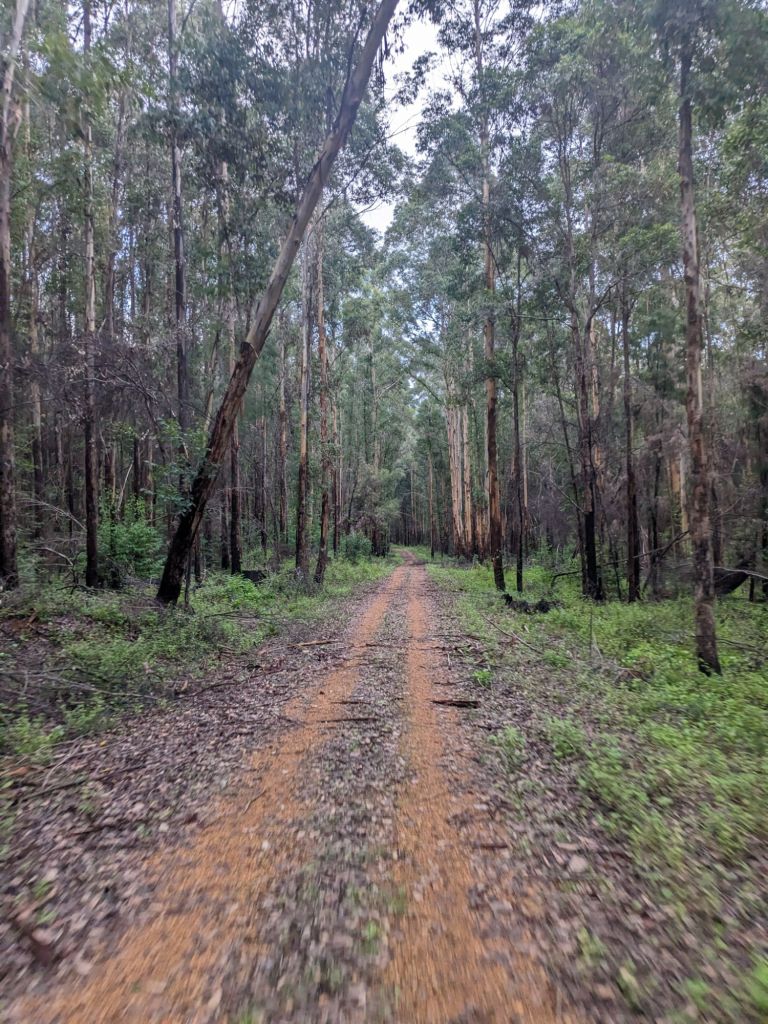
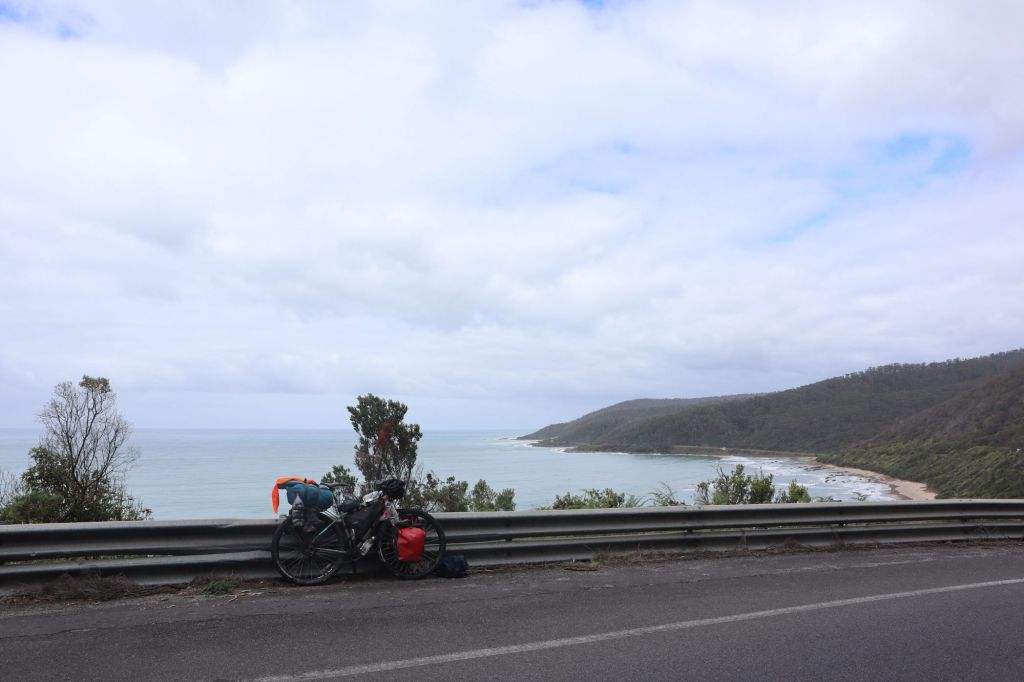
The terrain became much hillier as I reached the Great Ocean Road. Despite the traffic, it was a beautiful stretch to ride. I detoured into the Otway forest to camp for the night, then rejoined the road and continued into Geelong to catch the ferry to Tasmania.


The ferry was slightly stressful — I didn’t know the process, so when they told me to remove the bags from my bike I ended up stuffing all my damp clothes into random bags. This came back to bite me when the Tassie biosecurity dog picked out every one of them. I had to unpack everything to prove I wasn’t carrying food, much to my embarrassment as I emptied piles of wet clothing onto the floor.


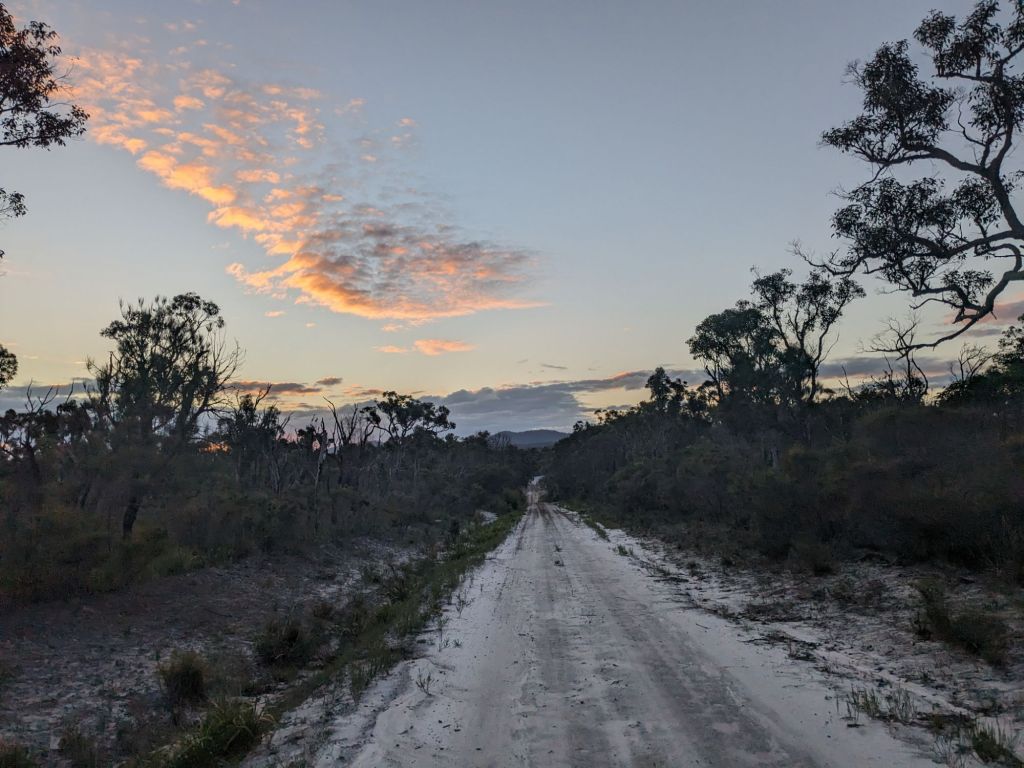
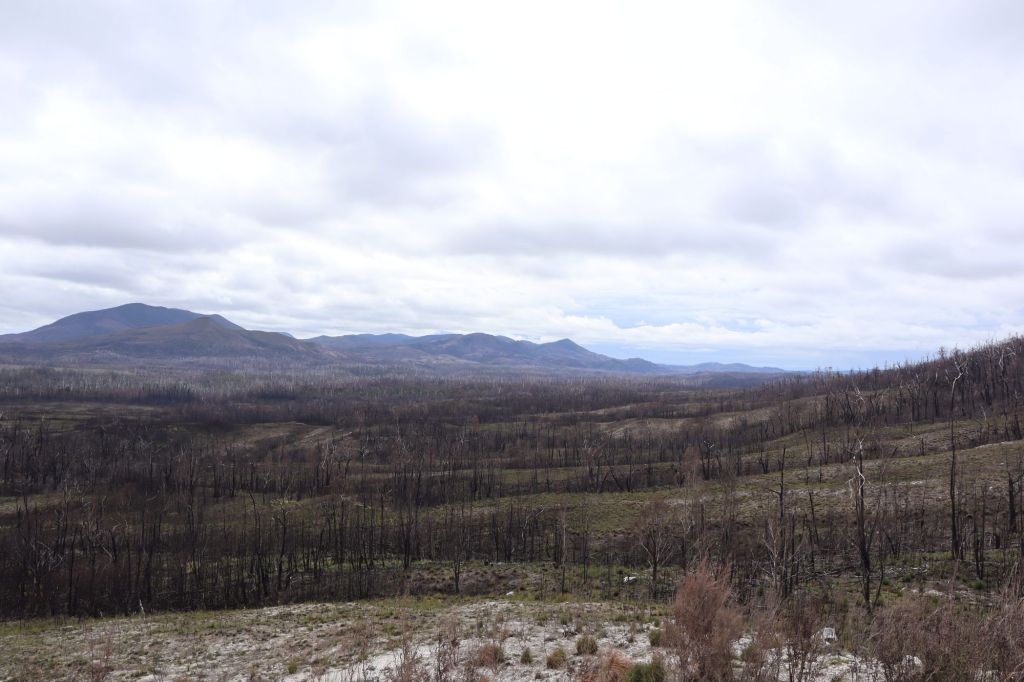
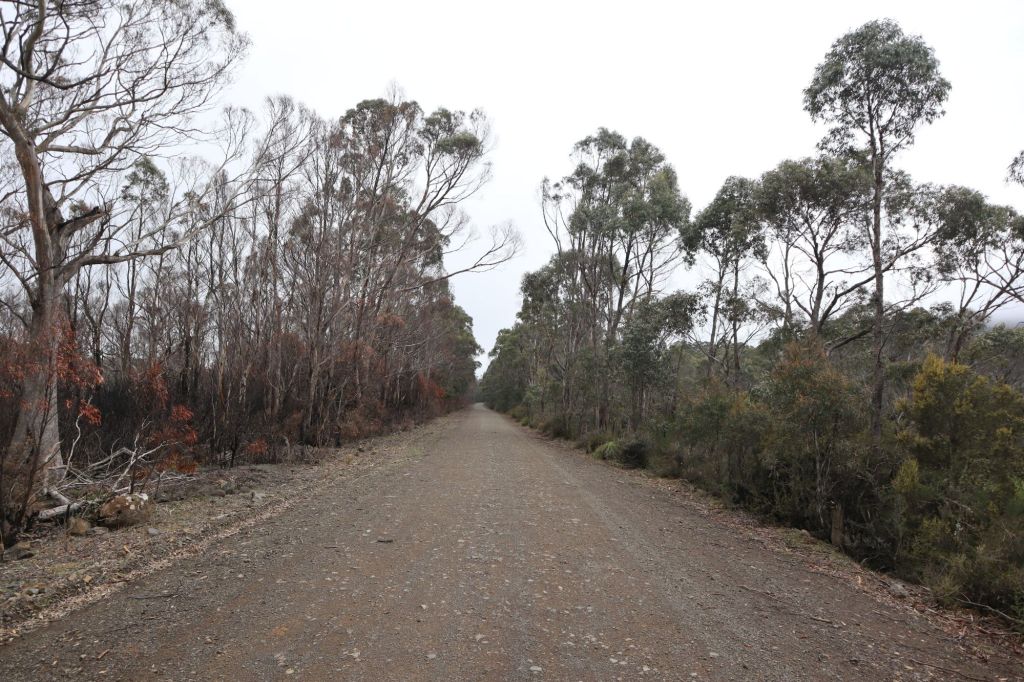
Heading down the west coast of Tasmania was incredible. Quiet gravel roads through wild, empty country — it felt like being back in New Zealand. It was brutally hilly, with short rolling 20% climbs winding through burnt-out forest.


Passing through the historic mining towns of Zeehan and Queenstown felt like stepping back into the gold rush era.


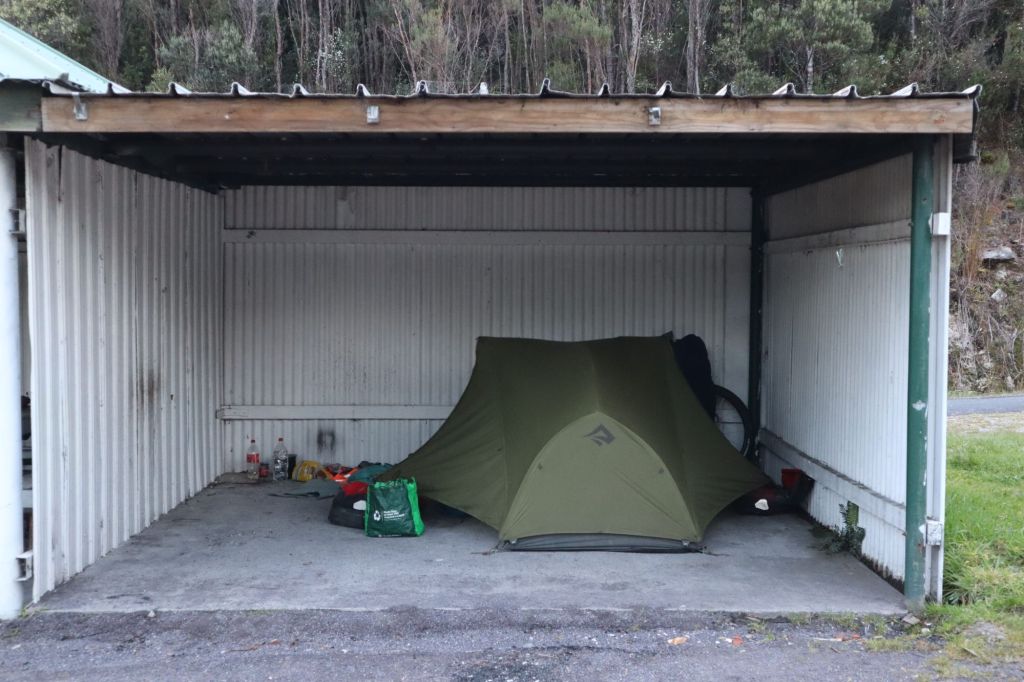
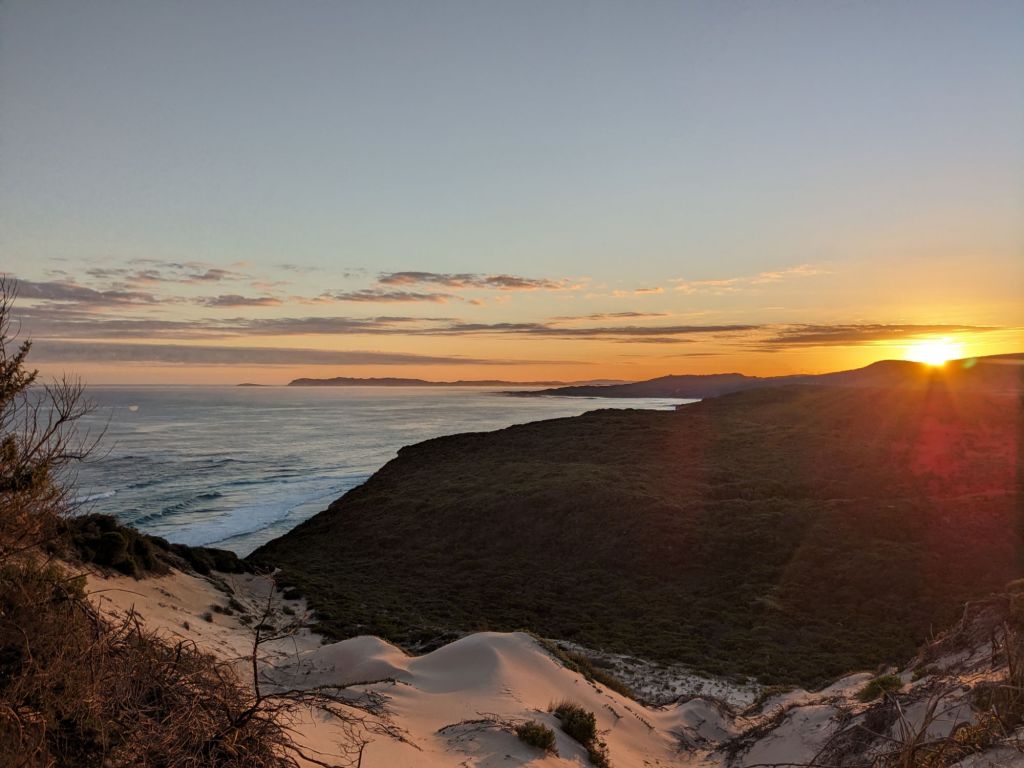
Next I took another ferry out to Bruny Island. Unfortunately the far south of the island was closed due to a forest fire, but I still found an amazing camp spot along Four Mile Beach — a definite highlight.


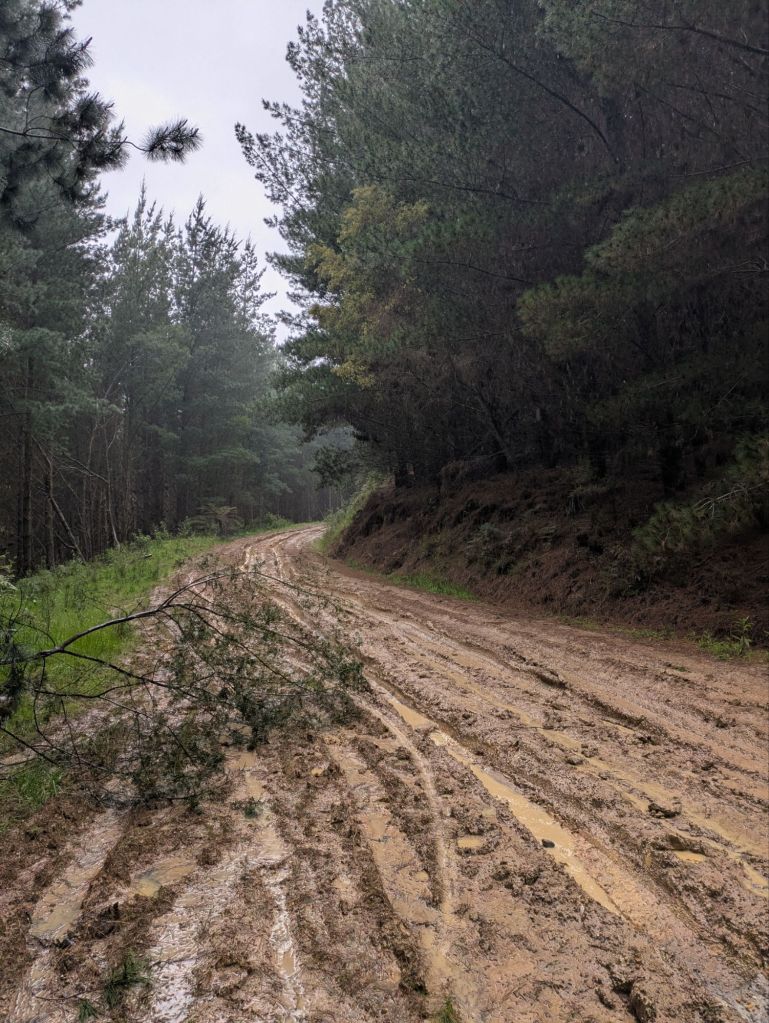
Reaching Hobart on a Sunday, I rode straight through the city. The centre was deserted, almost boarded-up, so I continued east to ride the other side of the island north. There were some fantastic logging roads winding through the forest, along with some very rough firetracks.
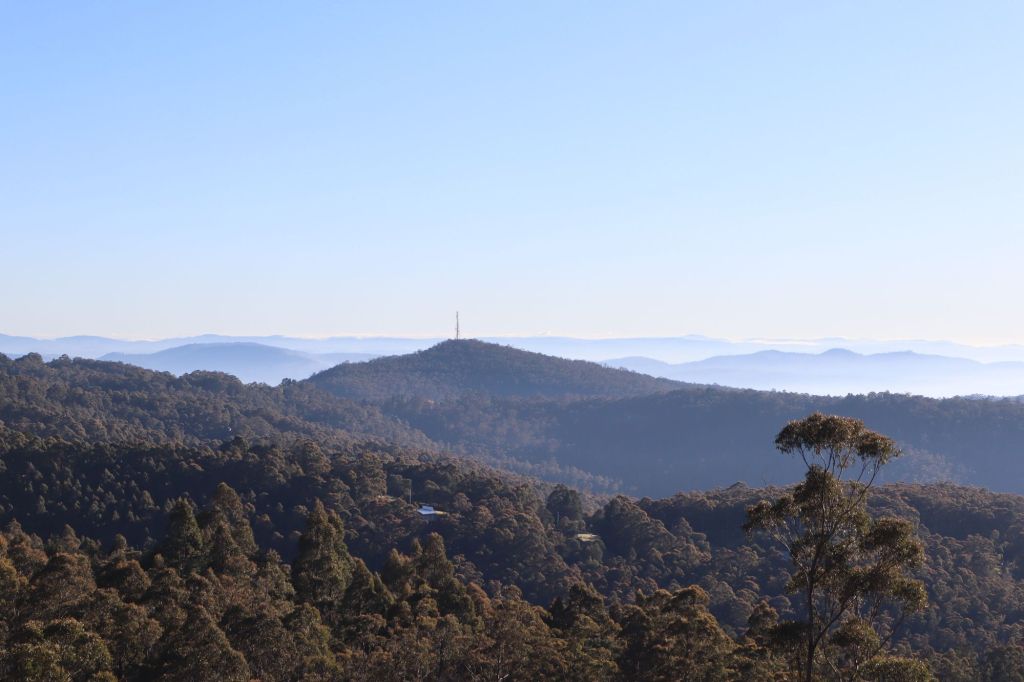


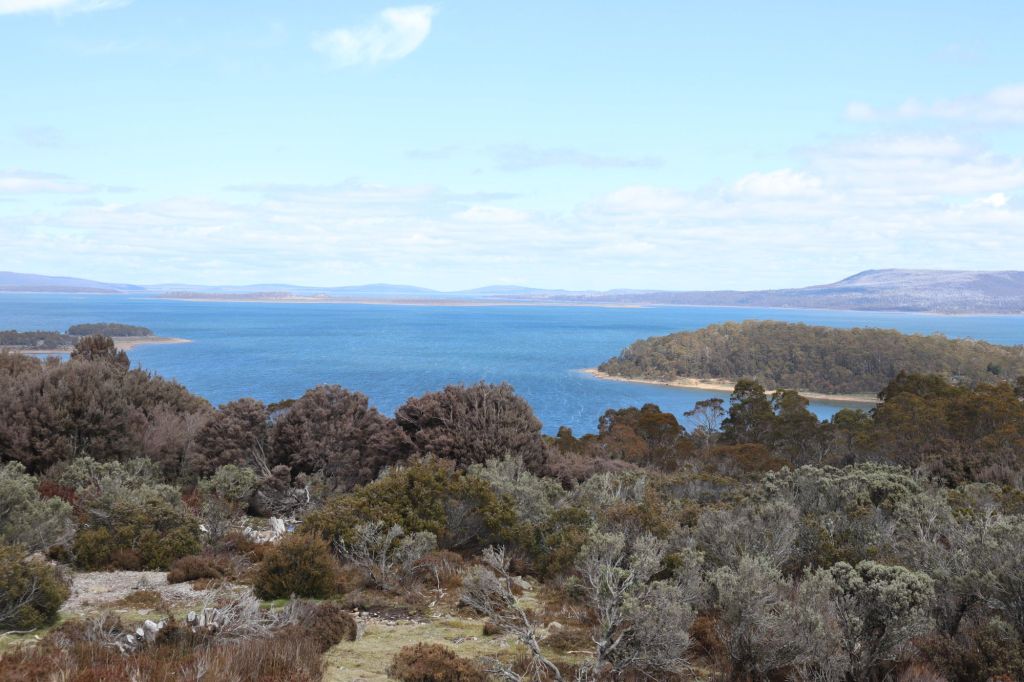
After a few grim days of rain, I made it up onto the Central Plateau — a huge lake-filled landscape at around 1000 m. The riding was perfect with a massive tailwind pushing me across it.

My last few days on the island were spent riding back to Devonport to catch the ferry to the mainland.


I had just three weeks left in Australia, and all that remained was riding from Melbourne to Sydney before flying to South America. Wanting to get my bike checked over, I booked a service in Melbourne, only to find out I’d been riding on a cracked rim. It took almost two weeks to get it replaced, so making it to Sydney was going to be tight.

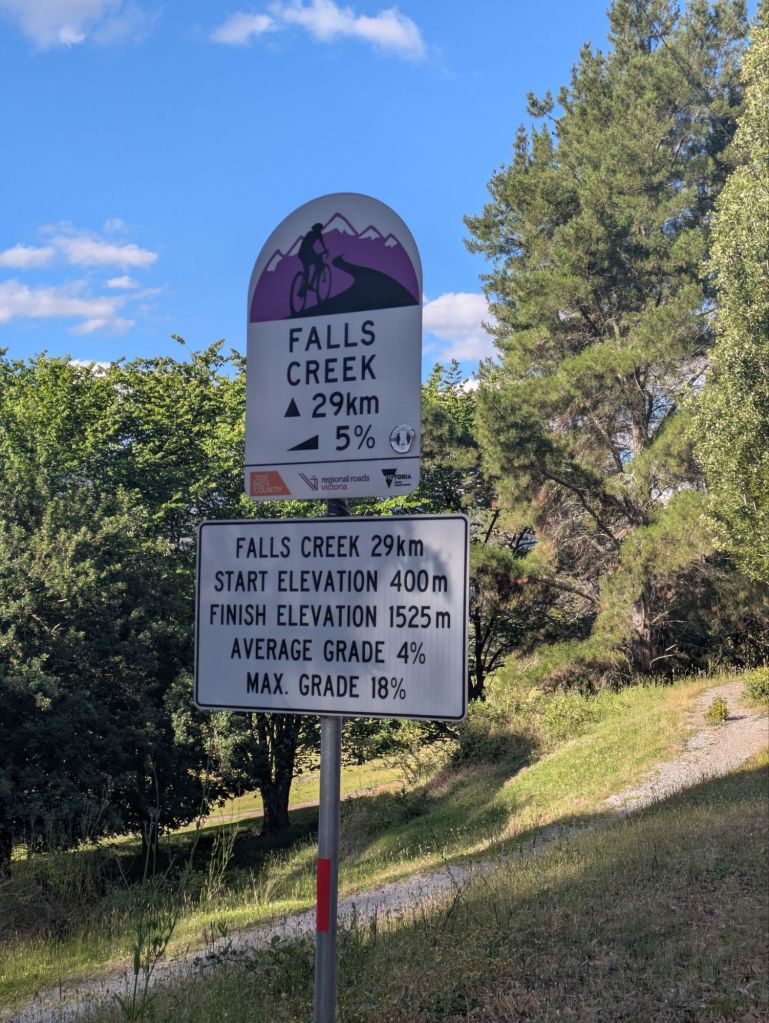
I set off along the Great Victorian Rail Trail, making fast progress, before heading into the Victorian High Country. I tackled a few big climbs through the Falls Creek ski area and over the Tom Groggin track.
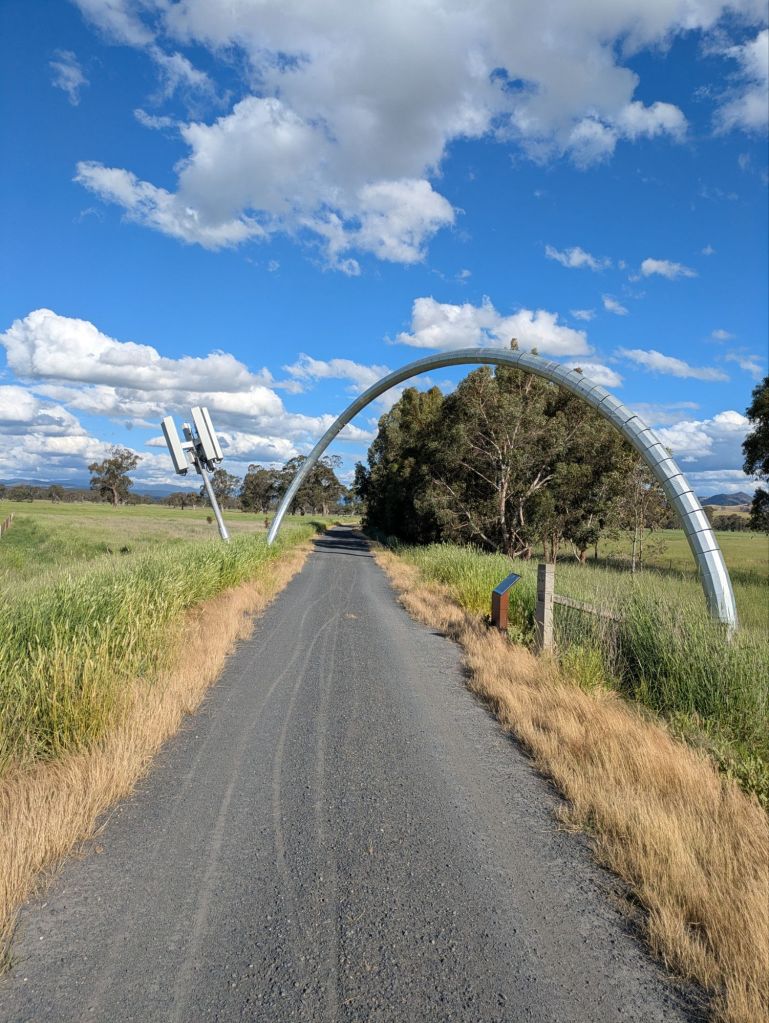

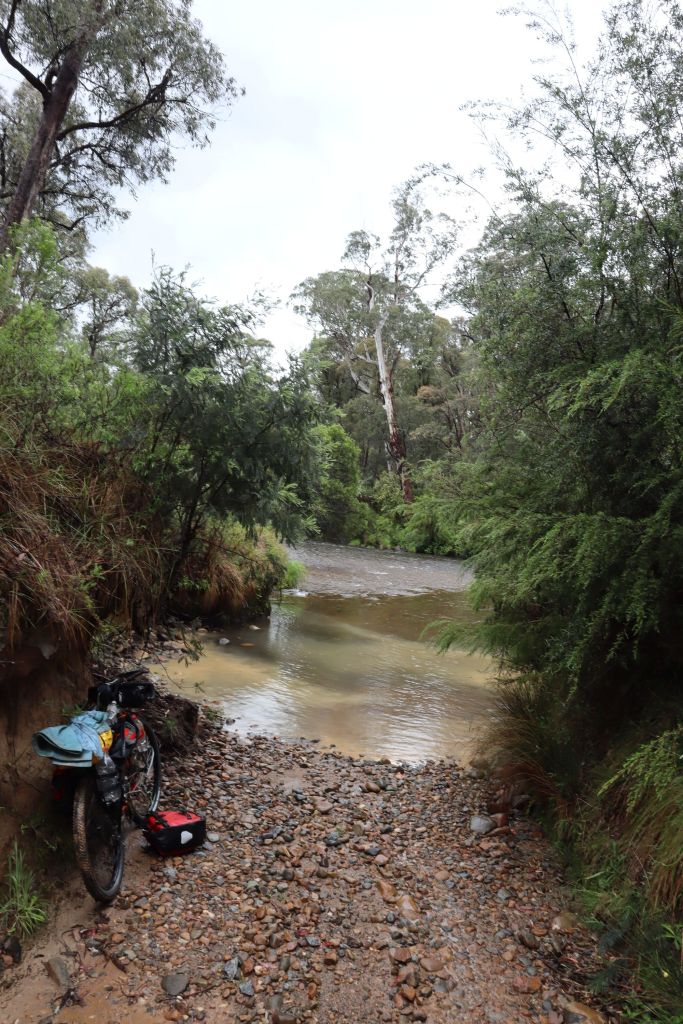
All that stood between me and New South Wales was the Murray River. After heavy rain the night before, I was worried it might be too deep to ford, but I made it across — waist-deep water, carrying my gear in three separate trips.


Joining the Alpine Road, I had one last major climb before the flatlands. It topped out at around 1500 m, and I started the ascent in light rain. It got heavier and heavier as I climbed, but with no shelter and trust in my bags waterproofing, I kept going. Near the top, thunder and lightning rolled in and fog closed around me. With only a hundred metres left to climb, the rain suddenly turned to huge hailstones, stinging every time they hit. At the summit I threw on every layer I owned and began the 40 km straight-line descent, hoping the weather would improve as I dropped altitude. By the time I reached Jindabyne, the sun was out and I could start peeling layers off. From there it was one more day’s ride to Canberra through scenic farmland flanking the Snowy Mountains.
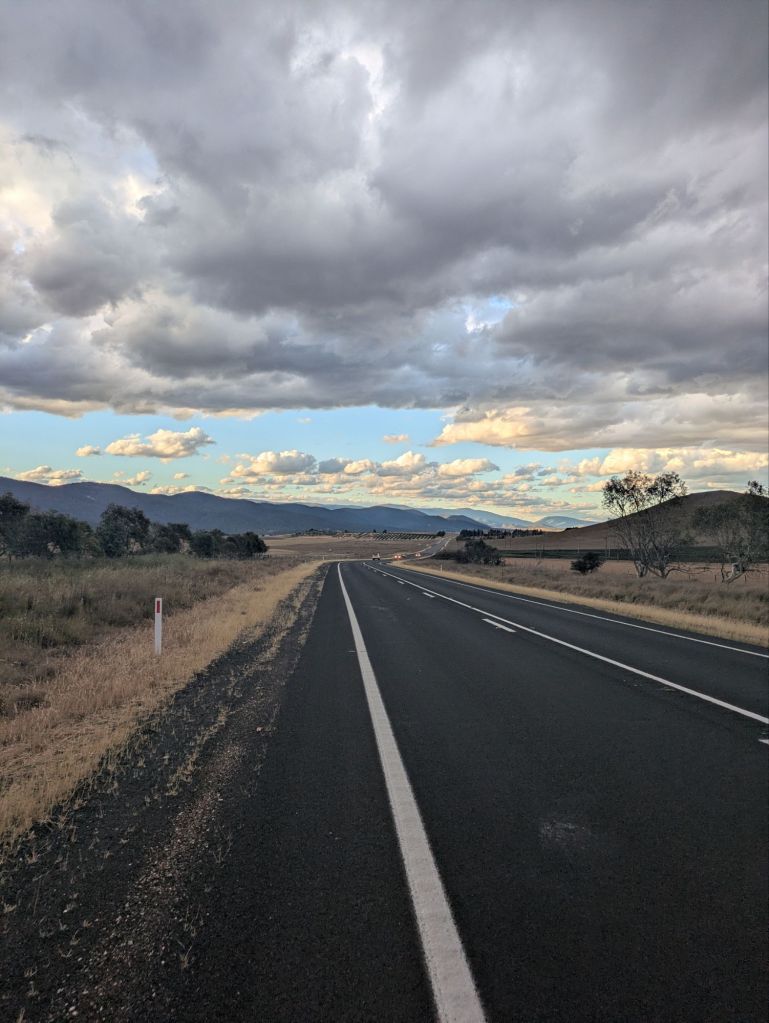
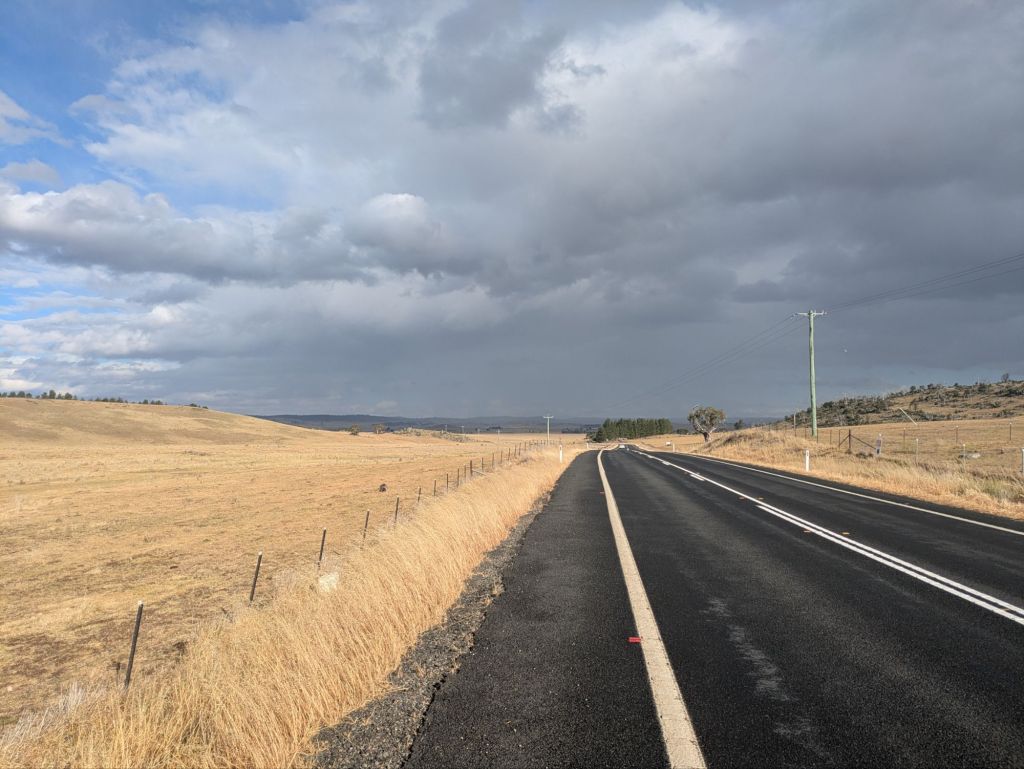

Canberra marked the final state/territory I needed to visit in Australia. With time running out, I ended up taking the bus to Sydney instead of riding the last stretch.

I was disappointed not to pedal into Sydney, but I probably didn’t miss much — a cyclist I’d met in Tassie told me the “best” route into the city was along the main highway.

Looking back, riding across Australia was everything at once—beautiful, brutal, isolated, and bigger than I ever imagined. From empty red roads to dense forests, storms to freezing nights and baking days, the country really tested me and my gear and I’m glad to have made it across in one piece.

The Oodnadatta Track


I rode back along the highway to Curtin Springs Roadhouse after leaving Uluru National Park. I needed a shower and to charge my power banks — a few sub-zero nights seemed to play havoc with my batteries. A big storm was also meant to roll through that evening, something almost every person I met had been warning me about for the past week.


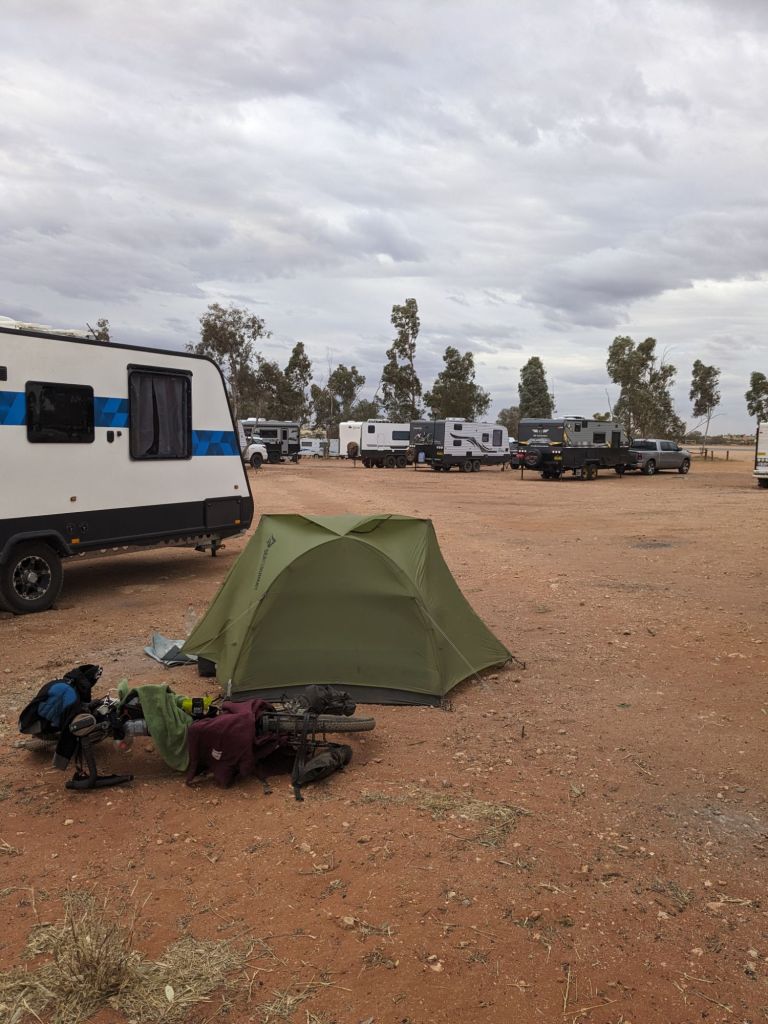
The roadhouse was horrible. I was greeted by a very unfriendly barman who repeatedly warned me about the oncoming storm and told me not to camp at the bottom of the field. The “field” was really just a dust bowl with a few portaloos and filthy showers. I squeezed my tent between a couple of caravans in the very packed campsite, using them as shelter from the 40 km/h winds.
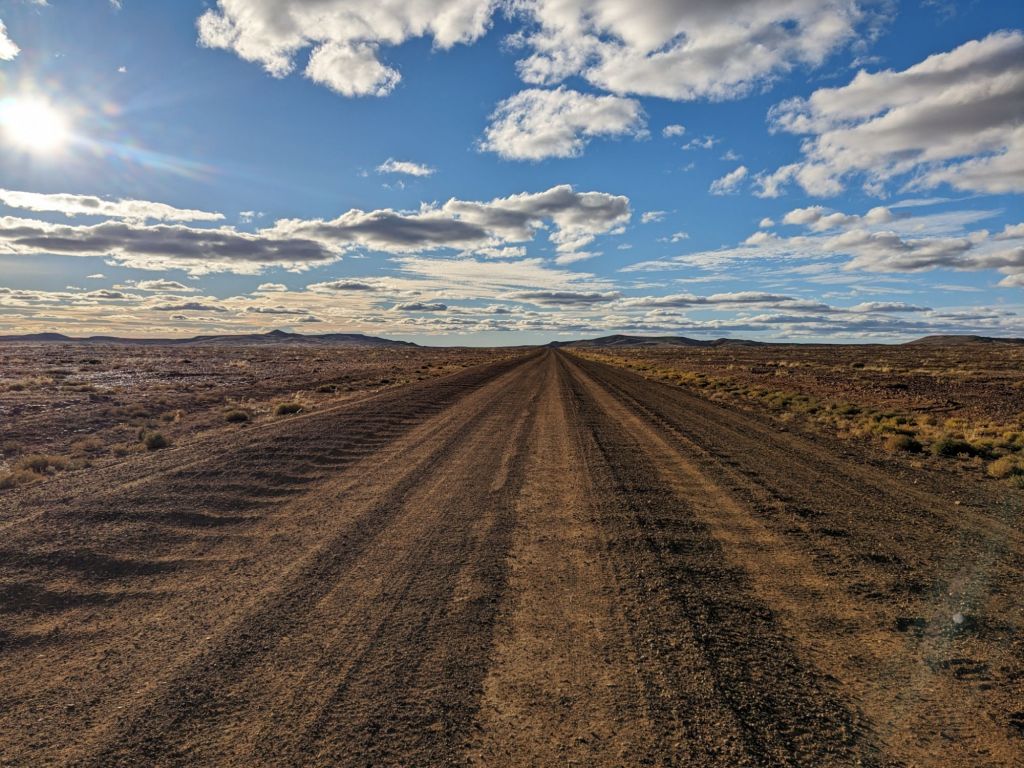
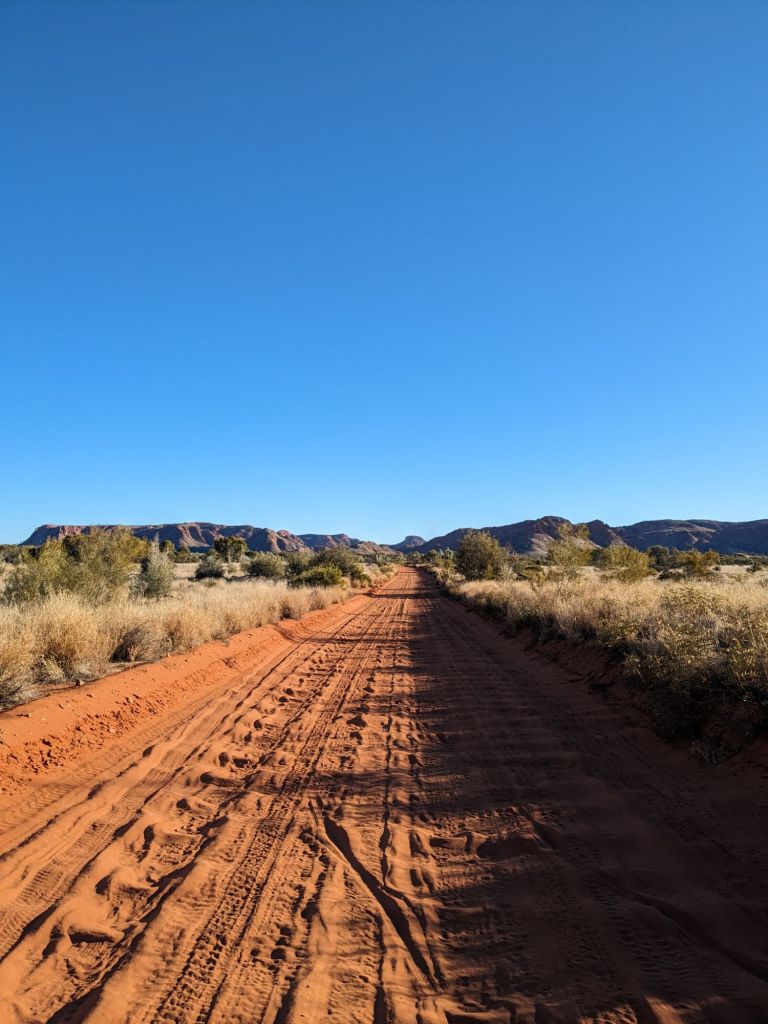
Fortunately, I survived the night and continued heading south. Not wanting to ride the Stuart Highway again, I took the dirt roads leading towards South Australia. I loved this route — only seeing about three cars a day on the way to the Indigenous community of Aputula, where I was relieved to find the general store open, with surprisingly reasonable prices for somewhere so isolated. This would be the last decent shop for 800 km on the dirt roads.


The tracks were great fun, sometimes barely distinguishable from the gravel beside them. The storm from a few nights earlier had left the ground wet, and I finally experienced the infamous red clay mud I’d been warned about — clogging everything and forcing me to waste precious water cleaning it off.


Running low on water after cleaning the bike, I was lucky to meet Mike, who was driving from Adelaide to Alice Springs entirely off-road with only a paper map for navigation. He was parked at a fork in the road, trying to decide which way to go. After a quick chat and a photo of me standing next to his car, he gave me some much-needed water in exchange for directions. I continued on to the Eringa Waterhole to camp. The abandoned homestead was fun to explore, and it felt surreal to see a sizable waterhole — the first in about a week.


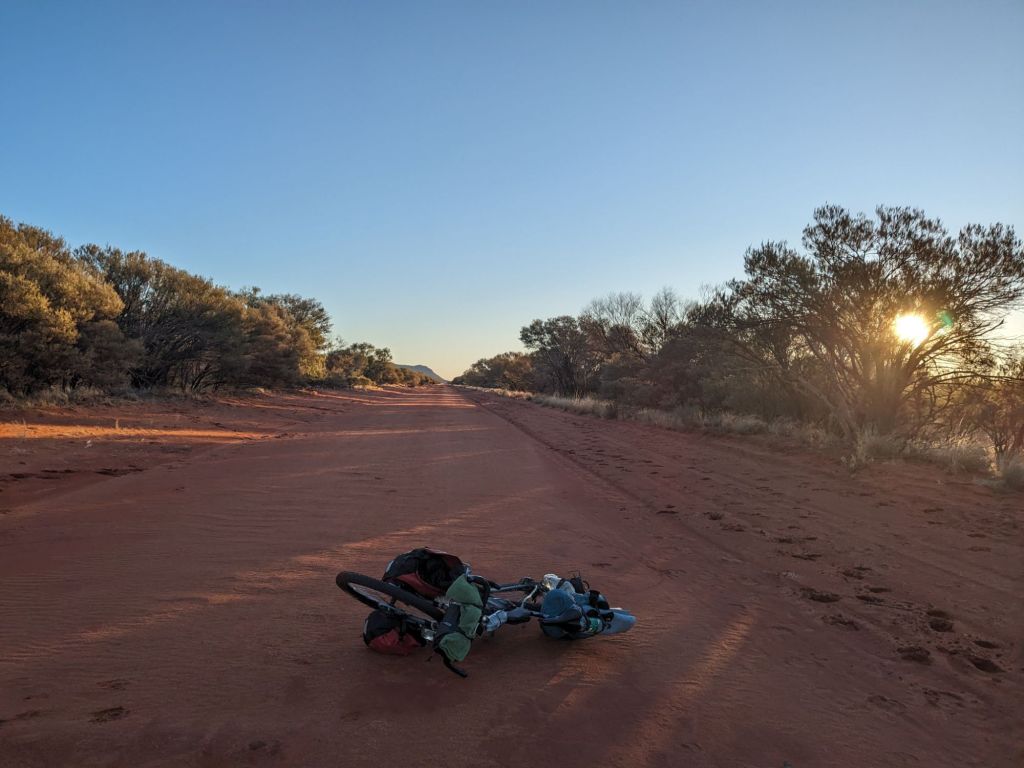
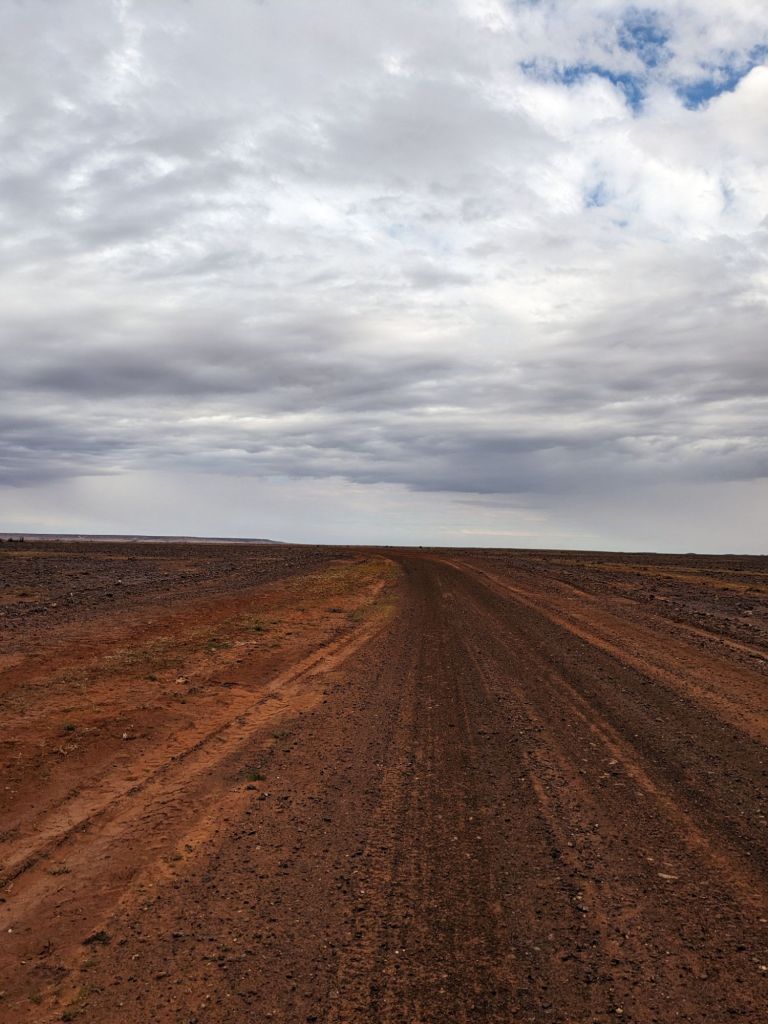
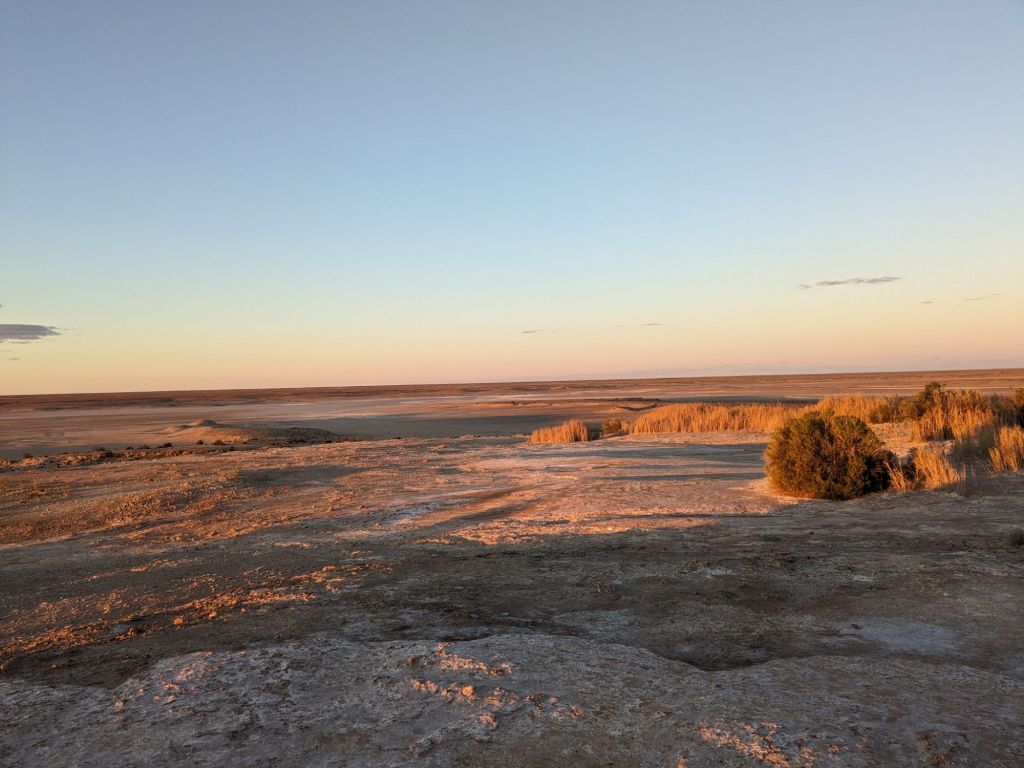
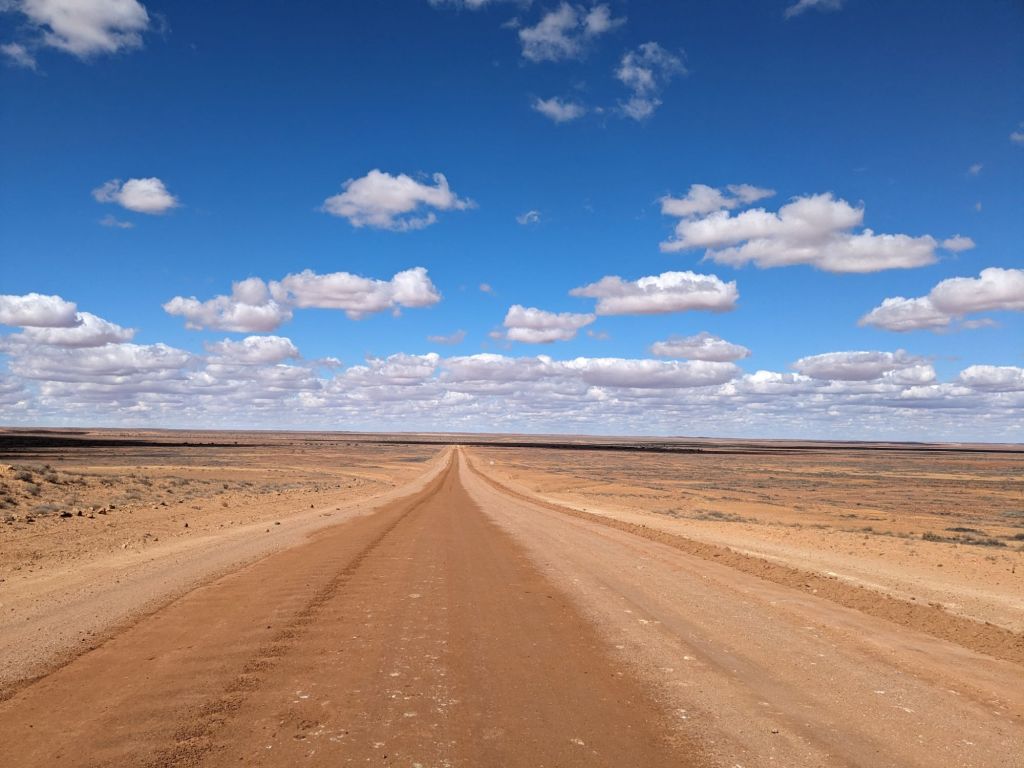
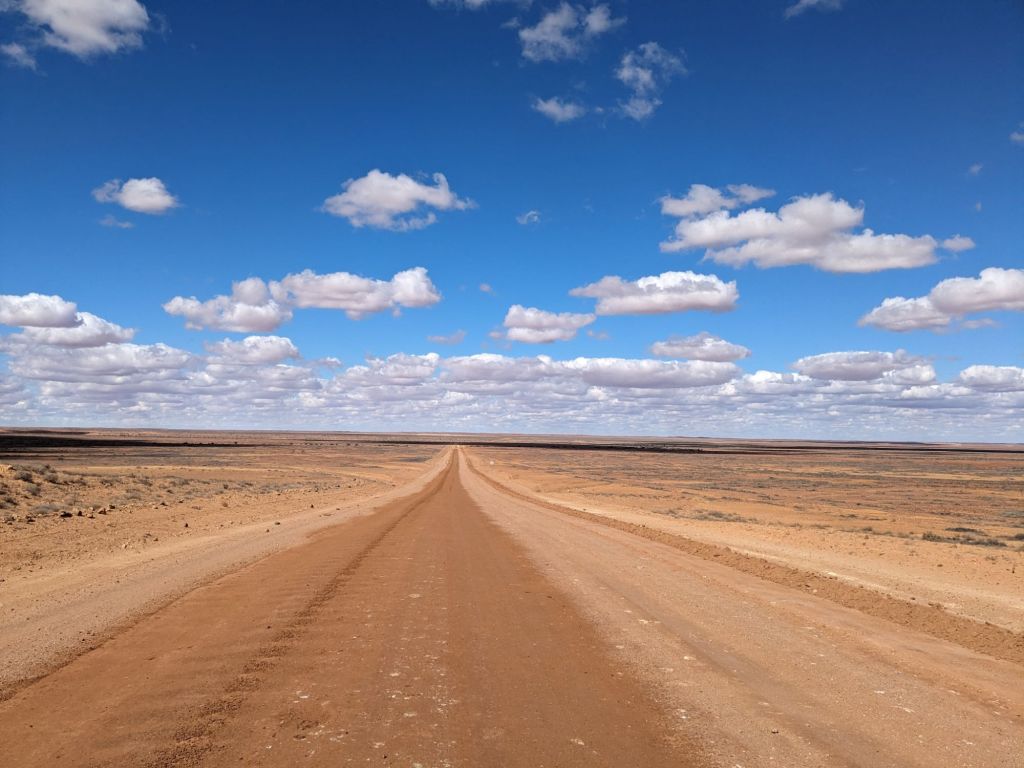
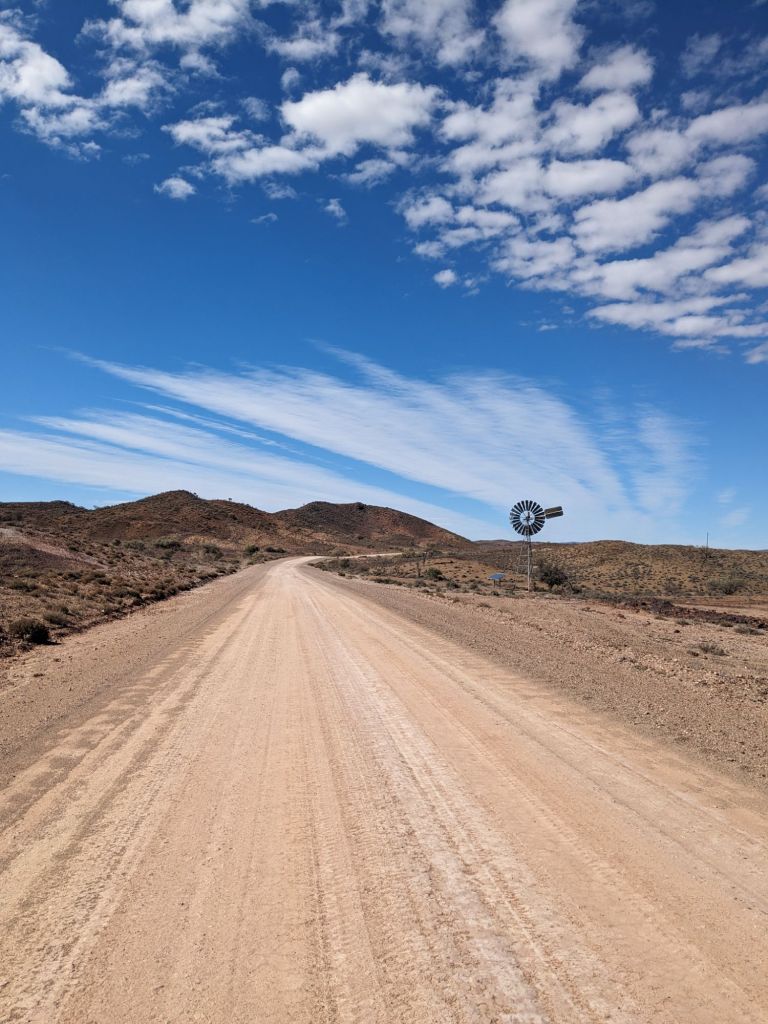
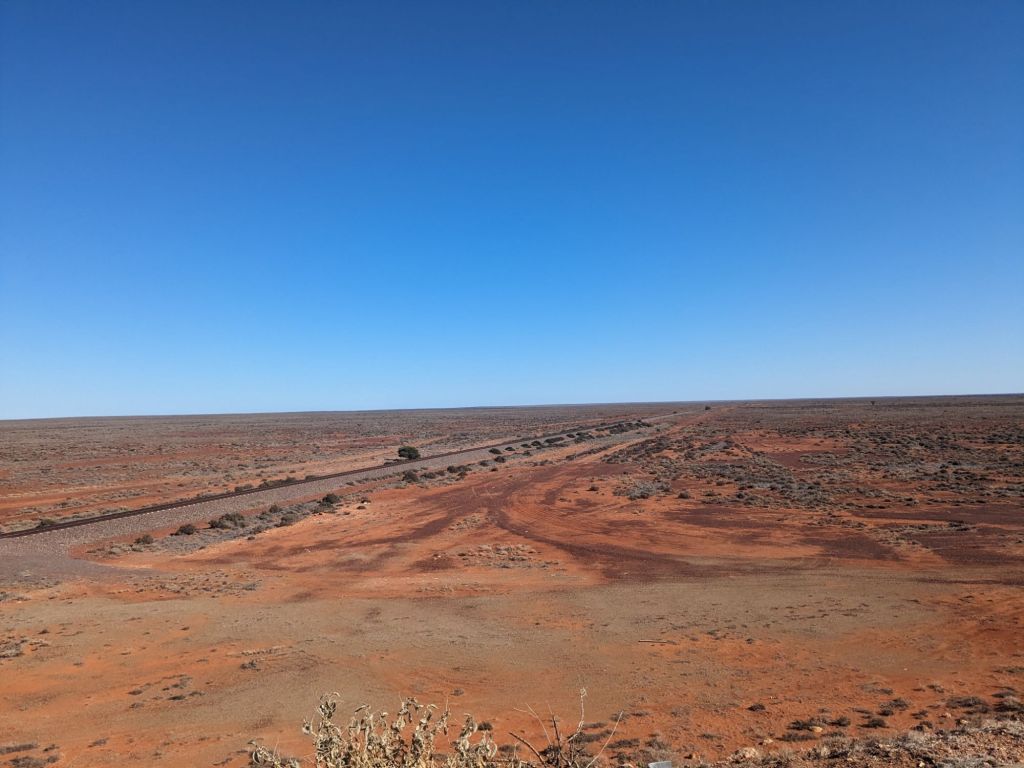
The following day I pushed south into a noticeable headwind, eventually reaching Oodnadatta and its iconic pink roadhouse. From there I joined the Oodnadatta Track, which follows the old Ghan railway. The track was awful — heavily corrugated and painfully slow to ride. With the headwind and dwindling food supplies, I had little choice but to ride from sunrise to sunset to make distance. Camping along the track, though, was incredible. Every night I peeled off the road and watched huge sunsets over the empty desert.
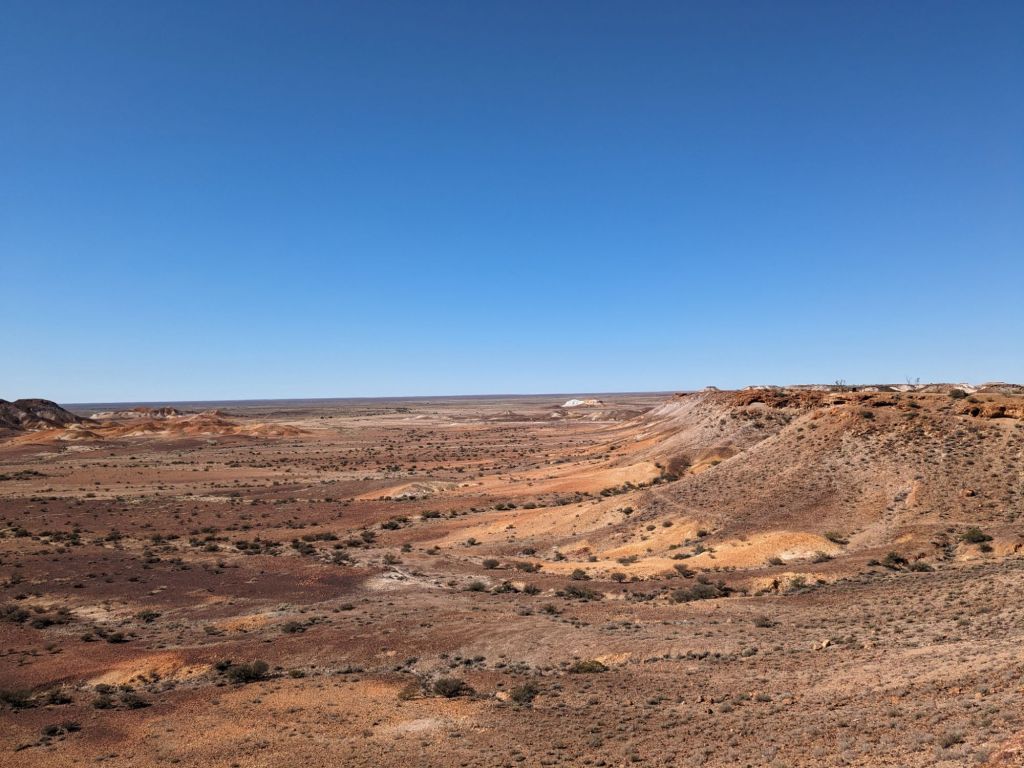
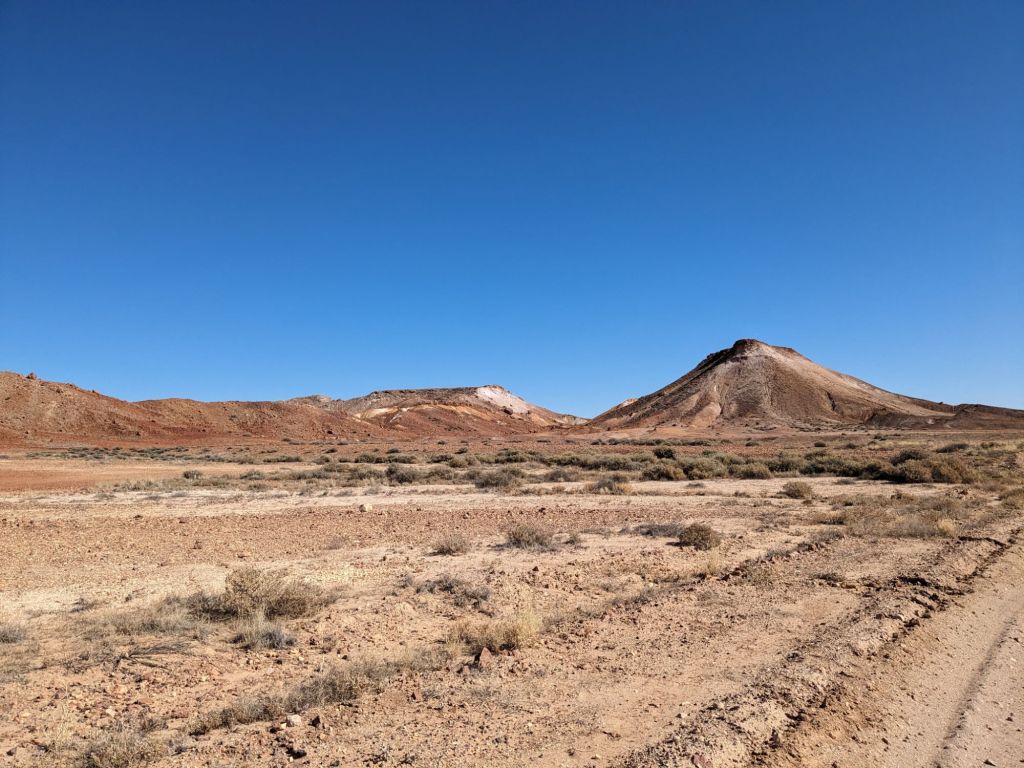

Still underestimating how slow the track would be, I ran out of water 50 km from William Creek. Not a disaster — about three hours of riding — but still concerning. Luckily a caravan pulled over and gifted me a cold Pepsi and filled my bottles. I’ve been incredibly lucky with water on this trip; whenever I’ve really needed it, I’ve always found somewhere to aquire it. Not long after leaving them, I spotted the grading machines on the horizon smoothing the road. Passing them was a brilliant feeling — suddenly the road became flat as a pool table and the riding effortless.


The good surface didn’t last long. In William Creek I was told that after the recent storm the road south was almost impassable with mud. Thankfully that wasn’t quite true, and I could ride it, though progress slowed again.


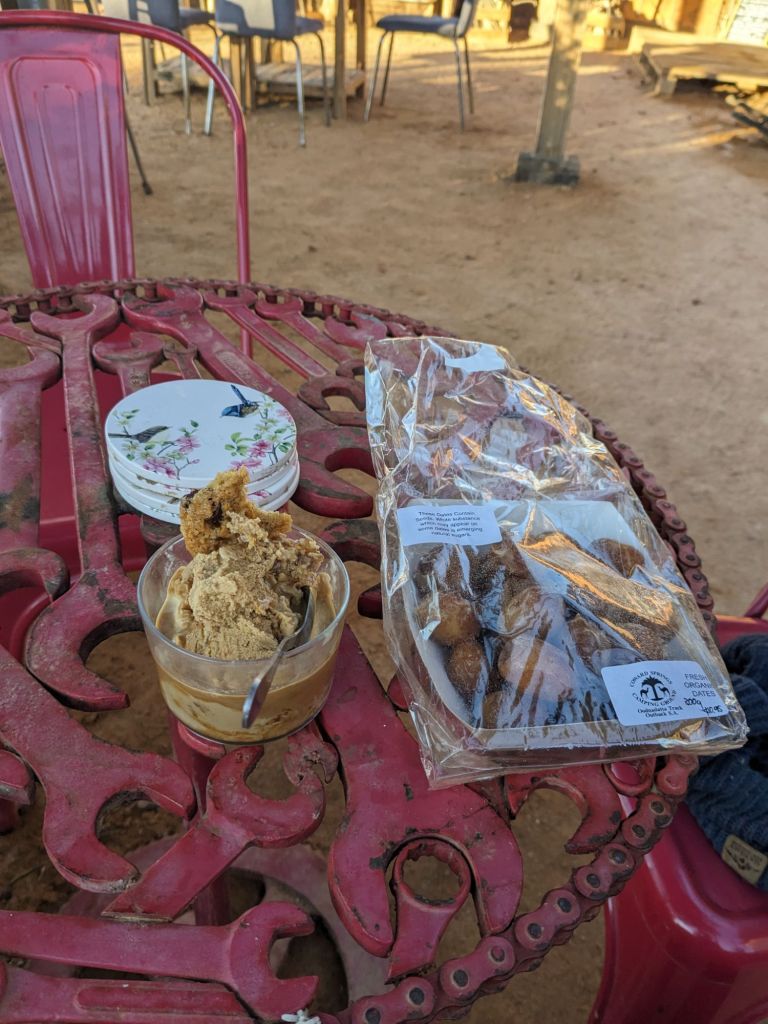
I was able to restock a bit at Coward Springs — a date plantation established by Afghan cameleers who built the railway and settled here in 1888. I fuelled up on date ice cream and picked up a packet of dates for the much needed sugar.


Another day and a half of riding brought me to the mining town of Leigh Creek, which felt almost like a ghost town — prefab houses, wide empty streets, and just a few caravans around. After checking into the campsite and having a shower, I headed straight to the supermarket, only to find it closed on Sundays. This was demoralising after days of dreaming about fresh food and craving a proper meal. Instead, I had to settle for a sad frozen pizza from the petrol station.


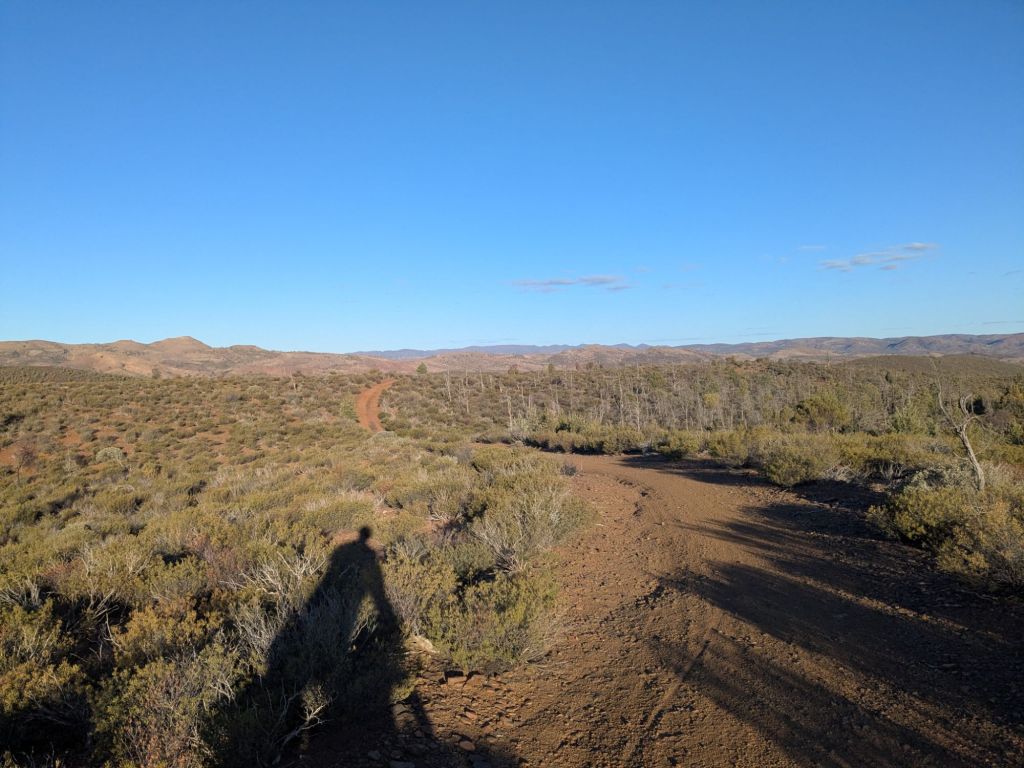
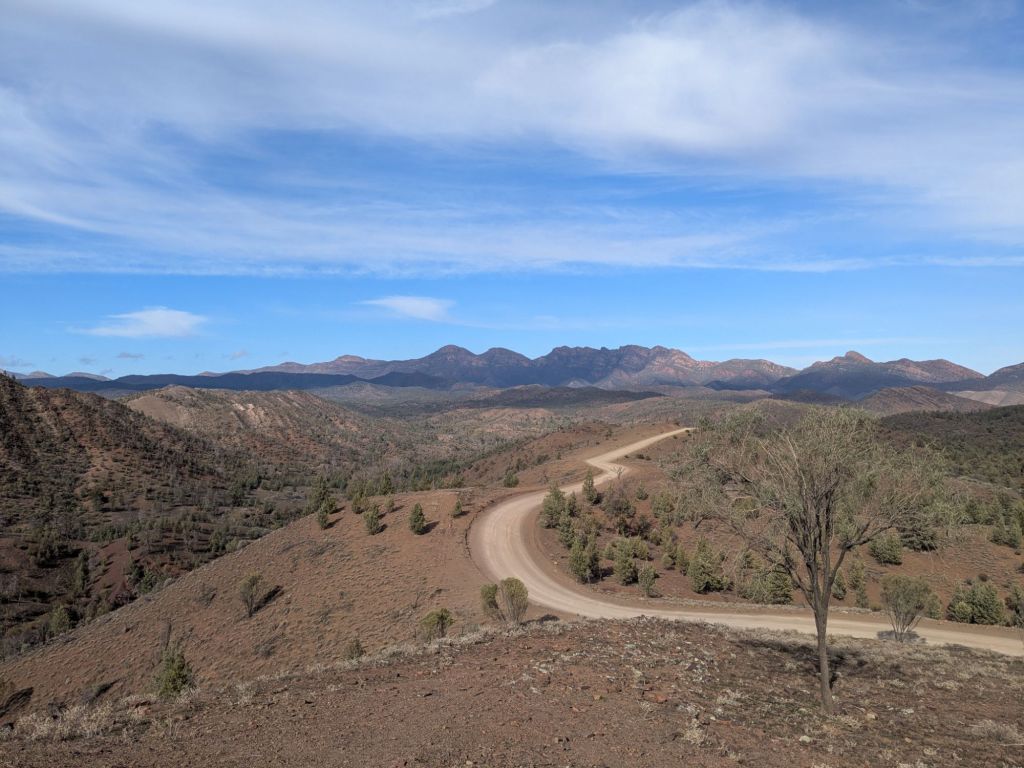
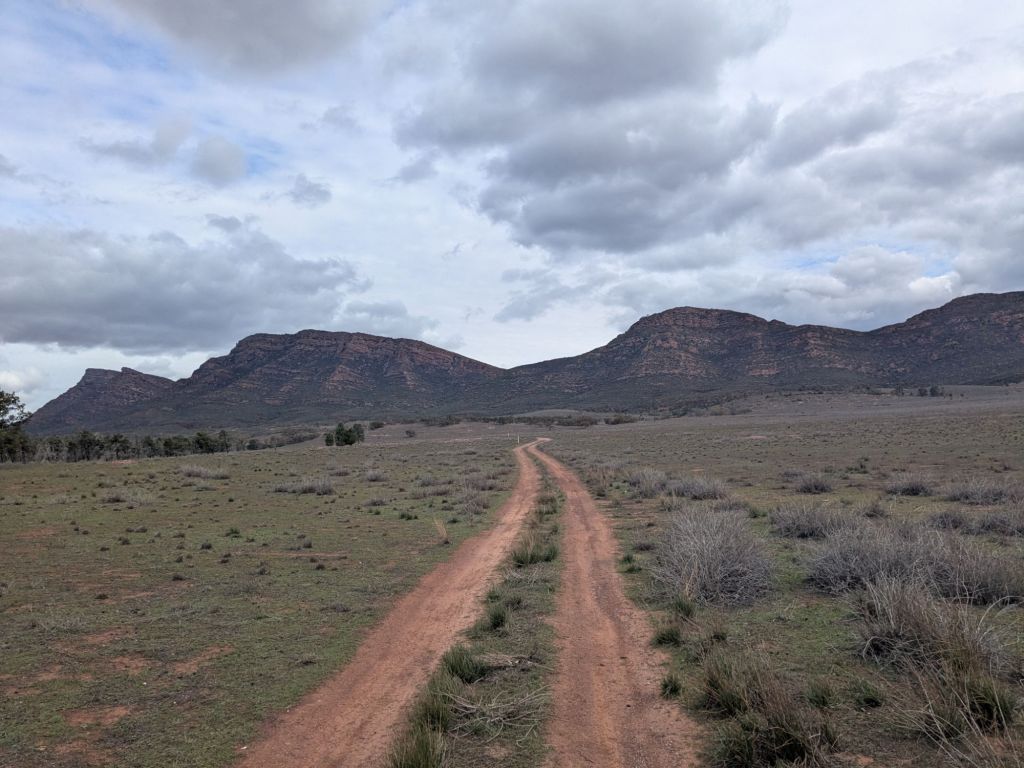
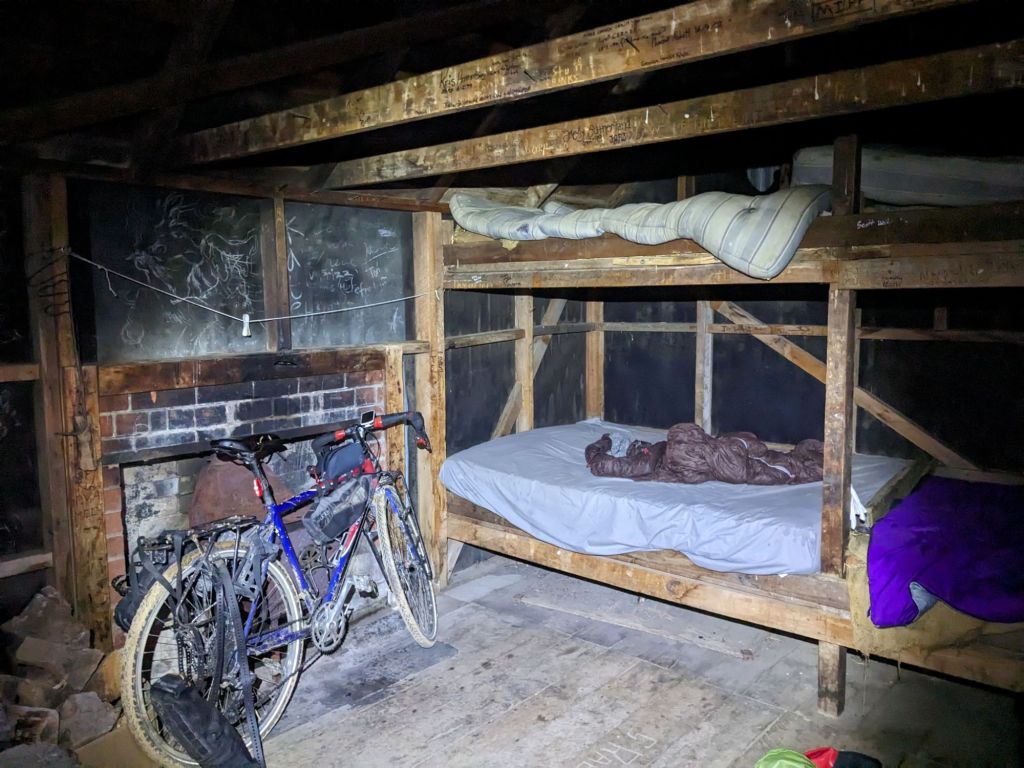
The next morning I stocked up properly and set off into the Flinders Ranges — a place claiming to have some of the oldest rocks in the world. It was a welcome change being back in hills after barely riding any since Western Australia. I joined the Mawson Trail, a 1,000 km bike route south to Adelaide, travelling through farmland and small towns. As I moved further south the temperatures dropped noticeably, this now being the middle of winter.  There were a few classic South Australian stone huts along the way offering a good shelter for the nights.


Reaching Adelaide, I decided to take a break from riding and found some work to settle down and wait for warmer weather. After five months on the road, it was nice to call somewhere “home” for a while. Riding through the outback had been incredibly rewarding — long stretches of emptiness, big horizons, and quiet days — but it was also one of the toughest parts of my journey, constantly thinking about water and hauling a heavy bike over huge distances on poor tracks.

The Red Centre

The ride from Ceduna to Port Augusta was pretty dull. Highway 1 continued through farmland for another 500 km, and I struggled to find anywhere good to camp with fences lining both sides of the road most of the way. Every town looked almost identical — a big silo and a handful of buildings clustered around a pub.

After a few days of monotony, I finally reached Port Augusta. Turning north, I joined the Stuart Highway. Within a few hours I was in the desert and enjoying myself again. On the second day I passed huge salt lakes and felt like I was truly in the outback.

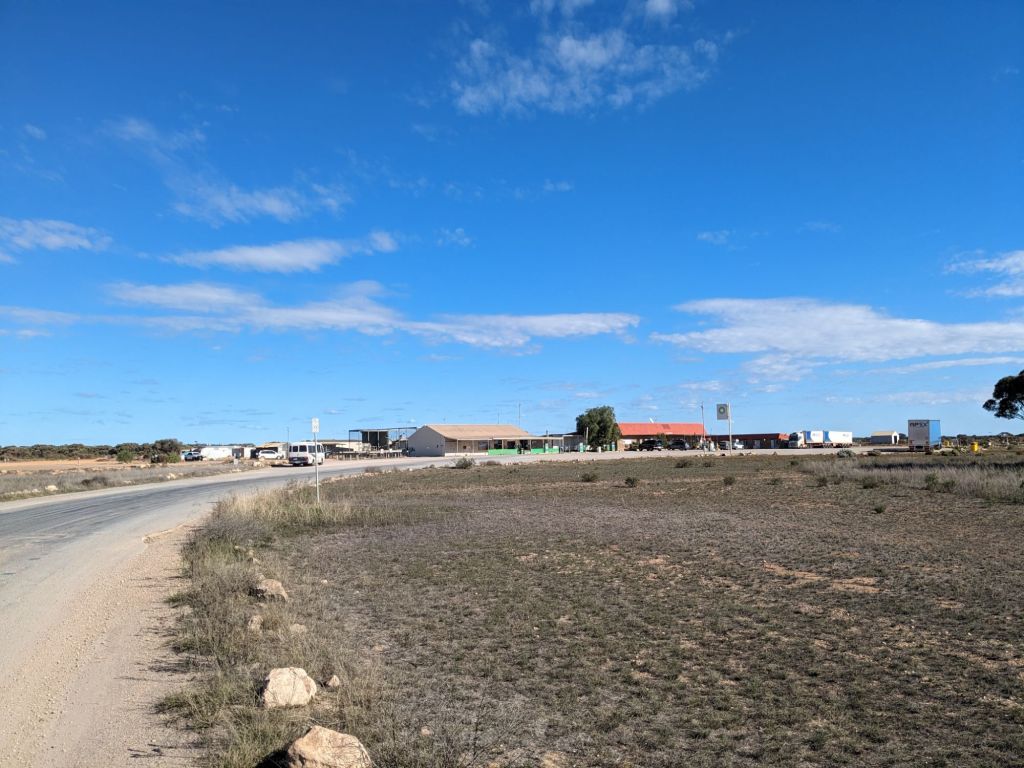
It was another 500 km to Coober Pedy. At the second of only two roadhouses along this stretch, I filled my water bottles in the toilet sink — something that had been fine across the Nullarbor, but this time I’d unknowingly loaded up on salty bore water. I only realised once I’d set up camp. Filtering it or drowning it in sugary tea didn’t make it any more drinkable.

There were a few old rainwater tanks along the road, but every one so far had been empty. I prayed the next one had something in it, but it too was dry. In the end I had to ask a caravan in a layby for some water. They were more than happy to help and even offered me a morning coffee.

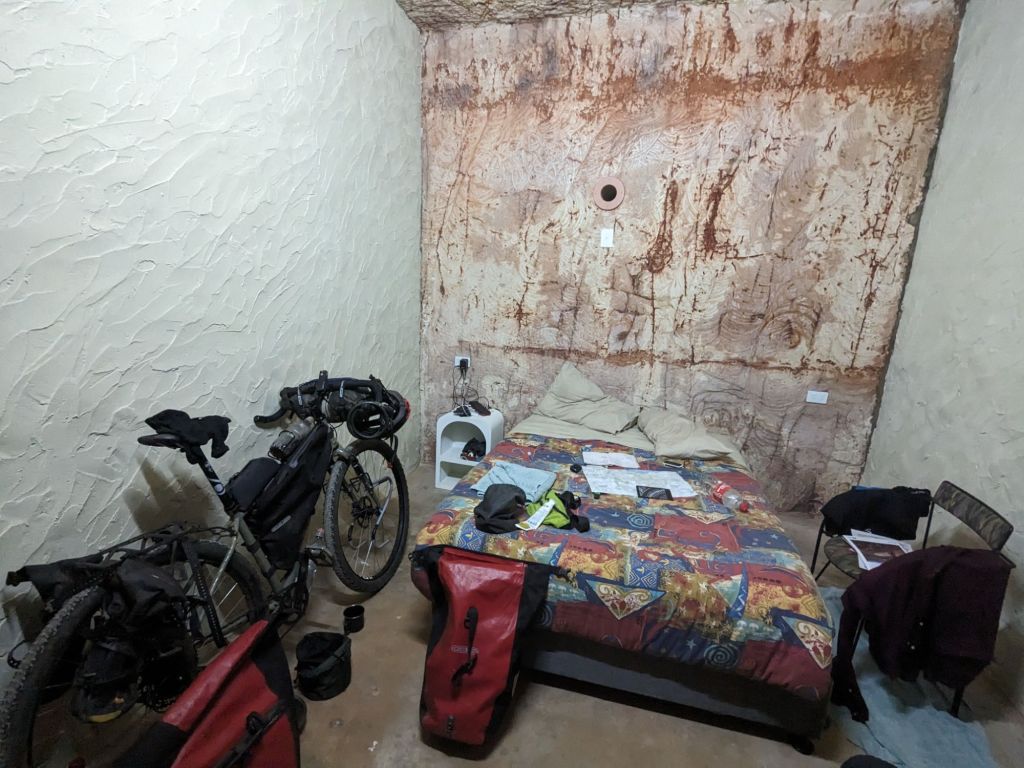
Coober Pedy is propped up by the opal mining industry, and many of its buildings are underground to escape the heat. I checked into an underground motel and spent most of my stay there resting deep below the surface.

The next day I rode through the Kanku-Breakaways Conservation Area. This was a refreshing change from the highway riding through the colourful landscape.

That night, while finding a spot to camp, I managed to puncture both tubes on a patch of three-cornered jacks. It was frustrating to burn through both my spare tubes and spend the evening picking thorns out of the tyres. The next morning, pushing my bike back to the road, I punctured both new tubes again. I spent an hour on the roadside, swarmed by flies, patching the tubes, but they were still slowly leaking. My tyres were pretty destroyed after 5,000 km now offering little puncture protection, and I’d used up all my patches. I still had 200km to Alice Springs, so I was forced to kept stopping every few hours to pump them up. That evening I attempted to tape the remaining holes up and limped into Alice the next morning, heading straight for the bike shop for fresh tyres and tubes.
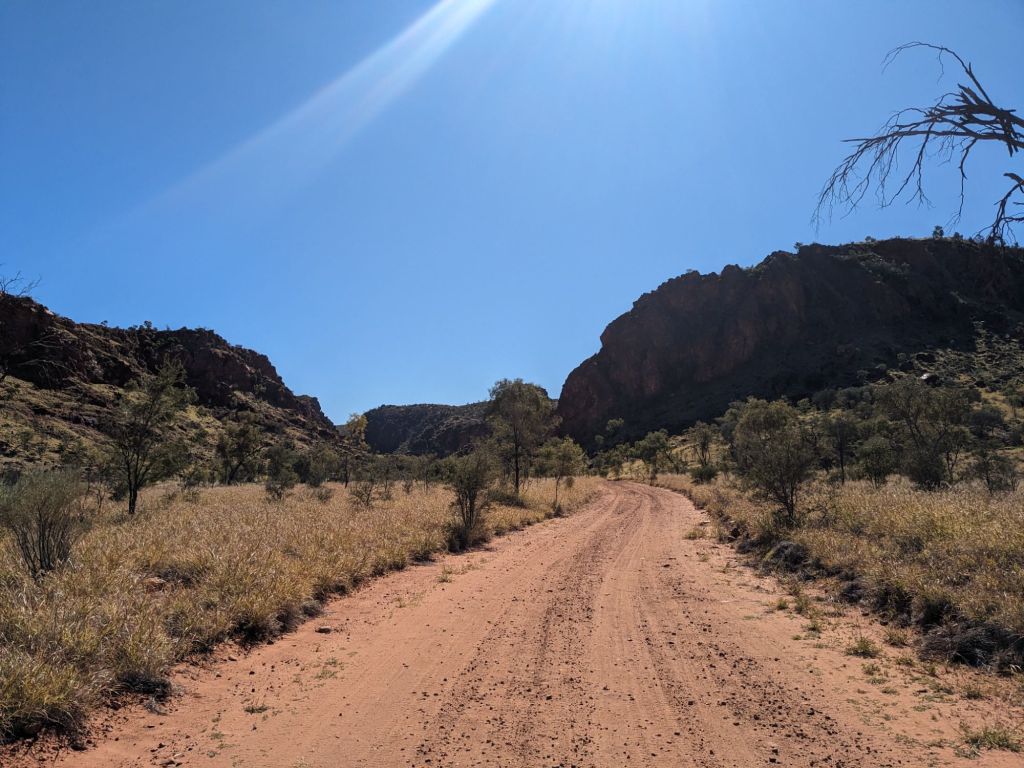
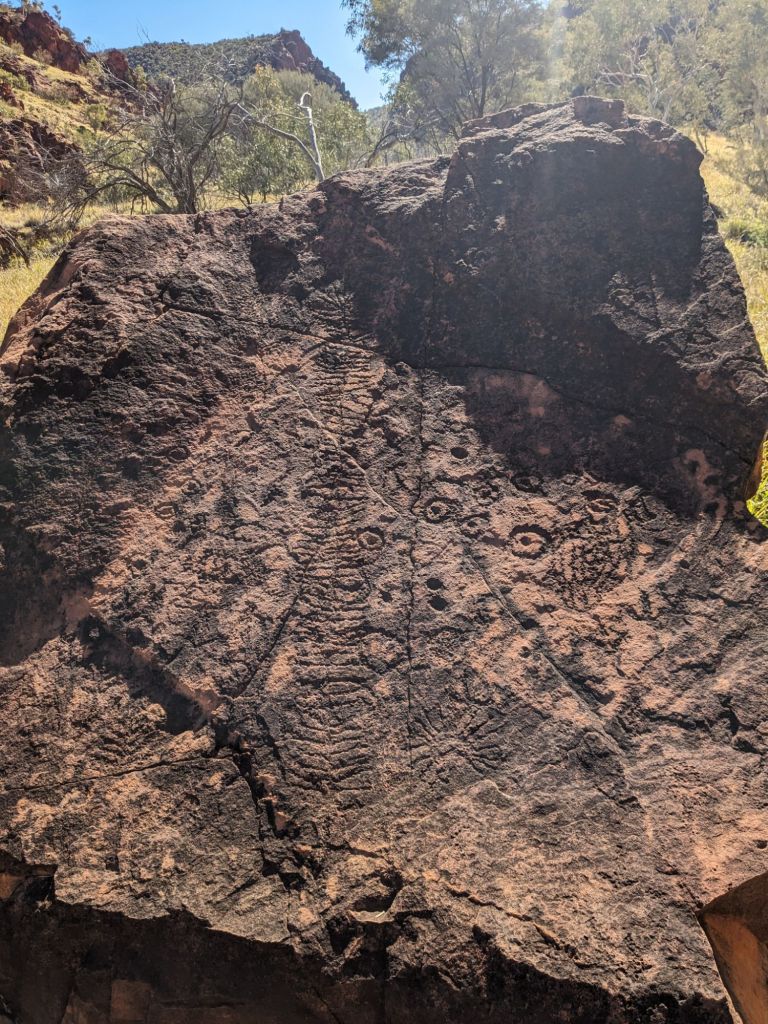
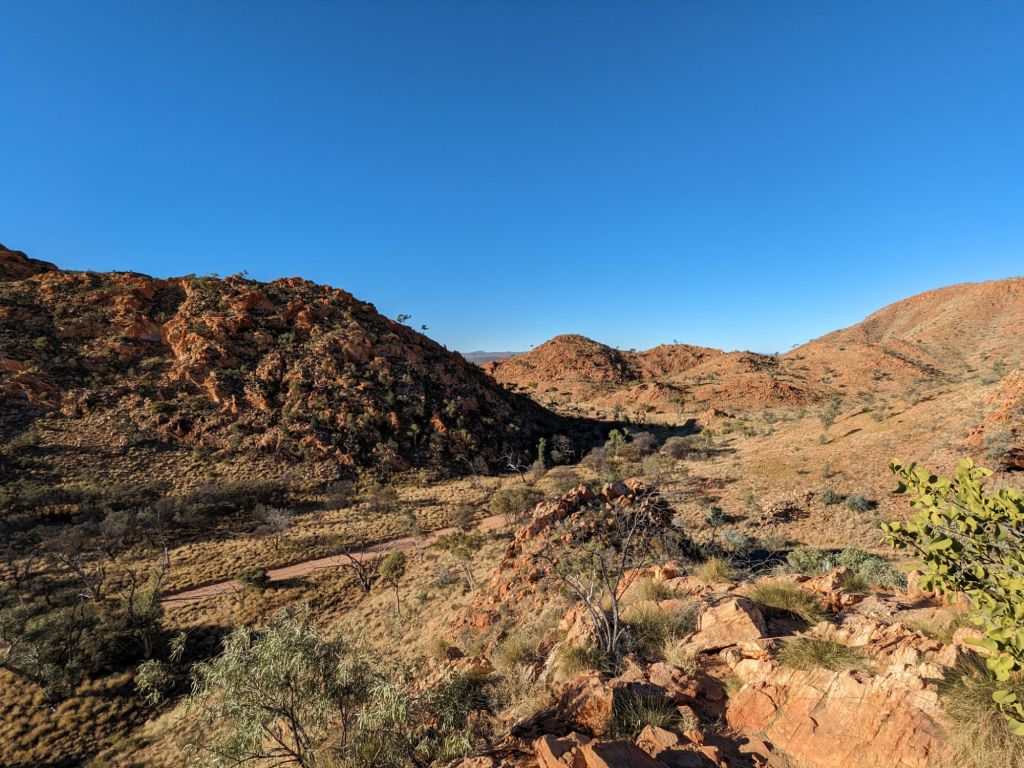
Now I was in the Red Centre — the part of Australia I’d been most excited about. I first set off on a loop through the East MacDonnell Ranges, exploring a few gorges before returning to Alice for a short rest.

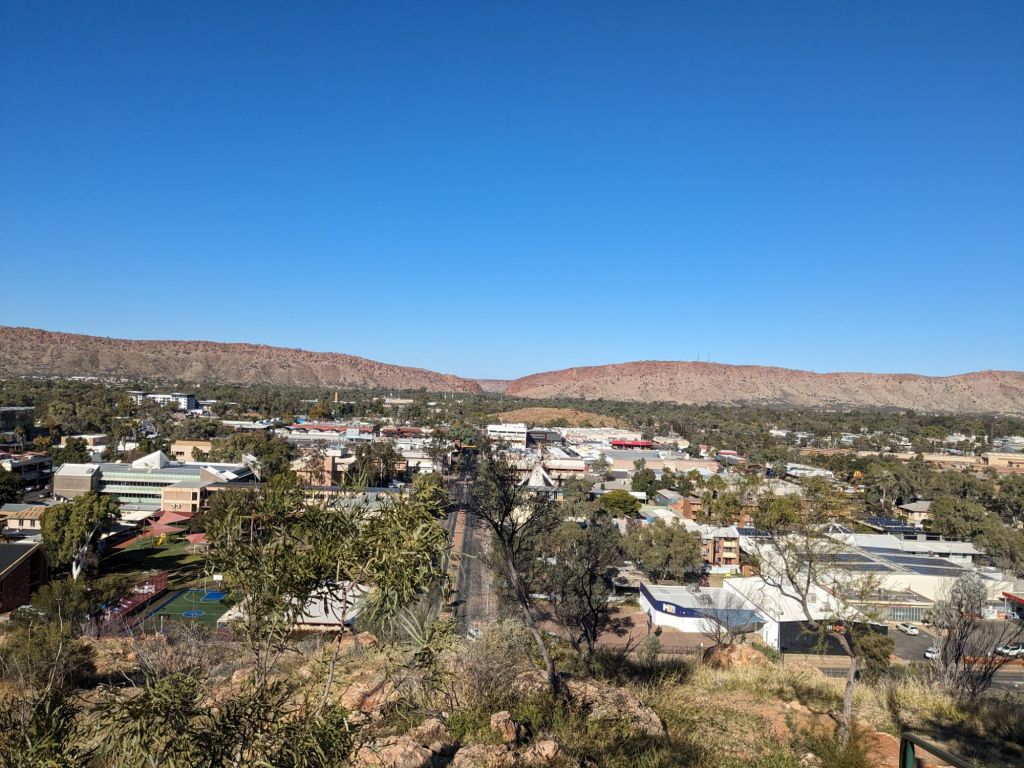
I’d been told Alice Springs was a rough frontier town, but I never felt unsafe. I liked its down-to-earth, relaxed feel and the strangeness of a town built around a dry riverbed.

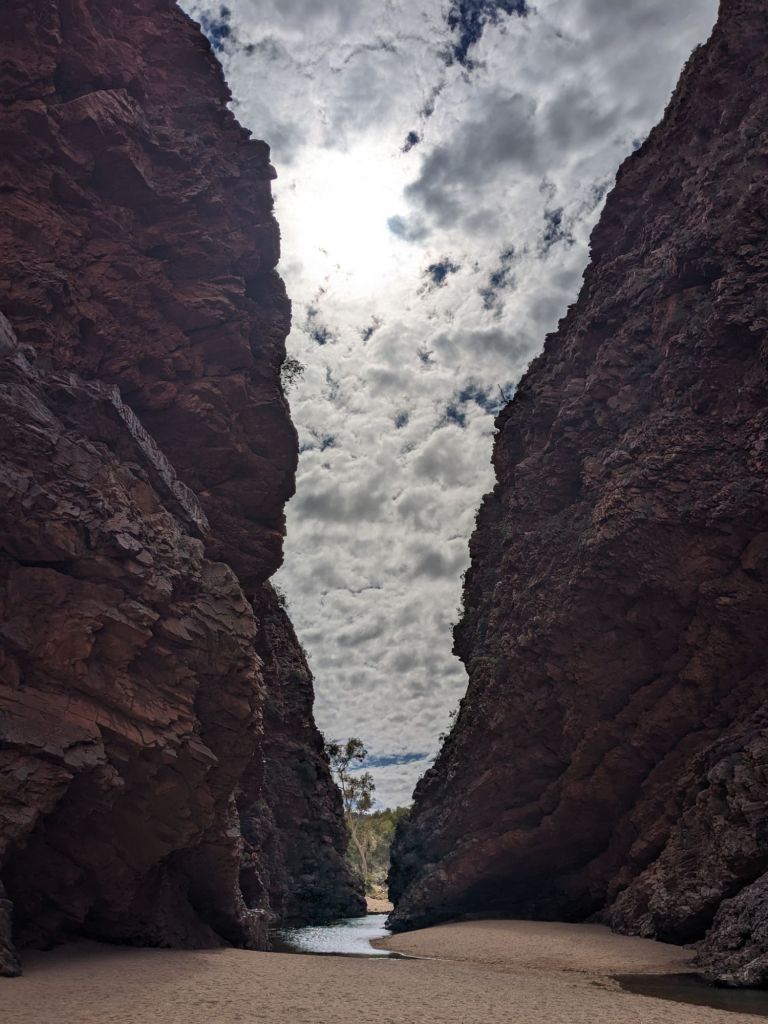
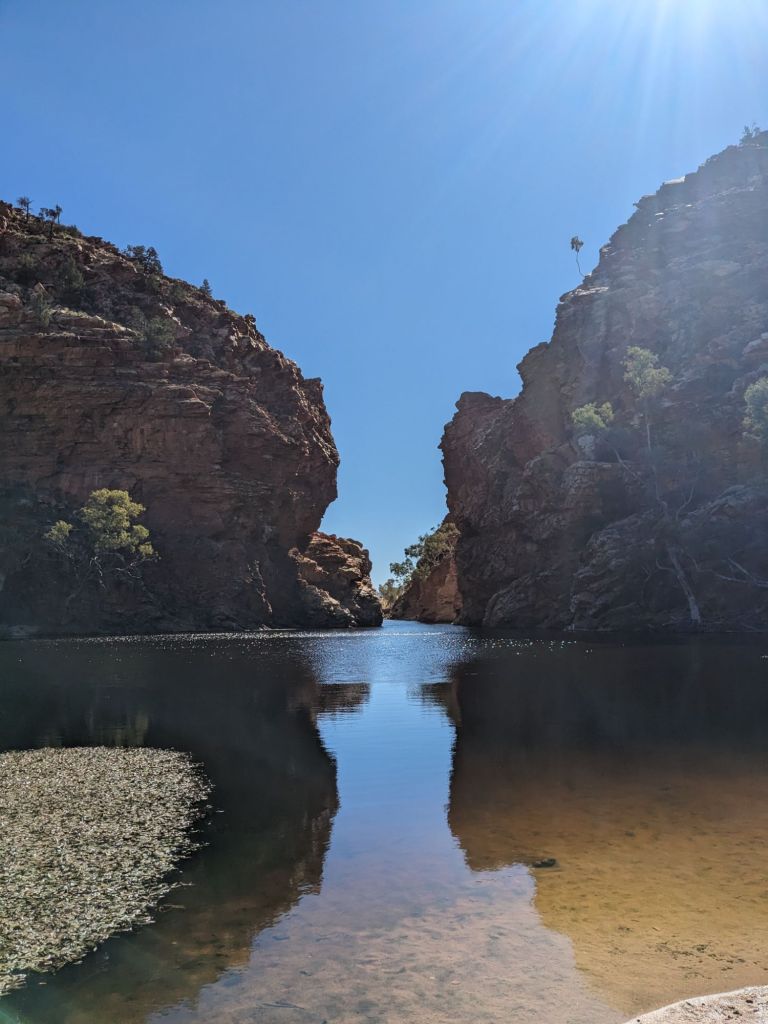
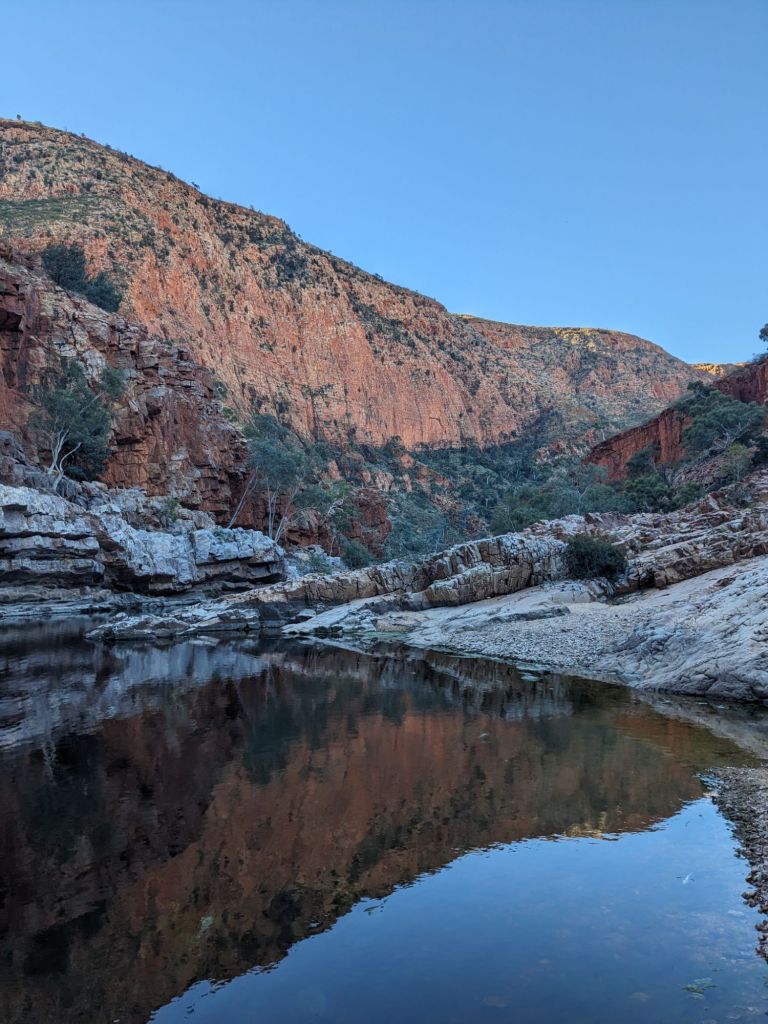
It was also great to have proper supermarkets again. I made sure to enjoy the variety of fresh food before loading up for the six-day trip to Yulara. This took me into the West MacDonnell Ranges — more incredible rock formations and freezing swimming spots despite daytime temperatures around 30°C. At the gorge car parks, caravaners often offered me food and beers, and it was fun bumping into the same people at different stops over a few days. The gorges were unlike anywhere I’d been, and I kept wondering what lay on the far side of the range, protected by the cold water and ridgeline.

The final sight in the West Macs was Gosse Bluff crater — a 5 km wide impact crater formed by a meteor strike 142 million years ago. It was spectacular, and I had it all to myself. I spent the night on a riverbed before joining the Larapinta dirt road. The road was awful — deeply corrugated — but amazing for wildlife. I saw wild cattle, horses, and camels. One night a dingo came right up to my tent, chewed my water bladder, and stole my shoe. I only realised in the morning when I could find just one shoe. After 20 minutes of searching I eventually found it with half the lace bitten off.

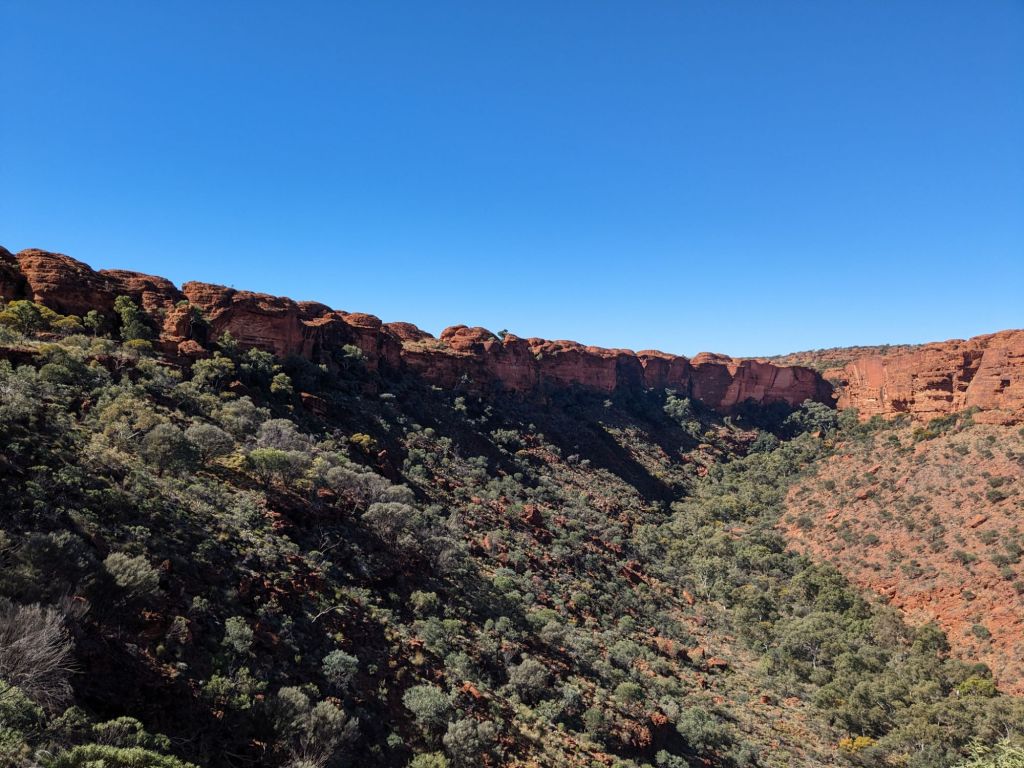
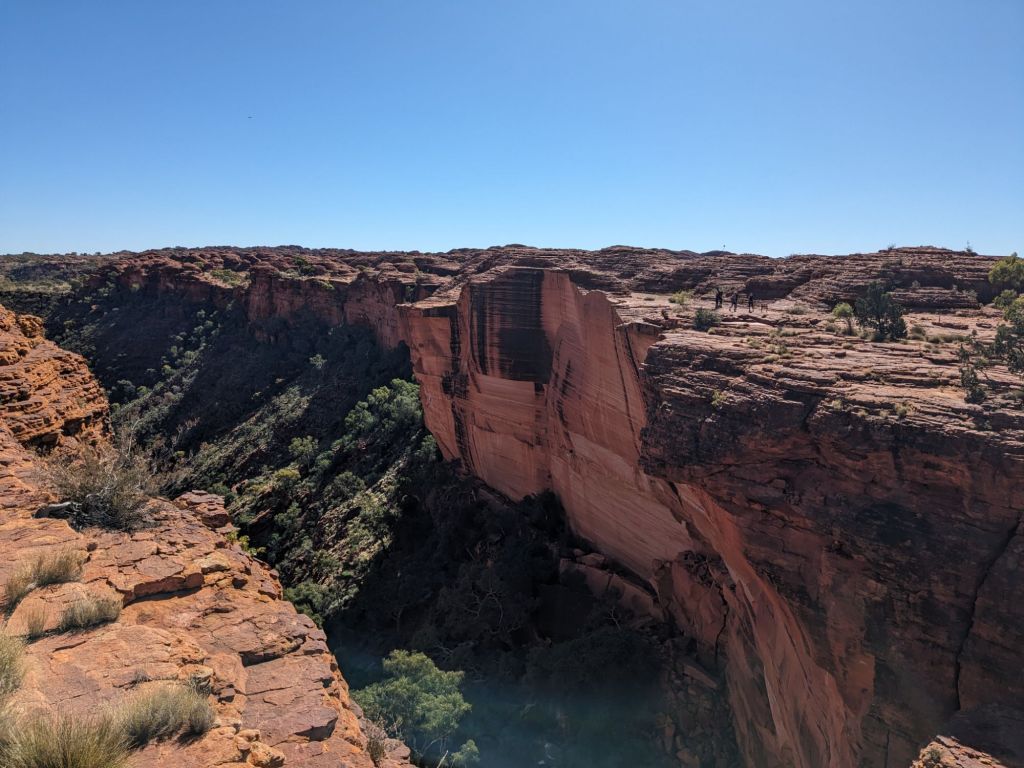
When I finally reached tarmac again, I headed to Kings Canyon. It was a beautiful spot but absolutely packed with people, which felt overwhelming after so much solitude.

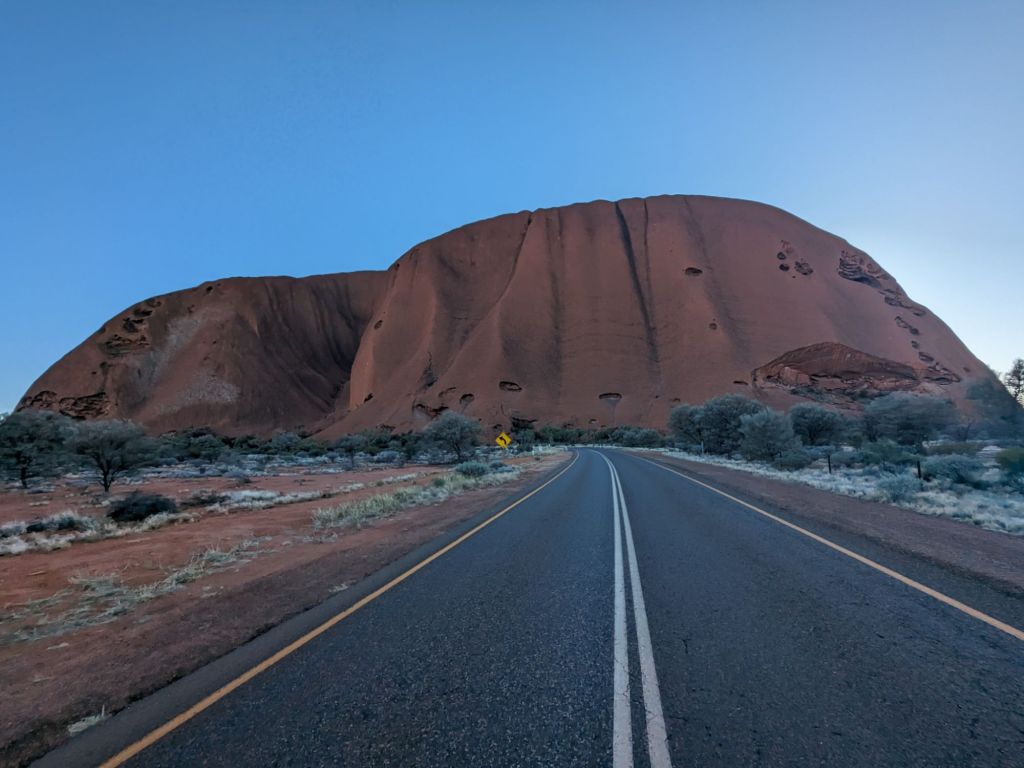
A few days later I rolled into the outback resort town of Yulara — base camp for exploring Uluru. The cycle path around the rock was perfect, and arriving here felt like a massive achievement. A location I wanted to visit for years.

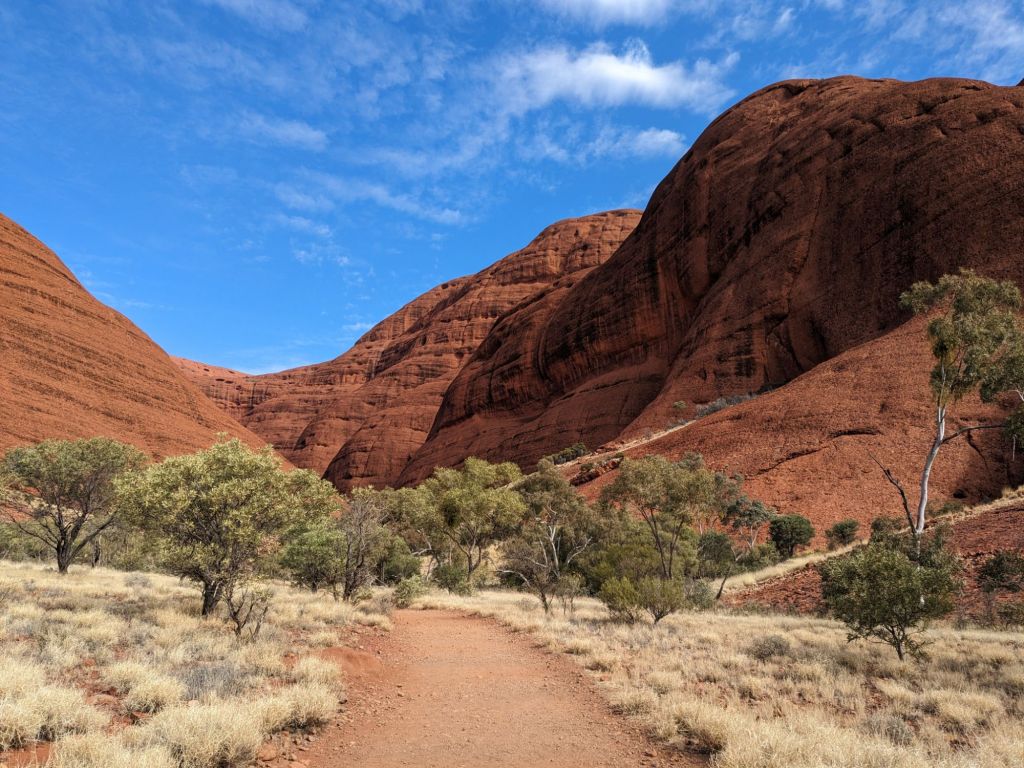
I also visited Kata Tjuta, another set of incredible rock formations. Walking around it was great, though a bit of a return to reality — defibs every 500 m and plenty of people struggling with the 2 km walk from their cars.

The stretch through the red centre was one of the best parts of my journey so far. The West Macs,  gorges, the crater, the wildlife, the long quiet roads — all of it felt unlike anywhere else I’d ridden. After so many kilometres through the outback, arriving at Uluru felt huge making it to the centre of the continent.

Crossing the Nullarbor

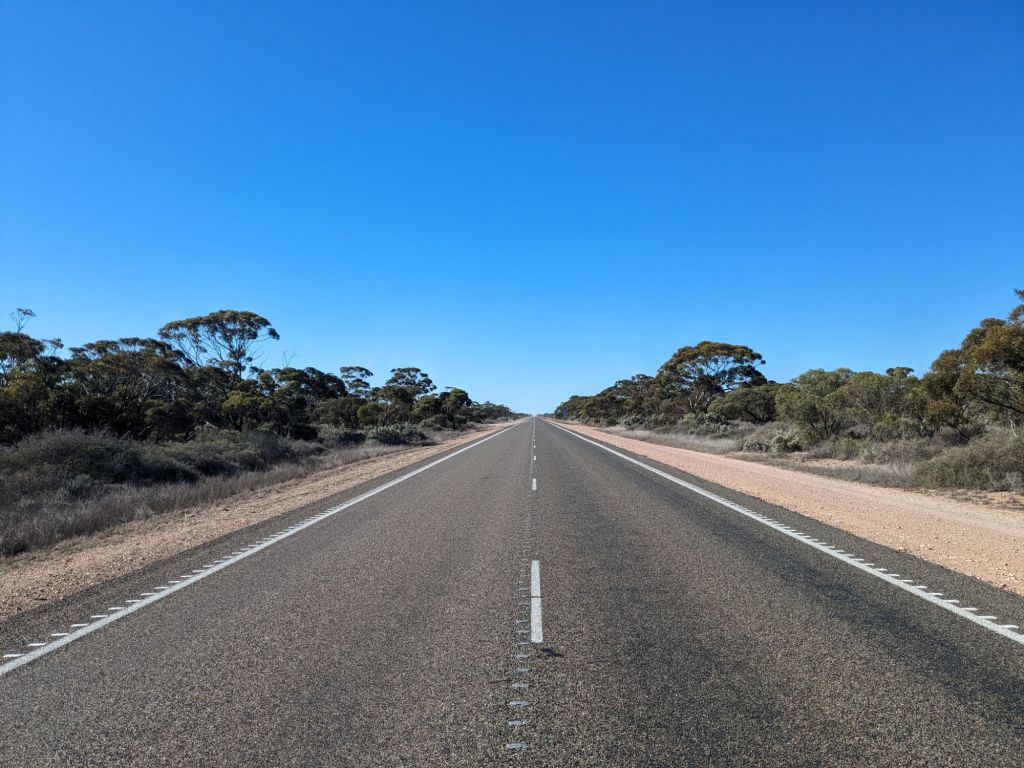
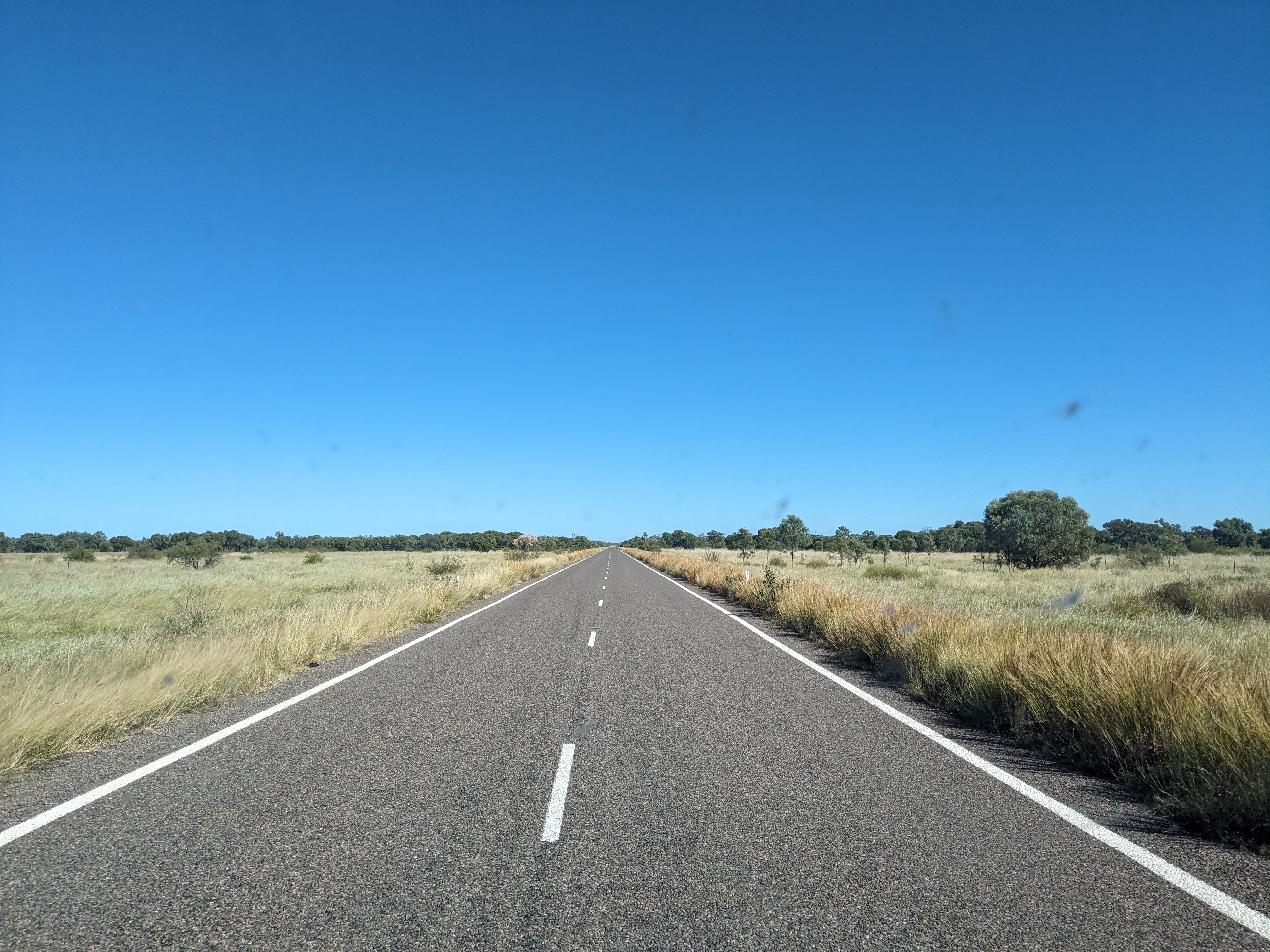
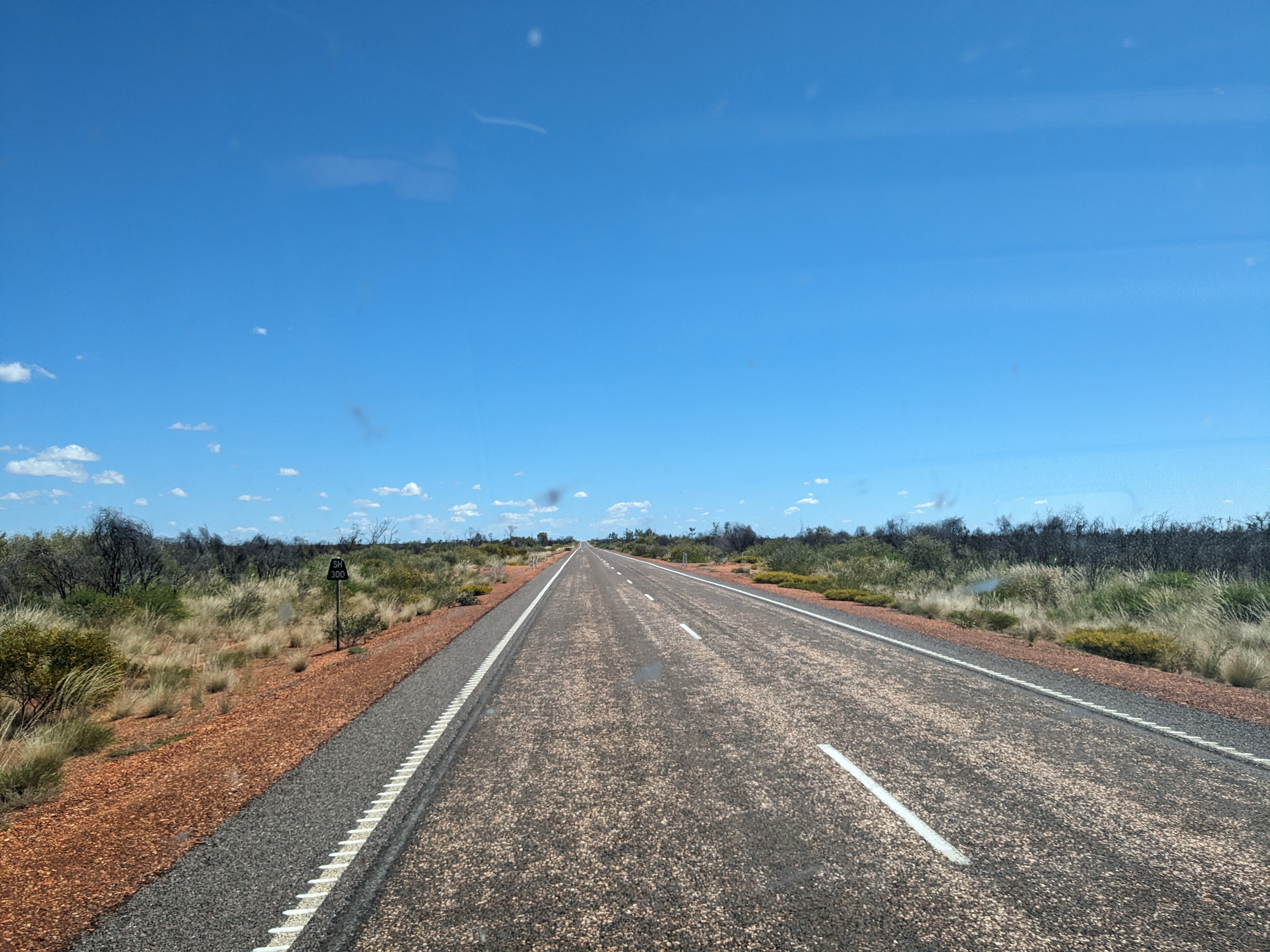
From Albany, I finally joined Highway 1. This road loops all around Australia and I’d be predominantly on it for the next three weeks. It felt like I was doing something completely different, riding the highways. On the tracks, you have to be constantly focused, looking out for any bad sections and trying to spot the posts dictating the route. Now, however, I could zone out easily, not get lost following the same road all day and just stay aware of the trucks occasionally overtaking. This meant progress was good, often riding 160 km a day with a strong tailwind.


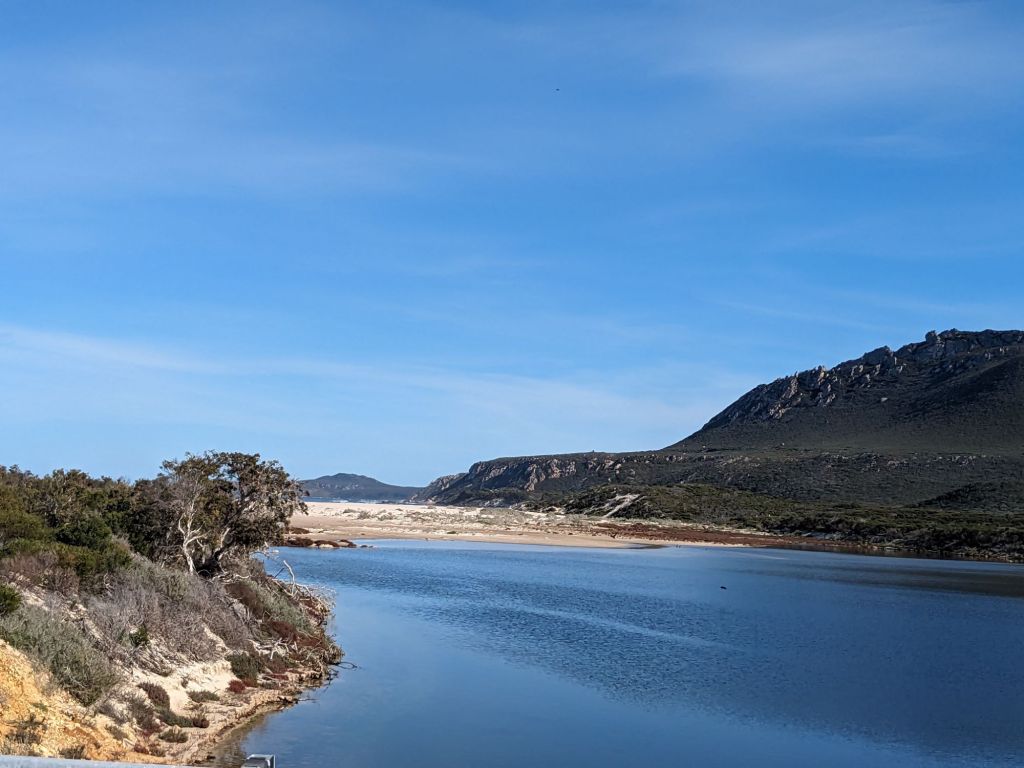
The only detour I could take was riding through the Fitzgerald River National Park, which was a welcome exit off the highway. It was an incredibly quiet road towards the coast and I managed to get a swim in on a beach to myself. There wasn’t much else to see before Esperance and I arrived on the cycle trail wrapping around Pink Lake. This lake was an attraction twenty years ago, known for its deep pink colour and flamingos, but now it’s just a grey lake.


I spent a good morning in Esperance, washing my clothes, charging up everything and visiting the final proper supermarket before I hit the Nullarbor. I left with the bike feeling very heavy but with a few days of proper food and lots of fruit and veg, knowing I wouldn’t be getting much the following week.

The 200 km to Norseman was tough, riding into a headwind. Finding somewhere to camp was incredibly easy with forest on either side of the road in lots of sections. Now water was the main concern, with only one place to fill up on this stretch. It required a fair bit of planning ahead to know how much to carry and for the first time on the bike, I was really having to conserve water.

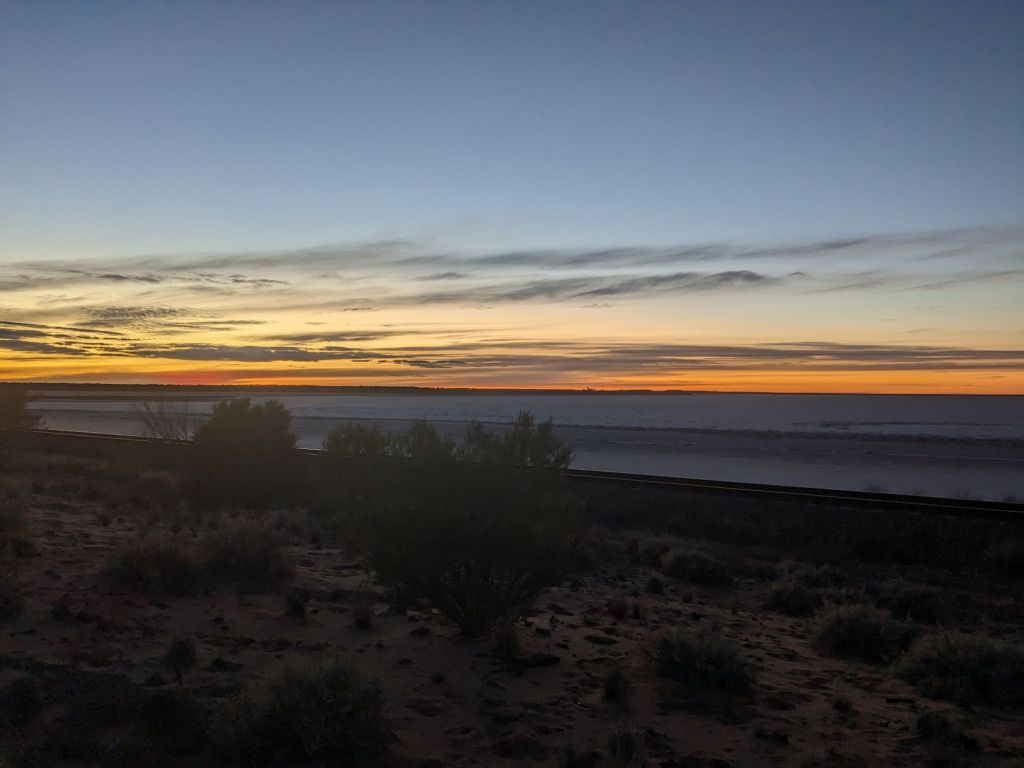
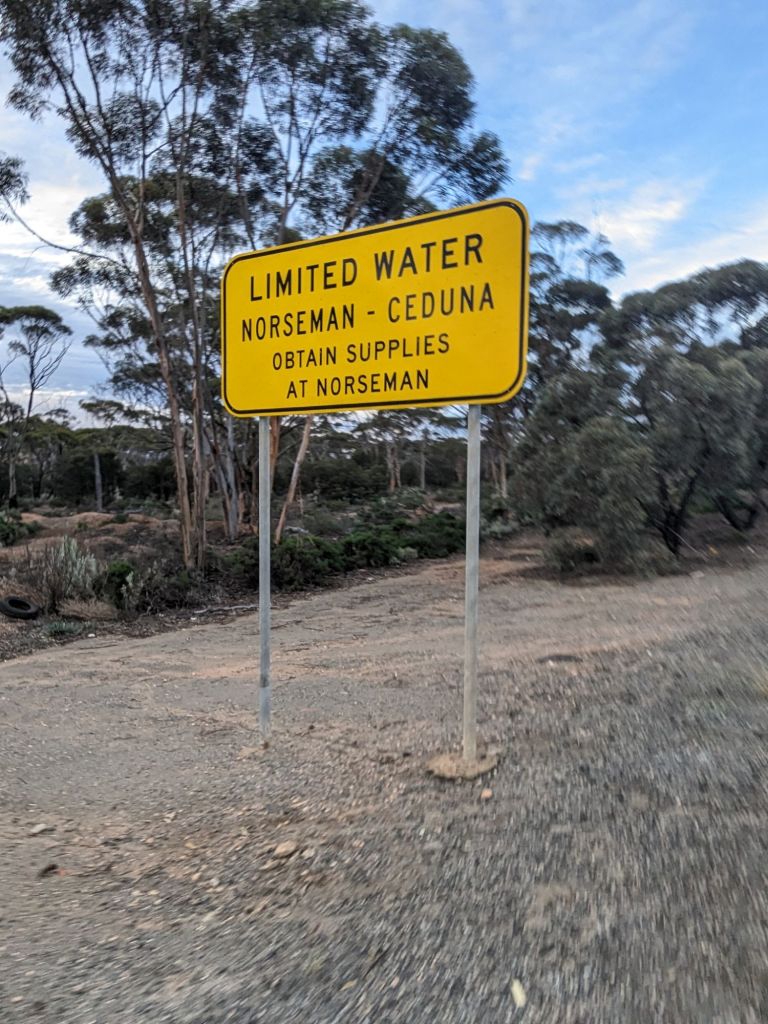
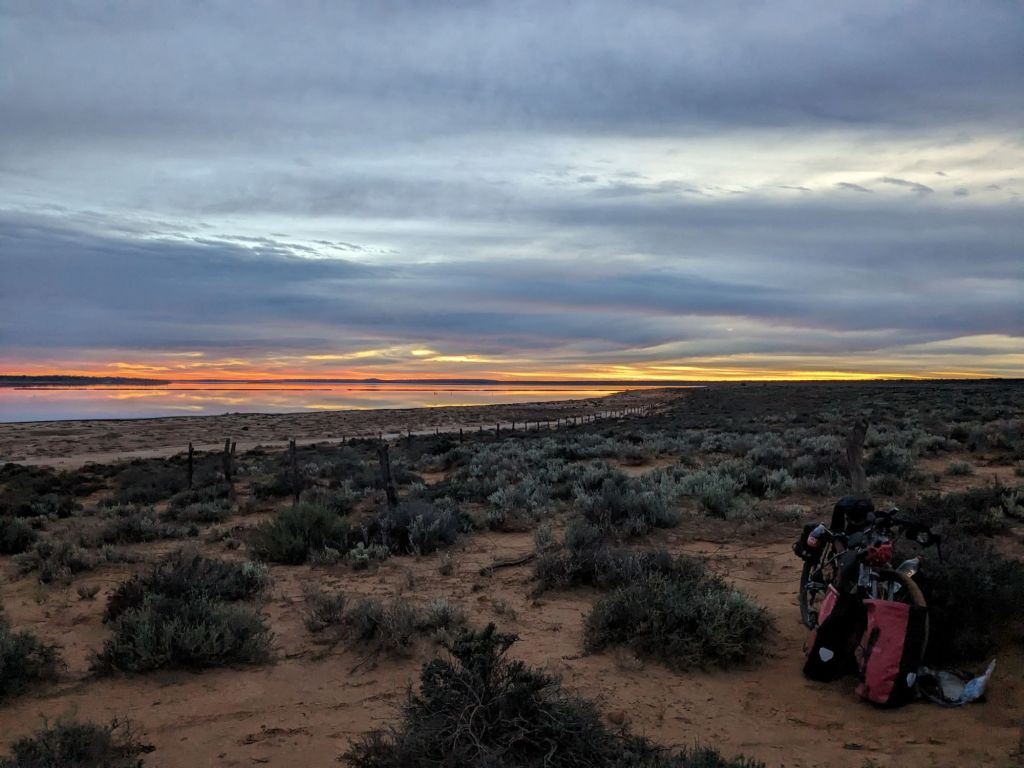
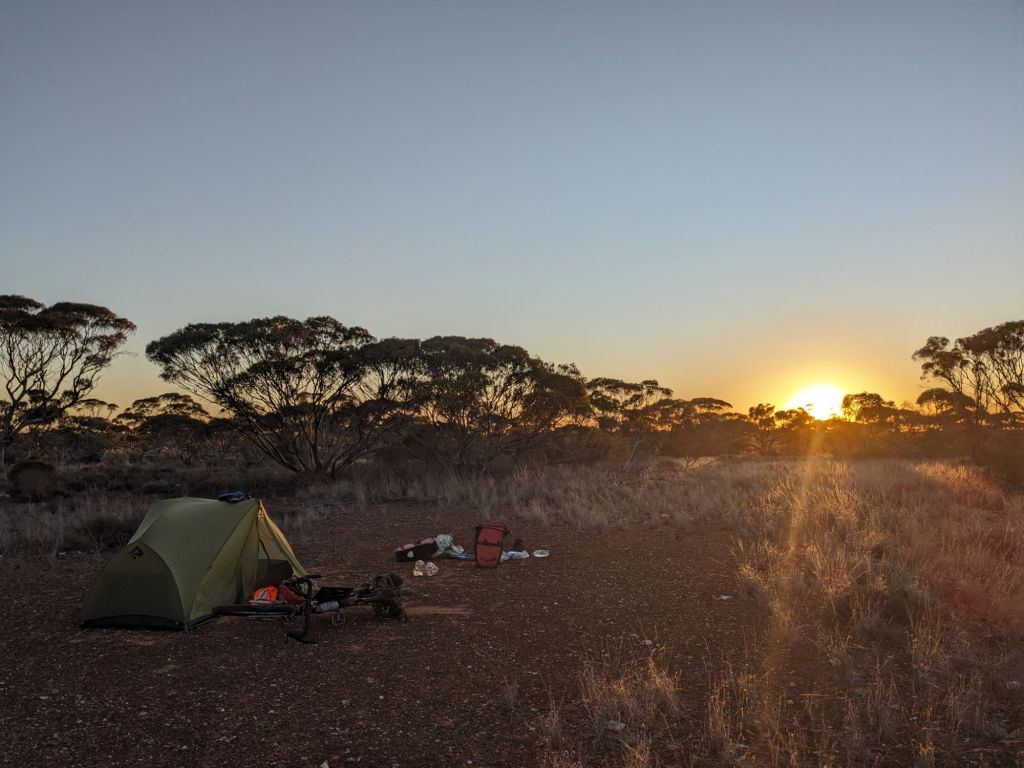
Norseman was quite the frontier town, feeling very empty except for the car park outside the IGA shop full of Land Cruisers towing caravans. Here, I bought more supplies, loading up with nine days of food to take me the 1,200 km to Ceduna. This time the bags were really overflowing, with bread having to be strapped down to the top due to no room. Along with all this food, I loaded up with 4 L of Coke, 2 L of milk and 10 L of water, my theory being if you need to carry the fluids, they might as well have some calories in them. I was in a bit of a rush to leave with darkness quickly approaching and it was quite a surreal moment setting off onto the Nullarbor, something I had wanted to do for a few years, riding past the kangaroo, camel and emu warning signs and one for no services for 189 km. I only rode about 10 km out of town and camped out by a salt lake with a very colourful sunset.


Day 2 was 150 km and very easy riding with a good tailwind. I was only stopping for a quick bite of food as anytime I’d not be moving, I’d get swarmed by flies. I very much felt like I was just a minor amusement for the cars passing by; just something to look at besides the vast emptiness.


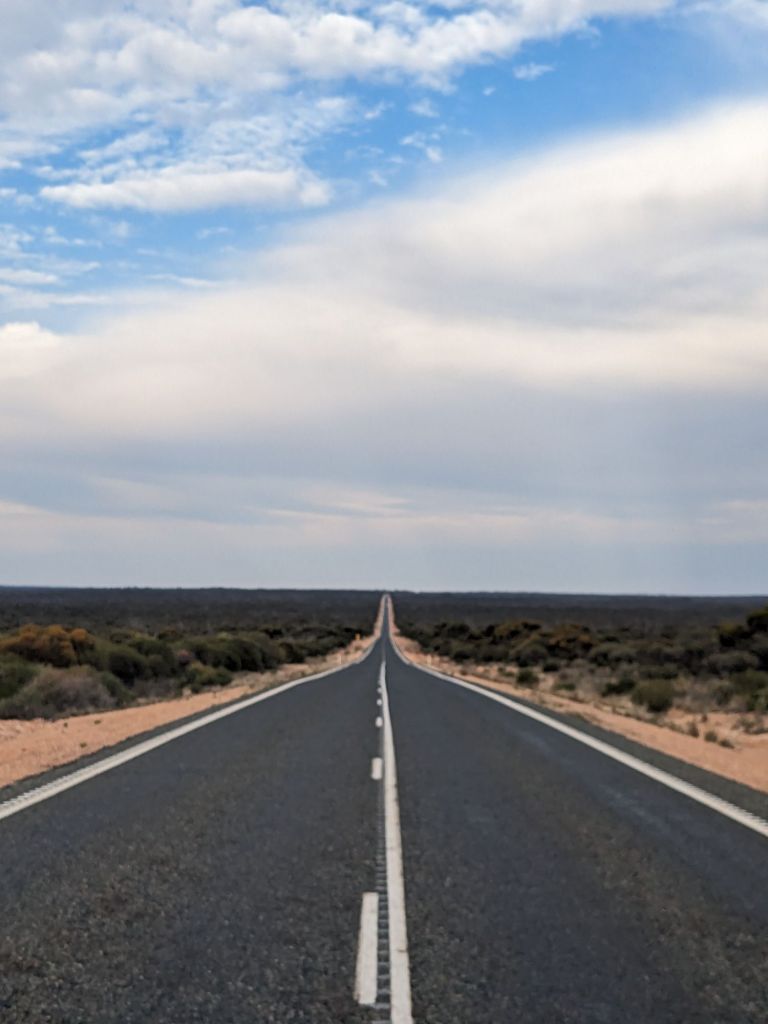
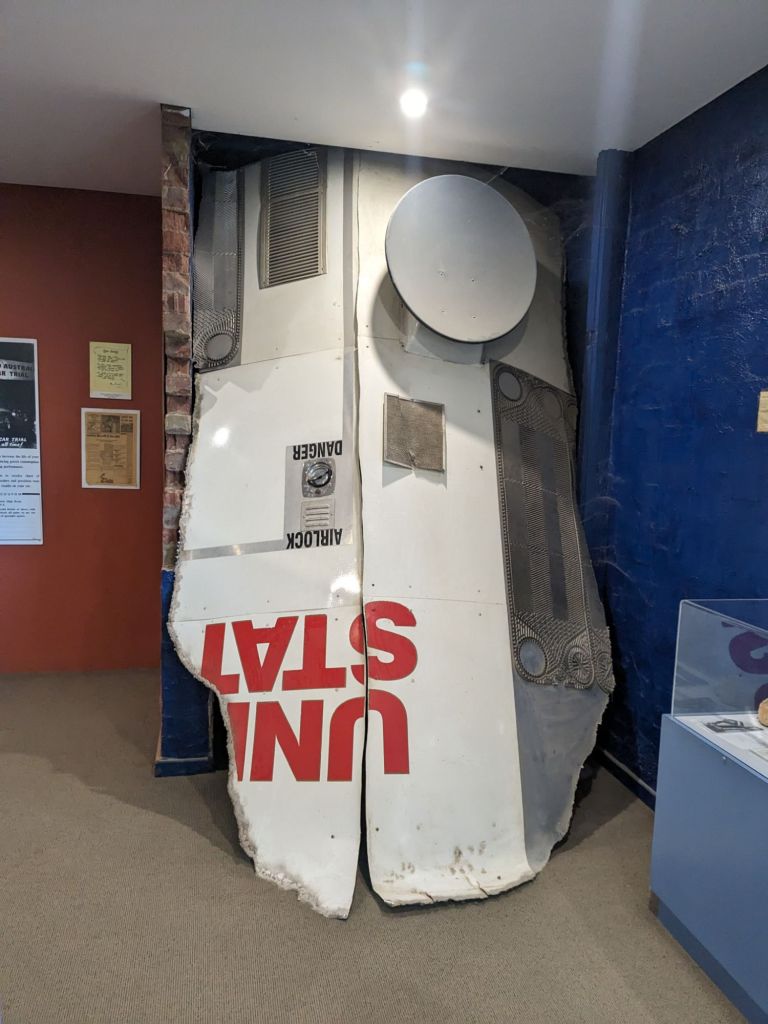
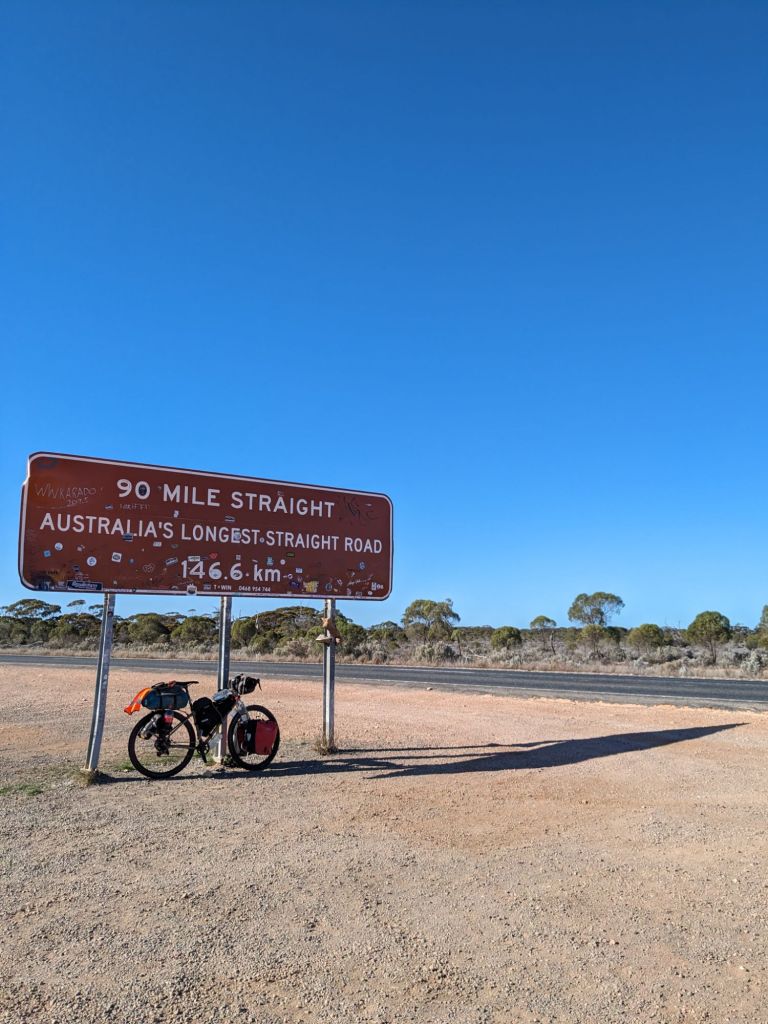
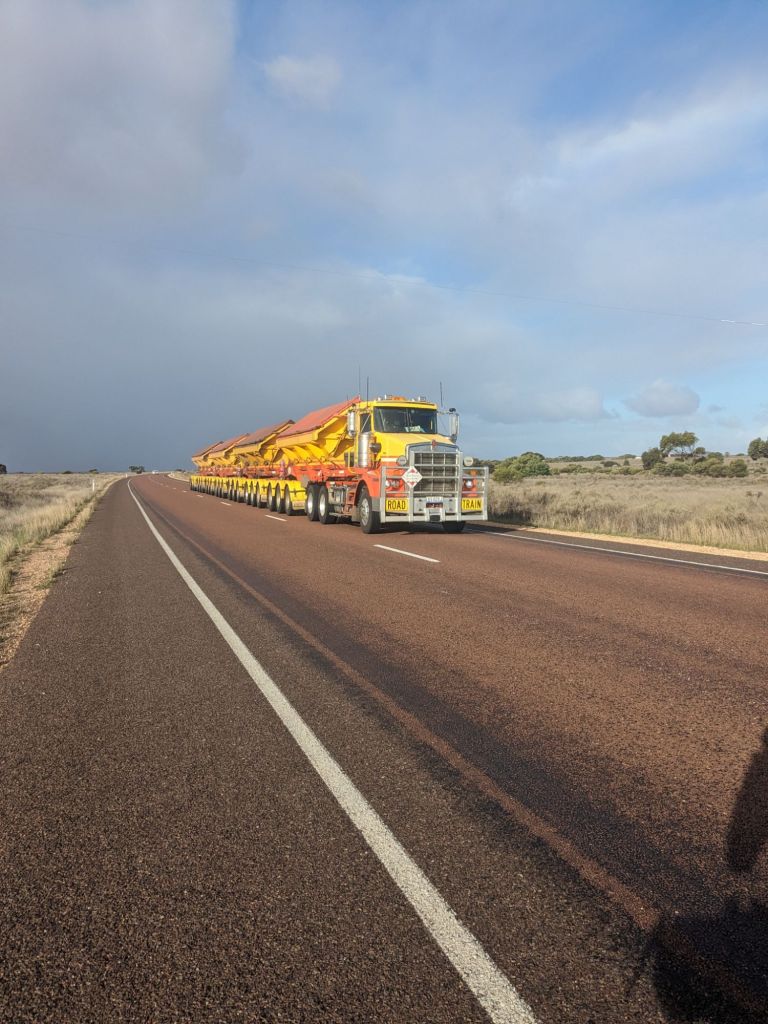
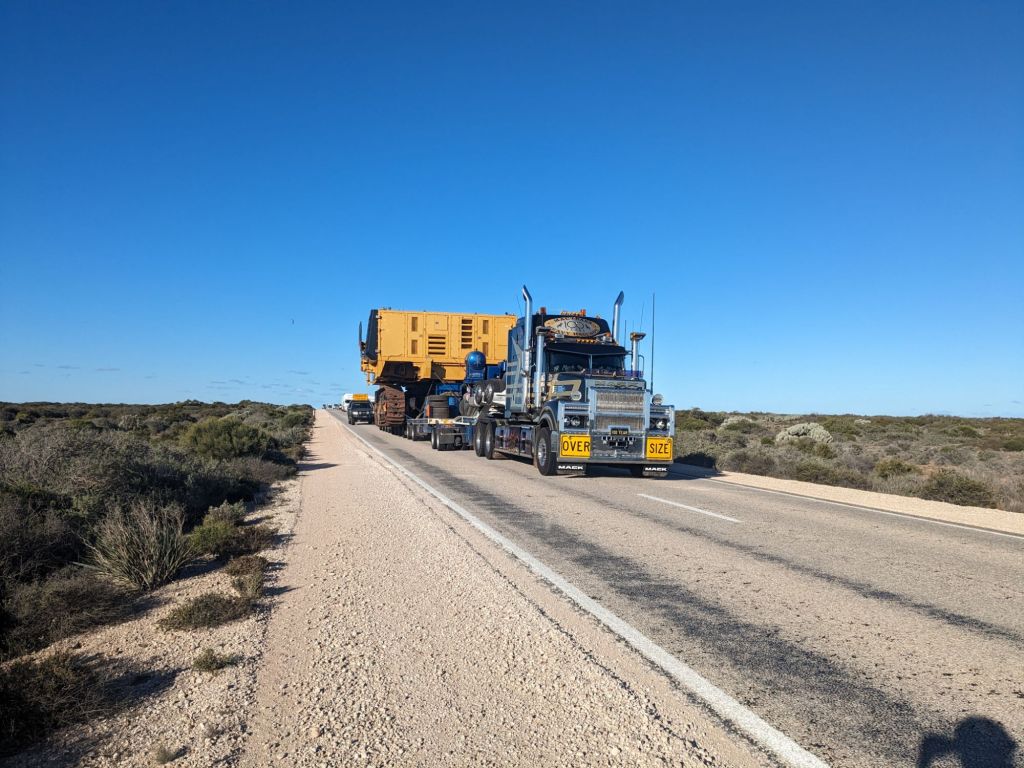
On Day 3, I managed to load up with more water at Balladonia Roadhouse before making the slight left turn onto the longest straight road in Australia. The roadhouse had a small museum attached with a chunk of the Skylab space station that had crash-landed onto the property. I felt I had gotten used to the road trains now and would know when to get clear of them. These 60-metre-long trucks were most of the traffic on the road and always a bit frightening when they’d overtake me, occasionally forcing me onto the dirt beside the road when there was an oncoming vehicle.


Day 4 was much the same, just riding, with the only notable stop being the Caiguna Roadhouse where fortunately they had some showers, which was nice to cool down but felt a bit pointless when you put the same dirty clothes straight back on.


Day 5, I was given a few oranges from the binman who I met at one of the lay-bys. This was a continuous job, driving out to the WA-SA border and back from Norseman, emptying all the bins along the side of the road. Most of the rest areas were still full of used toilet paper and litter, being pretty horrible places to stop and only about 3 metres from the highway.


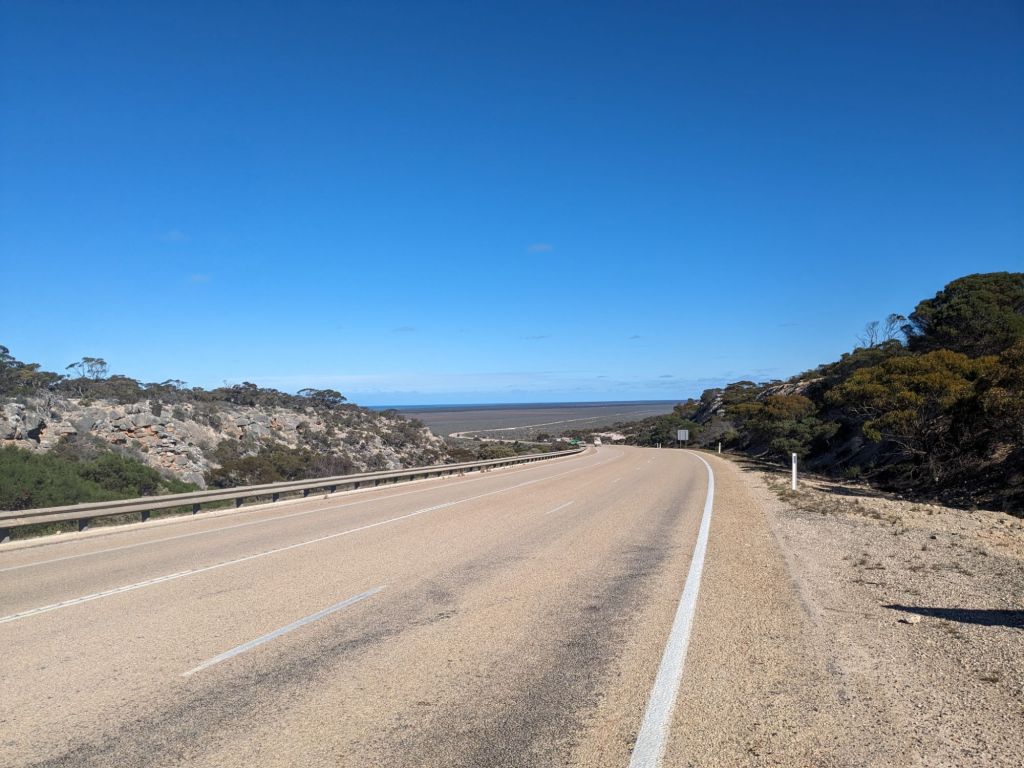
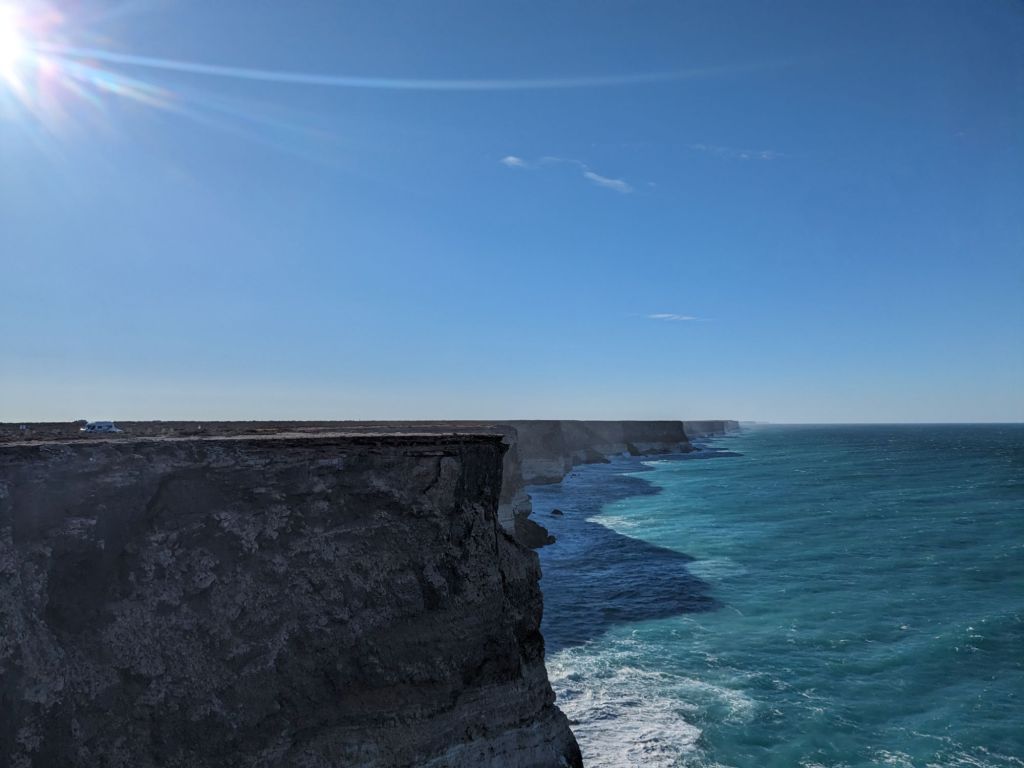
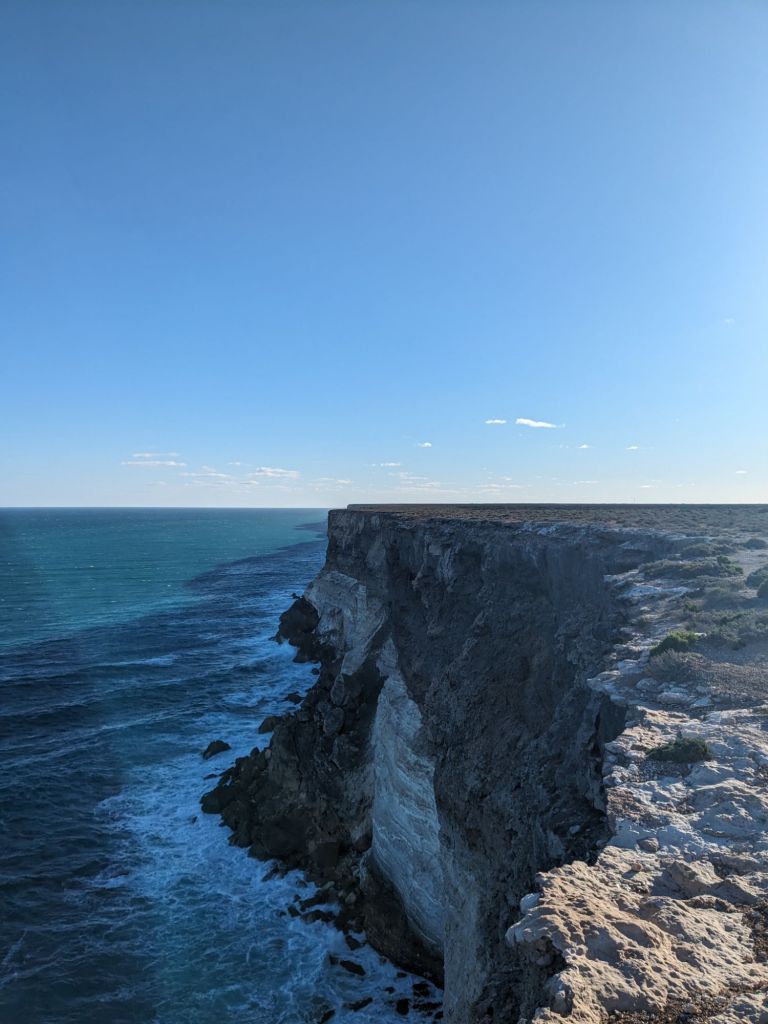
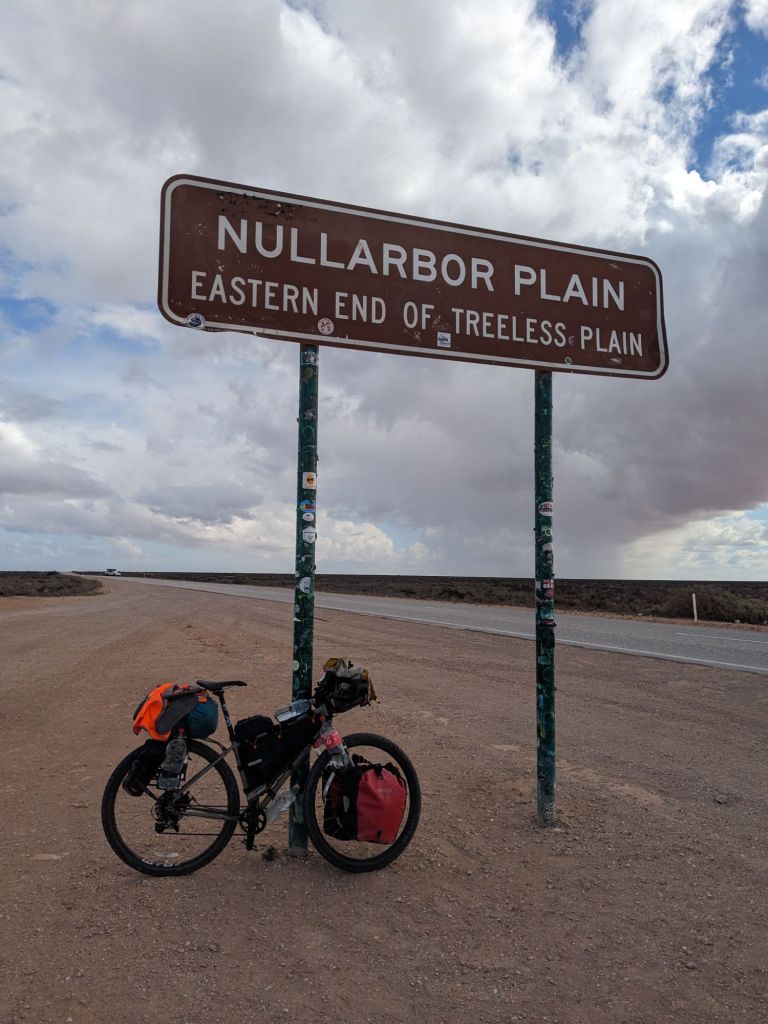
Day 6, I descended onto the treeless Nullarbor Plain. This relatively small hill felt significant after so many days of flat riding and it felt very strange to feel the bike speeding up under me as I dropped down. I crossed into South Australia and got my first views of the Great Australian Bight. This was an inspiring place and very much felt like the bottom of the map, with the cliffs stretching as far as I could see and nothing out into the ocean. Crossing the Nullarbor Plain was easy with 50 km/h tailwinds the whole way, despite a small amount of rain.


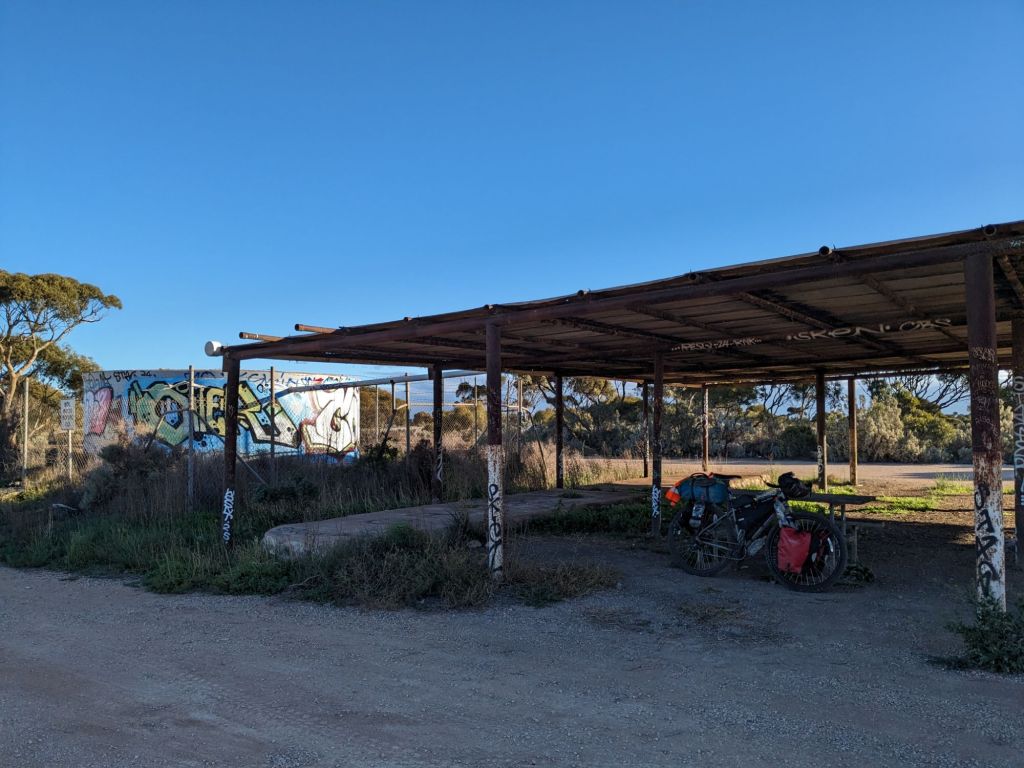
Day 7 and the winds and rain picked up even more throughout the day and into the night. It was too windy to even attempt to put my tent up. I found a shelter at a rainwater tank with a tin roof to collect the water. But the cylindrical water tanks provided little shelter. I ended up sleeping on the ground beside a camper’s Land Cruiser under the shelter and got little rest.


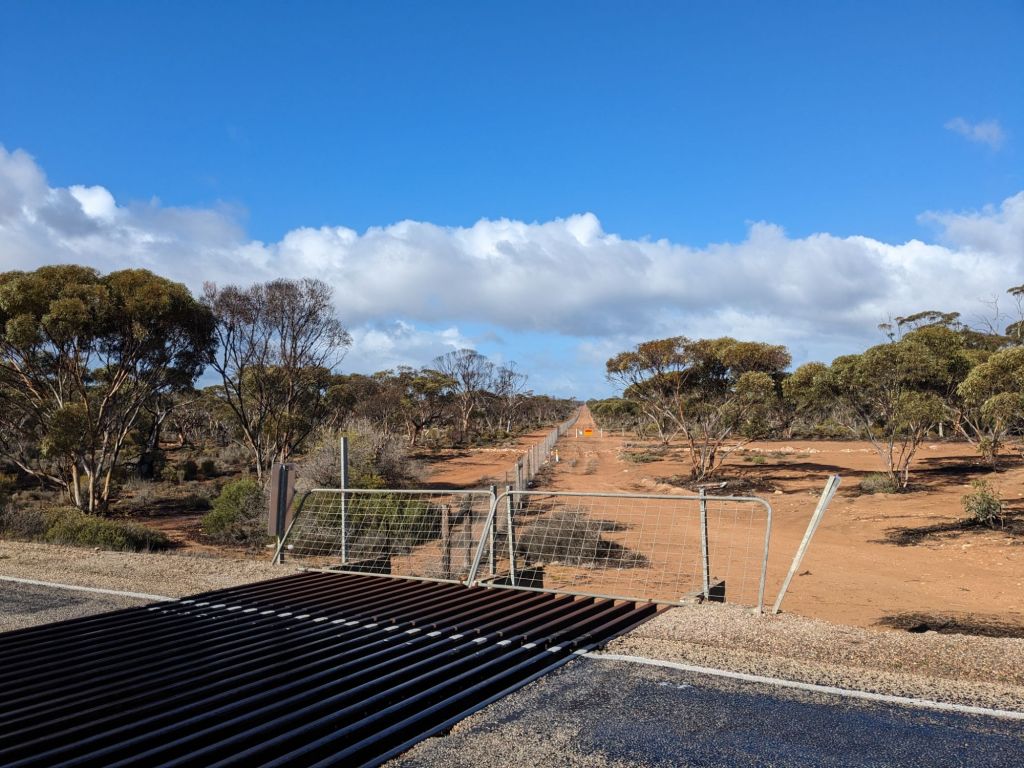
Day 8 and I passed through the Dingo Fence, the longest fence in the world, and the desert transformed into bushland. Now the wind was coming from the side, which made every passing road train very tense as the wind would stop once they came alongside and then I would get sucked towards them.


Day 9 and I finally made it to Ceduna, heading straight to the supermarket and buying way too much food. Refuelling outside the supermarket, I met Andy, a Brummie that had lived out in Australia for the last thirty years but hadn’t lost the Birmingham accent. He was heading west and hanging around Ceduna, trying to wait out the wind. He was very envious of my 180 km days with the tailwind; I can’t imagine the challenge of heading the other way, fighting the wind for nine days.


It was nice to have someone to debrief the Nullarbor to. The cliffs were one of the craziest views I’ve ever seen, but the rest of it was pretty bleak. The views from the side of the road were not beautiful but dirty, with decaying kangaroos rotting alongside and lots of litter and used toilet paper almost everywhere I looked. I loved the camping spot each night, dragging my bike 100 metres from the road and having an amazing sunset and quiet camp in untouched bushland.

Munda Biddi Trail

My flight from Auckland to Melbourne landed to the tune of the Jetstar music. After a pretty cold and restless night on my airbed in Terminal 4, I was back on another flight to Perth.

I was spoilt in Perth; a great week was spent camped out in Libby’s lounge, eating some good food and trying to plan out a bit of Australia. Consulting my map of the continent, it was pretty daunting drawing on the 1,000 km Munda Biddi Trail which barely filled the southwest corner of the continent. The track heads south from Perth to Albany, mostly through forest, and seemed like a good place to start riding, with huts every 70 or so kilometres and a well-documented route.

Leaving the city was easy, following the river then a rail trail taking me to the official start where I’d be following the yellow posts with blue arrows for the next fourteen days or so.

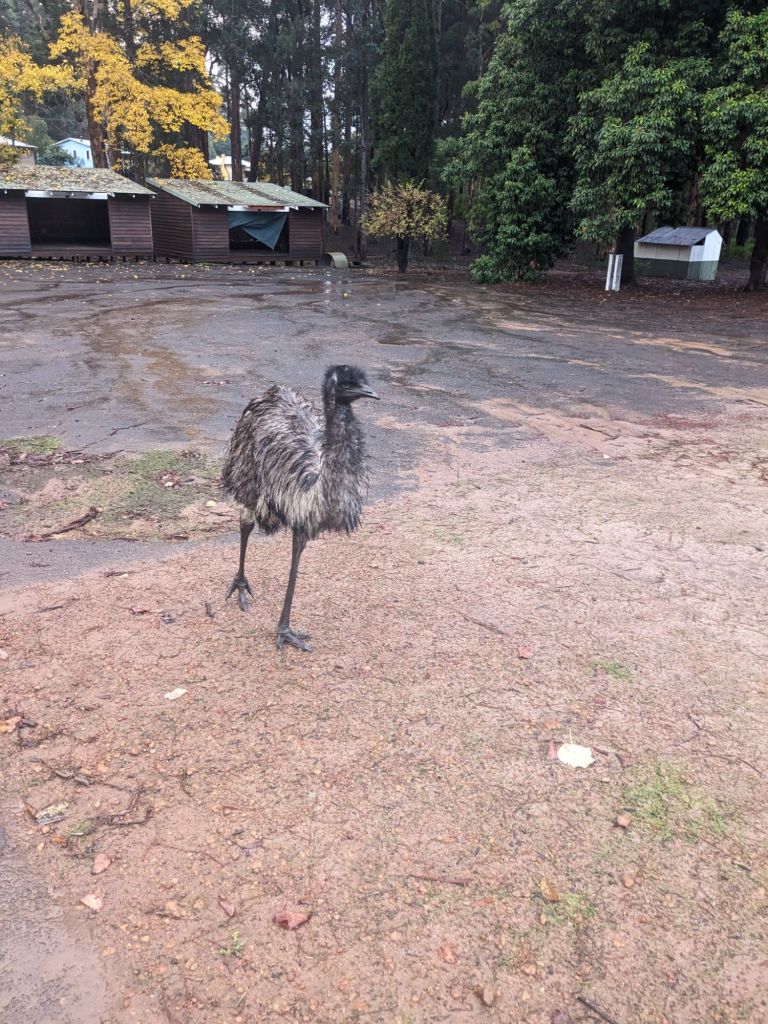
The first few days were fantastic. I was really able to enjoy the single-track sections on my new bike with bigger tyres, and having a hut each night was a welcome relief from the overnight rain. The wildlife was also a big change. I was chasing countless emus and kangaroos down the trail and getting totally disorientated in the forests, just following the signposts and not really knowing where I was going.

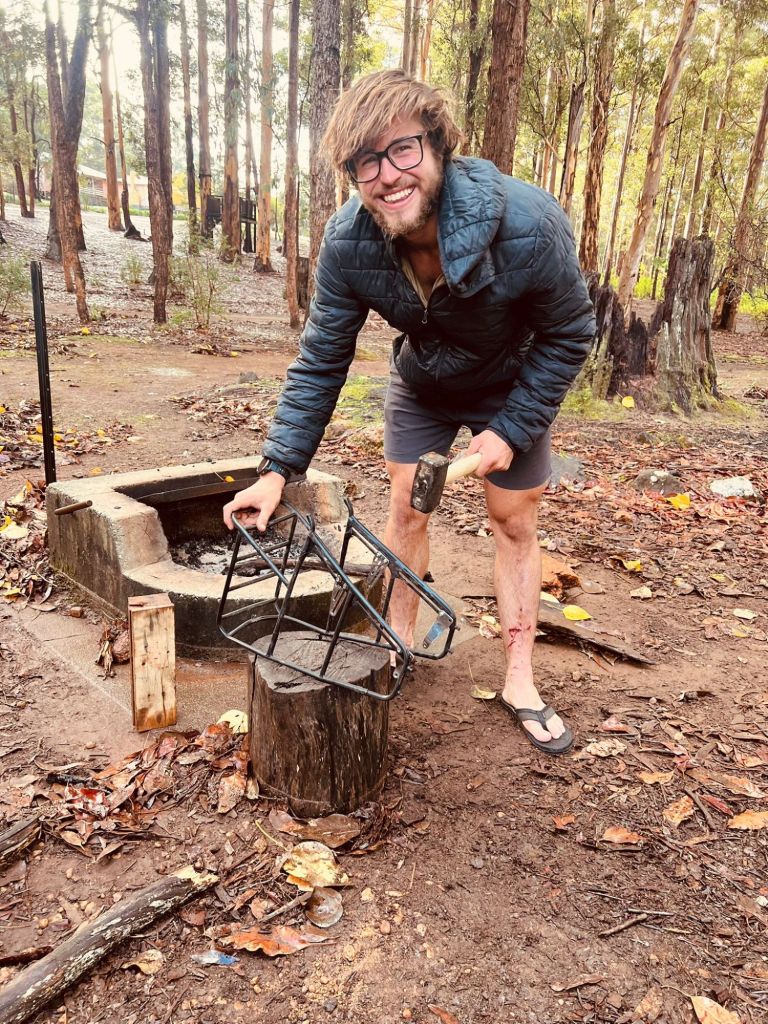
On day six, however, things took a downturn. My brake pads were almost completely worn out. Fortunately, I had spares, but I couldn’t undo the bolt to loosen the current ones. After failing a few times, I managed to strip it (I later learned this was due to my old multi-tool being too worn down) and now had no hope of fixing it without some better tools. Not really having a choice but to keep moving, I set off early that morning with barely functioning brakes into what was predicted to be 80 mm of rain. The first 50 km went well, but then the brakes failed altogether on a downhill and I came off, heading straight into a tree. After getting up, the front rack had taken all the impact, wrapping around the tree, and I also punctured the front tyre. I wasn’t too badly damaged, but my leg had a nasty cut and I was getting cold standing in the rain, unsure what to do. After fixing the front flat, I kept moving, mostly just walking my bike, occasionally riding on an uphill or flat section, when I came upon Donnelly River. This was an old timber-felling settlement that had now been converted into a remote holiday village. When arriving, I was greeted by Gus and Harry, two other cyclists who had been there a few days sheltering from the rain and seemed pretty confident they could fix my bike, looking for something to do, stuck in this tiny village with no internet signal.

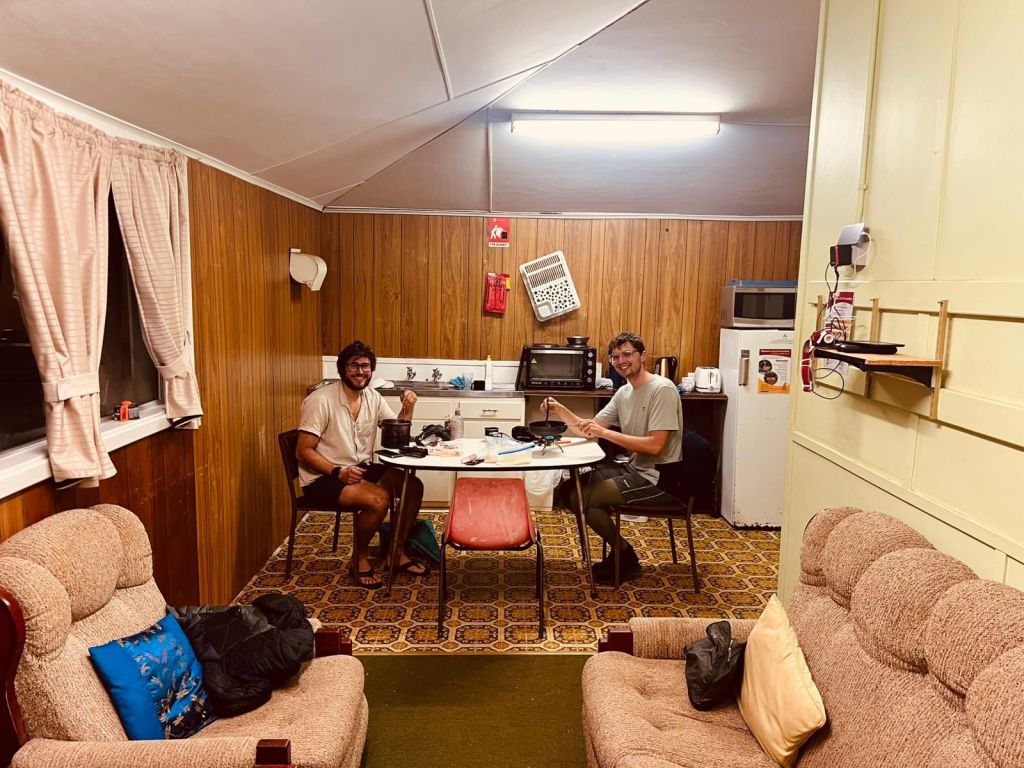
There were a few options for accommodation: a house which was definitely out of my budget. Then also the old primary school had been converted into dorms and a kitchen and shower. For $30 you could get a night in a dorm, or for $15 you could get access to the facilities but had to find your own place to sleep. I chose the latter, opting for the sofa in the kitchen. After a warm shower and a packet of noodles to eat, we were ready to repair the bike. With a pair of multigrips to undo the brake bolts and a mallet to bash the rack back into place, the bike was mostly rideable again. This meant I could enjoy the evening relaxing in the shelter, which felt straight out of an ’80s sitcom.

The rain continued through day seven and I opted for a short 20 km ride to the next hut in an opening in the weather.

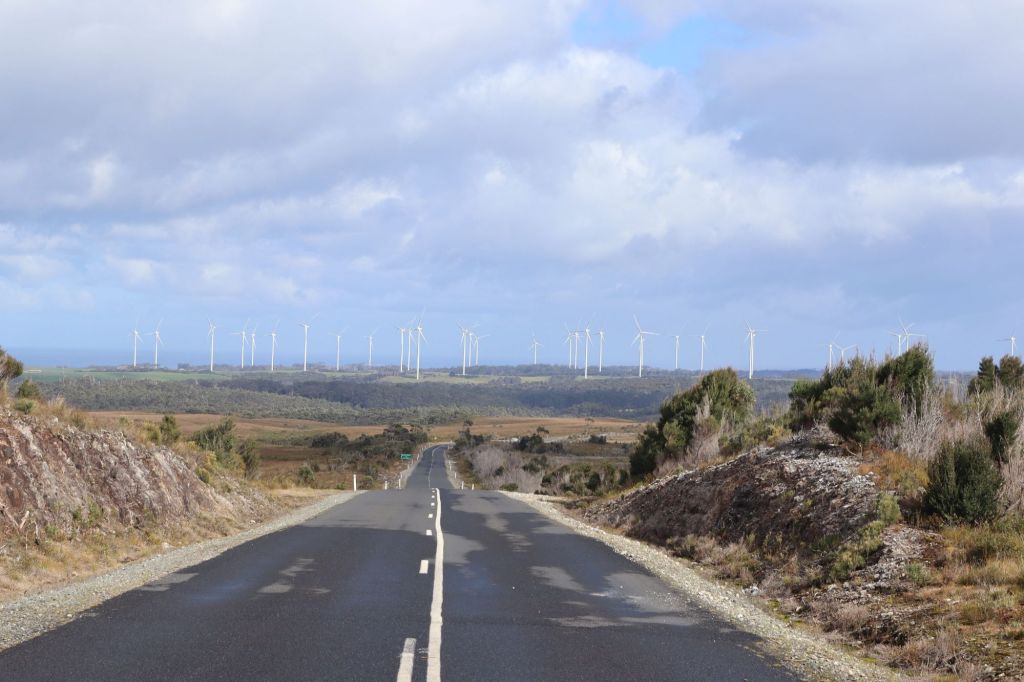
The next few days went better, making it to the coast and enjoying the amazing views out into the Southern Ocean. The final stretch of the track took me through a wind farm perched on the hills west of Albany; listening to the sound of the turbines was impressive. In Albany, it felt strange seeing the final trail marker. From here it would be mostly on the highways. I booked into a campsite for a few days, repaired the bike, also attaching as many water bottle cages as I could squeeze on, preparing for the next section across the Nullarbor.

North Island

I didn’t fancy spending any time in Wellington and wanted to keep riding whilst the weather was good, so I headed straight out of the city when the ferry disembarked. The cycle path I was riding on felt pretty sketchy, with just a white line separating me from the motorway, but I figured it must be alright as I saw two people casually running down it.

Loading up at the supermarket on the Wellington outskirts, I was informed by a local not to lock my bike up anywhere north of Auckland as it would get stolen. I figured I’d take my chances when I got there, as I didn’t really have any other choice.

That first night, I camped along the coastal trail which was tough going, as it was a very sandy track and was so windy I ended up just sleeping under a rock, not wanting to try to pitch my tent.


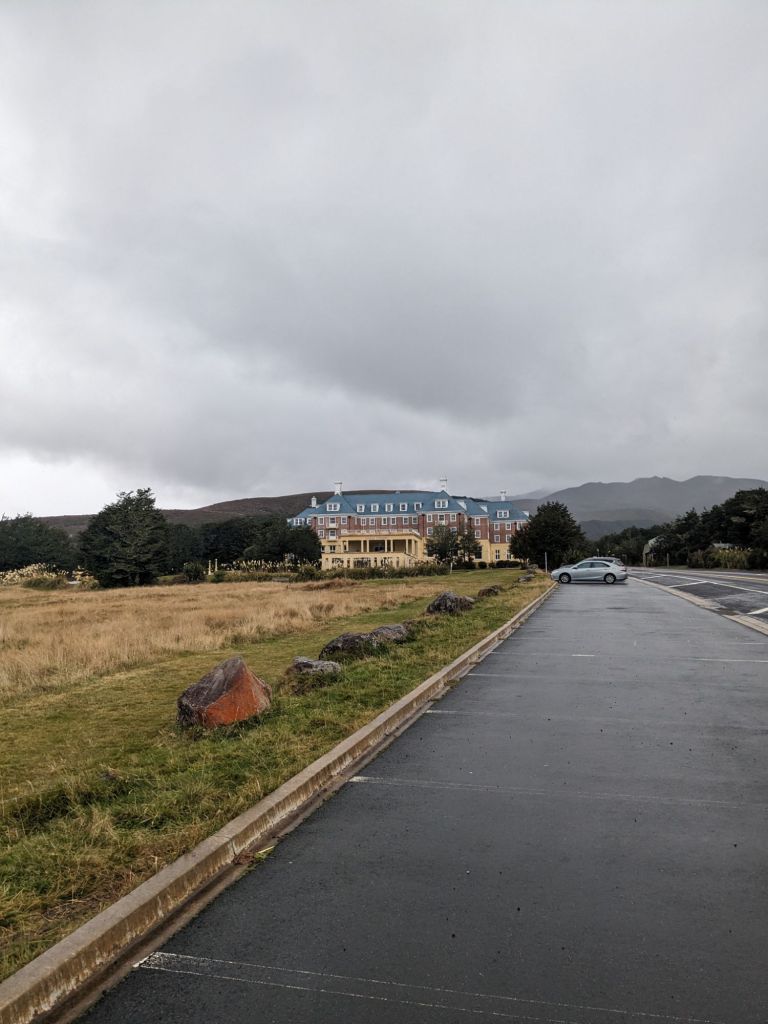
The next few days were spent riding along a highway through just farmland and some bad weather. It was pretty mentally draining as it’s just not that ‘epic’ and hard to take any breaks through the rain. Eventually, I made it to Tongariro National Park and camped at the town of Whakapapa. The town felt very eerie, with a hotel that looked out of The Shining and a huge car park and visitor centre that were both empty. Fortunately, there was at least someone to check me into the campsite and let me stash my bike in his garage whilst I walked the Northern Circuit.


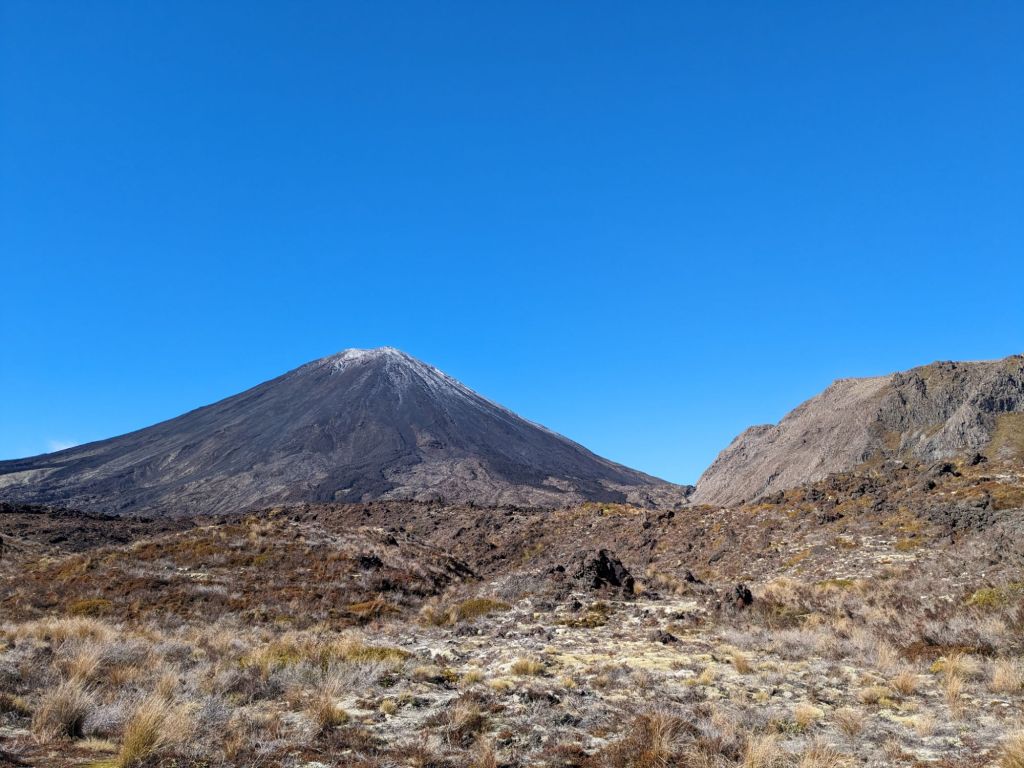
The first day of the walk was amazing, going up a volcano and getting hit by the steam coming out of the vents. Then, crossing over the pass and winding between the Emerald Lakes felt like being on a different planet. I made it to the hut, which was very social as it was the first weekend out of peak season, so the price of a bunk was $100 less than a few days before and lots of locals were taking advantage.


The rest of the walk was alright, walking back to Whakapapa the other side of Mount Ngauruhoe with less good views. I continued on the bike north along the 42 Traverse, a 4×4 track crossing State Forest 42. This was great except for one hill with so much mud. This was a small side track constructed to detour around a landslide and was impossible to ride or even walk up. Every time I’d take a step forward, I’d slide back the same distance and was just stationary, stuck in the wet, slippy mud for about five minutes. Eventually, by grabbing some overhanging tree branches and no longer caring about trying to stay clean, I made it up the hill. I kept pushing on into the dark to make it to the hut at the start of the Timber Trail to get some shelter from the freezing temperatures coming in that evening.


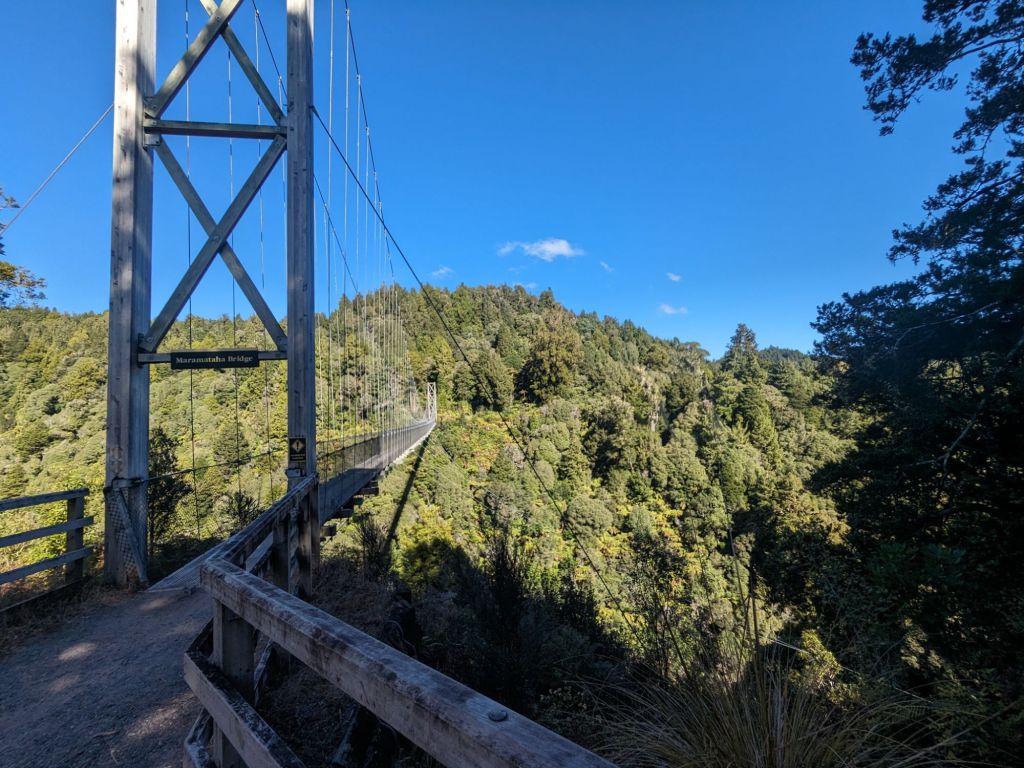
The Timber Trail was a really good track: well-graded, smooth surface with some impressive swing bridges across the valleys.


Continuing north, the weather was definitely improving but the riding was now mostly just through farmland on the occasional rail trail. I crossed Auckland, not stopping, knowing I’d be back to get my flight out, and then had a few more days through the rolling hills towards Cape Reinga.


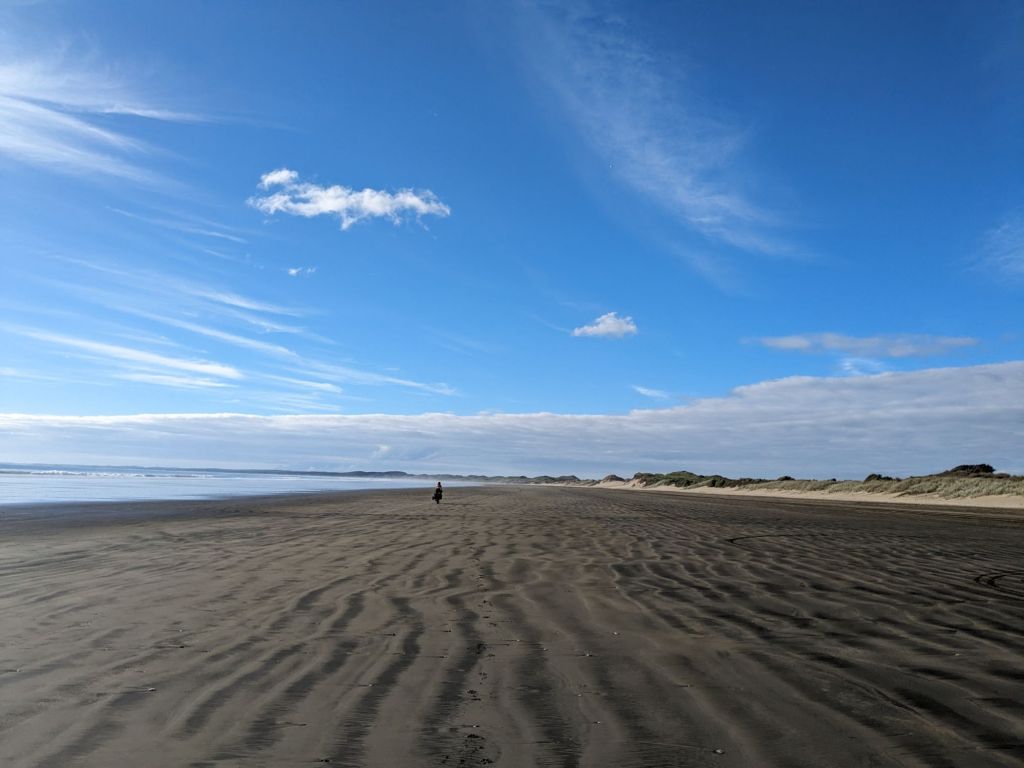
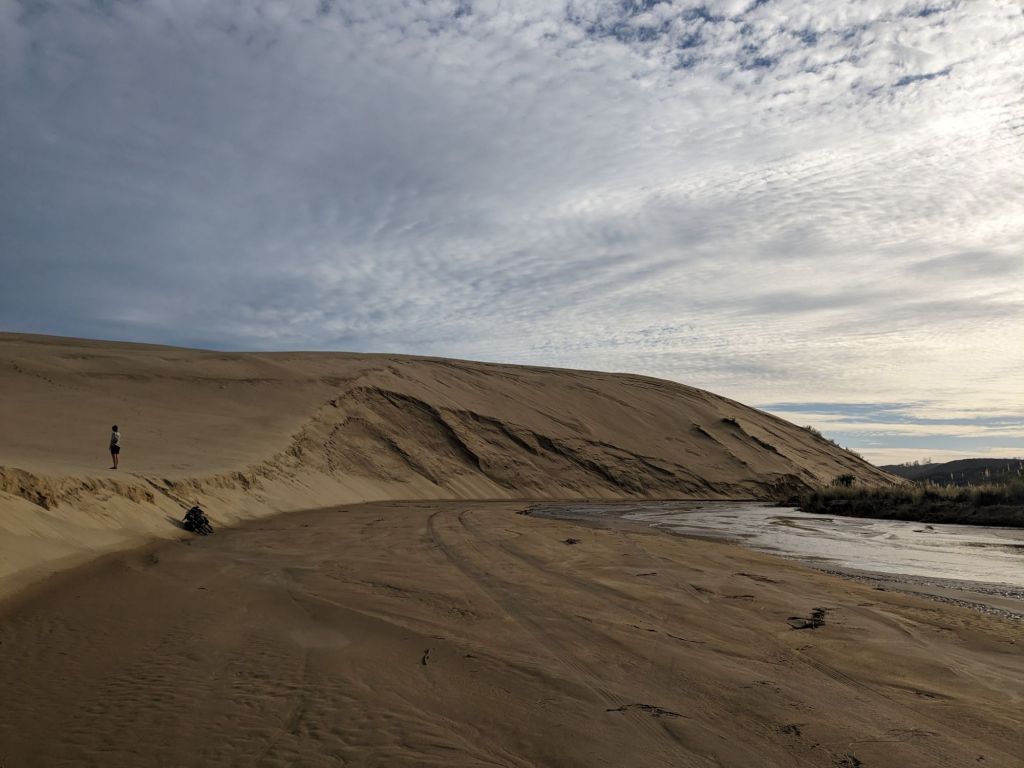
The final stretch of my journey would take me up Ninety Mile Beach. This 85 km-long beach is classified as a road, but is only really passable at low tide when the sand is hard. Reuniting with Elise at the start of the beach, we set off at about 4 pm, riding out into the setting sun. Knowing tide windows were best that night, then again only until about 8 am the following morning, we tried to cover as much ground as possible that night, riding through the sunset then continuing into the darkness. This was an amazing experience and the photos definitely do it justice, riding through some incredibly coloured skies and with the reflection on the wet sand. There was just enough starlight to see where we were going through the dark and it was so cool riding into the darkness not knowing what was around.


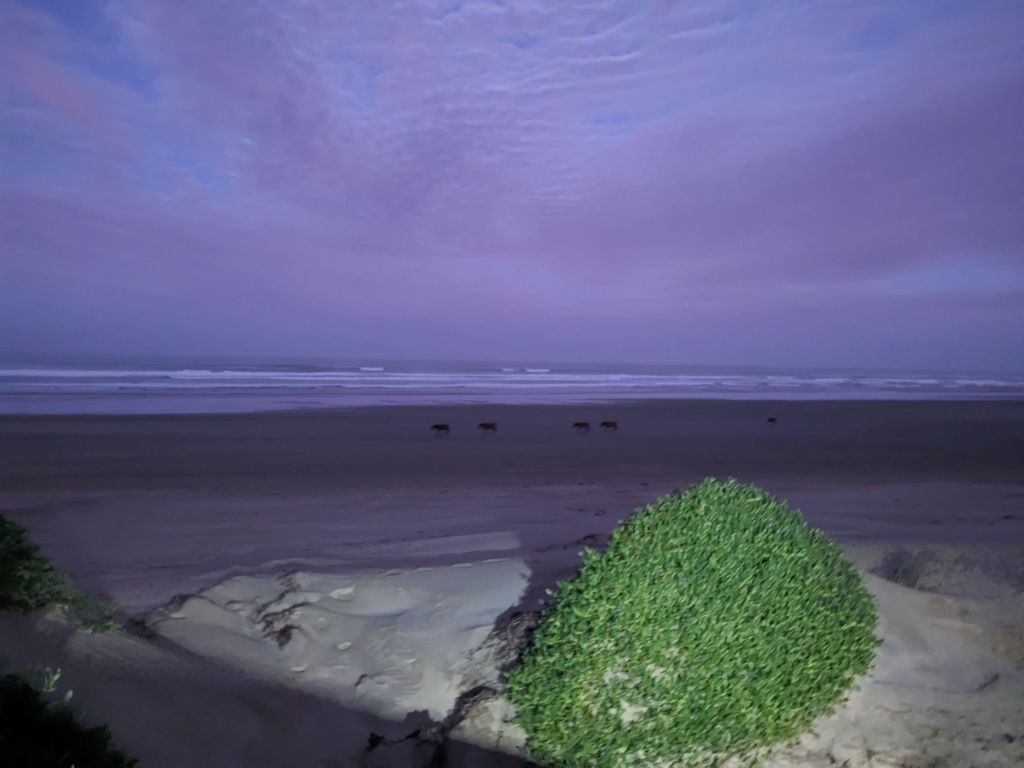
Camping out on the dunes offered a great sunrise in the morning, with a slight scare from a pack of horses who looked quite spooky in the dim morning light. All that now remained of the route to the top of NZ was rejoining the tarmac via a tough riverbed track and a few hills before Cape Reinga.


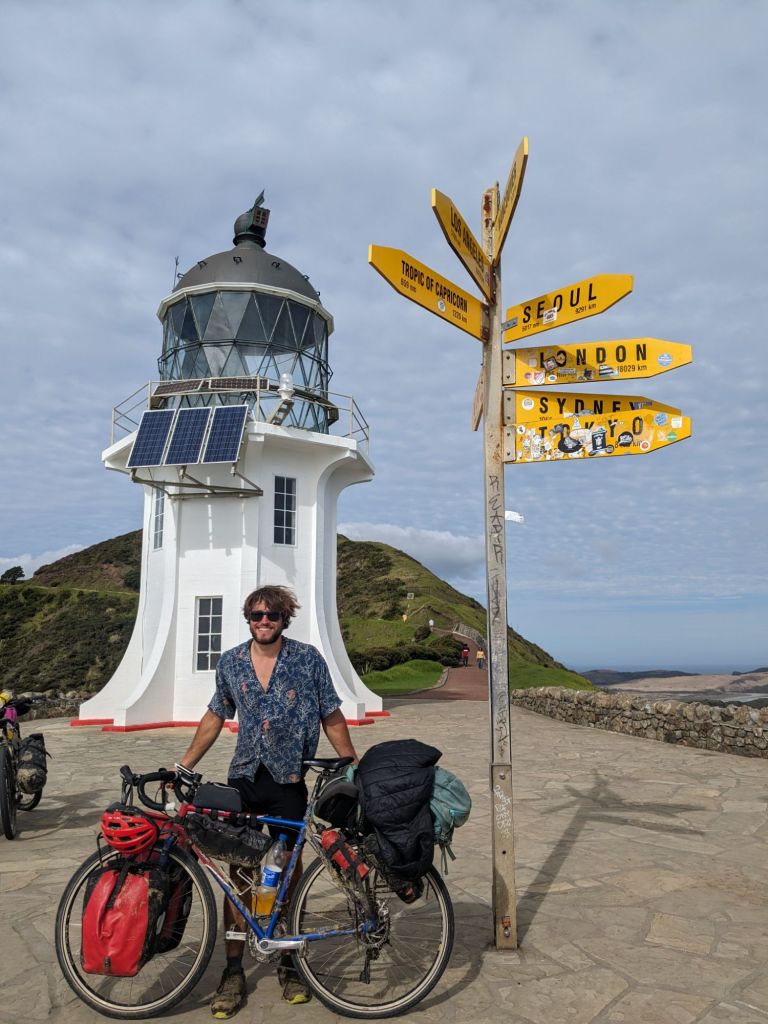
The feeling at the top was mostly relief. The bike had really started to play up over the last few days and I’d already ordered myself a new bike to arrive in Perth, so I didn’t want to spend any extra money keeping this one going. The gears were barely working and now the left crank would loosen and come off about every day. It made the feeling of riding through the salt water more enjoyable, knowing it didn’t matter about the corrosion. After a few obligatory pictures at the lighthouse, we rode back to the beach to camp for the night.


I had a few days until my flight out of Auckland so decided to ride another route south before taking a bus. Unfortunately, the bike’s crank snapped off. This left me scooting it down a small country road, trying to hitch a lift with any passing vehicle. Eventually I got picked up and taken to Whangarei, where I could get a bus to Auckland finishing my seven months in New Zealand.

South Island Part II

I was putting off my departure from Te Anau for about three days, partly due to a small patch of bad weather and partly because I didn’t want to leave. Te Anau had been my home for the last three and a half months and I’d really enjoyed using it as a base to explore the wilderness of Fiordland, along with growing close to my housemates in this time. I needed to leave however, as autumn had arrived and I did not fancy riding through the cold, wet New Zealand winter.

The first few days were spent crossing the Old Man Range and Old Woman’s Range. I’d hoped to do this back in October, but the track was covered in snow along what claims to be the highest road in the country. Climbing into the mountains, I was walking my bike most of the way. I definitely noticed my loss of fitness and I felt pretty run down after spending the last few days celebrating the end of an era in Te Anau, not having time to recover from the nine-day hike I’d just returned from. This was shown to be true when I was sleeping for twelve hours a night in each of the three huts I slept at. I was liking the solitude through the hills, seeing about one car or dirt bike a day.

Rejoining the tarmac, I headed for Macetown. This was an old gold mining town which is now a campsite, reachable by a rough 4×4 track. The bike wasn’t enjoying the route, with about eight stream crossings before fifteen kilometres along a very dusty track. This combination of water and dust quickly turned to mud, wearing down the bike’s drivetrain. Arriving at the campsite and washing everything, I noticed the shimmer of the dust containing tiny specks of what I assumed to be gold. It was a cool place to explore with some old mining batteries left behind and a few huts to explore.

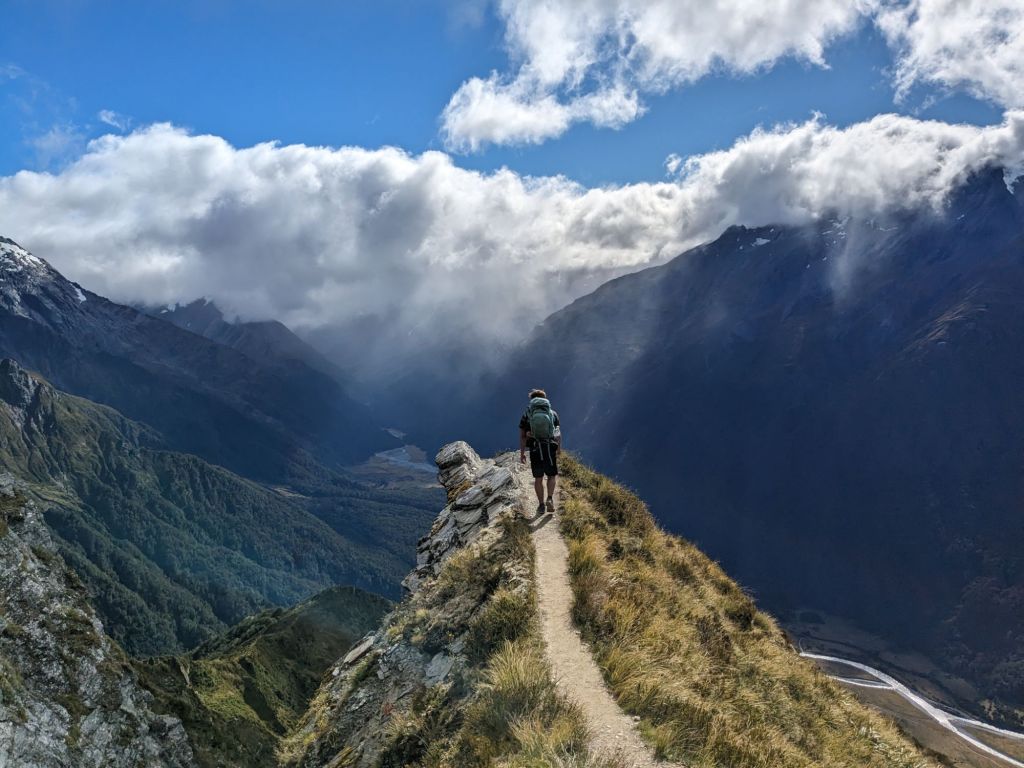
In Queenstown, I met up with my mate from the UK, Ryan, and headed off into the Mt Aspiring National Park for six days. I’d been tasked with giving him a tough hike, seeing the best NZ had to offer, and felt I delivered pretty well: hitchhiking a lift in the back of a pickup, staying in an alpine hut and seeing some incredible glacial valleys.

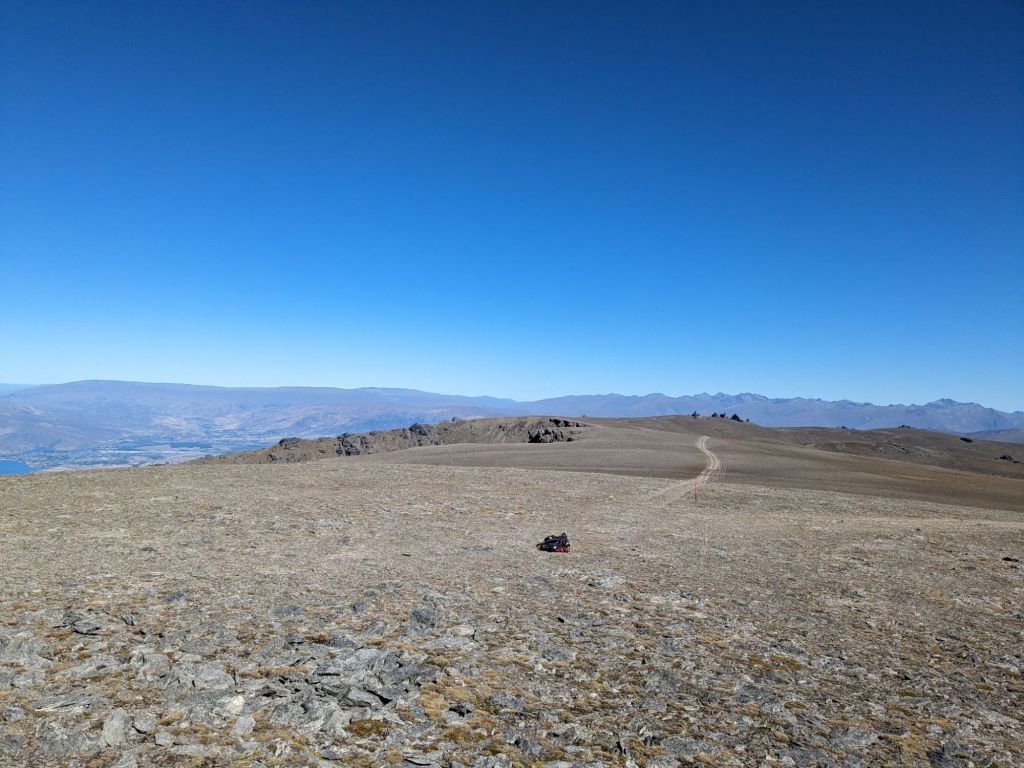
Returning to the riding, the bike was feeling very rough. I think the toll from the Macetown detour, combined with leaving it for a week, had seized up the bottom bracket. It started to improve whilst riding, but I could still tell something was wrong and I made my way to Wanaka over Crown Peak, another contender claiming the highest road in NZ. I didn’t see anyone else for the two days I was travelling through the Pisa Range and the views were impressive, looking down at the town of Cromwell.

At the bike shop in Wanaka, after a quick inspection, I was given the bad news. I was informed I’d need a new bottom bracket and new cranks, with the cranks costing $200 and probably taking three days for the part to arrive. However, the mechanic said he could probably bodge it with just the new bottom bracket, but it would probably only last another 1,000 km. I took this second option, wanting to get back on the road quickly, and he jokingly informed me as I was leaving that the warranty for the repair would expire the moment I left his shop.

The bike did feel good again and the pedalling was far smoother than before. I was now heading up Highway 6, better known as the West Coast Highway.

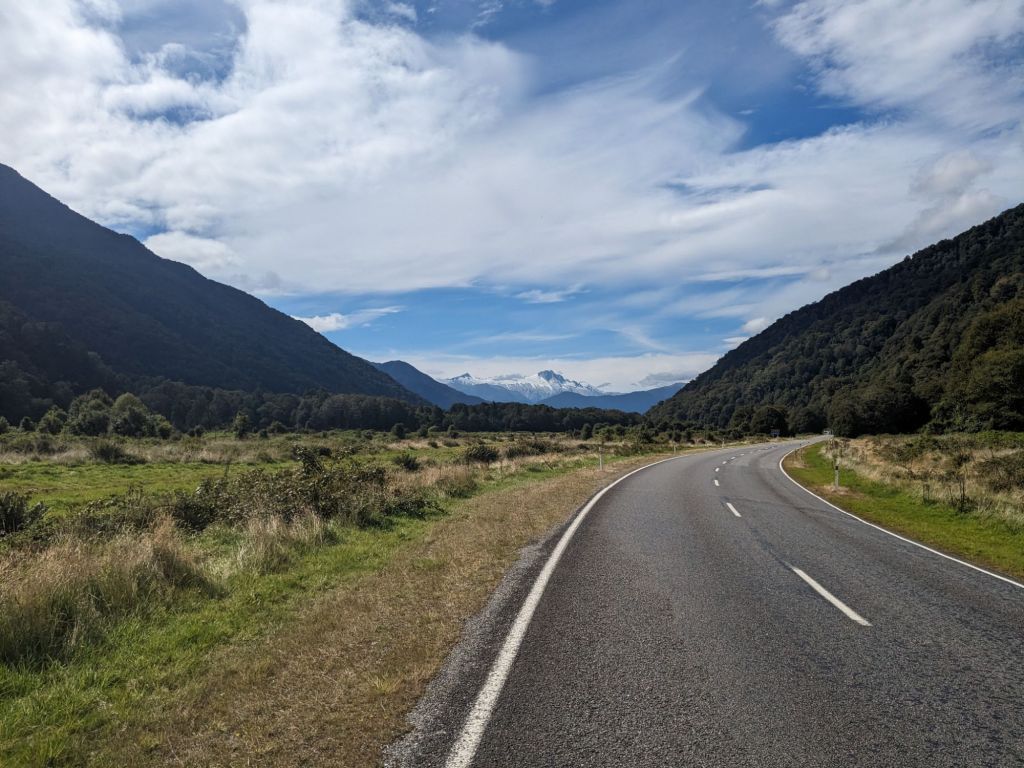
Otago, the region I had spent the last few weeks travelling through, is the driest in New Zealand, but now I was heading into the wettest. The rain began almost immediately after I crossed over the Haast Pass and began descending towards the coast. It rained solidly for the next three days and, being on the remote highway, riding mostly through forest and farmland, there was little shelter from the elements.

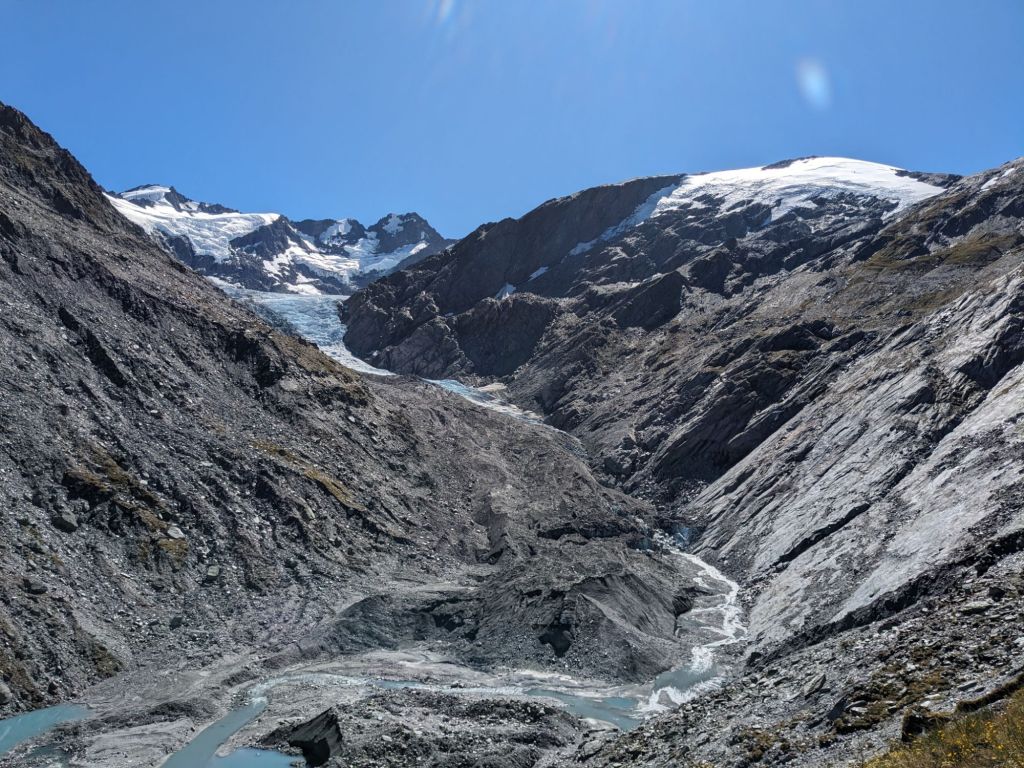
Fortunately, there was a window of good weather and I took the opportunity to walk up the Copland Valley. The views were great walking up the huge river bed, before attempting to make it to the top of the pass. Unfortunately, this was all in thick cloud, so I turned back early, never seeing over the far side of what is one of the few routes that cross the Southern Alps. A small detour on the way back down the valley took me to the thermal hot pools. Honestly, I was a bit disappointed by them, as they just felt like lying in a muddy, tepid bath surrounded by strangers whilst the flys attacked any exposed skin above the water.

The three-day walk was a nice break from riding along the highway and, as I headed further north, I was joining up the cycle tracks of the West Coast Wilderness Trail, Paparoa Track and Old Ghost Road. These were more excuses to head through the mountains on some rough bike tracks. Unfortunately, the next storm hit just as I began the Old Ghost Road. This trail had been created through old mining country and was predominantly a walking track, but bikes were allowed. Fortunately, the first night I could shelter in a hut, but that just made continuing the following morning even harder, knowing I’d have to head back out into the rain. The second day on the track was really demoralising. It was mostly spent climbing up some very wet tracks and involved lots of pushing the bike, trying to enjoy the scenery through the rain. Having spent the entire day in the rain, it was a relief to get into the tent that night and try and dry off a bit. The rain persisted on the third morning and, heading down off the ridgeline, I managed to crash off the track, falling about two metres into some bushes below. Luckily I wasn’t hurt, but having seen no one all day, three guys turned the corner and saw me tangled up in the foliage. They didn’t laugh too much and helped me get my bags and bike back up onto the track. Checking the bike over, nothing seemed broken but it definitely wasn’t riding as nicely. I finished the track off, passing a few more groups coming the other way. They all seemed pretty miserable, like no one wanted to spend a weekend riding through the rain.

The rain cleared within minutes of leaving the track and I now headed east. From here I took Rainbow Road, a private toll road through Rainbow Station up the valley, then over the Alpine Island Saddle (which they also claim is the highest road in New Zealand), then looped back towards the north coast on the Molesworth Track that heads through the largest sheep station in the country. This area is known as the Marlborough High Country as the valleys are at around 900 m. This made it very cold when the next rain storm came through. Fortunately, I was next heading into the wine-growing region of Marlborough next, and the weather was set to be better.

I was really looking forward to the next section: the top of the South Island. I met up with Elise in Blenheim before hugging the coastline for a few days towards the Abel Tasman National Park.

At this point, my bike really started to play up. I’d realised my bike frame was bent where it met my rear derailleur, causing the gears to play up; the new bottom bracket was starting to play up; and both wheel hubs were very loose. It was at this point I’d accepted that I’d need a new bike in Australia and just needed this one to make it to the top of the country. So it was a welcome relief to leave the bike and hire a kayak to explore Abel Tasman. It was great to be back in a boat again and good fun paddling on the calm sea round the islands and up the lagoons. We spent three days paddling with picturesque beach camps each night.

All that remained now of the South Island was a ride to the ferry terminal in Picton. I had loved the South Island and I really felt like I could call it home. Finding great camp spots each night had been easy and the riding was interesting with very little time spent just making up the miles between the exciting parts. Leaving for the North Island, I had that feeling of unknown anticipation I would get when entering a new country. I also hadn’t planned any of my journey from Wellington to Cape Reinga so, as the ferry departed, I got the map out and tried to figure out where I was going once the boat docked.

Doubtful Sound By Bike

This trip first took shape in my mind five months earlier while scouring Google Maps, searching for any tracks or roads I could ride through Fiordland. That’s when I discovered what appeared to be a road leading to Doubtful Sound.
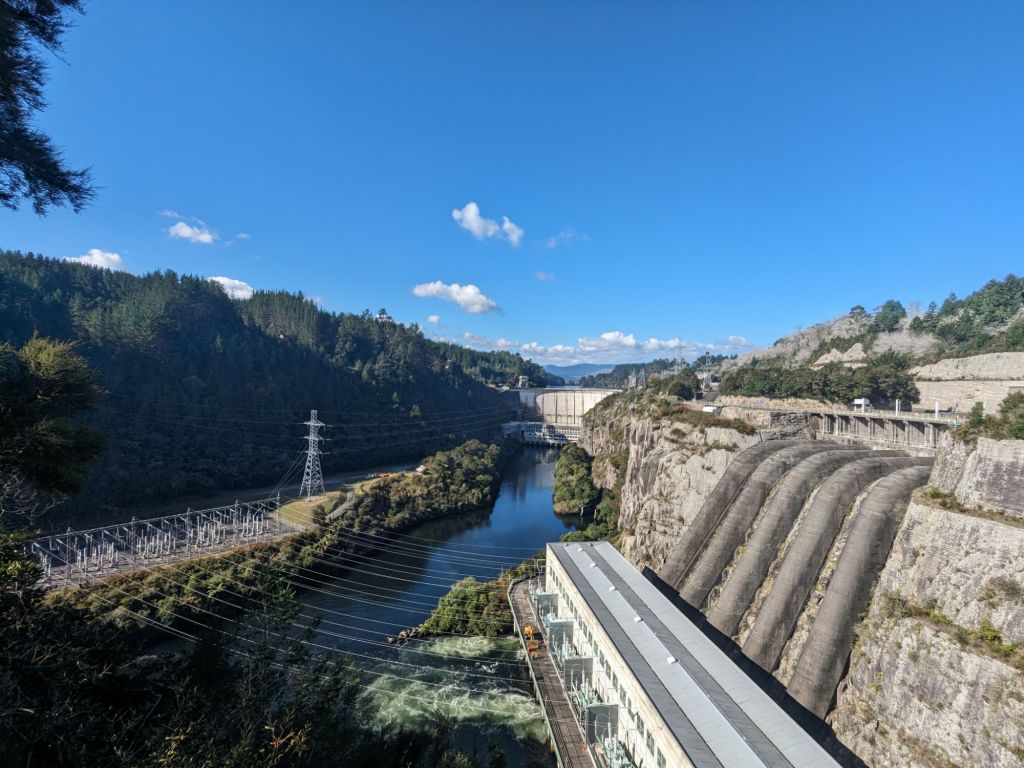
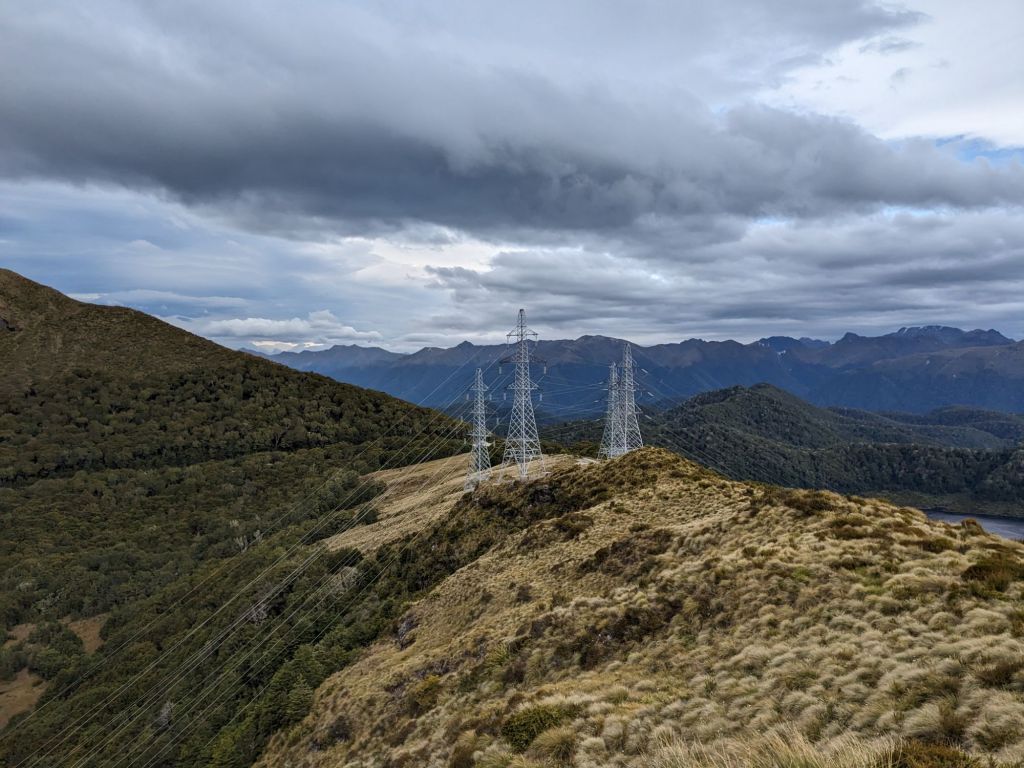
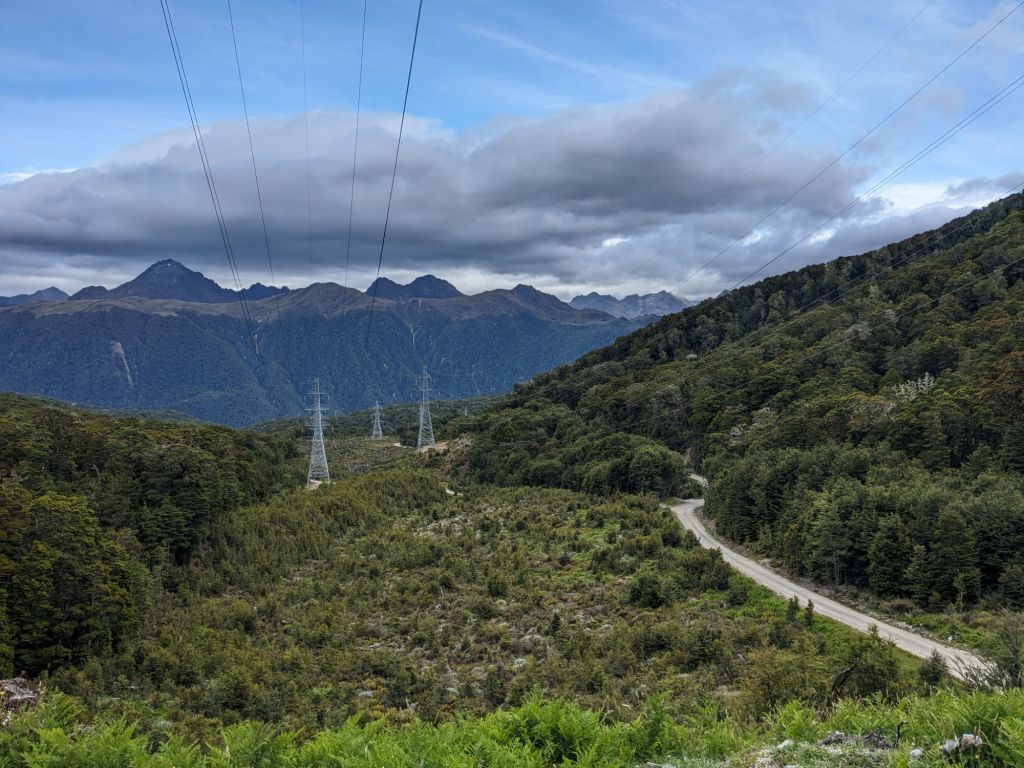
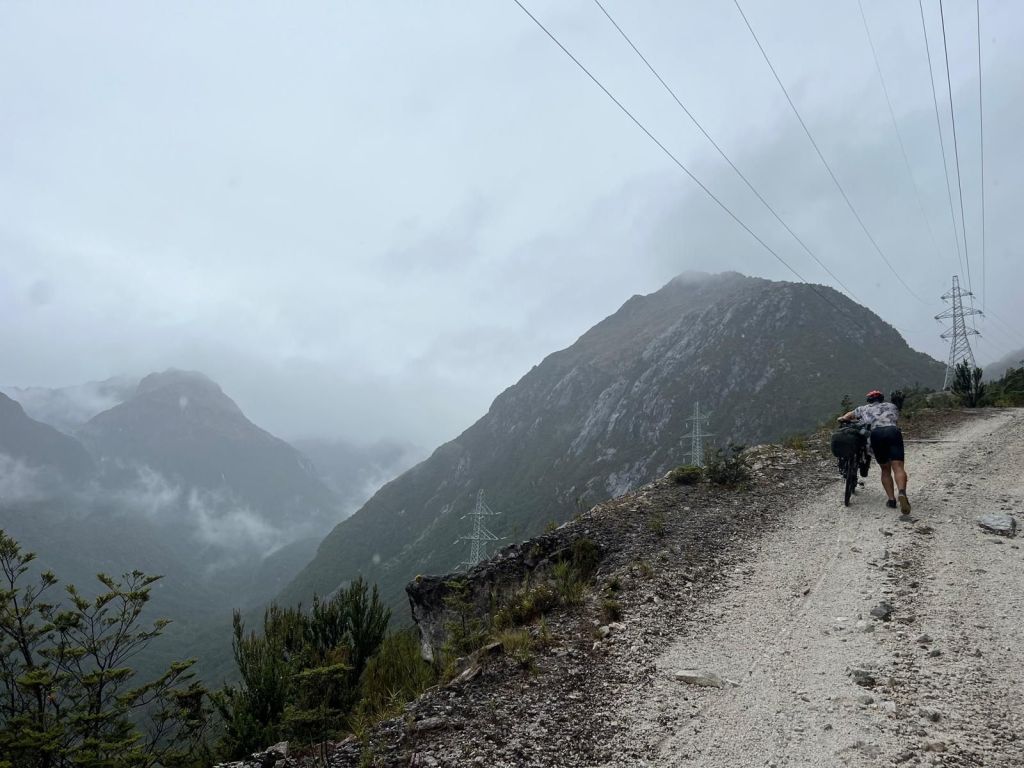
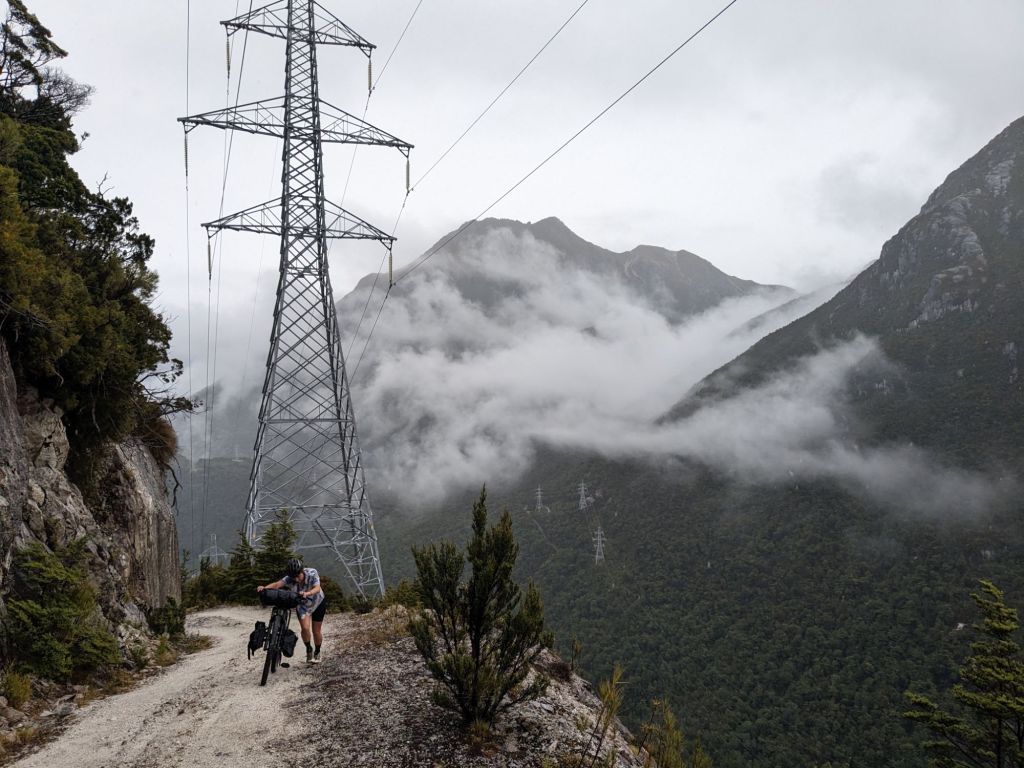
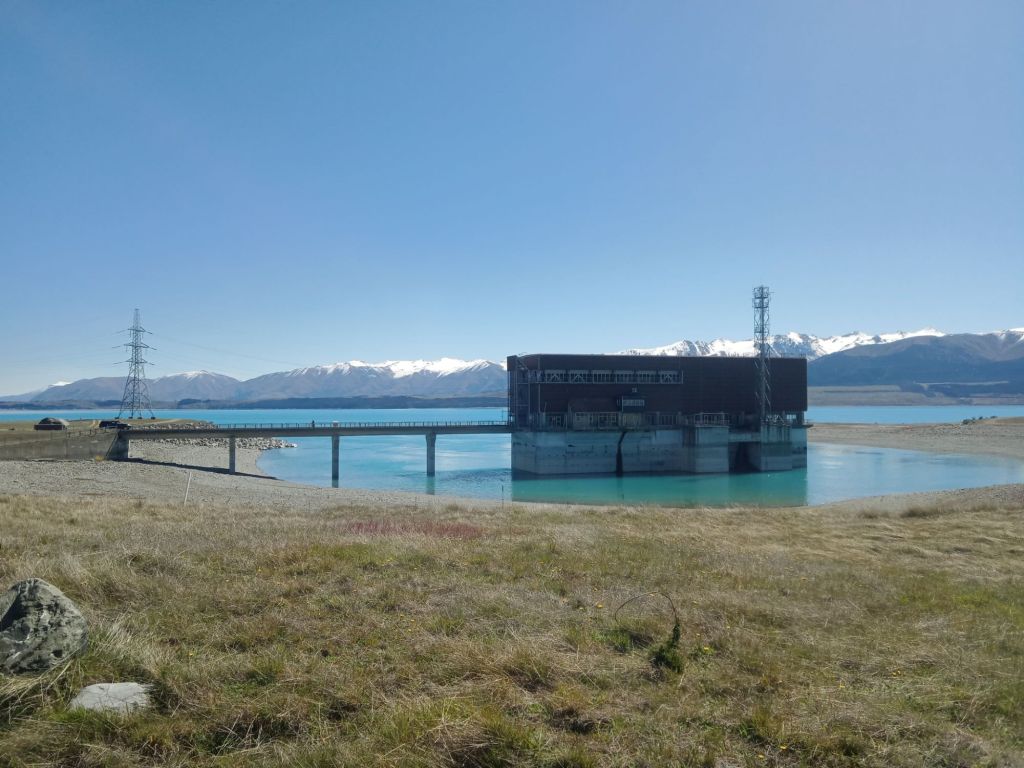
Digging deeper, I learned that this road was built during the construction of the Manapouri Power Station at the West Arm of Lake Manapouri. To transport materials and equipment for the project, a road was constructed, linking Doubtful Sound to the lake via the 671m-high Wilmot Pass. Additionally, two more roads were built to support the electricity pylons connecting the power station to Invercargill—one leading from the power station up to Percy’s Saddle at 1,075m and another starting inland, following the Borland Burn over the 990m-high Borland Saddle before climbing the opposite side of Percy’s Pass, stopping 250m below the summit.


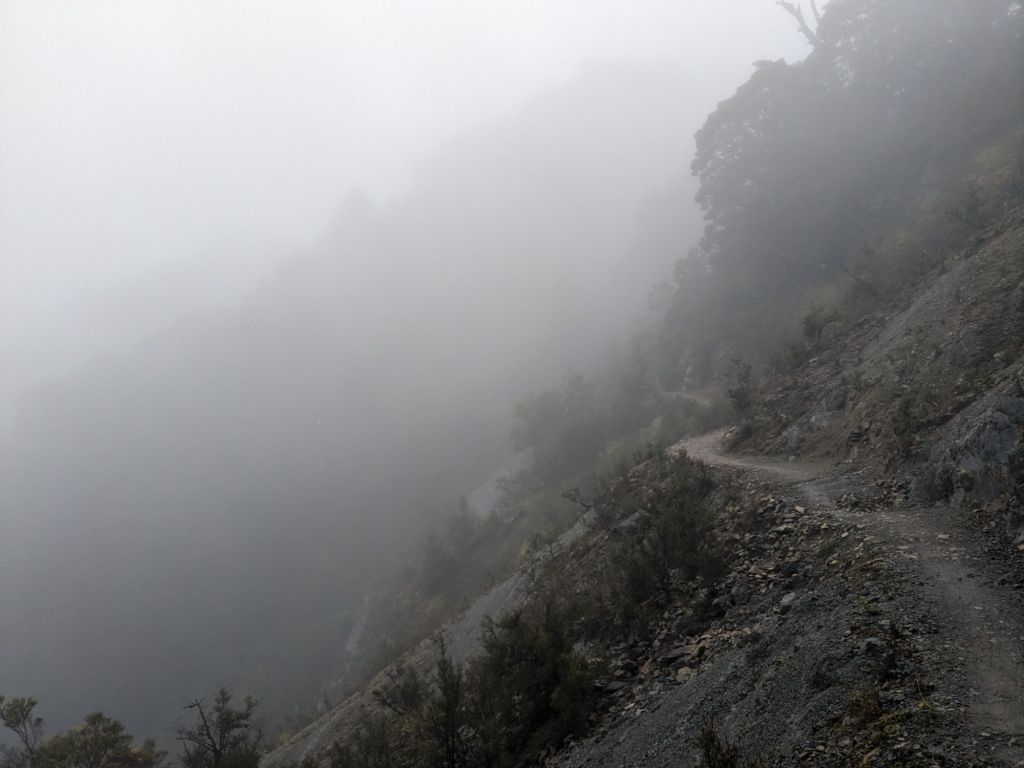
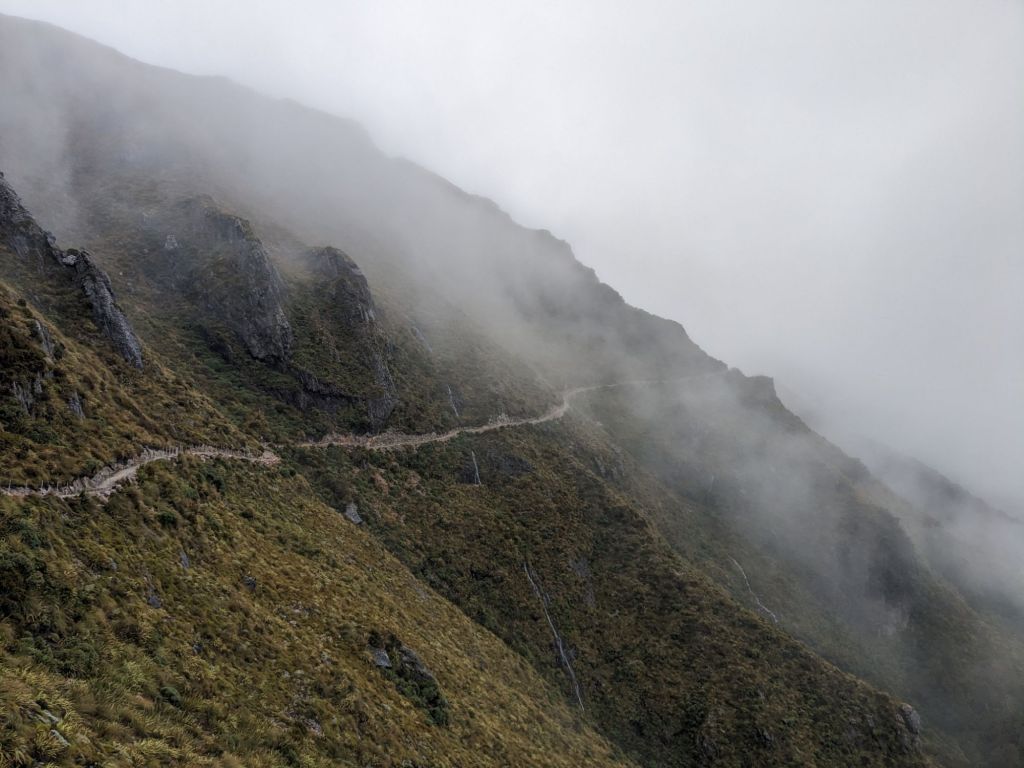
All of this set the stage for an epic bikepacking route: First, tackling the Borland Road, then bushwhacking to the top of Percy’s Pass with the bikes before descending to the power station, continuing to Doubtful Sound, and finally returning to the West Arm of the lake to catch a boat back to civilization.

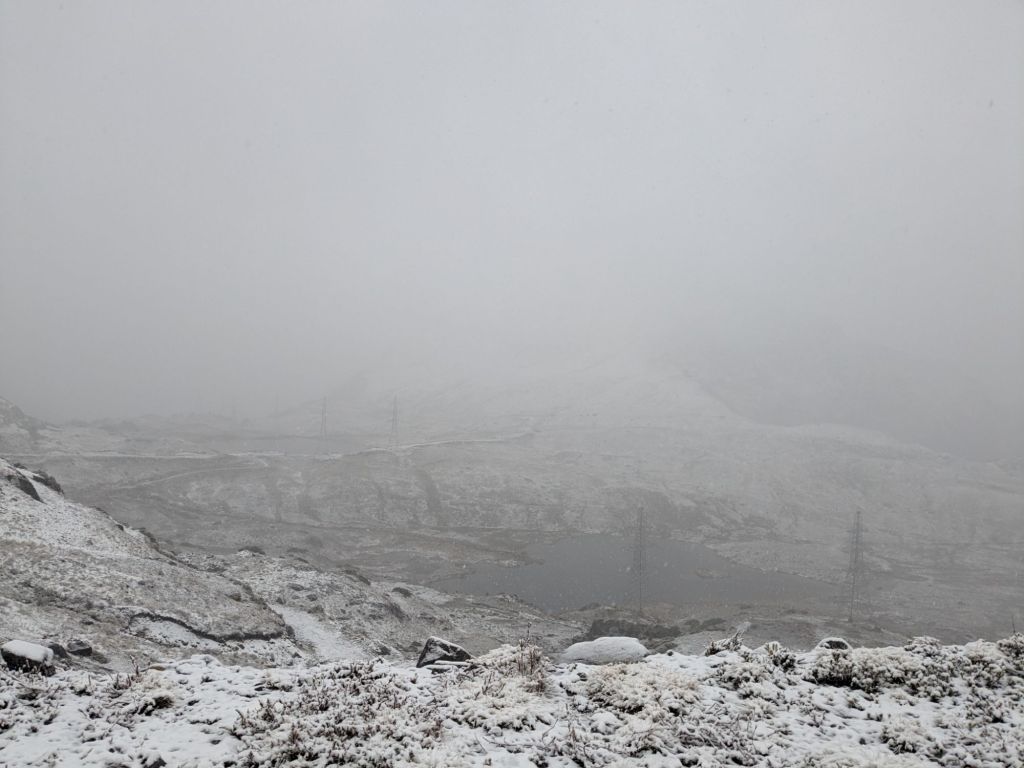
This post details my second attempt at reaching Doubtful Sound by bike. My first, two months earlier, ended in failure—I underestimated the mountains, didn’t bring enough food and got caught in snow, breaking both my phone and GPS.


This time, I was far better prepared. My setup was lighter, and I knew what to expect. Setting off from Te Anau after work, I was joined on the trip by the only person I could convince, my housemate Elise.

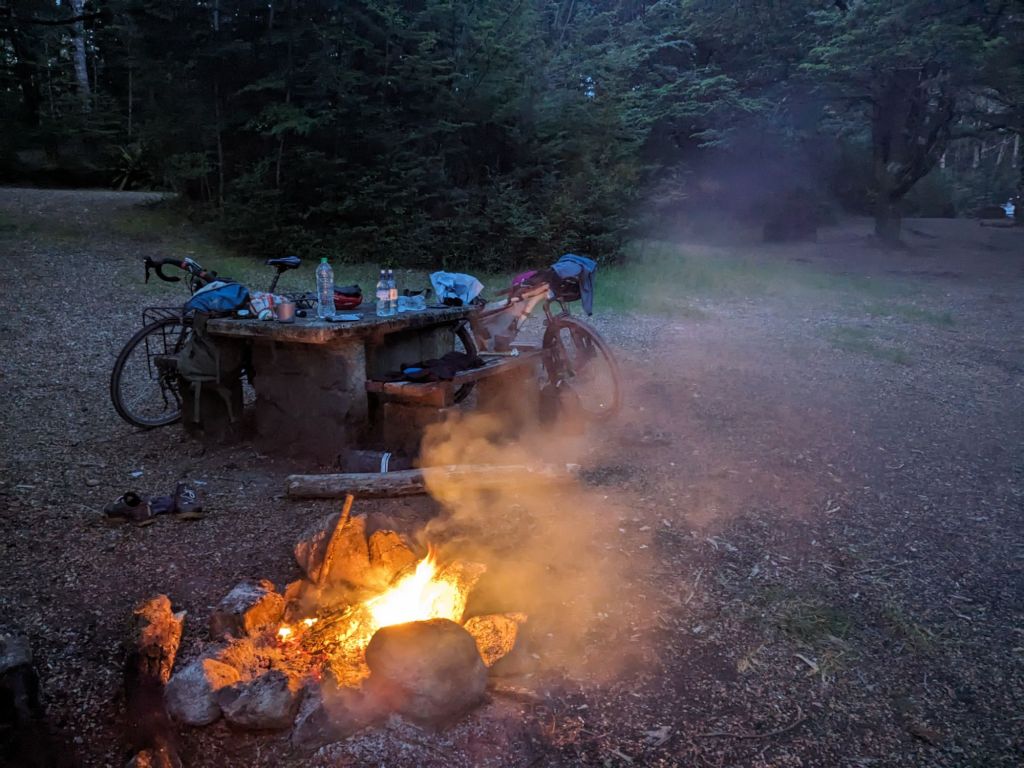
Our first night was spent camping at Lake Monowai, after riding an easy 70km on the sealed roads.


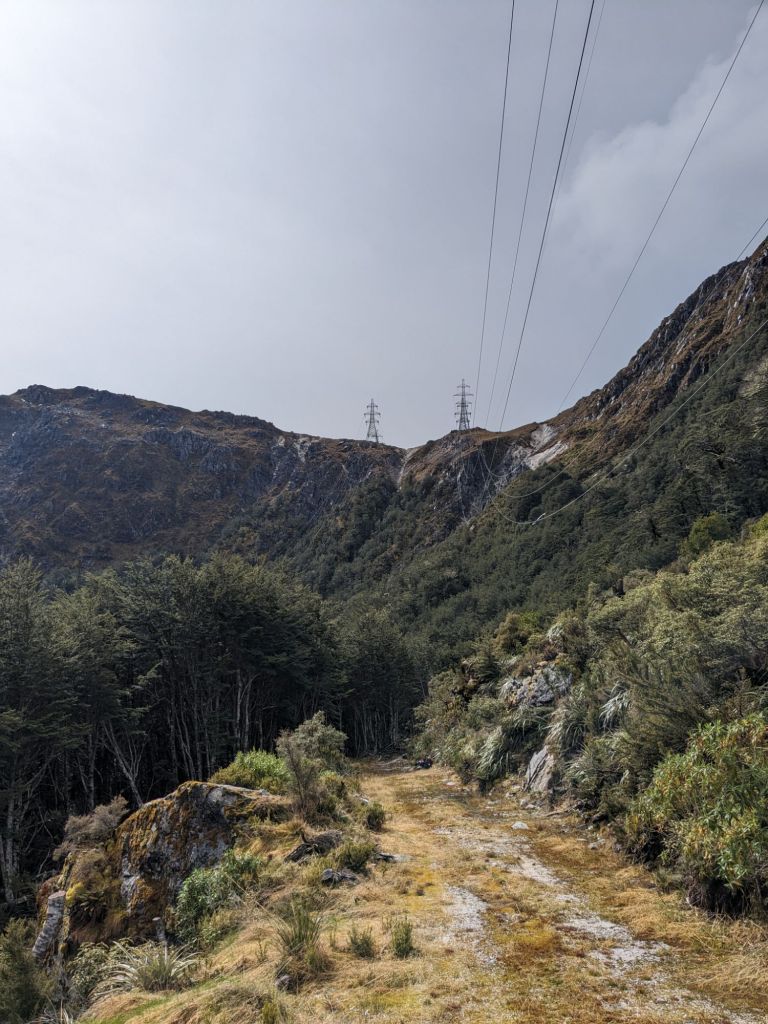
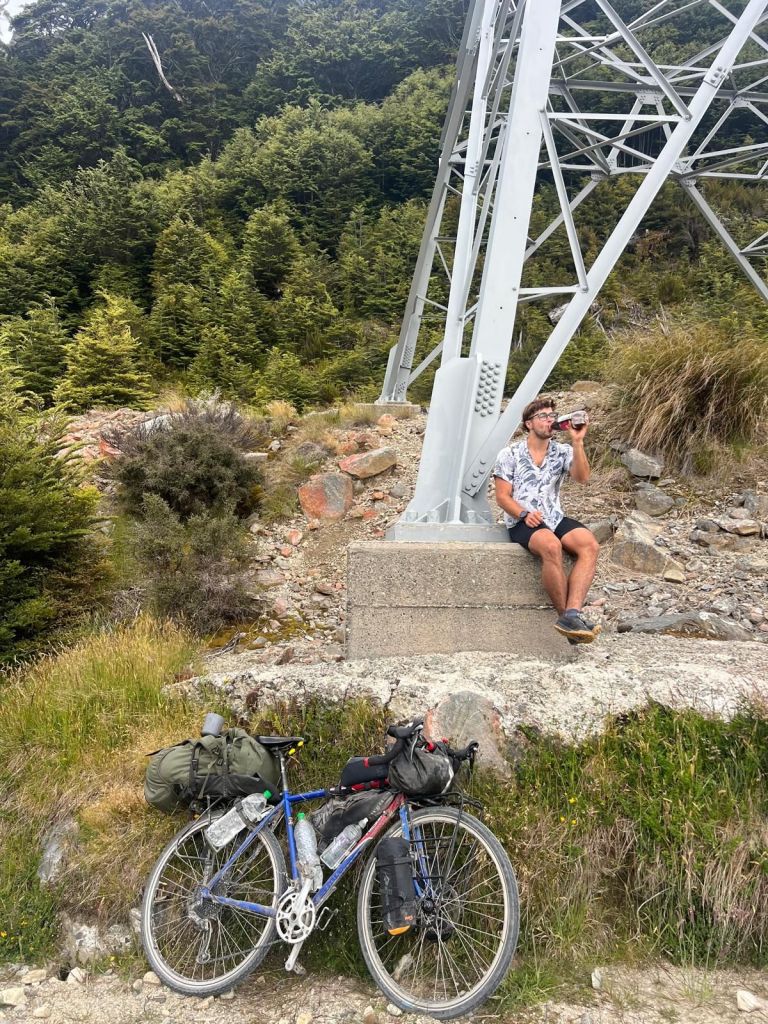
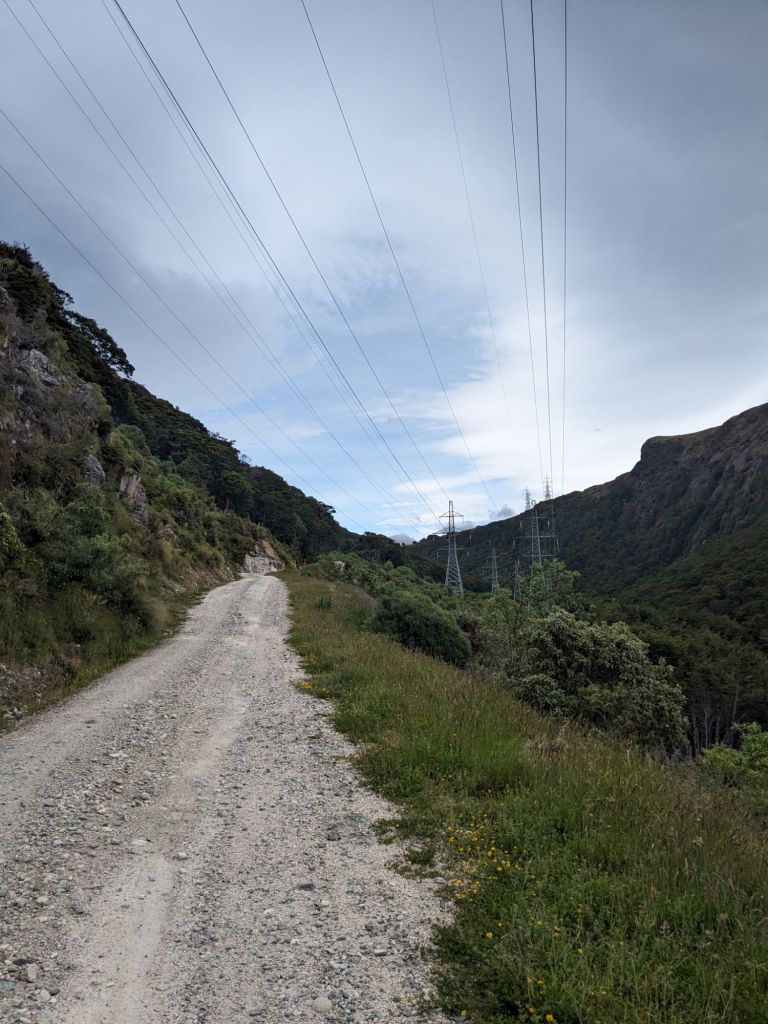
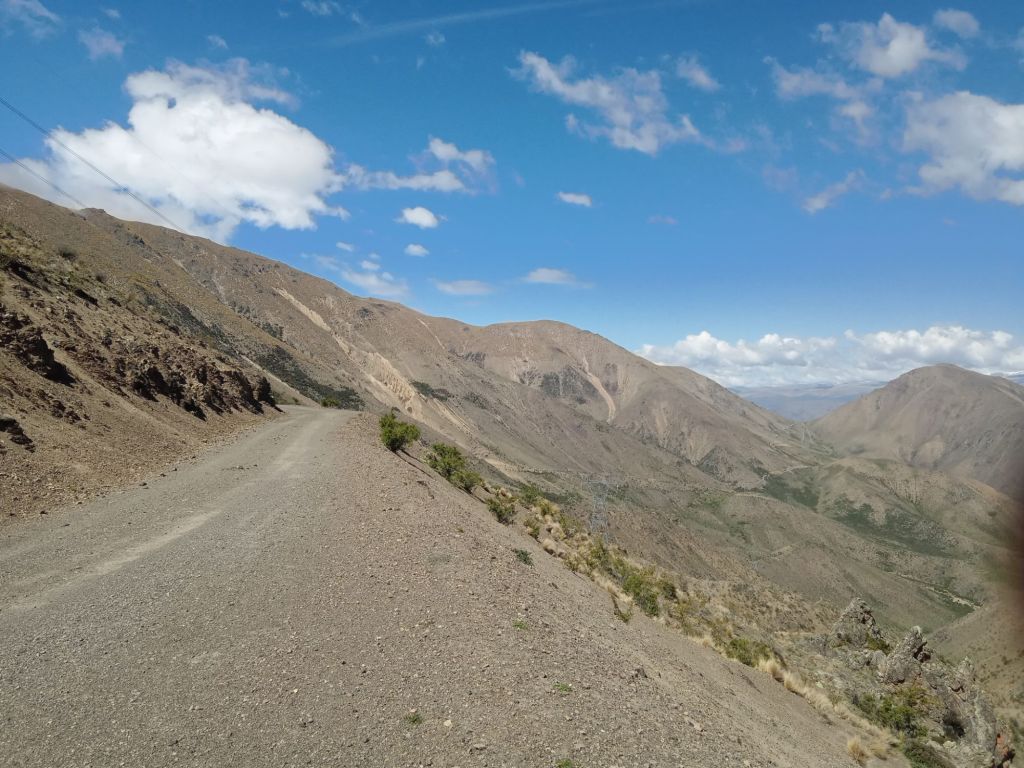
We joined the Borland Road for day 2, following the powerlines as they snaked through the landscape.


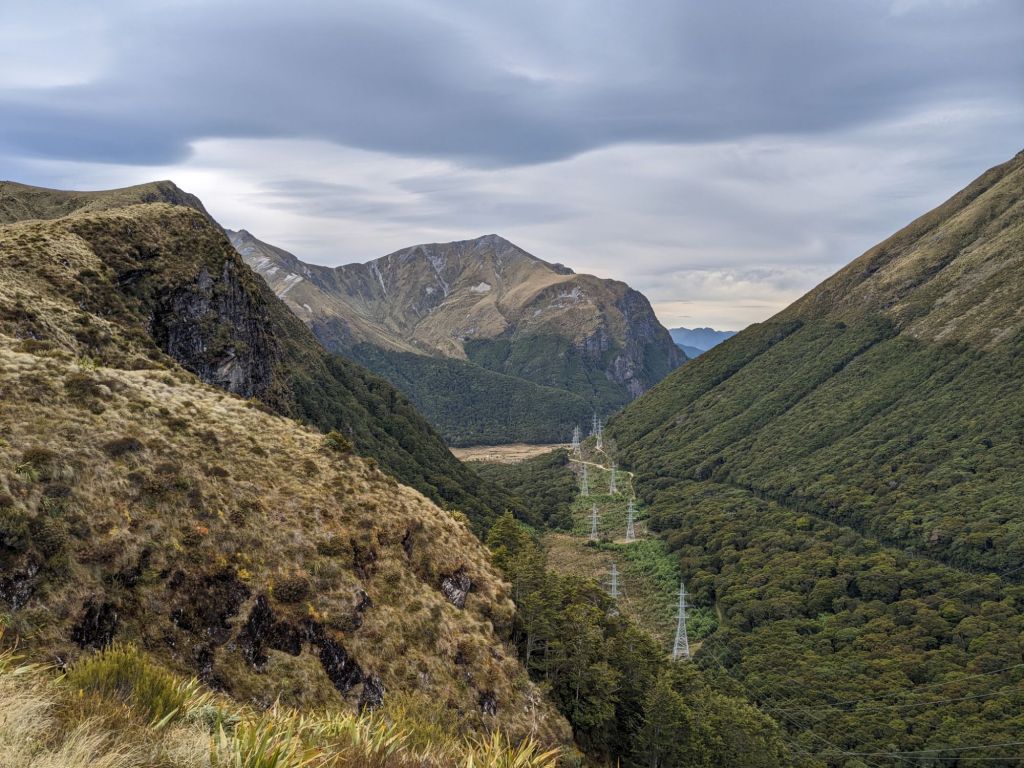
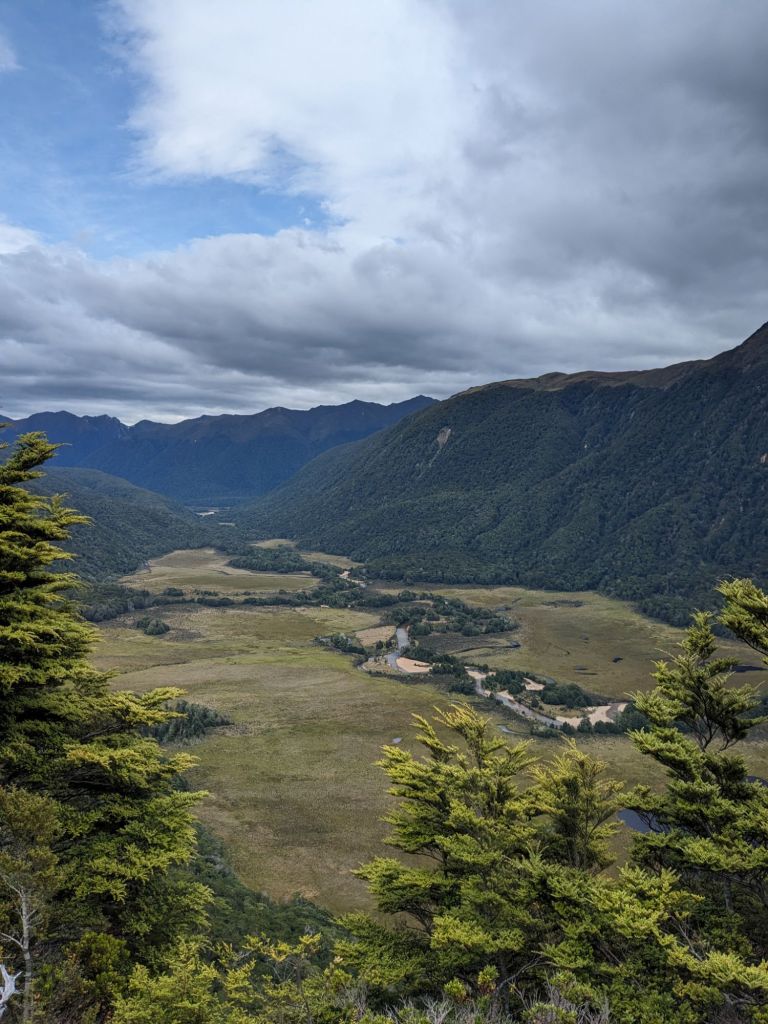
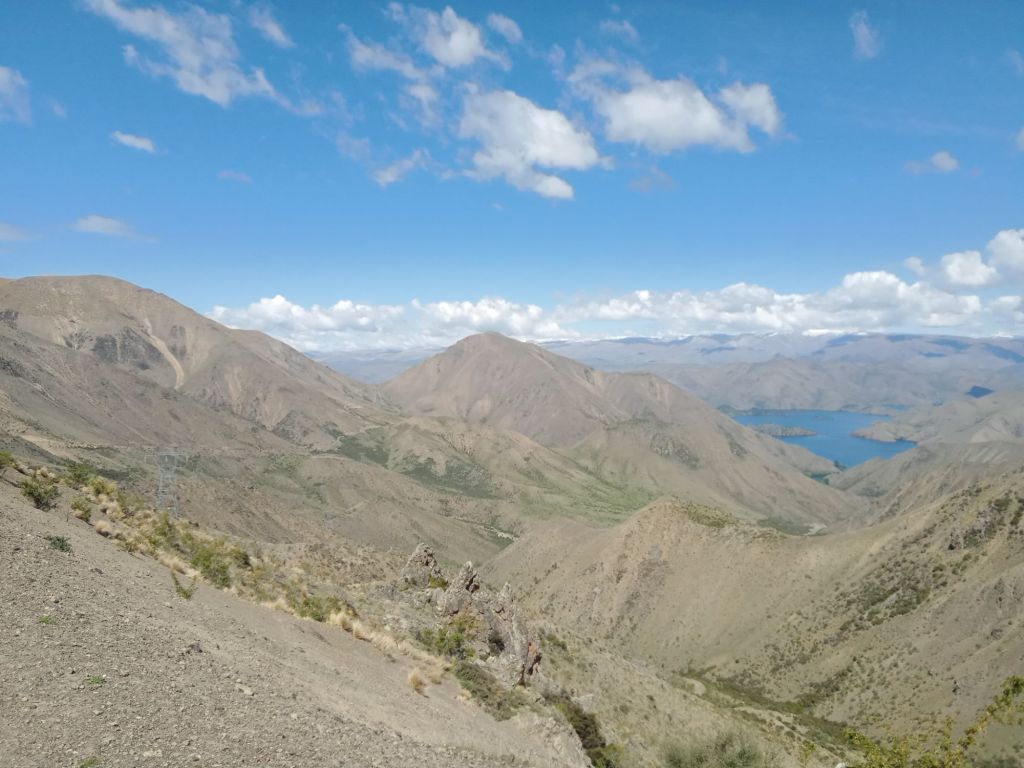
By mid-morning, we reached Borland Saddle, which offered stunning views over the Borland and Grebe Valleys.

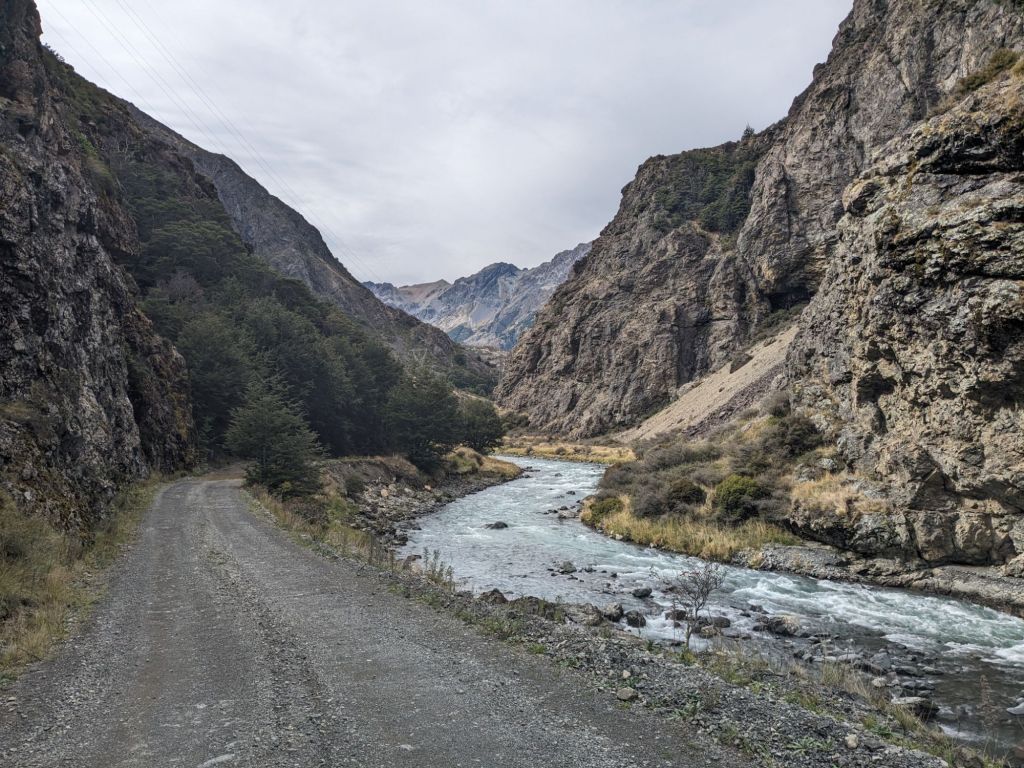
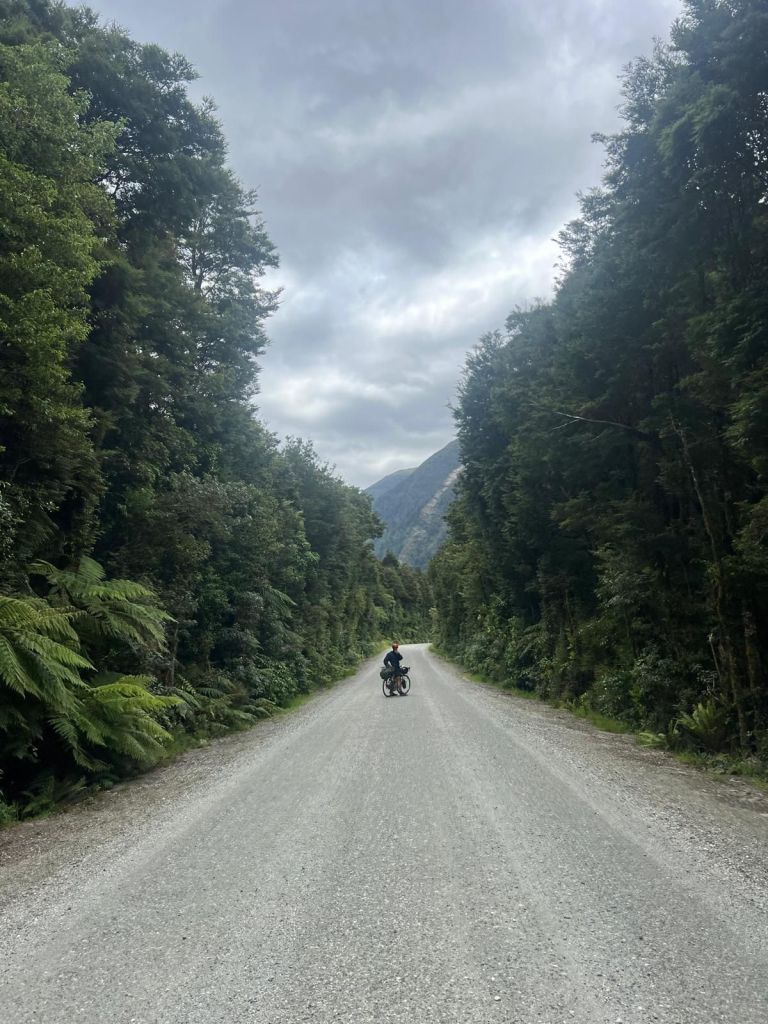
What followed was a fantastic descent—a fast, flowing ride down into the valley along an empty gravel road.


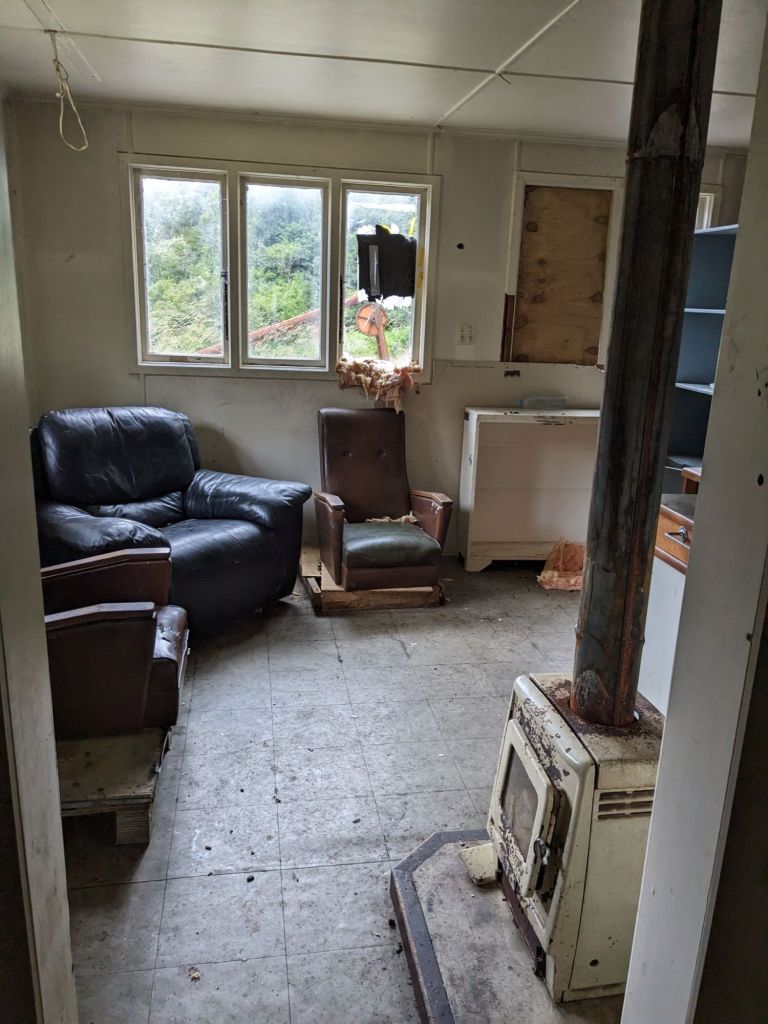
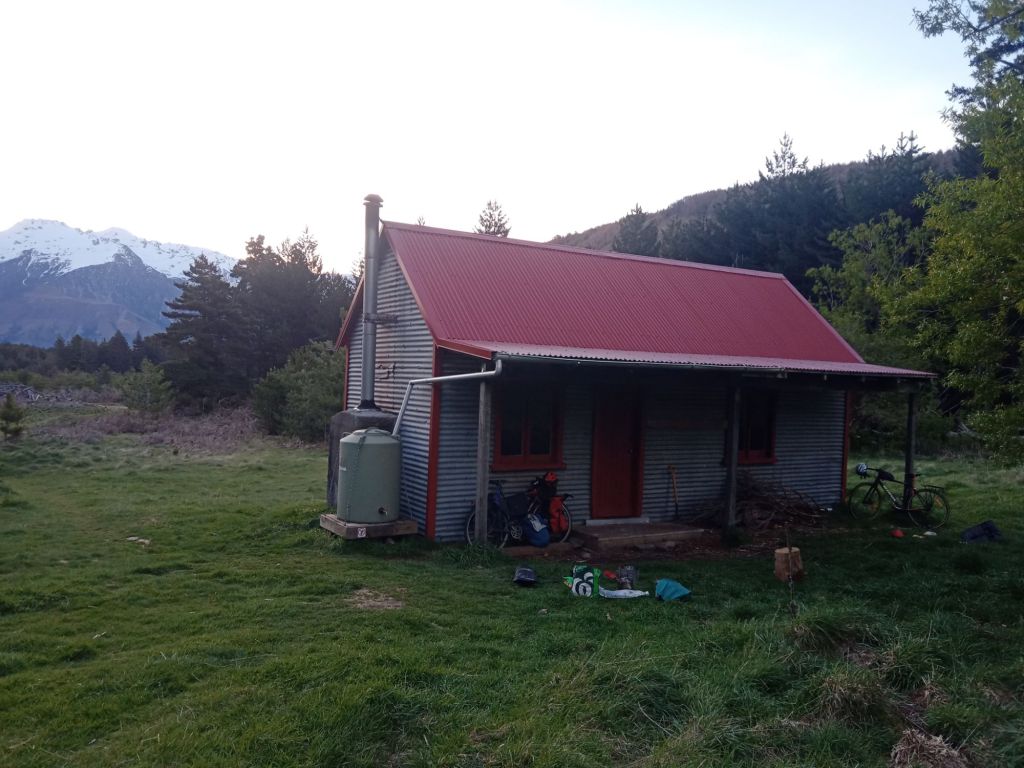
Stopping for an early lunch, we found shelter in an old workers’ hut, avoiding both the rain and relentless sandflies.


Continuing after lunch, we made a detour to the South Arm of Lake Manapouri.

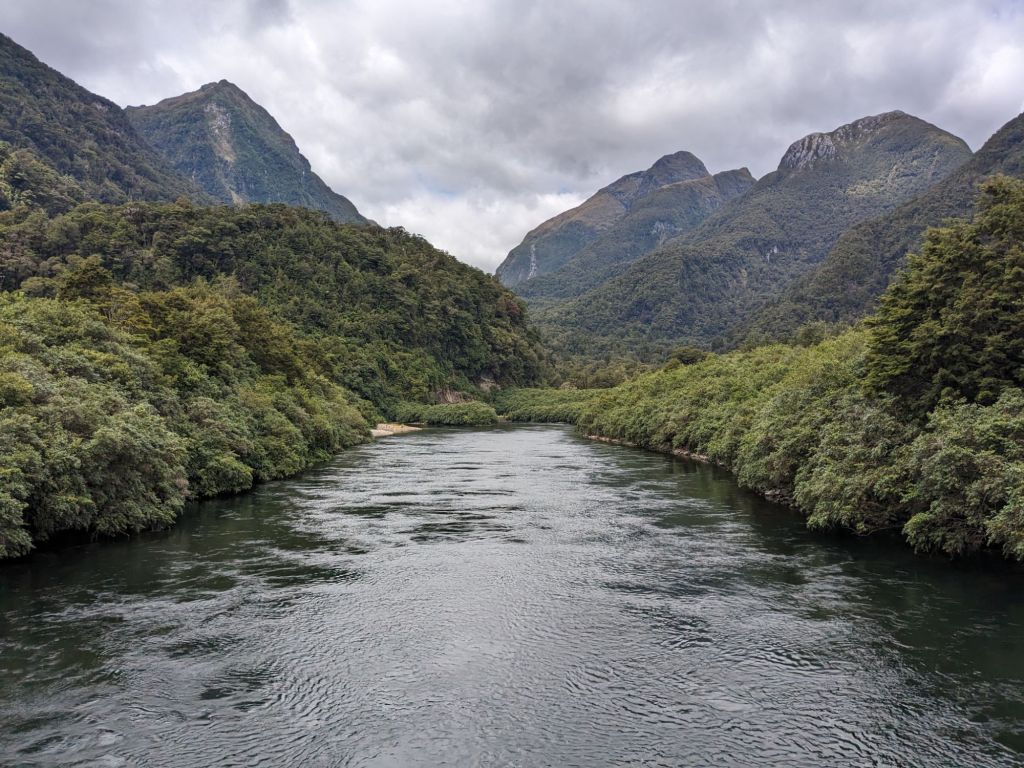
Shuffling under a locked gate and crossing a bridge, we joined the road toward Percy’s Pass. The route began gently, winding through the flat forest of Percy Valley, but soon turned steep, with loose gravel and sharp gradients forcing us to push the bikes uphill.


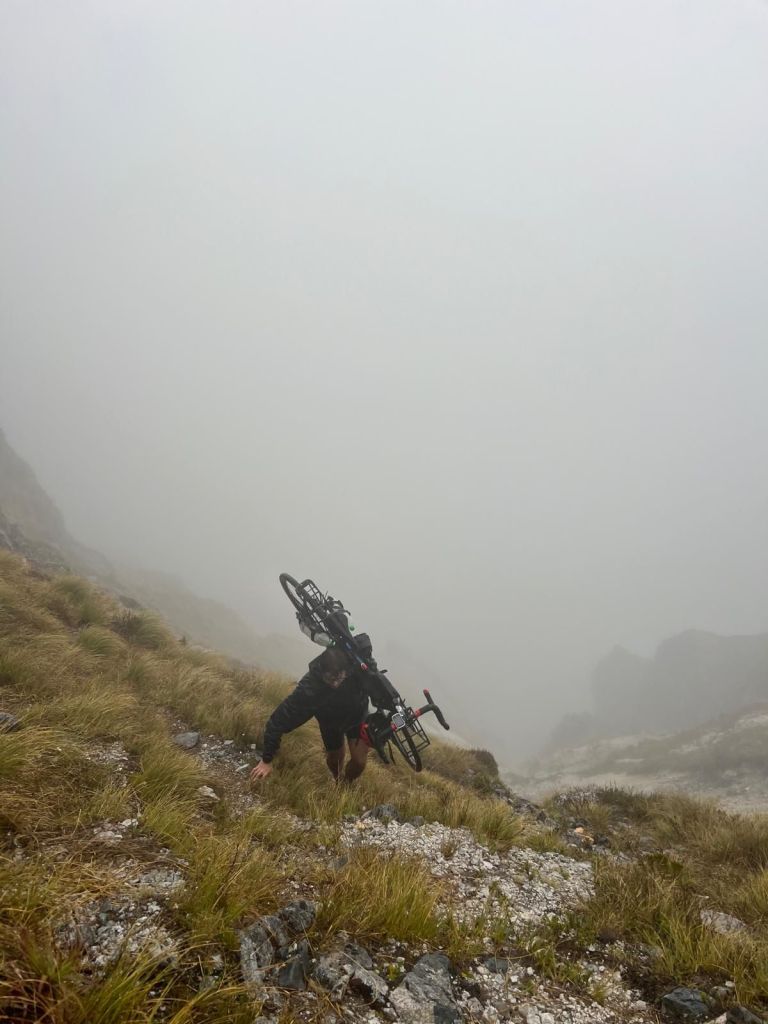
At the base of the pass, we removed our bags and prepared for the hardest section of the trip. The track through the forest was poorly marked and impossible to wheel the bikes through, so we had to carry them. This meant two trips—one for the bikes and another for the bags. Fallen trees and boulders blocked our way, forcing us to lift and pass the bikes to each other.


After an hour of struggling through the dense forest, we had barely gained any elevation—only moving sideways along the same contour line. What lay ahead was the real challenge: a steep, 250m scramble to the top. Once again, this required two trips. Climbing with a bike on my shoulder felt precarious, especially on the edge of the cliffs, where my only grip came from tufts of grass. More than once, it felt genuinely unsafe knowing that if I lost balance I’d have to drop my bike down the mountain to save myself.


Two exhausting hours later, we finally reached the summit, setting up camp in the clouds at the top of the pass.


The morning greeted us with spectacular views—each side of the pass revealed a vastly different landscape.


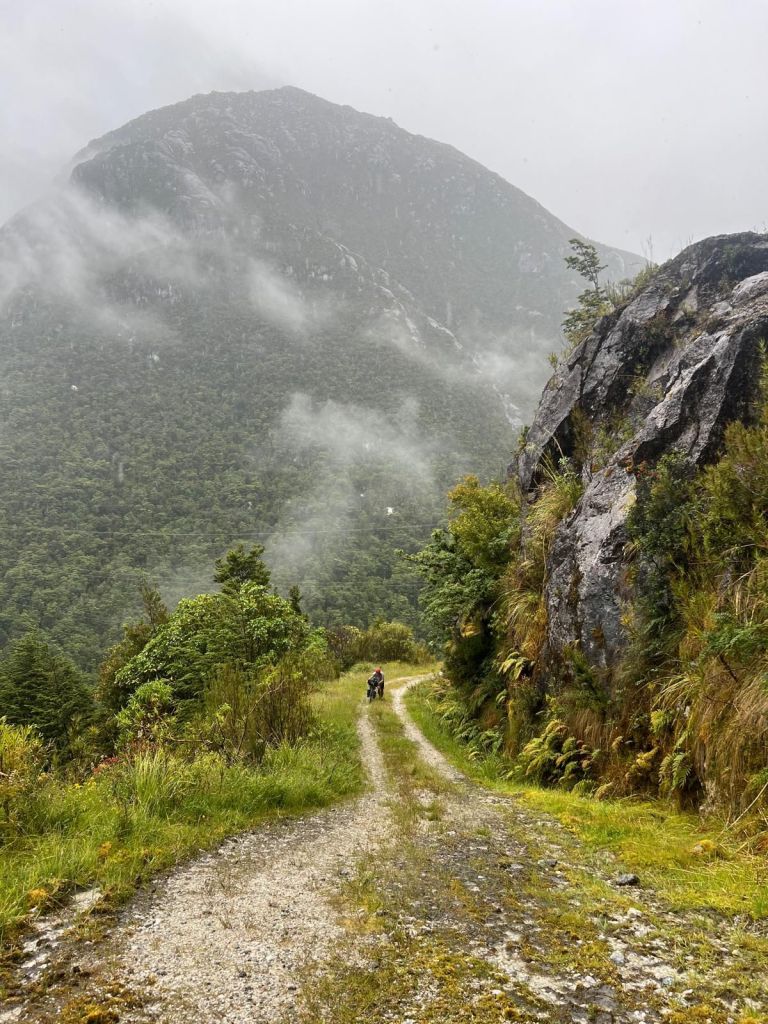
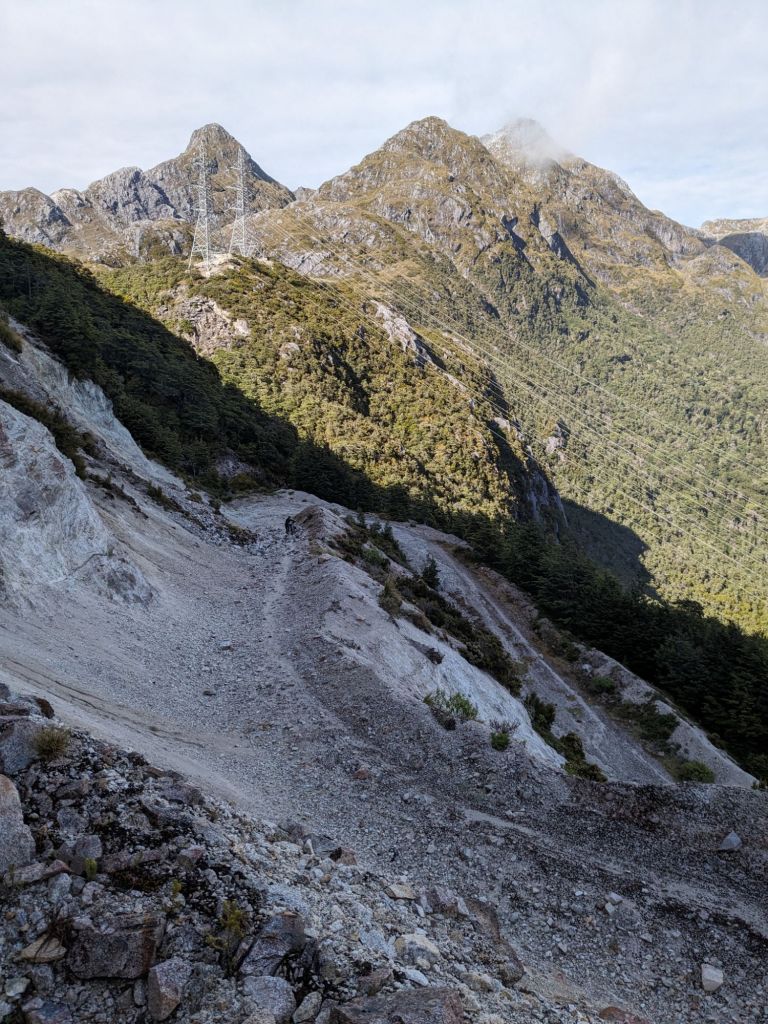
The descent to the West Arm of Lake Manapouri was rough, littered with boulders from past landslides, but still a great ride.


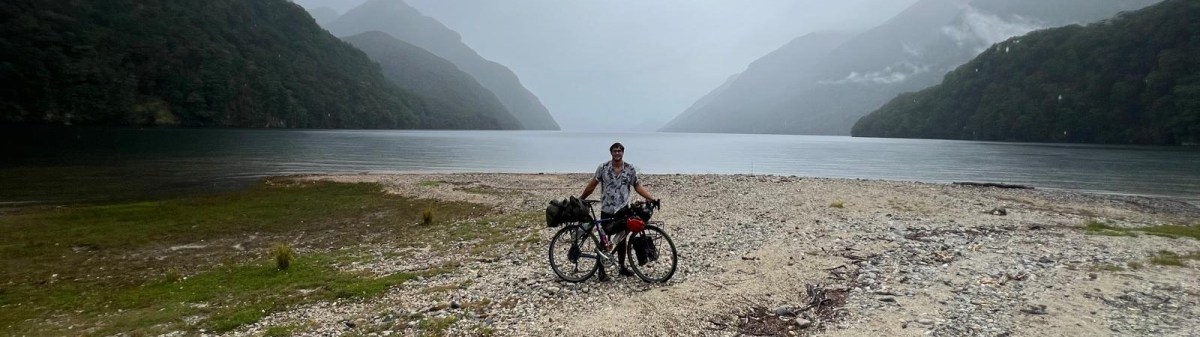
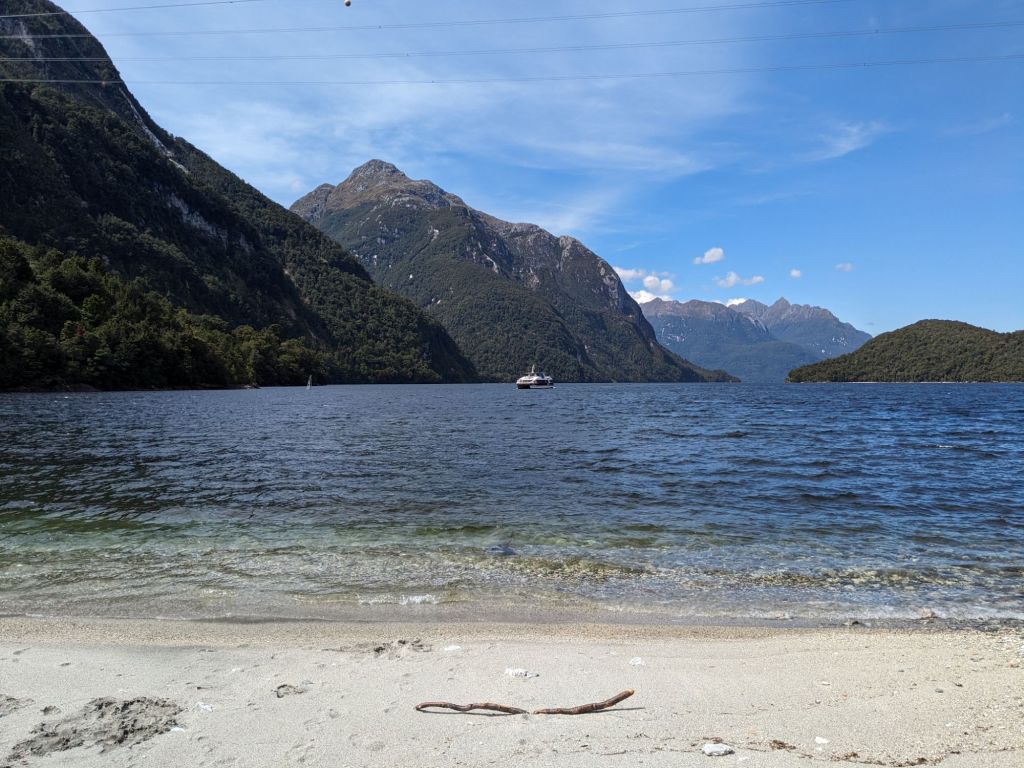
After lunch in another hut, we crossed over Wilmot Pass that afternoon, finally arriving in Doubtful Sound.


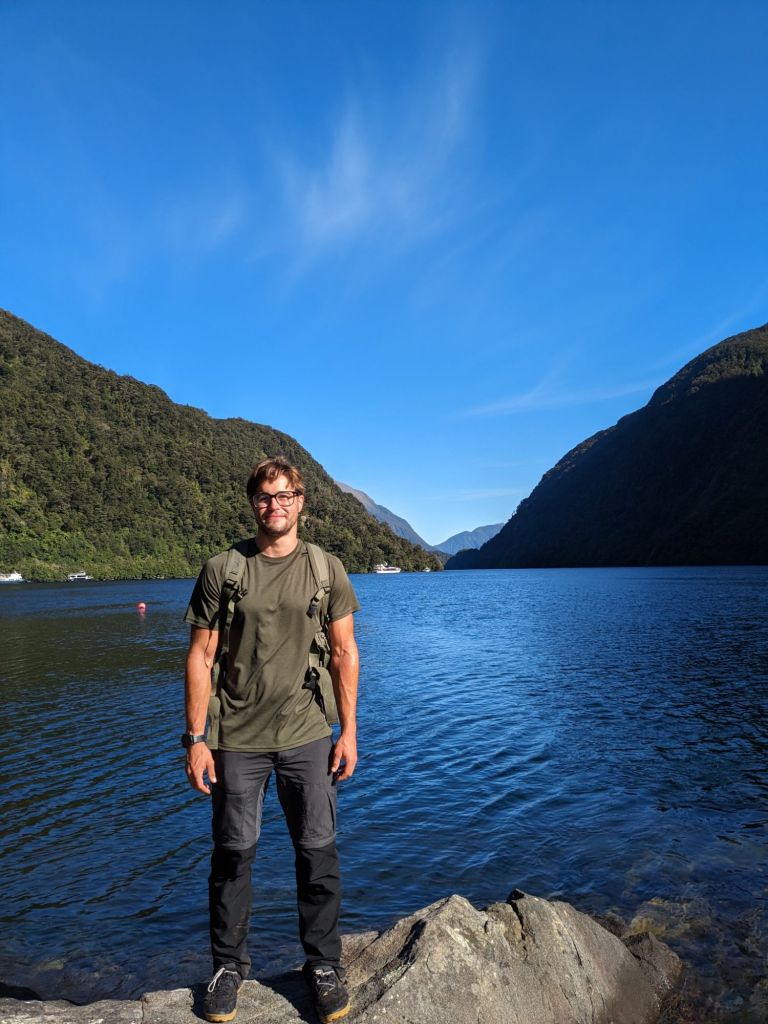
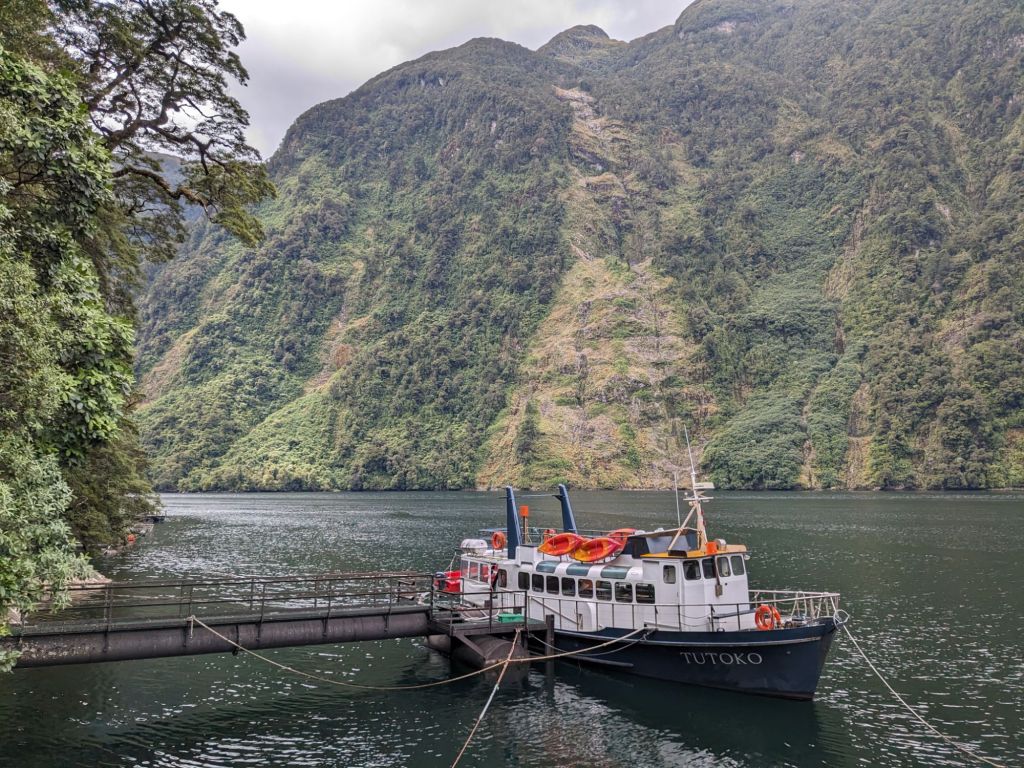
Spending the night at the Deep Cove Hostel, we explored some nearby waterfalls, hiked an old track crossing Wilmot Pass, and checked out the massive pipe where water flows out from the power station.


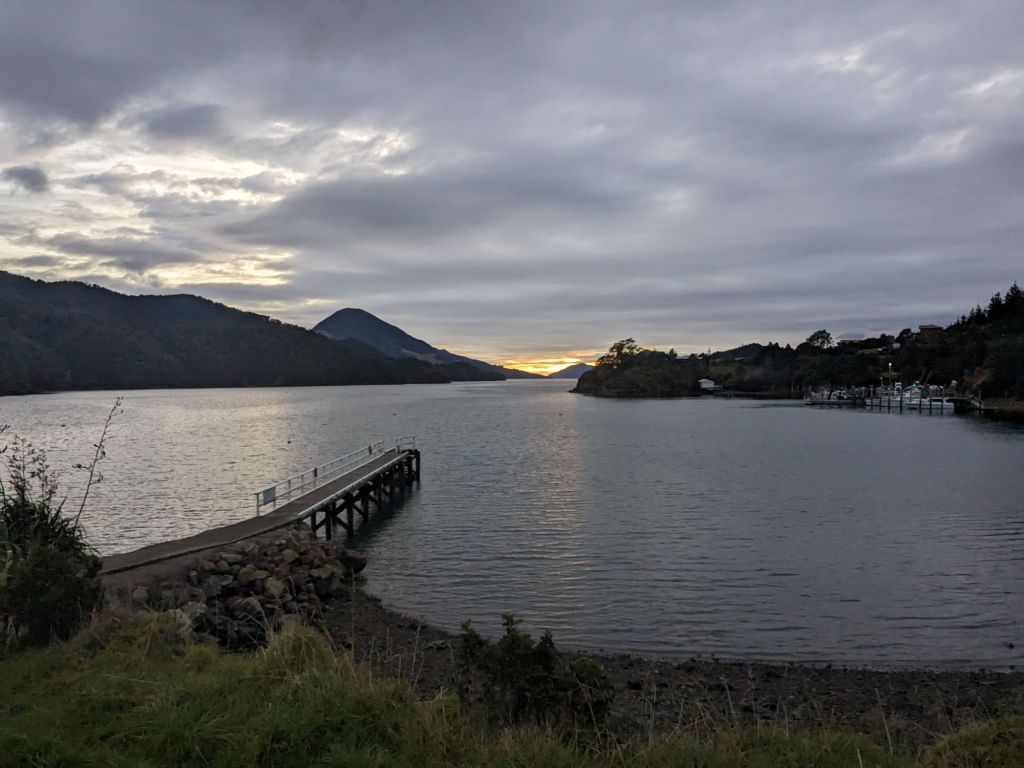
The final day was an easy ride back over Wilmot Pass before catching the boat back to Manapouri, bringing an end to an unforgettable four-day adventure.

This was easily one of the craziest trips I’ve done anywhere. I’ve never felt as remote as I did camping on top of Percy’s Pass, nor has any climb been as hard as hiking the bike up percys pass, taking 3 hours to gain 250m, but that’s what made this trip so rewarding.

Bottom of the South Island, New Zealand

After seven months off the bike, I’m finally back on the road, exploring New Zealand.

My journey began in Queenstown, where I spent two nights before heading into the Old Woman Range.

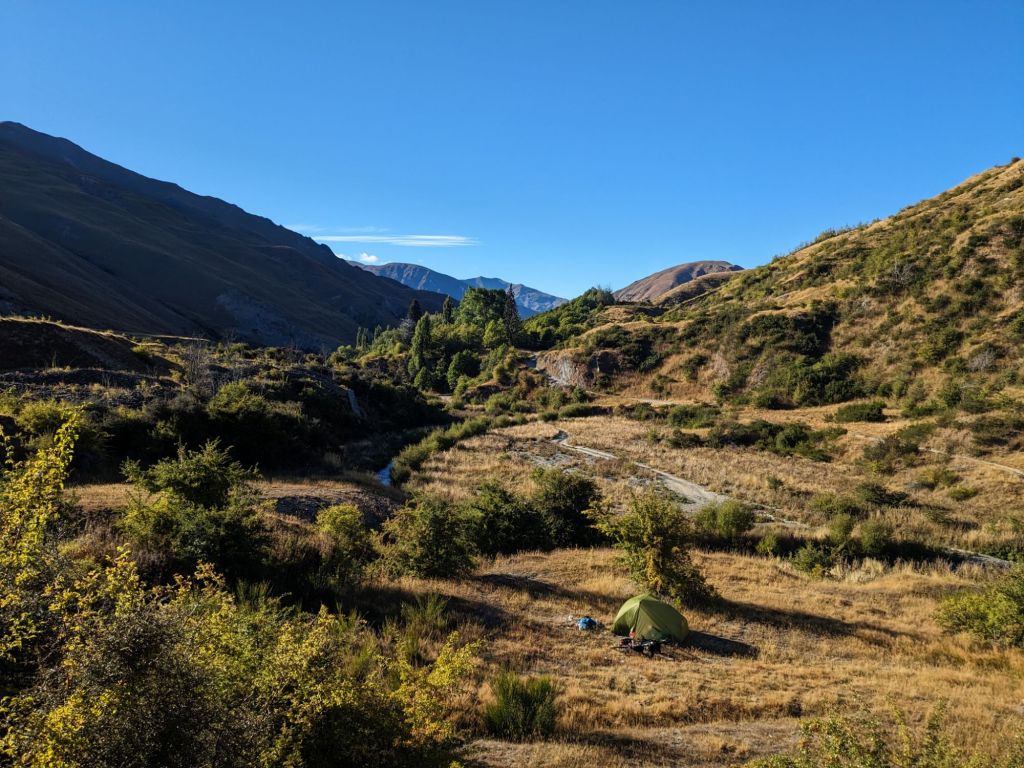
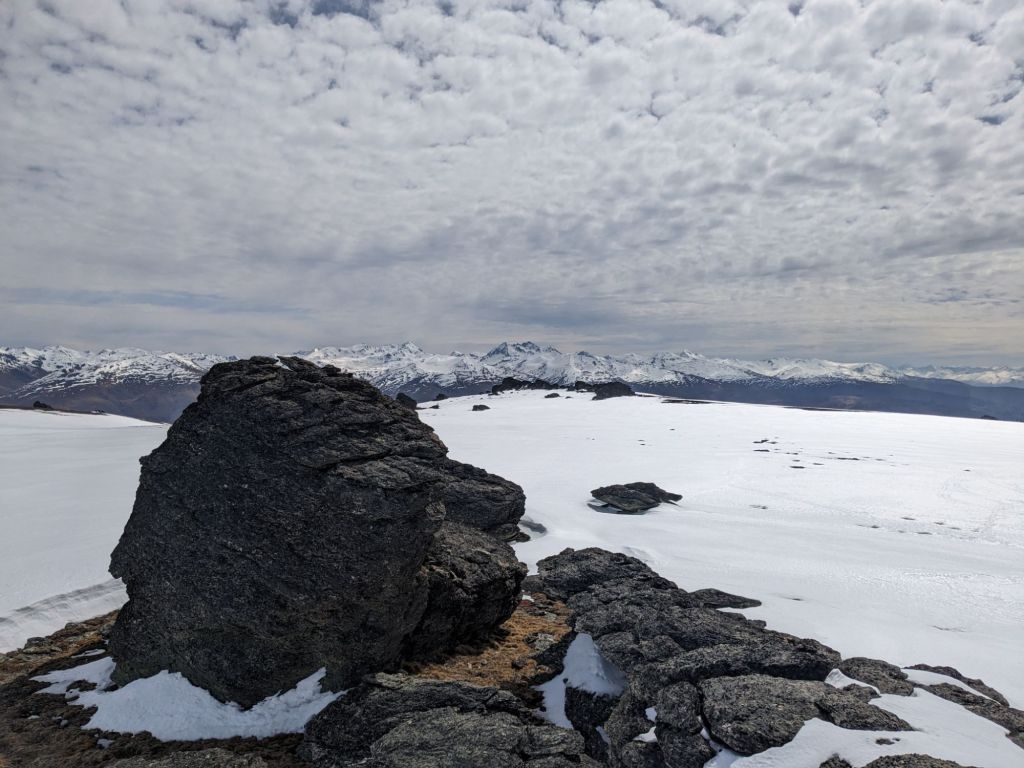
Eager to get into the wild, I may have been a little too ambitious. With most of my second day spent walking through deep snow, pushing my bike. It wasn’t until I dropped below the snow line after a very long day that I could finally make camp for the night.

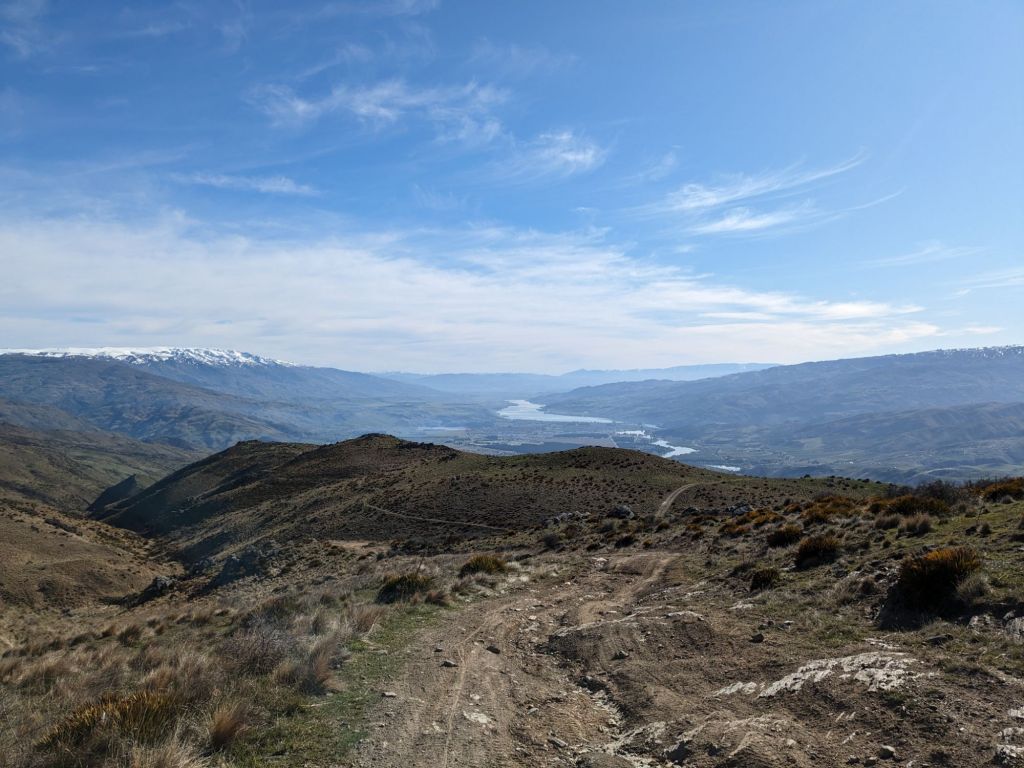
My original plan had been to follow a 4×4 track south through the range however, this would take me higher and not wanting to head back into the snow, I changed course leaving the mountains for the Otago Rail Trail. This decommissioned railway line provided an easier ride, and I followed it for two days.

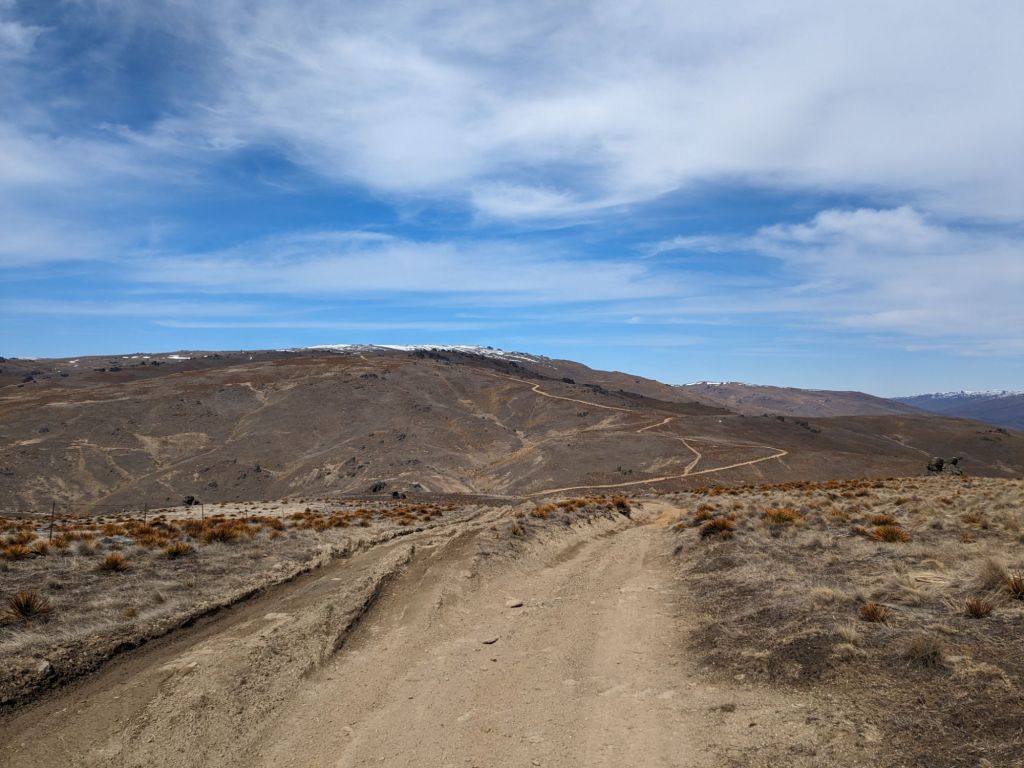
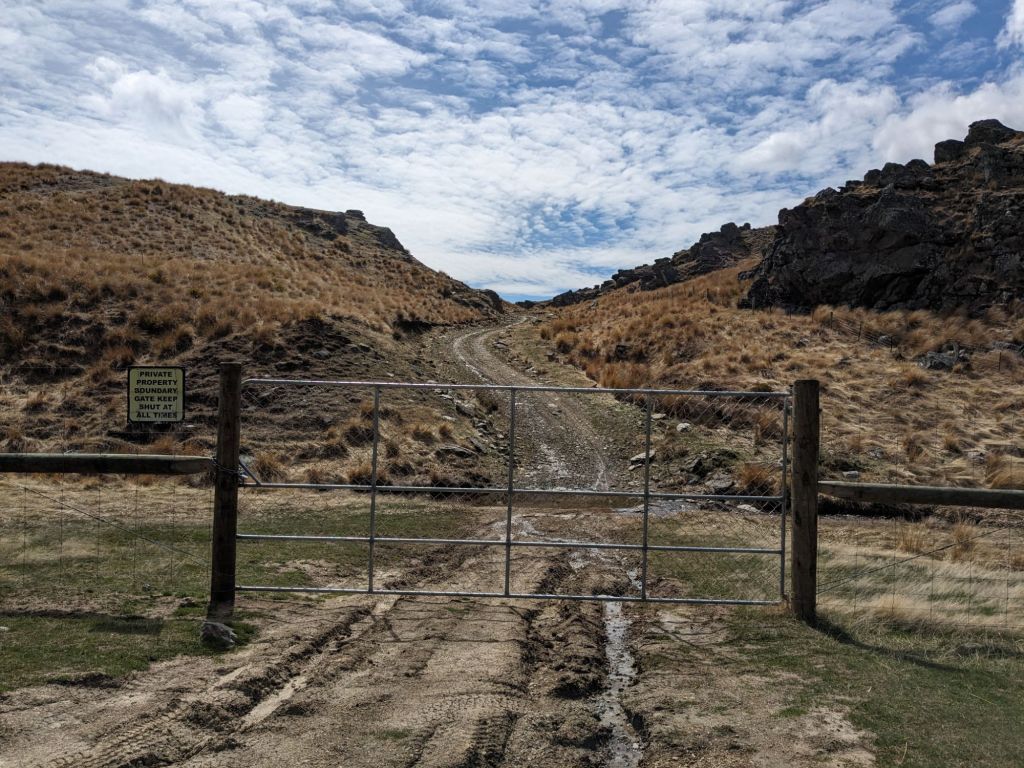
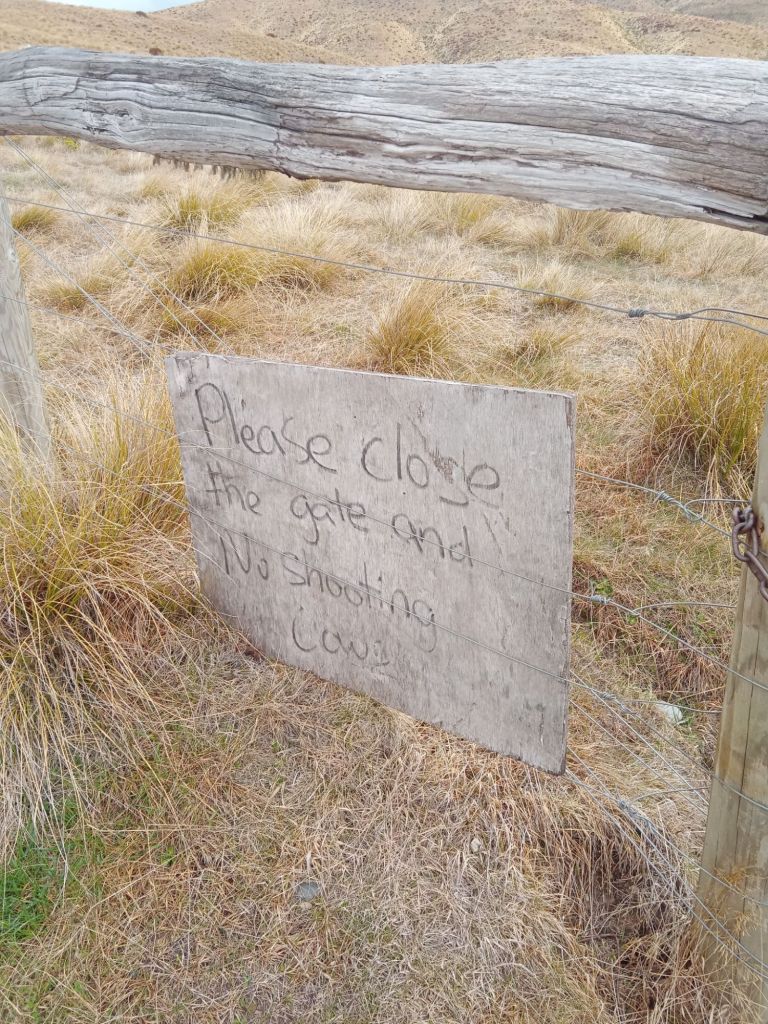
Heading southeast, I joined the Old Dunstan Road, a rugged route built in the 19th century as the most direct path to the coast. It winds through the mountains and was heavily traveled during the gold rush. The riding here was tough—made even harder by locked gates along the route, which I had no choice but to climb over.

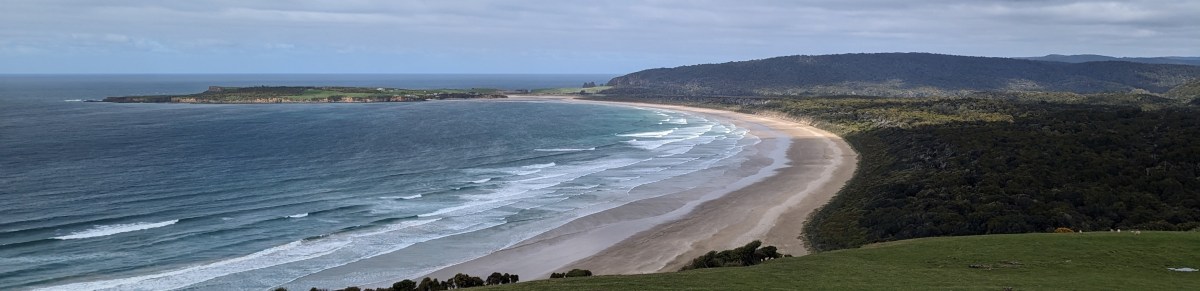
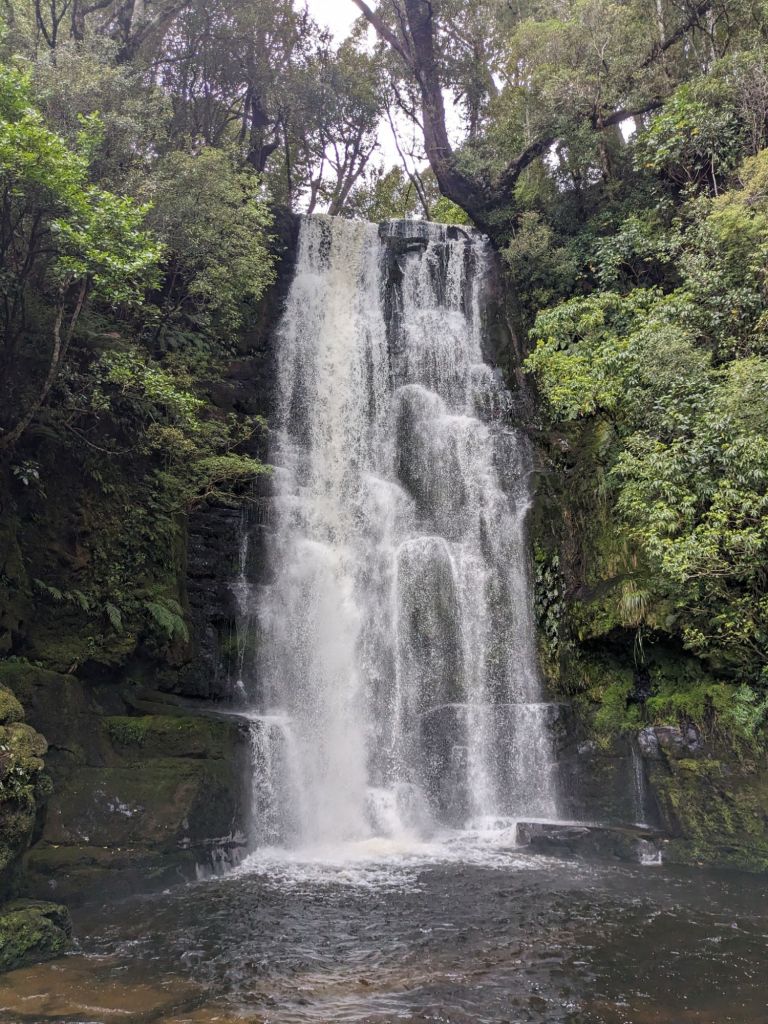
From there, I made my way around the southernmost point of the island, passing through the Catlins. This region offered some of the most stunning coastline I’d seen, along with the impressive McLean Falls.

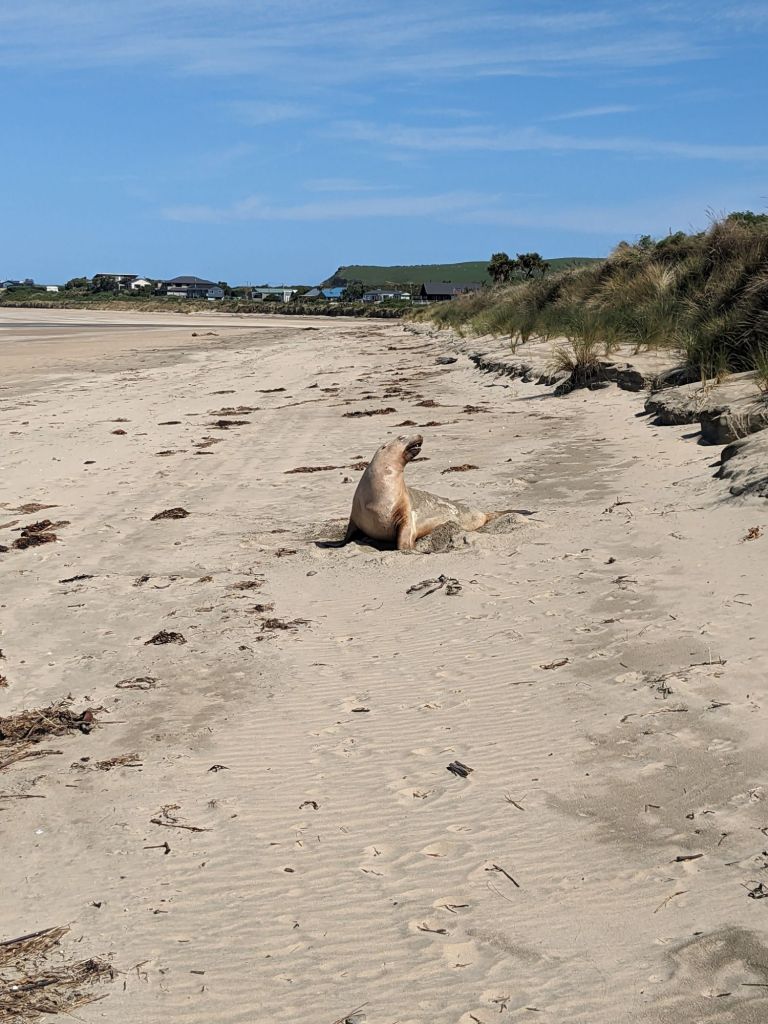
One afternoon, while stopping for lunch on a beach, I spotted a sea lion basking in the sun. Curious, I inched closer, but as soon as it sat up and started growling at me, I took that as my cue to leave it in peace.

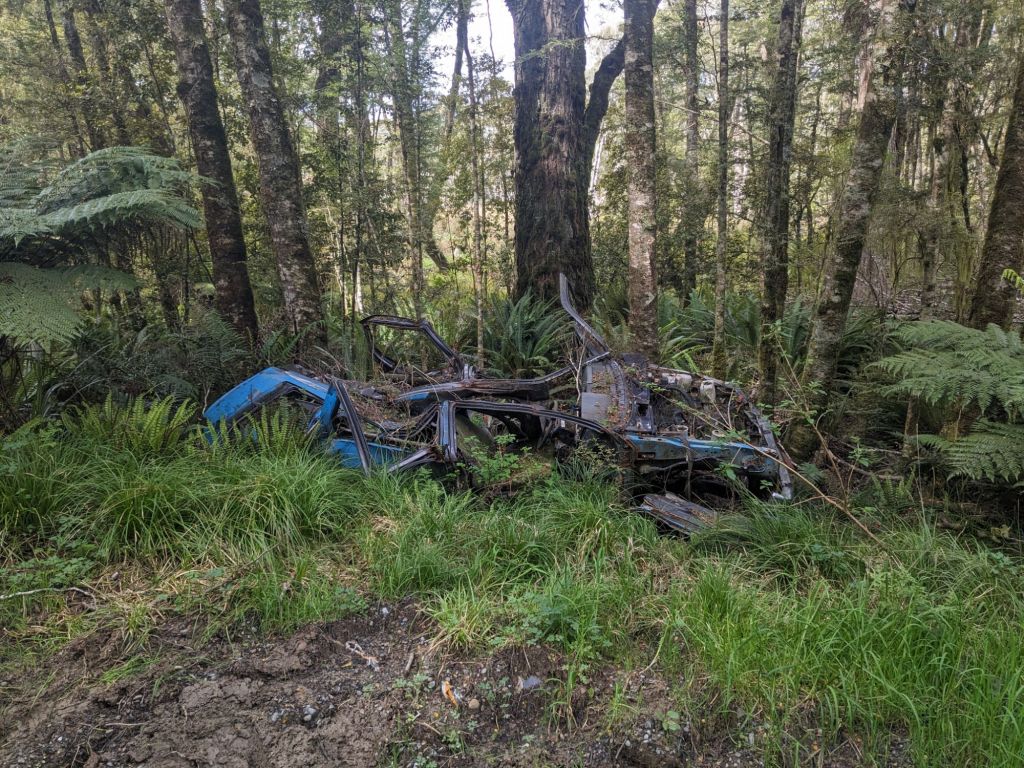
Now heading north, I found myself following empty logging roads through Bald Forest. There was a very eerie atmosphere, only heightened by the abandoned cars I passed along the way and a massive metal gate I had to pass round.

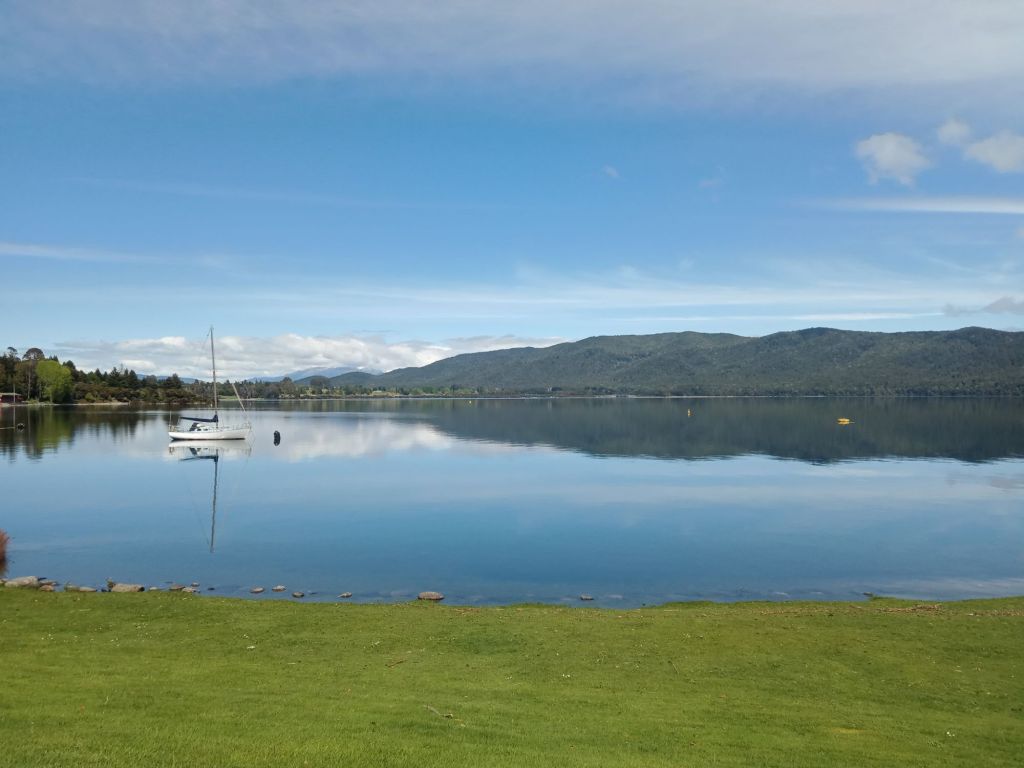
After a few days of riding, I reached Te Anau, where I took a short break and lined up a job at a local hostel—starting in ten days. This forced me to rethink my plan and I now opted to spend these days exploring the center of the South Island.

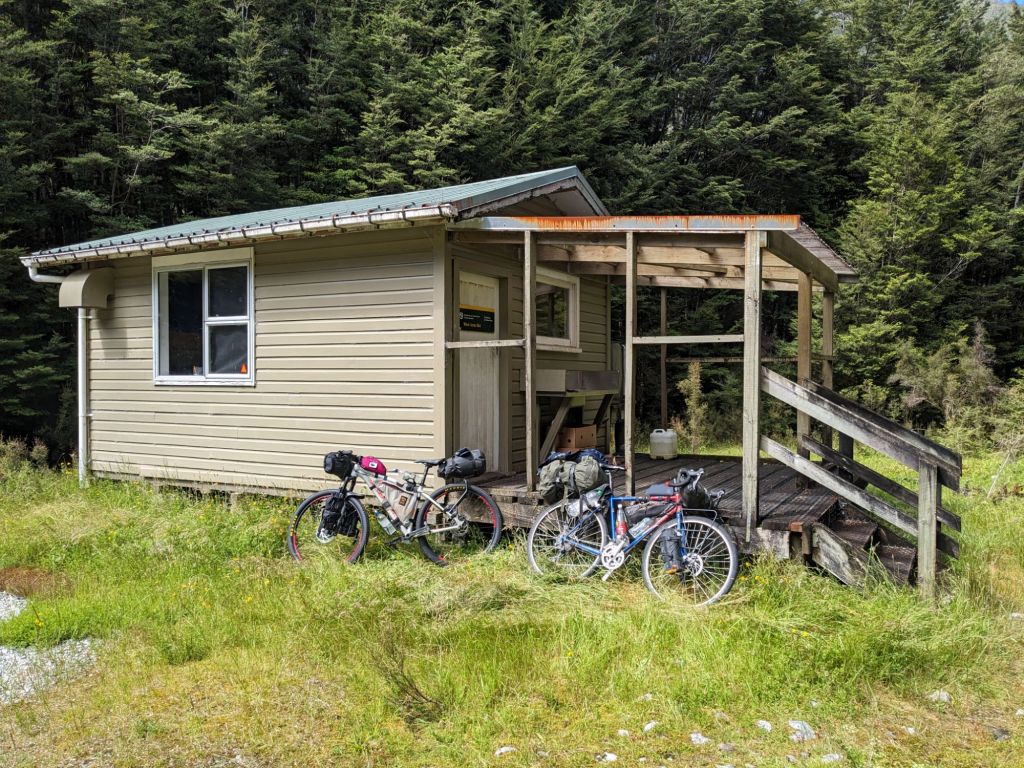
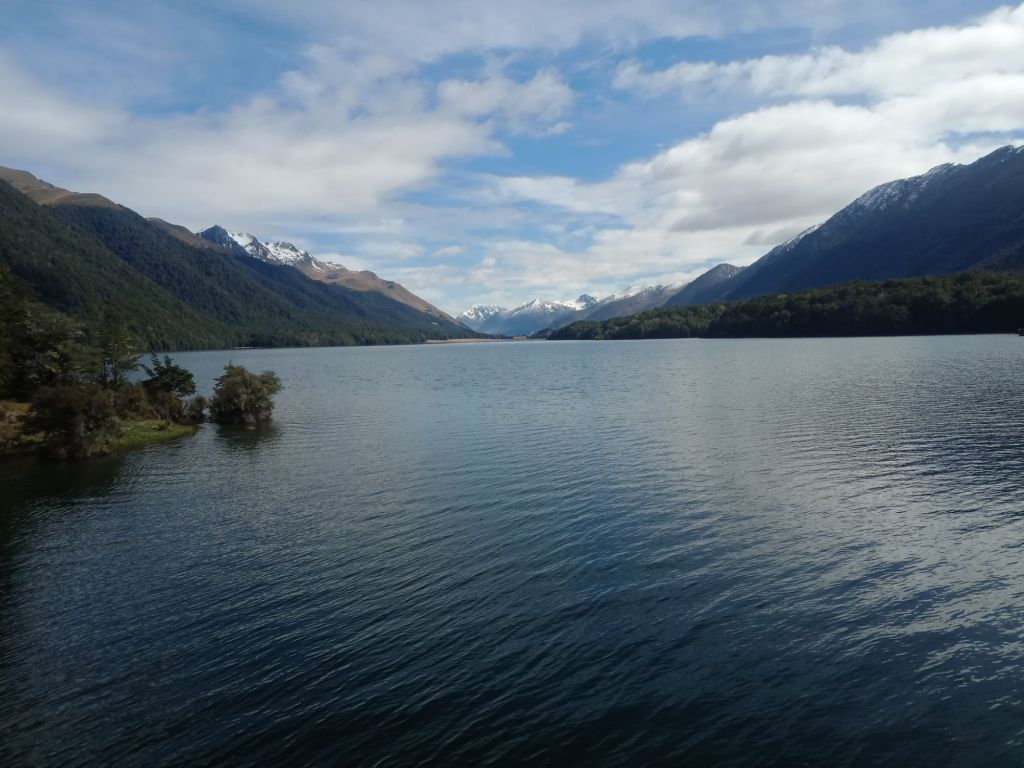
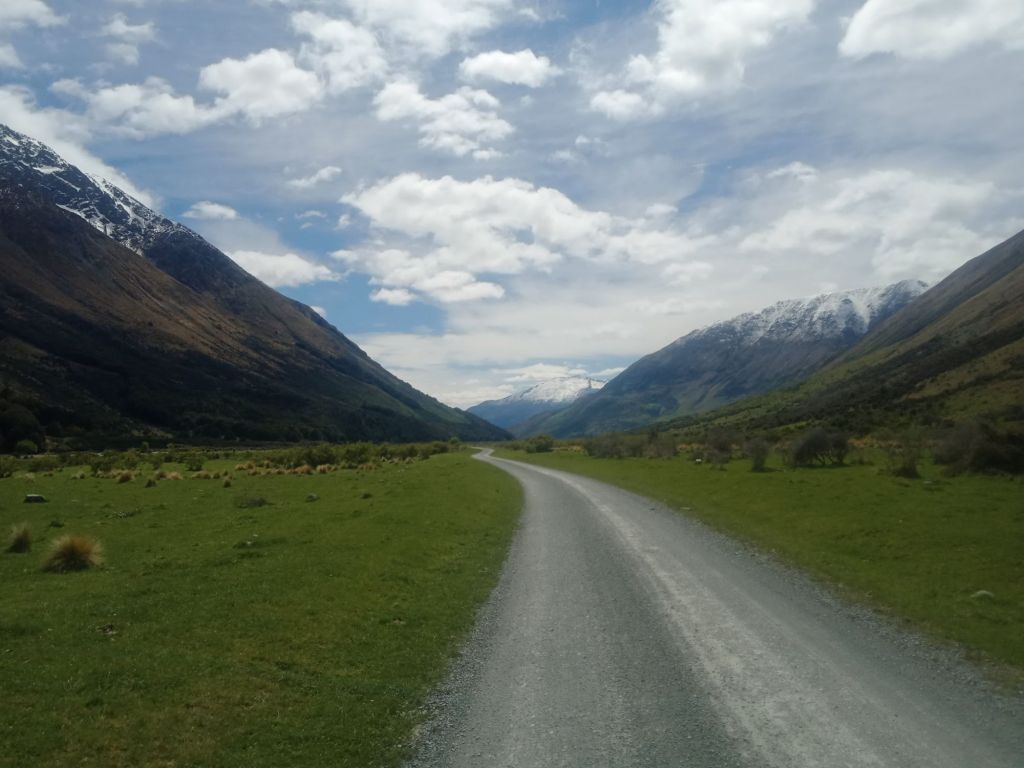
My next stop was the Mavora Lakes and the Von River Valley. Following a rough 4×4 track along the lake, I reached my first backcountry hut in New Zealand. Scattered throughout conservation land, these huts provide a roof and bed for $10 a night. I had this one all to myself and spent the evening cooking by the lake, enjoying the solitude.

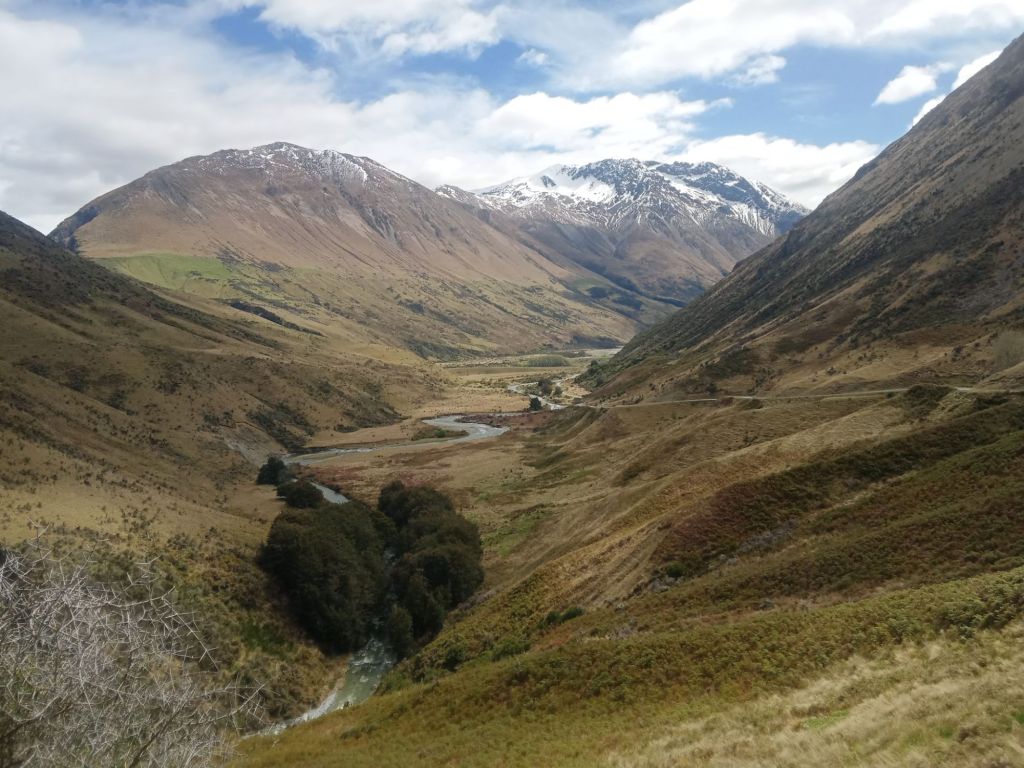
After briefly rejoining the main road north, I turned off again into the mountains, taking the Nevis Road—a track with 14 river crossings. At first, I was removing my shoes for each crossing, but after failing to ride through one river, I accept my feet would just get wet speeding up the process considerably.

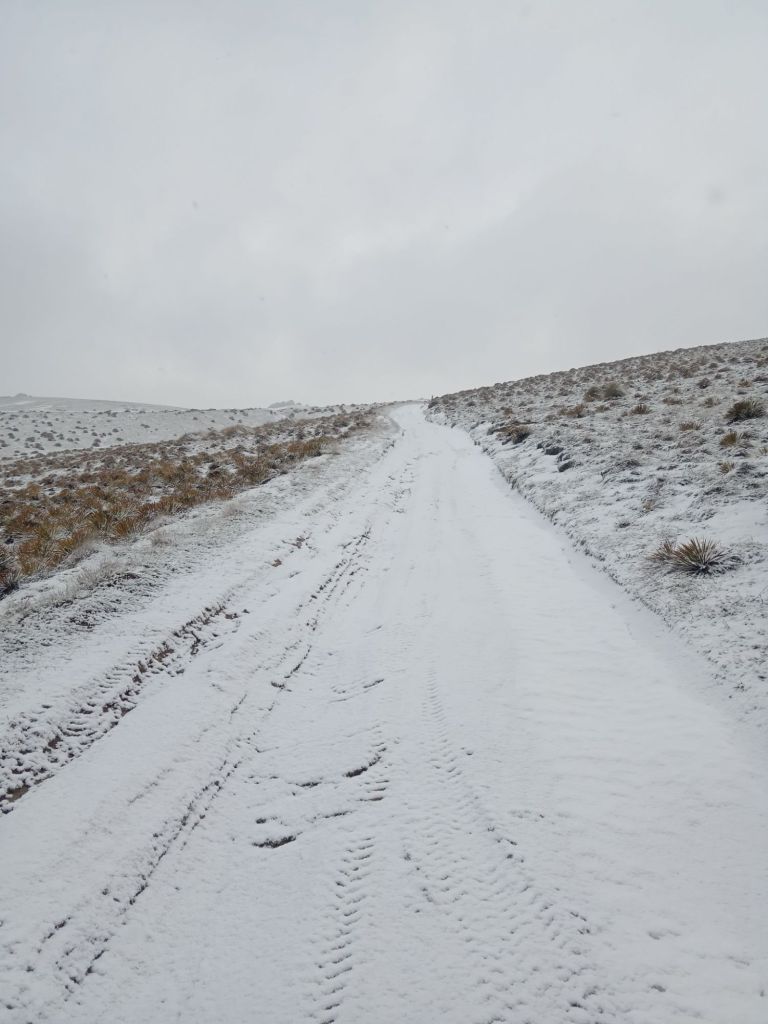
That night, the temperature dropped, and by morning, a fresh layer of snow covered everything. Fortunately, the road remained rideable, and once I descended out of the hills, the conditions improved.

Continuing through Cromwell, I faced the next obstacle: Lindis Pass. The ride up to the saddle at 971m was beautiful, with perfect weather, but as soon as I crossed over the summit, it turned into heavy rain and a hailstorm.

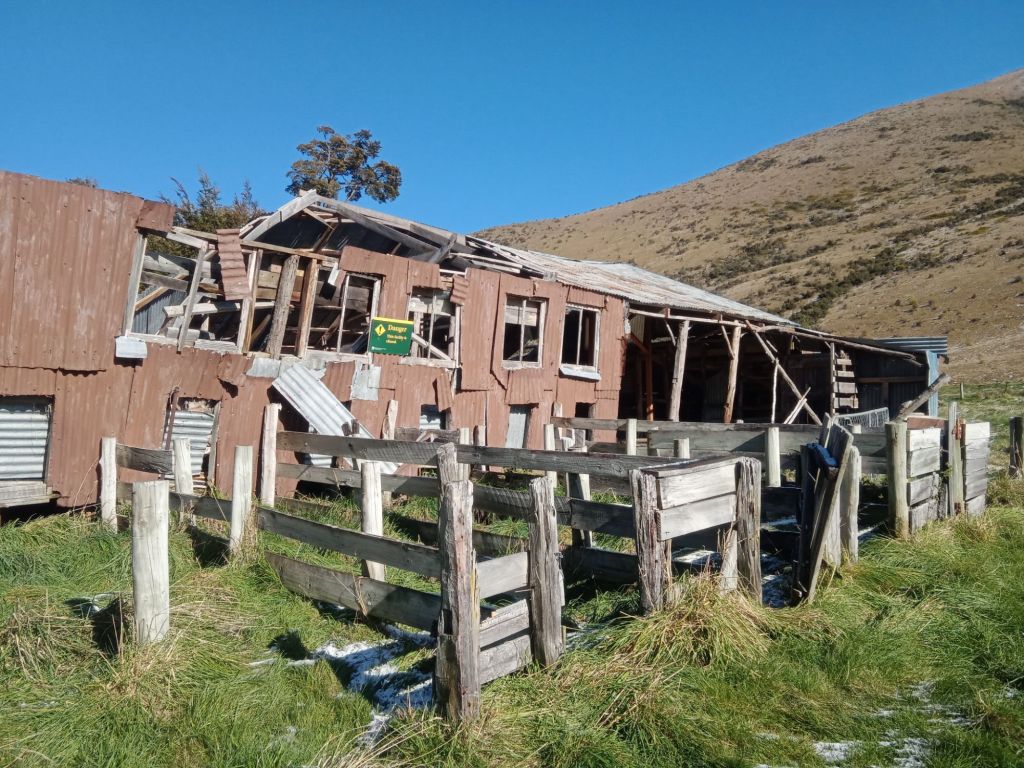
I took shelter at a supermarket in Omarama, waiting out what I thought was the worst of the weather before pushing on toward a campsite along the Alps to Ocean Cycle Trail. An hour later, I spotted a massive black cloud rolling in. Knowing I was only 30 minutes from the campsite, I pushed hard to get there before the storm hit—but I wasn’t fast enough. The last 10 minutes of my ride were spent battling through a full-blown snowstorm. When I finally reached the campsite, I considered setting up my tent under a collapsing barn for shelter, but I didn’t fancy the risk of it falling on me overnight.

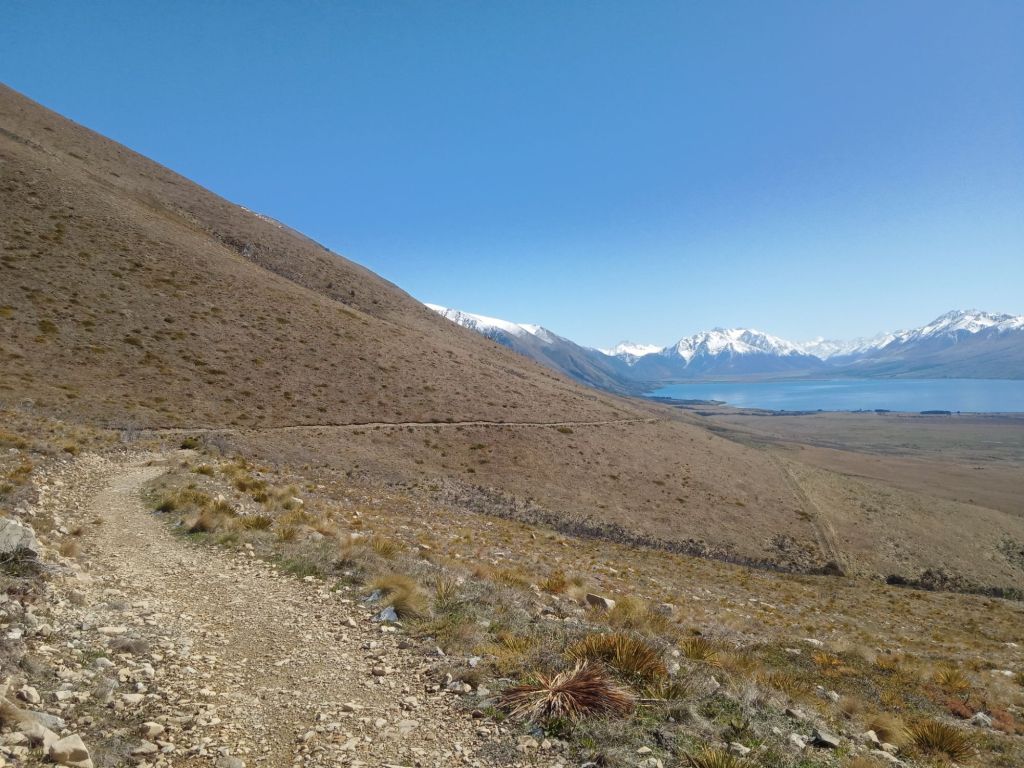
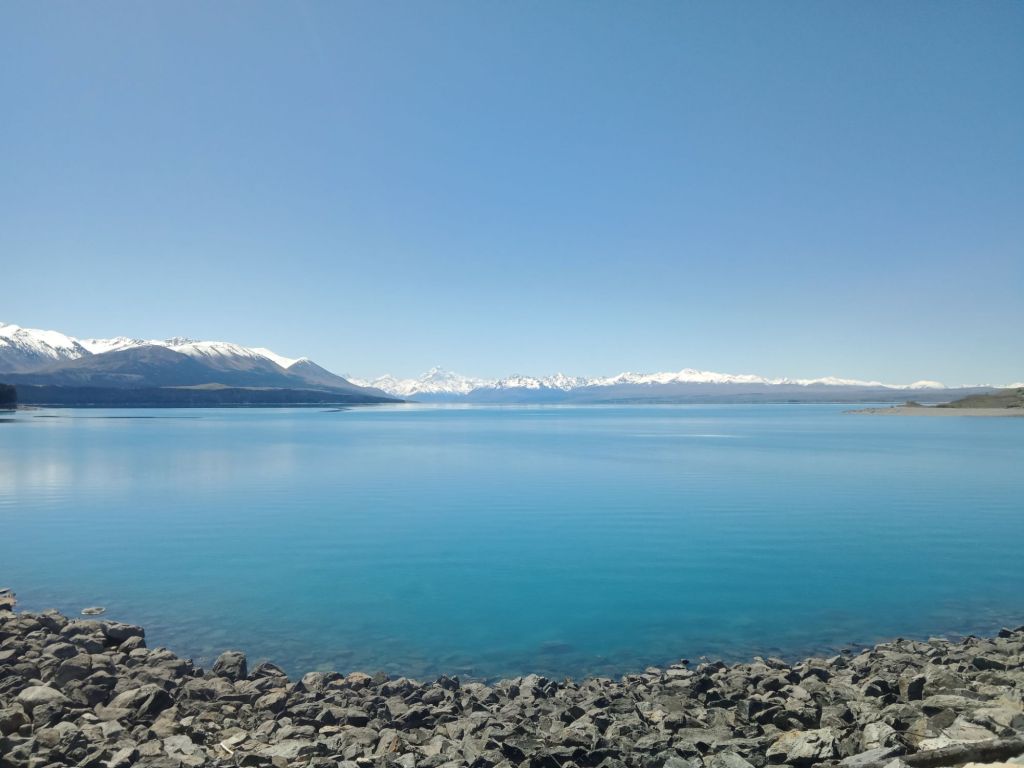
Luckily, the next morning brought perfect weather, and I continued along the trail, riding around the beautiful Lakes Ohau and Pukaki before spending another night in a backcountry hut.

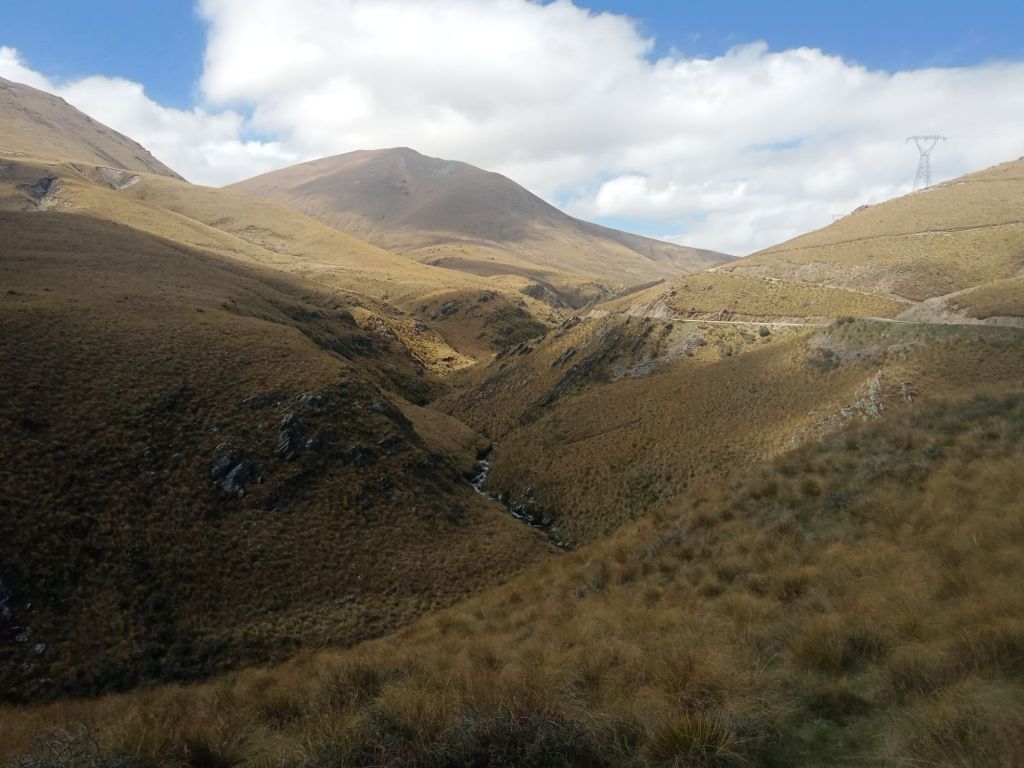
Now needing to start the return journey to Te Anau, I decided to take a different route back, following a rough track down the Tekapo River. This turned out to be one of the most intense parts of my journey, featuring a waist-deep river crossing and one of the bumpiest roads I’d ever ridden.

Along the way, I met a fisherman who suggested I take the Black Forest Track. I wasn’t entirely sure I was supposed to be on this farm track, but it was an incredible ride through the mountains.

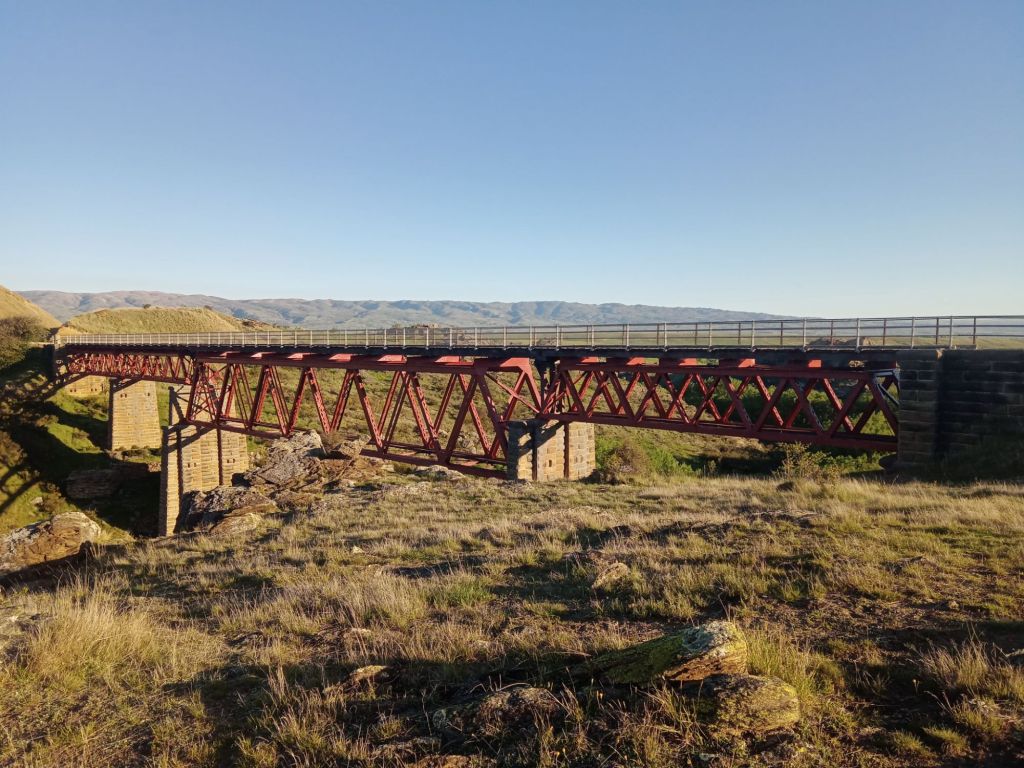
After a night in a campsite, I tackled Dansey’s Pass, another remote mountain route. Unfortunately, the campsite on the conservation land I had planned to stay at was closed, so I pressed on, rejoining the Otago Rail Trail and camping near the historic Poolburn Viaduct after a very long day in the saddle.

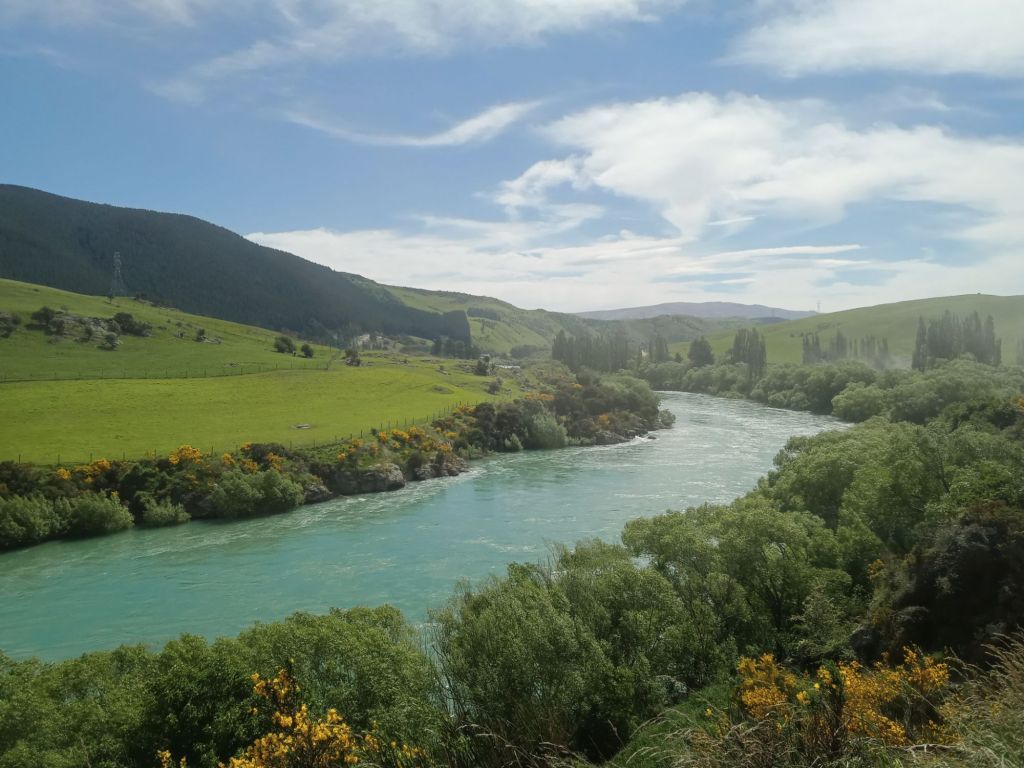
The final stretch of this trip took me along the Clutha Gold Trail before a day’s ride west brought me back to Te Anau, wrapping up this first chapter of my New Zealand adventure.

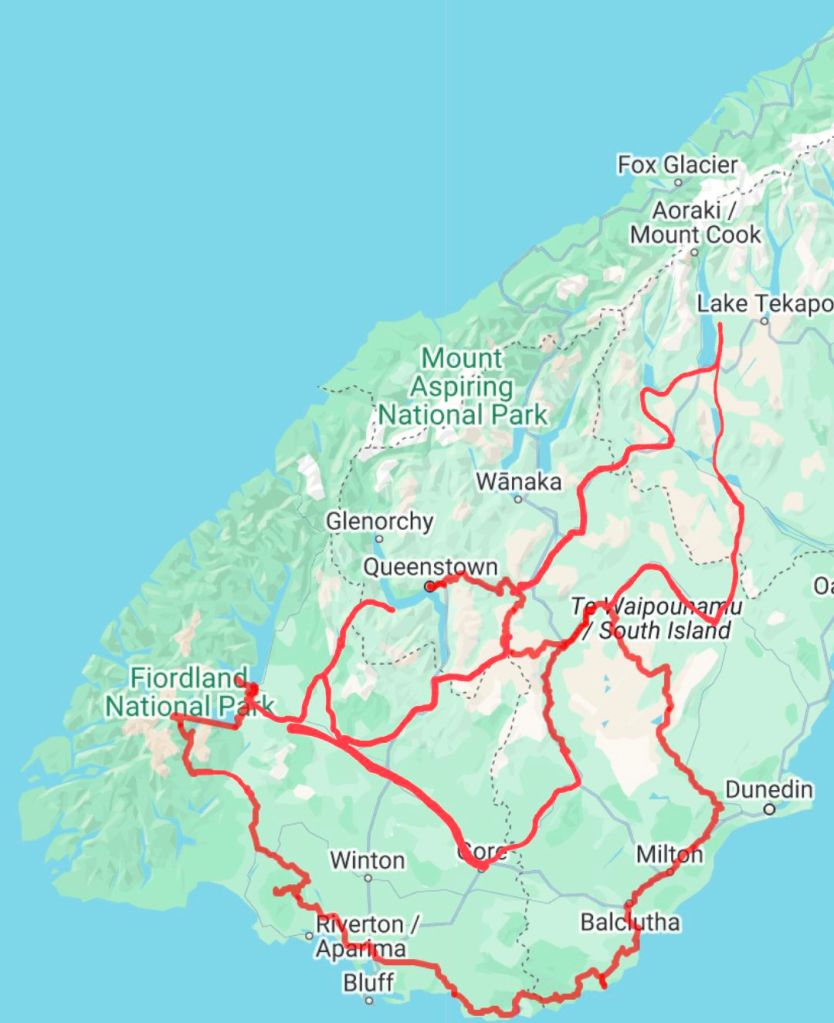
Riding through this new country has been far more challenging than I expected. There were times when I went two full days without passing a town—something I hadn’t anticipated. But that was the result of my choice to ride through the mountains. The landscapes have been incredible, and thankfully, there are some great bike routes threading through them. As shown on the map, it was quite a mess the route I chose. Mostly due to trying to plan another 10 day loop through the same region, leaving me the west coast to explore starting in March.

Now settled in Te Anau, I’m living right on the edge of Fiordland, New Zealand’s largest national park. I’ve been making the most of it, hiking and biking through as much of it as I can and my next post will be detailing some of these adventures.

Cairns to Darwin in 6 days

After three-weeks holiday in Airlie Beach and Sydney with my family, they returned to England leaving me to fend for myself in Oz. With numerous people warning me of the harsh Sydney winters where temperatures drop to single digits, I opted to head to the sunshine state of Queensland to see out the winter and find work as a banana farmer.

This didn’t go to plan. Upon arriving in Cairns and talking with people from the hostel it immediately became clear that there weren’t many jobs going as everyone finishes their east coast trip, then are also in Cairns looking for work. This led me to decide to relocate to Darwin, but after taking four flights in the last month, I fancied a bit of an adventure to getting there.

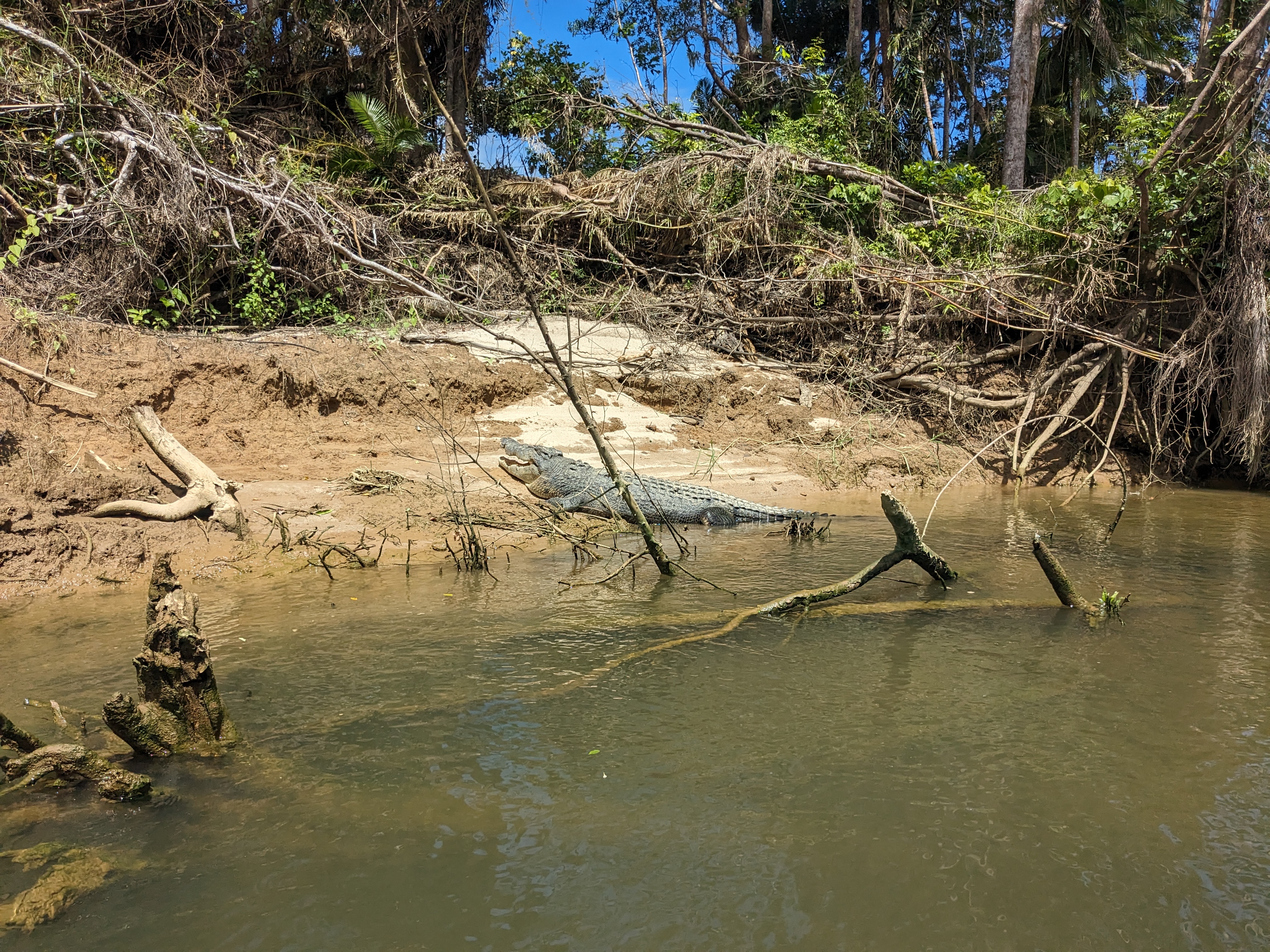
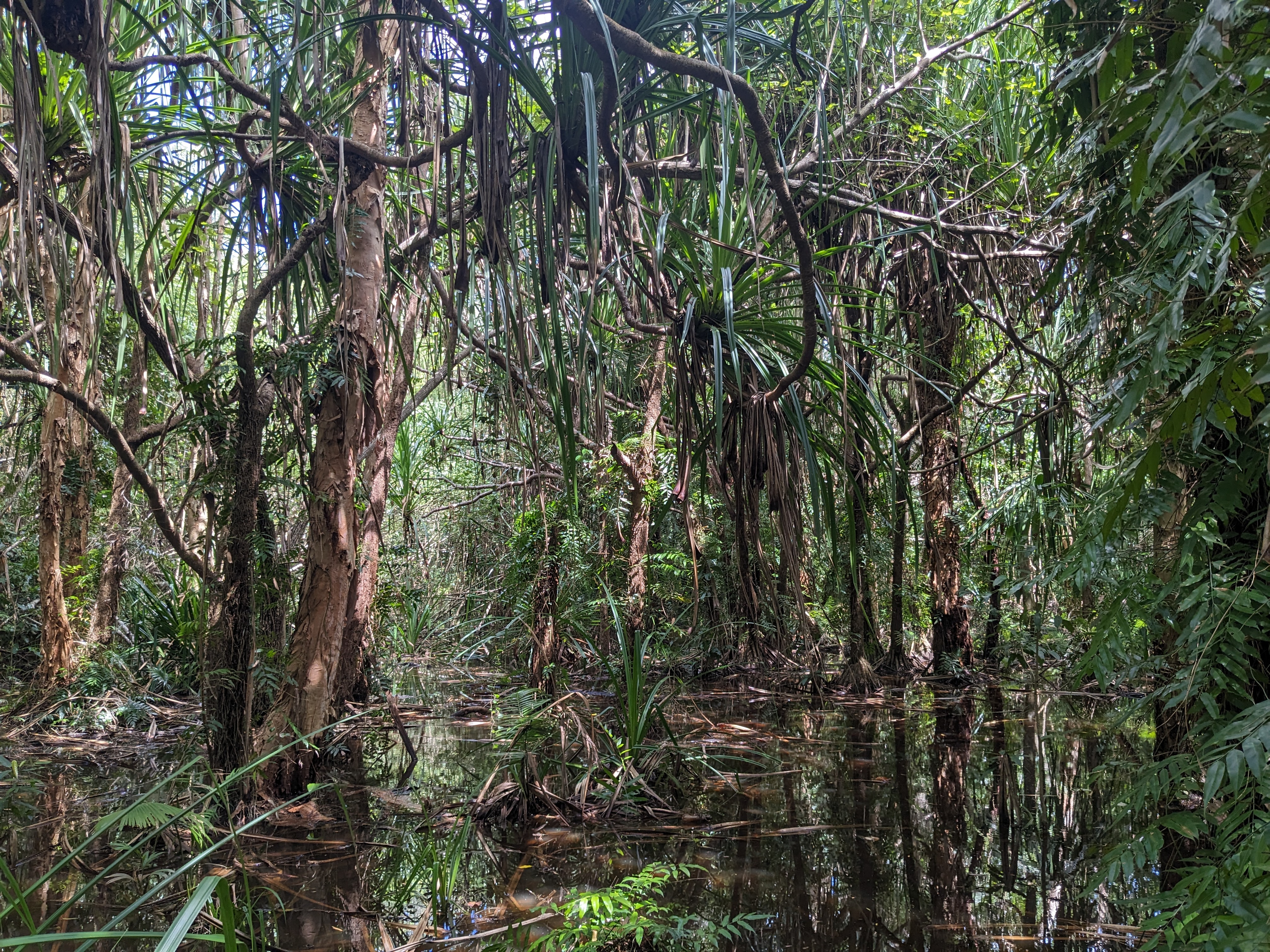
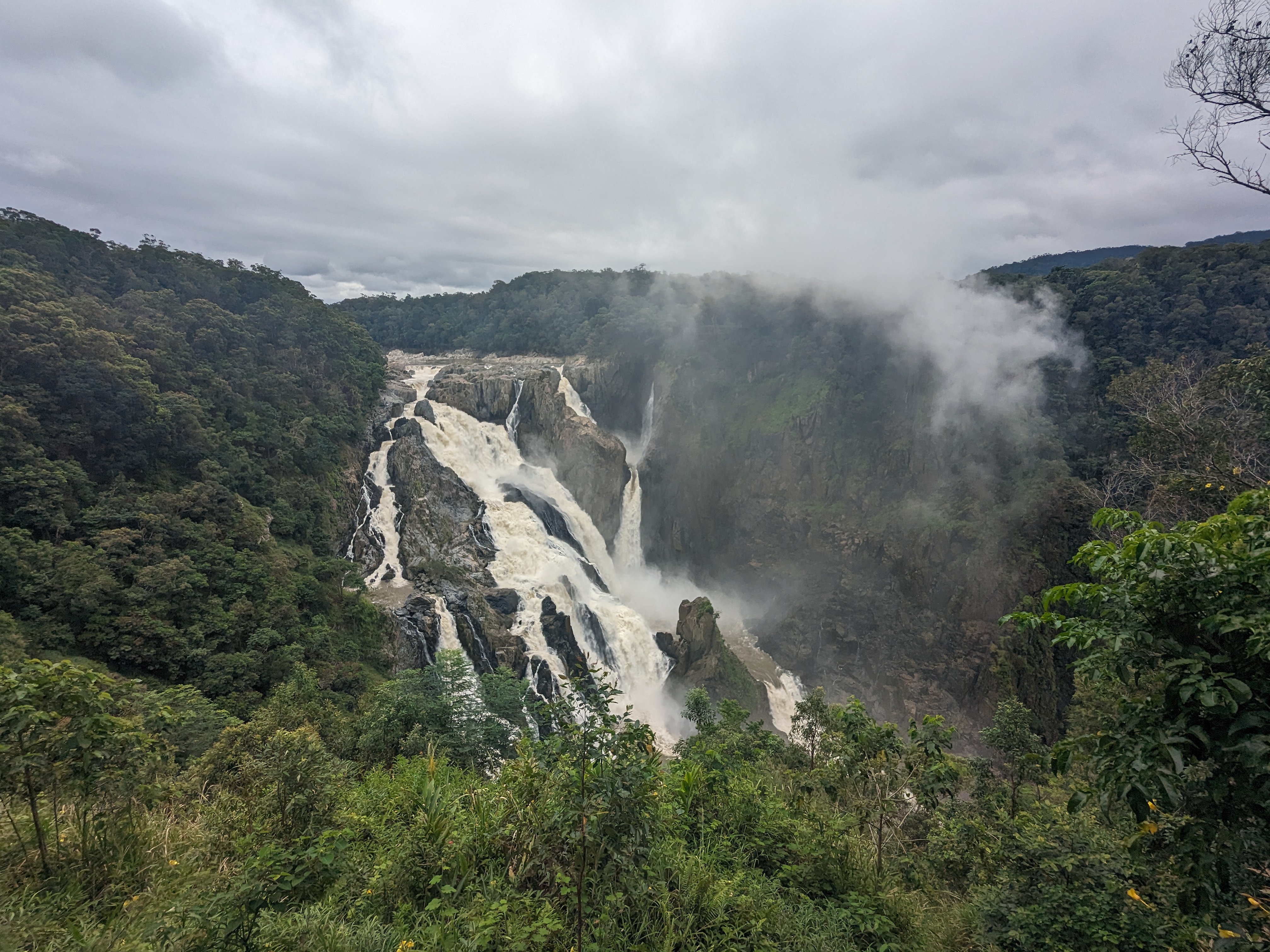
With the dry season approaching, there were plenty of opportunities for campervan relocations to Darwin when the city becoming a big holiday destination for winter with its 30 degree sunshine from May to September. Not wanting to take on the 3000km journey alone, I convinced my mate Josh to join who was also looking to escape from Cairns. We’d booked the journey to begin the following weekend giving just enough time to explore Far North Queensland heading into the jungle and going croc spotting.

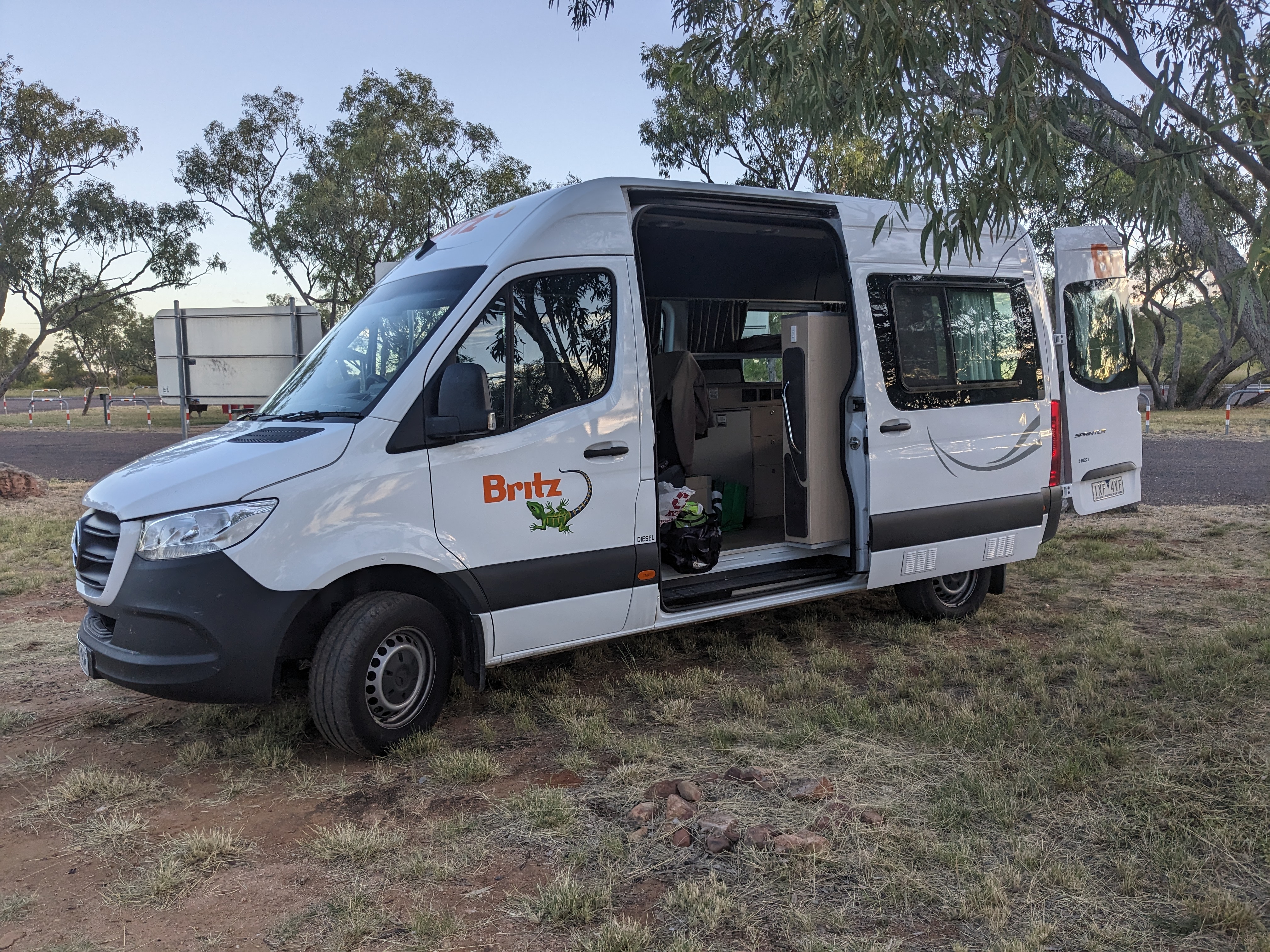
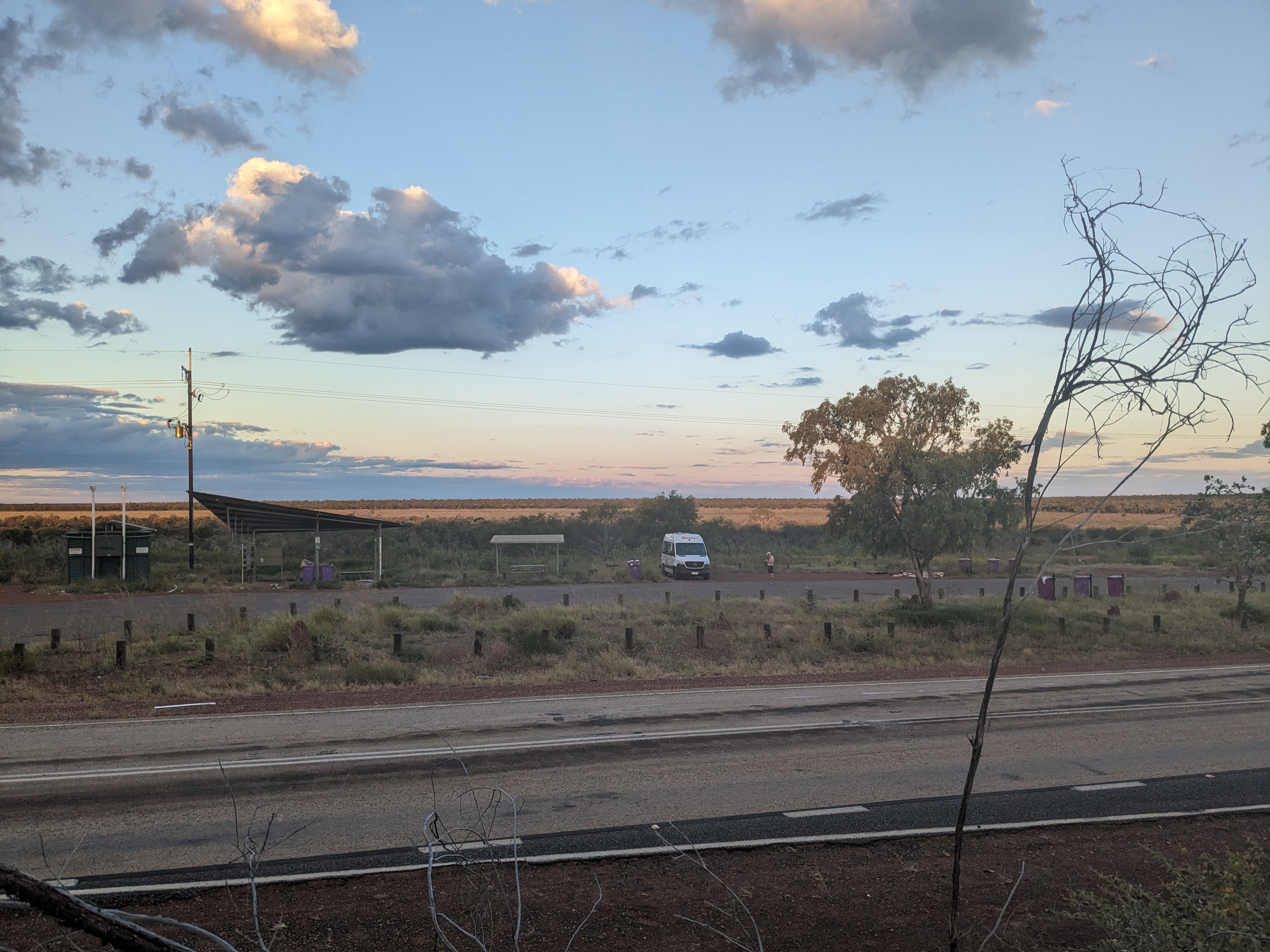
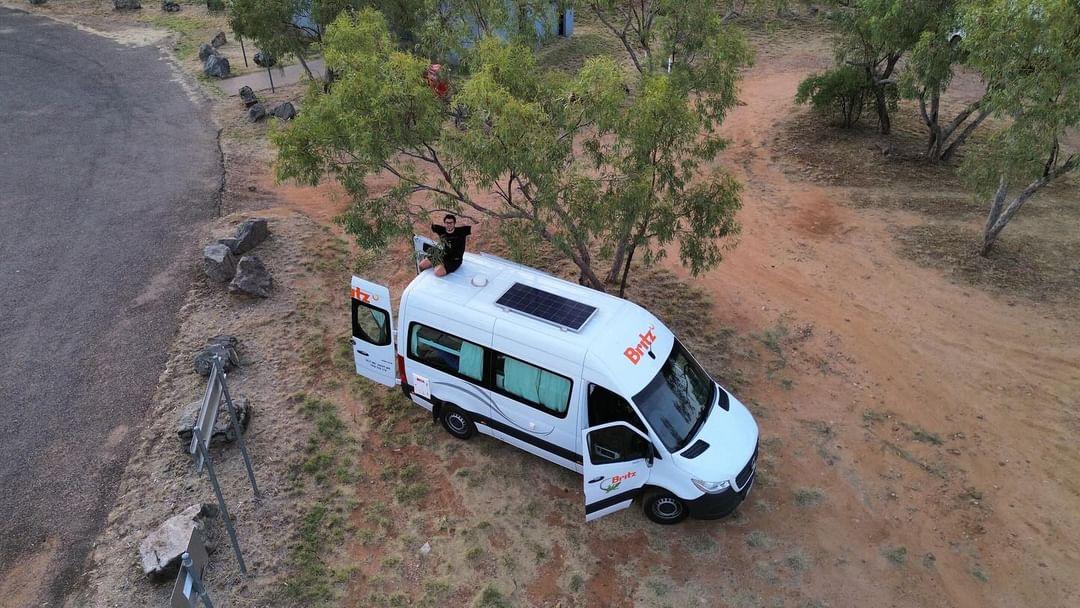
Given only six days to complete the drive, we arrived early at the camper depot to pick up the keys. To our surprise, we were given a huge 4-berth Mercedes Sprinter van, when we were expecting something a bit smaller.

The first challenge arose when we headed into town to the supermarket and struggled to find parking suitable for our 2.7m tall vehicle. After causing a bit of a jam realising last minute we weren’t going to fit into the multistory car park and needing to reverse back out of the entrance, we eventually managed to stock up on food knowing that prices would soar and choice would drop once we hit the outback.

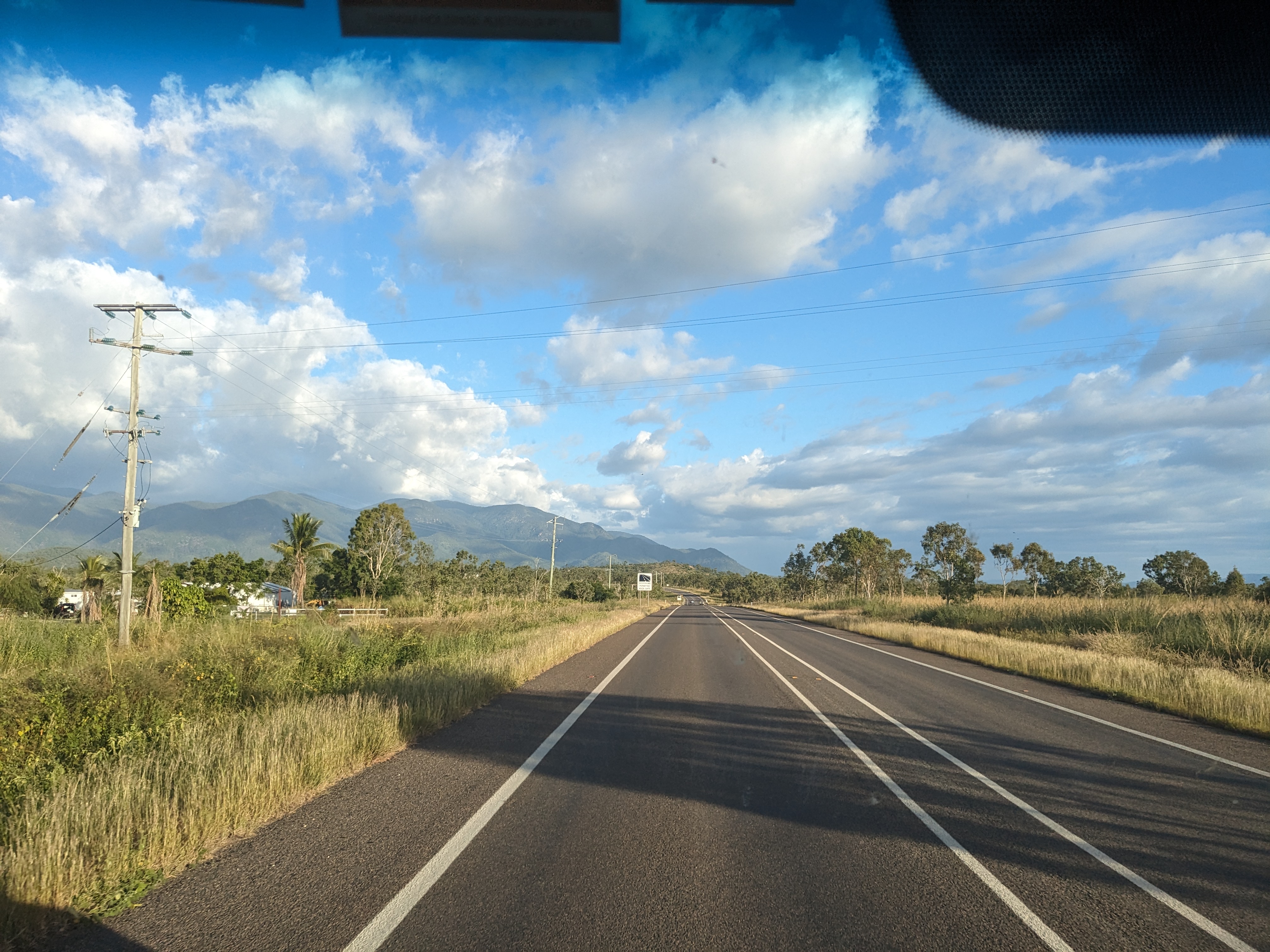
Once loaded up, we headed south following the east coast towards Townsville, choosing not to stop anywhere except for grabbing fuel and drinks from a bottleshop. Our plan was to try and get most of the miles completed in the first 4 days, giving us time to enjoy the national parks on the remaining days.

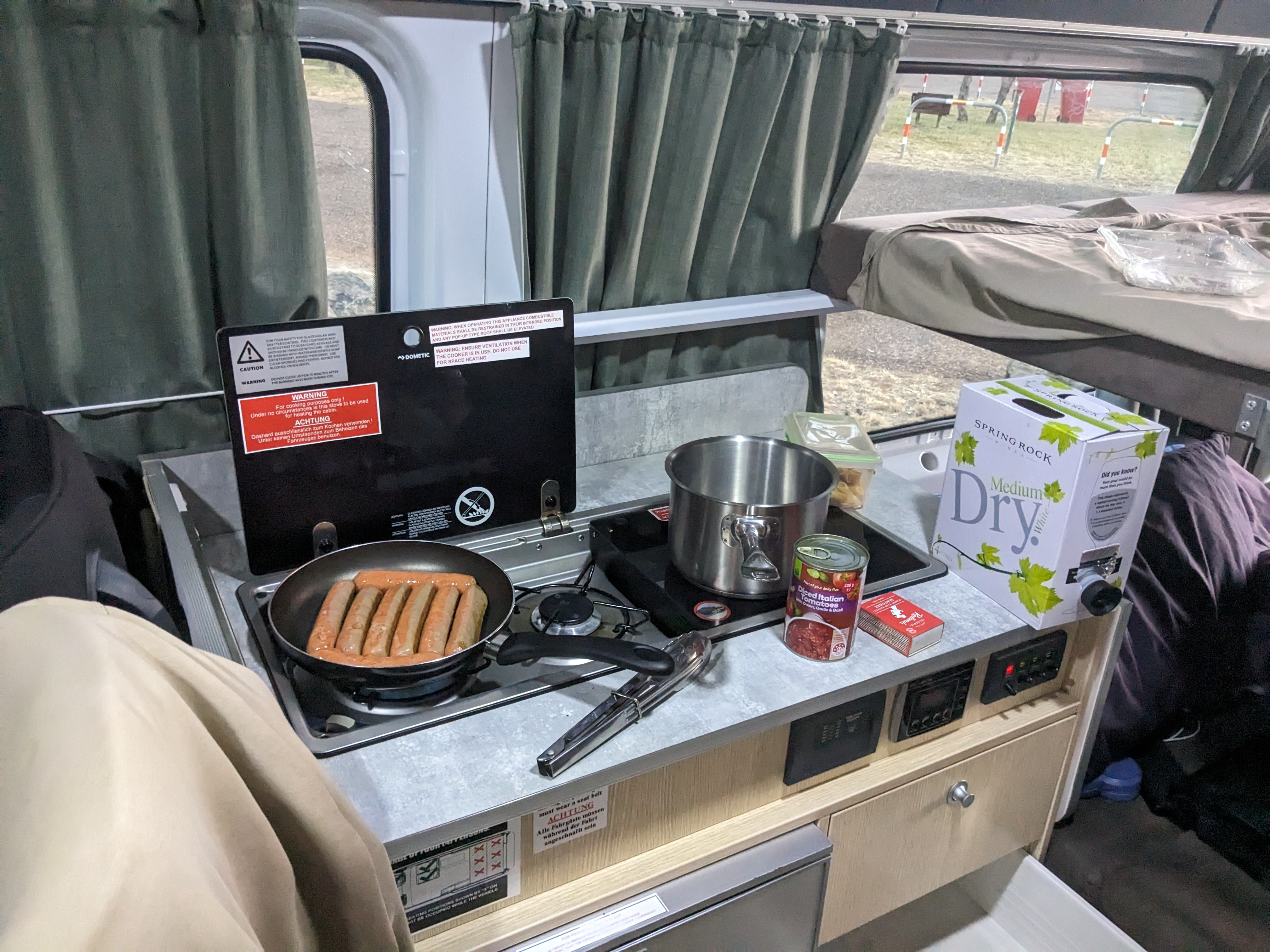
Exiting Townsville, we headed west, watching the familiar landscape of the east coast change becoming more empty bushland. We pulled up just before sunset at a free camp spot featuring toilets and taps, then cooked up some sausage pasta before resting up before the long drive the following day.

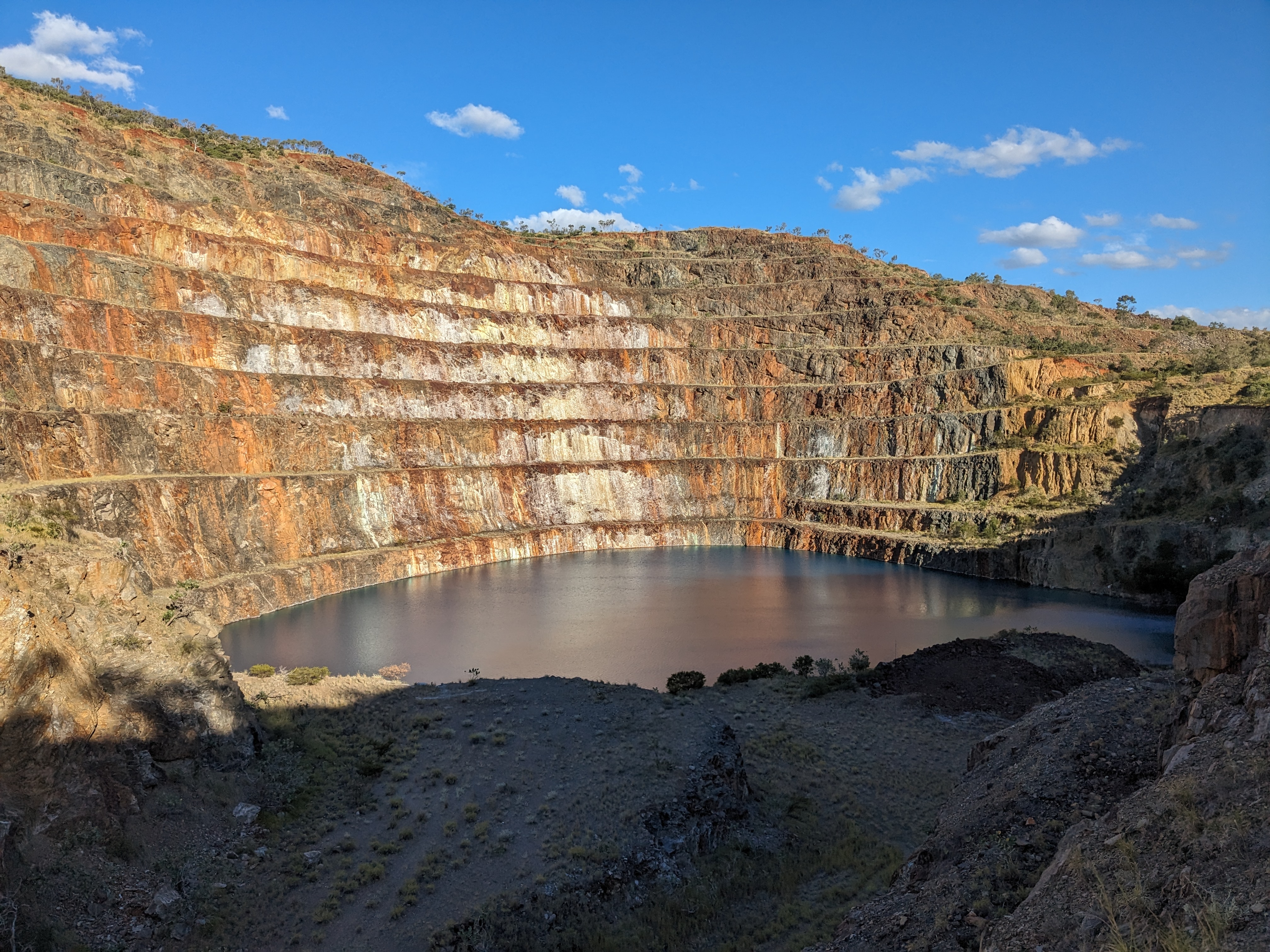
The plan for day two was to make it to Mary Kathleen, an abandoned town and uranium mine that’s free to visit and camp at. Setting off at 7 am, we arrived at 4 pm, stopping only once for fuel and to change drivers. This was when we first interacted with the road trains, needing to overtake these 60m long trucks carrying goods across the outback.

At the turnoff to the town we encountered some difficulties. The road was riddled with potholes, and the large van was struggling. We decided to park up, and I opted to run the 7km up to the mine, eager to see what was left from the site.

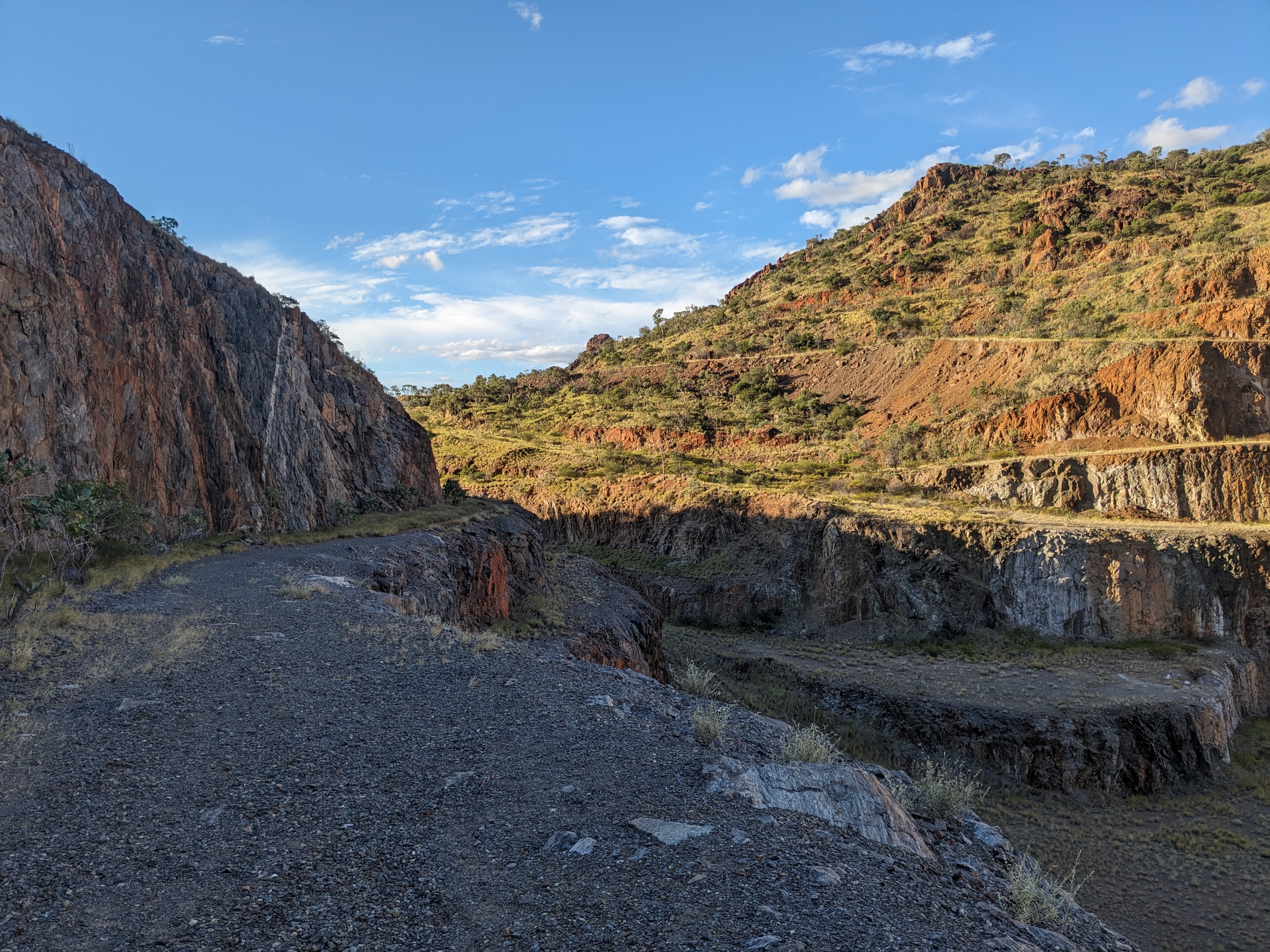
About 1 km into my run, a car came past, and I held out my hand, hoping for a lift. Fortunately, they stopped, seemingly intrigued by my endeavour. In the car was a family of four on a six-month adventure around Australia, towing a caravan behind their Land Cruiser. They kindly gave me a lift up the track reaching the pit as it was cast into shadow by the evening sun. Standing and looking out at the enormous hole in the earth was truly impressive, and the photos definitely don’t do it justice. The water was a metallic blue colour from the copper and looked very inviting if I didn’t know it was contaminated with uranium.

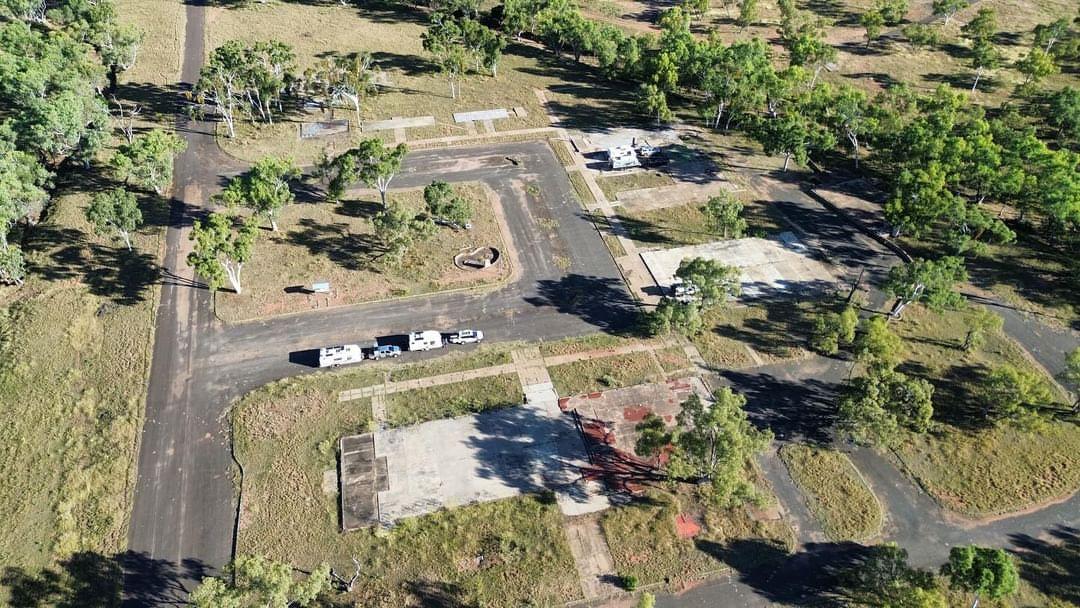
I was kindly offered a lift back to where we left our van too, and after a long conversation about their vehicle I really wanted my own 4×4 to roadtrip around Australia in. The town of Mary Kathleen was pretty disappointing, I was expecting it to be full of abandoned buildings but all that remained were a few concrete slabs where the building had been and an information board depicting the old town layout. This town had been constructed to home the mine workers, so when the mine shut in 1982 the buildings were all sold and transported away.

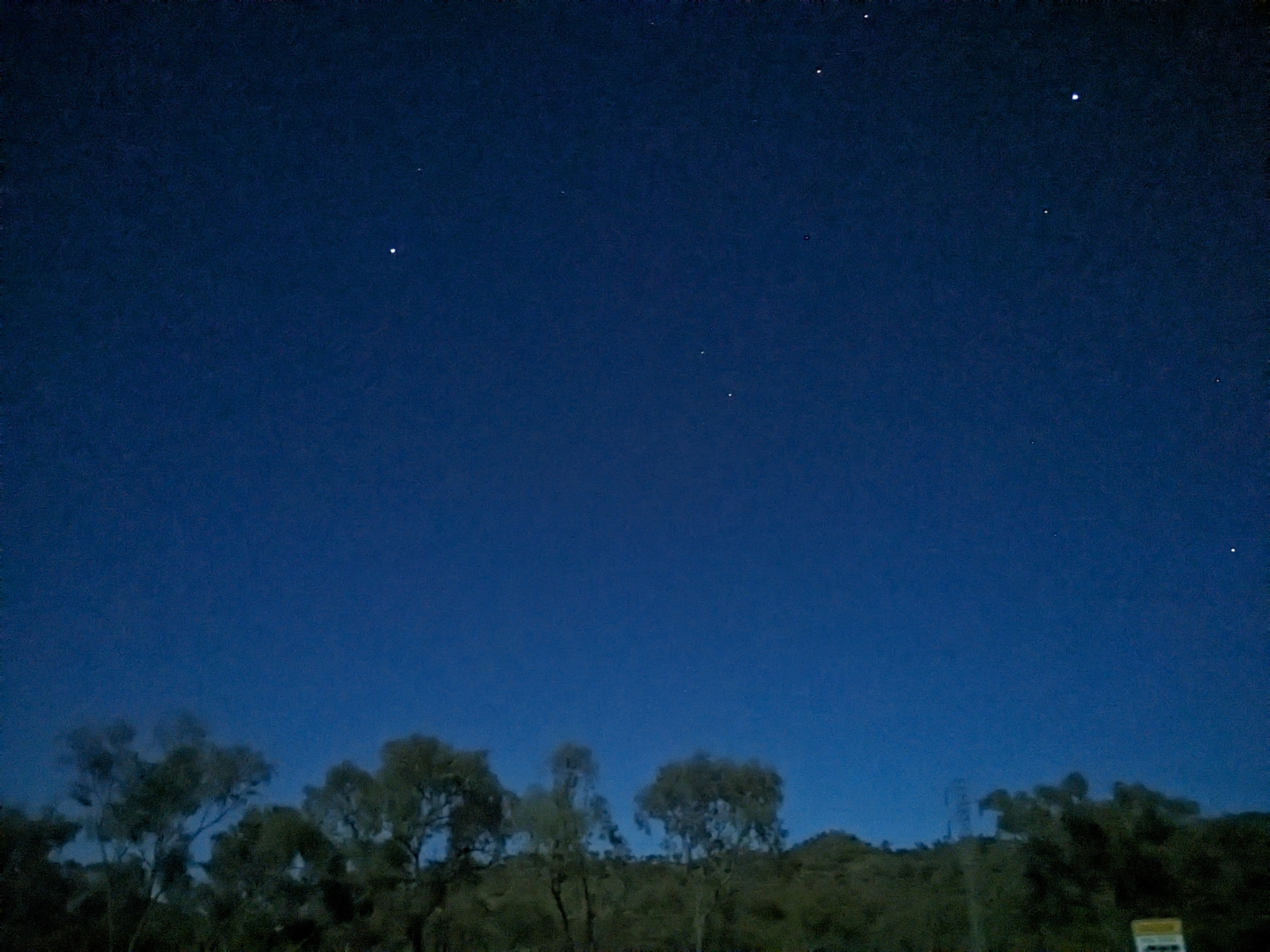
That evening, we dined on more sausage pasta and enjoyed the amazing night sky of the outback.

Day three began with a short drive to Mount Isa, the final “city” (having a population of 18,000) before Darwin. We stocked up on more food and fuel as we weren’t going to pass a supermarket for the next 1300km and downloaded as much music as we could while there was still phone data.

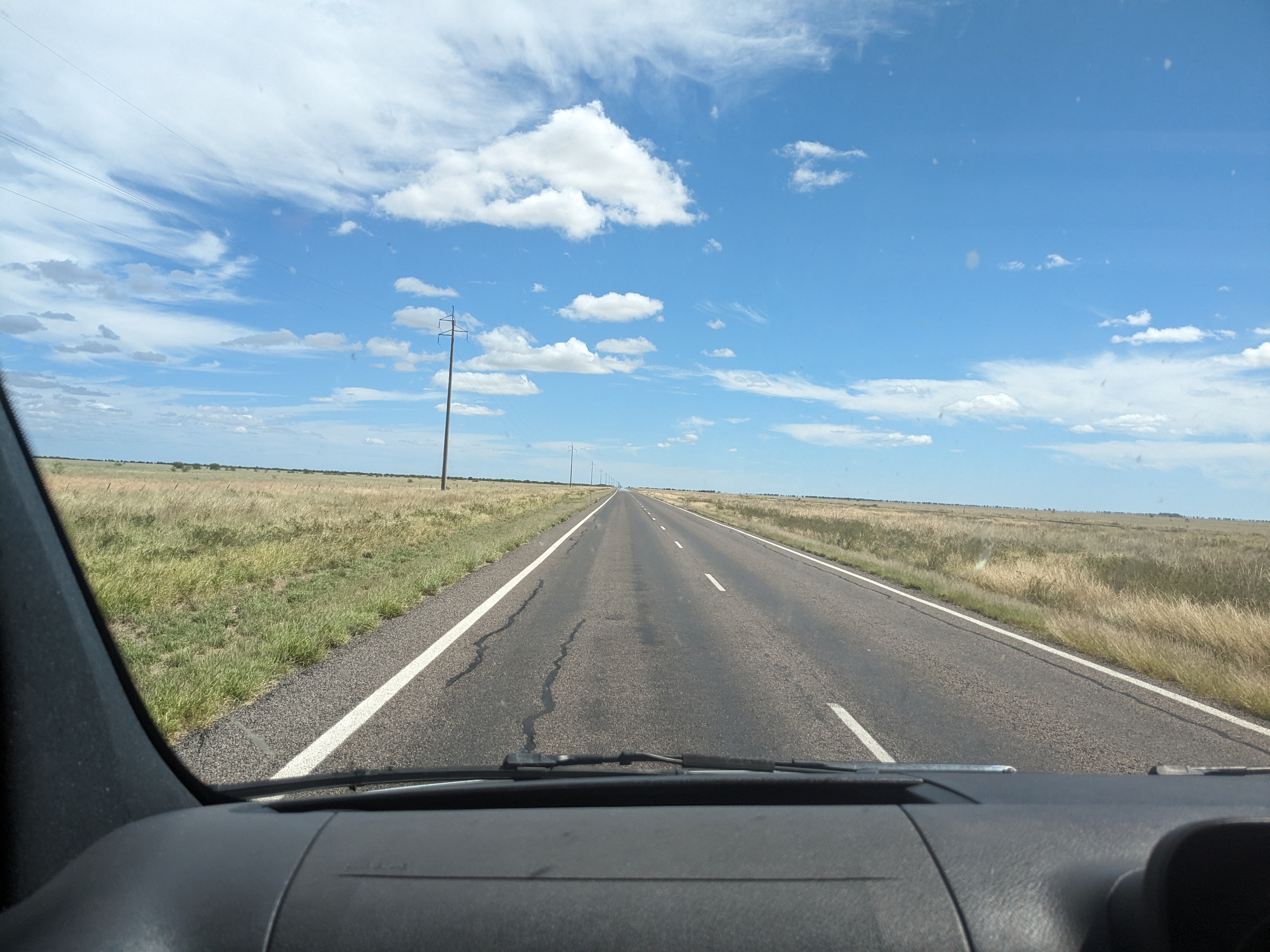
This leg of the journey was pretty monotonous, following the Barkly highway 630km. With not much to see besides large cattle stations on either side of the road, the only thing to mix up the driving was some stretches of flood-damaged washboard roads and a sign letting us know we were now in the Northern Territory. Stopping for fuel at one of the outback roadhouses was a painful experience, spending 1.5x more for the diesel than we paid that morning.

We took the right turn, joining the Stuart Highway, which would take us to Darwin, and once again found another free camp spot for the night.

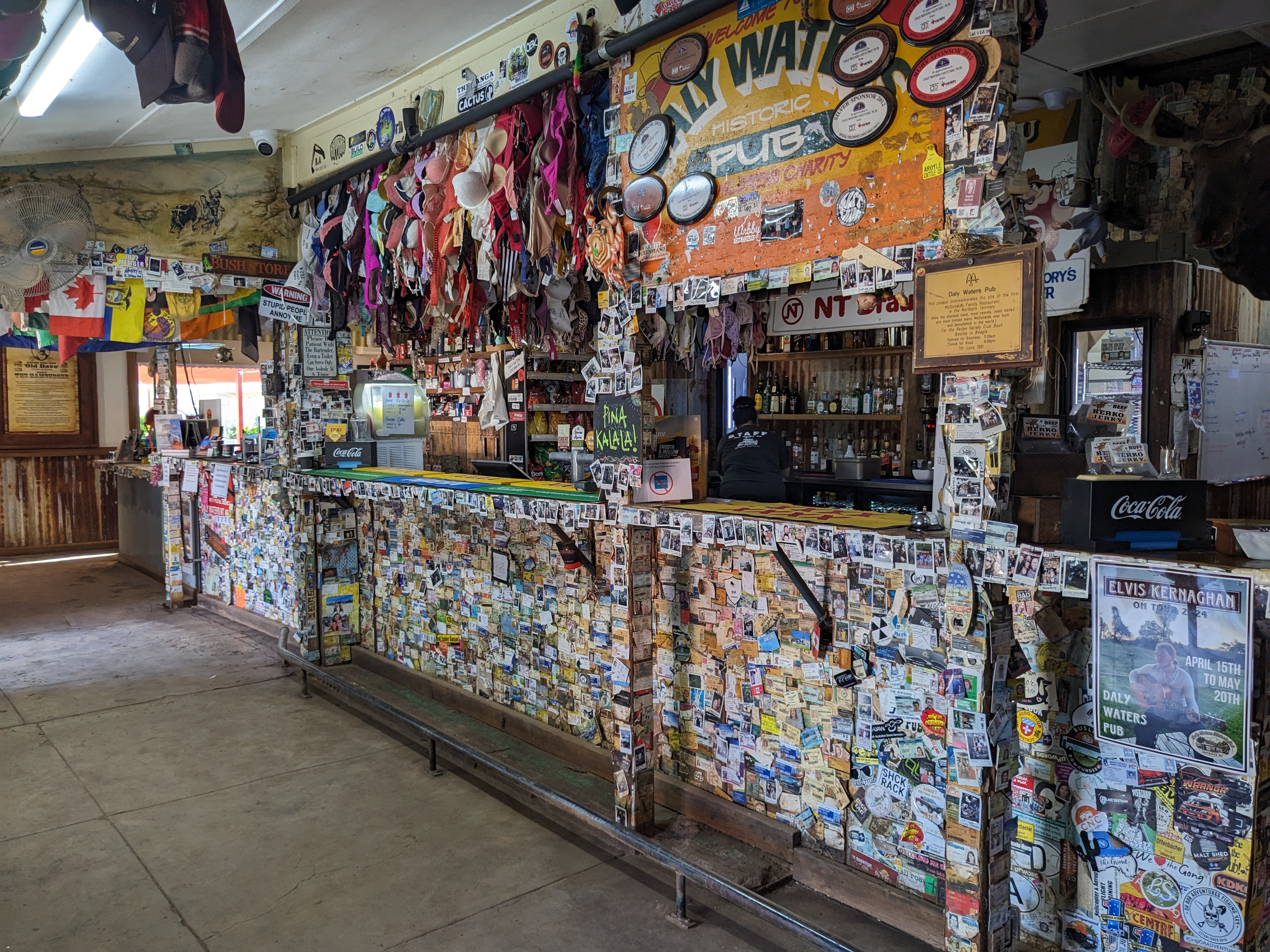
Day four was Anzac Day, similar to remembrance day but for the troops of Australian & New Zealand. That morning, we made it to the tiny outback town of Daly Waters where there had been a sunrise service in remembrance.

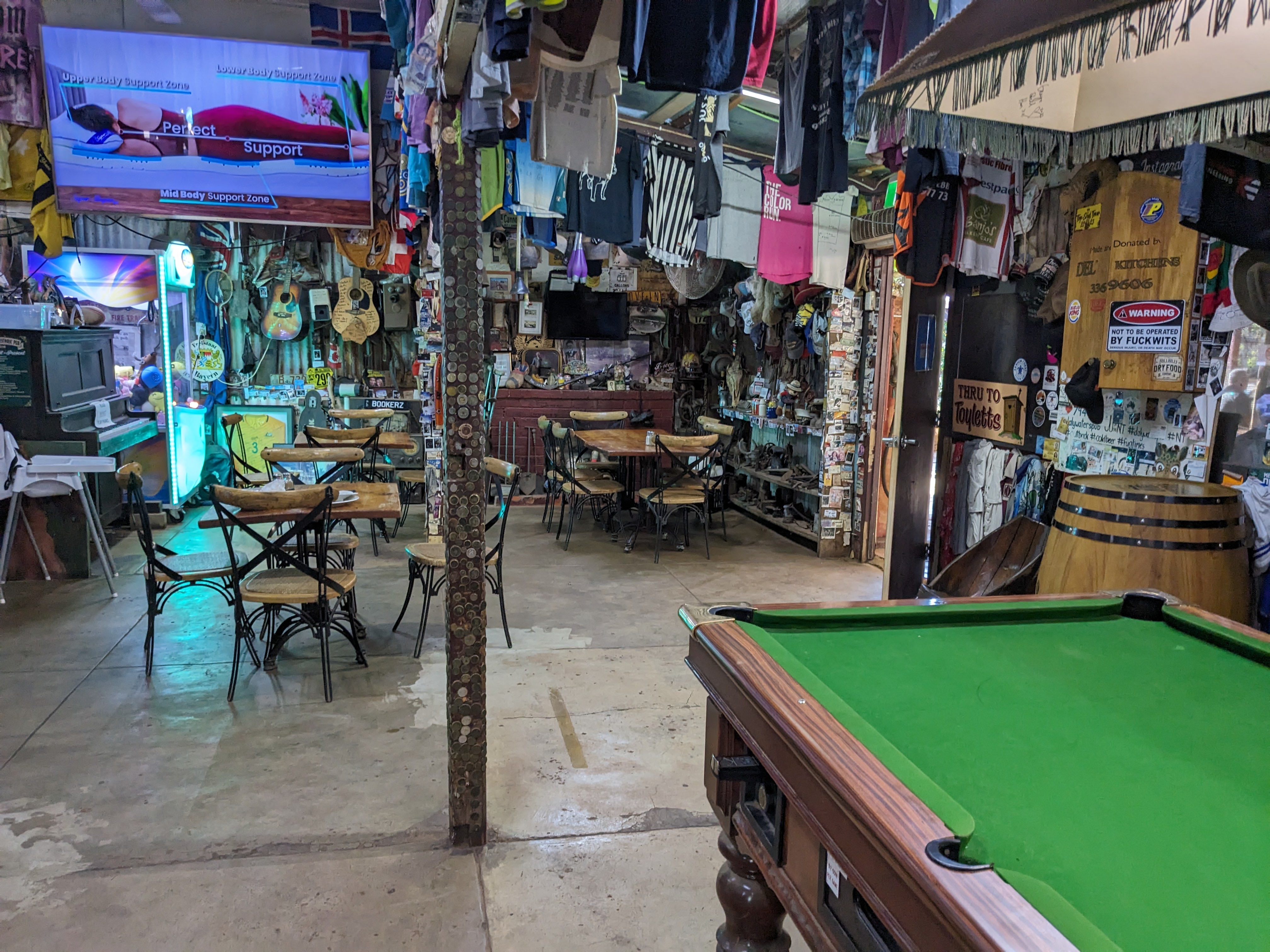
The pub in the town has become iconic as a traditional outback pub and decorated with tat that people had chosen to leave there. We just grabbed some coffees, and it was pretty busy at 8 am with lots of servicemen already on the beers and playing two-up.

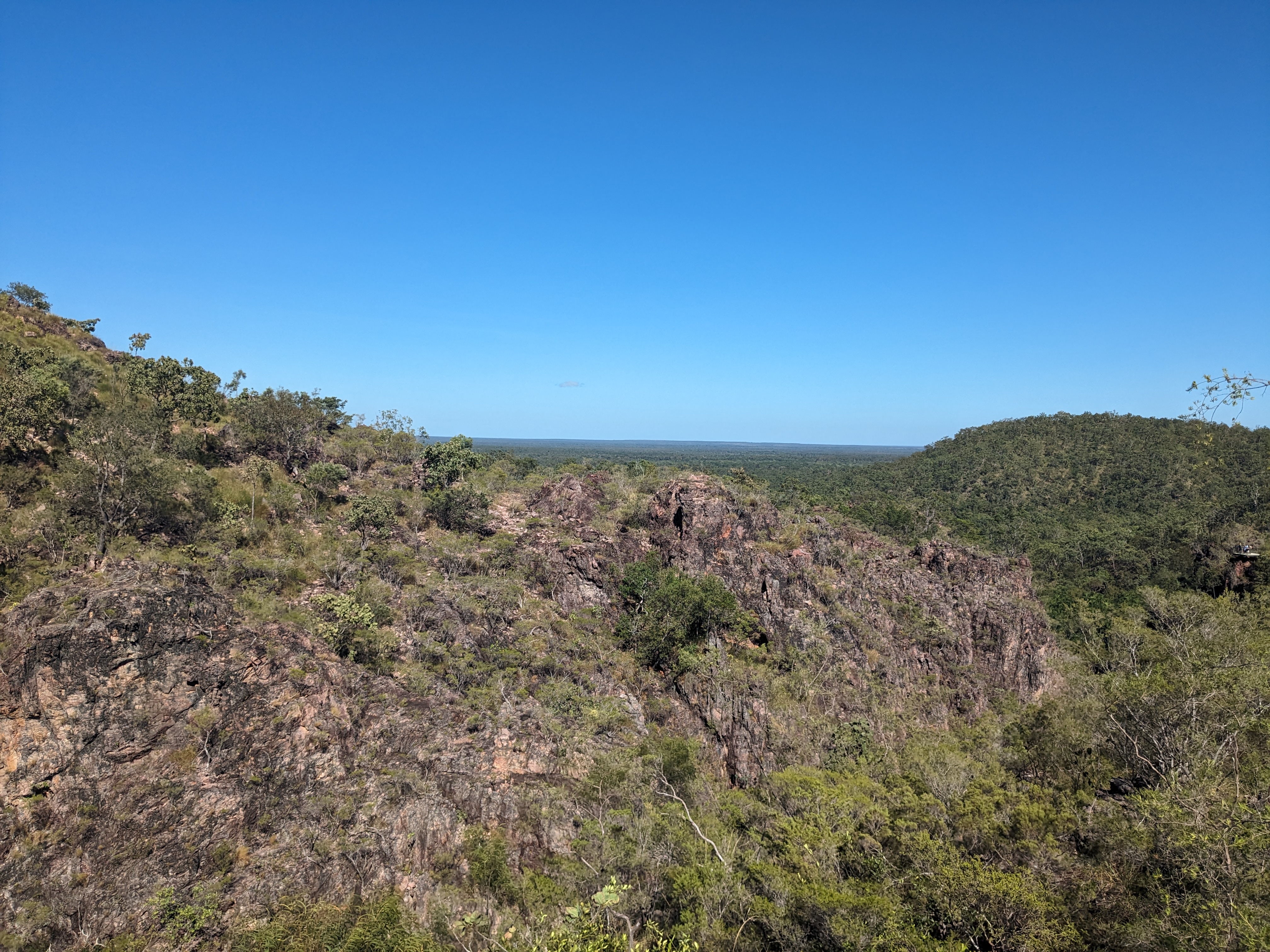
The rest of the day was spent driving north, stopping off to do a quick walk at Katherine Gorge before searching for another campsite. Along this route, we passed some forest fires, which I think were controlled burns, often done at the beginning of the dry season to avoid unmanageable fires.

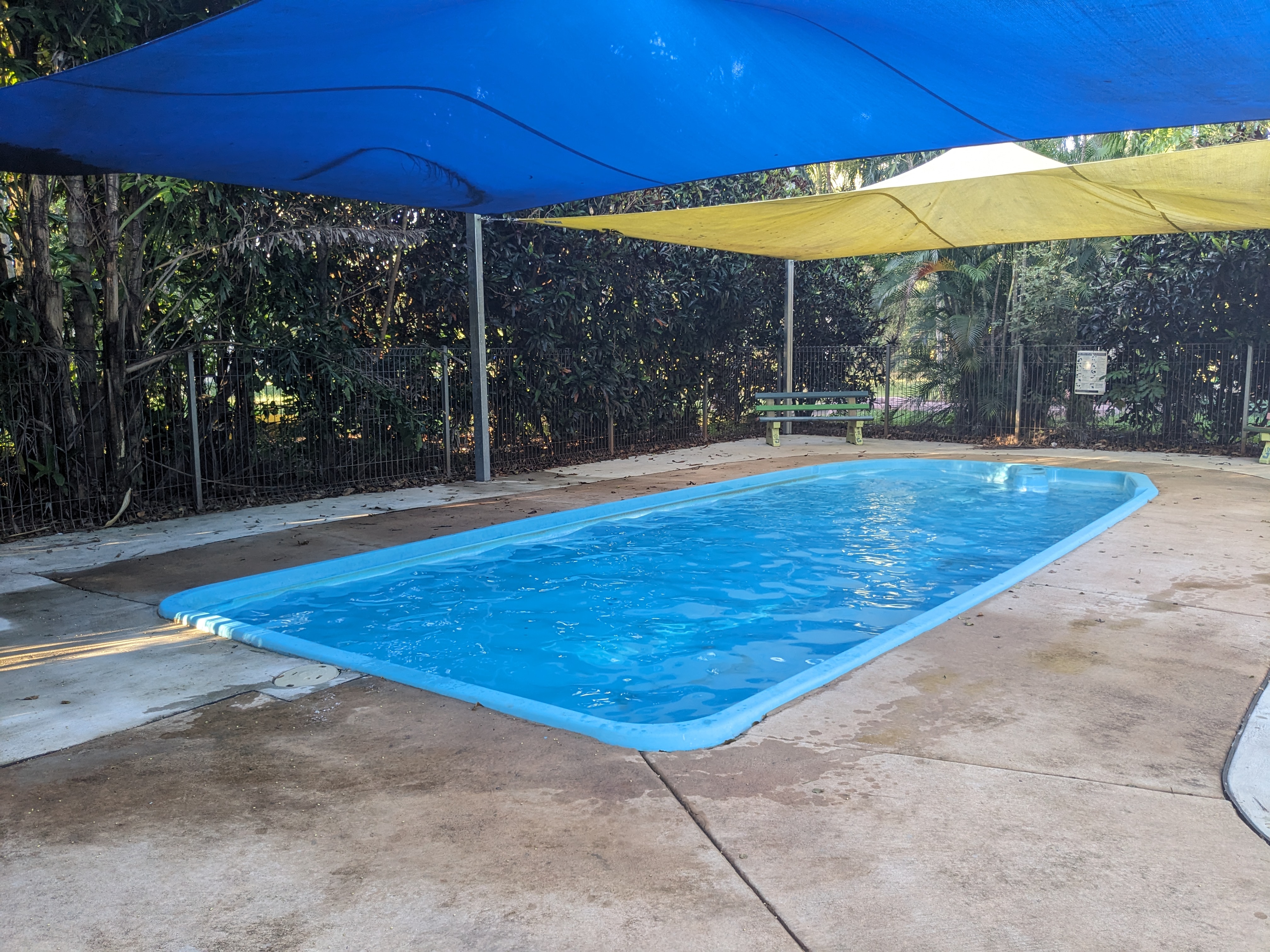
That night, we checked into a proper campsite in Batchelor, finally needing to top up the water tank, charge the battery, and empty the waste water. This was a very nice change from the lay-bys we’d spent the last few nights featuring a pool and BBQ area along with a great local pub.

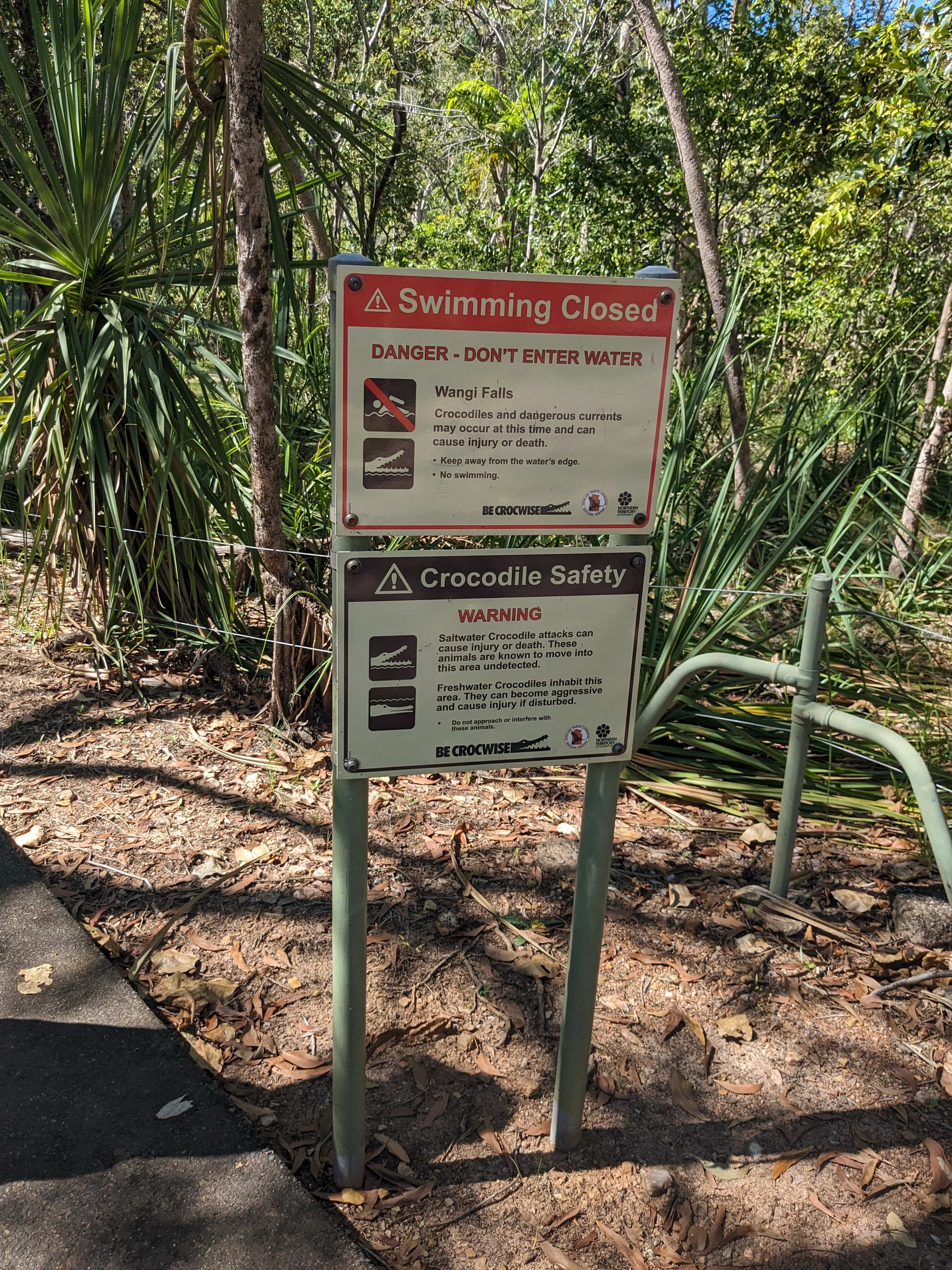
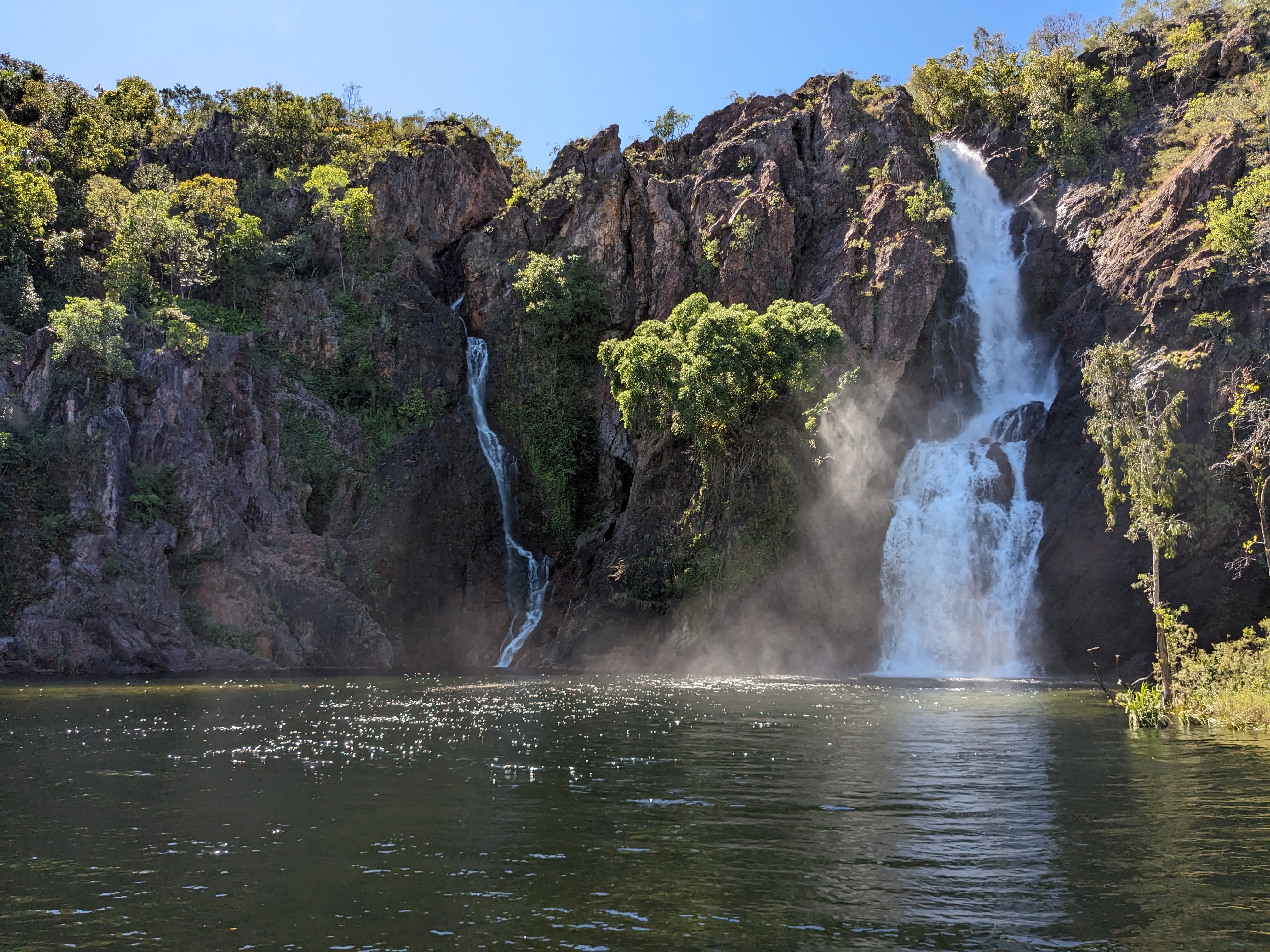
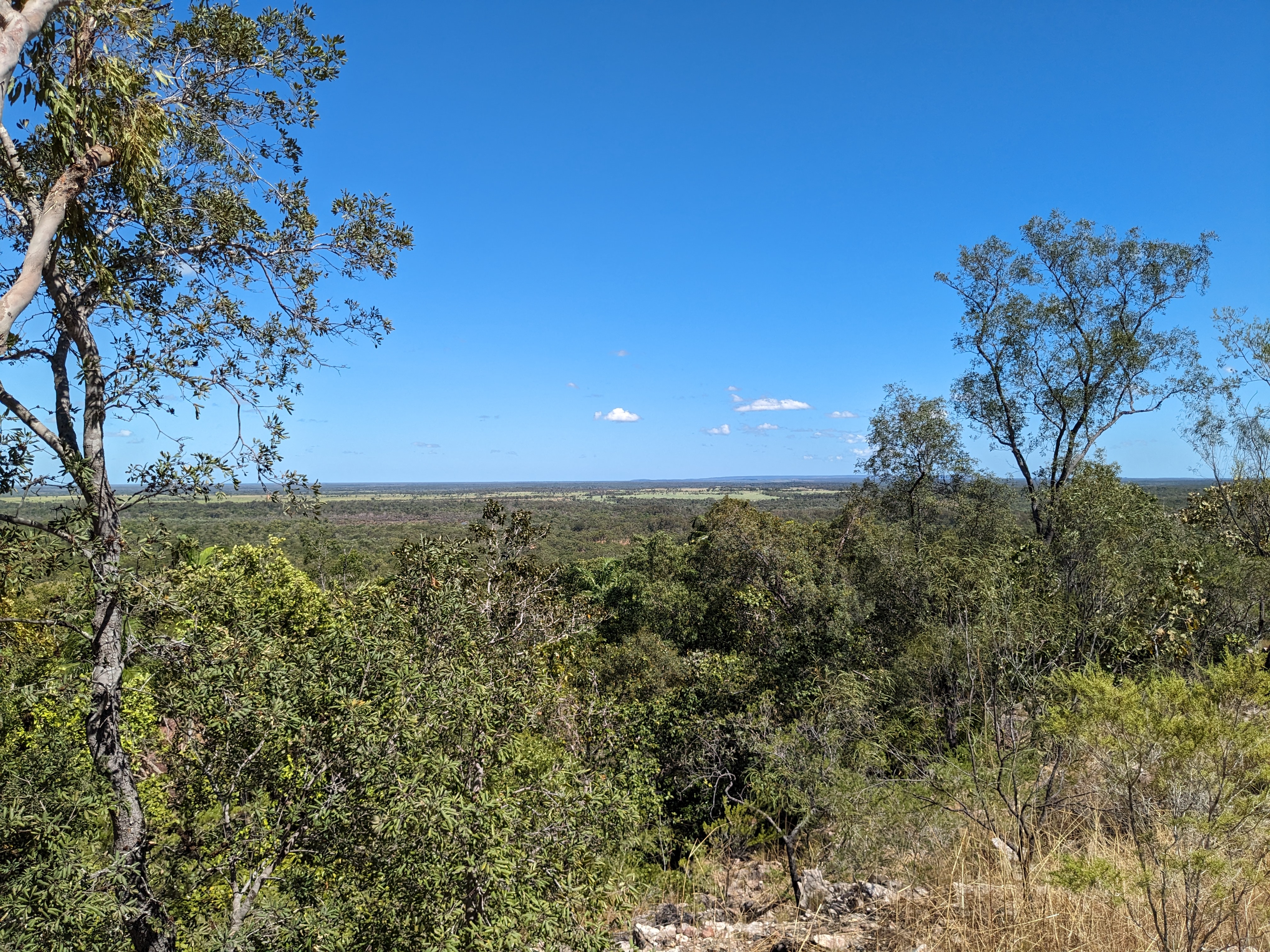
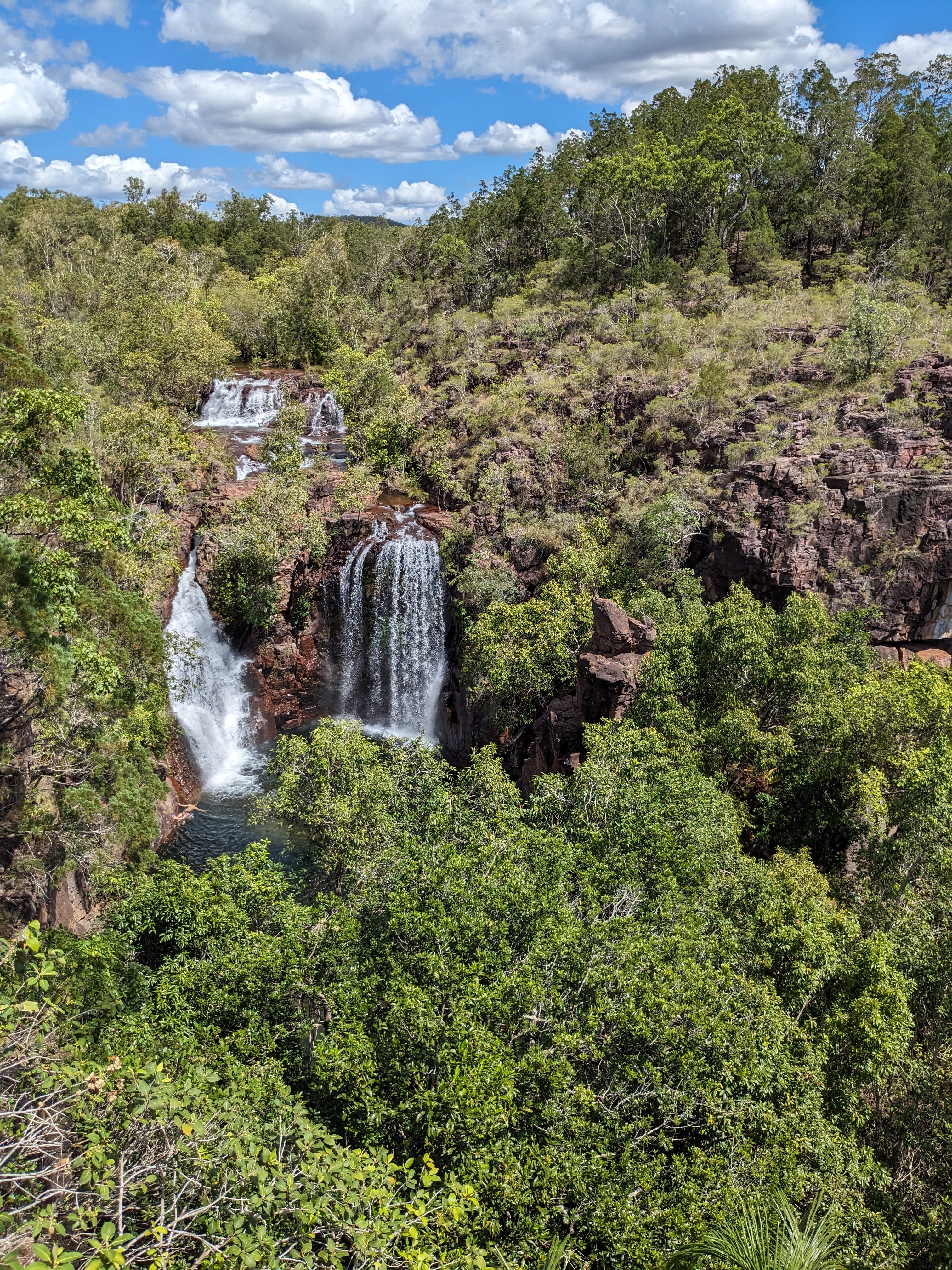
For day 5, we explored Litchfield National Park, enjoying some of the swim spots and walks. The waterfalls and views were very impressive but it all felt very controlled with few tracks to walk and few places to swim. I think this may be due to us being too early in the season and so they were still fixing up some trails and relocating the crocodiles before opening up the swim holes. We returned to the same campsite and pub that night after being tempted by the owners offer of a reduced rate.

Day 6 was our final day and we finished the journey with a 2-hour drive into Darwin to the camper depot and after a quick inspection got our much-needed $1000 deposit back before heading into town.

The trip was a great taste of the outback however, it didn’t convert me to van life. For starters, our van was just too big to take anywhere off the main highways and felt very unstable on the bad roads being 2wd and so tall therefore limiting to places we were able to explore. Then, I wasn’t impressed by the beds either, being double bed width but not long enough unless I lay diagonal and had my feet on top of the cupboard. It was also far hotter in the van compared to if I was in my tent and being forced to cook in the van also just heated it up even more. We just needed more ventilation but with the outback flies we were only able to keep one small mesh window open overnight.

Having said all that, I really enjoyed the trip and it made me want to return to the outback to experience even more of this special landscape.