
The ride from Ceduna to Port Augusta was pretty dull. Highway 1 continued through farmland for another 500 km, and I struggled to find anywhere good to camp with fences lining both sides of the road most of the way. Every town looked almost identical — a big silo and a handful of buildings clustered around a pub.


After a few days of monotony, I finally reached Port Augusta. Turning north, I joined the Stuart Highway. Within a few hours I was in the desert and enjoying myself again. On the second day I passed huge salt lakes and felt like I was truly in the outback.


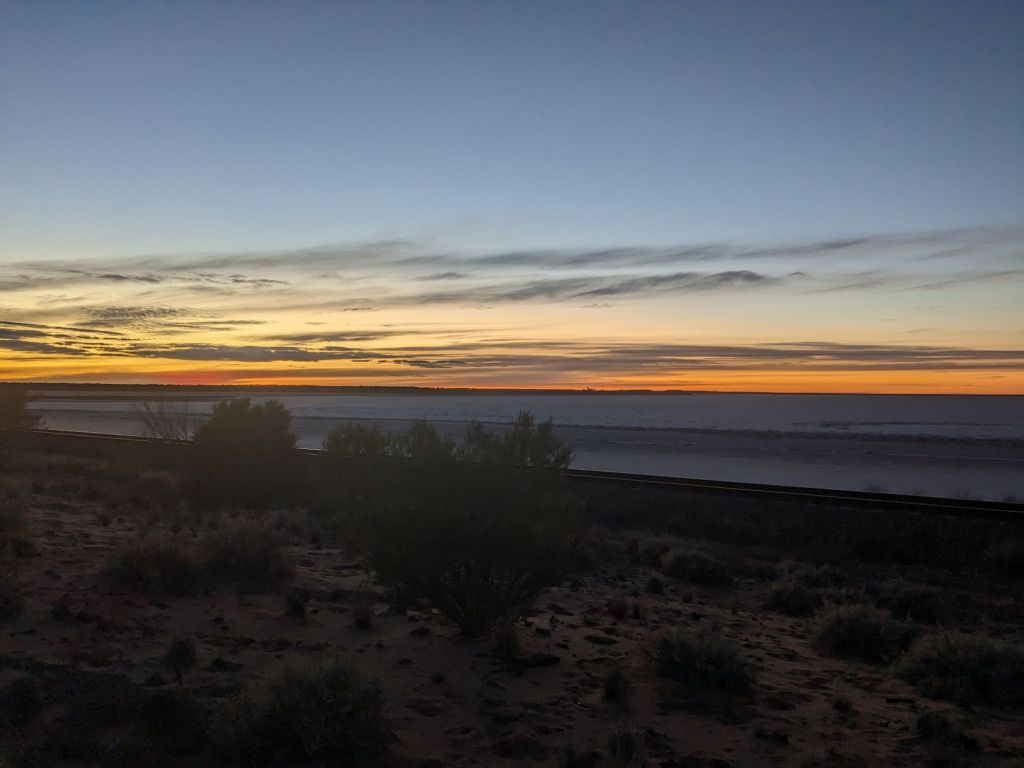
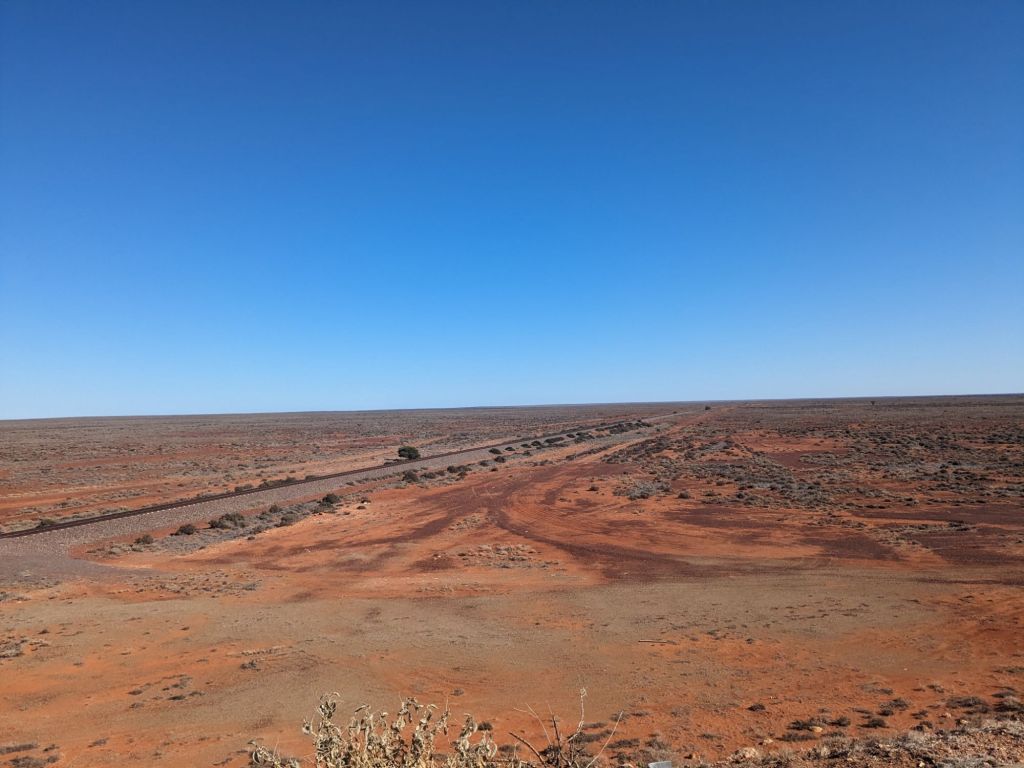

It was another 500 km to Coober Pedy. At the second of only two roadhouses along this stretch, I filled my water bottles in the toilet sink — something that had been fine across the Nullarbor, but this time I’d unknowingly loaded up on salty bore water. I only realised once I’d set up camp. Filtering it or drowning it in sugary tea didn’t make it any more drinkable.
There were a few old rainwater tanks along the road, but every one so far had been empty. I prayed the next one had something in it, but it too was dry. In the end I had to ask a caravan in a layby for some water. They were more than happy to help and even offered me a morning coffee.
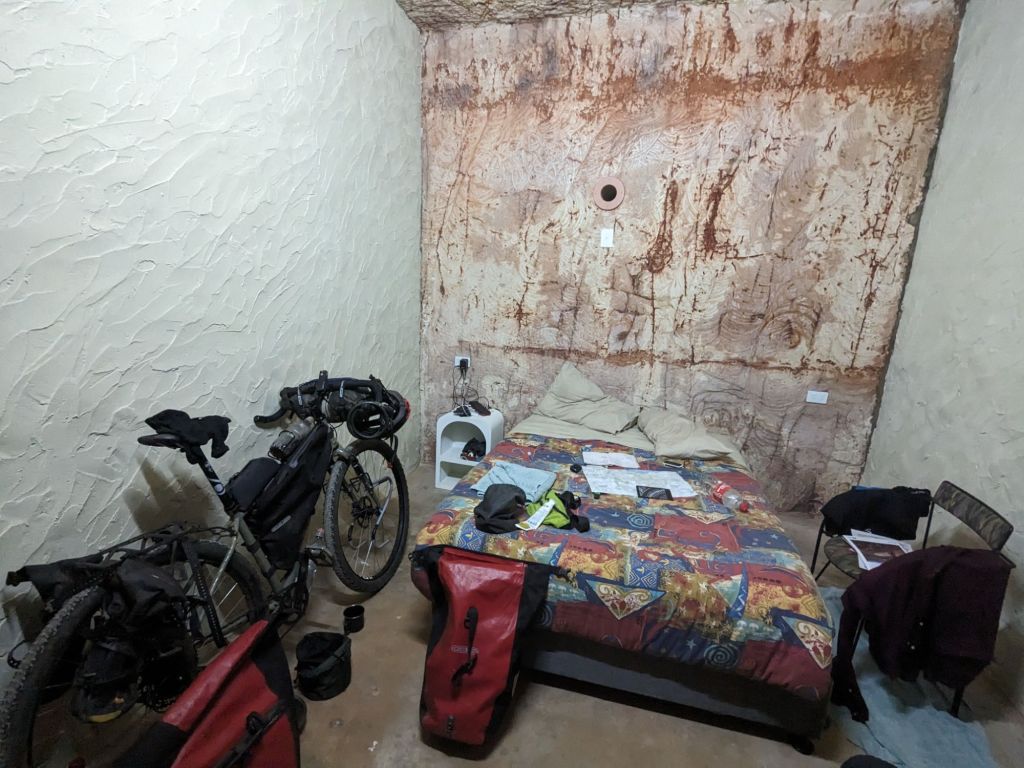
Coober Pedy is propped up by the opal mining industry, and many of its buildings are underground to escape the heat. I checked into an underground motel and spent most of my stay there resting deep below the surface.

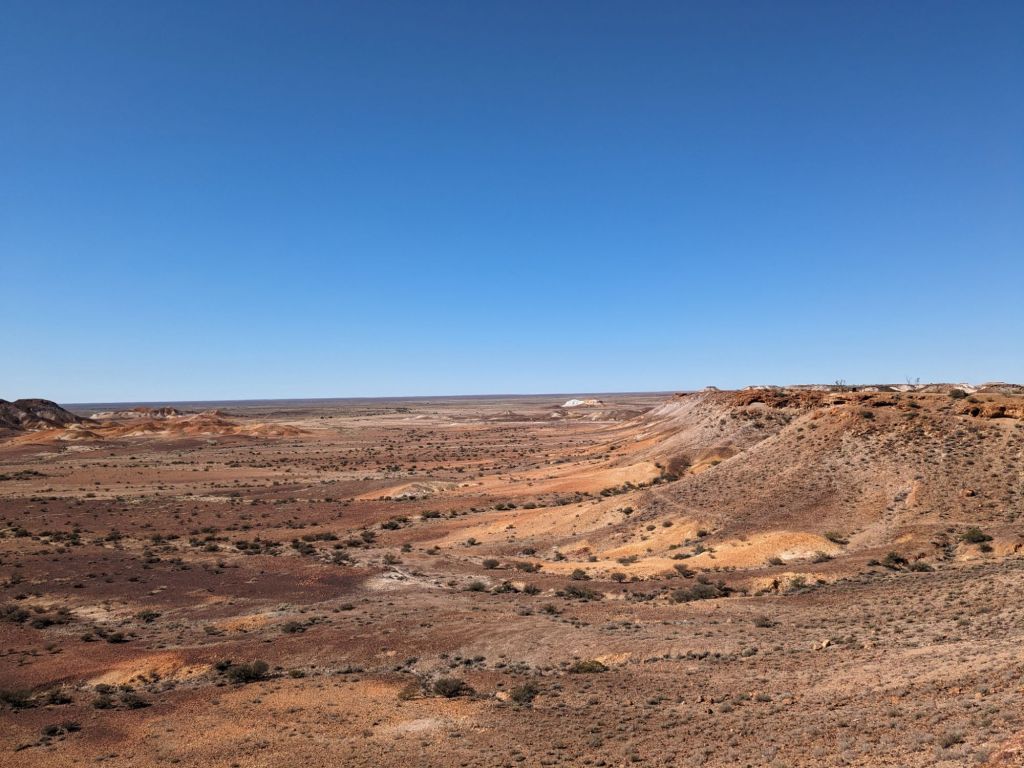
The next day I rode through the Kanku-Breakaways Conservation Area. This was a refreshing change from the highway riding through the colourful landscape.

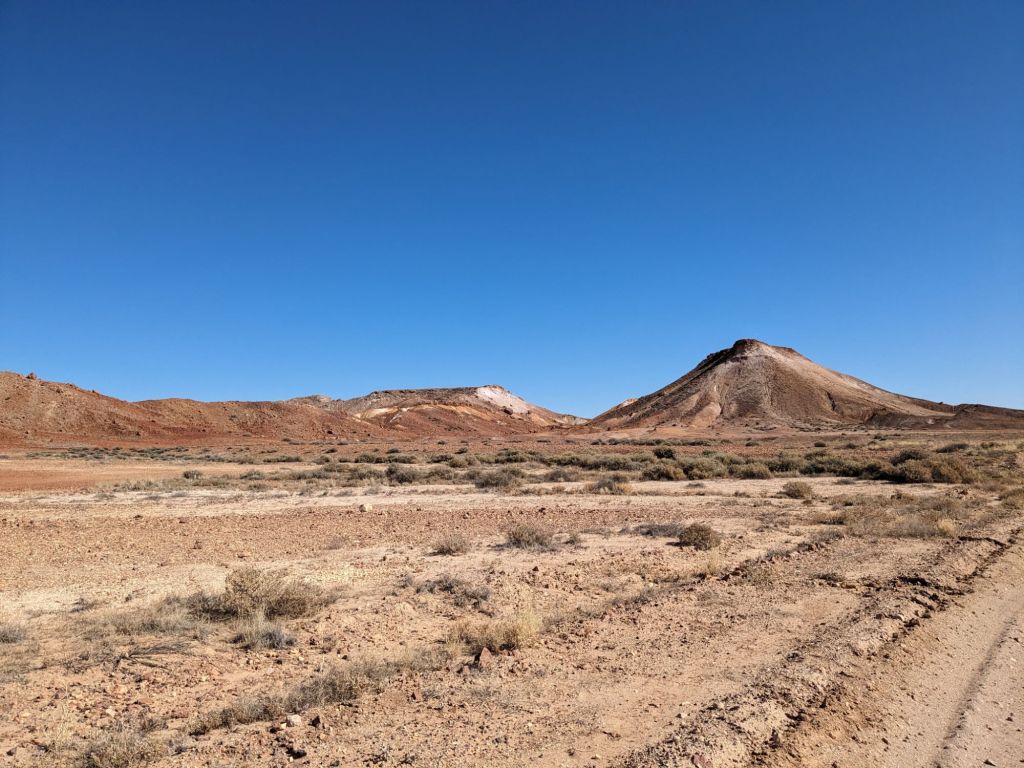
That night, while finding a spot to camp, I managed to puncture both tubes on a patch of three-cornered jacks. It was frustrating to burn through both my spare tubes and spend the evening picking thorns out of the tyres. The next morning, pushing my bike back to the road, I punctured both new tubes again. I spent an hour on the roadside, swarmed by flies, patching the tubes, but they were still slowly leaking. My tyres were pretty destroyed after 5,000 km now offering little puncture protection, and I’d used up all my patches. I still had 200km to Alice Springs, so I was forced to kept stopping every few hours to pump them up. That evening I attempted to tape the remaining holes up and limped into Alice the next morning, heading straight for the bike shop for fresh tyres and tubes.
Now I was in the Red Centre — the part of Australia I’d been most excited about. I first set off on a loop through the East MacDonnell Ranges, exploring a few gorges before returning to Alice for a short rest.


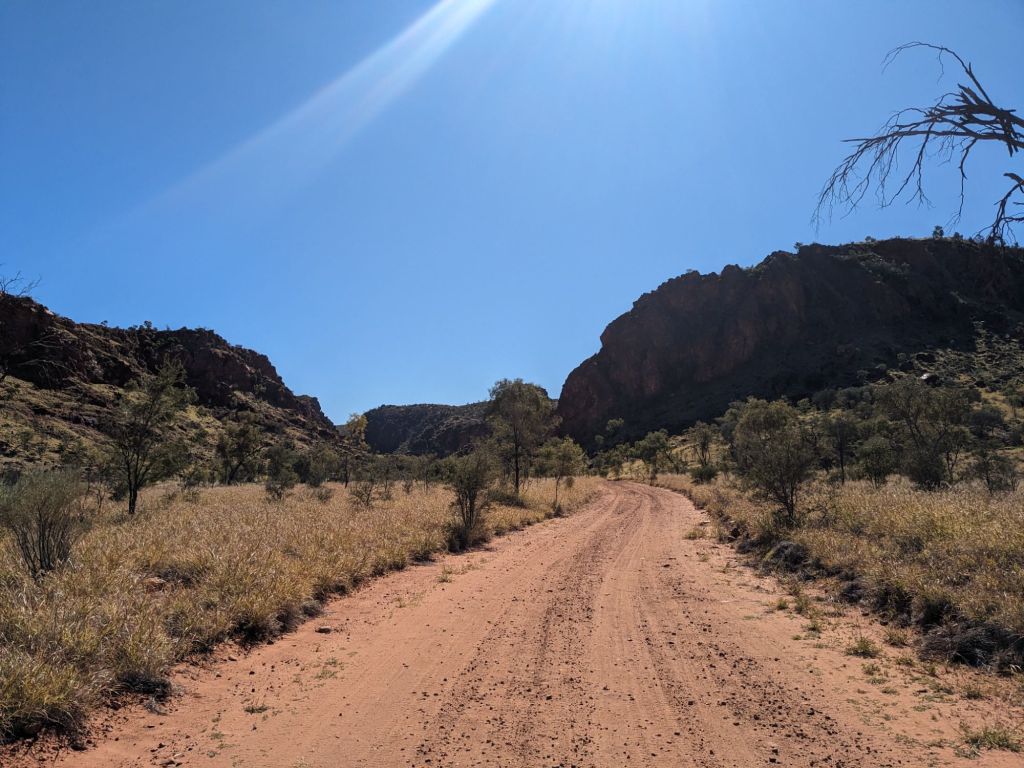
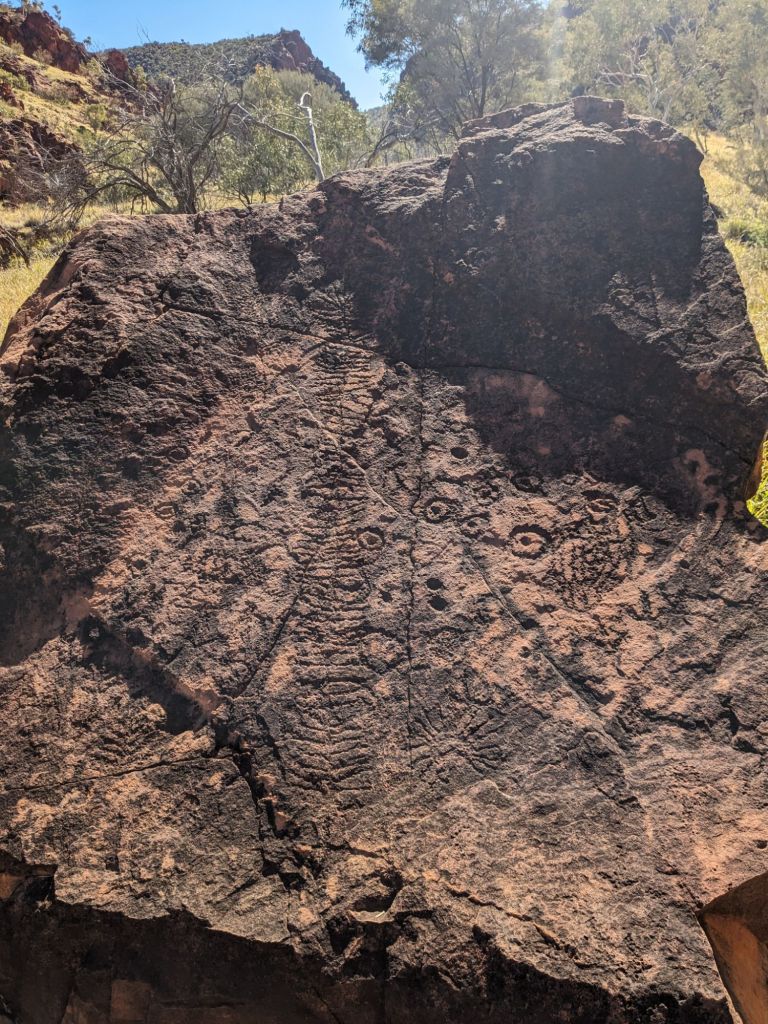
I’d been told Alice Springs was a rough frontier town, but I never felt unsafe. I liked its down-to-earth, relaxed feel and the strangeness of a town built around a dry riverbed.
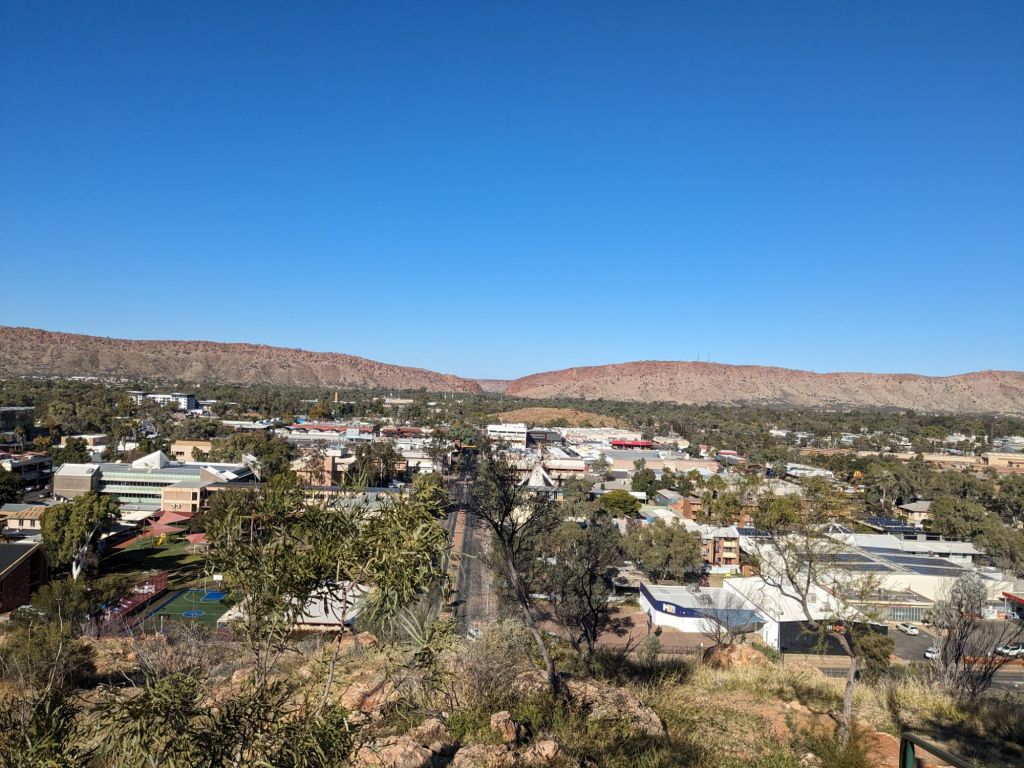
It was also great to have proper supermarkets again. I made sure to enjoy the variety of fresh food before loading up for the six-day trip to Yulara. This took me into the West MacDonnell Ranges — more incredible rock formations and freezing swimming spots despite daytime temperatures around 30°C. At the gorge car parks, caravaners often offered me food and beers, and it was fun bumping into the same people at different stops over a few days. The gorges were unlike anywhere I’d been, and I kept wondering what lay on the far side of the range, protected by the cold water and ridgeline.
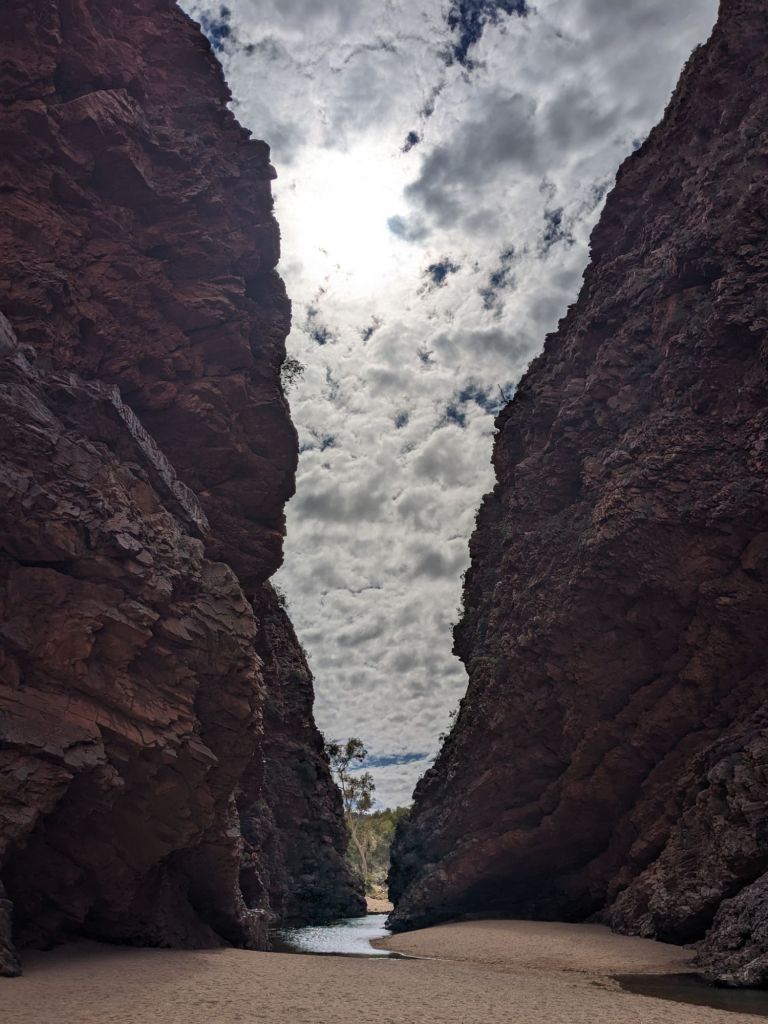

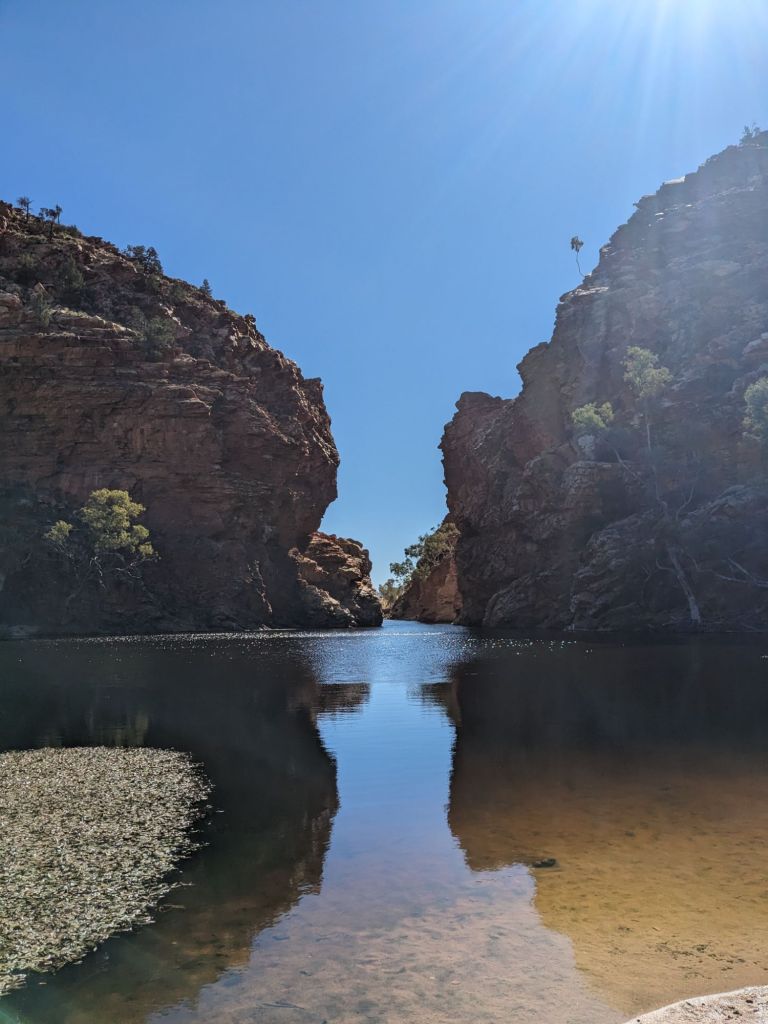
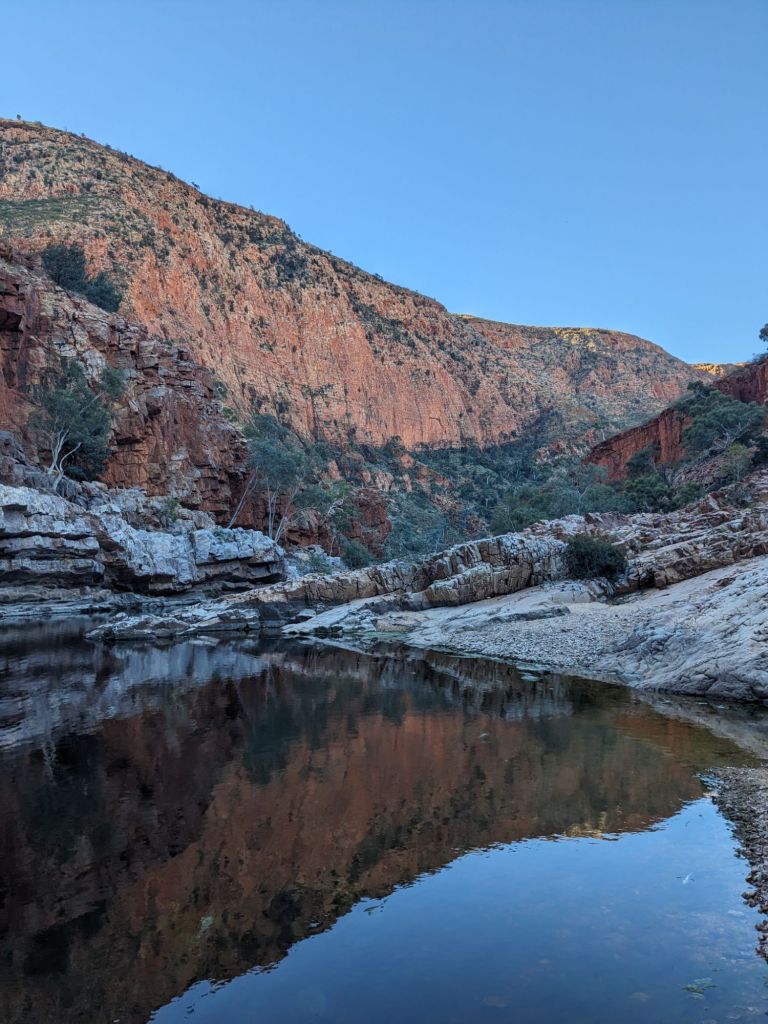

The final sight in the West Macs was Gosse Bluff crater — a 5 km wide impact crater formed by a meteor strike 142 million years ago. It was spectacular, and I had it all to myself. I spent the night on a riverbed before joining the Larapinta dirt road. The road was awful — deeply corrugated — but amazing for wildlife. I saw wild cattle, horses, and camels. One night a dingo came right up to my tent, chewed my water bladder, and stole my shoe. I only realised in the morning when I could find just one shoe. After 20 minutes of searching I eventually found it with half the lace bitten off.
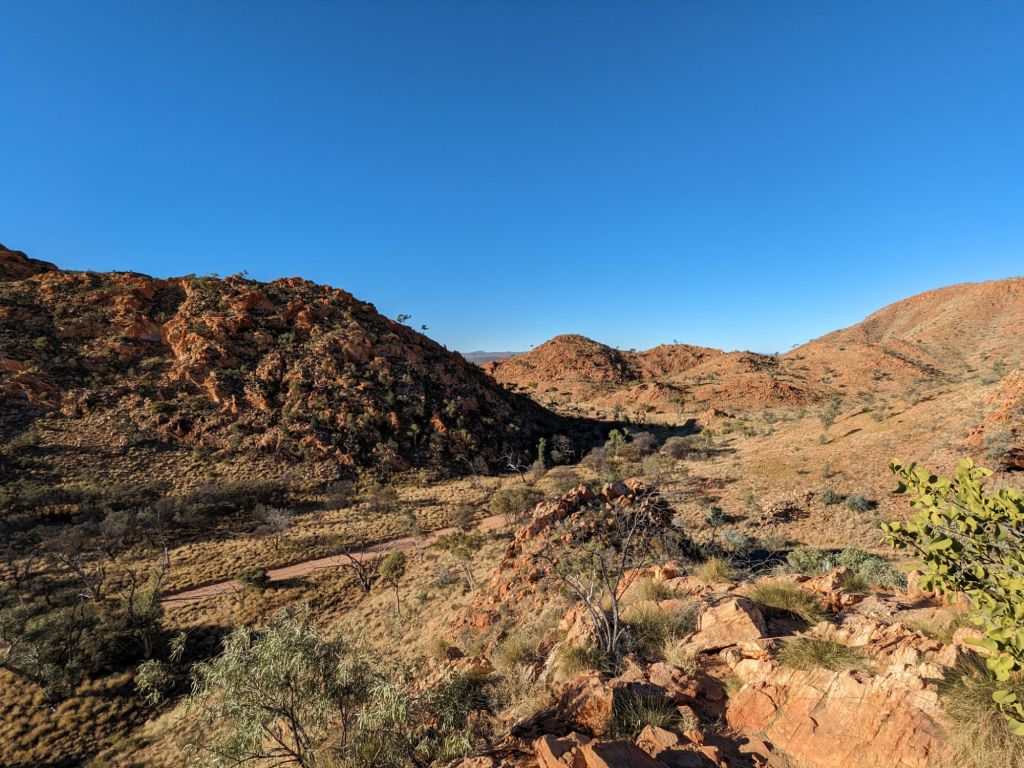
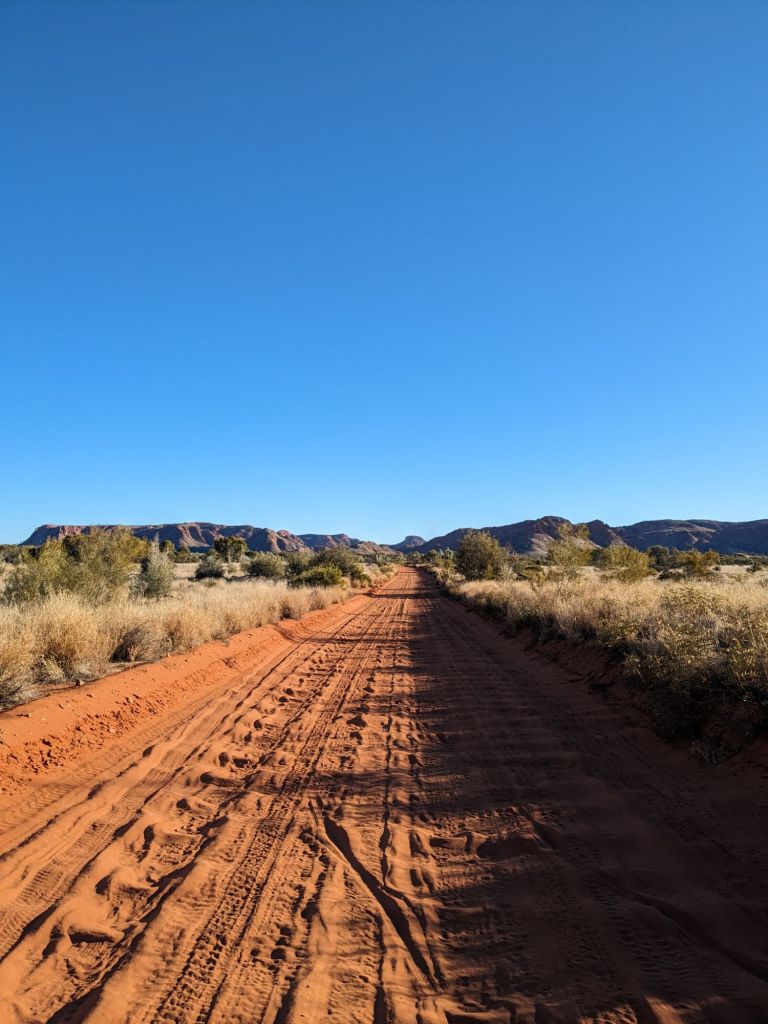


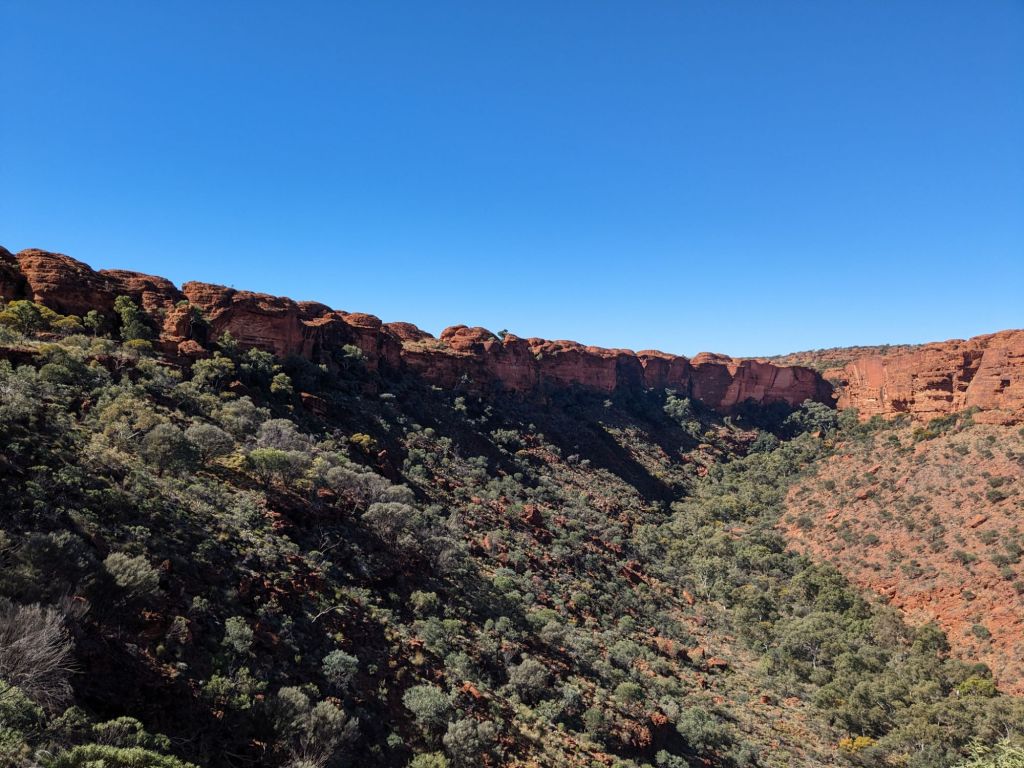
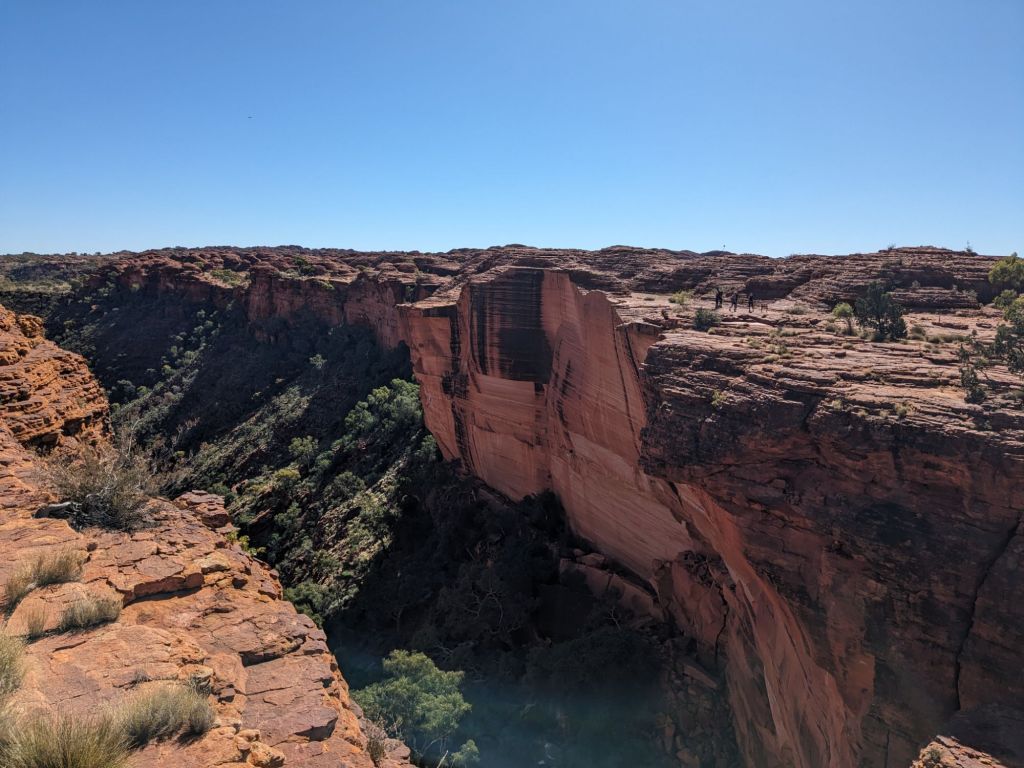
When I finally reached tarmac again, I headed to Kings Canyon. It was a beautiful spot but absolutely packed with people, which felt overwhelming after so much solitude.

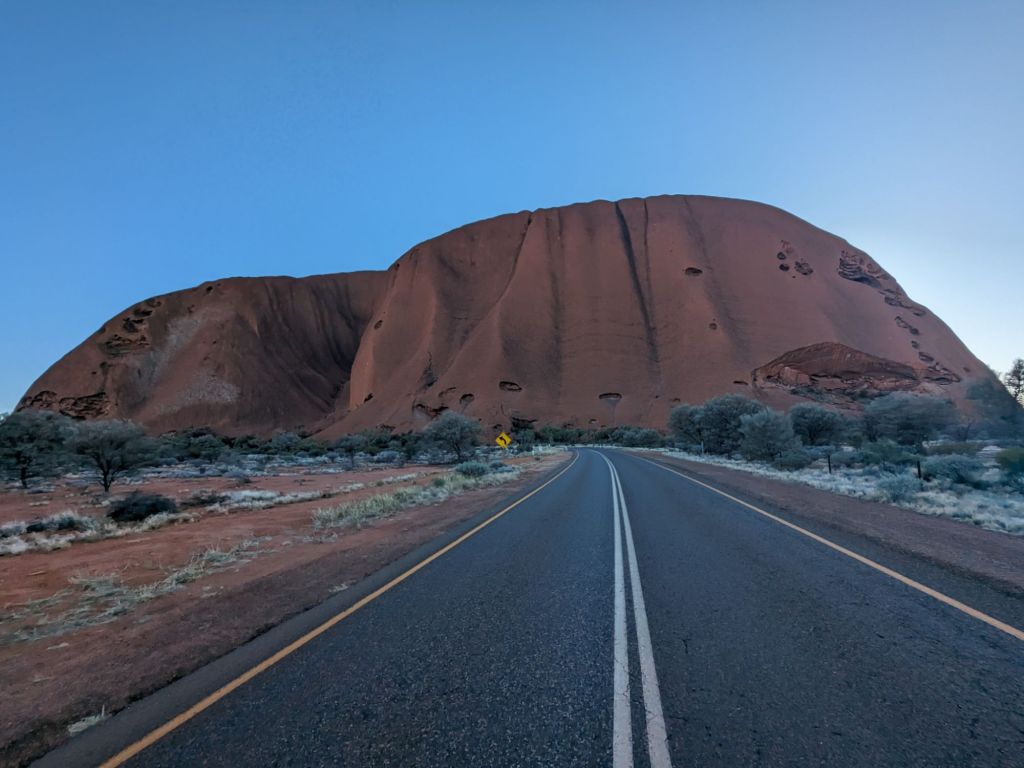
A few days later I rolled into the outback resort town of Yulara — base camp for exploring Uluru. The cycle path around the rock was perfect, and arriving here felt like a massive achievement. A location I wanted to visit for years.


I also visited Kata Tjuta, another set of incredible rock formations. Walking around it was great, though a bit of a return to reality — defibs every 500 m and plenty of people struggling with the 2 km walk from their cars.
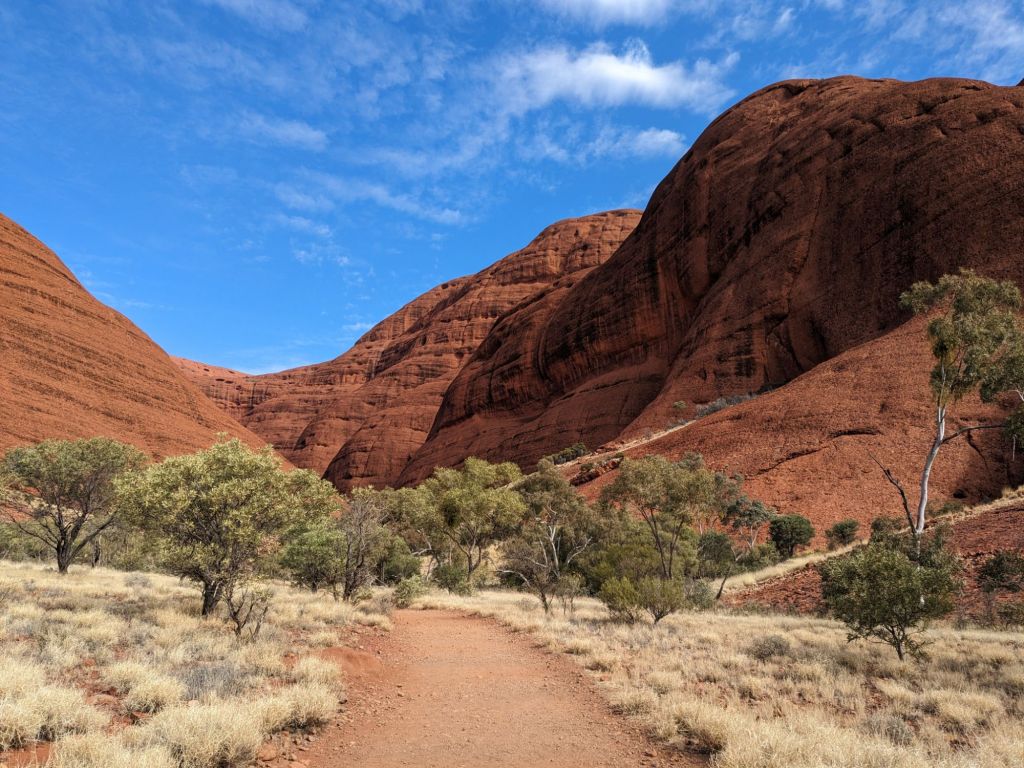


The stretch through the red centre was one of the best parts of my journey so far. The West Macs, gorges, the crater, the wildlife, the long quiet roads — all of it felt unlike anywhere else I’d ridden. After so many kilometres through the outback, arriving at Uluru felt huge making it to the centre of the continent.

 Will Scam