
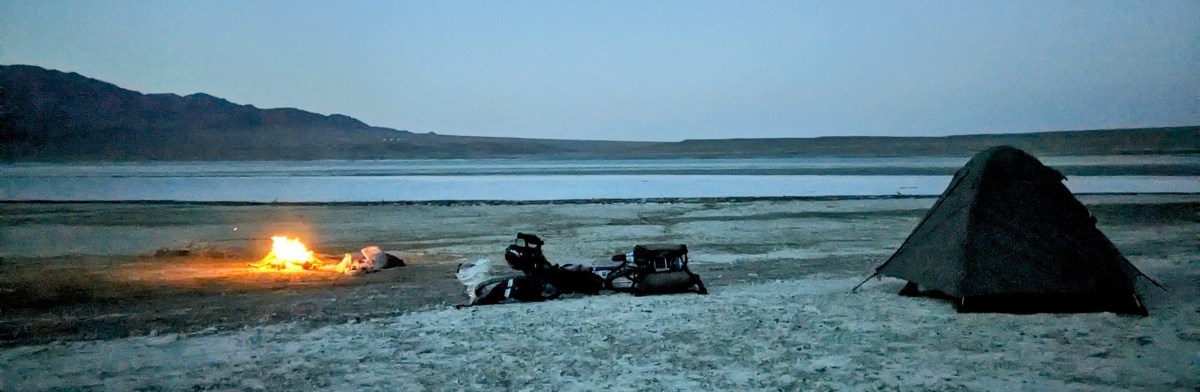
This will probably be the final update from the trip, going into depth on the kit I brought with me. It’s not really a review of the gear, but more just my opinions of everything I brought and how it compared to other peoples setups.
Bike
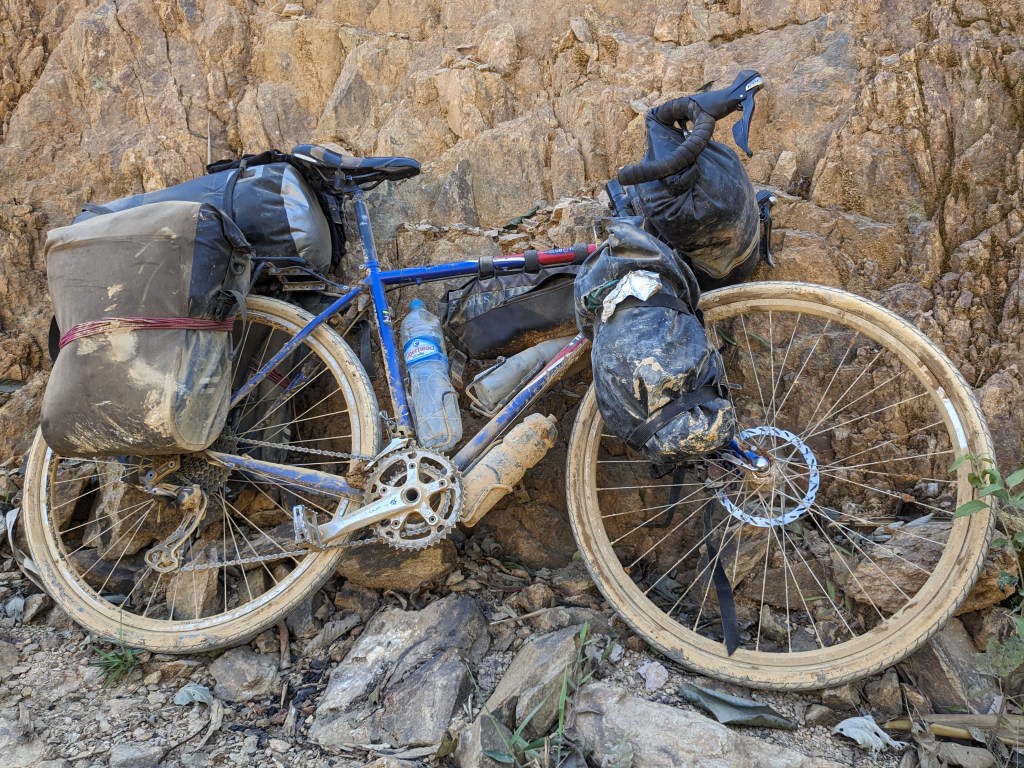
It was definitely a love hate relationship with the bike depending on if I was experiencing any problems. I never really had a chance to put it through its paces before setting off, but I had no major issues the whole way. The disc brakes required quite a bit of maintenance: tightening, cleaning or replacing the pads frequently due to the extra stress from the weight of the gear, but I’m not sure calliper brakes would’ve been any different. I would’ve liked to have the room for larger tyres, although I managed with 38mm and the Schwalbe Marathon plus tyres were incredibly durable and puncture proof lasting the entire trip.
Pannier bags
I had some cheap waterproof ones costing £30 each from Halfords. The material held up most of the way, getting a small rip from the seam on one bag and the hook holding them to the rack came off too. I was able to fix this with some nuts, bolts and bungee, however I think I’ll upgrade them for the next trip to the twice as expensive Ortlieb branded bags.
Waterproof bags
I had two big thin waterproof bags I used inside the panniers, as before the trip started I wasn’t sure how waterproof the pannier bags would be. These were useful just to keep the clothes organised and doubled up as a pillow.
Pannier Rack
This was taken off an old bike before the trip and snapped in Laos. Fortunately, as it was steel I could get it welded back together. I think it’s probably one of the most important bit of kit, as it would be incredibly challenging to carry everything if it broke.

Fork cages
I will definitely be upgrading to a proper front rack and front pannier bags for my next trip, but chose the front fork cages and waterproof bags as it was a significantly cheaper alternative. They took too long to put on and off the bike along with never feeling very secure bouncing around lots on bumpy roads. This was probably partly my fault trying to carry too much with them and toward the end, they were only held on with zip ties.
Frame bag
This was another cheap bag and worked well. It claimed to be waterproof, but I never trusted it and one of the zips broke. This was vital to be able to store bits to access whilst riding along.
Large Dry Bag
This worked well just being strapped to the top of the rack filled with light bulky stuff: sleeping bag, air bed, rain coat and tent poles. The straps soon broke, my fault wrapping them up in the wheel and I should’ve cut them shorter. I’ll keep this for the next trip, but get a new dry bag with backpack straps which can double up as a day bag for when I’m not cycling.
Bottles and Bottle Cages
The bottles I started with quickly became disgusting with a thin layer of slime on the inside and got thrown away after a few months. I ended up using 1.5L plastic coke or water bottles most of the time which worked better as the screw lids kept the mouth piece from getting coated in dirt and I could regularly swap them out. The metal bottle holders were forgiving, with the flexibility to be bent to fit pretty much any size or shape bottle.
Camelbak
I brought both the bladder and backpack with me and used it regularly because it was a good way to carry some extra water without adding weight onto the rear rack. It was also great on the bumpy roads as it was a quick way to drink without having to reach down grab a bottle, then unscrew the top whilst riding along. The one problem is in the heat it just makes you hotter as where its in contact with your back it’s like wearing another layer of clothing.
Handlebar bag
This is where I stored my tent and it worked well storing it separate to the air bed and sleeping bag as it was often damp. Most of the other cyclist I met had Orlieb handlebar bag that looked great for keeping valuables in and to quickly unclip from the bike to take with them into a shop. It’s also another storage bag easily accessed when on the move or to grab stuff from without going through the slow process of unclipping then unrolling the pannier bag.
Bumbag
This was stored in my pannier bag and used to store my valuables mainly passports, money and cards. I had 4 bank cards with me but would mainly just use my Monzo travel card and occasionally the starling card if I’d withdrawn the monthly limit of cash using the Monzo. It would’ve been good to also have a visa travel card as occasionally places would not accept Mastercard. I was also travelling with a few hundred USD which I was able to withdraw from Georgian ATMs which I’m glad I had for emergencies.
Clothes
It was difficult deciding how much to bring, as the clothes quickly piled up packing for the negative temperatures of the Pamir mountains, the heat of the Kazakh desert and the humidity of Indonesian wet season. I think the solution is to pack light and just buy items when you need it, then dump them when you don’t. Toward the end of the trip, I had some extra layers and just three outfits, one for wearing on the bike, then two other sets of shorts and t-shirt for wearing at camp which I’d swap between trying to keep one set clean for if I was staying somewhere or able to wash.
Cycling Shorts
I started with bib shorts but once these were destroyed after wearing them for 3 months I just got a pair of cheap Decathlon cycling shorts. The bib shorts were an annoyance when you needed to go to the toilet whilst wearing lots of layers and then too warm in the South East Asian humidity.
Cycling Tops
I began with a lightweight cycling jersey which was good to have the pockets on the back, but once it was ruined I just wore button up shirts which were nice to be able to unbutton to stay cool. Having a long sleeve was also useful to not have to worry about applying suncream or insect repellent. Picking a darker coloured top would’ve been smart to hide the dirt.
Bike Shoes
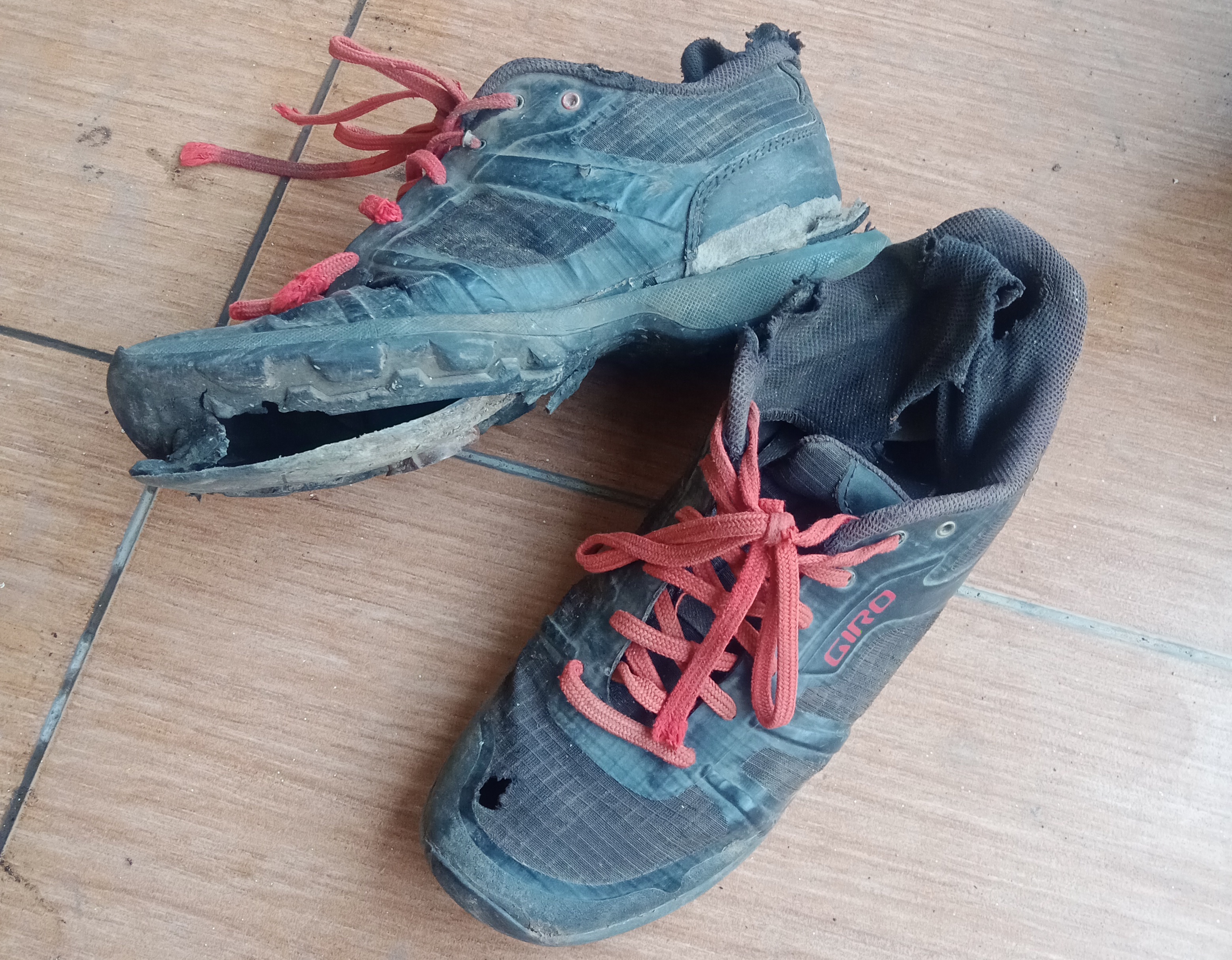
I had clip in bike shoes and I’m not sure they were necessary. Most other bikepackers just had good walking shoes. After 8 months these got binned in Bali, as they were in pieces.
Puffer Jacket
This was great. It packed up really small and was a warm layer. Mine was a cheap Primark one although I’d love a Rab down jacket but I’m not sure I could justify the cost of one.
Arm Warmers/Leg Warmers
I’d never tried these before the trip but liked them. They packed away really small and effectively gave an extra layer that I’d quickly throw on before descending the mountain passes.
Thermals
I brought 2 thermal with me on the trip but probably could’ve managed with one. It was nice to have one for sleeping in and one for cycling in but I only wore both of them at the same time for a single night. Generally, it would be the last extra layer I’d go for when it was cold just because it was a pain to take on and off and I’d often get too warm wearing them.
Trekking Trousers
These were trousers with zips so you could wear them as shorts and ended up being really useful. These were good to put on whilst cycling when it got really cold as they acted as a windproof layer covering my legs. It was important to have a pair of long trousers with me for when I visited mosques and these were a good light option.
Hat, Gloves and Buff
All more essential layers for when it got cold. The buff was also good when the sun was really strong or after soaked in water to breath through on the very dusty roads.

Waterproofs
I’m not sure the best solution for a waterproof jacket, I brought two, a lightweight cycling one and a large gortex jacket. The gortex jacket was quite bulky but was a great windproof layer that I could fit it over the top of the puffer jacket. The cycling jacket was great to quickly throw on if it rained or as an extra layer in the morning before the sun rose. I always felt the gortex jacket was taking up too much room but was still an important item to have.
Flip flops
They were nice for camp in the evenings just to get out of the cycling shoes I’d worn all day. I think I’d prefer crocks as then I could cycle in them too when it was raining as it wasn’t nice wearing wet cycling shoes all day long.
Socks
I ended up buying lots of pairs along the way as they would get so dirty. I tried going without socks for a bit too but it wasn’t comfortable doing this all day.
Towel
I had a small microfiber towel which I really don’t like, but there’s no good replacement for them as they’re quick drying, lightweight and small.
Camping Gear
Tent
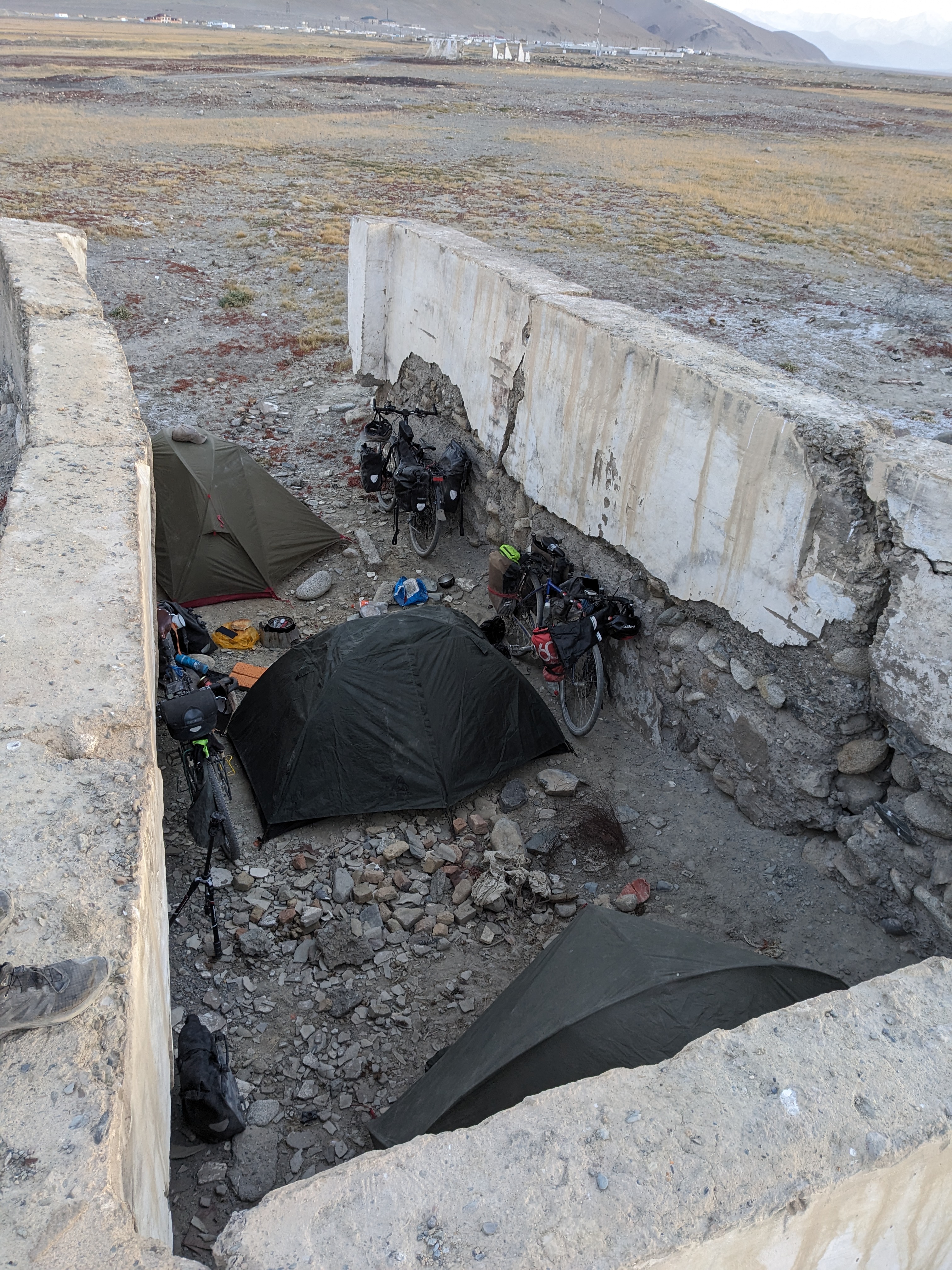
By the end of the trip, the tent was pretty wrecked. The pole had snapped and there were holes in the base material where ants could crawl in. Having said that however, I still have the tent with me and really liked it. It was a Trespass 2 man costing under £100 and weighed about 2kg. Having a 2 man tent was definitely worth it just for the extra room to store bags inside. It also had a removable outer waterproof layer which was really nice when sleeping in the heat as it kept you cooler with the air blowing through. Being freestanding was vital as I was often camping out on gravel or concrete so could set the tent up without needing to use the pegs.


Sleeping mat.
I made it through two sleeping mats on the trip. The inner structure broke on the first mat, giving it a large bubble when inflated making it useless and so I got a new one in Bangkok. Both were just cheap ones and worked fine. They were both durable, never getting any punctured in them but I’ve heard lighter, more expensive ones puncture more easily. One problem was the cold from the ground would come up through the mat but after taking a foam mat for free from a hostel, this solved the problem. The foam mat was also great for just sitting on when cooking or using as a pillow so it stayed with me for the rest of the trip.

Sleeping bag
This was one of the fancier bits of kit I picked up before leaving, buying a down bag rated to -16 degrees. It was too warm most of the time but I was glad to have it for some cold nights. I wish I’d brought a sleeping bag liner to use when it was warm and also to stop the bag getting so dirty, as I was unable to wash the downs material whilst on the road. It also didn’t pack up too small but was a good balance between warmth, size and cost.
Cooking set
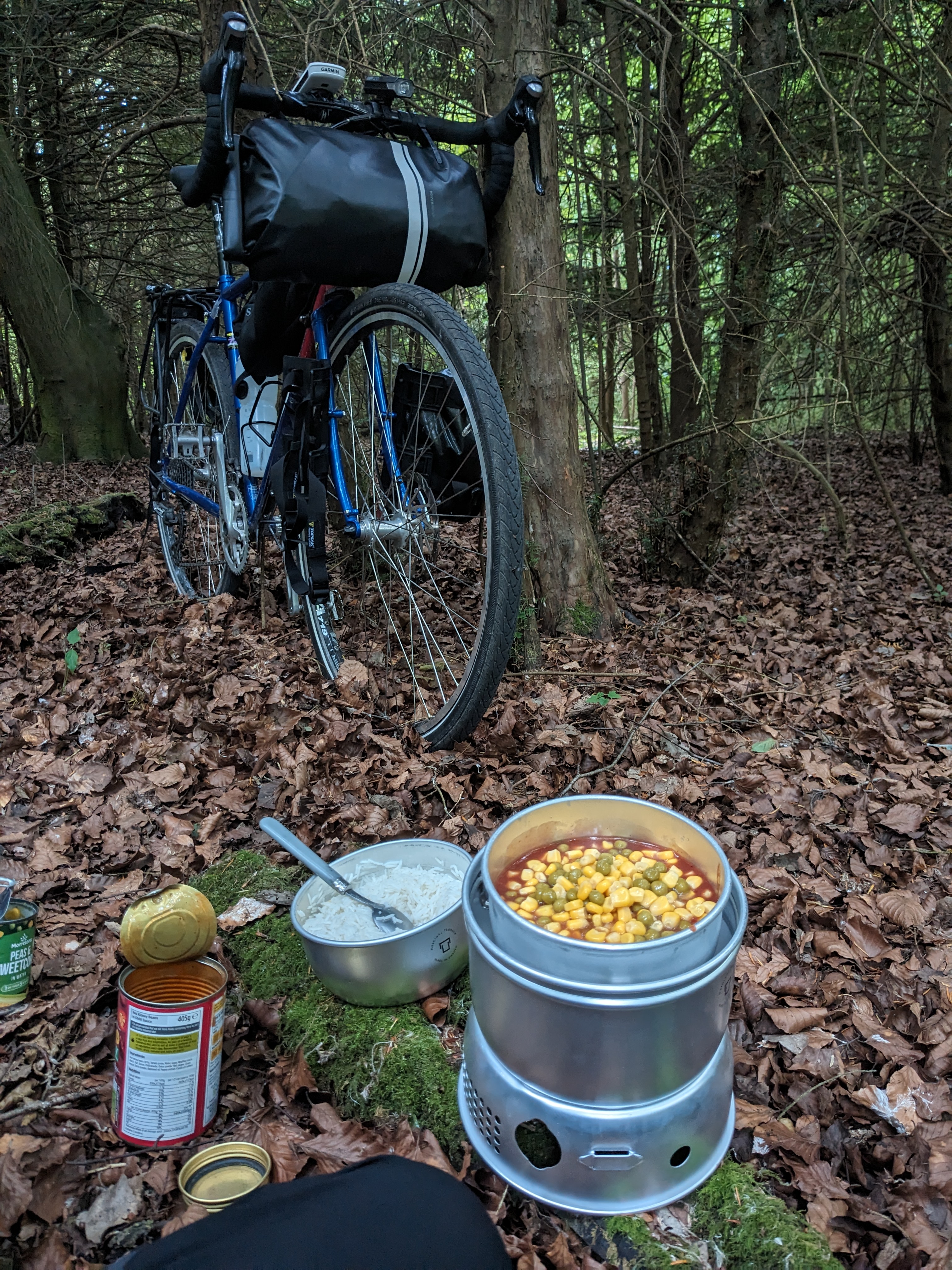
I went for an alcohol burning Trangia stove. This kit came with two bowls both 1L which were too small and I’d often need to make two bowls of pasta in the evenings. I think just one big pot would be better. I was able to find fuel everywhere occasionally resorting to burn paint thinner or hand sanitiser. This kit was cheaper than the petrol burning stoves but I think I’d upgrade to one of them in the future to allow me to use a larger pot and boil water faster as this kit struggled a bit in the cold.
The only bit of cutlery I brought was a spoon, which was all I needed. I wasn’t particularly doing complicated cooking, mostly just some pasta or rice then veg and some kind of protein source out a tin. To wash everything, I’d just scrub it with my hand under a tap or in a stream.
Swiss army knife
I mainly used the knife and tin opener when cooking but by the end of the trip I’d used every other feature it offered.
Cigarette Lighters
I’d always carry two with me as always be leaving them out overnight, then it being too wet to light the stove the following morning.
Water filter
I could’ve survived through Central Asia without it, as in the villages we could find water and in the mountains the streams were so clear they seemed safe to drink. I used it frequently in South East Asia, filtering the tap water everywhere I was told it was unsafe to drink in order to save buying bottled water. Filtering the water took some time and effort, taking probably about 3mins to fill up a 2L bottle and just not bothering to filter anything that wasn’t already clear as this would just clog the filter.
Bike Tools and Spares
Inner tubes, puncture repair kit, tire levers and good pump
It was good having the puncture repair kit in addition to the spare tubes as it’s such a small kit and just gives you more redundancy if tubes burst.
Spare spokes
They’re so small and light I think it’s work carrying a few. I managed to snap two spokes on separate occasions when pushing my bike through branches in the forest. Also with all the extra weight on the bike it puts more pressure on the spokes so snapping one is more likely.
Gear cables, brake cable and brake pads
They’re all so small and light so defiantly worth bringing spares. I’d try to always have two sets of new brake pads as they were sometimes quite hard to find.
Bike Multitool
It’s a lightweight option for being able to adjust every bolt on the bike. Also good to have a chain tool and spoke wrench on it.
Cable ties, paracord, duct tape and super glue
Should be able to bodge anything back together for a bit with these.
Spare bolts
I was glad to have replacement bolts for everything on the bike. Especially the pannier racks as these were always coming loose.
Bike lock
It was hard to decide what sort of lock to choose. A D lock is probably overkill so I went for a decent combination cable lock. I reckon where the bike is left is more of a factor than what lock you use.
Chain lube and old tooth brush
For trying to clean everything and keep it running smooth.
Toiletries and First Aid
Toothbrush, Toothpaste and Dental floss
Good to keep them where you can reach it on the bike to save time in the mornings by brushing your teeth on the move.
Toilet paper
I’d grab this from public toilets or hostels.
Bar of soap
All I took for washing myself and clothes.
Bug spray
I really liked the one from 7eleven in South East Asia, it was strong and a nice small bottle.
Suncream
I found the Lidl factor 50+ kids waterproof one worked best and I’d only need to apply it every few days. I’d often buy suncream before leaving a country if I had any cash left over as it’s something small and expensive to spend it on.
Glasses, sunglasses and contact lenses
I just had 3 pairs of contact lenses in case the glasses broke to give me a few days to find somewhere to get them fixed. Luckily, I had no problems.
Sudocrem
This was about the only thing I used in the first aid kit. It can be used for almost anything minor that is likely to happen: burns, sunburn, bites, blisters, chafing and as an antiseptic for cleaning wounds.
Paracetamol
I think I took it once to help with altitude sickness but always good to have.
Spray plaster
I really like the stuff, just being able to clean a small wound and spray this over to cover it up. Then just regularly apply more layers to keep it covered. I never ended up using it though.
Tweezers/tick remover
This was used a few times getting ticks camping out in French forests.
Bandages, plasters, steri strips and dressings
I took a selection of different sizes. I think it’s hard to know if you’ve overpacked for this as you don’t expect to or want to use any of it and fortunately I didn’t.
Electronics
Bike Computer
This was very much a love hate relationship. The first problems occurred leaving Europe and losing all maps as it only had the one continent downloaded. Eventually, I found a computer to borrow and load the rest of the countries I needed. Next, I’d have issues with it not charging or just freezing. I don’t think it was designed to be left on for 10 hours a day every day. When it did work, it was great though being able to see the roads, see the gradients to know the size of all the hills coming up and record everything for Strava without burning through phone battery.
Phone
Mostly just used for researching places and planning a route along with taking photos.
Waterproof phone case
This was really great, just one of those pouches to put the phone in and seal up. I’d often leave my phone in it just to give it some extra protection from either the dust or rain. Then pretty much always use it after having to buy a new phone when mine became water damaged.
Headphones
I went through a few pairs of cheap headphones but it was really nice to be able to listen to music or podcasts during dull days of riding.
Bike Lights
I didn’t use them that often but glad to have.
Head Torch
Really useful. I’d often wear it cycling at night just to be more visible and be able to look to the side of the road for camp spots. It was also used lots when I was staying in hostels to find stuff in the dark rooms. The red light feature was nice too to use when reading before bed.
Power Banks
I took two large power banks with me and could go about two weeks before I needed to plug them in. I didn’t carry a solar panel as it worked out cheaper to just take an extra power bank. One Problem I had was that my older power bank just took too long to charge and so if it was fully out of juice it wouldn’t charge up completely overnight.
Sim tool
A safety pin worked fine but I’d always end up losing this tiny tool when I actually needed it.
Charging cables
Definitely worth having two of each type as they were often breaking, I think from getting dirt inside.

This has been quite a long post, but it has been nice to reflect on the kit as I begin planning the next trip. I’m sure I’ve forgotten to include a few obvious things from the list, writing it 4 months later from memory. The truth is the gear really doesn’t matter, anything can be bought whilst on the road and if anything fails, this only adds to the adventure.
 Will Scam